Why Do Mexicans Celebrate Day of the Dead? The Real Meaning of Día de Muertos

Wondering, Why do Mexicans celebrate Day of the Dead?
If you’ve never experienced Día de Muertos in Mexico, it can be easy to look at the colorful decorations and wonder what the celebration is really about.
Why do Mexicans build elaborate altars, buy mountains of cempasúchil (marigolds), decorate with skulls, visit cemeteries, and prepare the favorite foods of people who have died?
After living in Mexico since 2018, and experiencing numerous Día de Muertos celebrations in Mexico, I’ve learned it’s much more than the colorful holiday many people see in photos.
At its heart, Día de Muertos is about remembering the dead, honoring family, and keeping the memory of loved ones alive.
That’s just part of what makes Día de Muertos so fascinating, so let’s do a deep dive into the why Mexicans celebrate Day of the Dead.
What Does Día de Muertos Mean?

The Spanish name Día de Muertos literally translates to “Day of the Dead.” However, the name doesn’t really capture the spirit of the celebration.
In many Mexican communities, Día de Muertos is a time when deceased loved ones are remembered and, within particular traditions, welcomed back temporarily to the world of the living.
UNESCO describes the Indigenous celebrations as marking the temporary return of deceased relatives and loved ones to Earth.
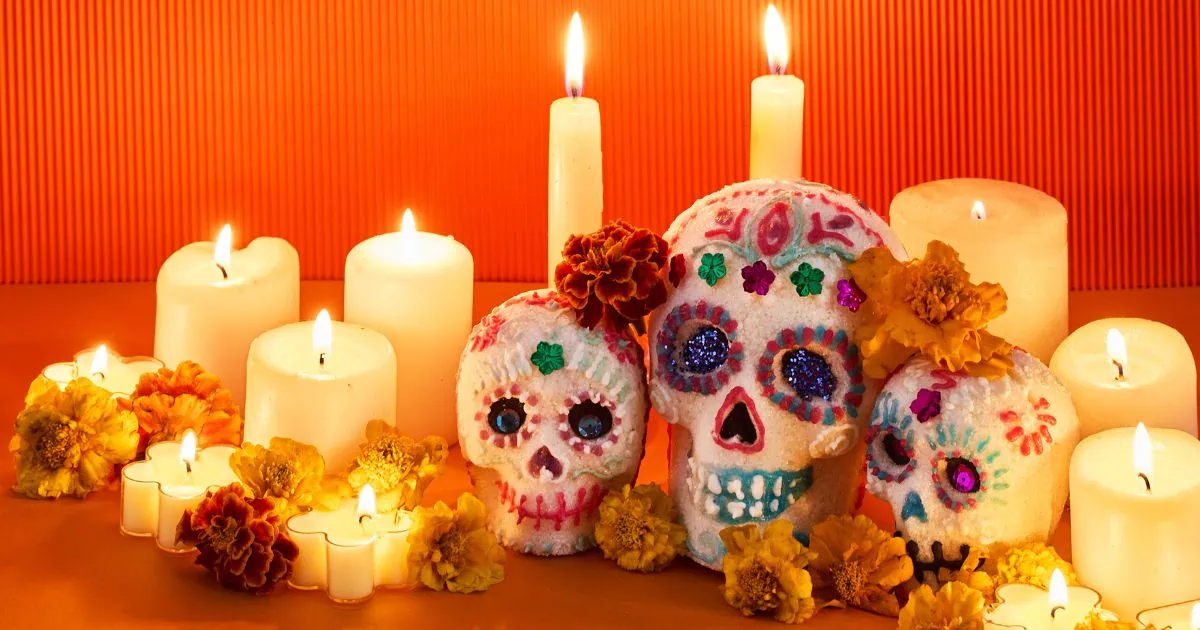
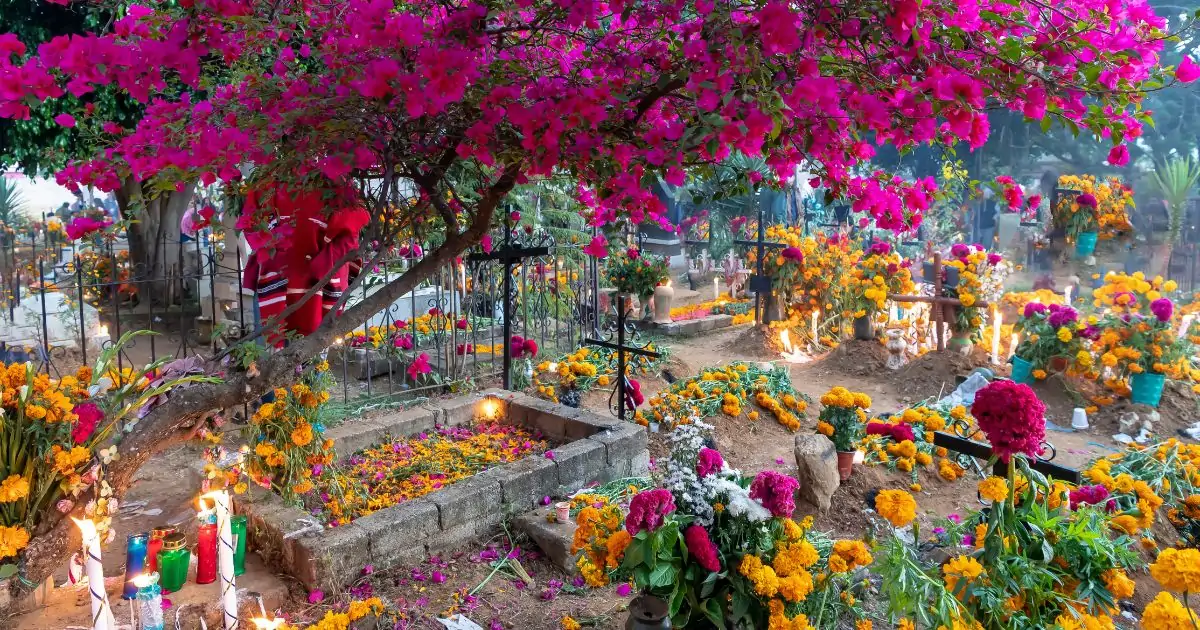
Families prepare alters with offerings of flowers, candles, food, drinks, incense, and other objects to help honor and receive them.
For this reason, it’s easy to see why the celebration can feel surprisingly joyful.
Instead of treating death only as something frightening or tragic, Día de Muertos creates a space for families to talk about the people they’ve lost, remember their personalities, prepare their favorite foods, and tell their stories.
In that sense, memory becomes a way of keeping someone present.
Why Do Mexicans Celebrate Day of the Dead?

There isn’t just one answer.
Día de Muertos developed over centuries from Indigenous traditions surrounding death and ancestors, Catholic observances introduced by the Spanish, and the many regional customs that developed throughout Mexico.
The result is the living tradition we know today.
UNESCO describes Día de Muertos as a syncretic tradition that developed through Indigenous and Catholic influences and continues to take different forms among communities throughout Mexico.
That last part is important because it tells us that there isn’t one universal Mexican Día de Muertos tradition.
The way families celebrate in Oaxaca can be very different from what you’ll see in Michoacán, Yucatán, Mexico City, or a small rural community like Mixquic.
Some families create elaborate home altars, while others place offerings at graves.
Some communities hold large public celebrations, while others observe the days quietly with close family.
Is Day of the Dead an Ancient Aztec Holiday?

This is where things get complicated!
You will often hear that Día de Muertos is an ancient Aztec or Mexica holiday that has been celebrated for thousands of years. It’s not quite that simple.
Ancient Mesoamerican peoples absolutely had important traditions and ceremonies connected with death and the dead.
The Mexica, for example, held celebrations connected with deceased children and adults at different times of the year.
But those celebrations did not take place on November 1 and 2.
The November 1 and 2 observances themselves came from medieval European Catholic traditions: All Saints’ Day on November 1 and the commemoration of the Faithful Departed on November 2.
These observances arrived in Mexico following the Spanish conquest of Mexico from 1519 to 1521.
At the same time, Indigenous communities already had their own traditions surrounding death and remembrance.
Over the centuries, these traditions interacted with Catholic practices and were transformed in different ways throughout Mexico.
Mexico’s Secretaría de Cultura (Culture Secretary) describes this historical process as the gradual merging of Indigenous traditions with Christian celebrations.
So rather than thinking of Día de Muertos as simply an ancient Aztec holiday, it’s more accurate to understand it as a tradition that has evolved through Indigenous, European, Catholic, and Mexican influences over many centuries.
When Is Day of the Dead Celebrated?

Día de Muertos is most commonly associated with November 1 and November 2.
November 1 is traditionally associated with children who have died, while November 2 is associated with deceased adults.
These correspond broadly with Catholic observances of All Saints’ Day and All Souls’ Day — but the actual timing can vary by state, city, and/or community.
UNESCO notes that celebrations can take place from the end of October through the beginning of November, with different communities observing different days for different groups of deceased people.
For example, some Mexican communities recognize October 28 for people who died violently or unexpectedly.
So if you’re visiting Mexico for Día de Muertos, don’t assume everything begins on November 1.
In many places — including the cities with elaborate festivities like Oaxaca City, Morelia, and Guanajuato City — preparations and celebrations are already underway.
What Happens During Día de Muertos?

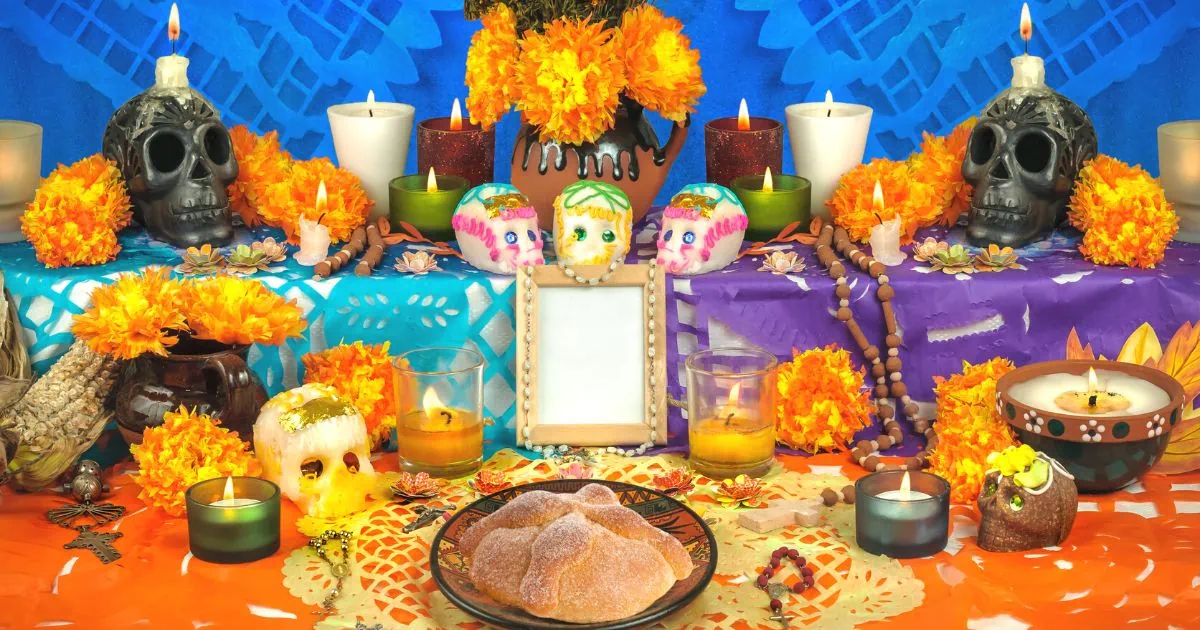
One of the most important things families do is prepare an ofrenda, or altar.
An ofrenda isn’t simply a decoration; it’s a personal space created to honor someone who has died, and one of the most important Day of the Dead symbols.
Families may place photos of their loved ones alongside their favorite foods, drinks, flowers, candles, personal belongings, and other meaningful objects.
The idea is that these offerings help welcome and honor the deceased, and since this is very personal, it varies from family to family.
Some families prepare traditional Day of the Dead foods like mole, while others make the favorite dishes of their deceased relatives.
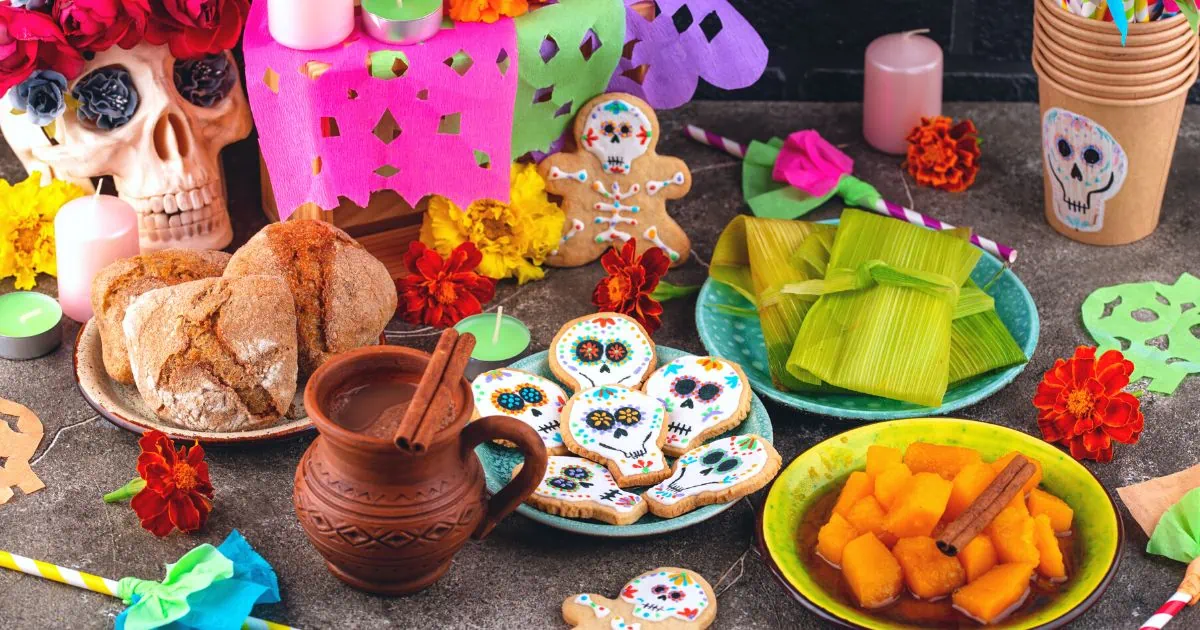
Others include flowers, candles, photos, pan de muerto (Day of the Dead bread), and papel picado in their Día de Muertos celebrations — but some don’t!
I’ve always found this personal aspect of the celebration especially meaningful.
When you look closely at an ofrenda, you’re often seeing someone’s life represented through the things they loved.
Why are Ofrendas So Important?

The ofrenda is one of the clearest expressions of what Día de Muertos means.
- 📸 A photos tells you who is being remembered.
- 🌮 Their favorite food tells you something about them.
- 🍾 A bottle of their favorite drink, a beloved object, or even a toy can make the altar feel incredibly personal.
- 🕯️ Flowers, candles, water, salt, copal, food, and other traditional elements also have their own meanings and interpretations.
If you want to understand these details, I’ve put together a complete guide to Day of the Dead symbols and their meanings.
The important thing to remember is that not every altar will look the same.
Some are elaborate with multiple levels; some are surprisingly simple and small.
Some are created in homes, while others appear in cemeteries, schools, businesses, museums, and public spaces.
Why are Marigolds Used for Day of the Dead?

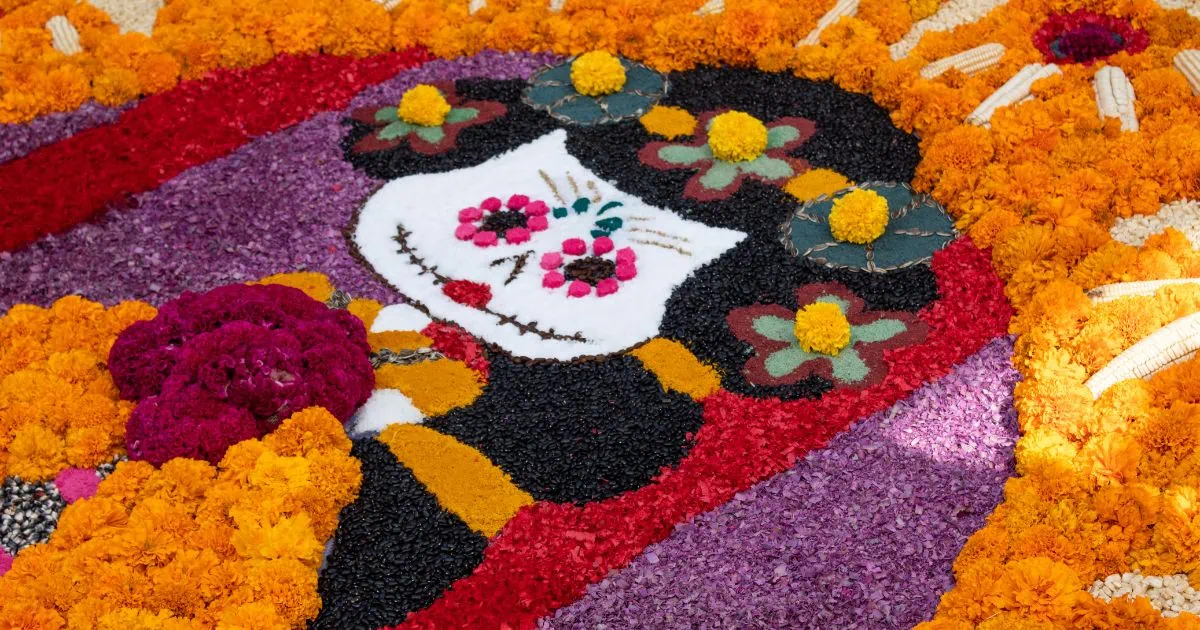
One of the most recognizable parts of a Día de Muertos celebration is the bright orange cempasúchil, or marigold flowers.
The flowers may be placed on altars, scattered across graves, or arranged into paths that lead people to an ofrenda (altar).
In some traditions, their color and fragrance are associated with helping guide or attract the souls of the dead.
UNESCO specifically describes families using cempasúchil petals, candles, and offerings to help facilitate the return of the deceased.
You can learn more about this important flower in my article about why marigolds are used for Day of the Dead.
If you’ve ever walked through Mexico during Día de Muertos, you know just how impossible it is to miss them; the brilliant orange flowers are everywhere.
Why are Skeletons and Skulls Part of Día de Muertos?

Skulls are another symbol that can be confusing to Mexico visitors and those unfamiliar with the holiday.
In fact, you might be wondering, Why would a celebration honoring deceased family members be filled with colorful skulls?
The answer has a lot to do with the Mexican relationship with death and the ways the image of the skull has evolved over time.
Calaveras (skulls) and calacas (full skeletons) can represent death while also appearing playful, decorative, humorous, or even satirical.
Calaveras de azúcar (sugar skulls) are among the best examples as skulls decorated with brightly-colored icing and whimsical patterns.
I’ve written more about Mexican sugar skulls and the meaning behind this popular Day of the Dead tradition, including what the colors and names can represent.
What Does La Catrina Have to Do With Day of the Dead?

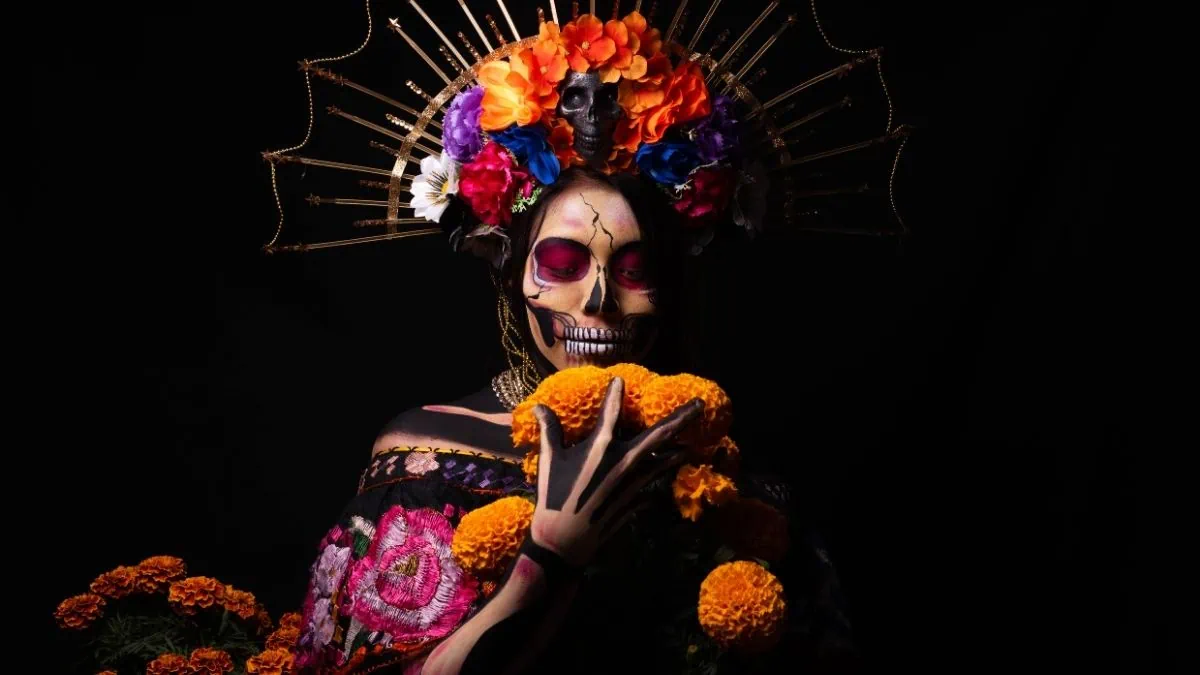
If you’ve seen Día de Muertos imagery, you’ve probably also seen La Catrina.
She’s the elegant skeleton woman often depicted wearing an elaborate dress and hat.
La Catrina has become one of the most recognizable symbols associated with Día de Muertos, but her history is more complicated than simply being a traditional “Day of the Dead character.”
Her roots are connected to the work of Mexican printmaker José Guadalupe Posada, whose famous skeletal figure originally had a satirical purpose.
Later, artists including Diego Rivera helped turn La Catrina into the iconic figure we recognize today.
If you’d like to know how she became such an important part of Mexican culture, I’ve written the full story of La Catrina and her connection to Día de Muertos.
Why Do Families Visit Cemeteries for Day of the Dead?

Cemetery visits are an important part of Día de Muertos in many parts of Mexico.
Families may clean and decorate graves, bring flowers and candles, leave food, pray, listen to music, or simply spend time together.
But again, this varies considerably by region.
Some communities hold lively gatherings in cemeteries, while others have much quieter observances.
In Indigenous communities documented by UNESCO, families may create decorated paths between homes and cemeteries using flowers, candles, and offerings.
This is another reason I think it’s misleading to describe Día de Muertos simply as a “Mexican festival.”
It’s a collection of living traditions that can look very different depending on where you are.
Why Does Día de Muertos Feel So Colorful?

If there’s one thing that surprises many first-time visitors, it’s how colorful the celebration can be.
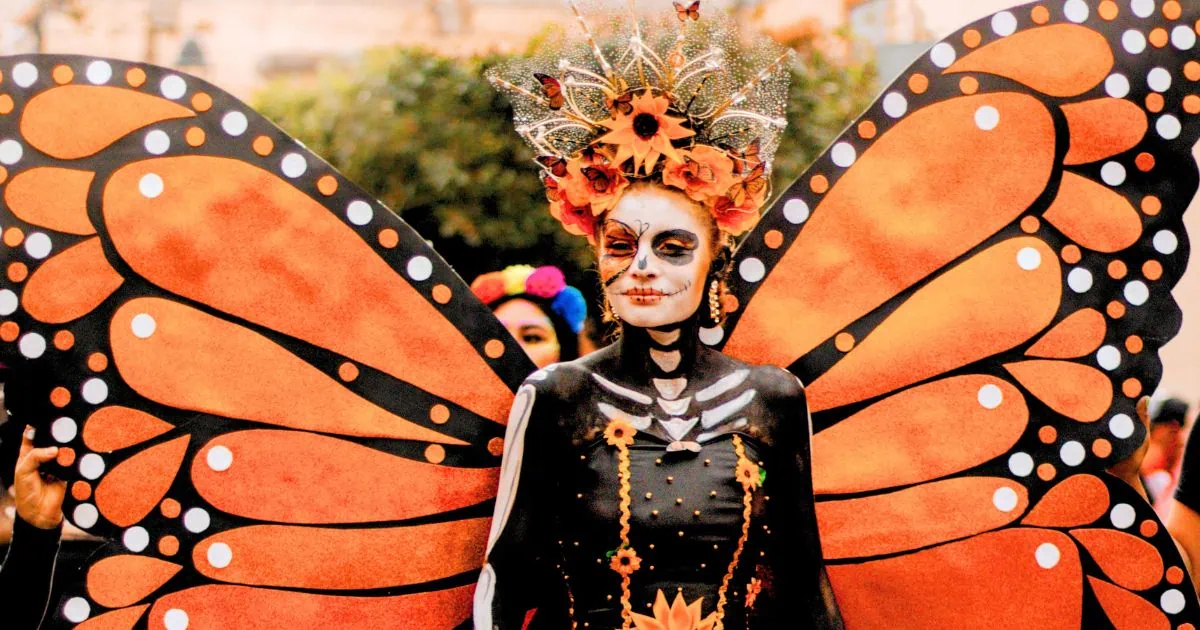
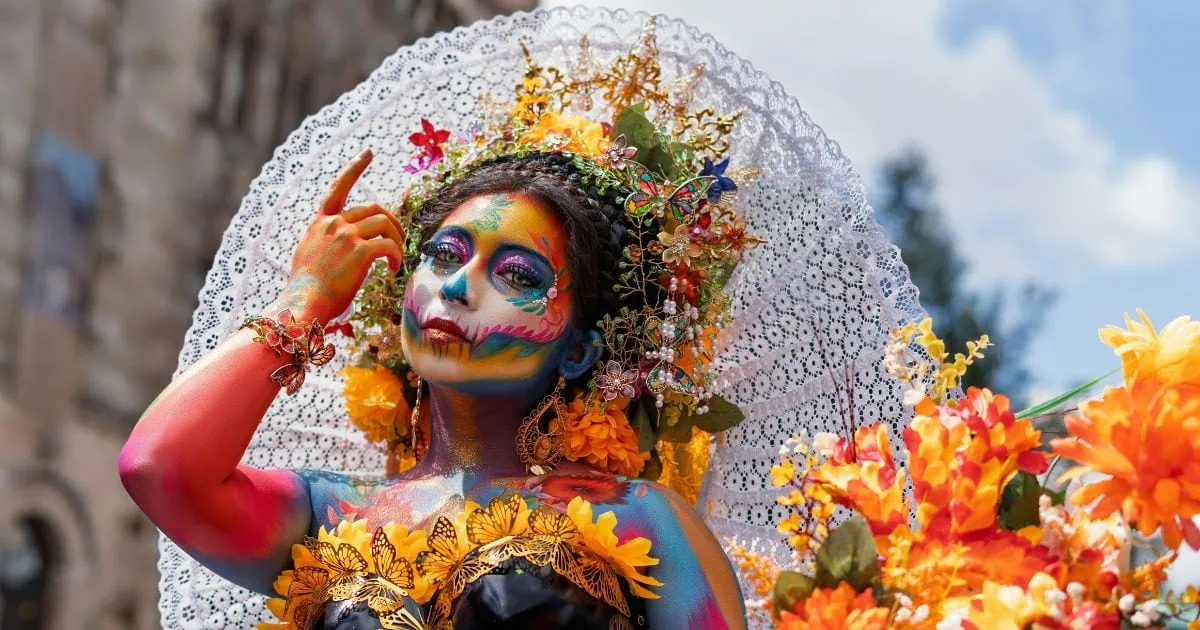
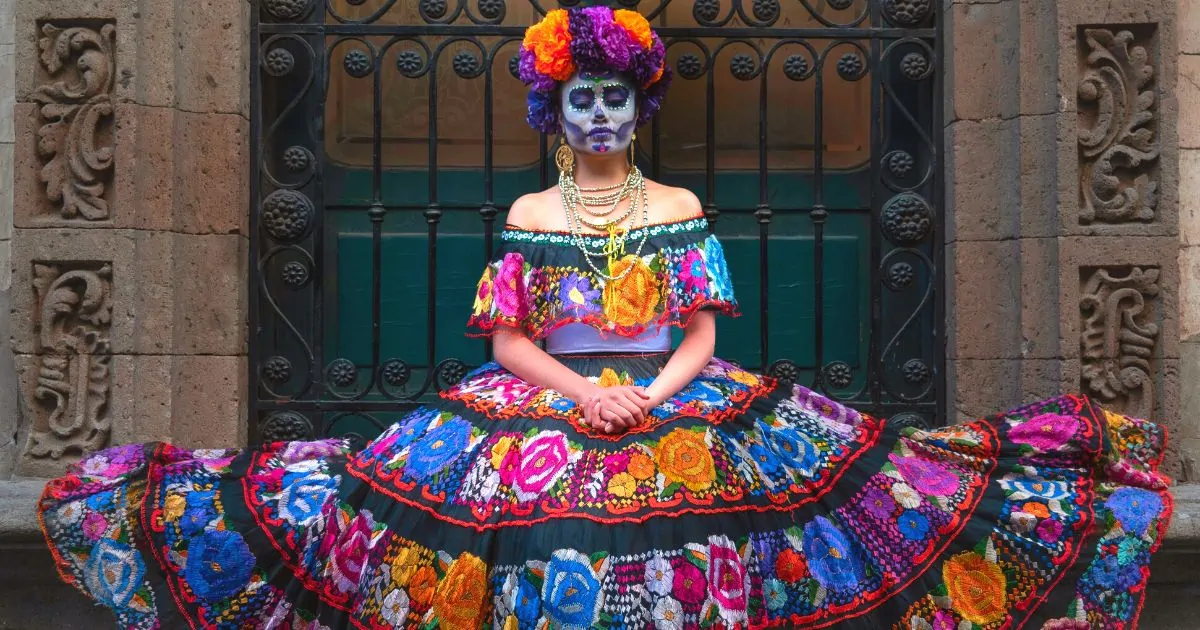
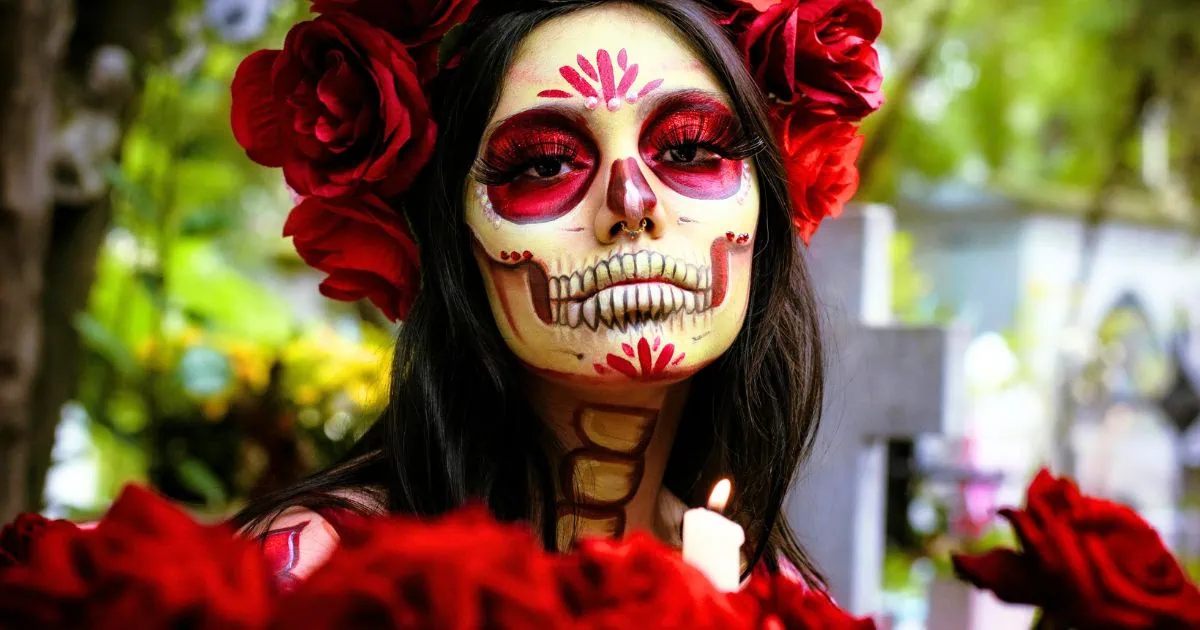
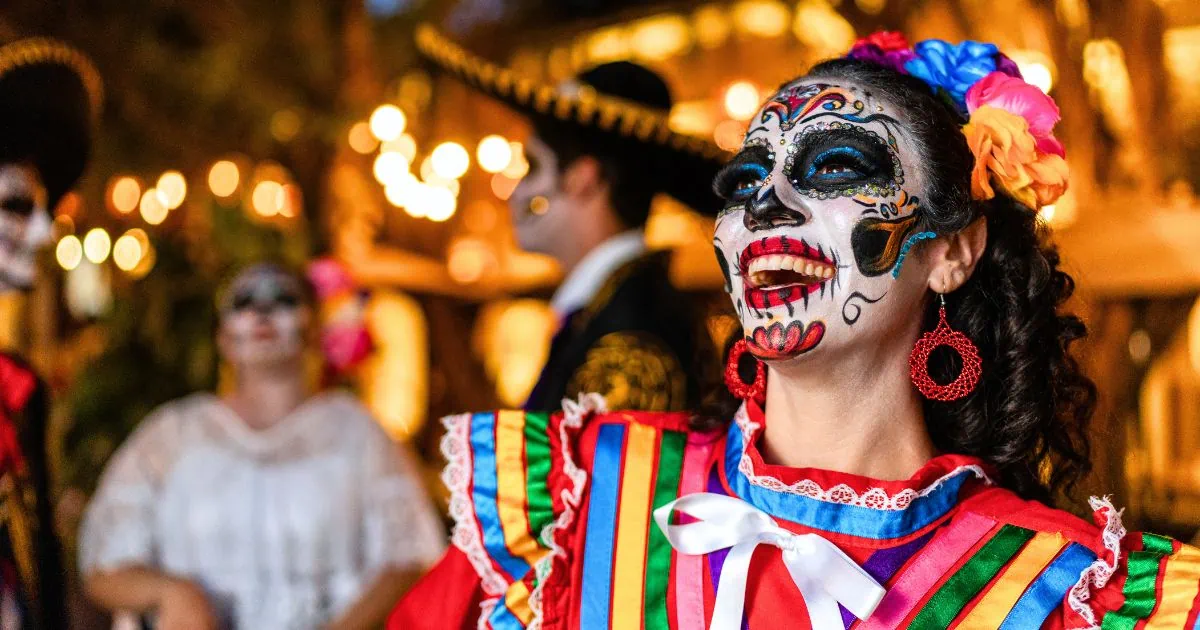
Magenta and orange marigolds; bright papel picado (seen above); decorated sugar skulls; painted faces; colorful clothing and costumes; elaborate altars…
It’s obviously a colorful affair, but the color isn’t simply there to make the celebration attractive for photos.
In fact, many of these objects have their own histories and meanings.
🏳️🌈 Papel Picado
The colorful papel picado paper (seen above) is the delicate cut-paper decoration you’ll see hanging above many altars, city streets, and public spaces.
You can read more about the meaning behind Mexican papel picado in my separate guide.
🥐 Pan de Muerto

Pan de muerto is another important part of the tradition.
The sweet bread is commonly placed on altars and eaten by families during the celebration, and its distinctive shapes and decorations carry their own symbolism.
I’ve also written about the meaning of pan de muerto and why this seasonal bread has become such an important part of Día de Muertos.
Is Día de Muertos a Sad Celebration?

It can certainly involve grief for some people, as their loved ones being remembered and celebrated during the holiday have in fact passed away.
However, Día de Muertos isn’t necessarily a gloomy occasion. In fact, for most Mexicans, the holiday simply is not a somber affair.
One of its most striking characteristics is the way grief, humor, food, music, color, and celebration can exist alongside one another.
Mexican government sources describe the celebration as having solemn, festive, humorous, and religious dimensions.
That’s something I’ve noticed while experiencing Día de Muertos in Mexico; the celebration doesn’t pretend that death doesn’t hurt.
Instead, it creates a space where people can remember someone with affection, laughter, stories, and the things that person loved.
Do All Mexicans Celebrate Day of the Dead the Same Way?

Definitely not, and this may be the most important thing to understand about Día de Muertos.
Mexico is an enormous and culturally diverse country, and Día de Muertos traditions vary from one region and community to another.
Oaxaca City has one of Mexico’s most festive celebrations, with elaborate cemetery decorations, public altars, music, dancing, costumes, and parades.
Mexico City’s Día de Muertos has also developed into a huge public celebration with the country’s largest Day of the Dead parade.
In Michoacán state, particularly around its capital city of Morelia, Purépecha communities have distinctive traditions surrounding the celebration.
The Yucatán Peninsula’s Día de Muertos celebration is called Hanal Pixán. Meaning “food for the souls” in Yucatec Maya, it has a distinctive history and customs.
These aren’t simply different versions of the same event. They’re expressions of local histories, cultures, beliefs, and communities.
Why Is Day of the Dead Important in Mexico?

At the deepest level, Día de Muertos is about memory and connection.
It’s a way of saying that someone who has died is still part of the family story.
Their photos remains on the altar; their favorite meal is prepared; their stories are told; their grave is cleaned; their favorite flowers are placed nearby…
And for a few days each year, the dead are not simply people who are gone.
They are remembered as people who lived, loved, laughed, ate, worked, raised families, and mattered.
That’s why I think the most meaningful way to understand Día de Muertos is not as a celebration of death itself.
It’s a celebration of the continuing relationship between memory and the people we have lost.
The Real Meaning of Día de Muertos

So, why do Mexicans celebrate Day of the Dead? While there’s no one definitive answer, there are common answers.
One such answer is that because remembering the dead is a way of keeping them connected to the living.
The traditions surrounding Día de Muertos have changed enormously over time, and they continue to change today.
But the importance of remembering loved ones remains at the center of many of these celebrations.
That’s what makes Día de Muertos so much more than colorful skulls, marigolds, elaborate makeup, and beautiful photos.
It’s a celebration of memory, family, identity, and the idea that the people we love don’t simply disappear from our lives when they die.
And that’s the part of Día de Muertos that stays with me long after the candles have gone out and the last marigold petals have faded.