Why Is Día de Muertos So Colorful? The Meaning Behind the Day of the Dead Colors

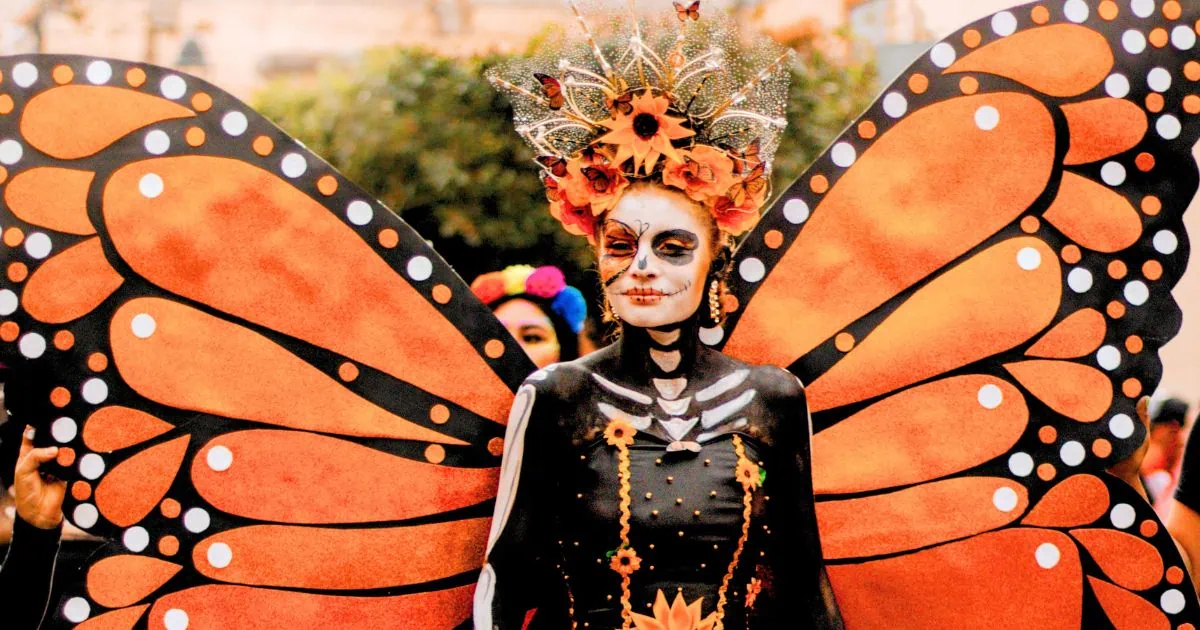
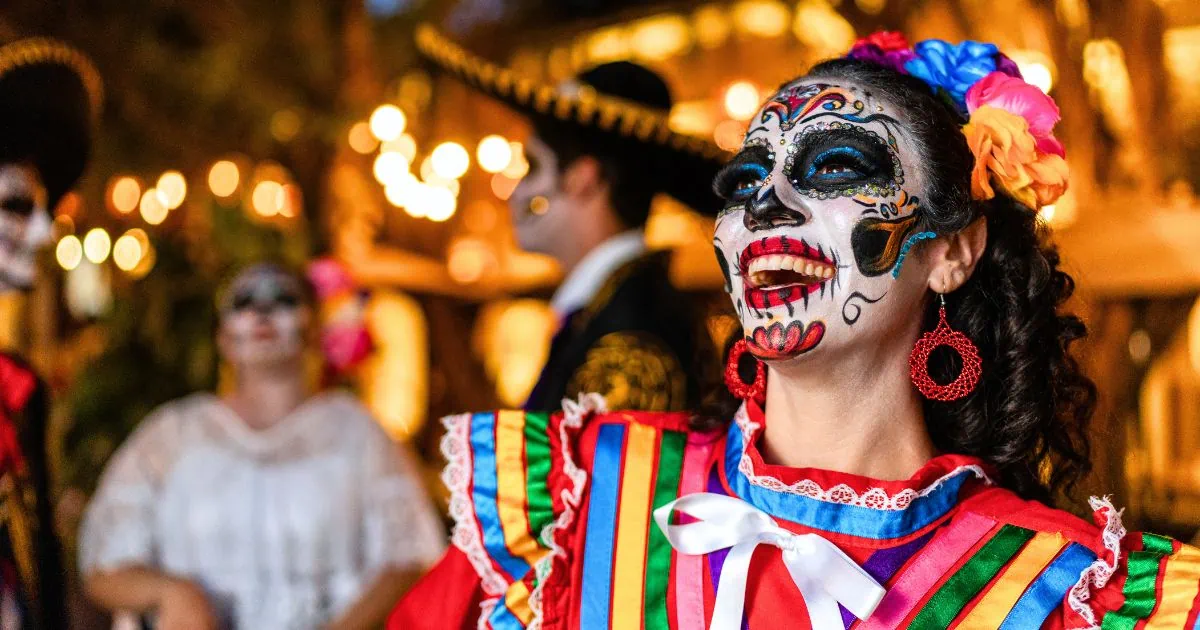
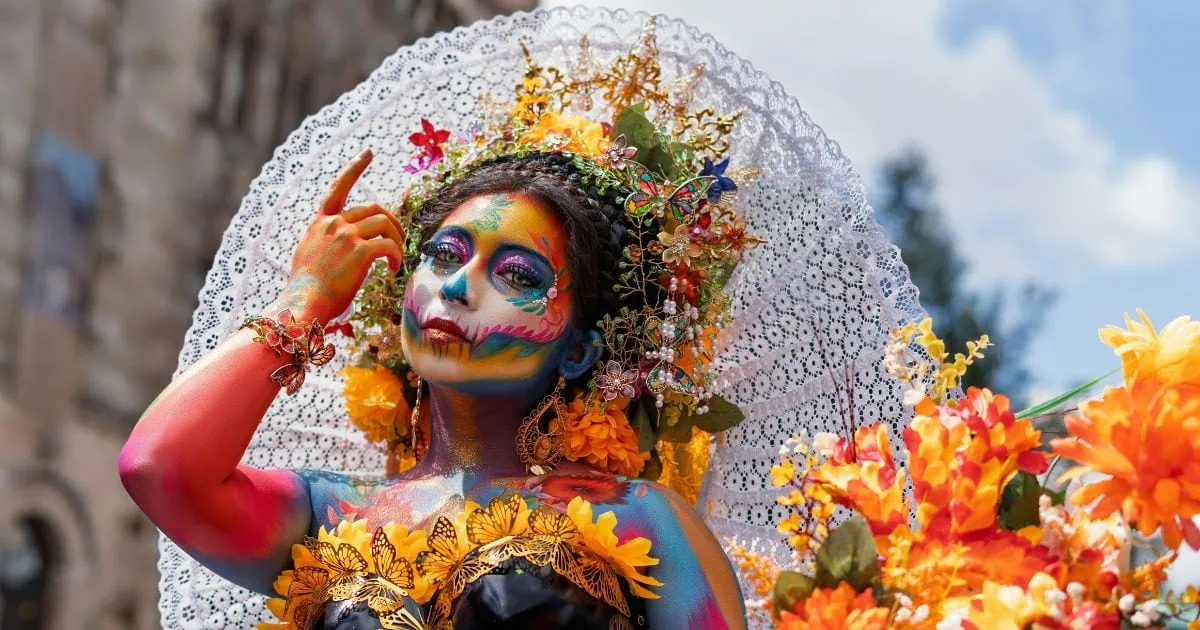
One of the first things you notice about Día de Muertos in Mexico is the color.
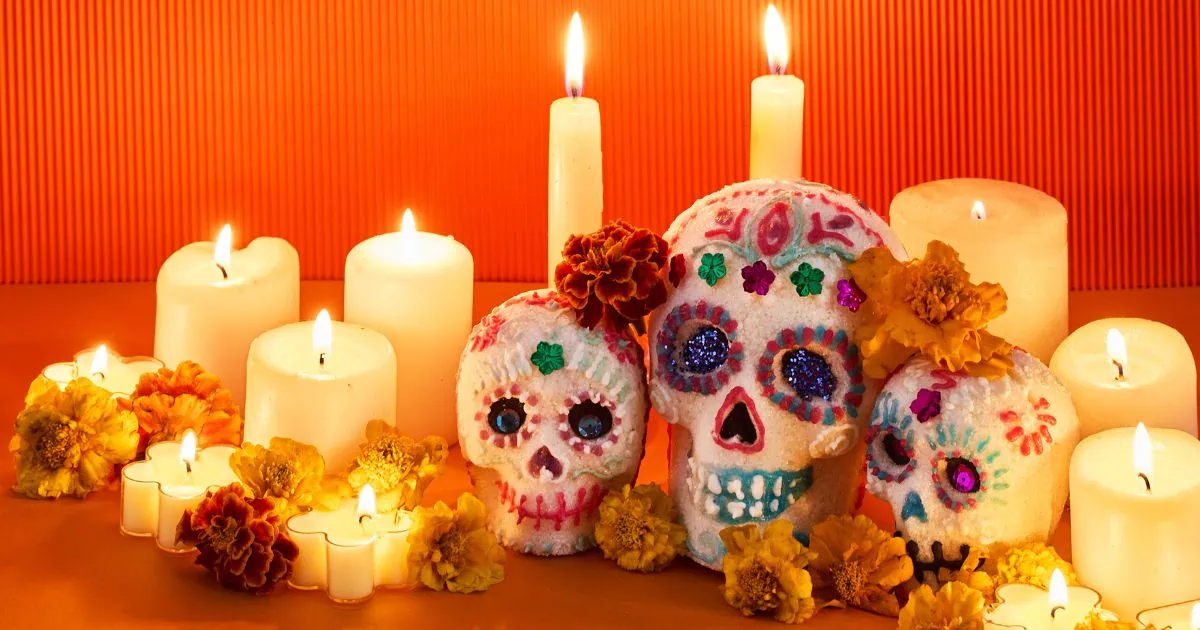
Bright orange marigolds spill across altars and cemetery paths, papel picado dances overhead, and colorful flowers, candles, painted skulls and favorite foods transform ordinary spaces into something completely different.
After living in Mexico since 2018 and experiencing Día de Muertos several times, I can tell you that the colors are one of the things that make the celebration so unforgettable.
But why is Día de Muertos so colorful? And what’s up with all the different Day of the Dead colors?
The answer is more complicated than simply saying certain colors represent certain things, so let’s do a deep dive into the symbolism of Day of the Dead colors.
Why Is Día de Muertos So Colorful?

Día de Muertos is a celebration centered on remembering and honoring people who have died.
For many, that means dark colors and mourning, but in reality, death doesn’t mean that everything has to look dark and somber.
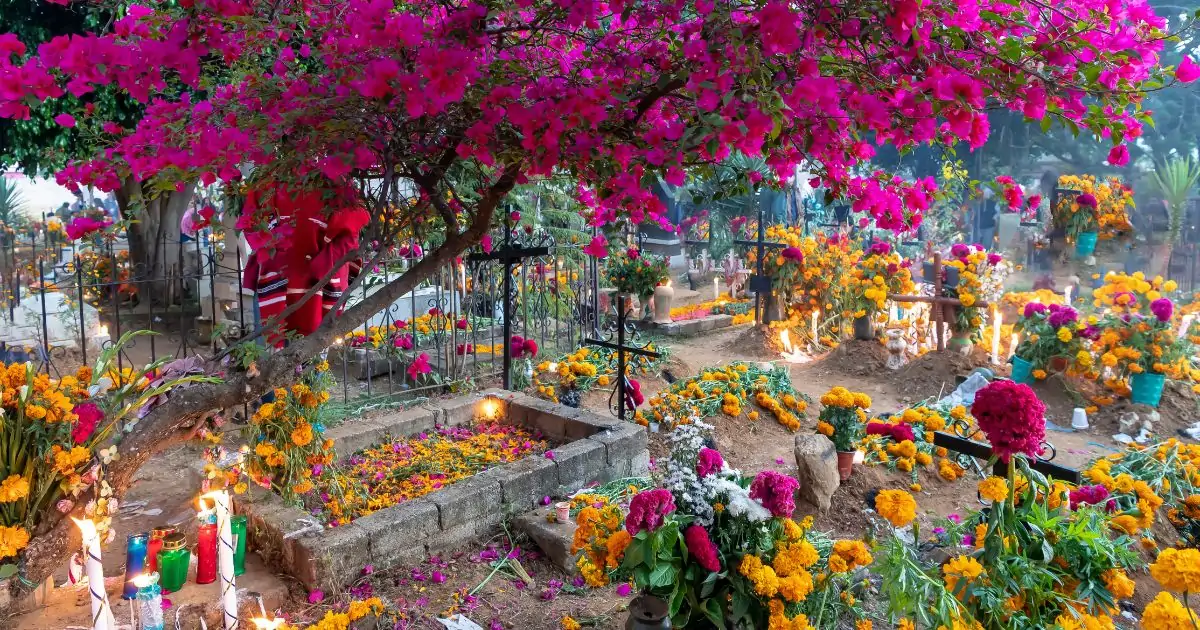
In fact, one of the most striking things about Día de Muertos is the way families use color, flowers, light, food and decorations to create a welcoming space for their deceased loved ones.
The ofrenda is especially important.
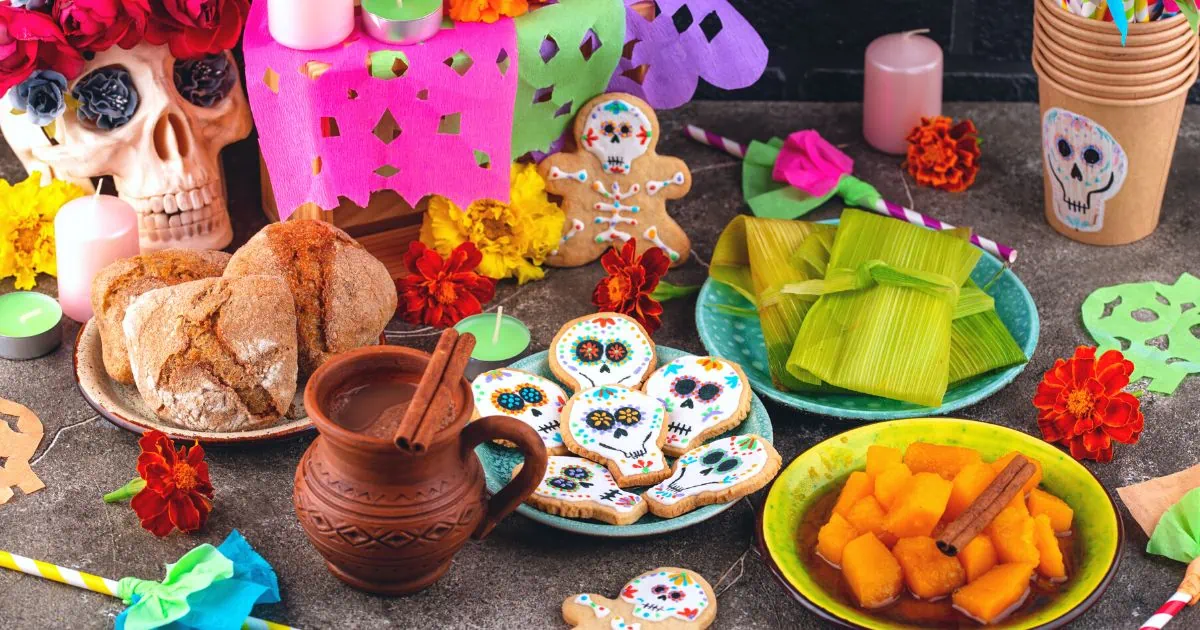
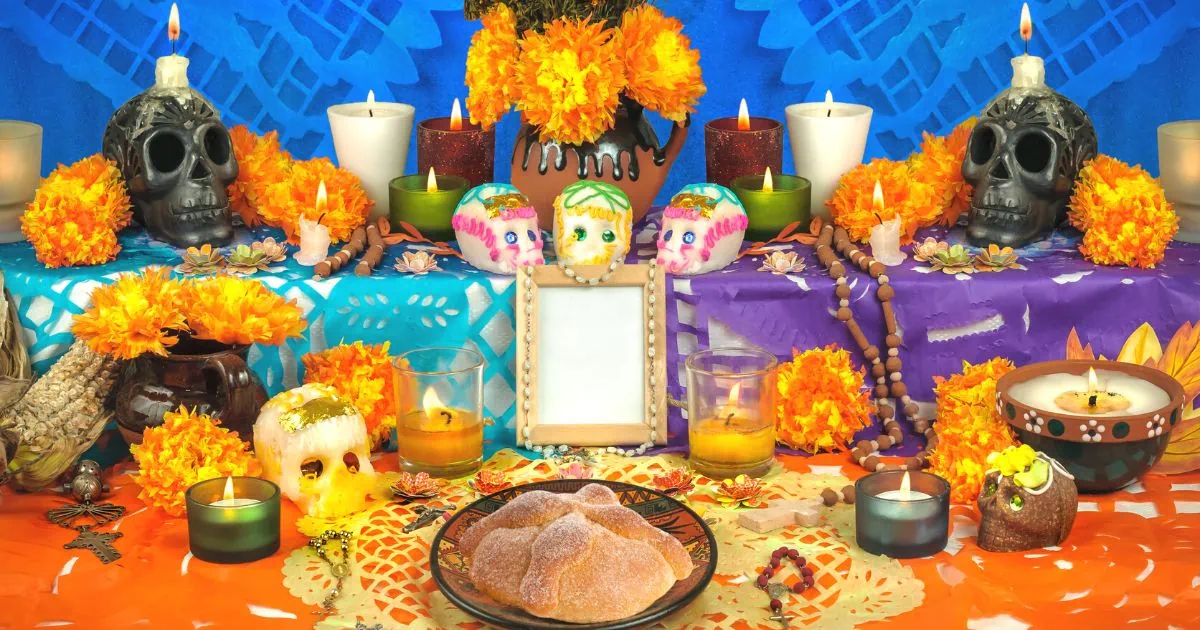
These altars can be filled with brightly colored flowers, photographs, candles, papel picado, fruit, pan de muerto, sugar skulls and the foods and drinks that a loved one enjoyed in life.
For those who make them, the ofrenda itself is a colorful ritual centered on memory and maintaining a connection with the deceased.
So when you see a brightly decorated Day of the Dead altar, known you’re not simply looking at decorations.
Rather, you’re looking at a visual expression of love, memory and remembrance.
What Do the Day of the Dead Colors Mean?
There isn’t one official color chart that applies to every Día de Muertos celebration in Mexico.
That’s important to understand because the meaning of colors can change depending on the community, the flowers being used and the individual family creating the altar.
That said, some colors appear again and again during the celebration.
🧡 Orange: Cempasúchil and the Path to the Ofrenda

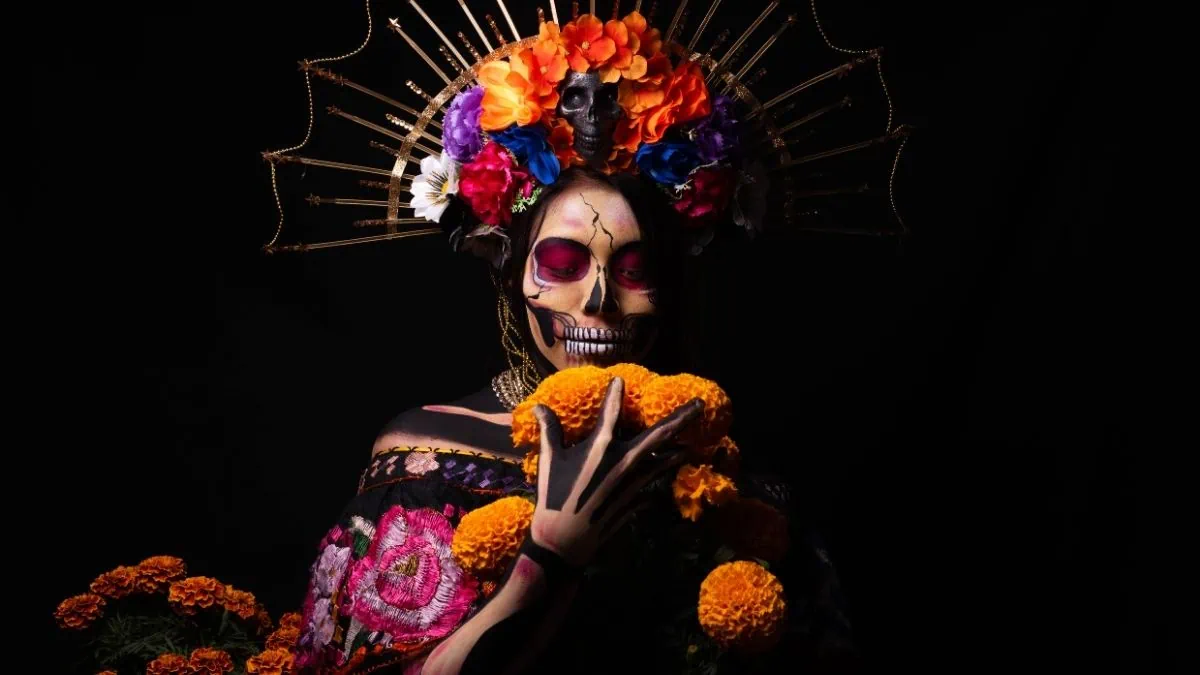
Orange is probably the color most strongly associated with Día de Muertos.
That’s largely because of cempasúchil, the brilliant orange and yellow marigold flowers that appears on altars, graves and pathways throughout Mexico during the season.
Cempasúchil has a long history in Mexican traditions surrounding the dead.
In fact, the Mexica people associated the flower’s yellow-orange color with the sun and used it in connection with the dead.
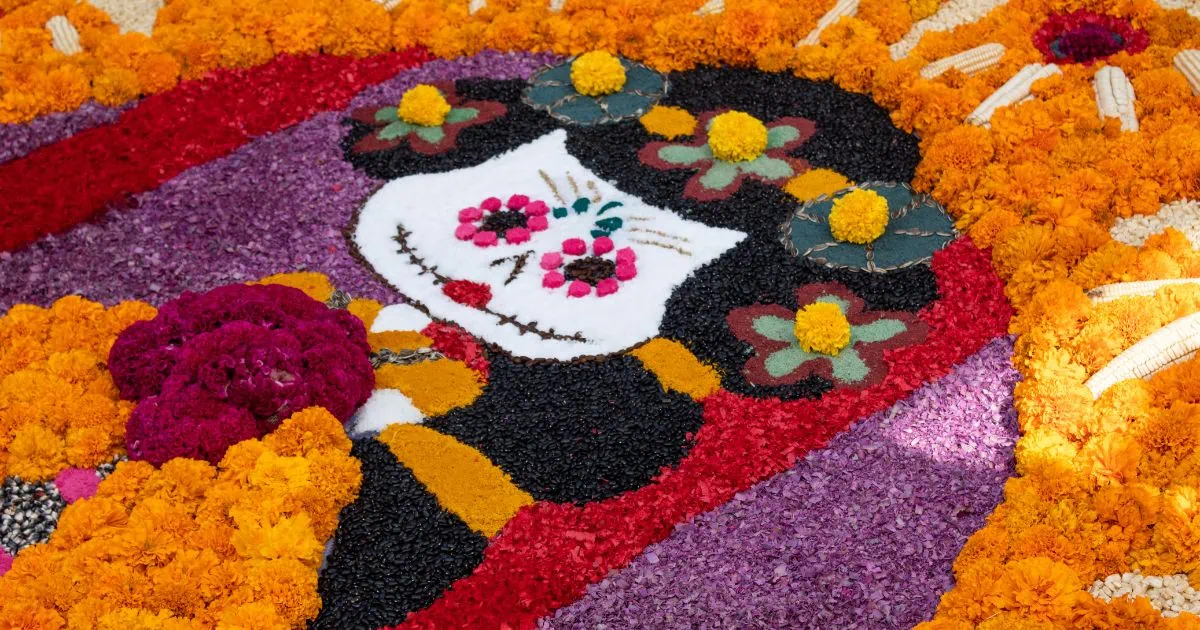
Today, petals are often arranged into paths leading toward an altar.
The flower’s strong fragrance is traditionally believed to help guide the souls of the deceased toward the ofrenda.
This is one reason orange is such an unmistakable part of the Mexican Day of the Dead colors you see throughout the country.
Also, there’s something especially beautiful about seeing an entire cemetery filled with orange flowers.
💛 Yellow and Gold: Light, Sun and Marigolds

Yellow and gold also appear throughout Día de Muertos, particularly through flowers.
The connection to cempasúchil makes these warm colors especially prominent on ofrendas and in cemeteries.
Government cultural sources describe cempasúchil as a flower associated with the sun and with guiding the souls of the dead.
You’ll also see yellow in other flowers and decorations, depending on the region.
So while yellow doesn’t have one universal meaning across Mexico, it contributes to the warm, welcoming appearance of many altars.
💜 Purple: A Color of Mourning and Spirituality

Purple is another color you’ll frequently encounter during Día de Muertos.
It can appear in flowers, papel picado, candles, religious decorations and other elements of an altar.
Purple is often associated with mourning, spirituality and Catholic religious traditions.
But this is one area where it’s important not to oversimplify.
The use and meaning of purple can vary considerably from one altar or community to another, so I wouldn’t assume that every purple decoration has a specific symbolic meaning.
Sometimes it is simply part of the beautiful combination of colors used to create the altar.
🤍 White: Purity, Peace and Remembrance

White flowers are also common, particularly on some altars dedicated to children.
Mexico’s Instituto Nacional de los Pueblos Indígenas notes that flowers such as nube (baby’s breath) may be used on altars for children, with white associated with purity and tenderness.
White can also provide a beautiful contrast to the intense oranges, pinks, reds and purples found elsewhere on an altar.
When you see a Day of the Dead altar filled with white flowers, candles and photographs, the effect can be surprisingly peaceful.
❤️ Red and Magenta: Love, Life and Vibrant Celebration

Red is another common color in Mexican Day of the Dead decorations.
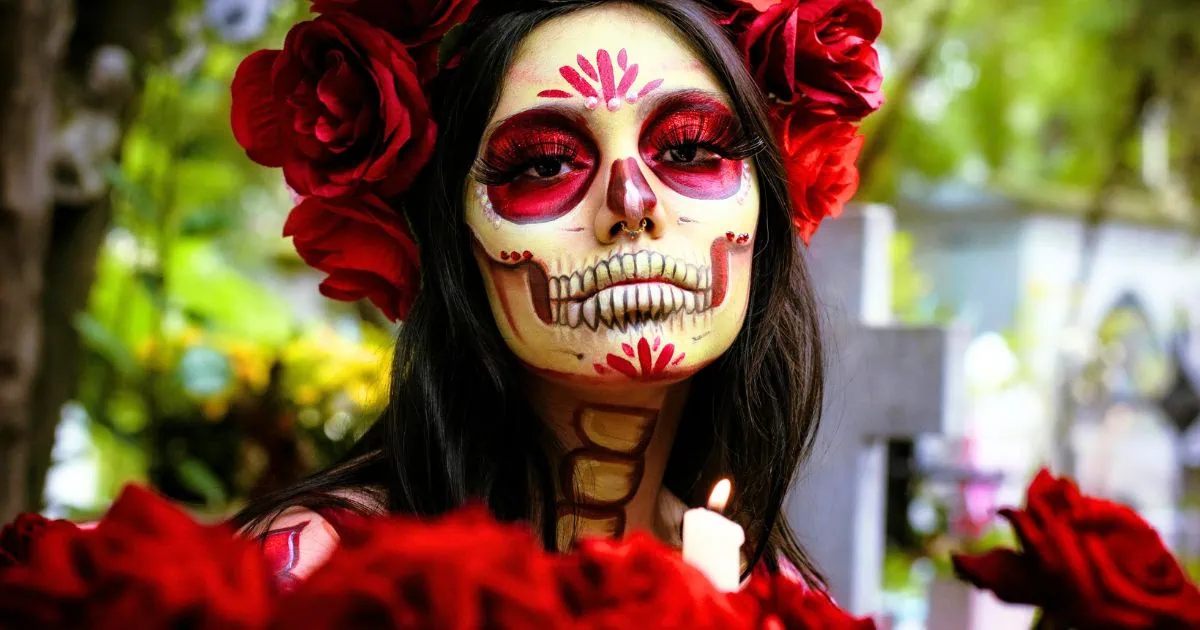
You might see it in flowers like coxcomb (pictured above), papel picado, candles, painted skulls and other decorative elements.
Red can evoke love, passion and life, which makes it particularly fitting for a tradition that focuses so much on remembering people for who they were when they were alive.
However, as with the other colors, there isn’t a single nationwide rule saying that every red object on an altar means the same thing.
The personal connection is often more important than a strict color code.
💗 Pink: A Bright and Playful Touch

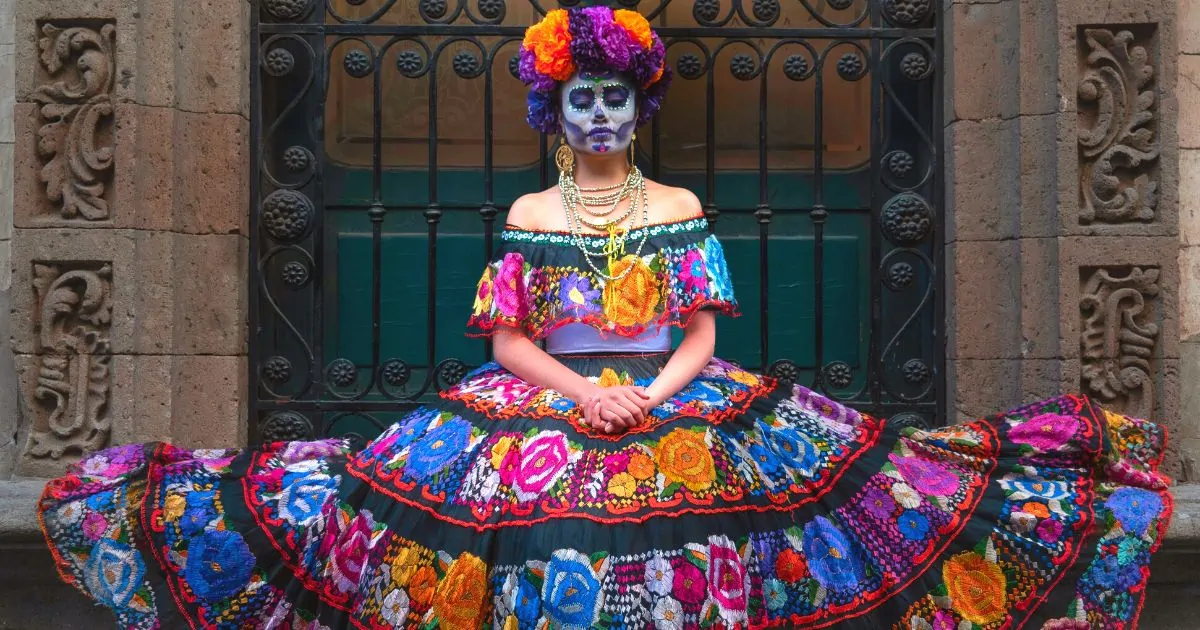
Pink is one of the colors that helps give Día de Muertos its unmistakably Mexican visual style.
It can appear in flowers, papel picado, painted decorations, clothing and other elements of an altar.
You’ll find especially colorful combinations in some regions of Mexico, where local flowers and materials influence the appearance of the ofrenda.
In Yucatán, for example, Día de Muertos traditions can look quite different from those in central Mexico.
Mexico’s Secretaría de Cultura has documented Yucatecan altars decorated with brightly colored local flowers rather than relying on the cempasúchil, calaveras and pan de muerto that many visitors associate with the celebration.
That’s a great reminder that there isn’t one single version of Día de Muertos.
Why Is Papel Picado So Colorful?

You can’t talk about Día de Muertos colors without mentioning papel picado.
These delicate sheets of perforated tissue paper are often hung above altars, across streets and around public spaces during the celebration.
Papel picado comes in many colors, including pink, purple, orange, yellow, red, blue and green.
The cutout designs may include flowers, birds, skeletons and other symbols associated with Día de Muertos.
The movement of papel picado in the breeze adds another layer of life to an altar.
It also creates a wonderful contrast with the stillness of photographs, candles and offerings.
If you’d like to learn more about this decoration, I’ve written a complete guide to Mexican papel picado and its meaning during Day of the Dead.
Do Day of the Dead Altar Colors Have Specific Meanings?

This is where you’ll find a lot of conflicting information online.
You may see lists claiming that every color has one specific meaning, such as purple meaning mourning, red meaning blood or love, and yellow meaning the sun.
Some of these associations are commonly discussed, but they shouldn’t be treated as universal rules.
Day of the Dead altar colors can vary from one region, community and family to another.
The flowers available locally can influence an altar’s appearance, as can religious traditions, family customs and the personal preferences of the people creating it.
This regional diversity is one of the things I love most about experiencing Día de Muertos in different parts of Mexico.
An altar in Oaxaca doesn’t necessarily look like one in Mexico City, and an altar in Mérida can look completely different again.
Why are Day of the Dead Decorations So Bright?

There’s a deeper reason the celebration doesn’t look like the stereotypical Western image of death.
Día de Muertos is not primarily about fear.
It’s about remembering people who have died and welcoming their memory back into the family home and community.
The bright flowers, favorite foods, photographs, candles and decorations help create a space that feels alive.
In fact, Día de Muertos is a celebration in which death is understood not simply as absence, but as a continuing presence connected to memory and family.
That’s why the visual contrast can feel so powerful; it reminds of of the light and dark, the good and bad, and the cycle of life.
You’re looking at photographs of people who are no longer alive surrounded by flowers, food, candles and some of the brightest colors imaginable.
The result is joyful, emotional and deeply personal.
Mexican Day of the Dead Colors Vary Across Mexico

One of the biggest mistakes you can make when learning about Día de Muertos is assuming that every Mexican family celebrates it in exactly the same way.
Mexico is an enormous country with 32 states, 68 recognized indigenous groups, and hundreds of distinct cultural traditions.
The flowers, foods, decorations, rituals and colors used for Día de Muertos can change dramatically from one region to another.
In Yucatán, the traditional Hanal Pixán celebration has its own customs and foods.
In other parts of Mexico, you may see elaborate marigold paths, enormous public altars, decorated cemeteries or families spending the night beside graves.
The colors reflect that diversity, and showcase that there isn’t one correct palette for Día de Muertos.
Instead, the colors you see often tell you something about the place, the people and the family creating the celebration.
The Real Meaning Behind the Colors

The most important thing to remember about Day of the Dead Colors is that they aren’t simply there to make the celebration look beautiful.
- The orange of the cempasúchil can help create a path toward the altar.
- The white of certain flowers can create a feeling of peace and tenderness.
- Purple, red, pink and other colors can add beauty, spirituality, emotion and personality to the space.
The colors are symbolic, but sometimes, a color is there simply because it was a favorite color of the person being remembered.
That last part is worth remembering, as an ofrenda isn’t a generic decoration. It is created for someone loved by someone else.
The photographs, favorite foods, personal belongings, flowers and decorations all help tell the story of that person’s life.
That’s why I think the incredible color of Día de Muertos makes so much sense.
The celebration isn’t trying to hide death; it’s using color and beauty to keep the memory of a person alive.
Why Día de Muertos Is So Beautifully Colorful

After seeing Día de Muertos celebrations in different parts of Mexico, I’ve come to think that the colors are one of the best ways to understand the spirit of the tradition.
They’re warm rather than gloomy; they’re personal rather than standardized; they’re often as much about celebrating a person’s life as remembering their death.
The next time you see a brightly colored ofrenda, look beyond the individual flowers and decorations.
Look at the whole picture because that’s really what makes Día de Muertos so colorful.
The colors, photographs, food, candles and papel picado come together to create a place where memories feel present again.
In the end, it’s not just about the colors themselves; it’s about the lives and memories they help helping families remember.