30 Day of the Dead Foods & Drinks: What People Eat on Día de Muertos


Wondering about Dia De los Muertos food?
You’ve landed on the right article because I’ve been living in Mexico since 2018, and I’m going to tell you all about the best Day of the Dead foods and drinks I’ve enjoyed while traveling all over the country.
This list is the most comprehensive list of traditional Day of the Dead foods you’ll find in Mexico — and also delicious food for Day of the Dead from other countries.
Ready to discover the best Day of the Dead food & drinks?
Let’s get to the list — and don’t miss the FAQ at the end of the article to learn everything you need to know about this Mexican holiday.
What Do People Eat on Day of the Dead?
On Day of the Dead, families in Mexico prepare the favorite foods and drinks of their loved ones who have passed.
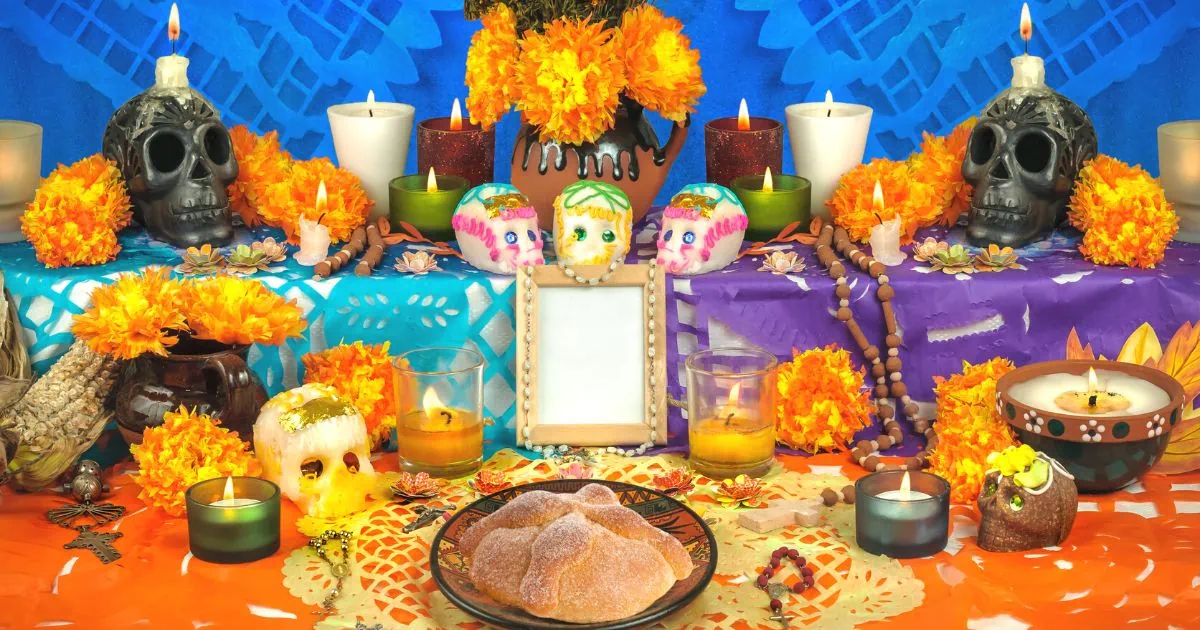
They place them on the ofrenda (altar) to welcome the spirits home, then share the meal with family and friends.
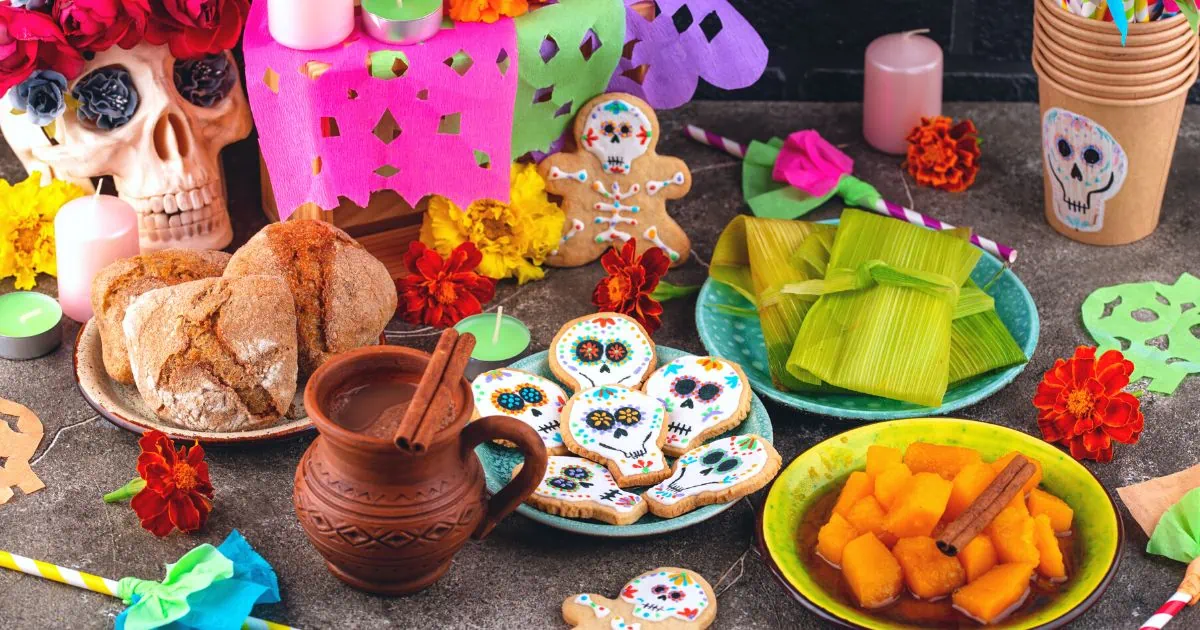
The most traditional Day of the Dead foods are pan de muerto, tamales and mole.
You’ll also see plenty of sweet treats and snacks, like sugar skulls, candied pumpkin (calabaza en tacha) and amaranth candy (alegrías).
Popular drinks include atole, champurrado, Mexican hot chocolate, mezcal and pulque.
Why Is Food Left on the Ofrenda?

Families believe the spirits travel a long way to visit, so they arrive hungry and thirsty.
The spirits are said to enjoy the aroma and essence of the food.
Once the celebration ends, the living eat what’s left, and many say the food has lost some of its flavor.
What Drinks Go on a Day of the Dead Ofrenda?
A glass of water is always on the ofrenda to quench the spirits’ thirst after their long journey.
Families also add their loved one’s favorite drink, like atole, hot chocolate, coffee, tequila, Coca Cola, mezcal or beer.
The 30 Best Day of the Dead Foods & Drinks
1. Pan de Muerto: The Day of the Dead Bread

Pan de muerto (bread of the dead) is a type of bread roll or pastry that’s traditionally only made from about mid-September to mid-November for Day of the Dead.
It is known as the most famous food in Mexico for Day of the Dead, and most peoples’ favorite food associated with the holiday.
Depending on where you are in Mexico, the pan de muerto recipe and preparation can vary.
In many parts of Mexico, the pan de muerto dough has a cross shape on the top of the roll, and it’s topped with sugar — similar in appearance to a hot cross bun.
🥐 Different types of pan de muerto in mexico

Depending on where you are, the pan de muerto will look different. There are actually several types of pan de muerto in Mexico.
In Oaxaca, unlike many other places in the rest of Mexico, there’s a small candy face placed in the center of the bread. This is said to represent a departed soul.
During the festivities for Day of the Dead in Oaxaca, you’ll see street vendors selling this type of pan de muerto.
Since this type isn’t very sweet, you’ll find that many people enjoy their Oaxaca pan de muerto dipped in a cup of hot chocolate, one of the most delicious Mexican drinks.
2. Tamales

For savory El Dia de los Muertos foods, opt for tamales.
A tamal (spelled as tamale in English) is a traditional Mexican dish often served by street vendors. It is also a staple at Day of the Dead Mexico gatherings and at many Mexican holidays.
Tamales are a pre-hispanic food made from masa, which is the same maize dough (corn dough) used to make corn tortillas.
The masa mixture is then wrapped in a corn husk or banana leaf, and steamed — and the leaf can then act as a plate for eating the tamales.
Tamales are the ultimate Mexican comfort food and come in a wide variety of flavors and can be filled with meats, cheeses or vegetables.
There are also sweet tamales, called tamales dulces.
🤔 Why are tamales eaten on the Day of the Dead?
While they’re one of the most prominent holiday foods in Mexico, it seems no one knows for sure — other than to say tamales have been around for so long that they’re now just part of many Mexican holiday meals.
One of the most important cultural foods in Mexico, you will also find tamales on tables during Mexican Christmas celebrations and on the Día de la Candelaria holiday on February 2nd.
🫔 Mexican Tamal Fun Facts
Tamales in Central Mexico are made with a corn husk.
However, tamales in Oaxaca State are made with a banana leaf, and called tamales hojas (leaf tamales) or tamales oaxaqueños (oaxaca tamales).
In traditional Yucatan food, there are several types of banana leaf tamales as well.
These include vaporcitos, brazo de reina, tamales colados, and pib, which is up next on this list.
3. Pib (Mucbipollo or Mukibil)
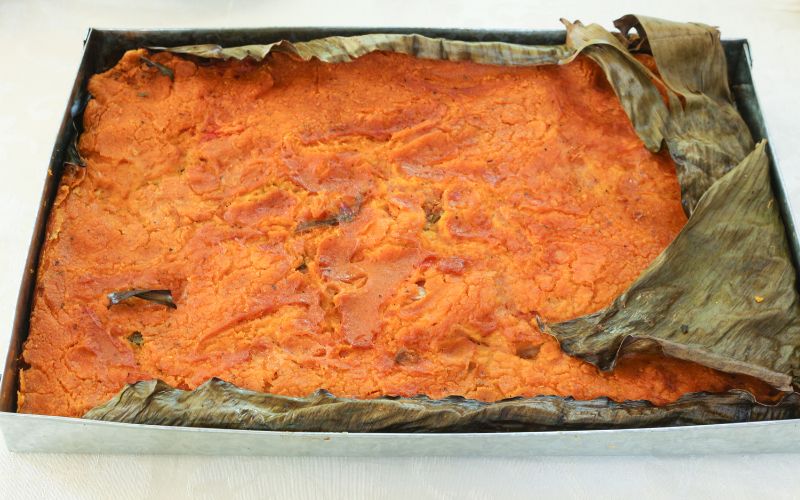
Day of the Dead food traditions vary in different parts of Mexico, and this one something you will only find in Mexico’s Yucatan Peninsula.
If you’re traveling to Yucatan during Hanal Pixan, the Mayan Day of the Dead holiday, don’t pass up the chance to try pib (AKA mucbipollo, or chicken mukibil).
Though it is made of masa, the same as a standard tamale, this Mexico holiday food is a crispy, baked tamale that looks more like a casserole than a tamale.
Yucatecan pib is a locals’ favorite — and something you’ll rarely (if ever) see outside of Yucatan Peninsula.
It is only made and sold from about mid-October to early-November to coincide with the Día de Muertos holiday, so don’t miss the chance to try this special occasions food if you see it.
🍽️ Yucatan Foods Tips
Unlike individual tamales, Yucatecan pib gets cooked in large, rectangular sheet pans.
For Yucatan visitors, you’ll probably just want a single pib tamal, not a whole pan of it — so for a single serving of pib, be on the lookout for chachacuahs or tamales enterrados, meaning “buried tamales.”
4. Day of the Dead Sugar Skulls (Calaveras de Azucar)

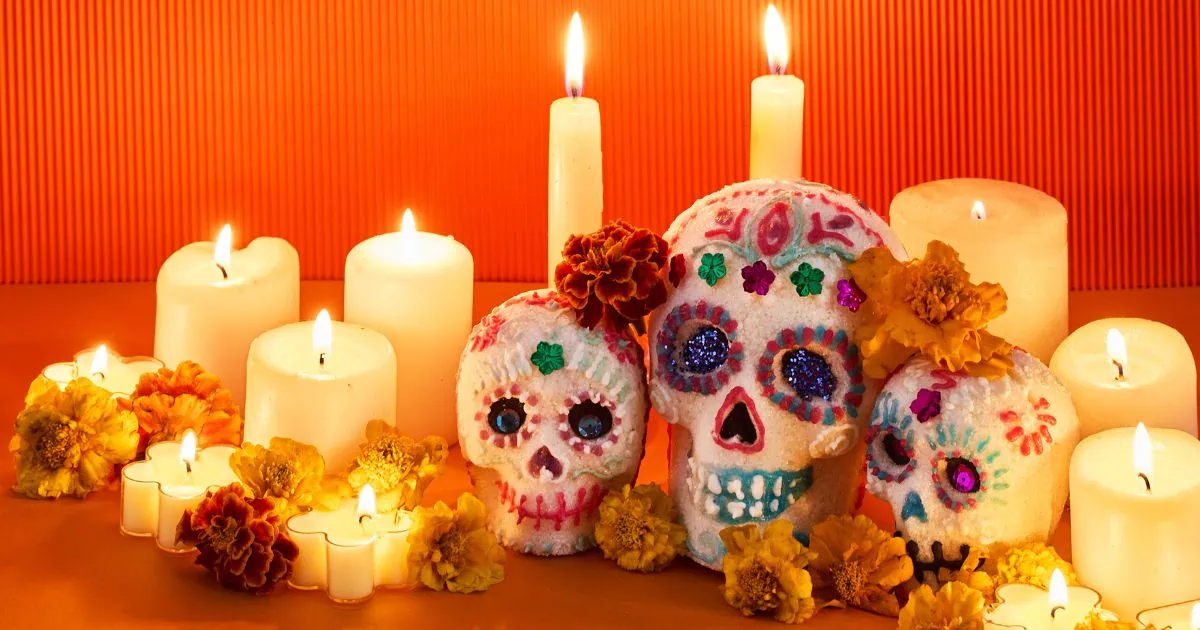
Among the most common and most festive Day of the Dead traditional food offerings, the calaveras de azúcar, or Day of the Dead sugar skulls, has become one of the icons of the entire holiday.
Ironically enough, these confectionery treats don’t have Mexican or even pre-Hispanic roots; they come from Europe when Italian Catholic missionaries brought sugar art to Mexico in the 1600s.
Unlike Europe, Mexico is abundant in sugar and sugarcane, so it became a natural place for these molded sugar figures to take root and form their own traditions.
Nowadays, they are the most popular Day of the Dead candy, and also, the most beloved Mexican halloween food because you’ll definitely see them at American-style Halloween parties in Mexico.
💀 What’s the difference between Small sugar skulls & large sugar skulls?

During Día de Muertos, sugar skulls will be made in two sizes: large and small.
While the sugar skulls meaning is the same for each, the larger and smaller skulls can be used differently.
The small, bite-sized sugar skulls can be eaten. You’ll also see them used for an in-home ofrenda as a family altar decoration.
They can be taken home, and make for one of the best Mexico souvenirs.
The larger ones represent a departed person, and that person’s name is written on the forehead of the skull.
They can be in honor and remembrance of the departed children or of an adult.
You’ll usually see these more elaborate, larger sugar skulls placed on an ofrenda or gravestone for that person’s returning spirit.
These larger sugar skulls are not meant to be eaten, as they’re part of the atmospheric vigils.
They are among the most important Day of the Dead symbols you’ll see today.
💀 Mexican sugar skull meaning

The meaning behind sugar skulls is quite literal, as the skull represents death and a departed person.
Simply put, the skeleton shows that we’re all the same on the inside.
Unlike other representations of a skull or skeleton which appear somber with dark colors, sugar skulls have bright colors.
This is because Mexicans see death as a part of life to be celebrated like all other parts, and these candy skulls (or, calavera de azucar in Spanish) represent that.
HOW ARE SUGAR SKULLS MADE?
Sugar skulls are made from a paste called alfeñique.
This is a mixture of sugar, hot water, ground nuts, honey, lemon juice and other ingredients that combine to make a moldable paste, which will then become a skull.
The Day of the Dead skull designs are then painted by hand when made in small production.
In fact, painting your sugar skill is one of the most fun Day of the Dead rituals.
Of course, now that they are popular all over the world, you might not get a hand-painted one outside of Mexico — but you can always make your own sugar skulls!
You can also make Day of the Dead cookies by baking skull-shaped cookies and decorating them as sugar skull cookies.
Both the cookies and sugar skulls make for a great Day of the Dead menu dessert item.
5. Black Mole (Mole Negro)

Not only is Mexican mole (pronounced moe-lay) the National Dish of Mexico, it’s also an important and popular food for Dia de los Muertos.
One of the best things to eat in Mexico, you’ll find mole both during Day of the Dead, and all year-long.
Mole is one of the most traditional foods from Oaxaca Mexico, but you can find it in other parts of the country as well, like the state of Puebla, Mexico.
In this state, you have to try their famous mole poblano.
There are actually seven moles of Oaxaca: mole negro, mole poblano, mole verde, mole amarillo, mole coloradito, mole manchamantel and mole chichilo.
🇲🇽 In fact, if you do any of these popular food tours in Oaxaca, you’ll likely taste several types of mole.
For Day of the Dead, mole negro (black mole) is the one you’ll want to try.
It gets its black color from a combination of Oaxacan chocolate and roasted chili peppers, creating a sweet and savory flavor combo.
Mole is unique in that it’s actually both a marinade and a Mexican sauce. A rich, flavorful dish, mole can take days to prepare and cook.
Authentic Mexican mole is made from various spices, herbs, dried fruits, nuts, and even chocolate, so not all moles are the same.
Some moles have up to 30 ingredients, though 12-15 is more common.
6. Enmoladas & Enfrijoladas

You don’t need to have visited Mexico to have heard of an enchilada — which are tortillas that are rolled like a cigar, often stuffed with meat, cheese or veggies, and then covered in salsa.
However, have you heard of the enchilada’s lesser-known siblings: enmoladas and enfrijoladas?!
Popular Dia de los Muertos foods, you can also enjoy them year-round, especially at breakfast time.
🍽 Enmoladas
Like enchiladas, the enmolada dish is made with rolled corn tortillas, sometimes stuffed, sometimes not, that are smothered in mole instead of salsa — hence the “mol” in the name enmoladas.
There are these 7 moles of Oaxaca, but enmoladas are usually served with mole negro, mole poblano or mole coloradito.
Traditional Mexican enmoladas are also often served with queso fresco (fresh cheese) on top, as well as crema (sour cream) and sliced onion.
These additions help cut through that rich mole sauce.
🫘 Enfrijoladas
Another popular variation is called enfrijoladas (pronounced en-free-ho-lawh-dahs).
The word frijol means “bean” in Spanish, and as the name might have cued you into, these enchiladas are covered with a bean puree instead of salsa or mole.
For those who don’t want the richness and sweetness of mole negro enmoladas, make sure to add enfrijoladas to your list of great Day of the Dead food ideas.
If it’s easy Day of the Dead food recipes you want, this one fits the bill.
7. Pozole Rojo (Red Pozole Soup)

Like tamales, pozole (pronounced po-zo-lay) is a staple during many Mexican holiday meals, so it’s no surprise that it’s also a popular Day of the Dead Mexico food during this holiday as well.
Traditional Mexican pozole is made with hominy and meat, and cooked in broth. Then, plenty of spices are added in, such as garlic, cumin, chili powder, and more.
Pozole has a spicy, rich taste to it, and can even be made vegetarian with beans instead of meat.
You can garnish your pozole with different things, including diced white onion, lime juice, avocado, shredded lettuce, radishes, chili powder and dried oregano.
It is often served with tostadas on the side, and sometimes crema (sour cream).
There are three different types of pozole, though pozole rojo is the most common during Day of the Dead, but here is a brief explanation of them all:
- Pozole blanco (White pozole): This is the basic broth which doesn’t have any added green or red chilis
- Pozole verde (Green pozole): Made by adding tomatillos (green tomatoes) and green chilis to the pozole blanco broth
- Pozole rojo (Red pozole): Made by adding red chilis, like chili ancho and chili piquín, to the pozole blanco broth
The stew is pre-colonial, and dates all the way back to the 1300s, and has Aztec origins.
Today, pozole is popular all throughout Mexico, and is eaten as a regular dish, but also on holidays as a festive meal.
🎄 Check out these other Mexican Christmas and holiday foods!
8. Chalupas

Right off the bat: Authentic Mexican chalupas are not the same as Taco Bell chalupas.
A traditional food from Mexico that’s most commonly found in Puebla State, but you can find them with different preparations in different places.
A beloved Puebla Mexico street food, the chalupas you’ll find here are cooked on a comal and made with thin corn tortillas that get topped with salsas (usually red and green), a bit of shredded pork and cheese.
Like many things on this list, it’s impossible to say why these rank among the popular Dia de los Muertos food traditions, but nowadays you’ll find traditional Mexican chalupas on ofrendas (altars) and tables alike.
9. Sopa Azteca (Tortilla Soup)

No list of the Top Day of the Dead food and drink staples is complete without talking about sopa azteca, also known as sopa de tortilla or “tortilla soup.”
Mexico City, formerly called Tenochtitlan, was the seat of the Aztec Empire — and this dish is said to originate in Mexico City.
It has deep Aztec roots, hence the name sopa azteca.
🤔 Did you know: You can see one of the original Aztec Temples, the Templo Mayor, which is partially buried underground in Downtown Mexico City.
Sopa azteca soup is made with chicken broth and many Mexican staple ingredients like corn, beans, chilis, tomatoes, tortillas, garlic, onion and spices like Mexican oregano.
It is served with toppings that include avocado, crema (sour cream), chunks of a soft cheese called queso panela, or queso oaxaca (Oaxaca cheese), chicharrón (fried pork skin) and strips of fried tortillas.
The end result is a dish not only rich in flavor, but one that also provides a textural experience.
In sopa azteca, the gooeyness of the cheese as it melts in the hot broth, juxtaposed with the crunchiness of the tortilla strips, makes for a delicious combo and unforgettable Day of Dead food meal.
10. Sopes

Not only is this food eaten on Day of the Dead, but you will find it all year long when traveling to Mexico.
👩🍳 Looking for Day of the Dead foods recipes? You can see how to make sopes for Día de Muertos in this sope recipe.
Mexican sopes are made with smaller-sized, thick tortillas that have a bit of a tall edge to them, which holds all the fillings inside.
They are usually topped with meat, beans, veggies and cheese, but that can vary.
Personally, sopes are one of my favorite traditional Mexican foods, so I look forward to being in Mexico in October and November when they become more abundant than usual.
11. Chapulines (Mexican Grasshoppers)

Looking for snack ideas to add to your must-try Day of the Dead food and drink list?!
If you have adventurous foodie friends, or have friends you want to freak out by having edible bugs in your home, these make for great Day of the Dead party food ideas.
You can actually buy chapulines from Amazon so you don’t have to travel all the way to Mexico to get them.
🦗 What are chapulines?
If you are strolling the streets of Mexico City for Day of the Dead or Oaxaca City, you might encounter a peculiar-looking street food — chapulines, or grasshoppers in English.
These bite-sized snacks are toasted on a cooking comal, a type of flat griddle popular in Mexico, and then seasoned with garlic, lime juice, salt and chilies.
Though not a food in Mexico most will gravitate towards, after some people try chapulines for the first time, they say these actually taste like salt and vinegar chips.
However, compared to chips, chapulines have a lot more protein so many consider them a healthier snack.
In terms of texture, they are a bit crunchy on the outside and soft on the inside.
Though you can find chapuline grasshoppers throughout Mexico (and even some places in Guatemala), they are very abundant in Central Mexico, especially Oaxaca Mexico.
12. Conchas

A great addition to any Day of the Dead foods list, and a perennial crowd favorite for those who have a sweet tooth, the concha is among the most beloved Mexican pastries.
There are a lot of variations of sweet breads, or pan dulce in Mexico. Of them all, there is none more popular than the concha, meaning “shell.”
This traditional breakfast pastry gets its name from a shell-shaped pattern made with sugar that’s on top of the bread.
🍔 Mexico Food Fun Fact: In 2016, the Concha Burger, made by brothers Bobby and Adrian Cruz, won the James Beard Foundation’s Blended Burger Project.
Conchas are one of those Mexico food items that have made their way across the border into the United States.
In big cities and small towns that have a large Mexican and Mexican-American population, like LA, San Francisco, Texas and New York, you can often find conchas at panaderías (bakeries) and in restaurants.
An especially popular Dias de los Muertos food, you’ll likely find conchas in abundance from mid-October and early-November.
13. Caramel Flan

One of the foods Day of the Dead celebrations in Mexico are known to always have is flan.
How this became so popular during the holiday, no one knows for sure, as flan isn’t exactly a Mexican food.
Flan is consumed in a few European countries, like France, where it’s called crème caramel and Spain. In fact, flan was brought to Mexico by the Spanish.
It is a simple dish, with only a few ingredients — egg, milk and sugar — though it requires some technique to perfect.
Essentially a custard dessert topped with caramel sauce, there are a few variations of traditional flan in Mexico, including jericalla and flan de cajeta, which replaces the standard caramel with cajeta.
However, for Mexico Day of the Dead parties, it’s all about the standard caramel flan.
14. Candied Pumpkin (Calabaza en Tacha)

In many places throughout the world, the pumpkin is one of the most recognizable foods associated with the autumn season.
Day of the Dead is no different, and calabaza en tacha is a must-try for pumpkin lovers.
Calabaza en tacha, which translates to “pumpkin in molasses” or “pumpkin in syrup,” is a traditional Day of the Dead dessert treat you’ll find throughout Mexico.
Different regions in Mexico have a special way to make their calabaza en tacha variation — but essentially, it’s pumpkin cooked in piloncillo syrup (cane sugar syrup), cinnamon, cloves, star anise, and more.
This is one of those Day of the Dead foods you must try — if you can get your hands on it!
If not, this calabaza en tacha recipe from the Mexico In My Kitchen food blog is a great option.
15. Amaranth Candy (Alegria de Amaranto)

A grain that’s very popular in Mexico, amaranth (amaranto) is found in everything from smoothies and yogurt at breakfast, to candy.
Of the most popular Mexican amaranto candies, there’s also alegria de amaranto, meaning “joy of amaranth” — which needs to be on your must-try Day of the Dead food list.
During the holiday, you’ll see Day of the Dead amaranto candy skulls sold by street vendors and in local mercados (like the ones above)/
You can eat them, or use them to decorate an ofrenda (Día de los Muertos altar) because they don’t spoil quickly.
Alegria candy is made with, of course, amaranto, but also Mexican peanuts, walnuts, pepitas (pumpkin seeds), raisins, and other dried fruits.
The ingredients are toasted and combined with honey or piloncillo (raw cane sugar), and finally, packaged for sale.
Alegria de amaranto is closely associated with the town of Santiago Tulyehualco in Xochimilco Mexico City, where it has been made since the 16th Century.
16. Pepitorias (Obleas)

Made of pumpkin seeds and sugar syrup, pepitorias are a type of oblea (pronounced oh-blay-ha), which are among the most popular Mexican sweet treats.
While obleas and pepitorias are available year-round in markets and from street vendors, the colorful pepitorias are considered a Day of the Dead food — possibly because of their festive colors.
Pepitorias are sold all over Mexico, and make for a nice treat for kids throughout the year.
17. Sopaipillas

Similar to a Mexican buñuelo or beignet in New Orleans, sopaipillas (also spelled as sopapillas) are another Day of the Dead dessert option you’ll want to try.
They consist of fried dough that’s topped with simple ingredients like cinnamon, chocolate or honey.
The fried dough is ideally served warm, so the toppings don’t overpower its crispy-chewy goodness.
💀 Day of the Dead Food Facts: Many food historians say sopaipillas originated in New Mexico, not Mexico. Still, they’re now recognized among the best Day of the Dead desserts.
18. Mexican Milk Fudge (Jamoncillo de Leche)

Jamoncillo de leche is another sweet treat served on Day of the Dead.
It can be made with cow’s milk or goat milk, and then ingredients like brown sugar, pecans, cinnamon and vanilla extract are added.
Jamoncillo itself (AKA dulce de pepita) is something you can find in Mexican candy shops year-round.
It is especially popular in the states of Veracruz and Puebla, and made using pepitas (pumpkin seeds).
19. Mezcal

Wondering, What drinks are drank on Day of the Dead? There are MANY, and you’re about to discover nine of them.
When it comes to boozy Day of the Dead alcoholic drinks, mezcal is a top choice for many.
Mezcal is basically a religion in Oaxaca, Mexico, where the majority of the world’s mezcal is made — and Day of the Dead is one of the most important holidays and festivals in Oaxaca, so these two go hand-in-hand.
🥃 Want to taste some mezcal from Oaxaca — minus the plane ticket?! Opt for buying 400 Conejos, Mexico’s best-selling Oaxaca mezcal.
If you’re having a Day of the Dead themed party, mezcal and these best mezcal cocktails are the obvious choices, but let’s take a step back so you know what you’re drinking.
🥃 WHAT IS MEZCAL?
Mezcal is made from the agave plant, just like tequila, and they are also both distilled spirits.
Different mezcals vary in flavor, but this drink is often called “smoky tequila,” as many mezcals have a deep, smoky flavor.
However, there are non-smoky mezcals like Fidencio Unico Sin Humo. In case you didn’t know “sin humo” means “without smoke” in Spanish.
Outside of the top Mexico tourism cities, you’ll often see more mezcal than tequila in local bars.
This is especially true in Oaxaca State, where much of the authentic Mexico mezcal is made.
Like tequila, mezcal is meant to be sipped! While one of the most delicious Mexican drinks, it’s also very strong.
Mezcal averages 48%-55% ABV; by comparison, tequila averages 40% ABV (alcohol by volume).
In Mexico, most mezcals will come served with a plate of orange slices and some sal de maguey (maguey worm salt).
Some places serve their mezcal in a cup with a salt rim, using this maguey salt.
This maguey worm is the same one you’d find in a tequila bottle, though they are rarely (if ever) put in a mezcal bottle.
20. Marigold Tequila, or Other Alcohol infused with Marigolds
The cempasuchil, or marigold flower, plays such an important role in Day of the Dead celebrations — and occasionally makes its way into food and drinks like tortillas de cempazuchitl (marigold tortillas).
You can also find marigold-infused tequila from boutique producers like Araceli Marigold Liqueur, or you can make your own by infusing alcohol with marigolds.
While you can eat and cook with the edible petals of some marigolds, not all marigolds are edible due to potential toxicity.
If you want to cook with them, double check that they’re safe for human consumption.
Also, different varieties of the flower taste different, so citrus marigolds will have a light, citrus taste, while French marigolds have a stronger flavor and much more bitterness.
🌼 Marigold Flowers: An Important Day of the Dead Symbol

The marigold flower, or cempasuchil (pronounced sem-pah-sue-chill), has been a part of this celebration dating back to its Aztec origins.
Throughout Mexico, marigolds are often called flor de los muertos (flower of the dead) because of their close associations with Day of the Dead.
According to Aztecs beliefs, the flower’s bright color and strong scent served a sensory guide for the spirits.
They believed the marigold flowers let our departed know exactly where they should return to meet us.
Nowadays, no Day of the Dead ofrenda (altar) is complete without some cempasuchil flowers on it.
These flowers are part of any quintessential Day of the Dead motifs and decorations.
You’ll see marigolds and terciopelo rojo flowers (cockscomb) all over Mexican cities that have large-scale celebrations — on restaurant tables and as elaborate floral archways outside shops.
21. Pulque

🧉 WHAT IS PULQUE?
Pulque (pronounced pull-kay, and sometimes called octli) is an ancient adult beverage made from the fermented sap of the maguey plant.
It is common throughout Central Mexico, which has the prime maguey-growing climate.
Prehispanic people have made and consumed pulque for millennia. It is lovingly referred to as la bebida de los dioses, or “the drink of the gods.”
In fact, there’s even the Tepozteco Temple dedicated to the god of pulque, Tepoztēcatl, located in the town of Tepoztlan, Mexico.
🤔 WHAT DOES PULQUE TASTE LIKE?
Pulque is an acquired taste — and texture! It actually has a thick, milky consistency and a bit of a sour taste.
Nowadays, you can get pulque with different flavors added, like oatmeal, mango, coconut and pineapple, to cut the sour taste, though it’s worth trying in its natural state.
Of course, the best way to find out is to try some pulque for yourself during a Day of the Dead party.
You can order pulque online here and have it shipped right to your door from Total Wine (depending on your location, of course).
22. Atole

Atole is one of the most common Mexico street drinks, very popular throughout Central Mexico, and one of the most popular non-alcoholic Mexican drinks.
It is often served in the morning, and contains a yummy mix of cinnamon, masa, piloncillo (unrefined cane sugar) and vanilla.
It is nearly the same drink as champurrado, but with vanilla instead of chocolate.
For fans of sweet drinks, but not chocolate, atole (pronounced ah-toe-lay) is among the most perfect drinks to try in Mexico.
🍫 If these were not enough Mexican chocolate drinks, there’s also tascalate from Chiapas State, chilate from Guerrero State, and tejuino from Jalisco State.
23. Horchata

Horchata is also known as rice water or Mexican rice milk, and something consumed all over Mexico.
As Mexican tacos and so much other Mexican food is often on the spicy side, this cool, sweet drink can really cut through some of that spice.
🤔 WHAT DOES HORCHATA TASTE LIKE?
It is a sweet drink, as it contains a good amount of sugar, with a thicker, creamier texture than many would expect from a rice drink.
Horchata is made mostly with rice, sugar and cinnamon, and different people add in additional ingredients from recipes passed down through the generations.
🧉 Mexican rum cocktail: Rumchata is a yummy boozy version of traditional Mexican horchata.
24. Champurrado

Champurrado (pronounced champ-pour-ah-doe), like Chocolate de la Abuela, is a type of Mexican hot chocolate.
If you love chocolate (🤔 who doesn’t?), this is one of the best Mexican hot chocolate recipes.
It’s a bit richer than regular Mexican hot chocolate because it’s prepared with masa de maíz or masa harina (corn flour), piloncillo (raw cane sugar) and cinnamon.
Champurrado has been around since the Aztec times, and really useful to keep people warm on the cooler Central Mexico nights.
Yes — Central Mexico has many more cold days than the beaches of Mexico.
Still popular today, champurrado’s thick texture makes it the perfect drink for dipping your churros in.
🇲🇽 Mexico Fun Fact: Chocolate comes from Mexico, and the Mayans in the Yucatan Peninsula were the first to cultivate the cacao plant, which is what chocolate is made from.
25. Agua de Jamaica (Hibiscus Tea)

The beloved Mexican agua de jamaica tea is made with dried flor de jamaica (hibiscus flowers), and you’ll find it everywhere from Mexico City to Cancun.
You will usually just see it called jamaica, and it’s pronounced haa-mike-uh, not Jamaica like the country.
Mexico jamaica tea is a pretty magenta color, which ends up being a bit lighter than the actual hibiscus flowers.
It has a tart and tangy flavor, similar to pomegranate and cranberry, so many will want to add in sugar or a sweetener.
In Mexico, it’s usually served with sugar already in it.
26. Mexican Hot Chocolate

Chocolate has been a Mexican staple food since prehispanic times.
Traditional Mexican hot chocolate drinks are made with chocolate and water, unlike chocolate and milk in the U.S. It is hand-spun using a wooden whisk called a molinillo, and usually contains cinnamon.
There are several chocolate drinks in Mexico, including tejate, atole, tascalate, chilate, tejuino and champurrado.
While these are mostly regional drinks, Chocolate de la Abuela (grandma’s chocolate), is one of the most popular brands consumed all over Mexico.
🍫 Chocolate Abuela (Grandmother’s Chocolate)

Chocolate has been a Mexican staple food since prehispanic times. In Oaxacan Mexican cuisine, it is even used more for savory dishes like mole negro (black mole).
In Mexico, if you don’t have a local supplier, Chocolate de la Abuela (grandma’s chocolate) is a popular supermarket brand.
While hot chocolate in the U.S. is often prepared with milk, Mexican hot chocolate drinks are made with chocolate and fresh water.
It is still served with a frothy foam-top because this chocolate beverage is hand-spun using a wooden whisk called a molinillo (wood whisk), which creates a foam.
27. Cafe de Olla (Mexican Coffee)

Mexican cafe de olla (meaning, “coffee from the pot”) is a traditional Mexican coffee preparation, common in states like Oaxaca and Chiapas.
It is made in an olla (large clay pot) with cinnamon and piloncillo (raw cane sugar).
If you like your coffee sweet, this is one of the best drinks to have in Mexico.
28. Your Ancestors’ Favorite Foods and Drinks

While there are traditional Day of the Dead foods in Mexico (and other countries) you might find at group gatherings, it’s important to keep in mind the meaning of the holiday: Honoring your departed loved ones.
For this, many people will construct an ofrenda, or altar, that you’ll have in your home.
On this altar, you can incorporate things your loved ones enjoyed the most, including their favorite foods and drinks.
You can also make their favorite dishes and drinks, and enjoy a dinner indulging in what they most loved to indulge in while Earth-side.
In short: The Day of the Dead food meanings and traditions that should be most important are the ones you create yourself to honor your departed loved ones.
Traditional Day of the Dead Food Across Latin America
While Mexico is the country most associated with Day of the Dead, there are a few countries that also celebrate this holiday, like these:
- In the towns of Sumpango and Santiago Sacatepéquez, Guatemala, you’ll find a unique Day of the Dead celebration called the Festival de Barriletes Gigantes (Giant Kite Festival).
- The Aymara people in the Bolivian Andes have the Day of Skulls.
This is just a few examples, as there are Day of the Dead celebrations across Latin America.
At these, the food and traditions are different, but the holidays themselves do all center around death.
29. Fiambre Guatemalan Salad

The traditional fiambre salad, or Guatemalan Composed Salad dish, is one of the most important customs during Guatemalan Día de los Muertos festivities.
On November 1st for Día de Todos los Santos (All Saints Day), families come together to make this giant salad.
It has a variety of cold cuts, cheeses, and pickled veggies — offering a lot of different textures and flavors.
30. Guatemalan Molletes
Another traditional Day of the Dead food in Guatemala is molletes, which are also known as torrejas.
👩🍳 Note: You’ll find molletes in several countries, like Mexico and Spain, and they’re all a bit different.
Guatemalan molletes consist of a sweet bread roll that’s stuffed with custard, then deep-fried.
They come served warm, covered in a yummy syrup made of run and piloncillo (raw sugar).
Day of the Dead Symbols, Customs & History: FAQ

What is Day of the Dead?
Wondering, What is Dia de los Muertos? The first thing you need to know about Day of the Dead — it is not Mexican Halloween.
Day of the Dead is, however, one of the best Mexican holidays that celebrates our departed.
There are vibrant Day of the Dead celebrations throughout Mexico as Day of the Dead is one of the most important holiday celebrations in Mexico, and one of the best times to visit.
The most important of all Day of the Dead facts to understand is this: Unlike many present-day rituals around death, Day of the Dead is not a somber funerary event in Mexico.
On the contrary, Mexican Dia de Muertos is a celebration — one so grand even our deceased loved ones return to attend the party held in their honor.
A Brief History of Dia de los Muertos

The holiday’s origins date back to the Aztec celebration of the goddess Mictecacihuatl, their Queen of the Underworld.
Much like the current incarnation of Day of the Dead, the Aztec festival was a celebratory affair — as is the Mayan Day of the Dead festival called Hanal Pixan.
After Mexican colonization by the Spanish, who brought with them Christianity, the festival was moved from late summer to fall.
Its new dates coincided with what Christians called Allhallowtide, another multi-day holiday commemorating the deceased.
Allhallowtide took place on October 31-November 2.
The first day, October 31, was known as All Saints Eve; November 1 was All Saints Day; and November 2 was All Souls Day.
When is Day of the Dead?
Though it’s called “Day” of the Dead, the holiday takes place over two days each year, November 1-2, and the different days of the festival correspond to different spirits.

As the spirits of our departed are said to return each day at midnight, many celebrations take place at night — so you might see some sources say Day of the Dead is October 31-November 2.
However, some celebrations start as early as October 28 in different parts of the country.
For example, preparations for the elaborate Oaxaca City Day of the Dead festival begin at least a week prior.
Since the first day of the celebration starts on November 1, the spirits will return at midnight, which is basically the night of October 31.
Though this is technically the “eve” of Dia de Muertos, much like Christmas Eve, many consider it a festival day.
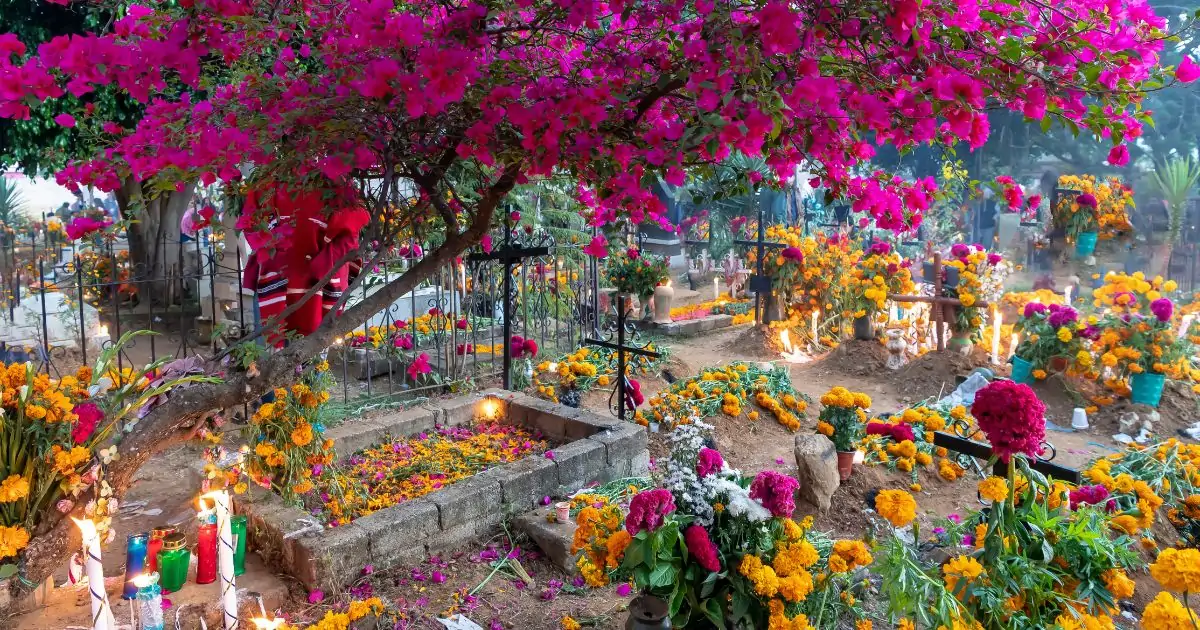
It’s really fun to see the city getting decorated with marigold flowers and watching the ofrendas (colorful altars) being constructed, and visiting the cemeteries during the day.
📆 October 31st

Wondering, When does Day of the Dead start? The first day is November 1 at midnight, which is why many say it starts on October 31.
Though not an official festival day, many families observe October 31st, the former All Saints’ Eve, by building elaborate ofrendas (altars) on the cemetery gravestone of their deceased loved one.
As the eve of the souls returning, these preparations must be ready for the spirits’ arrival at midnight.
There’s a lot of energy in town, as people are ready to officially celebrate Dia de los Muertos after weeks of prep.
Families visit the town’s cemeteries to decorate their loved ones’ graves and gravestones, and many put the finishing touches on the ofrendas (altars) outside of their homes.
📆 November 1st: Day of the Little Angels

What was formerly known as All Saints’ Day, is present-day Día de los Angelitos (Day of the Little Angels).
This Day of the Little Angels on November 1 honors the children who have passed. Their spirits returned the night before, at midnight, but parties continue all day.
👼 Note: You may also see this day called the Día de los Inocentes, or Day of the Innocents. However, don’t confuse it with the Day of Holy Innocents Mexican holiday, which is on December 28th.
📆 November 2nd: Day of the Dead

Formerly known as All Souls’ Day, November 2nd is the actual Day of the Dead day.
On this day, family members and loved ones celebrate the adults in their life who no longer walk the Earth.
The spirits of all adults returned the night before, at midnight, but parties will continue all day.
What are significant objects Day of the Dead has?
The most significant Day of the Dead objects include cempasúchil (marigold flowers), pan de muerto (Day of the Dead bread) and sugar skulls — all placed upon an ofrenda (Day of the Dead altar).

What is the most recognizable symbol for Day of the Dead?
Sugar skulls — Calaveras azúcar, or sugar skulls, are the most delicious and most recognizable Day of the Dead symbol.
Each of these hand-painted skulls are unique, and represent just one departed person.
What is an icon of the Day of the Dead festival?
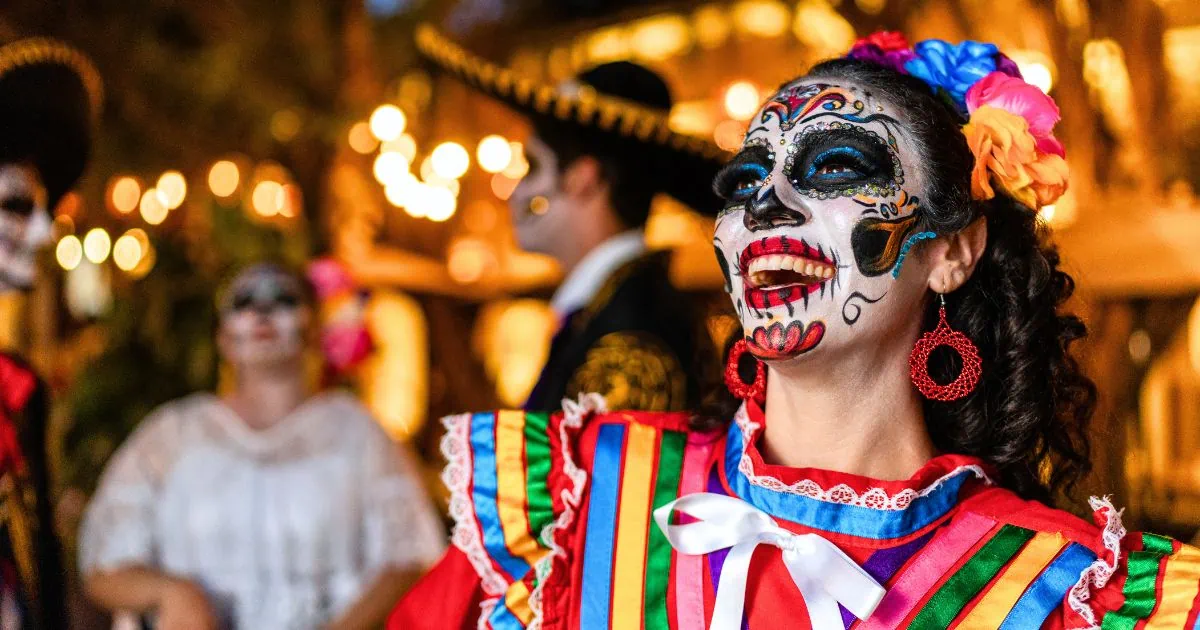
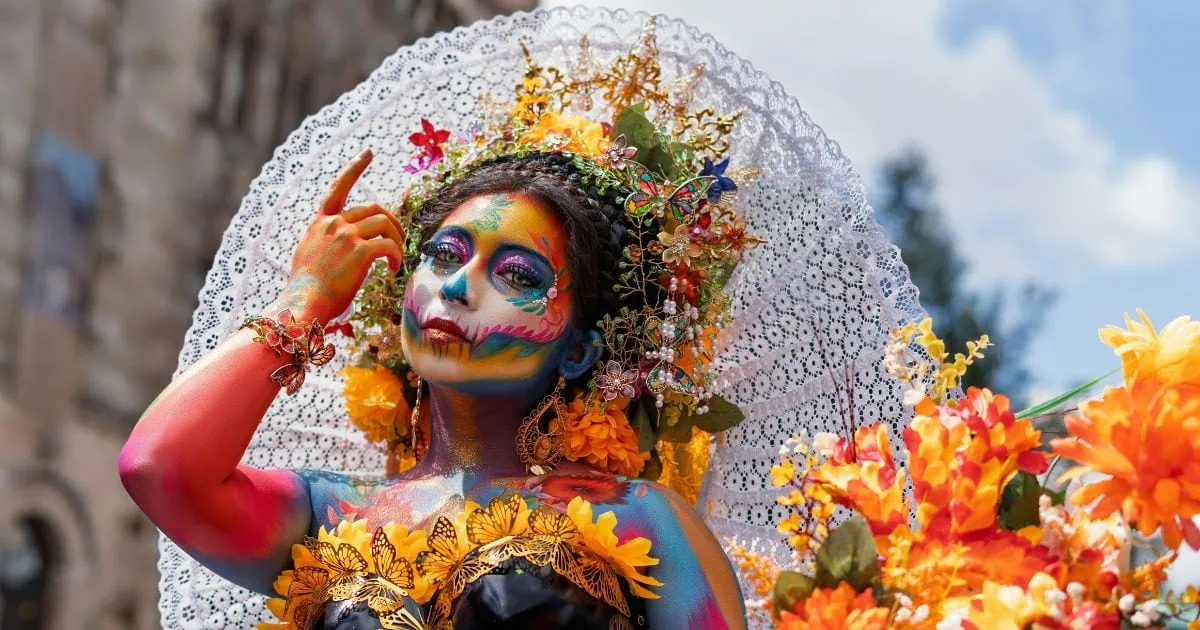
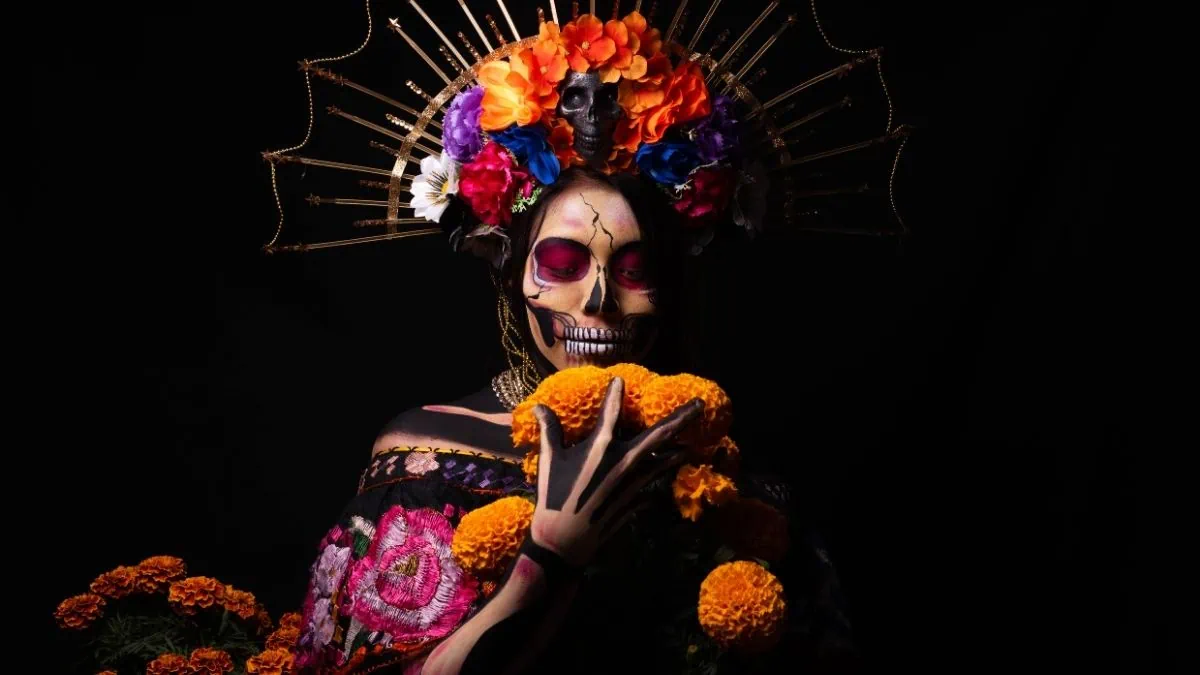
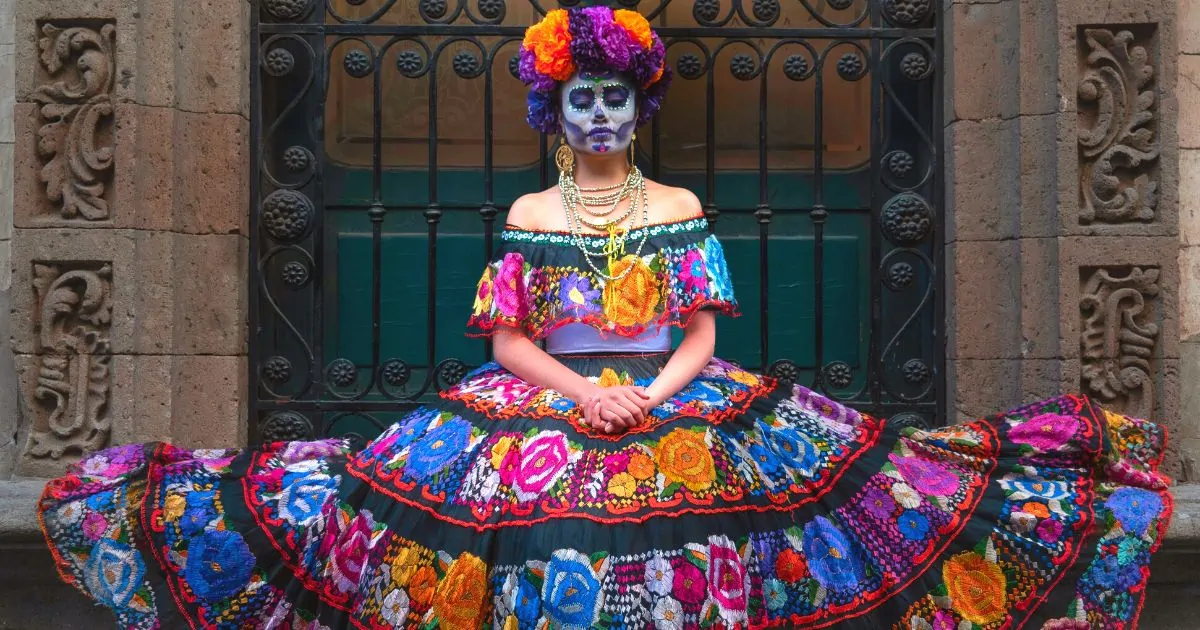
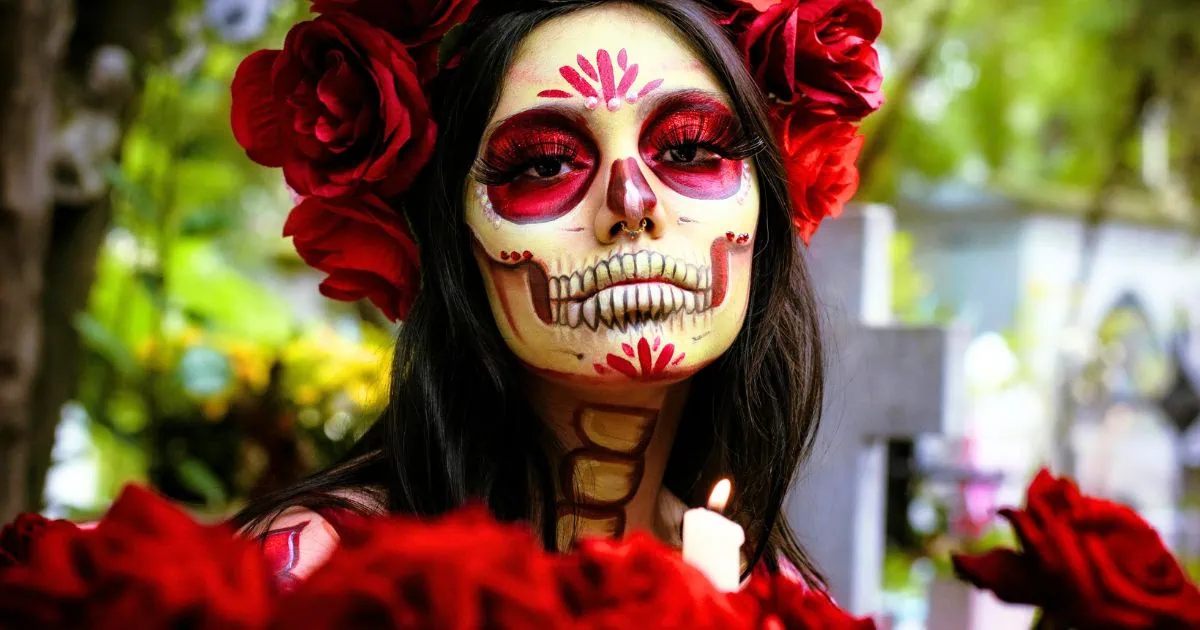
La Catrina (Calavera Catrina) — This skeletal woman is the unofficial Day of the Dead icon, and you’ll see people all over the world painting their face to look like hers.

What is the flower for the Day of the Dead?
Cempasuchil, or marigold flowers — While you will find a lot of flowers used in Day of the Dead festivities, none signifies the holiday more than marigolds, which are known as the “flor de muerto,” or flower of the dead.
What are 5 symbols of Day of the Dead?
Some of the most important Day of the Dead symbols include: 1) marigold flowers, 2) pan de muerto (bread for Day of the Dead), 3) sugar skulls, 4) La Catrina, the skeleton woman, and 5) Day of the Dead altars.
What is the traditional food for Day of the Dead?
The most famous 3 foods Dia de los Muertos is accociated with include tamales, pan de muerto, and mole negro (black mole). There’s also sugar skulls, but that’s more candy than food!
Can you eat the food from the ofrenda?
Most people don’t do this, as ofrenda foods are meant for the departed.
Further, some believe food left on the ofrenda becomes tasteless because it has already been “consumed” by the dead.
Can you put alcohol on an ofrenda?
Yes — The Day of the Dead altar is meant to have your departed loved ones’ favorite foods and drinks so that you entire their spirit to return and celebrate Day of the Dead with you.
My Final Thoughts on the Best Day of the Dead Foods & Drinks
One of the most important Mexican holidays, Día de Muertos is as much a celebration of life as it is a celebration of death and the departed.
For many Mexicans, death is a somber affair, but also a natural part of life — so it should be celebrated as such.
While people do also mourn their departed, the Day of the Dead holiday is a time to remember them fondly with food, drinks, in-home parties and city-wide celebrations.
As someone who lives in Mexico and has celebrated Day of the Dead in several cities throughout the country, it has been an honor to experience death in such a joyful way.
If you’re planning to visit Mexico during Day of the Dead, there are amazing celebrations in Mexico City, Oaxaca City, Morelia, Merida, Guanajuato City, and the small town of Patzcuaro, Michoacan.