
35 Mexico Holidays & Unique Mexican Traditions You’ve Probably Never Heard Of


Ready to discover the best Mexican holidays and traditions?
You’re in the right place because I’ve lived in Mexico since 2018 — and in this article, I’ll be sharing my personal experiences at Mexican holiday celebrations and fun info about the many interesting Mexico holidays and festivals.
Holidays in Mexico really do offer a great glimpse into Mexico’s culture and traditions. Since moving to the country in 2018, it’s been such a great experience to immerse myself in the vibrant culture of Mexico first-hand.
Undoubtedly, the best way to experience Mexican traditions and holidays is by being in Mexico, but I hope this list will transport you there (minus the cost of a plane ticket).
From piñatas at parties to the Cinco de Mayo holiday (May 5th), which actually isn’t Mexican Independence Day, you’ll learn about all the best Mexico holidays and traditions here.
The Most Important Mexico Holidays & Best Mexican Traditions
1. Dia de los Muertos

📆 When: October 31-November 2
Right off the beat: One of the most important holidays Mexico has, it’s important to note that Dia de Muertos (Day of the Dead) is NOT Mexican Halloween!
What the Day of the Dead actually is, is a two-day holiday to honor our deceased relatives and loved ones — and one of the most popular holidays and traditions Mexico has.
While American Halloween and other rites involving death are dark, sad affairs, Dia de Muertos is a celebration. It’s also one of the most important Mexican holidays in November.
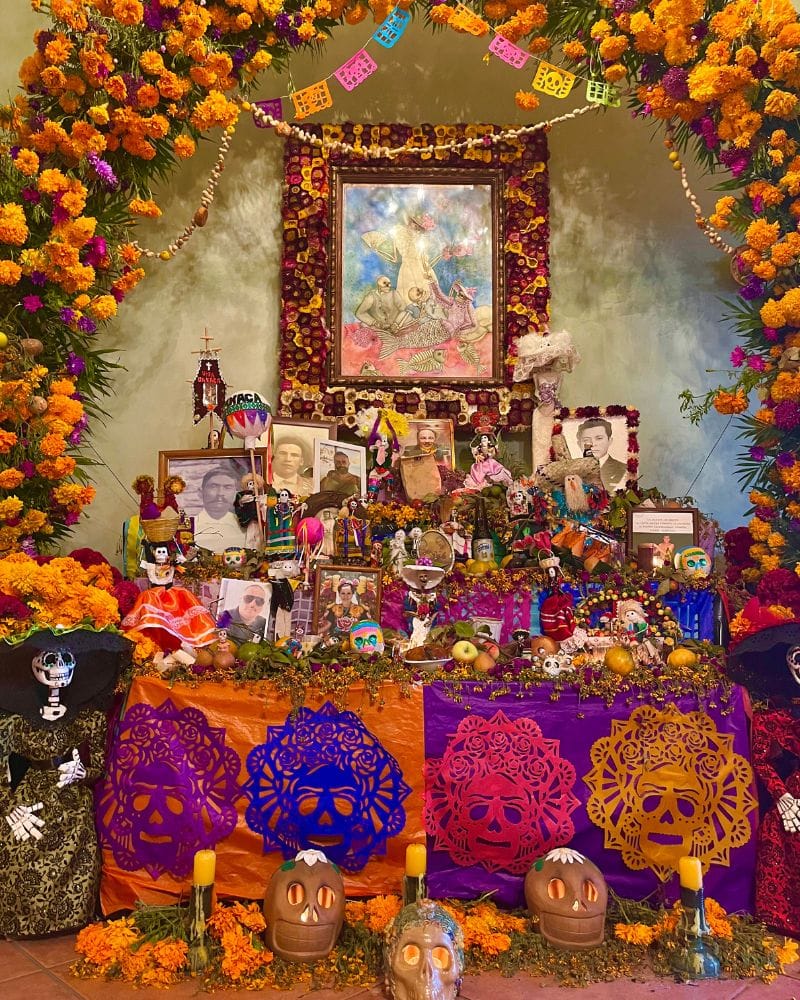
This holiday involves costumes, face painting, bright colors, dancing in the streets, parades, elaborate ofrendas (altars), traditional Mexican cuisine made only during the holiday, and much more.
🥳 Mexico Holidays Fun Fact: Some of these Mexican traditions on this list have even been recognized by UNESCO (United Nations Educational, Scientific and Cultural Organization) — including Mexico Day of the Dead.
Mexican Traditions & Mexico Holidays
2. Día de los Angelitos (Day of the Little Angels)

📆 When: November 1
If you’re planning a Mexico trip and have flexibility in your travel plans, try to come during Day of the Dead in Oaxaca. This is one of the most magical holidays in Mexico, and a truly unique Mexican cultural experience.
The holiday begins at midnight on November 1st (or the night of October 31st, depending on how you look at it).
On this night, it’s said the spirits of deceased children return to earthside. For this reason, it’s known as Día de los Angelitos (Day of the Little Angels). This day is known as All Saints’ Day in Catholicism.
Mexican Traditions & Mexico Holidays
3. Día de Muertos (Day of the Dead)
📆 When: November 2
At midnight on November 2 (or the night of November 1), the spirits of the departed adults return. This is the actual Day of the Dead day.
As this holiday has both prehispanic Aztec and Catholic roots, this is the Catholic equivalent of All Souls’ Day.
Want more info on Mexico Dia de Muertos traditions? Check out my comprehensive Guide to Day of the Dead in Mexico.
🇲🇽 Note: Beyond Día de Muertos (Day of the Dead), the most popular of all Mexican holidays November has, there are other Mexican celebrations taking place each month too, like Day of the Mexican Revolution Day.
💀 Day of the Dead in Oaxaca Mexico

One of the most popular places to celebrate Day of the Dead in Mexico is Oaxaca City, located in southern Mexico.
Oaxaca state is known as a hub for culture travelers, and as one of the top foodie destinations in Mexico to enjoy all the amazing Oaxaca food.
It is also a small town, so for those who want to attend the Oaxaca Day of the Dead celebration you’ll want to book about 6-9 months out for this Mexico bucket list experience.
🗣 Note: I’ve been all over Mexico, and this has been my hands down favorite experience.
In fact, I’ve been to Oaxaca for Day of the Dead twice! Want more info? Check out Oaxaca Day of the Dead: The Ultimate Travel Guide.
💀 Parade of Alebrijes: Mexico City Day of the Dead Parade

🇲🇽 Fun Mexico Fact: There was never a Mexico City Día de los Muertos parade until it was depicted in the James Bond film, Spectre.
The movie parade was so epic the city decided to make it a reality — and the Day of the Dead parade in Mexico City was born.
It is an elaborate, citywide celebration with parade floats, face-painting, music in the streets, dancers in traditional costume and more. It usually takes place the third Saturday in October, though the date can vary.
Mexican Traditions & Mexico Holidays
4. Mexican Independence Day

📆 When: September 16
Though most Americans would probably tell you Cinco de Mayo is Mexico’s Independence Day — the holiday actually takes place on September 16. (⚠️ I repeat: Cinco de Mayo it NOT Mexican Independence Day.)
Much like the U.S. and other countries, Independence Day is among the Mexican traditions that best represents national pride, and the most important Mexican holiday in September.
This national holiday officially kicks off at midnight on Sept. 16 (or the night of Sept. 15, depending on how you look at it), with El Grito de Dolores (see video below).
However, for much of the day of Sept. 15, there will be cultural celebrations, dancing, music and foods in the Zocalo (Town Square) of cities throughout Mexico.
Mexican Traditions & Mexico Holidays
5. El Grito de Dolores
📆 When: September 16, at midnight
El Grito de Dolores (The Cry of Dolores) is the most important of all Mexican Independence Day traditions.
The Grito was the rallying call given to Mexican troops before going into battle against the Spanish.
Proclaimed by Catholic priest Miguel Hidalgo y Costilla in the city of Dolores Hidalgo, this cry is said to have triggered the Mexican War of Independence.
The largest Grito de Dolores takes place in Mexico City, where the Mexican President recreates the cry on the Presidential Balcony of the Palacio Nacional (National Palace) in Centro Historico.
Each year, thousands gather to hear the cry and see the impressive firework display that follows.
Though this is the largest Cry of Dolores in Mexico, as it’s this one given by the president of Mexico, it is not the only one.
Throughout the country, various cities also recreate the Grito, including in Dolores Hidalgo, Mexico, where Father Hidalgo made the original battle cry to the troops at midnight on September 16, 1810.
You’ll also see smaller-scale versions of El Grito de Dolores everywhere from colonial cities like Merida and Guadalajara, to coastal beach towns like Riviera Maya and Los Cabos.
Though not the only patriotic holiday in Mexico, it is the largest. However, there are others like Dia de la Constitucion (Mexican Constitution Day), Dia de la Bandera (Mexican Flag Day) and Labor Day in Mexico.
Mexican Traditions & Mexico Holidays
6. Cinco de Mayo (May 5th)
📆 When: May 5
Even if you’re not familiar with seasonal holidays in Mexico, you’re probably familiar with at least one of the Mexican holidays in May.
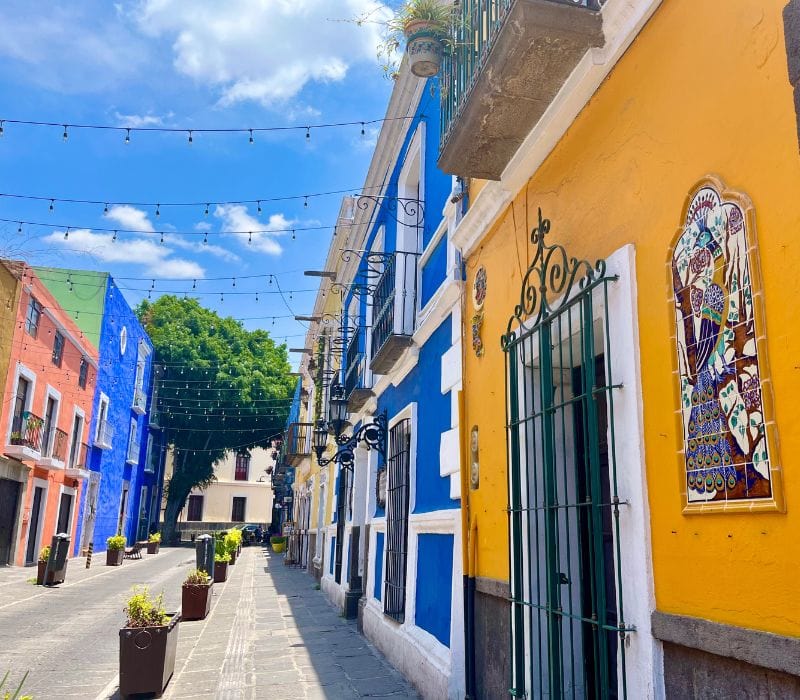
Though a rather big holiday celebration in the U.S. most Mexicans don’t actually celebrate 5 de Mayo. In fact, it’s really only celebrated in one city — Puebla, Mexico, located a few hours south of Mexico City.
As mentioned, this isn’t Mexican Independence Day. Rather, the holiday commemorates the Mexican Army’s victory over France in the 1862 Battle of Puebla.
While many don’t know this, Mexico was actually under French governance in 1862!
For those who make the trip to Cinco de Mayo in Puebla, it’s a festive time with parades, music in the streets, battle reenactments, special foods like chile en nogada, and more.
However, outside of this, you won’t find any May 5th Mexico celebrations.
If you do want to celebrate Cinco de Mayo in Mexico, Puebla makes for one of these 17 Best Day Trips from Mexico City You Won’t Want to Miss.
Mexican Traditions & Mexico Holidays
7. Carnival in Mexico

📆 When: Approx. Late-February to early-March, but the dates vary each year
Carnival or Carnaval is a multi-day event, culminating on Martes de Carnaval, known as Mardi Gras or “Fat Tuesday” in the U.S.
Similar to Mardi Gras in New Orleans and Carnaval in Brazil, there are parades, festive floats, dancing, elaborate costumes and street parties in Mexico as well.
The largest celebration takes place in the state of Veracruz, but there’s also a huge, elaborate Carnaval in the coastal city of Mazatlan.
Carnival in Mexico: What to expect

1. Carnival in Veracruz Mexico
Carnaval takes place in several parts of Mexico, though Carnaval de Veracruz, which takes place in the Port of Veracruz (AKA Heroica Veracruz), is the largest.
In fact, it is the second most famous Carnival in Latin America, after the one in Rio de Janeiro, Brazil.
The nine-day Carnaval de Veracruz starts off in the city’s Zocalo (Town Square), with the Quema del Mal Humor, meaning “burning the bad mood.”
As the name implies, there’s a large effigy of a human figure that’s burned, to symbolically cleanse the world’s negative energies.
2. Carnival in Tepoztlan Mexico

Tepoztlan is one of the Mexico pueblos magicos (magic towns). It is located about one hour from Mexico City by rental car or bus, and ranks among the most popular day trips from Mexico City.
The town is lively all year, especially at the Central Market in Tepoztlan, but it really comes alive during the Carnival.
Here, you’ll see indigenous Chinelo dancers in their colorful masks, and hear traditional flute and drum music.
3. Carnival in La Paz Mexico
The La Paz Carnival is an epic 10-day party!
It takes place in the small town of La Paz, located in the Baja California Peninsula, about two hours from both Cabo San Lucas and San Jose del Cabo (AKA Los Cabos).
During the celebration in La Paz, you’ll see four parades and musical performances all day long.
On day 10, when the festivities are coming to a close, they will crown the Carnival King of Happiness — a great honor! If you want to attend Carnival in Mexico, this really is a great place.
Mexican Traditions & Mexico Holidays
8. Semana Santa and Pascua (Holy Week and Easter)

📆 When: Easter Week
Semana Santa (Holy Week) is a weeklong Catholic holiday that begins on Palm Sunday, and ends the following Sunday on Pascua, or Easter Sunday.
As Mexico has one of the largest Catholic populations of any country, this is a big holiday in Mexico. However, not everyone celebrates it the same!
For many Mexicans who get the entire week off of both school and work — they head to the beaches. In fact, beach resorts and hotels fill up months out for Semana Santa in Mexico.
🏝 SEMANA SANTA Mexico Travel Tip
For the non-religious, one of the most popular Mexican traditions for Easter is actually hitting the beach!
If you’re looking for a peaceful Mexico beach vacation, avoid making your travel plans over Semana Santa, as the beaches are packed.
I made the rookie mistake my first year living in Mexico and went to the beach town of Sayulita for Semana Santa — and I’ll never make that mistake again!
The town was insanely crowded, and prices were triple the normal rates. I also visited nearby Puerto Vallarta on this trip, and it was even worse than Sayulita. #NeverAgain
✝️ Taxco: Best Place to Attend Semana Santa in Mexico

For those who want to experience the religious side of this holiday, there’s no place that has a more elaborate Mexico Semana Santa celebration than the city of Taxco in Guerrero state.
This former silver mining town in Central Mexico is one of the best Mexico pueblos magicos (magic towns).
Every day of the week leading up to Easter in Taxco, there are (often gory) processions in the streets.
During these, devout Catholics will depict the main people in the Bible’s Easter events, walking through the streets to reenact the crucifixion and other events.
In the afternoons and evenings, different processions feature hooded penitents, carrying heavy crosses or bundles of sharp thorny sticks on outstretched arms, or lashing their backs with sharp thorns.
It’s a gruesome, yet fascinating, connection to historical displays of penitence.
Mexican Traditions & Mexico Holidays
9. Las Posadas (Mexican Christmas Parties)

📆 When: December 16-24
Christmas in Mexico is a wonderful time of year, and the Mexican Christmas season starts well in advance of the actual Christmas holiday.
Beginning in mid-December, Posadas, or nightly holiday celebrations, take place throughout Mexico.
The Posadas symbolize the Biblical story in which Joseph and Mary made a month-long journey from the city of Nazareth to the city of Bethlehem, in search of a place to give birth to their baby.
This is one of the oldest Mexican Christmas traditions.
Posadas happen everywhere from private homes and rented halls, to citywide public celebrations and pastorela performances.
Pastorelas represent the journey of the shepherds to go worship Jesus.
At a private party, you may end up joining in with the pedir posadas (posada songs). This term means “asking for shelter,” alluding to the Biblical journey of Joseph and Mary seeking shelter at the inn.
These are songs and verses, similar to what Christmas carolers do in the U.S., singing from door to door.
Mexican Traditions & Mexico Holidays
10. Noche Buena (Christmas Eve)

📆 When: December 24
Traditionally, Mexicans eat the main Christmas dinner on December 24, known as Noche Buena, or Christmas Eve.
Unlike in the U.S., the next day, Christmas Day, is much more calm.
For religious Mexicans, they will attend the Midnight Mass church services, and follow that with a large dinner.
Other Mexican families skip the mass and just spend time together for dinner and a party.
While some families open presents at midnight, others only eat the meal on this day, and some Mexicans don’t open presents until Three Kings Day on January 6.
Dinner is among the Mexican traditions for Christmas that’s not too dissimilar to the U.S.
Exact dishes vary from family to family, as people will make their favorite foods even if they aren’t traditional, though you’ll often find roasted turkey or ham and potatoes and veggies on all tables.
You’ll also see traditional Mexican foods like tamales and romeritos con mole, and traditional Mexican cookies like hojarascas at a Mexican Christmas dinner as well.
Mexican Traditions & Mexico Holidays
11. Navidad (Christmas in Mexico)
📆 When: December 25
Though the actual date for Mexican Christmas is the same as it in the rest of the world, December 25th, the main event took place the day before.
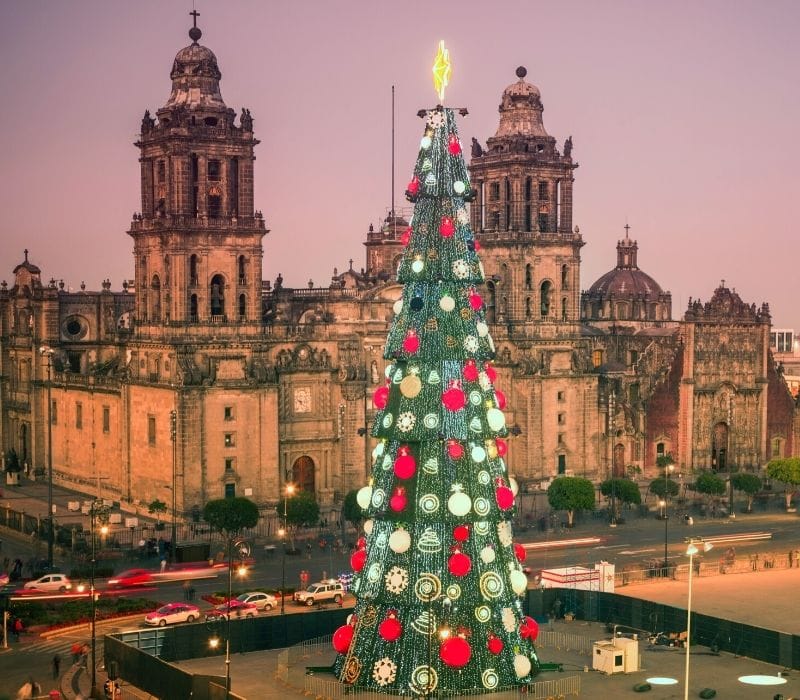
In fact, Christmas in Mexico is a bit anticlimactic — though it’s one of the most charming Mexico City holidays because a lot of the city gets decorated, especially Downtown Mexico City and the Zocalo (Main Square).
For most, it is a day of rest (and recovery) for the large party that took place during Noche Buena, or Christmas Eve.
This is similar to how New Year’s Day in the U.S., when many are just nursing a hangover 🍻
On Christmas Day in Mexico, you might sleep in, eat leftovers and watch movies with your family members and friends.
The majority of businesses and government offices will be closed, as everyone simply relaxes in their homes or takes a leisurely stroll around town.
Mexican Traditions & Mexico Holidays
12. Año Nuevo (New Year’s in Mexico)

📆 When: January 1
For those looking to party in Mexico on New Year’s Eve — know this is NOT a party holiday in Mexico.
However, there are various ways to celebrate, and some people do have a New Year party or hit the bars, especially in big cities.
For the most part though, Mexico New Year’s is celebrated with family in low-key celebrations at home, with many fast asleep by midnight.
🥳 Want to wish your Mexican friends a Happy New Year? Tell them “Feliz Año Nuevo” (pronounced fell-lees ahn-yo new-whev-oh).
With many adults off work, and students on a school break, many simply head to the beaches and bring their family gatherings there.
The best time to go to Mexico beaches is from November to March during the dry season, so this is the perfect time for a tropical Christmas in Mexico.
6️⃣ Popular Mexican New Year’s Traditions

1. Some people will walk down the streets with luggage, which is said to bring lots of travel in the coming year.
2. Others will sweep in 12 coins from the outside of the house at midnight on New Year to represent bringing in good fortune, wealth and prosperity for the year. This is also a good excuse to clean up the house!
3. One of the Mexican New Year traditions that’s not always discussed publicly, is that many people will wear a certain color of underwear to signify what they hope for in the New Year.
Each color has a different meaning, like 💛 yellow for abundance and happiness, 💚green for good health and wealth, ❤️ red for love and romance, and 🤍 white for hope and peace.
4. Eating 12 Grapes: During a family dinner on Año Nuevo (New Year’s), one Mexican tradition includes eating 12 grapes as a way to make a wish or set an intention for each month of the year.
With each gong of a nearby church bell, or ring of the bell as the clock strikes 12:00, you’re supposed to eat one grape — which is harder than it sounds.
This tradition is called “Las Doce Uvas de la Suerte,” meaning the 12 Grapes of Luck.
5. Speaking of Mexican food traditions at New Year, some people eat one spoonful of lentils to bring them good fortune.
6. Some Mexican people will throw a bucket of water out the window which is said to get rid of whatever happened in the previous year, and usher in all that’s new and yet-to-come.
Mexican Traditions & Mexico Holidays
13. Dia de la Virgen de Guadalupe (Day of the Virgin of Guadalupe)

📆 When: December 12
One of the central religious figures, images and statues of the Virgen de Guadalupe (Virgin of Guadalupe) can be seen all over Mexico.
There is even the Guadalupanos, a religious sect who have the Virgin as their central idol, as many Catholics in Mexico are devoted to her above all other figures (including Jesus) and Mexican saints.
The Day of the Virgin of Guadalupe is among the most important holidays for religious Mexicans and all Latin American Catholics.
It has been celebrated for centuries, and began after the Virgen de Guadalupe herself appeared on December 12, 1531 to a Mexican man named Juan Diego (later Saint Juan Diego).
The Virgin ordered Juan Diego build her a temple. As a way to prove she did appear to him, he brought local clergy members a piece of fabric from her.
Eventually, one bishop did see an image of the Virgen de Guadalupe appear on it. He then ordered a church built on Tepeyac Hill, in the very spot she requested it to be.
💒 Best Place to Attend Dia de la Virgen de Guadalupe in Mexico

The main place to experience Día de la Virgen de Guadalupe is on Tepeyac Hill, in the beautiful Basílica de Guadalupe in Mexico City.
On December 12 each year, millions of devout Catholics (yes — millions) travel from every corner of Mexico to attend mass; some even make the trek on foot as a form of pilgrimage.
In the days that lead up to December 12, caravans of worshipers will be making their way into Mexico City for the Día de Guadalupe mass.
Those in their own cars will often decorate them with a giant cross, flashing lights, large speakers blasting music and colorful balloons, as they make the journey.
For those who want to experience Día de la Virgen de Guadalupe in Mexico, but don’t want to brave the large crowd in Mexico City, you’ll easily find smaller-scale masses and celebrations in Catholic churches throughout the country.
💒 Basilica of Our Lady of Guadalupe Tours

The church itself is a work of art, which any architecture lover will appreciate on any day of the year.
The most recent building on the church was built by famed Mexican architect, Pedro Ramírez Vázquez, who also built the National Anthropology Museum — one of the best museums in Mexico City.
To see the beautiful Basílica de Guadalupe in Mexico City, it’s easiest to join a group tour. Here are all the best tours to Basílica Guadalupe Mexico City, with options at all price points.
Many tours combine a visit to the Guadalupe Church with the nearby Teotihuacan Ruins, a UNESCO World Heritage Site with ancient prehispanic pyramids — and a Mexico City must see for most visitors.
Mexican Traditions & Mexico Holidays
14. Dia de los Reyes Magos (Three Kings Day)

📆 When: January 6
Día de Reyes, also known as Día de los Reyes Magos, Día de los Santos Reyes, or even Epifanía (Epiphany), is celebrated on January 6.
Regardless of what you call it, this important Catholic holiday commemorates the arrival of the Three Wise Men in Bethlehem to worship the Baby Jesus.
They brought with them gifts for the baby, and nowadays many Mexican children will not get their presents until the same day Jesus did.
That’s right, one of the main 3 Kings Day traditions in Mexico is that kids actually open their gifts on this day — not Christmas!
Now, this can vary, as families celebrate Christmas in Mexico by opening gifts on Dec. 25th.
🥮 Rosca de Reyes Cake

Besides the presents, one of the main traditions on Dia de los Reyes Magos (Three Kings Day) is eating a rosca de reyes. This is a ring-shaped sweet bread that’s somewhat similar to an Italian Panettone cake.
Inside each ring, there are a few small, plastic figurines in the shape of a child — called a muñeco (little doll).
If your slice of rosca has one of the doll figures, you’ll have to buy everyone present at the gathering tamales on the next holiday — which is Dia de la Candelaria on February 2nd.
In the weeks leading up to the holiday, supermarkets and bakeries start selling rosca de reyes. Many say the best roscas come from a local panaderia (bakery), and not the grocery store.
To experience one of the best Mexican holiday food traditions the right way, always shop local for your rosca.
Mexican Traditions and customs
15. Dia de la Revolucion (Mexican Revolution Day)

📆 When: 3rd Monday of November
There are quite a few holidays in Mexico in November, including Day of the Dead and Día de la Revolución Mexicana (Mexican Revolution Day).
Día de la Revolución in Mexico celebrates the day Francisco I. Madero started the movement to end the 35-year, dictator-like reign of Porfirio Diaz.
What started as a movement to oust an autocratic leader, turned into a civil war, and became one of Mexico’s most important historical events. Today, it is one of the most national holidays of Mexico to showcase civic pride.
To celebrate this public holiday that commemorates the start of the Mexican Revolution, you’ll hear traditional music and see patriotic parades all over the country, which include students, teachers, athletes, and the Mexican military.
🇲🇽 other patriotic holidays and special events
Besides Revolution Day in Mexico, there are other national holidays to honor the country, including these:
- Día de la Constitución (Constitution Day) on February 5th
- Día de la Bandera (Flag Day) on February 24th
- Día de Benito Juárez (Benito Juarez Day) on March 21st
- Día del Trabajo (May Day, Labor Day or Labour Day) on May 1st
- Día de la Raza (Columbus Day, or Day of the Race) on October 12th
Mexican Traditions and customs
16. Dia de los Inocentes (Day of the Holy Innocents)
📆 When: December 28
Día de los Inocentes (Day of the Innocents) is known as Mexican April Fool’s Day. While a lighthearted tone these days, it has ominous roots in ancient history.
The Day of the Innocents commemorates King Herod’s Massacre of the Innocents, in which he ordered the killing of children.
On this day, friends and family will often play practical jokes on one another in a light hearted way.
Even the Mexican news media sometimes get involved, reporting fake and outlandish stories to get in on the fun.
While not one of the important public holidays, this is certainly a fun one for many.
Mexican Traditions & Mexico Holidays
17. Dia de Santa Cecilia (Saint Cecilia’s Day)

📆 When: November 22
Besides Day of the Dead and Mexican Revolution Day, here’s yet another one of the Mexico holidays in November.
As music is a huge part of Mexico culture, the Feast Day or Celebration of Saint Cecilia, the patron saint of musicians, is a fun day in the country.
Throughout the day in much of Mexico, you may see public mariachi performances in the streets or in restaurants.
In Apaseo el Grande, a municipality in Guanajuato state near San Miguel de Allende, Saint Cecilia’s Day is an official holiday.
Here, they have special masses, concerts and organized dances — in a celebration that often lasts up to four days.
In Mexico City, mariachi musicians gather in the Plaza Garibaldi in Downtown to sing traditional mañanitas (songs) for Saint Cecelia.
While this plaza is the best place to see mariachis in Mexico City all year long, the celebration is only that much more amplified on November 22.
Mexican Traditions & Mexico Holidays
18. Dia de la Madre (Mexican Mother’s Day)

📆 When: May 10
Mexican culture is very family-oriented — and many go all out to honor their mama!
If you find yourself in Mexico during Mother’s Day, you may be awoken to hear mariachi bands serenading some mothers beginning at midnight.
During the day, it’s common to take mom out for lunch, or make her a nice meal at your house.
Mexican Traditions & Mexico Holidays
19. Dia del Padre (Father’s Day)
📆 When: June 20
Wondering, Are there any Mexican holidays in June? There is, and it’s the only major one of all the Mexican national holidays during this month.
Father’s Day in Mexico is pretty much identical to the holiday in the United States. Many will buy dad a gift, or take him to lunch, or plan a big family dinner.
In addition to eating a meal together, different Mexican family traditions might be celebrated within each family.
Mexican Traditions & Mexico Holidays
20. Dia del Niño (Children’s Day)
📆 When: April 30
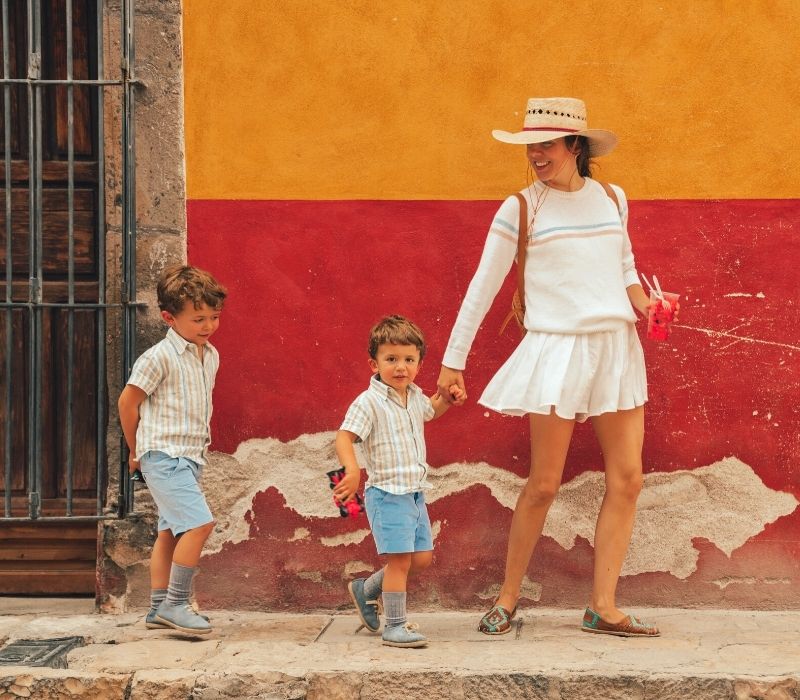
Día del Niño (Children’s Day) is similar to Mother’s and Father’s Day, but as a way to celebrate Mexican children.
On this holiday, many kids will get a gift, a few toys, or even just a special treat like a cake or an ice cream.
Children’s Day, one of the most widespread Hispanic culture traditions, is celebrated throughout many Latin American countries, though on different days.
For example, Argentina celebrates Children’s Day on August 15, and Ecuador celebrates it on June 1.
Mexican Traditions & Mexico Holidays
21. Oaxaca Guelaguetza Festival

📆 When: Mid-July, but the dates vary each year
La Guelaguetza (pronounced geh-la-gets-uh) is a grand annual celebration in Oaxaca City, the capital of Oaxaca state.
It is also known as Los Lunes del Cerro (Mondays on the Hill), because it takes place on the two Mondays that follow July 16, at Cerro del Fortín State Park.
💃 Guelaguetza Travel Tip: Oaxaca City is a smaller town, and this is a big festival. For those who want to go, book your Oaxaca City accommodation at least 3-6 months in advance.
Oaxaca state is known as one of the cultural epicenters of Mexico, with a large indigenous population and a deep connection to their traditions.
Besides the Guelaguetza, Oaxaca City is also home to the largest Day of the Dead Mexico festival. In fact, there are festivals in Oaxaca nearly every month of the year!
There are eight separate regions of Oaxaca, and they all come together to showcase their elaborate dances during the Guelaguetza — which attendees are invited to join.
The festival also highlights each region’s music, textiles, foods, arts and crafts, mezcals, and more.
Mexican Traditions & Mexico Holidays
22. Festival Internacional Cervantino (Cervantino Festival)

📆 When: October, but the dates vary each year
The Cervantino Fest is a performing and visual arts festival that takes place in Guanajuato City during the first three weeks in October. Immediately following, there’s a lively celebration of Day of the Dead in Guanajuato.
Guanajuato City has a lot of universities and art colleges, and is known for its youthful vibe.
It is a haven for creative types and artists — and even famed Mexican painter, Diego Rivera (AKA Frida’s husband), lived there. In case you don’t know, these are two of the most famous people from Mexico.
The Cervantino began as a small festival with local students and artists performing short plays by Don Quixote author Miguel de Cervantes, though has become the largest Latin American arts festival.
It is named in honor of Cervantes, and draws attendees from all over the world. If you plan to visit, check out these 25 Can’t Miss Things to Do, See & Eat in Guanajuato, Mexico.
Mexican Traditions & Mexico Holidays
23. Voladores de Papantla Flyers

In 2009, the Voladores de Papantla (Flyers of Papantla) ritual was designated a UNESCO Intangible Cultural Heritage of Humanity, as a unique display of ancient Mexican culture traditions.
This ceremony comes from the state of Veracruz, located in southeastern Mexico.
Their Danza de los Voladores (Dance of the Flyers) is done in tribute to the sun and the four elements. While it has the word “dance” in the name, it’s actually not a Mexican dance.
The ceremony, not considered among the Mexican rituals for the faint of heart, requires five “flyers” who must climb to the top of a 100-foot-tall (32 m) pole.
One man, called the caporal (foreman), will remain on top to play songs on his flute and drum.
The other four men hang upside down from ropes, spinning (or “flying”) around the pole for about 10 minutes on their journey back to the ground.
Visitors to the Yucatan Peninsula in southeastern Mexico can see the Voladores de Papantla at various spots in Tulum, Playa del Carmen and Cancun.
I have also seen it performed outside the Great Pyramid of Cholula in Cholula Mexico, and the Anthropology Museum in Mexico City, one of the best CDMX museums. This is the performance you see in the photo above.
Mexican Traditions & Mexico Holidays
24. Danza de los Parachicos (Dance of the Parachicos)
📆 When: January 15-23
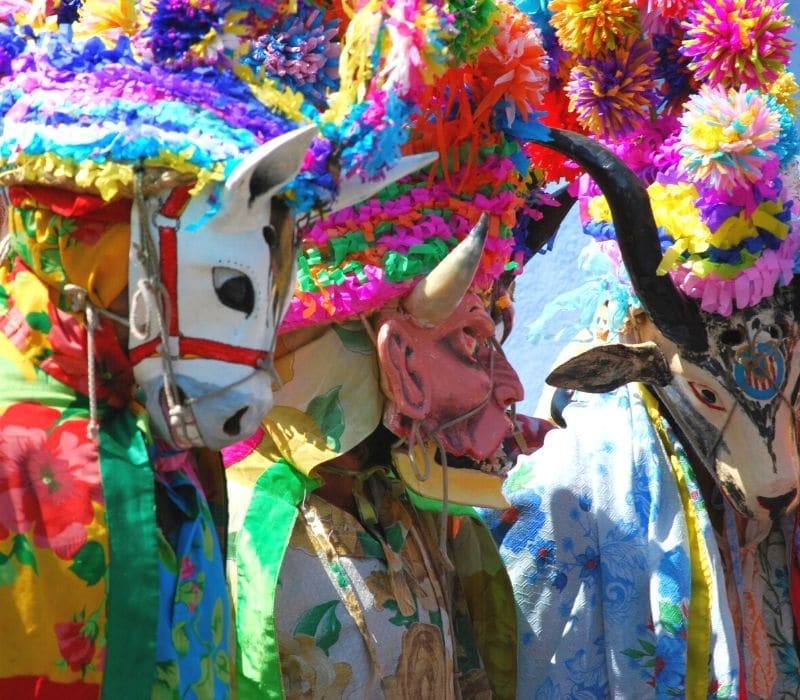
Each year, many head to the southern Mexico city of Chiapa de Corzo, a pueblo magico in Chiapas state, to see the Danza de los Parachicos (Dance of the Parachicos).
One of the coolest dances from Mexico, this colorful, indigenous dance has been declared Intangible Cultural Heritage by UNESCO in 2010.
During the festival, dancers don traditional wooden masks and embroidered shawls with colored ribbons, as they play chinchines (tin rattles/maracas), during their dances.
The Danza de los Parachicos is part of the large Fiesta Grande de Enero (Great January Feast), from January 4-23. It is one of the biggest and best festivals in Chiapas Mexico.
This celebration of music, gastronomy, dance, and religious ceremony is held in honor of the town’s patron saints, Saint Sebastian, Saint Anthony Abbot and Black Christ of Esquipulas.
This magical town is located near one of the most beautiful natural wonders in Mexico, Sumidero Canyon, and also San Cristobal de las Casas, another one of the 175 (or so) pueblos mágicos in Mexico.
Mexican Traditions & Mexico Holidays
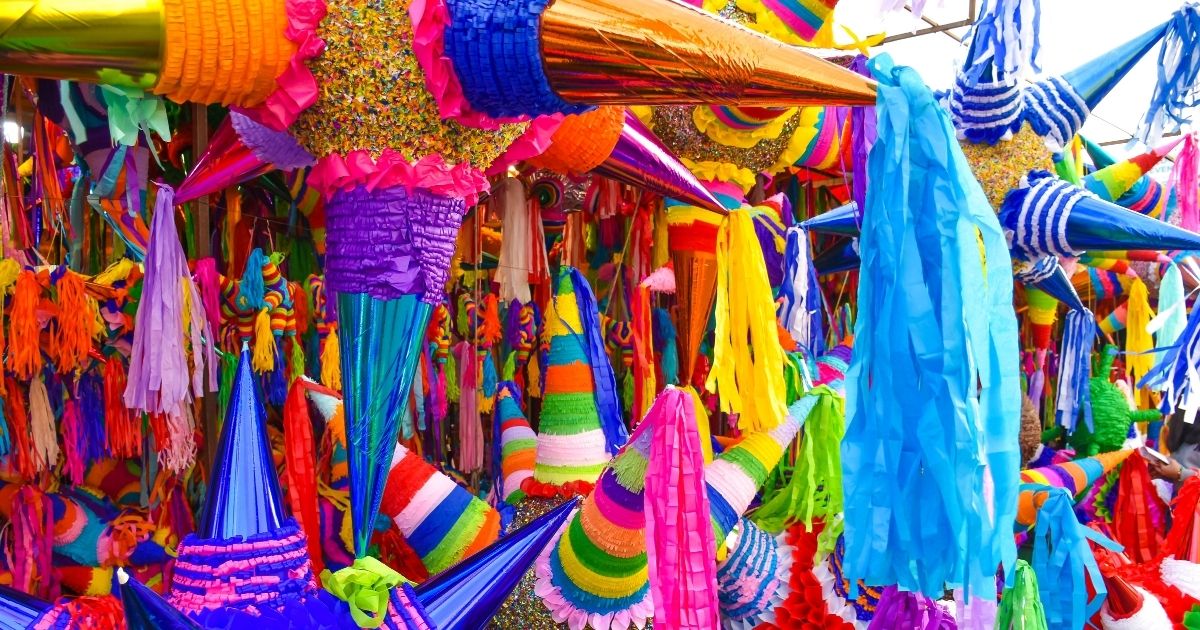
25. Mexican Piñatas

Having a piñata is one of the most prevalent Mexican birthday traditions! Seemingly an innocuous party favor, the Mexican piñata holds deep religious symbolism — though so few are aware.
The piñata’s bright colors symbolize temptation, and the stick to hit it with represents the will to overcome sin.
The blindfold person symbolizes faith, and once the most “faithful” person cracks open the piñata, they get all the goodies inside as a reward for overcoming sin and evil.
These colorful paper structures are common at many Mexican parties, especially ones for children. They are usually in the shape of a star or animal, and sometimes, a cartoon character.
Inside, piñatas are filled with candy, small trinkets, and sometimes money.
Mexican Traditions & Mexico Holidays
26. Quinceañera Parties

While in the U.S., teenage girls may have a Sweet 16 party — in Mexico and much of Latin America, they have Quinceañeras (pronounced kin-say-en-yare-uh).
This translates to 15 Years Party, and like a Sweet 16 party or Bat Mitzvah, is a celebration of the transition to womanhood.
Though Sweet 16 parties are becoming a thing of the past, the Sweet 15 Quinceañera is still an important Mexican party and rite of passage for girls.
It is not uncommon for families to go all out with these parties, spending tens of thousands of dollars and inviting hundreds of guests.
Mexican Traditions & Mexico Holidays
27. Mariachi Music

Mariachi music is probably the best-known and most important form of music in Mexico — and you really can’t discuss Mexico traditions and celebrations without talking about mariachi music.
It comes from the state of Jalisco (home to Puerto Vallarta and Tequila) in Central Mexico, though you can hear mariachi throughout the country.
Mariachi groups use several specialized instruments, including the guitarrón, vihuela mexicana, harp, guitar, violin, trumpet, and the singer’s voice. The band performs wearing their elaborate and iconic charro costume.
Once reserved only for men, modern day mariachi bands now include women.
🎶 Mariachi in Mexico City
Mexico City’s Plaza Garibaldi is one of the most fun places for mariachi, as bands gather in Garibaldi Square to “battle” each other day and night with their musical abilities.
You can also hire mariachi bands in Xochimilco, famous for its colorful gondola boats, called trajineras.
💍 Mariachi Mexican Wedding Traditions
Many Mexican weddings have a mariachi band to accompany the newly-married couple on La Callejoneada (the Wedding Parade).
This immediately follows the ceremony, as everyone makes their way to the reception.
Mexican Traditions & Mexico Holidays
28. Mexican’s Love Nicknames
Throughout the country, people often give each other nicknames, a playful and endearing part of the culture and customs in Mexico.
For many, the nicknames stick forever, and end up becoming the person’s new name that even their own parents adopt.
Some common nicknames include chaparrito, meaning shorty, or mi cielo, meaning my sky.
Those with curly hair will often be called chino or china, meaning “curls,” and men who have lost their hair will often be called pelon, or baldy.
Mexican Traditions & Mexico Holidays
29. Mexican Alebrijes (Best Mexican Folk Art)

Alebrijes (pronounced al-lay-bree-hays) are iconic and colorful Mexican folk art creations, made from paper maché or carved from wood.
On first glance, they look like animal figures — but when you look closer, you’ll see each one combines a few animals into one figure.
First made by artist Pedro Linares Mexico City, alebrijes later made their way into Oaxaca state. Oaxaca is now more closely associated with alebrijes than Mexico City.
Oaxacan artist Manuel Jiménez, one of the most famous people from Oaxaca, brought alebrije art into his hometown of San Antonio Arrazola, Oaxaca. They are also made in San Martín Tilcajete, Oaxaca Mexico.
Many visitors head to these pueblos (small towns), known as the Oaxaca art towns, to buy their own unique alebrije figure. As these are handmade, no two alebrijes are alike.
🐲 Brief History of Alebrijes from Mexico
According to an account by the original artist himself, Pedro Linares fell ill with a high fever and had vivid “fever dreams” that eventually inspired the alebrijes’ creation.
He said they served as a sort of spirit guide during his illness, to get him through that tough time.
Now one of the most beloved Mexican folk art styles, alebrijes are seen outside of his small town in Oaxaca. You can buy them everywhere from local arts markets to airport gift shops.
If you’ve seen the movie Coco, there’s two alebrijes in it, Pepita and Dante — and if you’re traveling to Oaxaca, Mexico, make sure you buy some alebrijes souvenirs.
Mexican Traditions & Mexico Holidays
30. Mexican Food Traditions

Among the most important Mexican traditions in Mexico? FOOD! 🌮
Mexico is a country that loves both their traditional foods and traditional Mexican drinks — like these 31 Amazing Tacos from Mexico Every Taco Addict Must Try!
It is a huge part of the culture and national identity — and in 2010, UNESCO declared traditional Mexican food an Intangible Cultural Heritage of Mankind, meaning Mexican food is a cultural treasure worth preserving.
A typical Mexican breakfast includes coffee, juice, pan dulce (sweet bread/pastry) and a plate of fruit.
Antojitos (pronounced an-toe-he-toes, and meaning “snacks”), like tacos, elote and tamales, are eaten at any time throughout, often bought from street food vendors.
Lunch, or comida, usually happens between 1-3pm, and is typically the largest meal of the day.
Traditionally, lunchtime was followed by a siesta, though this isn’t common anymore since so many work in offices that don’t allow it.
The typical Mexican dinner, or cena, is eaten much later in Mexico than in the U.S., often around 9pm.
In fact, most visitors to Mexico experience culture shock when they find themselves the only diners in restaurants from about 5pm-7:30pm during the normal U.S. dinner hour.
Traditional Mexican dishes & Drinks you have to try
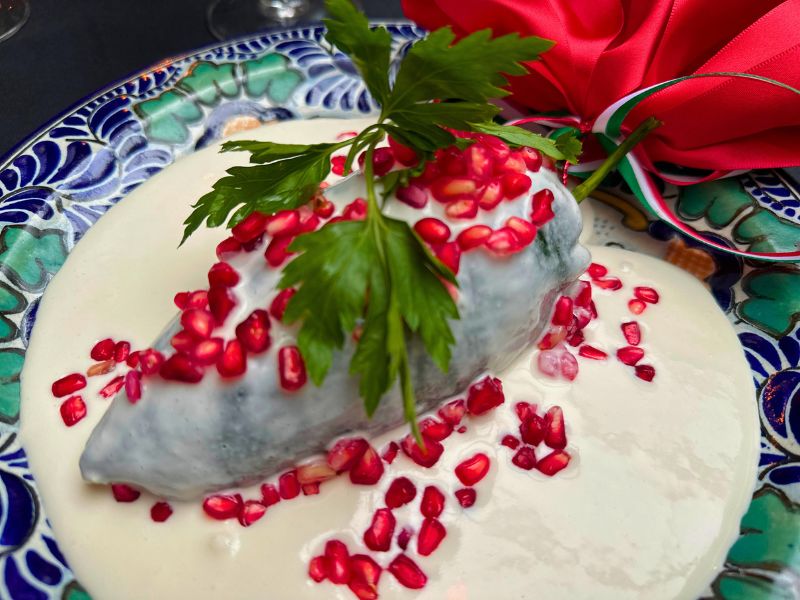
Chiles en Nogada: This is the national dish of Mexico! It is made with a non-spicy poblano chili pepper that’s stuffed with picadillo (a mixture of meat, veggies and fruit), then covered in a creamy walnut sauce, called nogada.
It is served with chopped parsley and pomegranate seeds — which may sound like a bizarre combo, but it’s delicious. The red (pomegranate seeds), white (nogada sauce) and green (poblano pepper) mimic the Mexican flag.
Mexican Mole: Mole is both a marinade and a sauce made from a mix of chili peppers, nuts, seeds and spices, and typically served with chicken or turkey. There are actually seven types of mole in Mexico.
It is commonly associated with the state of Oaxaca, but don’t miss mole poblano in the state of Puebla. Most Mexico holidays and celebrations in Puebla will feature this yummy dish.
Pozole: A pork soup made with hominy (a type of corn), chili peppers and other spices. It is usually served garnished with shredded lettuce, radishes, limes, oregano, tostadas, avocados and chili powder.

Birria: This stew can be made from goat or beef, depending where in the country you are. It is slow-cooked in meaty broth with spices and peppers, and served with fresh tortillas to make birria tacos, or with cheese as a quesabirria.
Mexican Tamales: The tamal is a pre-hispanic dish that’s made with masa (corn dough). It is filled with meat, vegetables or fruit, then steamed in a corn husk or banana leaf, depending where in the country you are.
Barbacoa: Meaning “barbeque” in English, Mexican barbacoa is slow-cooked meat (often sheep, beef or goat) that’s made in an underground oven. It is traditionally served with blue corn tortillas, salsa and consomé (soup broth).
Tlayudas: Sometimes called “Mexican pizza,” this traditional Oaxacan food consists of a giant tortilla that’s grilled with asiento (pork lard). Queso Oaxaca cheese, grilled meat, beans, lettuce and tomatoes are added on top.

Sopes: These are thick tortillas made from masa harina (corn flour) that are typically lightly fried so they crisp up a bit. Mexican sopes are served topped with things like seafood, meats, beans, cheeses, and chili pepper sauces.
Enchiladas: This traditional Mexican dish consists of corn tortillas filled with meat or cheese that are rolled, then covered in a red or green salsa. They often come topped with crema (sour cream) and cheese.
Chalupas: Unlike the Taco Bell chalupas, these small fried corn tortillas come topped with salsa and shredded meat. These are most commonly served in the state of Puebla, as part of traditional Poblano cuisine.
Menudo: This Mexican soup is known as one of the best hangover cures. It is a hearty soup that consists of beef stomach, hominy, and of course, chili peppers.
Mezcal: This Mexican spirit is also made from the agave plant, but can be made with many varieties of agave (not just Blue Weber). Mezcal is distilled differently, and known to have a much smokier flavor than tequila.

Tequila: The most popular Mexican alcoholic drink, Tequila is made in Tequila, Mexico (and a few other places). It is a distilled spirit made exclusively with the Blue Weber agave plant, and
To sample both tequila and mezcal, head to a traditional cantina in Mexico to have a drink with the locals. You can also take a mezcal tour in Mexico City and many other parts of the country!
Huaraches: These oblong-shaped tortillas are grilled and served topped with meat, veggies and cheese. 🩴 Note: The Mexican huarache shoe is the same shape as the food, which is how the food got its name.
Tostadas: A dish made from a flat and fried corn tortilla that is typically topped with meat, beans, lettuce, cheese, and salsa. In coastal Mexican beach towns, be on the lookout for fresh seafood tostadas.
Mexican Traditions & Mexico Holidays
31. Jarabe Tapatio (Mexican Hat Dance)

Mexico’s national dance is the Jarabe Tapatio, or the Mexican Hat Dance.
It began as a courtship dance back in the 18th Century in Guadalajara, but is now performed as a display of national pride at various events celebrating Mexican culture and traditions.
Guadalajara is the capital of Jalisco state, which brought us mariachi, so this music is played during the dance. 🪅Fun Facts: The word tapatio is slang for “a person from Guadalajara.”
Jarabe Tapatio male dancers wear a traditional charro suit, while the women don long, flowing skirts or dresses, which move freely when they dance.
Mexican Traditions & Mexico Holidays
31. Mexican Siesta
Siestas are one definitely one of the Top 10 Mexican traditions — and one most Americans and Canadians wish they could practice more!
A siesta (pronounced see-yes-tah) is essentially a short nap taken early in the afternoon, following a large lunch.
Sadly, it’s one of the Mexican customs and traditions that dies out more and more each year. As much of the country has made the shift to the 9-5 lifestyle, siestas are much less common than they once were.
🇲🇽 Want to learn more? Check out these 33 Interesting and Fun Facts About Mexico.
Mexican Traditions & Mexico Holidays
32. Charreria (Mexican Bull Fighting)
One of the Mexican traditions many aren’t sad to see go is bull fights.
They are much less common than in decades past, but still a part of Mexican culture, especially in rural parts of the country.
While I’m personally against this, if you want to see a bullfight in Mexico, it’s certainly part of the culture (for better or worse). The largest stadium is the Monumental Plaza de Toros Mexico, located in Mexico City.
Mexican Traditions & Mexico Holidays
33. La Vaqueria Dance

The Vaqueria is a popular Mexico tradition in the Yucatan Peninsula, particularly the city of Merida Mexico and surrounding areas.
Present day celebrations consist of showcases where dancers perform the Jarana dance and Vaqueria dance.
However, La Vaqueria Yucateca is an ancient tradition, dating back to colonial times and the heyday of haciendas in the Yucatan. Back then, they were multi-day festivals held in honor of various patron saints.
These elaborate parties usually took place at a hacienda, and included traditional dress (a huipil dress for women and guayabera shirt for men), religious ceremonies, firework displays, Yucatan foods, and of course, the dances.
Mexican Traditions & Mexico Holidays
34. Traditional Mexican Cantinas

You can find cantinas all over Mexico, as they’re a centuries-old tradition.
These watering holes once only allowed men, but now anyone above the Mexican drinking age (which is 18) can enter and enjoy some beer, tequila and mezcal.
Traditional Mexican cantinas and cantina culture are still very much alive and well in the city of Merida Yucatan Mexico — which is considered the Cultural Capital of the Yucatan Peninsula.
In Merida, you’d visit a cantina during the afternoon and early evening, as many close by about 8pm. When you go, you’ll get complimentary botanas to eat with your drink order, which are also known as Mexican tapas.
Mexican Traditions & Mexico Holidays
35. Salsa Dancing in Mexico

Many Mexicans love dancing, and it’s a big part of the culture. While the Salsa dance comes from Cuba, it has become one of the most beloved Mexico traditions.
To dance salsa in Mexico City, head to Mama Rumba in the Roma Norte neighborhood, and to just watch people dancing, head to El Centro (downtown) in almost any neighborhood.
The kiosko (gazebo) in Parque Alameda Central, located near Palacio Bellas Artes in Downtown Mexico City, and the Kiosco Morisco in the Santa Maria la Ribera neighborhood are two great places to see the Salsa dancers.
Mexican Traditions & Mexico Holidays: FAQ
What are some traditions Mexico has?
Many of the traditions are centered around the major holidays, like celebrating your departed loved ones during Day of the Dead in Mexico, and the annual pilgrimage some make to the Guadalupe Shrine in Mexico City for Día de Guadalupe.
Best Mexico Holidays & Traditions
What is the biggest tradition in Mexico?
Día de Guadalupe — Devotion to the Virgin of Guadalupe is deeply rooted in Mexican culture, and you’ll see symbols and statues of her everywhere!
Her holiday celebration and Mass on December 12 is one of the most popular traditions in Mexico.
Best Mexico Holidays & Traditions
What are the most important Mexican holidays?
The Mexican Christmas season includes some of the most important Mexican holidays, like Día de Guadalupe, Noche Buena, and Día de los Reyes Magos.
Of course, the holiday the country is most known for is likely Day of the Dead.
Best Mexico Holidays & Traditions
Do Mexicans celebrate Thanksgiving?
Many Mexican people do celebrate the Thanksgiving holiday at a large dinner with family and friends. The Mexican festivities are near-identical to what you might expect at a U.S. Thanksgiving.
Best Mexico Holidays & Traditions
What are 5 major holidays in Mexico?
The 5 biggest annual holidays in Mexico are: Mexican Independence Day (September 16), Dia de la Virgen de Guadalupe (December 12), Noche Buena/Christmas (December 24), Día de los Reyes Magos (January 6), and Day of the Dead (November 1-2).
Best Mexico Holidays & Traditions
What is the biggest Mexican holiday?
One holiday that’s celebrated country-wide with giant fiestas is Mexican Independence Day on September 16.
Festivities usually start the day before, and end at midnight with El Grito de Dolores (The Cry of Dolores) and chants of Viva Mexico.
Best Mexico Holidays & Traditions
What are 3 main Mexican cultures?
The Top 3 most famous cultures of Mexico are the Aztecs (Nahuas), Mayans, and Zapotecs — though there are many others, like the Purépecha and Huasteca.
Each of these has their own language, gastronomy, religious beliefs, holiday traditions, style of dress, culture norms and values.
Best Mexico Holidays & Traditions
What is the official language of Mexico?
Technically, Mexico has no official language — Though Spanish is the most widely-spoken, Mexico actually recognizes the 68 indigenous languages used throughout the country.
Best Mexico Holidays & Traditions
What is Christmas called in Mexico?
Navidad — The word “navidad” (pronounced nah-vee-dawd) means Christmas in Spanish.
However, during the Mexican Christmas season, you may hear a lot about Las Posadas, which are a big part of the holiday celebration.
Best Mexico Holidays & Traditions
How long does Mexico Christmas last?
26 days — The Mexico Christmas Season runs from Dia de la Virgen de Guadalupe on December 12, through Día de los Reyes Magos (Three Kings Day) on January 6.
In fact, some jokingly call this the Guadalupe Reyes Marathon!
Final Thoughts: Mexican Traditions, Mexico Holidays & Festivals

If you were wondering, What are some Mexican traditions? — You now know there are so many cool customs and traditions in Mexico!
I have lived in the country since 2018, and still find new ways to fall in love with the rich history and unique Mexican traditions that make this country so special.
As far as Mexican holidays, this list barely scratched the surface. Even though I’ve lived in Mexico for years now, I still feel like I discover new holidays in Mexico and more of Mexico’s traditions all the time!
At least once or twice a month, I’ll hear fireworks going off for one holiday or another — as fireworks are one of the most common Mexican holiday traditions used on all holidays.
🥳 Mexico Holiday Fun Fact: About 6,000 people google “Is today a holiday in Mexico?” and “Is there a Mexican celebration today?” each month — as there’s often fireworks going off and many don’t know why!
If there’s one thing to say about Mexico: It’s a very festive country! If there’s not a Mexican holiday today, there’s a good chance there’s a Mexican holiday tomorrow (or very soon).
No matter when you visit, there’s sure to be some Mexican celebrations and holidays to enjoy.
While there are holidays celebrated in Mexico each month, September, October and December are the best times to enjoy lively celebrations.