
Semana Santa in Mexico: What You Need to Know About Holy Week & Easter

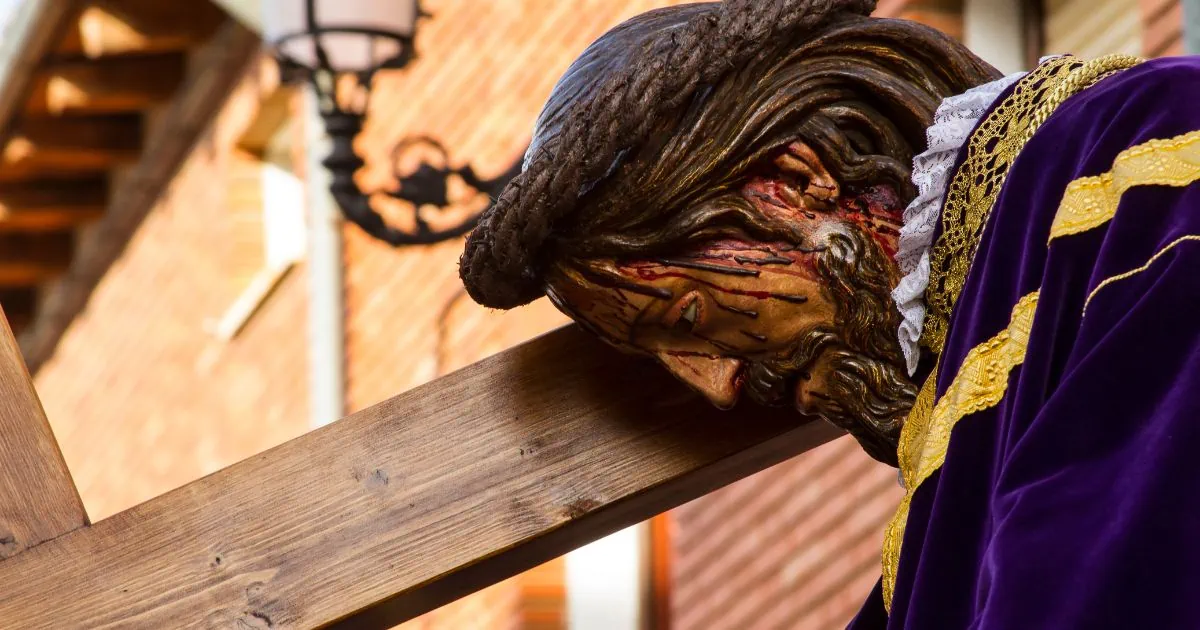

WANT TO KNOW MORE ABOUT EASTER IN MEXICO?
You’re in the right place, as this article contains everything you need to know about Semana Santa in Mexico, or “Holy Week.”
In 2027, Semana Santa runs from Palm Sunday, March 21, to Easter Sunday, March 28.
Holy Thursday (March 25) and Good Friday (March 26) are the busiest days, with processions and Passion plays across Mexico.
As someone who’s been living in Mexico since 2018, I’ve participated in Easter Holy Week celebrations in several different cities — and I must say, Mexico Holy Week is an incredible experience.
Many Mexicans take Holy Week very seriously, and watching the processions and participating in the celebrations has been unforgettable.
Ready to learn more about Easter Mexico style? This article covers it all, from Why is Semana Santa celebrated?, to where you should go to see the most unique traditions — so let’s dive in!
Semana Santa History

Wondering, Where did Semana Santa in Mexico come from?
The Spanish conquerors brought Semana Santa traditions to Mexico during the Spanish Conquest in the 16th Century (1519-1521).
During this time, the Spanish aimed to convert the indigenous populations to Christianity, and one of their methods was to introduce Christian holidays and practices.
Like many holidays in Mexico, the celebration of Holy Week in Mexico has roots in Catholic traditions — but these are also mixed with prehispanic religious traditions.
Semana Santa Traditions in Mexico

Over time, the local communities began to incorporate their own customs, beliefs, and even pre-Hispanic elements into these celebrations.
These traditions were blended with the indigenous cultures’ existing rituals and beliefs during the evangelization process.
Over time, this led to the unique way Semana Santa is observed in Mexico today. An example is the Passion Play of Iztapalapa in Mexico City.
🛐 Semana Santa in Iztapalapa Mexico City
This is a massive, community-wide event that involves thousands of local residents in a detailed reenactment of the last week of Jesus’s life.
As you might imagine, Semana Santa in Mexico City’s Iztapalapa neighborhood is not for the faint of heart.
This celebration incorporates elements unique to the area, such as characters and scenarios that are not strictly biblical.
This includes the use of Aztec drums and flutes during specific moments of the performance, which are in homage to Mexico’s indigenous roots in prehispanic times.
What are the dates of Semana Santa?
The week leading up to Easter Sunday — The dates for Semana Santa vary each year because the lunar calendar determines when they’re observed.

While the dates vary, Semana Santa Week always begins on Palm Sunday and ends on Easter Sunday. The period of Semana Santa immediately follows Lent.
Lent (Cuaresma in Spanish) is a 40-day period of fasting and penance that starts on Ash Wednesday and ends on Holy Saturday. This is the day before Easter Sunday.
The specific dates for La Semana Santa in Mexico shift annually, but usually, Holy Week begins in late March or April.
The week includes significant days such as Maundy Thursday, Good Friday, Holy Saturday, and Easter Sunday, celebrating the resurrection of Jesus.
While you might assume it’s seven days, Semana Santa, or Holy Week Easter, is actually an eight-day celebration.
Religious Celebrations & Semana Santa Holidays
1. Palm Sunday (Domingo de Ramos)

Palm Sunday marks the beginning of Semana Santa, commemorating Jesus Christ’s triumphant entry into Jerusalem.
On this day, Catholics attend Mass and often participate in processions, carrying palm fronds blessed by clergy.
The fronds are woven into crosses and other shapes, symbolizing victory and peace.
In Mexico, one notable celebration happens in San Miguel de Allende, a gorgeous colonial town in Guanajuato State.
Here, the community carries elaborately decorated palm fronds in procession through the town.
This day initiates a week of intense religious observance and community activities, blending solemnity with anticipation.
2. Ash Wednesday (Miércoles de Ceniza)

On Ash Wednesday in Mexico, believers go to a church service where a priest will draw the sign of the cross on their forehead in ash.
The cross is said to symbolize forgiveness of their sins, and reaffirm their faith in God. As a sign of repentance, Mexicans leave the ash untouched for the entire day.
Ash Wednesday is the first day of Lent, which is 40 days, and ends before Easter Sunday. It’s not a public holiday in Mexico, and businesses keep normal hours.
3. Maundy Thursday (Jueves Santo)

Maundy Thursday commemorates the Last Supper of Jesus Christ with the Apostles, as well as the washing of his feet.
In Mexico, this day is observed with various rituals, including the washing of the feet. This represents Jesus’ act of servitude towards his disciples.
Churches hold Maundy Thursday masses to remember the institution of the Eucharist, a fundamental sacrament in the Catholic faith.
In communities like Iztapalapa Mexico City, reenactments of the Last Supper are performed, deeply engaging the local population in the biblical story.
The day is filled with a somber reflection on Jesus’ love and sacrifice. It is one of the most somber days in the Semana Santa calendar.
4. Good Friday (Viernes Santo)

Good Friday is a day of mourning, marking the crucifixion and death of Jesus. It is the most solemn day of Holy Week, observed with fasting, prayer, and penance.
Across Mexico, dramatic reenactments of The Passion of Christ, known as Via Crucis, are common.
Iztapalapa, a municipality in Mexico City, hosts one of the largest and most famous passion plays in the world — with upwards of one million attendees during some years.
The Friday Night Procession of Silence in San Luis Potosí is a powerful tradition as well.
Here, participants march in complete silence, reflecting Jesus’ suffering and death.
This procession emphasizes the gravity of Christ’s sacrifice, with participants often wearing historical attire or carrying symbols of mourning.
5. Holy Saturday (Sabado de Gloria)

Holy Saturday is a day of quiet reflection, marking the transition from Christ’s crucifixion to his resurrection.
Traditionally, it is a time of waiting and vigil, culminating in the Easter Vigil after sundown, which celebrates Jesus’s resurrection.
In some parts of Mexico, Sabado de Gloria involves unique local traditions. These include the burning of Judas effigies, which symbolize the defeat of evil and betrayal.
This act, filled with satire and humor, contrasts with the day’s otherwise solemn nature, preparing the community for Easter’s joy.
6. Easter Sunday (Domingo de Pascua)

Pascua, or Easter Sunday, is a joyful celebration of Jesus Christ’s resurrection. It marks the culmination of Holy Week celebrations in Mexico.
Churches across Mexico hold Masses that are especially festive, with music and bells ringing to announce Christ’s victory over death.
This day is a profound affirmation of faith for Catholics, characterized by joyous gatherings, the sharing of meals, and, in some places, additional processions.
In cities like San Miguel de Allende and Taxco de Alarcón, Easter Sunday is also a day for community festivities.
These include city-wide festivals and the continuation of religious processions that embody the joy and renewal of Easter.
Travel During Holy Week in Mexico

Traveling in Mexico during Semana Santa offers a unique opportunity to experience the country’s rich cultural traditions and festivities.
However, it’s also a time when travel logistics can be significantly impacted due to the high volume of domestic travel.
Here’s what you need to know if you’re considering a trip to Holy Week Mexico:
Semana Santa is a busy travel period in Mexico
Semana Santa is one of the busiest travel times in Mexico, alongside Christmas, New Year, and Spring Break.
This period sees a massive influx of domestic tourists as Mexican families often vacation together, heading to beach destinations and popular colonial cities.
Flights and accommodations can be hard to secure if not booked well in advance. Even when booked in advance, know that both are generally more expensive.
Roads, especially around major cities like Mexico City, can experience significant congestion, with delays common on highways leading to popular vacation spots.
Impact on Services and Local Life
During Semana Santa, many Mexicans take at least Holy Thursday and Good Friday off, extending their break through the weekend.
This results in many businesses, including some restaurants and local stores, closing down for the period.
Although ATMs remain open, banks and public institutions may also observe the holiday. Some close entirely, and some have reduced hours.
Schools are out for two weeks, adding to the travel and activity surge as families make the most of the vacation period.
Mexico City During Holy Week

Easter in Mexico City can be a great idea if you want to avoid crowds. In fact, this is one of my favorite weeks to enjoy the city.
Many residents leave the city to vacation elsewhere, resulting in quieter streets, easier parking, and less crowded museums and restaurants.
It’s the ideal time to explore the capital’s cultural and historical attractions with fewer people and less stress.
6 Best Places to Celebrate Easter in Mexico
If you want to experience some Semana Santa in Mexico traditions, a couple of cities offer unique holy week traditions in Mexico.
As mentioned, you’ll want to book your hotel early, because accommodations can sell out months in advance to attend these noteworthy celebrations.
1. San Miguel de Allende, Guanajuato

San Miguel de Allende is a gorgeous colonial city famous for its Semana Santa Mexico observances.
Here, you’ll see daily processions, passion plays, and the unique tradition of the Burning of Judas on Easter Sunday.
🛐 Holy Week Traditions in San Miguel de Allende

The Quema de Judas, or Burning of Judas Festival, is a traditional Easter event symbolizing the destruction of evil and betrayal.
In San Miguel de Allende, paper mâché figures, often symbolizing negative characters or societal vices, are filled with firecrackers and explosives.
This town’s celebrations are also focused around the El Señor de la Columna Christ image. This image will be paraded among various churches in the area.
2. Taxco, Guerrero

In Taxco, the observance begins on Palm Sunday with a procession featuring a wooden statue of Christ on a donkey.
This is followed by various representations of Biblical figures throughout the week. Taxco is also known for its Semana Santa penitents.
These devotees participate in processions inflicting pain on themselves, a practice that remains severe in Taxco — and is not for the faint of heart.
🛐 Holy Week Traditions in Taxco Mexico

Taxco’s penitents are deeply committed to expressing their faith and repentance during Holy Week.
They are part of various religious brotherhoods or fraternities, organizations rooted in Catholic tradition that engage in acts of devotion and penance.
These acts include carrying heavy bundles of thorned blackberry canes and whipping their backs as a form of devotion. (⚠️ Note: This is disturbing for some.)
3. Iztapalapa, Mexico City

Iztapalapa Mexico hosts the largest reenactment of Christ’s crucifixion in Mexico — and one of the largest in the world.
Known as Via Crucis, or “The Way of the Cross,” it draws about one million people annually.
Via Crucis in Iztapalapa has deeply rooted traditions that date back to a cholera epidemic which plagued the area in 1843.
At this time, residents initiated a religious procession to seek divine intervention to relieve the epidemic — and according to the story, it worked.
This act of faith and petition to the divine for help is considered the origin of the annual Passion Play.
🛐 Reenactment of the Crucifixion in Iztapalapa

Participants at Iztapalapa Semana Santa include thousands of “Nazarenes” who will reenact Christ’s crucifixion. (⚠️ Note: This is disturbing for some.)
This dramatic play also includes unique secular influences not strictly found in biblical narratives, as well as characters like the Wandering Jew, King Herod’s harem, and a spy and dog accompanying Judas Iscariot.
These elements reflect a blend of religious texts, secular stories, and local traditions, enriching the reenactment with cultural and historical layers beyond the traditional Passion Story.
4. San Luis Potosí City

The Procesión del Silencio, or Procession of Silence in Downtown San Luis Potosí City, stands as a profoundly impactful representation of the Passion of Christ.
It is considered one of Mexico’s most significant cultural and religious events.
Started in 1954 and inspired by similar observances during Semana Santa in Spain (the city of Seville, to be exact), this event draws more than 160,000 visitors annually.
In 2013, it was officially recognized as part of the state’s cultural heritage.
🛐 The Procesión del Silencio in San Luis Potosi

This Walk of Silence occurs on Good Friday night, starting at the main church in the city — Templo de Nuestra Señora del Carmen (AKA El Carmen Church).
The procession winds through the historic center’s streets, marked by complete silence except for the sounds of drums and bugles.
This silence, and the aroma of incense filling the air, create a solemn atmosphere throughout the city.
Devotees and participants from various religious brotherhoods carry large platforms bearing religious images, embodying a collective act of mourning and reflection.
Additionally, the procession features participants in distinctive attire, representing different roles within the narrative of Christ’s Passion.
5. Chihuahua

In Chihuahua, the Tarahumara indigenous people maintain a unique Mexico Holy Week celebration that blends their spiritual beliefs with Christian traditions.
🏃🏽♂️ Note: The Tarahumara are also known as the Raramuri. These are the famous Mexico barefoot runners you might have seen in documentaries like Goshen.
Their Rarámuri Holy Week is a mix of ancient rituals and Christian observances that focuses on themes like “good versus evil.”
It incorporates traditional rituals, dances, and ceremonies that reflect the Rarámuri’s deep spiritual connection to their environment and pre-hispanic beliefs.
This event shows how indigenous cultures interpret and integrate Christian traditions with their ancestral heritage.
6. Cholula

Cholula is a pueblo magico (magic town) located just outside Puebla City, which is famous for elaborate Good Friday processions.
In these, participants pass over intricate tapestries on the ground in the town square that are made from colored sawdust, sand and flower petals.
This artistic expression within these alfombras de arena (sand carpets), and the town’s deep-rooted religious practices, offer a unique way to experience Easter Week in Mexico.
Semana Santa in Mexico: Frequently Asked Questions
Does Mexico Celebrate Easter?
Yes — Easter is widely celebrated in Mexico, however, it is part of a multi-day holiday within Semana Santa (Holy Week).

The Semana Santa period is marked by parades, processions, and reenactments of The Passion of the Christ. Holy Week culminates on Easter Sunday.
How is Semana Santa celebrated in Mexico?
Semana Santa is celebrated in Mexico with elaborate religious processions, passion plays, and rituals commemorating the last days of Jesus Christ’s life.

Communities across the country participate in events like the Procesión del Silencio (Procession of Silence), and the reenactment of the Crucifixion of Christ.
What is Good Friday called in Mexico?
Good Friday is known as Viernes Santo in Mexico (and other Spanish-speaking countries).
It is a day of solemn commemoration of Jesus Christ’s crucifixion and death, with various religious activities and processions taking place throughout the country.
What is Lent called in Mexico?
The word for Lent in Spanish is cuaresma. It comes from the Latin word “cuarenta,” which means 40, and signifies that Lent lasts 40 days.
How is Lent celebrated in Mexico?
Lent in Mexico is a 40-day ritual of sobriety and abstinence. It’s meant to replicate the contemplative period Jesus Christ spent in the wilderness.
As with many other countries, Mexico Lent is a time of year when religious Catholics give up one “vice” for 40 days — ie. gambling, shopping, sweets or fatty foods.
Many also observe meatless Fridays, and don’t eat meat on Fridays throughout the 40 days of Lent. However, they can eat things like seafood, fish and shrimp on Fridays.
Empanadas de vigilia (vigil empanadas) are another popular food during lent in Mexico. Instead of meat, which most empanadas have, these contain tuna.
What is Carnaval in Mexico?
Carnival in Mexico (sometimes spelled “Carnaval”) is a large-scale festival marking the last day to enjoy the things you will abstain for during the 40 days of Lent.

Mexico Carnaval takes place the Tuesday before Ash Wednesday, which is the first day of Lent.
During Lent, Catholics observe “meatless Fridays,” and often give up one vice (like beer or watching TV) — so Carnaval is a time to indulge and enjoy before Lent.
In some parts of Mexico, though not all, Carnaval is a citywide party similar to Carnival in Rio de Janeiro or Mardi Gras in New Orleans.
Mazatlán and Heroica Veracruz (AKA Veracruz City) have two of the best Mexico Carnival celebrations, with parades, floats, costumes, music, dancing and debauchery.
Is Holy Week a holiday in Mexico?
Yes — Holy Week is considered a holiday period in Mexico.
Many people take time off work to participate in or attend the numerous religious ceremonies and events that take place throughout the week.
While the whole week has a holiday on each day, Good Friday and Easter Sunday are two of the most celebrated.
Is Semana Santa a good time to visit Mexico?
Yes and No — While Semana Santa offers a unique glimpse into Mexico’s rich cultural and religious practices with processions and ceremonies, it is also a busy time for travel.
For those wanting to observe a unique religious celebration, Semana Santa offers an experience showcasing tradition and community spirit.
However, it’s also a period marked by crowded destinations, higher prices for travel and accommodations, and a general busyness as locals and tourists participate in or observe the festivities.
This is not the ideal time for those seeking a quieter, more relaxed visit or looking to avoid higher costs — especially if you’re planning to visit the popular beaches in Mexico like Puerto Vallarta, Cancun and Cabo.
In fact, the beaches see double or even triple their normal crowds during Semana Santa when many Mexican families travel to the beach for Easter week.
Does Mexico shut down for Holy Week?
Many businesses in Mexico reduce hours or close completely, especially on the most significant days of Holy Week, like Good Friday and Easter Sunday.
However, tourist areas, resorts, and restaurants generally may remain open to accommodate visitors.
What is Semana Santa in English?
The Semana Santa meaning in English is Holy Week.
What is Easter in Spanish?
In Spanish, the word Pascua means Easter. It is pronounced pass-kwah.
Final Thoughts: Semana Santa in Mexico
Exploring Mexico Semana Santa is a profound way to share in the country’s traditions and spirituality. However, here are some pros and cons to consider:
Still, visiting Mexico during Semana Santa is an unforgettable experience — especially in the cities with large-scale celebrations, like Taxco and San Miguel de Allende.
It’s a time when the contrast between solemnity and celebration comes to life, presenting challenges and rewards.
For those looking to bring back gifts or baskets as mementos, the bustling markets and local shops are treasure troves of unique finds, improving your travel experience with tangible memories of a deeply spiritual journey.
