
15 Popular Types of Mexican Dances That Will Get You Moving to the Beat

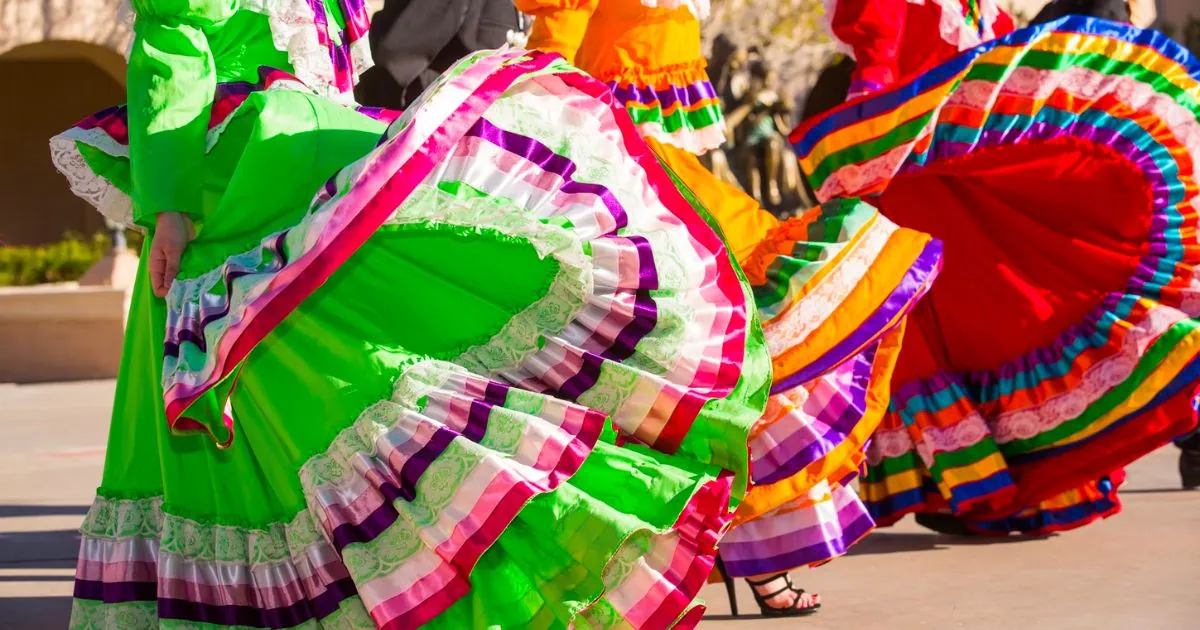

READY TO LEARN ABOUT POPULAR MEXICo DANCES?
If so, you’re in the right place. This list features all the best Mexican dances — from the traditional Mexican dances, to more modern versions.
As someone who’s been living in Mexico since 2018, I’ve seen various dances and even tried my hand myself. I admit, I’m far from the best dancer, but it was fun to learn, and the experiences have been unforgettable.
So, just what are some of the most popular Mexican dances? Let’s explore the 15 Mexican dances you should experience when traveling through Mexico.
15 Types of Mexican Dances
1. Jarabe Tapatío: The Mexican Hat Dance

The Jarabe Tapatío is a testament to Mexico’s cultural heritage that emerged as a symbol of national pride and unity, and was officially recognized as Mexico’s National Dance in 1924.
This dance originated in the 19th Century in Jalisco state, particularly the capital city of Guadalajara. More than just a dance, Jarabe Tapatío is a performance that narrates the courtship ritual.
💃🏻 how to perform Jarabe Tapatío
At the heart of the Jarabe Tapatío is the distinctive attire of the dancers.
The males wear a charro suit, which symbolizes the Mexican cowboy, while the females wear china poblana dresses. These are said to portray the essence of Mexican femininity and grace.
The dance itself involves a series of flirtatious interactions between the male and female dancers.
It ends in a sequence where the dancers revolve around a sombrero placed on the ground, symbolizing their unity.
One of the most famous Mexican dances, Jarabe Tapatío was inspired by earlier Spanish dance forms like the Jarabe Gitano and Zambra. This is a type of Flamenco dance from Andalusia, Spain.
Still, Jarabe Tapatío evolved to include elements unique to Mexican culture, and is now considered its own dance.
2. Danza la Jarana

The Jarana is a lively dance and genre of music from the Yucatan Peninsula, located in southeastern Mexico. It symbolizes the region’s Mayan and Spanish heritage.
The Jarana is often performed during festivals and celebrations, where participants don traditional attire, enhancing the visual spectacle of the dance.
If you’re traveling to Merida, Mexico, considered the “Cultural Capital of the Yucatan Peninsula,” you’ll see La Jarana performed in public spaces a few times per week.
It’s one of the dances in Mexico that expresses regional identity, bringing communities together through its energetic rhythms and festive atmosphere.
💃🏻 how to perform La Jarana Dance

The dance is characterized by its fast tempo, intricate footwork, and joyful interaction between dancers. If you’re looking for easy Mexican dances, this one isn’t for you!
Set to the rhythm of the jarana guitar, this dance includes elements of indigenous Mayan, African, and Spanish influences — reflecting the cultural melting pot of Mexico’s Yucatán Peninsula.
3. Danza de los Diablos

The Danza de los Diablos (Dance of the Devils) is a dance rooted in Mexico’s African heritage.
A dance that powerfully represents Afro-Mexican identity, it is mainly celebrated in the states of Guerrero and Oaxaca. These two states each have a sizable Afro-Mexican population.
This dance symbolizes the resistance and resilience of African slaves who were brought to Mexico during the colonial period.
The dancers wear masks and costumes representing devils, which symbolically embodies defiance against their oppressors.
👺 how to perform Danza de los Diablos

The lead dancer, known as El Diablo Mayor (The Main Devil), performs with distinct elegance, guiding the dance narrative. This reflects the slaves’ struggle for freedom and their cultural survival.
It is performed during unique festivals, including the Day of the Dead, serving as a testament to the enduring spirit and cultural syncretism of the African diaspora in Mexico.
4. Danza del Venado

The Danza del Venado (The Deer Dance) is a Mexico dance native to the states of Sonora and Sinaloa, and the indigenous Yaqui and Mayo peoples.
This dance dramatizes the hunt of the deer, representing a deep respect for nature and the animal kingdom.
The central figure, the deer, is portrayed by a dancer wearing a headdress with antlers, symbolizing the grace and spirit of the deer.
🦌 How to Perform Danza del Venado
The dance itself, accompanied by rattles and traditional instruments, is a ceremonial plea for harmony between humans and nature.
Initially performed by hunters seeking success and protection, this indigenous dance has evolved into a significant cultural expression.
It celebrates the renewal of life and the interconnectedness of all beings.
5. Danza de los Viejitos

Hailing from Michoacán state, the Danza de los Viejitos (Dance of the Old Men) is a dance that cleverly combines humor with cultural insights.
It is attributed to the Purepecha people, and originated in what’s now known as the Pueblo Purepecha Region. This area encompasses 22 municipalities of the state of Michoacán, including the capital city of Morelia.
Through allegory, this dance critiques Spanish colonial rule while celebrating indigenous wisdom and longevity.
👴🏼 How to Perform Danza de los Viejitos
Dancers, often young men, wear wooden masks depicting old men and move to the rhythm of traditional music.
Some will hold a cane in one hand, or simply hunch over and hold their lower back as if in physical pain.
The dancers move in slow steps, circling around the cane if they have one, which is said to mimic the frailty of the elderly.
However, as the dance progresses, these “old men” display surprising agility and vitality of movement — which symbolizes the enduring strength and resilience of the Purepecha people.
6. Danza de los Voladores

The Danza de los Voladores (Dance of the Flyers) isn’t a dance, per se.
Rather, it’s the name of a breathtaking aerial ritual performed by several ethnic groups in Mexico and Central America — but mainly the Totonac people from the town of Papantla, Veracruz.
The ritual, traditionally performed during significant cultural festivals and ceremonies, showcases the Totonac’s deep spiritual connection to their ancestors and the natural world.
Today, you can see it performed in various places throughout Mexico — and I’ve seen it everywhere from Mexico City to Tulum. However, it is most closely associated with the Totonac in Papantla.
In fact, you might even see this ritual colloquially referred to as Los Voladores de Papantla. This means the Flying Dancers of Papantla, or the Flying Men of Papantla, as it’s usually men who perform it.
This dancing ritual holds profound cultural significance. It emphasizes respect for nature and the cosmos, a prayer for fertility and balance in the natural world, and much more — as you’re about to read.
🪶 How to Perform Danza de los Voladores

This ancient ceremony involves four dancers, known as voladores (flyers), and a fifth participant, called the caporal (foreman), who plays a flute and drum.
They all climb an approx. 100-foot-tall pole (30 meters), from which ropes secure them. The four voladores drop from the pole head first and spiral earthward, while the caporal remains atop the pole in a small seat.
Their metaphorical dance is designed to invoke the four cardinal directions (north, south, east and west), and four elements (Earth, air, fire and water).
In 2009, UNESCO designated this ritual as an Intangible Cultural Heritage. This prestigious designation describes practices, expressions, knowledge, and skills that are passed down through generations — and worth preserving.
Today, Los Voladores de Papantla remain a vivid symbol of Mexico’s indigenous heritage, and a testament to the enduring strength of its native traditions.
7. Danza la Conquista

This dance is a historical and dramatic dance that narrates the Spanish conquest of the Aztec Empire.
It focuses on figures such as Spanish Conquistador Hernán Cortés, Aztec Emperor Moctezuma, and La Malinche, a Mestizo woman who acted as a translator between the Aztecs and Spanish.
La Conquista vividly portrays the complex interactions between Spanish conquerors and the indigenous people of Mexico.
El Baile de la Conquista (The Conquest Dance) highlights themes of betrayal, cultural clash, and the transformation of Mexican society.
🇲🇽 Significance of La Conquista Dance
Dancers embody the historical characters through elaborate costumes and masks, bringing to life the tragic events that reshaped the New World.
La Conquista Dance is a powerful educational tool and a compelling artistic expression of Mexico’s colonial history.
It is commonly performed in regions deeply influenced by these historical events, like Michoacán, Nayarit and Jalisco states.
8. Danza Matachines

The Matachines dance is a colorful dance performed across Mexico, blending indigenous and Spanish influences.
This ceremonial dance features dancers in elaborate costumes, including masks and headdresses, symbolizing the fusion of cultures that characterize much of Mexican history.
🇲🇽 Significance of Matachines Dance

The Matachines Dance tells a story of the battle between Moors and Christians.
The theme of it reflects the historical conflicts in Spain, but has been localized to reflect Mexican narratives and spirituality.
Participants in the Matachines dance, both young and old, come together in a display of community and faith.
It is a significant Mexican folk dancing tradition, usually performed during religious festivals and patron saint celebrations.
9. Danza Moros y Cristianos

Moros y Cristianos (Moors and Christians) is a theatrical dance commemorating the historical battles between Christians and Moors in Spain. Yet, Mexico has adapted it to reflect its own colonial and indigenous history.
It dramatizes the Christian reconquest of the Iberian Peninsula and is characterized by elaborate costumes and masks that differentiate the Moors from the Christians.
Through a series of choreographed battles and dialogues, the dance weaves together themes of conflict, cultural exchange, and, ultimately, the triumph of one group over the other.
Moros y Cristianos is one of those types of Mexican dances that is a reminder of Mexico’s complex history, blending European and indigenous elements in a performative narrative.
10. Polka Norteña

The Polka Norteña Dance (Northern Polka) is a lively dance and music genre that originated with European immigrants, especially the Germans and Czechs.
They brought the polka rhythm with them from their home countries to Northern Mexico during a wave of immigration in the 19th Century.
This genre quickly became a staple of Mexican music culture, particularly in North Mexico states like Chihuahua, Nuevo León, and Tamaulipas.
The traditional dance is characterized by its fast pace and the use of accordions, reflecting the fusion of Mexican and European influences.
Polka Norteña is one of the popular Mexican dances during celebrations and social gatherings.
11. Danza La Bamba

La Bamba dance is a traditional folk dance from Veracruz, Mexico. It is known throughout Latin America, the United States, and the world for its energy and rhythm.
This dance is often performed to the sound of guitars and jarana huasteca, with the dancers executing intricate footwork around a ribbon or a rope.
The most famous version of the song “La Bamba,” performed by Richie Valens in the 1950s, has helped to popularize the dance internationally.
It was later re-recorded by the band Los Lobos, and known as one of the most famous Mexican dance songs.
La Bamba is a symbol of Mexican identity and festivity, showcasing the rich cultural melting pot of the Veracruz region.
12. Danza Flor de Piña

One of the most fun Mexican dances names, Flor de Piña (Pineapple Flower) is a graceful dance from the state of Oaxaca, specifically the region of San Juan Bautista Tuxtepec.
In this area of northern Oaxaca state, known as the Papaloapan Basin area because it sits on the Río Papaloapan River, you’ll find pineapples growing most of the year.
This dance was created in 1958 by the teacher Paulina Solís Ocampo. She hails from the Papaloapan region, and is one of the most famous Mexicans from Oaxaca.
Solís Ocampo created the dance for a regional festival aiming to showcase Oaxaca’s beauty and cultural richness.
🍍 How to perform Flor de Piña Dance
The dancers, exclusively women, perform with pineapples carried in their hands or shoulders. At the end of the dance, they often offer the pineapples as gifts,
The women wear a traditional huipil (wee-peel) and skirt to represent the region’s different indigenous communities.
The dance symbolizes fertility and gratitude for the earth’s bounty, celebrating the joy of the pineapple harvest.
Flor de Piña has become a symbol of Oaxacan identity and is a highlight of the Guelaguetza Festival.
This is one of the largest folk festivals in Latin America, and the largest and cultural festival in Oaxaca. Each year, it attracts thousands and thousands of visitors from worldwide.
13. Danza Chinelos

Chinelos is a traditional dance from the state of Morelos. It is known for elaborate costumes and masks that caricature European facial features, reflecting a form of resistance to Spanish colonial rule.
The dance is performed during Carnival and other significant festivals.
Dancers dressed in elaborate, brightly colored costumes and towering hats bounce and move to the rhythm of the music to mock the Europeans.
The Chinelos dance has become a symbol of cultural pride and resistance, embodying the playful spirit and resilience of the Mexican people.
It has spread to other regions, including parts of Mexico City and the state of Guerrero, becoming one of the types of Mexican style dances that celebrate identity, history, and community.
14. Salsa Dance

In full disclosure, salsa dancing, cumbia dancing, and bachata dancing (which is next up on this list) are NOT Mexican traditional dances. However, they’re both popular dances in Mexico today.
As in other countries, salsa dancing in Mexico is a vibrant and passionate cultural expression.
Rooted in Afro-Caribbean rhythms, it has evolved in Mexico to embrace a fusion of indigenous influences. With sensual movements and infectious beats, Mexican salsa dancing is a unique and energetic dance style.
From the lively streets of Mexico City to coastal resort towns in Mexico, salsa clubs and festivals attract enthusiasts of all skill levels. If you’re looking to take salsa lessons in Mexico, you’ll have no issue finding them.
15. Bachata Dance

Originating in the Dominican Republic, the bachata dance is one that’s common in Mexico clubs and at parties today.
Fusing Latin and Afro-Caribbean influences, bachata music has emotive melodies to accompany the dance’s passionate connection between partners.
In fact, some of the top dance music Mexico has comes from the bachata style.
A romantic partner dance, it has found a second home within Mexican dance culture. Bachata dancing in Mexico captivates with its sultry and rhythmic allure.
The basics to bachata dance includes two parts. First, there’s a three-step with a Cuban dance hip motion, and that’s followed by a tap including a hip movement on the fourth beat.
Best Mexican Dances Guide & FAQ

What are the Mexican dances called?
Mexican dances are often collectively referred to as Mexican folk dances or Mexican folklore dances.
These dances include a wide range of styles and forms that reflect the diverse cultural heritage of Mexico, incorporating indigenous, African, and Spanish influences.
Each region in Mexico has unique dances that celebrate local traditions, historical events, and cultural stories.
The term “Mexico folk dance” encompasses this variety and richness, highlighting these Mexico traditional dances’ communal aspects.
What was the first Mexican dance?
Identifying the first Mexican dance is challenging due to Mexico’s rich pre-Hispanic history and the lack of written records from those times.

However, many indigenous dances, such as those performed by the Aztecs and other native peoples, can be considered among the earliest.
For example, dances dedicated to agricultural deities or seasonal changes, which were important to indigenous cultures, likely predate the arrival of Europeans.
These ancient dances set the foundation for Mexico’s diverse dance traditions, blending with Spanish and African influences over time.
Why is dance important to Mexican culture?
Dance expresses Mexican culture, highlighting the nation’s history, diversity, and artistic creativity.

It serves as a medium to celebrate and preserve the rich melting pot of Mexico’s indigenous, African, and Spanish heritage.
Through dance, communities express joy, spirituality, resistance, and social unity, marking significant life events, festivals, and religious ceremonies.
Different types of Mexican dances strengthen community bonds, foster cultural pride, and pass down traditions and stories from one generation to the next.
What is Mexico’s famous dance?
Mexico’s most famous dance is the Jarabe Tapatío, often called Mexican Hat Dancing.

This dance, a symbol of national pride, originates from Jalisco and showcases a courtship between a man and a woman. In it, the man tries to win the woman’s affection.
What are some modern Mexican styles?
Some notable modern Mexican dance styles include Quebradita, Reggaeton, Latin American Urban, and Cumbia Mexicana.

Looking to do a few Mexican dances at parties? Here is a list of some of the common names of Mexican dances you may see performed at a Mexican dance party.
💃🏻 La Cumbia Mexicana
Originating from Colombian Cumbia dance, the Cumbia Mexicana has been adapted in Mexico.
Though it has unique regional variations, it’s often characterized by rhythmic, swaying movements. This is a very popular dance at social gatherings and Mexican dancing parties.
💃🏻 Norteñas and Duranguense dances of Mexico

These dances are associated with Norteño and Duranguense music genres, which are styles of music form Northern Mexico states, like Durango.
These dances feature polka-based rhythms for the music. During Norteñas and Duranguenses, dancers typically perform with a lively, bouncy step that matches the upbeat tempo of the music.
Some typical Duranguense dances include the Redova (Redowa), Chotís (AKA Schotí or Schottische), La Cuadrilla (Square Dance), Mexican Line Dance, Polka and El Revolcadero.
💃🏻 Quebradita
The famous Quebradita started in the 20th Century, making it one of the most popular contemporary or modern Mexican dances.
Quebradita is a high-energy dance combining Mexican banda music elements with acrobatic moves. It often involves partners performing lifts, flips, and dips to the beat of the music.
What is the Mexican dance where they stomp?
The Zapateado is a Mexican dance characterized by stomping.
It involves vigorous footwork that mimics the sound of stomping and is a key element in many Mexican folk dances, including the Jarabe Tapatío and Son Jarocho.
The rhythmic patterns are created by tapping or stomping the feet on wooden platforms or the ground.
What dances are done at a quinceanera?
Several Mexican dances at quinces (quinceañera, or Sweet 15 parties) are traditionally performed. These include the Waltz, where the birthday girl dances with her father.

Another highlight at Mexican quinceañera parties is the Baile del Sorbete (Sorbet Dance). Here, the birthday girl dances with her chosen chambelán (escort).
There are also group dances with her chosen Corte de Honor (Court of Honor) which include modern dances chosen by the quinceañera girl.
For this, you might expect to see contemporary Mexican party dances like salsa, cumbia and/or bachata. These are three of the most famous types of Mexican dances at parties.
👰🏻 Curious about Mexican wedding dances?
While one of the most famous types of Mexican dances at a quinceañera, the Waltz Dance (or Vals Dance) is also one of the most traditional Mexican wedding dances.
Of course, there are also many different types of Mexican dances you might see at a wedding. These will usually reflect the vibe of the wedding, with formal dances at some weddings, and contemporary dances at others.
What are popular Cinco de Mayo dances?
Popular dances during Cinco de Mayo celebrations include the Jarabe Tapatío (Mexican Hat Dance), and regional dances from across Mexico, like the Son Jarocho from Veracruz state.

These traditional Mexican folk dances celebrate Mexican culture and history. In particular, many are said to celebrate Mexico’s victory at the Battle of Puebla, which Cinco de Mayo commemorates.
Final Thoughts: Traditional Mexican Dances

Traditional Mexican dances embody the spirit of Mexico, from the footwork at a lively Mexican party to the graceful performances of professional Mexican dancers.
These dances are more than just entertainment — they celebrate cultural heritage and unity.
As we share these captivating moments of Mexicans dancing, we contribute to keeping these traditions alive.
Whether shopping for traditional attire or enjoying the spectacle, each dance offers a unique insight into Mexico’s rich history.
Let’s continue to embrace and share the joy of Mexican dances, creating a deeper appreciation for this beautiful art form that connects us all.
