
30 Fun Facts About Cinco de Mayo You Probably Don’t Know


LOOKING FOR THE BEST CINCO DE MAYO FUN FACTS?
You’re in the right place. This article shares some of the best 30 fun facts about Cinco de Mayo, and some of these will probably shock you.
🇲🇽 As an American who has lived in Mexico since 2018, I’ve experienced my share of American and Mexican Cinco de Mayo traditions — and yes, they are different.
In this article, you’re about to uncover the truth about Cinco de Mayo, including important facts about Cinco de Mayo you probably never knew!
Buckle up as we are about to talk about the interesting facts about Cinco de Mayo, but first, let’s address the #1 most-asked 5 de Mayo question: What is Cinco de Mayo?
What is Cinco de Mayo?
Cinco de Mayo commemorates the Mexican army’s unlikely victory over French forces at the Battle of Puebla on May 5, 1862.

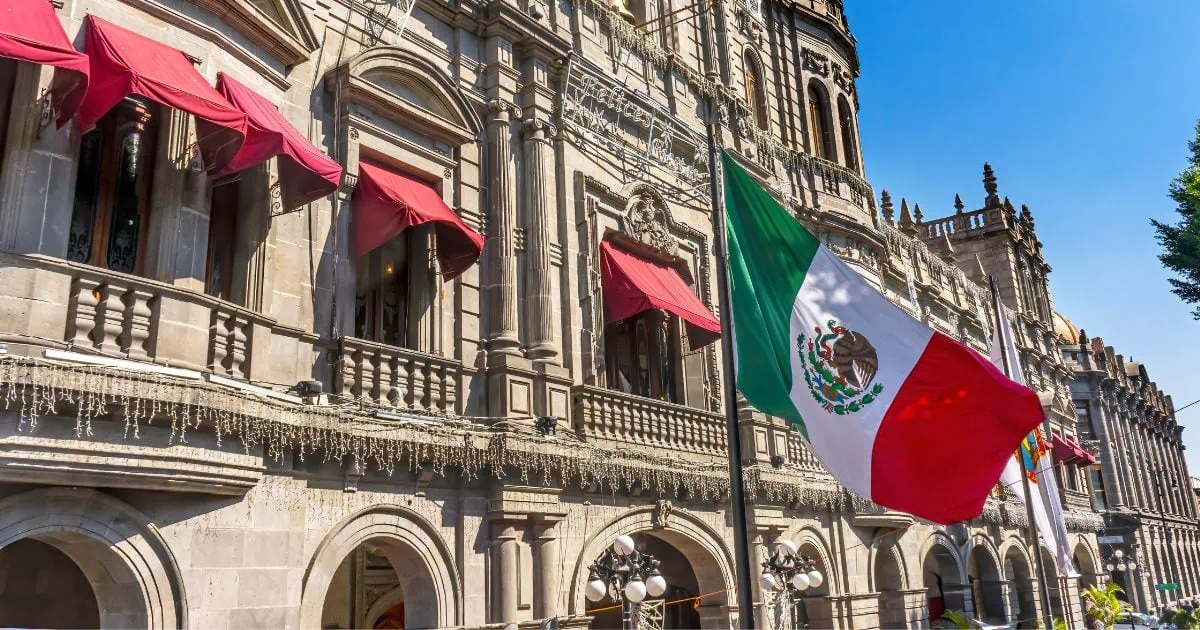
It’s a celebration of Mexican resilience and patriotism, particularly emphasized in the state of Puebla, Mexico, and its capital of Puebla de Zaragoza (AKA Puebla City).
The Battle of Puebla was led under General Ignacio Zaragoza’s command, which is why his name is now immortalized in the city’s name.
Zaragoza is one of the most important Mexican heroes.
30 Fun Facts About Cinco de Mayo
1. Cinco de Mayo is NOT Mexico’s Independence Day

I repeat: Cinco de Mayo and Mexican Independence Day ARE NOT the same holiday… How’s that for fun Cinco de Mayo facts you probably didn’t know!?
Independence Day is celebrated on September 16, while Cinco de Mayo is May 5th — but let’s examine some other differences. In fact, Mexican independence was declared more than 50 years before the Battle of Puebla.
Here’s another one of the interesting Cinco de Mayo facts you probably don’t know: A typical Cinco de Mayo celebration in Mexico is much more low-key compared to Independence Day celebrations.
The truth is that Cinco de Mayo is not considered a major holiday — and even the largest Cinco de Mayo celebration in Mexico pales in comparison to El Grito de Dolores during Independence Day.
Why is Cinco de Mayo celebrated?
Cinco de Mayo commemorates the Mexican army’s victory over France at the Battle of Puebla on May 5, 1862, not Mexico’s Independence from Spain.
Mexican Independence Day falls on September 16. It marks the anniversary of Mexico’s independence from Spanish rule, initiated by the priest Miguel Hidalgo y Costilla’s Call to Arms in 1810 (called El Grito de Dolores).
The confusion between these two historical events arises due to their significance in celebrating Mexican history and resistance against foreign domination.
Cinco de Mayo vs Día de la Independencia
A typical Cinco de Mayo celebration in Mexico is much smaller than a Mexico Independence Day celebration.
In fact, the Mexico City Independence Day celebration is one of the country’s largest events.
While everyone from the Mexican president to state governors host city-wide Independence Day celebrations, you won’t find that Cinco de Mayo is a celebration.
2. Cinco de Mayo is not a federal holiday in Mexico
Contrary to popular belief in the United States, Cinco de Mayo is not a federal holiday across most of Mexico.
Its observation is primarily limited to the state of Puebla, where the historic battle occurred.
While some schools and public offices may close in Puebla de los Angeles (Puebla City), the fifth of May is generally a regular working day elsewhere in Mexico.
This distinction highlights the holiday’s localized importance in Mexico versus its broader cultural celebration in the United States.
3. Mexicans don’t call it Cinco de Mayo

Looking for facts about Cinco de Mayo in Spanish? While Cinco de Mayo in English is a well-known phrase, in Mexico, many use different terminology.
In Mexico, the holiday is more formally called El Día de la Batalla de Puebla (The Day of the Battle of Puebla), rather than Cinco de Mayo.
The term Cinco de Mayo has gained more popularity in the United States as part of the holiday’s commercialization and celebration of Mexican-American culture.
4. Cinco de Mayo celebrates Mexico’s victory over France
Cinco de Mayo marks the Mexican army’s triumph against French troops at the Battle of Puebla on May 5, 1862.
This victory is celebrated because it represented a significant morale boost for the Mexican people and symbolized resistance against foreign intervention.
The battle occurred during the Franco-Mexican War, a conflict arising from Mexico’s temporary suspension of debt payments to European governments, leading France, under Napoleon III, to attempt to establish a monarchy in Mexico.
5. Cinco de Mayo started on the 5th of May 1862

Cinco de Mayo originated on May 5, 1862, when the Mexican army, under the leadership of General Ignacio Zaragoza, unexpectedly defeated French forces at the Battle of Puebla.
Despite being outnumbered and poorly equipped, the Mexican troops defeated one of the world’s most formidable military powers at the time.
This victory symbolized Mexican resilience and patriotism, inspiring a sense of unity and national pride among Mexicans.
Wondering, When did Cinco de Mayo start? — as in, when did the holiday first take place?
That was on May 9, 1862 when then-President Benito Juárez declared the anniversary of the Battle of Puebla as a national holiday.
6. The French Army was considered the best at the time of their defeat
At the time of the Battle of Puebla, the French military was regarded as one of the most powerful in the world, having experienced success in various European conflicts and imperial endeavors.
Their defeat by the Mexican army was unexpected, as the French forces were better equipped and larger in number compared to the Mexican defenders.
7. Families in California celebrated Cinco de Mayo first
The first recorded celebrations of Cinco de Mayo in the United States date back to the 1860s in California, where Mexican families living there held festivities to commemorate the victory at the Battle of Puebla.
These early celebrations were expressions of solidarity and pride among the Mexican community in California, showcasing the historical ties and cultural heritage shared across the border.
8. President Benito Juárez declared Cinco de Mayo a national holiday in Mexico on May 9, 1862
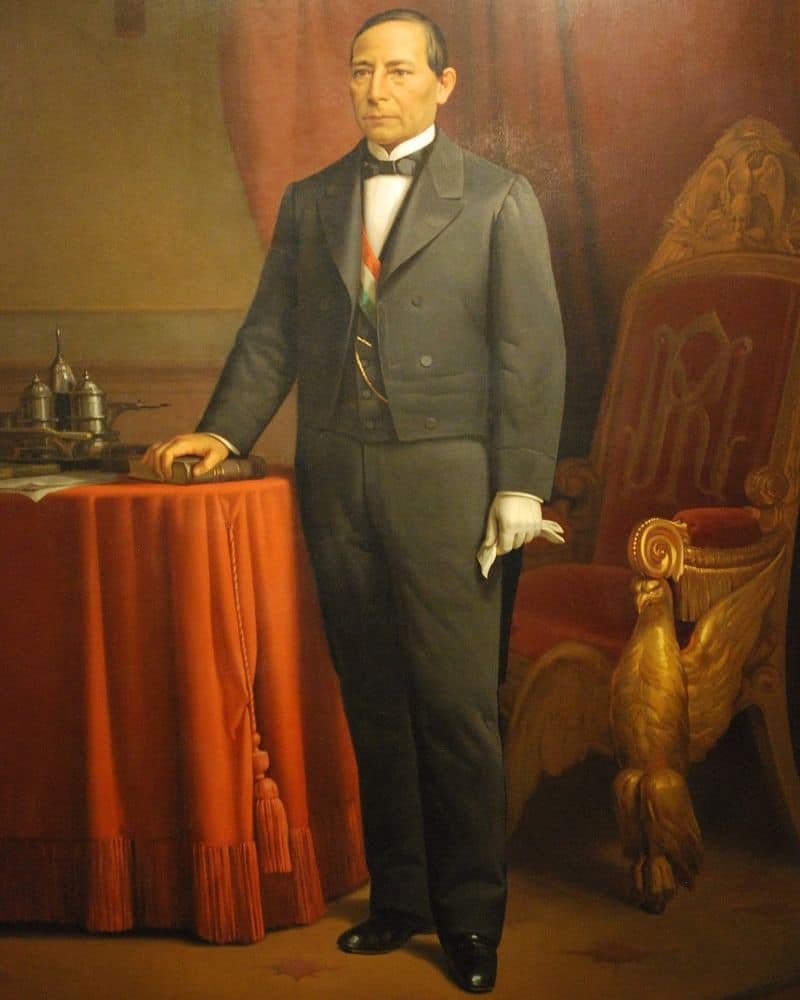
Following the surprising victory at the Battle of Puebla, President Benito Juárez declared May 5th as a national holiday in Mexico on May 9, 1862.
This declaration was intended to commemorate the courage and determination of the Mexican soldiers in defeating the French invaders.
The day, known as the “Battle of Puebla Day” or “Battle of Cinco de Mayo,” is observed to remember the Mexican army’s valor and the significance of the victory in Mexico’s resistance against foreign occupation.
9. General Zaragoza was honored in a special way
General Ignacio Zaragoza, who led the Mexican troops to victory at the Battle of Puebla, has been honored in numerous significant ways due to his leadership and the impact of the victory.
One notable tribute is in the city of Puebla itself, which has been renamed Puebla de Zaragoza in his honor. Monuments, museums, and annual celebrations commemorate his legacy and highlight his role in Mexican history.
10. Despite the defeat, France won the Franco Mexican War
The victory at Puebla did not halt the French invasion of Mexico.
Following the setback, France intensified its military efforts, ultimately succeeding in capturing Mexico City and installing Maximilian of Habsburg as Emperor of Mexico.
This period of French rule lasted from 1864 until 1867, ending when French forces withdrew from Mexico. Maximilian was also captured and executed by Mexican forces, restoring the republic under President Benito Juárez.
11. Porfirio Díaz made a name for himself during the battle

Porfirio Díaz, who would later become one of Mexico’s most notable and controversial presidents, first distinguished himself as a military leader during the Battle of Puebla.
His actions in the battle contributed significantly to the Mexican victory, and he emerged as a national hero.
Díaz’s military success at Puebla and subsequent rise in political power laid the groundwork for his eventual presidency, during which he implemented significant modernization but also exercised authoritarian control.
12. Cinco de Mayo, Napoleon III & the U.S. Civil War

Not many know this, but the Battle of Puebla’s outcome had broader geopolitical implications beyond Mexico’s borders.
It is said that Napoleon III of France had ambitions in Mexico were part of a larger strategy which included potentially supporting the Confederate States during the U.S. Civil War.
A French-controlled Mexico could have provided a strategic base to supply and support the Confederacy, potentially altering the course of the war.
The Mexican victory at Puebla, therefore, not only halted French advances temporarily but also indirectly supported the Union by preventing France from aiding the Confederate cause.
13. President Roosevelt helped popularize Cinco de Mayo celebrations in the U.S.
President Franklin D. Roosevelt played a key role in popularizing Cinco de Mayo in the United States by implementing the Good Neighbor Policy in 1933.
This policy aimed to improve relations with Latin American countries, and the celebration of Cinco de Mayo became a symbol of cultural diplomacy and solidarity with Mexico.
The policy encouraged the observance of Cinco de Mayo as a way to celebrate and appreciate Mexican culture and heritage, contributing to the holiday’s growing popularity in the U.S.
14. The holiday is associated with Mexican-American pride & The Chicano Rights Movement

Cinco de Mayo has become a symbol of Mexican-American pride and cultural identity in the United States.
It gained prominence during the Chicano Rights Movement of the 1960s and 1970s, when activists sought to reclaim Mexican-American heritage and rights.
What is the Chicano Rights Movement?
As you’ve read, Cinco de Mayo commemorates the victory of the Mexican Army over France at the Battle of Puebla in 1862.
This historical moment came to represent the struggle against foreign domination and the resilience of the Mexican people — and its symbolism was repurposed for Chicano activists in the 1960s and 1970s.
The Chicano Rights Movement (AKA Chicano Resistance Movement) used this symbolism to reflect the contemporary struggle for civil rights, social justice, and cultural affirmation within the United States.
During the Chicano Movement, Cinco de Mayo became popular as a day to celebrate Mexican-American heritage 🇲🇽🇺🇸 and mobilize the community around key issues, such as educational inequality, labor rights, and political representation.
15. The Battle of Puebla is re-enacted every year in Mexico City
Each year on May 5th, Mexico City commemorates Cinco de Mayo yearly by re-enacting the Battle of Puebla.
The re-enactment involves participants dressed in period uniforms, engaging in mock battles to bring history to life for spectators.
It serves as an educational and patriotic event, reminding the public of the courage and resilience of the Mexican army.
To attend, you’ll want to head to the Peñón de los Baños, located near Mexico City International Airport. Also located here, you’ll find some of the best Mexico City hot springs.
16. Not every Mexican state celebrates Cinco de Mayo

Cinco de Mayo is not uniformly celebrated across all of Mexico. Its observance is primarily concentrated in the state of Puebla, where the 1862 battle against French forces took place.
In the Mexican city of Puebla, Cinco de Mayo festivities include military parades, special Mexican dishes, speeches from government officials, and reenactments of the Battle of Puebla.
However, outside of Puebla, Cinco de Mayo is often a regular day with no official government holidays observed.
17. Cinco de Mayo was officially recognized in the US in 2005
Cinco de Mayo received official recognition in the United States in 2005.
This marked a significant acknowledgment of the day’s cultural and historical importance to the Mexican-American community.
18. Cinco de Mayo is more widely celebrated in the US than in Mexico

One of the more interesting facts about 5 de Mayo is that it’s celebrated more fervently and on a larger scale in the United States than in Mexico.
While the holiday commemorates a Mexican military victory, it has evolved in the U.S. into a broader celebration of Mexican culture and heritage.
Large-scale parades, festivals, and educational events across the U.S. reflect the holiday’s significance in promoting cultural understanding and unity.
This widespread observance contrasts with its more localized and subdued recognition in Mexico, where it remains primarily a regional celebration in the state of Puebla.
19. The world’s largest Cinco de Mayo Festival is in Los Angeles
Wondering, How is Cinco de Mayo celebrated in the U.S.? You can find large-scale celebrations that draw in hundreds of thousands of attendees in places like Denver, Chicago, San Antonio and New York City.
However, the Los Angeles Cinco de Mayo celebration, known as Fiesta Broadway, is said to be one of the largest in the world.
This festival features mariachi bands, Latino music superstars, and lots of Mexican food, attracting large crowds annually.
20. Mole poblano is considered the official dish of Cinco de Mayo
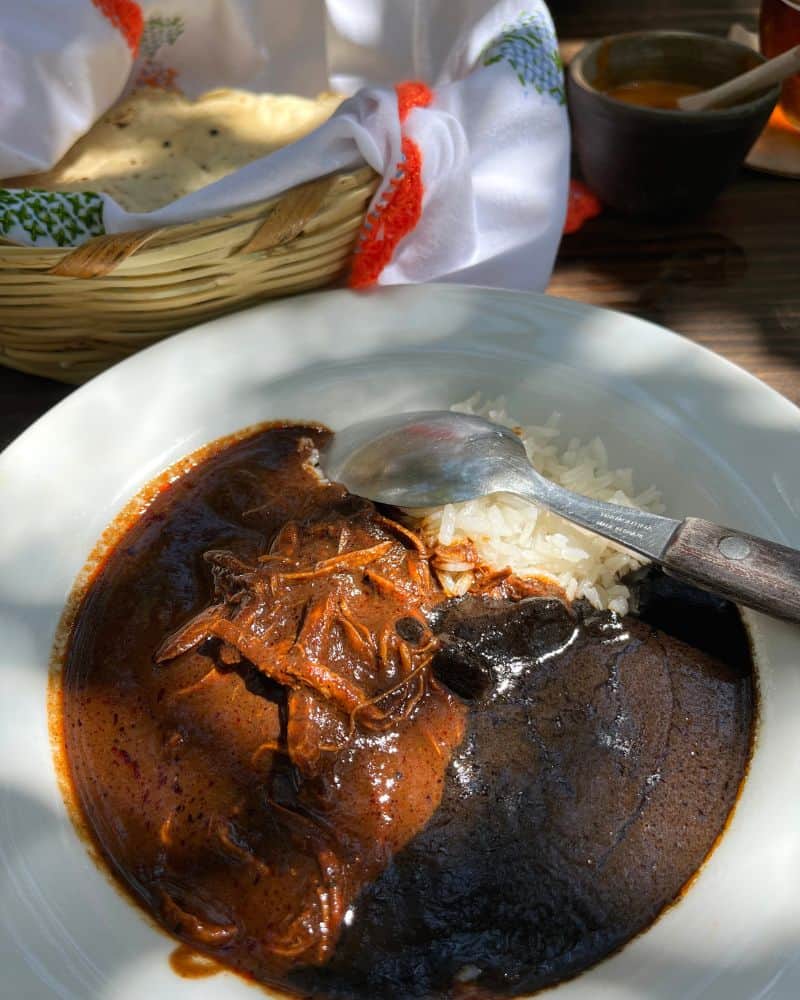
Mole is a traditional Mexican sauce known for its rich, complex flavors and deep cultural roots, often considered the national dish of Mexico. (Well, it’s technically the co-national dish, along with chile en nogada).
It is made from a blend of chili peppers, spices, chocolate, and several other ingredients, resulting in a distinctive dark sauce.
Though Oaxaca state is known for these seven moles, mole poblano hails from the city of Puebla. As you now know, this is the site of the Battle of Puebla, which Cinco de Mayo commemorates.
Its association with this historic victory and its profound cultural significance make mole poblano the official dish of Cinco de Mayo, celebrated for its unique taste and historical relevance.
21. Mariachi Music is a staple of Cinco de Mayo celebrations

Mariachi music, with its rich blend of vocal harmony, stringed instruments, and trumpets, is central to Cinco de Mayo festivities, embodying Mexico’s spirit and cultural heritage.
Originating in the 19th Century in Western Mexico, mariachi bands have become a symbol of Mexican culture. They play a key role in celebrations by performing traditional songs about Mexico’s history, struggles, and triumphs.
During Cinco de Mayo, mariachi music is performed in parades, restaurants, and public squares across the United States and Mexico, providing a soundtrack that enhances the festive atmosphere and honors Mexican heritage.
22. Baile Folklórico is commonly performed during festivities
Baile Folklórico, a traditional Mexican folk dance celebrating Mexico’s cultural history through movement and costume, is a common feature of Cinco de Mayo celebrations.
These dances vary widely across Mexico’s regions, each telling a different story through elaborate costumes and choreography.
Performances often occur at Cinco de Mayo events, showcasing the dancers’ skills and the heritage of Mexican dance.
23. The traditional colors associated with Cinco de Mayo are red, white & green

Red, white, and green, the colors of the Mexican flag 🇲🇽, are featured in Cinco de Mayo celebrations, symbolizing national pride and the Mexican army’s victory at the Battle of Puebla.
These colors represent unity (white), the blood of the national heroes (red), and hope (green).
They are woven through decorations, clothing, and even food at Cinco de Mayo events.
24. There’s no traditional clothing for Cinco de Mayo

Cinco de Mayo does not have specific traditional clothing associated with its celebration.
While there is no set dress code, many people wear colors and outfits that pay homage to Mexican culture, such as sombreros, serapes, and embroidered dresses.
These clothing choices are more about expressing cultural appreciation and festive spirit rather than adhering to a traditional costume specific to the holiday.
25. Cindo de Mayo became a profitable holiday for beer companies in the 1980s

In the 1980s, Cinco de Mayo began to be significantly commercialized in the United States.
At this time, beer companies identified the holiday as an opportunity to market their products to a broader audience, particularly targeting Mexican-American consumers.
This commercialization has led to Cinco de Mayo becoming associated with beer and alcohol promotions, transforming it into a highly profitable day for beer brands and retailers.
The emphasis on alcohol has sparked debates about the holiday’s cultural and historical significance, contrasting its original commemorative intentions with its modern-day commercial aspects.

This trend reflects the growing popularity of tequila in the American market, driven by an increasing interest in premium and ultra-premium tequila varieties.
Cinco de Mayo has played a significant role in popularizing tequila in the U.S., with many festivities highlighting tequila-based drinks as a celebration staple, further cementing its status in American drinking culture.
27. Americans eat millions of avocados on May 5th
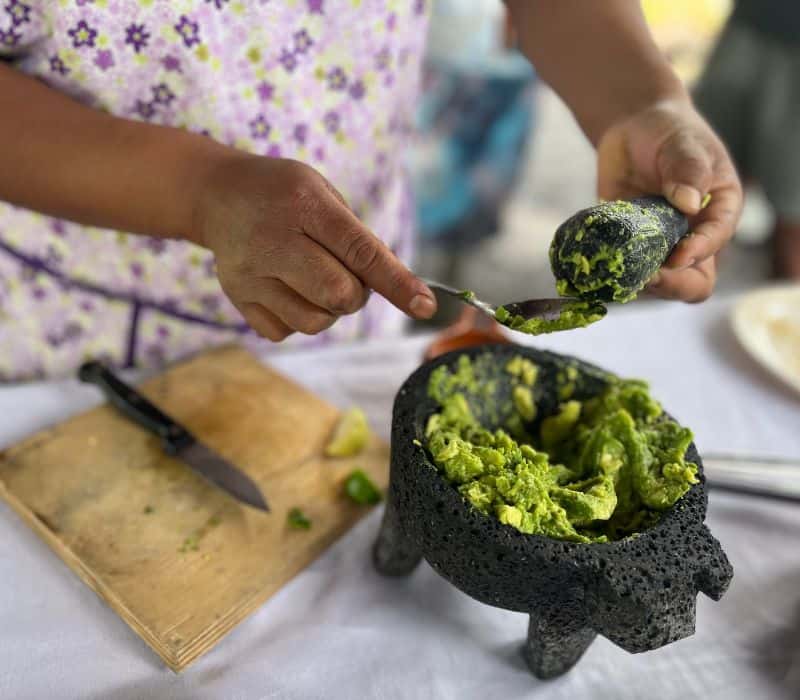
In the United States around Cinco de Mayo, it’s estimated that 151.2 million pounds of avocados are sold in the two weeks before the holiday. (🥑 Note: I’ve also seen this reported at 81 million pounds of avocados).
This spike in avocado sales highlights the fruit’s popularity, particularly for making guacamole, a staple of Cinco de Mayo celebrations.
This is one of the best fun facts about Cinco de Mayo food, and it also helps the California Avocado Commission by building demand for California avocados.
28. There’s an annual 5 de Mayo air guitar competition in the Cayman Islands
In the Cayman Islands, Cinco de Mayo celebrations take an unconventional turn with an annual air guitar competition at the Cayman Hard Rock Café.
This event exemplifies how Cinco de Mayo can be a platform for diverse expressions of joy and community participation worldwide.
29. Cinco de Mayo celebrations in some U.S. cities involve chihuahuas
Cinco de Mayo celebrations in some U.S. cities include unique events such as chihuahua races and costume contests.
These light-hearted festivities celebrate the chihuahua, a dog breed originating in Mexico, and add a family-friendly component to the day’s activities.
Events like the Running of the Chihuahuas in Washington, D.C., have gained popularity.
They draw participants and spectators with the charm and competitiveness of these small but spirited dogs and showcase the playful side of Cinco de Mayo celebrations.
30. People skydive for Cinco de Mayo in Vancouver
Vancouver Cinco de Mayo celebrations include unique and adventurous activities, such as the Vancouver Skydiving Boogie.
The annual events in Vancouver are part of broader festivities that aim to celebrate the day with fun, excitement, and a sense of adventure. There’s even aerial acrobatics and an annual air show!
Skydiving for Cinco de Mayo is an example of how the holiday is celebrated in diverse ways worldwide, incorporating local customs and interests into celebrating Mexican heritage and the holiday spirit.
Cinco de Mayo in Mexico vs USA: My Experience

I hate to be the bearer of bad news, but this really isn’t one of the popular holidays in Mexico anywhere in the country.
As I’d always heard the celebration was its most grand in Puebla City, so I visited Puebla for 5 de Mayo (because it’s basically just any other day in the rest of the country).
However, it wasn’t much of a big deal there either — certainly not compared to the elaborate Mexican Christmas celebrations and Day of the Dead festivities I’ve become accustomed to since moving to Mexico in 2018.
However, in the United States, Cinco de Mayo has evolved into a broad celebration of Mexican culture and heritage, marked by parades, music, festive foods and occasional educational events.
After celebrating 5 de Mayo in Puebla Mexico, it seems that it’s more of a U.S. to honor Mexican Americans and the community’s contributions and history (and drink lots of Mexican beers 🍻).
Cinco de Mayo Mexico: Frequently Asked Questions
What is the Cinco de Mayo meaning?
Cinco de Mayo literally translates into May 5th in English. The word “mayo” means May, and “cinco” is the number five.
Cinco de Mayo refers to the date of the Mexican army’s victory over France at the Battle of Puebla in 1862.
When did the holiday Cinco de Mayo start?
May 9, 1862 — On this date, then-Mexican President Benito Juárez declared the anniversary of the Battle of Puebla as a national holiday.
It was known officially as Día de la Batalla de Puebla (Battle of Puebla Day) or Día de la Batalla de Cinco de Mayo (Battle of Cinco de Mayo Day).
Why is Cinco de Mayo unique?
Cinco de Mayo is unique because it celebrates the significant underdog victory of the Mexican army over French forces in 1862 at the Battle of Puebla, symbolizing resilience and national pride.

As this particular battle took place in Puebla during the Franco-Mexican War, you won’t find that Cinco de Mayo is celebrated in other parts of Mexico.
Unlike Mexican Independence Day on September 16th, which is a MAJOR Mexican holiday, Cinco de Mayo has become a widespread cultural celebration in the United States to emphasize Mexican-American heritage and contributions.
What is the real meaning of Cinco de Mayo?
The real meaning of Cinco de Mayo is to commemorate the Mexican army’s unexpected victory over the French at the Battle of Puebla on May 5, 1862.
It represents a symbol of Mexican resistance against foreign domination and a celebration of national pride and heritage.
What do Mexicans call Cinco de Mayo?
In Mexico, Cinco de Mayo is often called “El Día de la Batalla de Puebla” (The Day of the Battle of Puebla), focusing on the historical significance of the victory rather than the date itself.
What are the colors for Cinco de Mayo?
The colors for Cinco de Mayo are green, white, and red, mirroring the Mexican flag.
These colors symbolize hope (green), unity (white), and the blood of national heroes (red).
Who invented Cinco de Mayo?
Cinco de Mayo doesn’t have an “inventor” — rather, it marks the historic victory of the Mexican army over French forces at the Battle of Puebla in 1862.
The celebration evolved over time, with Mexicans and later Mexican-Americans commemorating the day.
Although this might not be considered a Cinco de May trivia question, one of the most important 5 de Mayo facts is that this day commemorates an incredible day for the Mexican people.
Why is Cinco de Mayo so popular in the United States?
Cinco de Mayo gained popularity in the United States as Mexican-Americans began to celebrate it to honor Mexican heritage and culture.
It has also been embraced by a wider audience due to marketing and the universal appeal of Mexican cuisine, alcohol, and fun festivities.
What country is Cinco de Mayo most popular in?
The U.S. — One of the more interesting facts of Cinco de Mayo is that it is most popular in the United States, where it has evolved into a significant annual celebration of Mexican culture and heritage.
This is in stark contrast to celebrating 5 de Mayo in Mexico where it is observed more modestly, and primarily in Puebla.
Here, you might see battle reenactments or a video mapping show on the Puebla Government Palace. Select restaurants in town also offer a special menu as well, and you’ll see festive decorations in some bars and public squares.
How do kids celebrate Cinco de Mayo?
Cinco de Mayo for kids includes participating in educational activities to teach them about Mexican culture and history and enjoying traditional Mexican foods.

They also often take part in crafts like making papel picado, or participating in Cinco de Mayo-themed parades and school events.
It is also important that Cinco de Mayo history for kids is shared so that children of all ages can grow up to learn about the importance of this day.
Final Thoughts: Fun Facts About Cinco de Mayo
I hope you learned some Cinco de Mayo interesting facts in this article! Of them all, know that Cinco de Mayo serves as a vibrant celebration, rich in interesting Cinco de Mayo history and culture.
Whether diving into Cinco de Mayo quick facts, exploring Cinco de Mayo trivia questions, examining Cinco de Mayo statistics, or finding Cinco de Mayo facts for students — there’s a wealth of knowledge to learn about this historical event.
Cinco de Mayo offers a unique opportunity to celebrate Mexican heritage and freedom, from its roots commemorating a David vs. Goliath victory, to its modern-day festivities and Cinco de Drinko drinking games at Mexican-themed parties.
So, as we say Happy 5 de Mayo to one another, let’s embrace the day with joy, reflection, celebrate Mexican culture and foster an appreciation for the rich tapestry of history and culture it represents.
