Day of the Dead vs Halloween: The Real Differences Explained

Have you been wondering about Day of the Dead vs Halloween? Do you want to know if they’re the same holiday? Then you’re in the right place.
If you’ve seen photos of Día de Muertos in Mexico, you might wonder whether it’s basically Mexico’s version of Halloween.
I can understand why: Both holidays happen around the same time of year, involve skeletons and other spooky imagery, and can include costumes, parties, sweets, and public celebrations.
However, after living in Mexico since 2018 and experiencing Día de Muertos in a few cities, I can tell you that Día de Muertos has a very different purpose and feeling from Halloween.
Día de Muertos is primarily about remembering and honoring people who have died.
Halloween, meanwhile, developed from a different European tradition and is now largely associated with costumes, parties, trick-or-treating, and playful encounters with the spooky or supernatural.
So, Day of the Dead is not simply the Mexican version of Halloween, but let’s continue to dive deeper.
What’s the Difference Between Day of the Dead and Halloween?
The simplest way to understand the difference is to look at what each celebration is trying to accomplish.
| 💀 Día de Muertos | 🎃 Halloween | |
|---|---|---|
| Main focus | Remembering deceased loved ones | Costumes, fun, and spooky traditions |
| Main dates | November 1 and 2, with regional variations | October 31 |
| Central tradition | Ofrendas and remembering the dead | Costumes and trick-or-treating |
| Typical symbols | Marigold flowers, candles, altars, sugar skulls, papel picado, incense | Pumpkins, witches, ghosts, black cats, zombies, vampires |
| Connection to the dead | Welcoming back and remembering loved ones | Traditionally associated with supernatural beings and spirits |
| Common activities | Visiting cemeteries, preparing altars, family time, sharing food | Trick-or-treating, parties, costumes, games |
Of course, neither holiday is celebrated exactly the same way everywhere.
That is especially important with Día de Muertos because traditions vary significantly from one Mexican community to another.
UNESCO describes it as a living, diverse tradition with different expressions depending on the Indigenous community, region, and group celebrating it.
When Is Day of the Dead?

Día de Muertos is generally associated with November 1 and November 2.
November 1 is commonly associated with children who have died, while November 2 is traditionally associated with deceased adults.
However, there isn’t one universal schedule followed throughout Mexico.
Some communities begin their observances several days earlier, and particular dates can depend on local customs and the circumstances of the people being remembered.
Mexico’s consumer protection agency notes that some regional celebrations can begin as early as October 28.
That’s one reason I wouldn’t tell a traveler that Day of the Dead is only November 1 and 2. It’s not!
The most visible celebrations often center around those dates, but the traditions surrounding them can begin earlier.
Why Is Day of the Dead Different From Halloween?

One of the biggest differences is the way death is approached.
Halloween has traditionally incorporated frightening imagery, supernatural beings, ghosts, monsters, and the idea of encountering things that go bump in the night.
Día de Muertos takes a different approach.
Rather than trying to scare away the dead, many traditions focus on welcoming deceased loved ones back into the family circle.
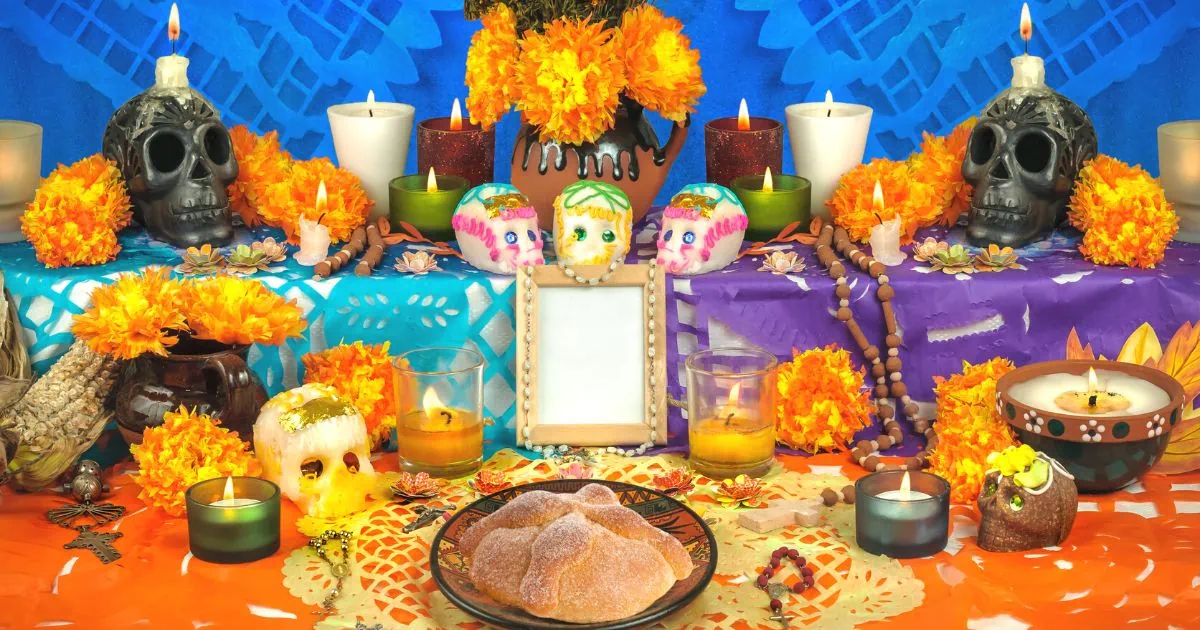
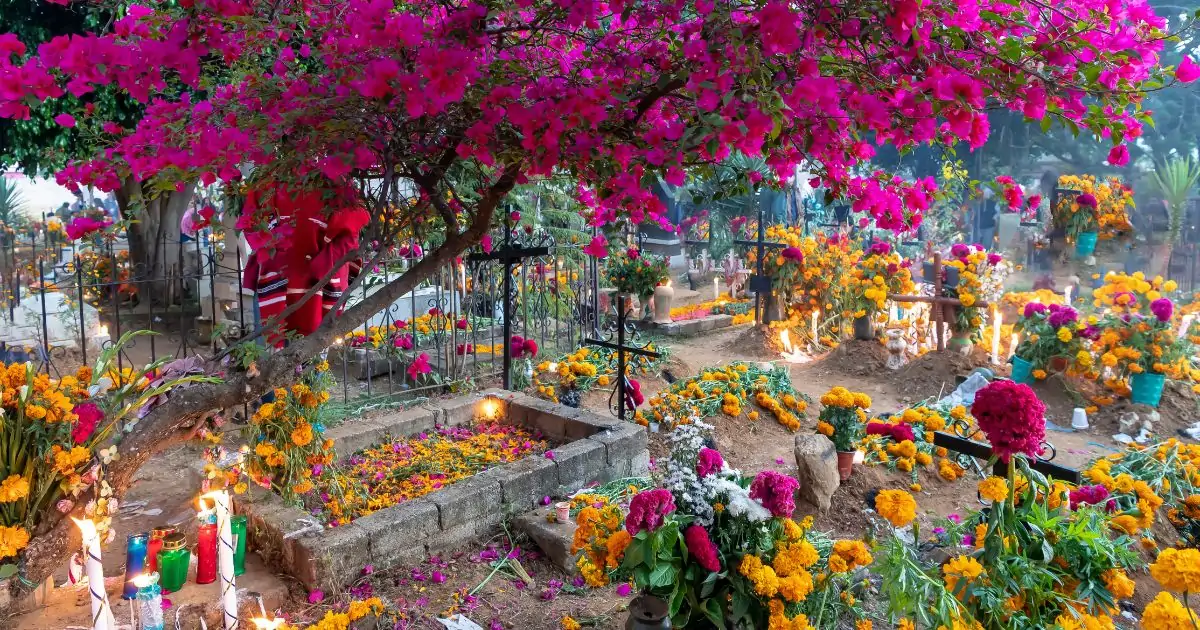
Families may prepare an ofrenda, or altar, with photographs, favorite foods, drinks, candles, flowers, and other meaningful objects.
The Smithsonian describes the ofrenda as a deeply personal part of Día de Muertos, designed to evoke memories of people who are no longer alive and bring those memories into the present.
That’s a very different idea from simply being frightened by ghosts.
Ofrendas vs. Halloween Decorations

This is probably one of the most obvious differences you’ll notice.
During Halloween, you might see a house decorated with pumpkins, fake spider webs, skeletons, ghosts, witches, and other spooky decorations.
During Día de Muertos, you may see something completely different: an ofrenda filled with personal memories.
You can put anything you want on your ofrenda, but a traditional altar might include some (or all) of these items.
- Photographs of deceased family members
- Cempasúchil (marigolds)
- Candles
- Water
- Salt
- Copal incense
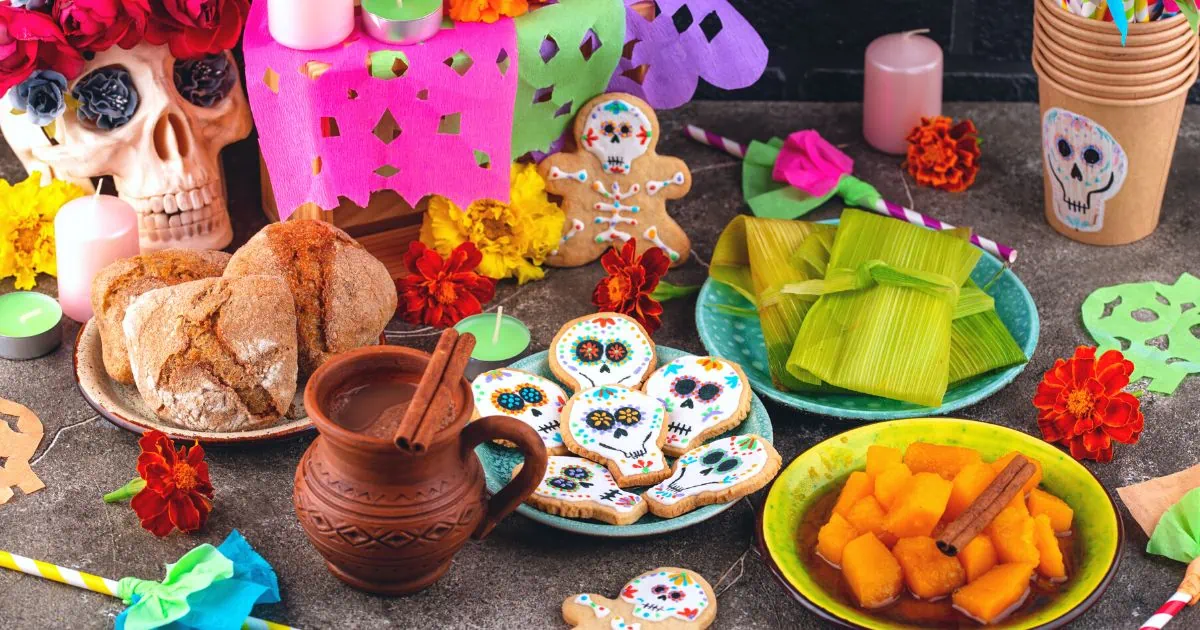
- Pan de muerto
- Favorite foods and drinks of the deceased
- Sugar skulls
- Papel picado
- Personal belongings of the deceased
I’ve seen ofrendas that feel incredibly intimate because they aren’t simply decorations.
They tell you something about the person being remembered — what they liked to eat, what they drank, what they enjoyed, and what their family remembers most about them.
That’s one of the things that makes Día de Muertos so different from Halloween.
The Day of the Dead vs Halloween Symbols are Different, Too

Halloween has its own instantly recognizable symbols; think pumpkins, witches, black cats, ghosts, bats, and spiders.
Día de Muertos has an entirely different visual language. Some of its best-known symbols include these.
- 🌼 Cempasúchil (Mexican marigolds)
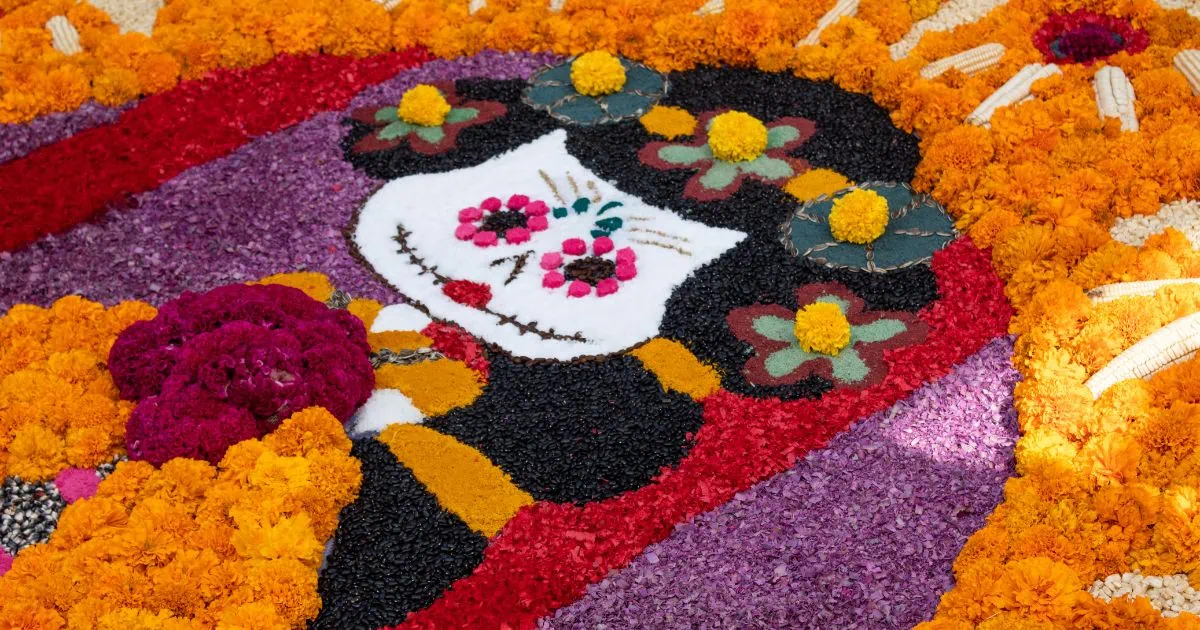
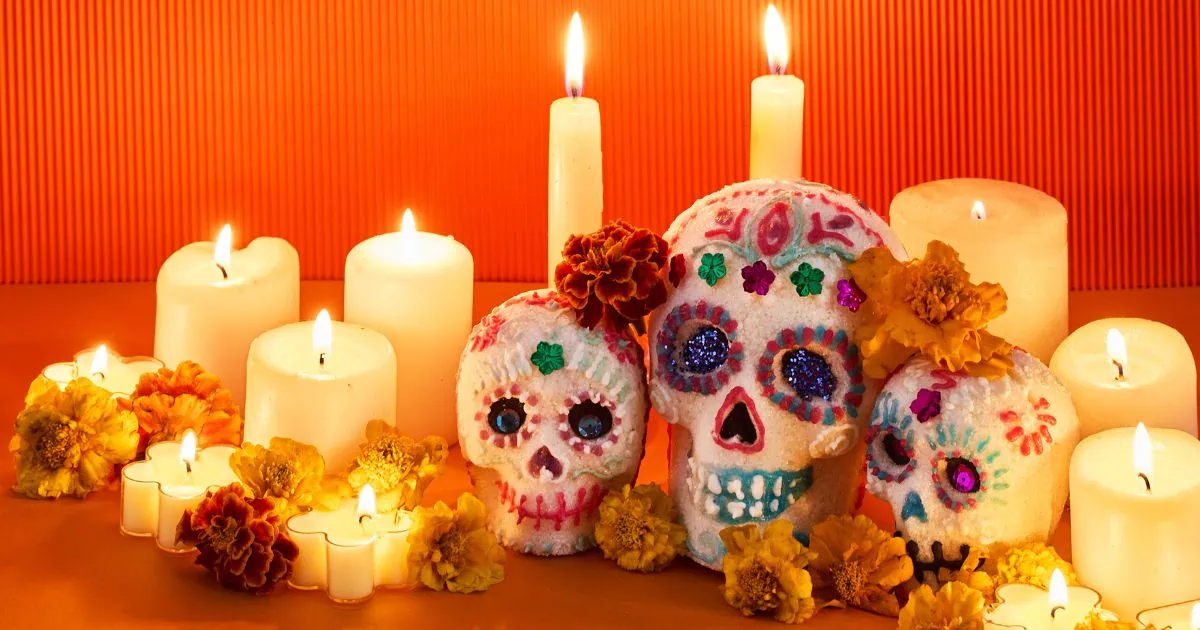
- 🍭 Calaveritas de azúcar (sugar skull candy; seen above)
- 🏳️🌈 Papel picado (colorful paper art)
- 🕯️ Candles and copal incense
- 🥐 Pan de muerto (Day of the Dead bread)
- 📸 Photographs of the deceased
- 💀 Skeleton figures like La Cartina
I’ve written about many of these individually because once you understand what they represent, Día de Muertos decorations become much more meaningful.
💀 Check out all my Day of the Dead articles here.
For example, bright orange cempasúchil (marigold flowers) is associated with remembrance and is commonly used to decorate altars and create pathways.
Sugar skulls, meanwhile, are colorful representations of calaveras that have become one of the most recognizable symbols of Día de Muertos.
And papel picado adds movement and color to an altar while representing the element of wind in many interpretations.
You can see the deeper meaning behind these symbols in my guide to Day of the Dead symbols and their meanings.
Do People Wear Costumes for Day of the Dead?

Yes, and this is one reason the two celebrations can sometimes look similar.
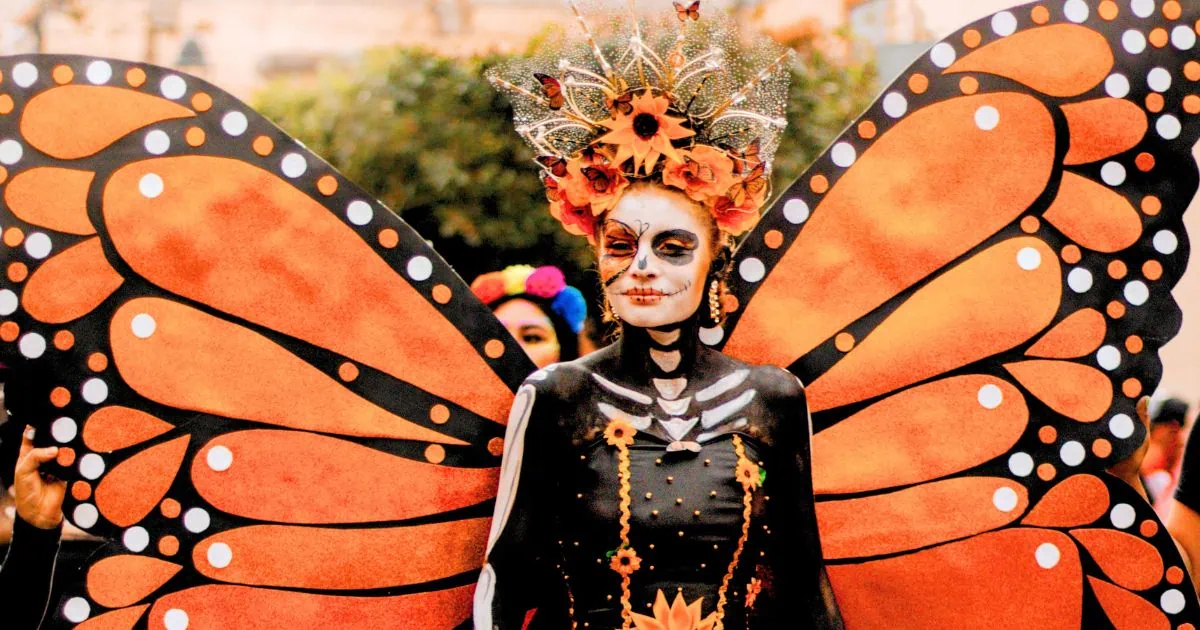
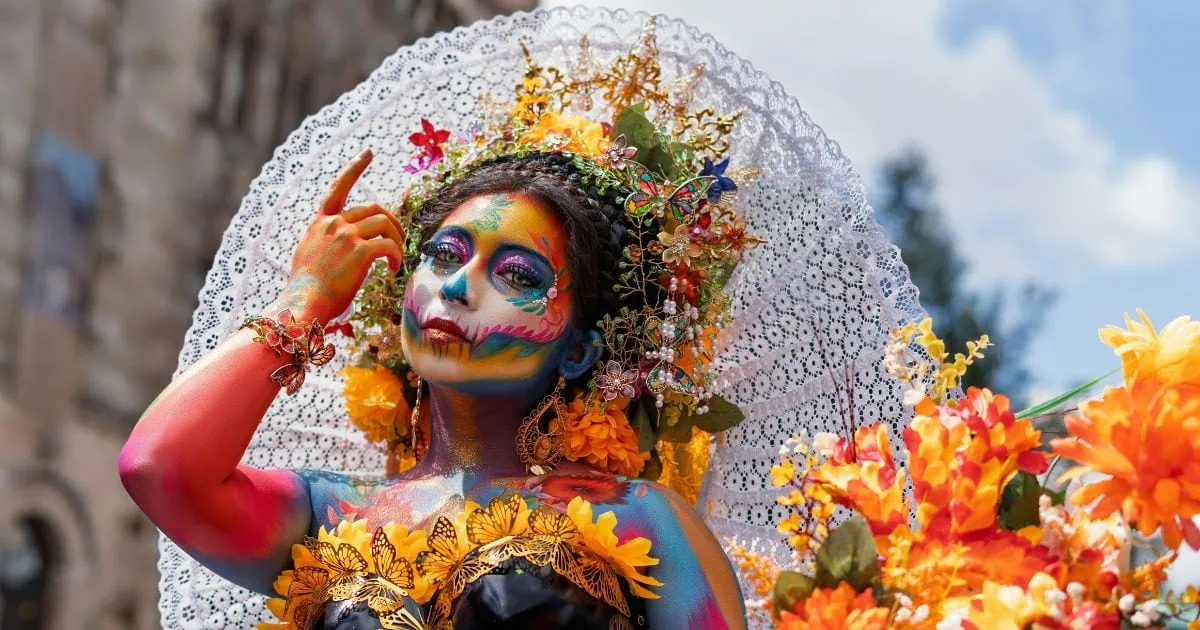
You’ll see people dressed up for Día de Muertos, particularly at public events, parades, festivals, and other modern celebrations.
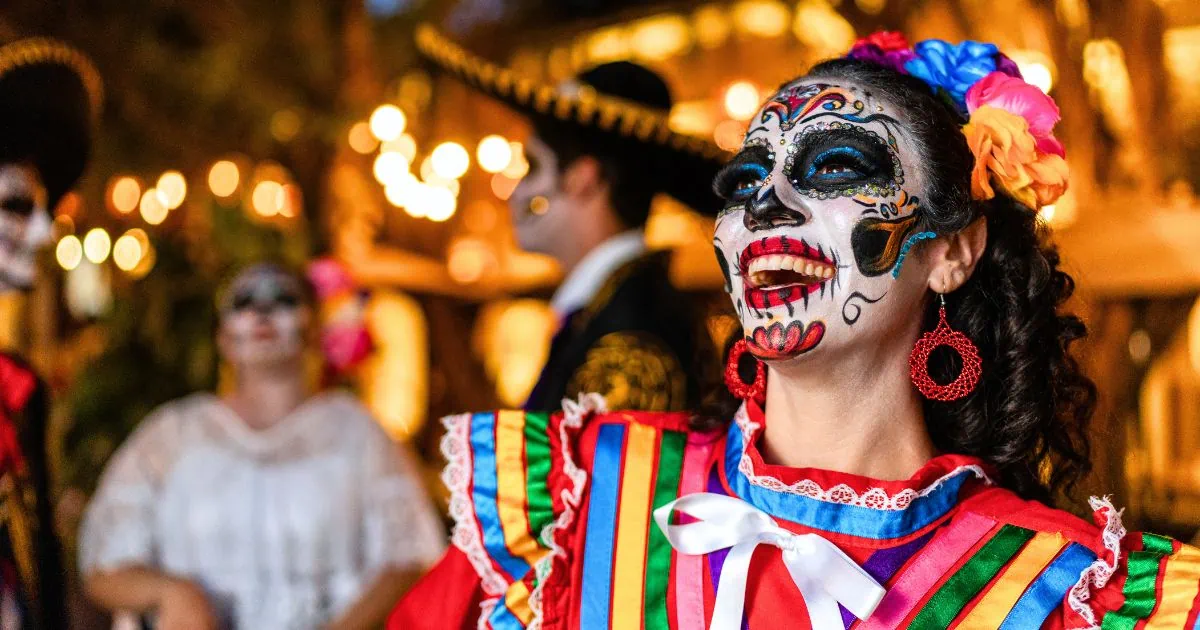
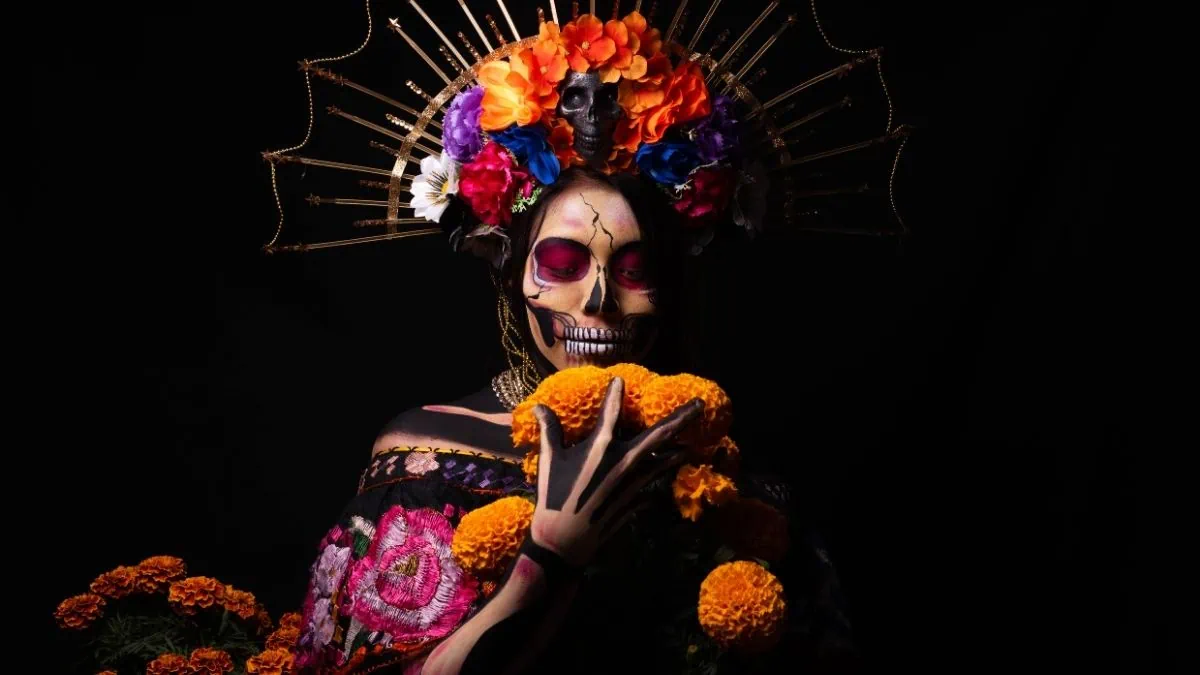
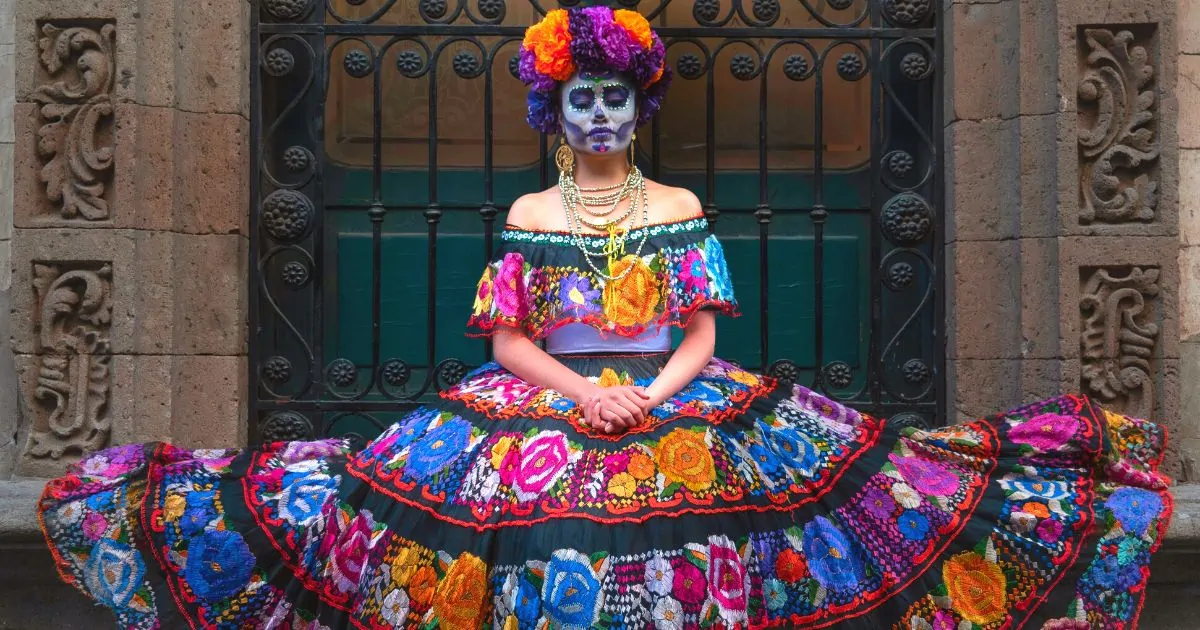
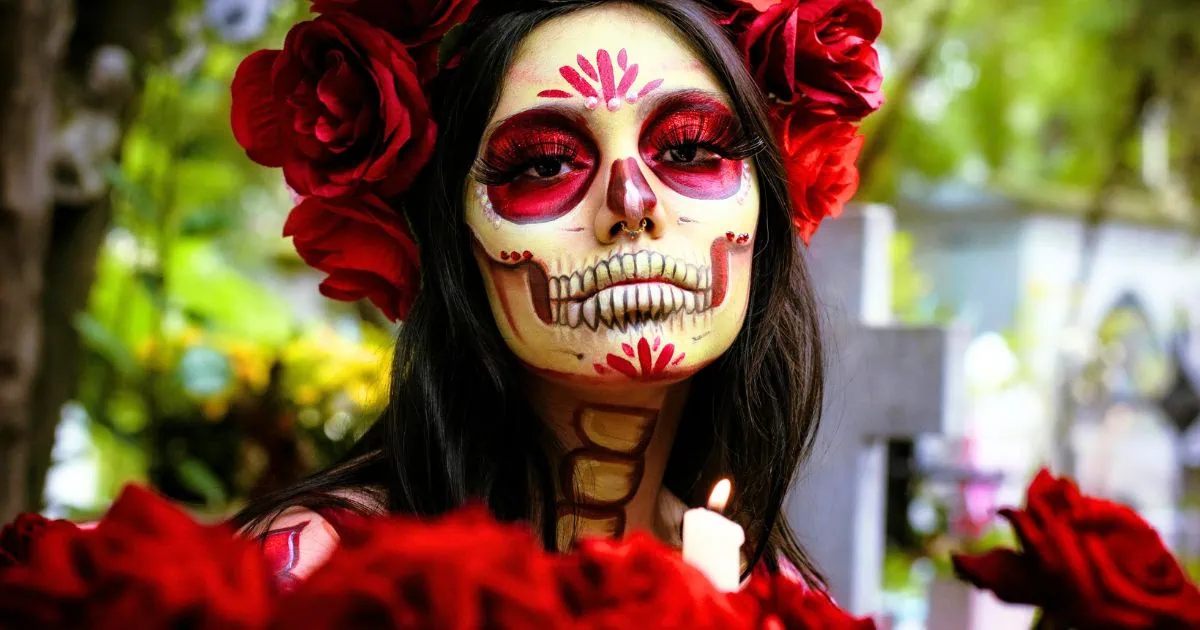
Skeleton makeup commemorating La Catrina and El Catrín is especially common.
But there’s an important distinction between dressing up for Halloween and the tradition of calavera makeup associated with Día de Muertos.
The famous painted skull face is often connected with La Catrina (seen above), the elegant skeleton figure popularized by Mexican printmaker José Guadalupe Posada.
I have a separate article about the story of La Catrina and how she became one of Mexico’s most recognizable symbols.
It’s worth understanding because La Catrina isn’t simply Mexico’s answer to a Halloween costume; she has a much more complicated cultural history.
Is Trick-or-Treating Part of Day of the Dead?

Not traditionally in the same way that trick-or-treating is associated with Halloween in the United States.
However, Halloween and Día de Muertos traditions can overlap in modern Mexico, particularly in cities.
Children may dress up, attend parties, and go from house to house asking for sweets. Adult Halloween parties seem to gain in popularity year after year.
However, there’s also a distinctly Mexican tradition you may encounter around Día de Muertos.
Kids May Sing “Mi Calaverita” for Treats
In some parts of Mexico, children go from house to house singing “Mi Calaverita” and asking for candy or other treats.
The tradition is similar to trick-or-treating, but the songs and calavera imagery give it a distinctly Mexican connection to Día de Muertos.
So if you’re in Mexico around Día de Muertos and hear children singing for candy, don’t automatically assume you’re seeing Halloween.
You may be witnessing Mi Calaverita, a Mexican tradition that has developed alongside the country’s changing Halloween and Día de Muertos celebrations.
Does Mexico Celebrate Halloween?

Wondering, Do Mexicans celebrate Halloween? The answer is that many do, but many don’t, as it’s not as popular as Halloween in the U.S.
Halloween is celebrated in Mexico, particularly among children and teenagers (though adult Halloween parties are gaining in popularity), and often only in urban and commercial settings.
But Día de Muertos remains a deeply established Mexican tradition, and the two celebrations aren’t interchangeable.
A Mexican family might participate in Halloween activities on October 31 and then prepare an ofrenda for Día de Muertos.
In short: Many communities, families and friend groups celebrate both Día de Muertos and Halloween — so you don’t have to choose one or the other!
Where Did Day of the Dead Come From?

This is where the history gets more complicated than many articles make it sound.
You’ll often see Día de Muertos described simply as an ancient Aztec holiday, but that’s an oversimplification.
The contemporary celebration developed through a long history involving Indigenous traditions, Catholic observances brought by the Spanish, and centuries of cultural change in Mexico.
UNESCO describes Día de Muertos as a syncretic celebration combining Indigenous and Catholic traditions, while also emphasizing that it has developed different meanings and practices among different communities.
Interestingly, Mexico’s National Institute of Anthropology and History, or INAH, offers an even more nuanced interpretation.
INAH points out that the November 1 and 2 celebrations themselves have European medieval Catholic origins and shouldn’t simply be equated with the specific funerary practices of ancient Mesoamerican societies.
Simply put, it would be an oversimplification to definitively say “Día de Muertos is an ancient Aztec holiday.”
It is much more accurate to say that today’s celebration developed through the interaction of Indigenous traditions and Catholic observances over centuries.
It is precisely that history that makes experiencing Day of the Dead in Mexico (and elsewhere) so fascinating.
Why Do Day of the Dead and Halloween Look So Similar?

There are a few obvious reasons for this, with three of them listed below.
- They’re celebrated within days of one another.
- Both have incorporated imagery associated with death, skeletons, spirits, and the supernatural.
- Modern celebrations have influenced one another.
Public Día de Muertos celebrations can include costumes, parades, elaborate La Catrina skeletal makeup, music, and theatrical performances.
At the same time, Halloween has become increasingly visible in Mexico, meaning photos/videos of the two holidays can sometimes look surprisingly similar.
However, similar-looking decorations don’t necessarily mean the traditions have the same meaning. That’s the key distinction.
Day of the Dead Is More About Remembering Than Being Scared

This is probably the biggest difference I would want a first-time visitor experiencing Day of the Dead in Mexico to understand.
- 👻 Halloween plays with the themes of fear and consequences to explore dark themes and moral lessons
- ❤️ Día de Muertos taps into themes of love and remembrance, as well as the cyclical nature of life
Instead of pretending that death is something that shouldn’t be discussed, Día de Muertos creates a time when families can openly remember people who have died.
There can be laughter, music, traditional Day of the Dead foods and drinks, stories, parties, decorations, and even humor.
In short, Día de Muertos as a celebration centered on remembering loved ones and bringing families together with the memory of those who have passed.
That’s why I think the celebration can feel surprisingly joyful to someone experiencing it for the first time.
You’re surrounded by reminders of death, but the atmosphere isn’t necessarily gloomy.
Often, it’s about celebrating the lives of the people who are no longer here physically, but who we never want to forget.
So, Is Day of the Dead Mexico’s Version of Halloween?

No, not at all!
Día de Muertos and Halloween share some visual similarities and occur at roughly the same time of year, but they developed from different traditions and have different purposes.
Halloween is strongly associated today with costumes, trick-or-treating, parties, and spooky entertainment.
Día de Muertos centers on remembering and honoring deceased loved ones through traditions that can include ofrendas, cemetery visits, food, flowers, candles, music, and family gatherings.
And if you visit Mexico during Día de Muertos, you’ll quickly see that it’s much more than colorful skulls and elaborate makeup.
It’s a living tradition about family, memory, death, and the continuing connection between the people who are here and those who came before them.
That’s what makes it so different from Halloween, and, in my opinion, so fascinating to experience in Mexico.