
15 Mexican Symbols and Their Meanings (#12 Was Buried for Centuries)

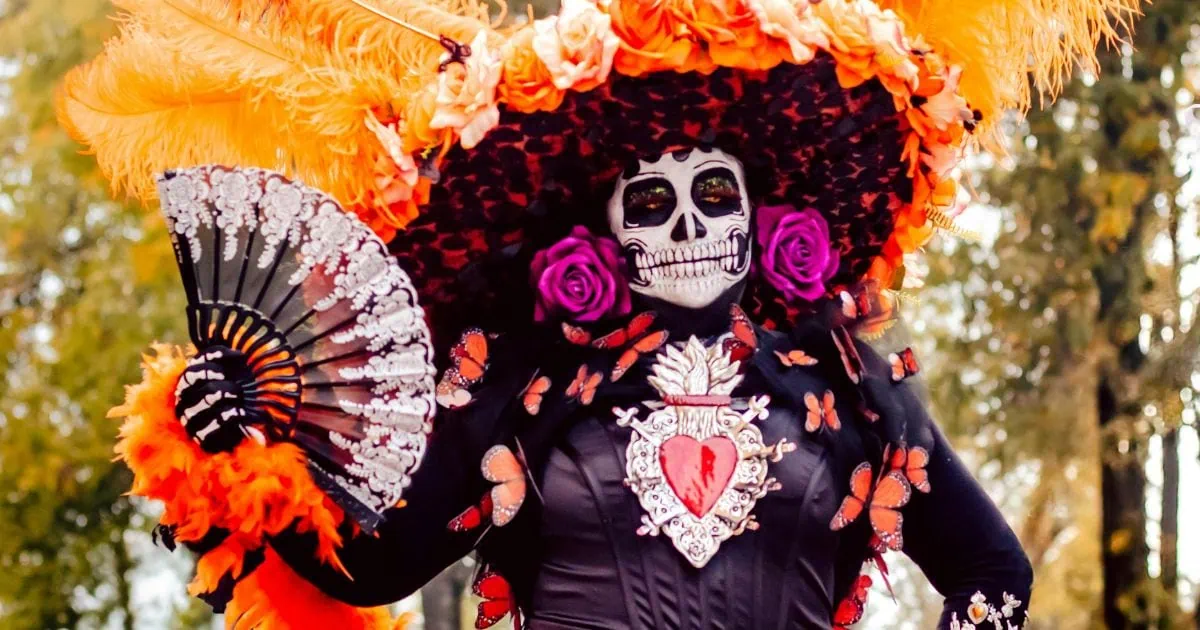
Looking for the meanings behind Mexican symbols?
I’ve called Mexico home since 2018, and I see these symbols everywhere, from murals and markets to Day of the Dead altars.
Some go back to the Aztecs and Maya, and others were born after Mexico’s independence from Spain.
From ancient times to today, here are the 15 most important Mexican symbols and what they mean.
The 15 Most Important Mexican Symbols
1. The Mexican Flag

Mexico’s flag has three vertical stripes of green, white and red, with the coat of arms in the center.
Today, green is often said to stand for hope, white for unity and red for the blood of the nation’s heroes.
Mexico celebrates Flag Day (Día de la Bandera) every February 24.
Learn the full story in my guide to the meanings of the Mexican flag.
2. Mexican Coat of Arms
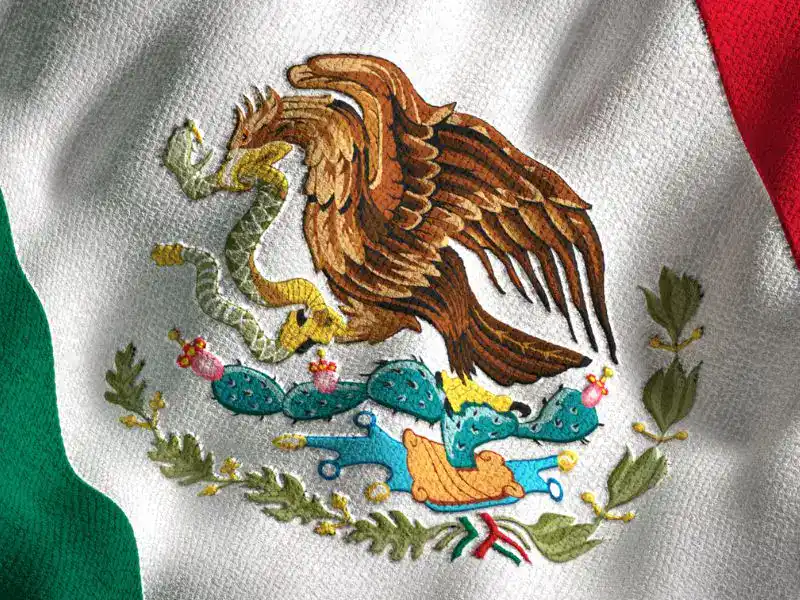
Mexico’s coat of arms shows a golden eagle perched on a nopal cactus, eating a snake.
It comes from the Aztec legend of how Tenochtitlan (which is present-Day Mexico City) was founded.
The god Huitzilopochtli told the Mexica to build their city on the very spot where they saw an eagle eating a snake perched on a cactus.
They found it on an island in Lake Texcoco, where Mexico City stands today.
Did you know Mexico City is sinking? It sinks about 10-14 inches (25-35 cm) each year, and that’s largely because it was built on a lake.
3. Golden Eagle: National Animal of Mexico
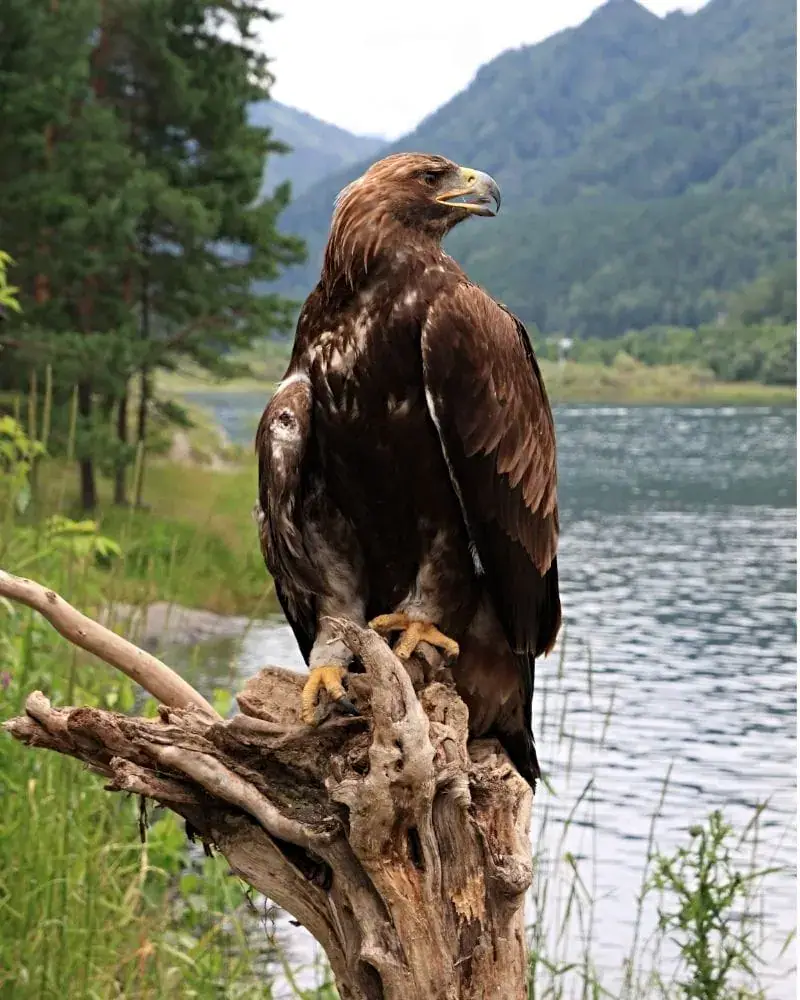
There are many cool birds from Mexico, including the golden eagle which is Mexico’s national bird and the star of its coat of arms.
To the Aztecs, the eagle represented the sun and the god Huitzilopochtli; just one of the many Aztec gods.
Wild golden eagles are rare in Mexico today, and most live in the northern states like Sonora, Chihuahua, and Coahuila.
Coahuila’s Ocampo Flora and Fauna Protection Area serves as a monitoring area where conservationists track active breeding pairs.
4. Nopal Cactus

The nopal, or prickly pear cactus, is the cactus the eagle stands on in the coat of arms.
It’s also an everyday food, and you’ll find grilled nopales in tacos, salads and breakfasts.
One of the best Mexican fruits the nopal produces a sweet fruit called tuna, which is sold at markets across the country.
There’s even a Mexican saying, “más mexicano que el nopal,” which essentially means something or someone is “as Mexican as it gets.”
5. Dahlia: National Flower of Mexico

The dahlia became Mexico’s national flower in 1963.
It’s native to Mexico’s highlands, and the Aztecs grew it long before it reached Europe.
6. Xoloitzcuintli: Mexican Hairless Dog

The xoloitzcuintli (show-low-etts-QUEENT-lay), or xolo for short (show-low), is an ancient, (mostly) hairless dog breed from Mexico.
The Aztecs believed xolos guided the souls of the dead through the underworld, Mictlán.
Its name comes from Xolotl, the Aztec god of death, and itzcuintli, the Nahuatl word for dog.
Meet the breed in my post on the Xoloitzcuintli Mexican hairless dog, but know there is also the coated xolo dog with hair.
7. La Catrina: Mexican Day of the Dead Woman
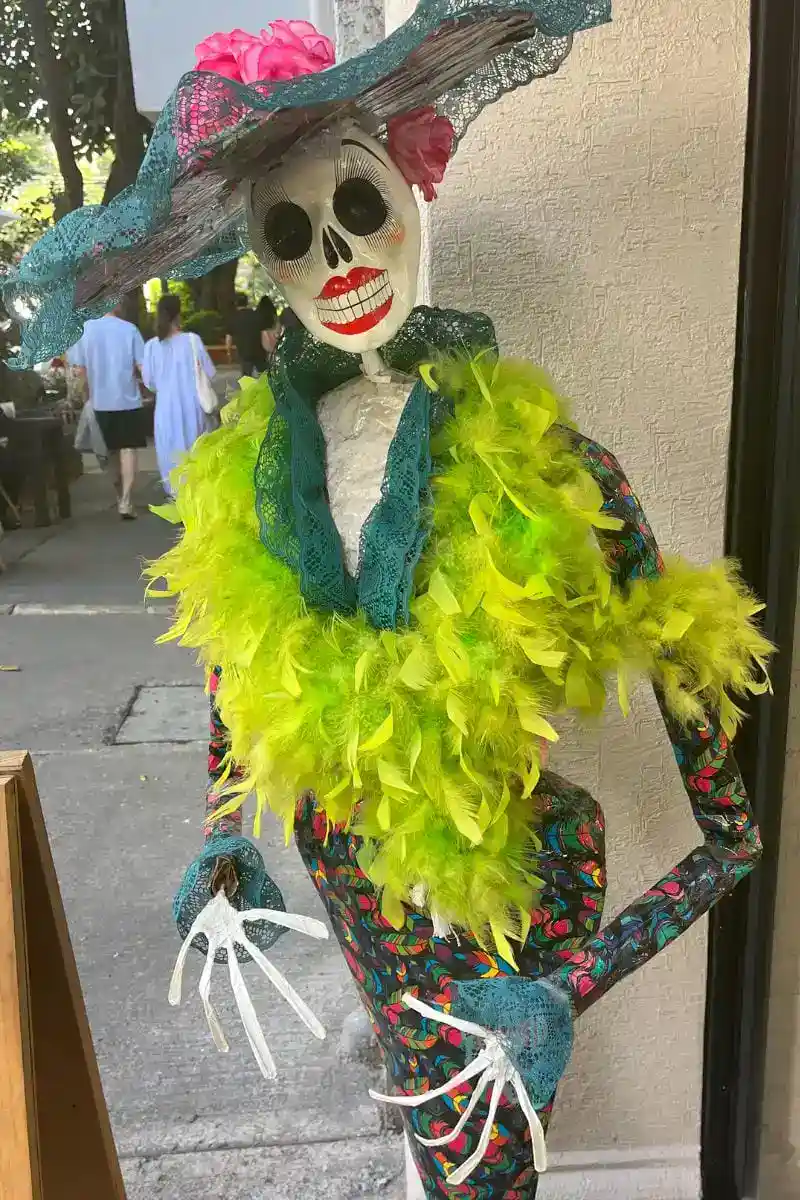
La Catrina is an elegant female skeleton in a fancy hat, now the face of Day of the Dead.
Printmaker José Guadalupe Posada created her in the early 1900s to poke fun at Mexicans who copied European fashions.
Diego Rivera, one of the top Mexican artists of all time, later gave her the name Catrina and painted her in a famous mural in Mexico City.
A true Mexican cultural symbol, she’s a reminder that death comes for everyone, rich or poor.
8. Sugar Skulls

Calaveras de azúcar (sugar skulls) are colorful skulls made from sugar and decorated with icing.
Families place them on Day of the Dead ofrendas, often with a loved one’s name written on the forehead.
They’re meant to be playful, not scary, and they honor the dead with sweetness.
One of the most important symbols of the holiday, they’re not the only ones, so head here to learn more in my Day of the Dead symbols guide.
9. Cempasúchil Fowers

The bright orange cempasúchil, or Mexican marigold, is the official flower of Day of the Dead.
Families believe its bright color and strong scent help guide spirits home to their ofrendas (altars).
I’ve celebrated Day of the Dead in Mexico every year since 2018, and cempasúchiles are seen everywhere as one of the most beloved Mexican flowers.
10. Virgin of Guadalupe: Patron Saint of Mexico
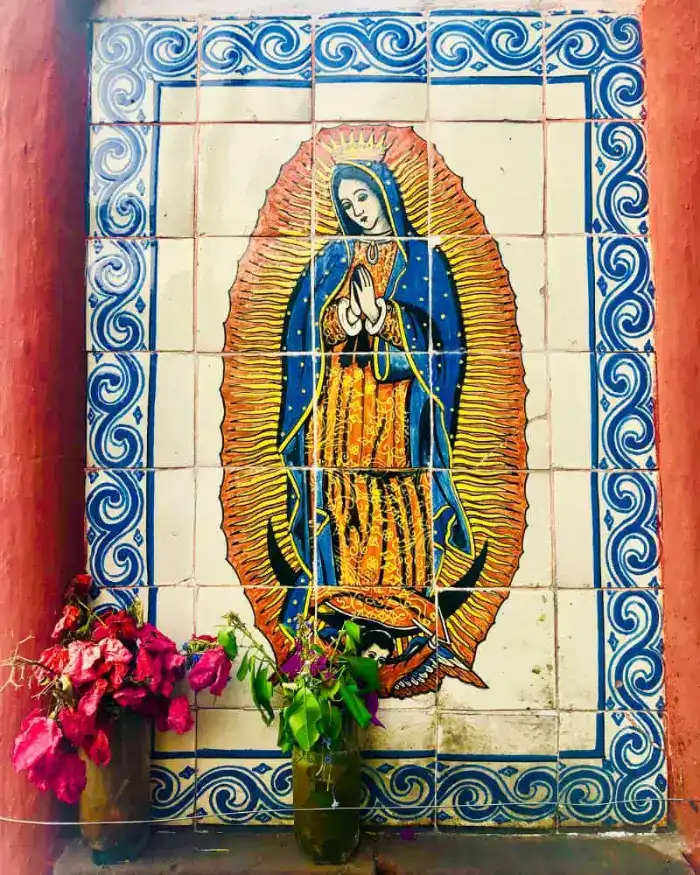
The Virgin of Guadalupe is Mexico’s patron saint and one of its most beloved symbols.
According to tradition, she appeared to Juan Diego, an Indigenous man, on Tepeyac Hill in 1531.
Her image hangs in the Basilica of Guadalupe in Mexico City, one of the most visited Catholic shrines in the world.
Millions of pilgrims arrive for her feast day on December 12, one of the most important holidays in Mexico.
11. Quetzalcoatl: The Feathered Serpent God
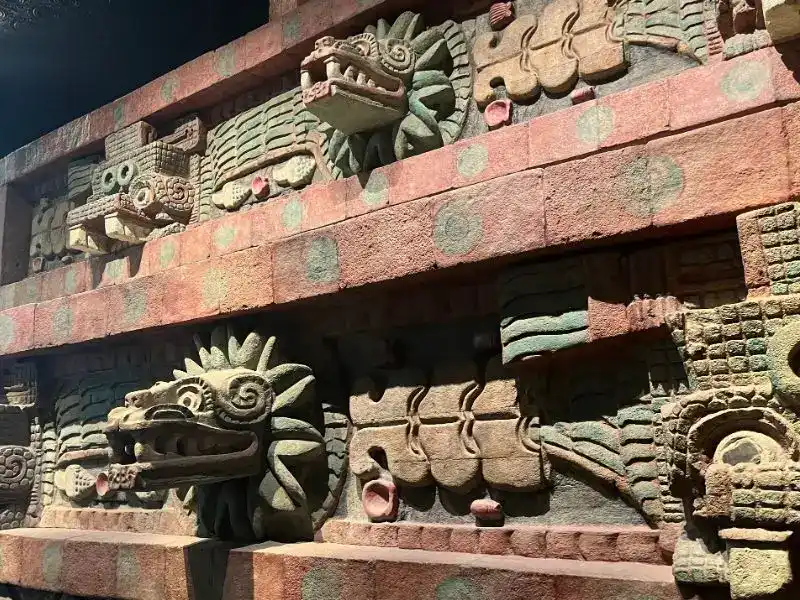
Quetzalcoatl (ket-sal-KOH-ahtl), the feathered serpent, was one of the most important gods of ancient Mexico.
He was linked to wind, learning and creation.
At Teotihuacan Ruins near Mexico City, stone carvings of Quetzalcoatl’s head still line the Temple of the Feathered Serpent.
The Maya called him Kukulcán, and his shadow seems to slither down El Castillo at Chichén Itzá during the equinoxes.
12. Aztec Sun Stone
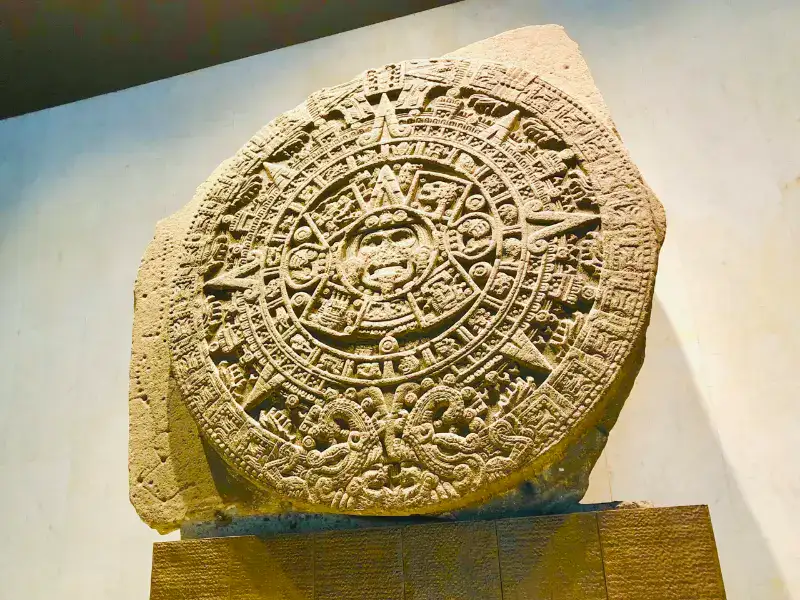
The Aztec Sun Stone is a huge carved basalt disc about 12 feet (3.6 m) across.
After the Spanish conquest, it was buried in Mexico City’s main square, where it stayed hidden for centuries.
Workers found it in the Zócalo in 1790. Today, it sits in the National Museum of Anthropology, one of the best museums in Mexico City.
Its center is often said to show the sun god Tonatiuh, surrounded by symbols for the days of the Aztec calendar.
13. Agave Plant
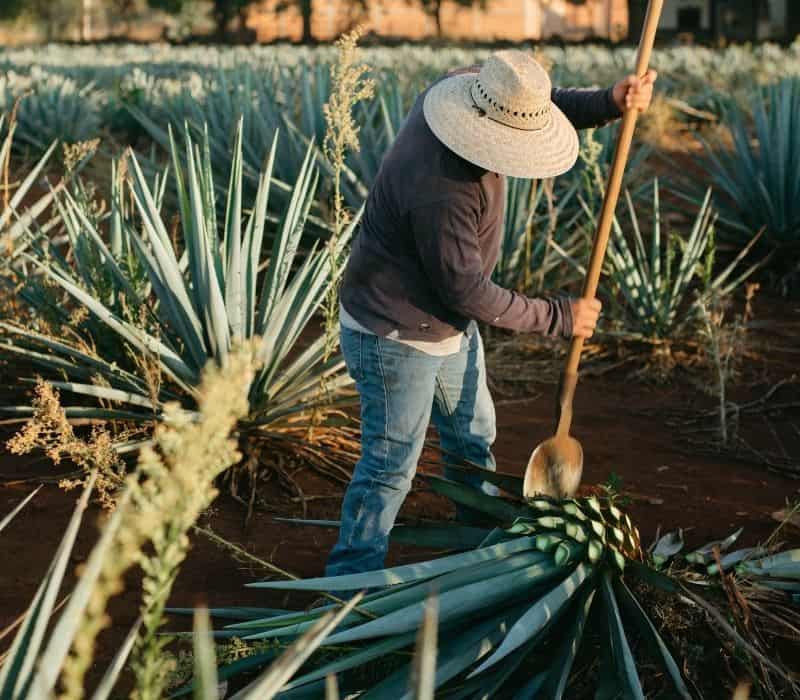
Agave is a spiky plant that’s been part of Mexican life for thousands of years.
Pulque (pull-kay) is a pre-hispanic drink made from its fermented sap, while tequila and mezcal are made from its cooked heart.
The agave landscape around the pueblo mágico (magic town) of Tequila, Jalisco, is a UNESCO World Heritage Site.
Here, you’ll see rolling fields of agave azul (blue agave), which is the only type of agave plant that can be used to make tequila.
Taste them all with my list of the best Mexican drinks.
14. Sombrero Hats

The wide-brimmed sombrero gets its name from “sombra,” the Spanish word for shade.
Among the quintessential Mexican garments, it was made for sun protection, keeping farmers and horsemen cool in the fields.
The fancy charro sombrero, with its embroidered brim, is worn by mariachi musicians and by charros at rodeos.
15. Jaguar
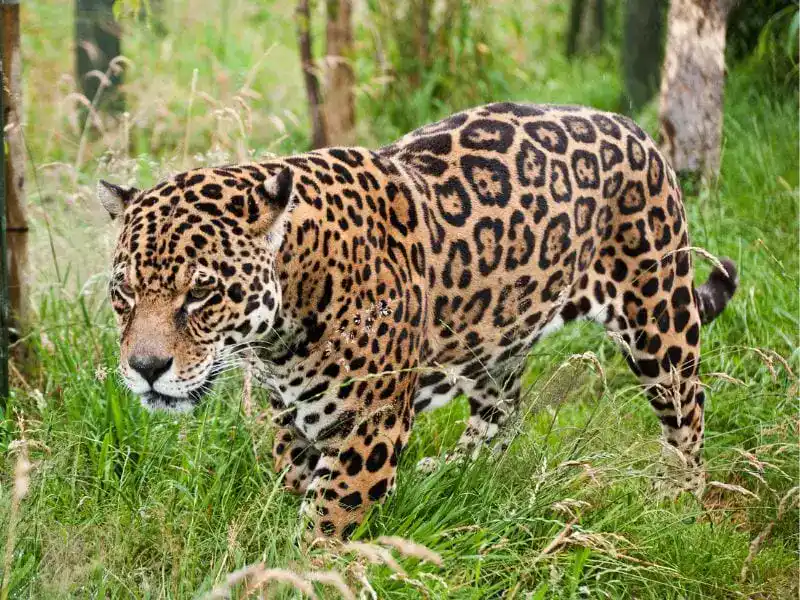
The jaguar was a symbol of power, strength and royalty in ancient Mexico.
The Olmecs carved half-human, half-jaguar figures, and Maya kings wore jaguar skins to show their power.
Jaguars still live in a few parts of Mexico, primarily the Yucatán Peninsula’s jungles, though they’re rarely seen.
Want to learn more about Mexican culture? Don’t miss my list of what Mexico is known for.
Mexican Symbols FAQ
What is the national symbol of Mexico?
Mexico’s main national symbol is its coat of arms, featuring a golden eagle on a nopal cactus eating a snake.
It sits in the center of the flag and is based on the Aztec legend of Tenochtitlan’s founding. Tenochtitlan is present-day Mexico City.
What does the eagle on the Mexican flag mean?
The eagle on the Mexican flag represents the Aztec legend of how Tenochtitlan was founded.
The god Huitzilopochtli told the Mexica to build their city where they saw an eagle on a cactus eating a snake.
What are the 3 national symbols of Mexico?
Mexico’s three official national symbols are the Mexican flag, the Mexican coat of arms and the Mexican national anthem.
A federal law protects how they’re used, and insulting or mistreating the national symbols can lead to fines or up to six months in prison.
What does La Catrina symbolize?
La Catrina symbolizes that death comes for everyone, no matter how rich or elegant they are.
Today, she’s the best-known face of Day of the Dead, and a reminder that we’re all the same (just bones 🦴) when we strip away our fineries.
Get My FREE Guide: 5 Easy Ways to Save Money in Mexico
Insider tips from someone who’s lived in Mexico since 2018.
