
15 Traditional Mexican Clothing Garments that Show Off the Country’s Unique Style


Mexican fashion isn’t just a copy-paste of global trends — it has its own flavor, deeply rooted in culture and history.
So just what is traditional Mexican clothing? It’s a blend of native prehispanic cultures and European influence.
It isn’t a monolith and varies by culture, as people and ethnic groups across different parts of Mexico have different traditional garments.
In this article, I’m going to show you 15 traditional Mexican dress items from various parts of the country.
Disclosure: This article may contain affiliate links, meaning when you make a purchase, I earn a small commission. Affiliate links cost you nothing to use, and help keep my content free. It’s a win-win for us both. For more info, see the Disclosure Policy.
1. Huipil

The traditional huipil from the Yucatan Peninsula (pronounced wee-pill, or wee-peel) is a vibrant symbol of Mayan culture, renowned for its loose-fitting design and colorful embroidered patterns.
Made primarily from cotton, which is perfect for the region’s tropical climate, it features intricate motifs inspired by nature and Mayan mythology.
Beyond its aesthetic appeal, huipiles carry deep cultural significance, often passed down through generations of Mayan women.
Each one has embroidered stitches that tell a story, connecting wearers to their ancestors and community traditions.
They also serve as a marker of a woman’s identity, marital status, and social standing within her community.
In contemporary times, the Yucatecan huipil has transcended its traditional roots to become a symbol of cultural pride, and has even garnered attention in the global fashion scene.
While it’s always better to buy them from a local seller → you can shop for huipil style clothing here.
Its timeless elegance and craftsmanship continue to inspire designers and enthusiasts worldwide, ensuring the enduring legacy of the traditional Mayan huipil from the Yucatan Peninsula.
2. Huarache Sandals

Originating from the early tribal communities of Mexico, and predating European colonization, the huarache sandal has deep roots in the region’s history.
Initially, huaraches (pronounced wah-rah-chays) were simple leather-woven footwear common in Southern Mexico before they evolved into more protective shoes.
However, in the early 20th century, this traditional Mexican sandal started to find a place in mainstream fashion, both within Mexico and outside of the country.
Today, handmade leather huarache sandals are popular items for sale in artisan markets, but if you’re not headed to Mexico anytime soon → you can shop for huaraches here.
You can find huarache sandals in all kinds of colors as companies adapt the style for wider consumer appeal. As a result, they’ve remained popular for decades.
🇲🇽 Fun Fact: The hurache is also a type of food from Mexico! It is a long oval shaped snack made with masa (corn dough) that mimics the shoe’s shape.
3. Poncho
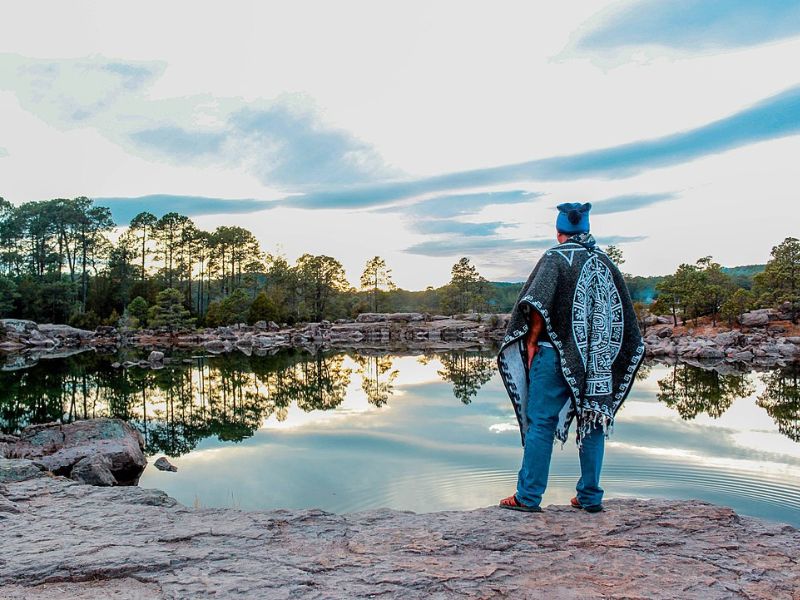
The poncho is an iconic Mexican garment that actually originated in Central America or South America (just FYI, Mexico is in North America).
Its use can be traced back as far as 500 B.C., preceding Spanish colonization of the American continent.
Originally crafted from materials like wool or fleece, ponchos were ingeniously designed to provide warmth and protection from moisture, even in the most rainy conditions.
This effectiveness led to the creation of cheaper plastic versions, making ponchos a must-have in wet climates.
While the primary function of ponchos remains practical, high-end manufacturers have elevated them into a fashion statement → like these trendy ponchos.
4. Baja Hoodie or Baja Jacket

Riding the wave of popularity thanks to the Baja California hippie and surf scene, the Baja jacket has become an emblematic garment for surfers worldwide.
While it gained fame in the United States, its origins can be traced back to Mexican clothing traditions, where they were originally handwoven.
Resembling serapes in style, Baja jackets feature striped and intricate patterns, often in softer hues of red, green, and gray.
Crafted from wool, cotton, or polyester, they offer style, comfort, and warmth.
Thanks to their widespread appeal, Baja jackets are among the most affordable pieces of Mexican clothing available.
It’s hard to resist the allure of a handmade surf jacket, especially when priced as low as $20 USD. For travelers, they make great Mexico souvenirs.
If you’re not headed to Mexico anytime soon → you can shop for Baja jackets here.
5. Guayabera

The guayabera shirt (pronounced why-ah-bear-uh), originating from Mexico’s Yucatan Peninsula, is a timeless garment renowned for its elegance and versatility.
Characterized by its distinctive pleats, four pockets, and buttoned front, the guayabera embodies both comfort and style, and is said to keep the wearer cool in tropical climates.
Its lightweight fabric, typically cotton or linen, makes it ideal for navigating the tropical climate of the Yucatan Peninsula, providing breathability and comfort in hot weather.
Beyond its practicality, the guayabera is deeply ingrained in Mexican heritage and tradition.
Originally worn by laborers, today, it is commonly worn for special occasions such as weddings, festivals, and celebrations, reflecting its status as formal attire with a touch of relaxed charm.
Outside of Mexico, the guayabera continues to captivate fashion enthusiasts worldwide, with contemporary adaptations blending traditional craftsmanship with modern design elements.
If you’re not headed to the Yucatan Peninsula anytime soon → you can shop for guayaberas here.
6. Rebozo

The Mexican rebozo is a contemporary interpretation of the Tilmàtli, an ancient Aztec cloak.
Unlike its predecessor, the rebozo is designed to be worn over clothing rather than as standalone attire, reflecting the more reserved style that’s prevalent in Mexican fashion to this day.
What sets the rebozo apart is its versatility — it can be transformed into various garments simply by tying, folding, or adjusting its orientation.
Depending on the wearer’s preference, it can serve as a shawl, blouse, shroud, or even a cape with ease.
This is such an important part of Mexican culture that there’s actually a rebozo museum called the La Casa del Rebozo.
It’s located in the pueblo magico (magico towns) of Santa Maria del Río in San Luis Potosí state.
I visited this museum, and they had a fashion show that showed at least 15 different ways to wear a rebozo.
7. Cuera Tamaulipeca

Cuera Tamaulipeca (Tamaulipas leather) is a fringe clothing style that originated in the Mexican state of Tamaulipas.
These distinctive garments are traditionally made of deer suede or calfskin, and characterized by the use of long fringe, which adds movement and flair to the design.
Historically, cuera clothing was worn by soldiers, ranchers, and other people from rural areas of Tamaulipas state.
The fringe served both functional and decorative purposes, providing additional protection against the elements while adding a touch of elegance and style to the garment.
Today, this fringe clothing remains an important part of the cultural heritage of Tamaulipas — and the town of Tula even holds the world record for the world’s largest cuera.
It is often worn during traditional festivals, rodeos, and other celebrations, serving as a symbol of pride and identity for the people of the region.
With its timeless appeal and unique aesthetic, Mexican cuera clothing continues to be cherished and celebrated today.
8. Tehuana Dress

The Tehuana dress, originating from Oaxaca, Mexico, is a captivating garment celebrated for its intricate embroidery, vibrant colors, and cultural significance.
This traditional dress holds deep roots in Zapotec culture and is named after the Tehuantepec region of Oaxaca, where it originated.
Characterized by its form-fitting bodice, full skirt, and ornate embroidery, the Tehuana dress is a symbol of femininity and strength.
Historically worn by indigenous women, it carries layers of meaning, representing resilience, heritage, and pride in Zapotec identity.
Each Tehuana Dress is a masterpiece of craftsmanship, with skilled artisans meticulously hand-stitching elaborate designs onto the fabric.
These dresses are often worn for special occasions such as weddings and festivals in Oaxaca, showcasing the rich cultural heritage of the region.
Despite its traditional origins, the Tehuana dress has transcended boundaries and continues to inspire contemporary fashion designers around the world.
9. Sombrero

One of the most iconic symbols of traditional Mexican attire, the sombrero is a tall, wide-brimmed hat that shades the wearer from the sun’s rays.
Initially associated with vaqueros (cowboys) and mariachis, Mexican sombreros have transcended their origins and are now worn by people from various walks of life.
Their influence can be seen in a wide range of hats, from baseball caps to beanies.
If you’re having a Cinco de Mayo party or Mexican-themed party → you can shop for sombreros here.
10. Mexican Pointy Boots

Mexican pointy boots (AKA Tribal Boots) are admittedly pretty funny looking, and you might have seen them in memes and comedy sketches.
These boots are said to come from the town of Matehuala in San Luis Potosí state, and they became popular alongside the rise in popularity of the tribal guarachero genre of Mexican music.
While they might be among the weirdest Mexican clothes, they have become a staple at parties, weddings, and holiday celebrations in north-central Mexico.
Usually only worn by men, these elongated boots are not typically spotted in professional settings.
Some boots can extend up to three feet in length, and many take pride in having the longest boots of anyone else at social gatherings.
11. Charro Suit

Charro clothing reflects the rich heritage and tradition of charros (Mexican horsemen and women), though it is also associated with Mexican mariachi musicians.
This traditional Mexican dress reflects a blend of Spanish, indigenous, and ranch-wear influences.
Typically adorned with intricate embroidery, silver buttons, and elaborate designs, charro clothing is the epitome of elegance.
The iconic traditional Mexican charro suit consists of tight-fitting pants for men and skirts for women, a wide-brimmed sombrero hat, a vest, and a jacket.
Each piece is meticulously crafted, often showcasing regional variations in style and decoration, though charro is closely associated with Jalisco state.
Beyond its aesthetic appeal, charro clothing carries significant cultural significance, often worn during important celebrations like weddings, festivals, and rodeos.
12. China Poblana

Popular in the late 1850s, the china poblana ensemble consists of a skirt, shawl, and blouse, all crafted to accentuate feminine attributes.
It comes from Puebla state — as anytime you see the word “poblano” or “poblana,” it refers to something from Puebla, Mexico.
However, the inclusion of the word “china” in the name remains a topic of debate. That’s not the only thing controversial about the china poblana either.
Popular in the 17th Century, women who wore a china poblana were considered scandalous because the ensemble was deemed too risqué for the more conservative fashion of the time.
It is now such a part of Poblano culture that there’s many references to it in the state where it comes from, including the Casona de la China Poblana Boutique Hotel in Puebla City, Mexico.
13. Sarape

The comfortable sarape (pronounced suh-rah-pay) is part shawl, part blanket, and part poncho — and 100% part of Mexico’s traditional clothing for centuries.
Historically donned by farmers and shepherds in higher elevated regions of Mexico, it was typically woven from wool or fleece in muted browns and grays.
However, with the surge in tourist demand, sarapes now come in a kaleidoscope of vibrant hues and materials, as well as intricate patterns from the Mayan culture.
This connection is no coincidence, as many sarapes are handcrafted by local Mayan families, giving each piece a touch of indigenous artistry and heritage.
14. Ichcahuipilli

This Mesoamerican military armor consisted of layered thick braided cotton, often reinforced with brine for added strength.
A well-crafted Ichcahuipilli served as effective protection against arrows, slowing or stopping their penetration.
There was also an element of fashion with these, and they showcase traditional Mexican clothes for men in prehispanic times.
15. Prehispanic Aztec Clothing

In ancient times, Aztec attire was known for its loose fit and vibrant colors, reflecting the extensive trading connections of the civilization.
Young Aztec women learned the art of hand-weaving, typically using materials like cotton or ayate fiber.
The huipil, an ornate tunic, holds deep roots in the indigenous cultures of central Mexico and Central America.
Ancient Aztec huipil were often adorned with ribbons, lace, and intricate designs, showcasing the craftsmanship and cultural heritage of their makers.