
50 Must-Know Mexican Slang Words & Phrases (Including the Dirty Ones!)



WANT TO LEARN SOME COMMON MEXICAN SLANG?
You’re in the right place, as you’re about to discover the Top 50 Mexican slang words and important slang phrases you need to know.
As someone who has lived in Mexico since 2018, I’ve experienced my fair share of linguistic adventures and misunderstandings when navigating Mexislang — and yes, it’s usually hilarious!
Ready to learn the Mexican words and slang phrases you should know, especially if traveling through Mexico? Buckle up as we dive into the fascinating realm of Mexican slang!
What are Mexican slang words you need to know?

Mexican slang words, often lovingly referred to as Mexislang, is a language unto itself — so you can imagine there are A LOT of words and phrases to know.
Even native Spanish speakers from other countries have a difficult time in Mexico because of all the slang, word-play and double entendre (when things have dual meanings).
While we’re about to get into an EPIC list of the 50 most common Mexican slang words and phrases, if you want to do a deep dive, I recommend you buy a copy of Mexislang by Raúl Jiménez.
The 50 Most Common Mexican Slang Words & Phrases
1. Órale
Orale is a versatile Mexican saying that shows surprise, encouragement, or agreement. Think of it as the Swiss Army knife of expressions in Mexislang.
Surprised? Impressed? Agreeing enthusiastically? Orale fits all these moods and more, making it a handy word in any conversation.
It can mean anything from “wow!” and “let’s do it!,” to “really?” depending on the context and intonation. It’s a staple in Mexican slang for its broad range of meanings.
🗣️ Pronunciation: ore-ahh-lay
🇲🇽 Examples: ¡Órale! Eso suena como un plan genial. (Wow! That sounds like a great plan.) Órale, ¿así pasó? (Wow, so that’s how it happened?)
Mexican Slang Words & Phrases
2. Güey
Güey (sometimes spelled “wey”) is one of Mexican slang’s most versatile and commonly used terms.
Originally an insult akin to fool or idiot, its meaning has evolved to become more endearing. Today, güey is often used among friends to mean dude, bro, or “my guy.”
🗣️ Pronunciation: way
🇲🇽 Example: “¿Qué onda, güey? ¿Cómo has estado?” (What’s up, dude? How have you been?)
Mexican Slang Words & Phrases
3. Neta
Neta is the Mexican slang term for truth, reality, or the real deal.
When someone wants to emphasize the sincerity or seriousness of what they’re saying, many Mexicans will use the word neta.
It’s a way to seek or express authenticity and honesty in conversations, cutting through any pretense to get to the heart of the matter.
🗣️ Pronunciation: net-ah
🇲🇽 Example: “¿Es neta que te vas a mudar a Canadá?” (“Is it true that you’re moving to Canada?”)
Mexican Slang Words & Phrases
4. Chido or Chida
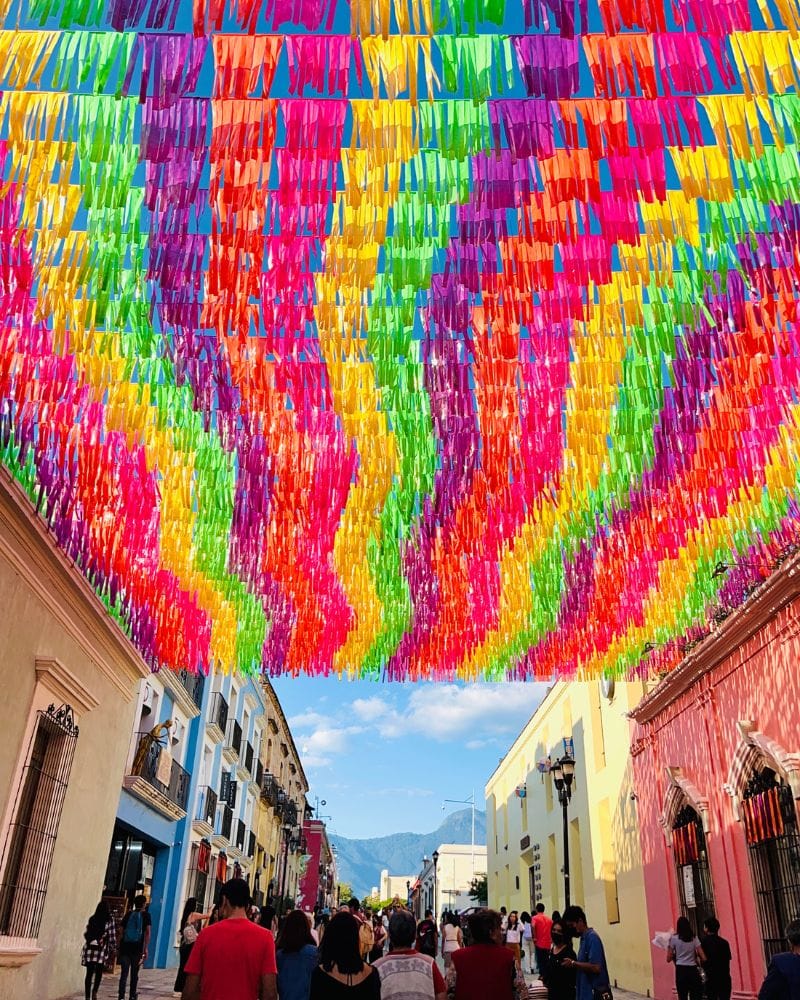
The Mexican slang word chido (masculine form) and chida (feminine form) epitomizes coolness and approval.
Mexican Slang Words & Phrases
5. Mande
The Mexican word mande is rooted in politeness. It is traditionally used to signal attentiveness, or ask someone to respectfully clarify what they meant.
Similar to “I beg your pardon” in English, its usage reflects the value placed on courteous interactions. Mande is often heard in formal settings, or among unfamiliar people.
🗣️ Pronunciation: mahn-day
🇲🇽 Example: Mande, ¿puede repetir la dirección? (Sorry, could you repeat the address?)
Mexican Slang Words & Phrases
6. Aguas
While aguas literally means waters, it takes on a new meaning within Mexislang words.
In Mexico slang terms, aguas serves as a quick, informal warning. It is akin to telling someone to be alert or pay attention to immediate surroundings.
The word aguas is especially common when quick reflexes are necessary, from dodging puddles to avoiding potential hazards headed your way.
🗣️ Pronunciation: agh-was
🇲🇽 Example: ¡Aguas con el escalón! (Watch out for the step!)
Mexican Slang Words & Phrases
7. Chamba
Chamba refers to work or a job, but can also refer to any unpleasant task.
This everyday slang for Mexicans is a way of talking about employment or things someone doesn’t really want to do.
🗣️ Pronunciation: cham-baas
🇲🇽 Example: Ando buscando chamba. (I’m looking for work.)
Mexican Slang Words & Phrases
8. Chanclas

The Mexican word for flip-flops, sandals or slippers is chanclas. However, this word transcends this simple description.
In a cultural context, they’re iconic, often humorously associated with Mexican mothers wielding their shoe as a discipline tool — so it is a funny Mexican slang word.
🗣️ Pronunciation: chan-klahs
🇲🇽 Example: Mi mamá me lanzó la chancla desde el otro lado de la casa. (My mom threw the flip-flop at me from across the house.)
Mexican Slang Words & Phrases
9. No Hay Bronca
When there’s a problem or heated argument that’s more complicated than you’d like, you can use no hay bronca to mean “everything’s fine.”
Similar to “calm down,” this Mexican slang phrase can be used to de-escalate tricky situations and bring levity.
🗣️ Pronunciation: bron-kah
🇲🇽 Example: Tengo bronca con el vecino por el ruido. (I have a problem with the neighbor over the noise.)
Mexican Slang Words & Phrases
10. No Mames
No mames is a colloquial expression that translates to “No fuc*ing way!” or “You’re shi*ting me!” It’s used to express disbelief, shock, or amazement.
Given its intense language, it’s best used among friends or in informal settings where such expressions are acceptable.
🗣️ Pronunciation: no mom-mes
🇲🇽 Example: ¡No mames! ¿En serio ganaste la lotería?” (No fuc*ing way! Did you win the lottery?)
Mexican Slang Words & Phrases
11. No Manches
A softer version of “no mames,” no manches is a more family-friendly way to express astonishment without crossing any lines.
When you’re in disbelief or shocked in a semi-formal setting like with co-workers, you can use no manches as a go-to expression.
🗣️ Pronunciation: no mon-chays
🇲🇽 Example: ¡No manches! ¿De verdad te encontraste dinero en la calle? (No way! You found money on the street?)
Mexican Slang Words & Phrases
12. Carnal

In Chicano slang and Mexican expressions, carnal (singular) or carnales (plural) is a term of deep camaraderie and brotherhood. It is similar to homie or homies in English.
Originally meaning brother, this word now transcends biological relations to encompass friends who are so close they’re considered family.
🗣️ Pronunciation: car-nall
🇲🇽 Example: Él es mi carnal desde la infancia. (He has been my friend since childhood.)
Mexican Slang Words & Phrases
13. A Poco
A poco is an expression of surprise or disbelief, similar to saying “really?” or “no way!” in English. It’s often used when someone hears something surprising or hard to believe.
🗣️ Pronunciation: ahh poe-coe
🇲🇽 Example: ¿Te vas a Japón el próximo mes? ¡A poco! (You’re going to Japan next month? No way!)
Mexican Slang Words & Phrases
14. A Huevo
Huevo means egg 🍳 but the Mexican slang phrase “a huevo” (sometimes written as “a webo”) translates to the colloquial “hell yeah!” or “absolutely!” in English.
It’s an enthusiastic way of agreeing with someone or showing excitement about something. However, be aware of the context, as it can be informal and direct.
🗣️ Pronunciation: ahh way-voe
🇲🇽 Example: ¿Quieres ir al concierto esta noche? ¡A huevo! (Do you want to go to the concert tonight? Hell yeah!)
Mexican Slang Words & Phrases
15. Crudo or Cruda

After a night out, crudo (for males) or cruda (for females) is the word you’ll use to describe your terrible hangover.
It’s the go-to term when you feel the aftermath of those extra shots you probably didn’t need.
🗣️ Pronunciation: crew-doe
🇲🇽 Example: No puedo creer que tomé tanto, estoy super crudo. (I can’t believe I drank so much, I’m super hungover.)
Mexican Slang Words & Phrases
16. Chicano or Chicana
A Chicano (male) or Chicana (female) is a person of Mexican descent that was born or raised in the United States.
Another term for this would be pochos or pochas, especially used when the person isn’t fluent in Spanish and lacks general knowledge of Mexican culture.
A term of cultural identity that carries pride in one’s Mexican-American heritage, chicano and chicana are often associated with the Chicano Movement.
🗣️ Pronunciation: chee-kahn-oh or chee-kahn-ah
🇲🇽 Example: Ella es Chicana y está muy involucrada en los derechos de los migrantes. (She’s Chicana and is very involved in migrant rights.)
Mexican Slang Words & Phrases
17. Cholo or Chola
Cholo and chola originally referred to certain subcultures within Mexican and Mexican-American communities.
It is often associated with street life, a specific style of dress, lowrider cars, etc. There are even unique cholo words and cholo sayings within this subculture.
While it can carry negative stereotypes like being considered Mexican slang for gangster or “Mexican ghetto,” the cholo meaning has also been embraced as a symbol of cultural identity.
🗣️ Pronunciation: choe-loe
🇲🇽 Example: El estilo cholo se reconoce por los pantalones anchos y los tatuajes mexicanos. (The cholo style is recognized by baggy pants and Mexican tattoos.)
Mexican Slang Words & Phrases
18. Fresa
In Spanish, fresa literally translates to strawberry 🍓 However, when you call someone a fresa in Mexico, you’re describing a stuck-up person who acts preppy, posh, and a bit snobby.
In general, fresa has a negative connotation. It’s usually said to well-off people who think they’re better than everyone else, and are overly concerned with appearances.
🗣️ Pronunciation: fress-ah
🇲🇽 Example: Siempre anda con marcas caras, es muy fresa. (She’s always wearing expensive brands, she’s very stuck up.)
Mexican Slang Words & Phrases
19. Chela

Forget cerveza, which is the standard Spanish word for beer — when you kick back with friends in Mexico, you ask for a chela, cheve or caguama (a quart of beer).
This slang for beer is your casual, everyday term when you’re in the mood to relax and unwind with a cold one.
🗣️ Pronunciation: chel-lah
🇲🇽 Example: Vamos a la cantina para unas chelas. (Let’s go to the cantina/bar for some beers.)
Mexican Slang Words & Phrases
20. Madre
Madre literally means mother, but it can take on numerous meanings in Mexican slang beyond the familial context.
It’s used to emphasize both positive and negative situations, often determined by the accompanying words — e.g., “a toda madre” for something great, or “de la madre” for something bad.
🗣️ Pronunciation: mah-dre
🇲🇽 Example: Este problema está de la madre. (This problem is really bad.)
Mexican Slang Words & Phrases
21. Padre
Padre literally means father, however as Mexico slang, anything cool, amazing, or fantastic can be called padre.
It’s the ultimate compliment for anything that impresses you, from a cool gadget to a fantastic experience.
🗣️ Pronunciation: pah-dre
🇲🇽 Examples: Esa fiesta estuvo padre. (That party was awesome.) ¡Que padre! (How cool!)
Mexican Slang Words & Phrases
22. Chavo or Chava
Chavo (for a guy) or chava (for a girl) is what you call young people.
It’s a neutral, friendly way to refer to teenagers or young adults, capturing the spirit of youth without any fuss.
🗣️ Pronunciation: cha-voe
🇲🇽 Example: Ese chavo siempre está en la cancha de fútbol. (That guy is always on the soccer field.)
Mexican Slang Words & Phrases
23. Taco de Ojo

Ever catch yourself staring 👀 because someone is just that good looking? That’s when they’re a taco de ojo, which means “a feast for the eyes” or “eye candy.”
This is a fun way to say someone is attractive without being too crude about it, and also incorporate the most famous Mexican food of them all — tacos!
🗣️ Pronunciation: taco day oh-hoe
🇲🇽 Example: Me di un taco de ojo con ese actor en su nueva película. (I had a good time admiring this handsome actor in his new movie.)
Mexican Slang Words & Phrases
24. Que Pedo
Literally translating to “what fart?,” this one might raise eyebrows in many Spanish-speaking countries.
However, in Mexico ¿que pedo? is the equivalent of “what’s up?” or “what’s the problem?” Depending on the tone, it can be a casual greeting or a way to ask what’s wrong.
🗣️ Pronunciation: kay ped-doe
🇲🇽 Example: ¿Qué pedo, cómo has estado? (What’s up, how have you been?)
Mexican Slang Words & Phrases
25. Gacho
Gacho is a Spanish language slang Mexico term that embodies negativity or disappointment.
Whether referring to something of poor quality, an unfair situation, or someone acting unkindly, gacho is the go-to descriptor for the less-than-ideal aspects of life.
🗣️ Pronunciation: gow-choe
🇲🇽 Example: Es gacho que no te hayan pagado a tiempo. (It’s crappy that they didn’t pay you on time.)
Mexican Slang Words & Phrases
26. Sale

When you’re in agreement or ready to go, “sale” is your word. It’s the laid-back, easy-going way of saying okay or let’s do it — perfect for making plans or getting things moving.
🗣️ Pronunciation: sah-lay
🇲🇽 Example: ¿Vamos al cine a las ocho? ¡Sale! (Shall we go to the movies at eight? Okay!)
Mexican Slang Words & Phrases
27. Verga
Be careful with the word verga, as it’s vulgar and literally means “dick” (penis).
However, like many Mexislang words, verga has multiple meanings because double entendre (dual meanings) is incredibly prevalent in Mexican Spanish.
Depending on the context, verga can also express surprise, frustration, or admiration. Think of it as a stronger, more explicit way to say damn or wow.
🗣️ Pronunciation: ver-gah
🇲🇽 Example: ¡Verga, eso estuvo intenso! (Damn, that was intense!)
Mexican Slang Words & Phrases
28. Pendejo or Pendeja
Pendejo or pendeja is a harsh insult in the lexicon of Spanish speakers, striking with the force of calling someone an as*hole, bi*ch, and/or fuc*ing idiot.
Though it literally translates to pubic hair, the word pendejo has a use far from that benign definition.
One of those Mexican slangs loaded with aggression, it’s typically reserved for moments of anger or disdain. It is a term you’d use when patience has worn thin and tempers flare.
🗣️ Pronunciation: pen-day-hoe
🇲🇽 Example: Solo un pendejo se metería en ese lío. (Only an as*hole would get involved in that mess.)
Mexican Slang Words & Phrases
29. Chamarra

When people say Mexislang is a whole different language, they aren’t kidding. Case and point: In every other Spanish-speaking country, the word chaqueta means coat or jacket.
However, you have to be careful with the word chaqueta in Mexico — as it literally means “jack it,” as in masturbation. When in Mexico, use the word chamarra for jacket (or everyone will laugh at you).
🗣️ Pronunciation: chah-marr-ah
🇲🇽 Example: Me encanta tu chamarra nueva. (I love your new jacket.)
Mexican Slang Words & Phrases
30. Pinche
Pinche is a commonly used adjective in Mexican slang that can be transliterated to “fuc*ing” in English.
It can be used to express frustration, disdain, joy, or to simply intensify the noun it precedes.
Much like “fu*k” in English, pinche is used to convey solid emotions or emphasize a point. It is a versatile word that packs a punch in Mexislang.
🗣️ Pronunciation: peen-chay
🇲🇽 Examples: No soporto a mi pinche jefe. (I can’t stand my fuc*ing boss.) Esos pinches tacos estaban ricos. (These fuc*ing tacos were delicious.)
Mexican Slang Words & Phrases
31. Chingar
Chingar is one of the most versatile verbs in Mexican slang, used to express everything from annoyance (chingar) to admiration (chingón).
Its meaning changes with context, ranging from “to bother,” to stronger, more offensive connotations.
It is sometimes called the Mexican F word because it’s so versatile. However, unlike the word fu*k in English, chinga it’s not always used as one of the Mexican curse words.
🗣️ Pronunciation: cheen-gar
🇲🇽 Example: Este trabajo es una chinga. (This is a very annoying job.)
Mexican Slang Words & Phrases
32. Metiche

If someone can’t help but stick their nose where it doesn’t belong, they’re called a metiche, meaning busybody or gossip. (Note: The slang for “a gossip” person is a chismoso or chismosa).
As you might imagine, this isn’t really a term of endearment. However, it’s also necessarily a harmful insult, as it can be a playful jab at their inability to mind their own business.
🗣️ Pronunciation: meh-tee-chay
🇲🇽 Example: No seas metiche, eso no es asunto tuyo. (Don’t be nosy, that’s none of your business.)
Mexican Slang Words & Phrases
33. Prieto or Prieta
In Mexico, speaking about skin color isn’t seen as taboo or hurtful the same way it is in other countries like the U.S. and Canada.
While the words prieto (male) and prieta (female) may seem racist to native English speakers, they’re actually non-offensive Mexican slangs that describe people with darker skin.
Similarly, güero (male) and güera (female) describe people with light skin tones. These are also non-offensive terms, and used to refer to light-skinned Mexican people and light-skinned non-Mexicans alike.
🗣️ Pronunciation: pree-toe or pree-tah
🇲🇽 Example: ¿Conoces a Juana, mi amiga prieta? (Do you know Juana, my dark skinned friend?)
Mexican Slang Words & Phrases
34. Gacho
Gacho describes something that’s bad, poor in quality, or unfair. It can also refer to someone being mean, unpleasant, uncool, or even ugly.
This is one of those slang Mexican words you’d use to express disappointment or disapproval of a situation or person’s behavior.
🗣️ Pronunciation: gah-choe
🇲🇽 Example: Fue gacho lo que le hicieron a Carlos. (What they did to Carlos was terrible.)
Mexican Slang Words & Phrases
35. Naco or Naca
Naco for men and naca for women is a derogatory term used to describe someone perceived as tacky, trashy, uncultured, uneducated, or lower class.
Similar to the word “ghetto” in English, it’s a judgmental word that reflects social prejudices, and should be used cautiously due to its strong meaning.
🗣️ Pronunciation: nah-coe
🇲🇽 Example: Se viste tan naco, siempre con ropa de mal gusto. (He dresses so tacky, always in bad taste in clothes.)
Mexican Slang Words & Phrases
36. Tocayo
Have you ever met someone with the same name as you? In Mexico, that person would be called your tocayo, or namesake.
From the moment you meet, you and your tocayo have an instant bond. It is a unique way of acknowledging a shared connection, without diving into a long conversation.
🗣️ Pronunciation: toe-kah-yo
🇲🇽 Example: ¡Qué onda, tocayo! Rara vez encuentro a otro con el nombre de Marco. (What’s up, namesake! I rarely find another person named Marco.)
Mexican Slang Words & Phrases
37. Pomo

In the mood for a drink, but want to keep it casual in conversation? Pomo is your go-to slang for a bottle of alcohol.
It’s the shorthand everyone uses when bringing a bottle to a party or enjoying a drink at home.
🗣️ Pronunciation: poe-moe
🇲🇽 Example: Para la fiesta, cada quien tiene que traer un pomo. (For the party, everyone needs to bring a bottle.)
Mexican Slang Words & Phrases
38. Malacopa
We all know someone who can’t handle their liquor without turning into a completely different person — and usually not for the better.
In Mexico, that’s someone you’d describe as malacopa. It’s the term for someone who gets aggressive, overly emotional, or just plain unpleasant when they drink.
🗣️ Pronunciation: mahl-lah-coe-pah
🇲🇽 Example: Evito el alcohol; me convierto en malacopa. (I avoid alcohol; I turn into a bad drunk.)
Mexican Slang Words & Phrases
39. Chafa
Nothing’s quite as disappointing as buying something that breaks the next day. That’s when you’d call it chafa.
Used to describe anything of poor quality or a knockoff, it’s the perfect descriptor for items that don’t meet expectations.
🗣️ Pronunciation: cha-fah
🇲🇽 Example: Compré unos audífonos chafa; se descompusieron en una semana. (I bought some crappy headphones; they broke within a week.)
Mexican Slang Words & Phrases
40. Varos
When talking about money without sounding too formal, varos is the slang for any word that refers to money in a laid-back, everyday context. It is similar to calling dollar bills bucks or cash.
Whether splitting the bill or lending a friend some cash, using the word varos makes the conversation easy and casual. It is an informal way of saying dinero (money).
🗣️ Pronunciation: vah-roes
🇲🇽 Example: ¿Me prestas cincuenta varos? Olvidé sacar dinero. (Can you lend me 50 bucks? I forgot to withdraw money.)
Mexican Slang Words & Phrases
41. Vocho or Vochito

I didn’t know this until I moved to Mexico in 2018, but VW Bugs are really popular cars in Mexico. However, in Mexico they’re referred to as vochos or vochitos.
As the largest Volkswagen plant in North America is located in Puebla, Mexico, the parts are inexpensive, and people end up driving their vochos for decades.
🗣️ Pronunciation: voe-choe or voe-chee-toe
🇲🇽 Example: Esa vocho es del año 1975. (That vocho is from 1975.)
Mexican Slang Words & Phrases
42. Buena Onda
All about good vibes and a pleasant atmosphere, buena onda is the phrase you’d use to describe someone or something cool, nice, or positive.
Someone who’s buena onda is easy to get along with, and makes everything more enjoyable.
🗣️ Pronunciation: bwen-uh own-dah
🇲🇽 Example: Tu amigo es muy buena onda. (Your friend is really cool.)
Mexican Slang Words & Phrases
43. Qué Onda
¿Que onda? is one of the Mexican sayings for “What’s up?” This versatile greeting can be used in various situations, from casually bumping into a friend to genuinely inquiring about someone’s well-being.
🗣️ Pronunciation: kay own-dah
🇲🇽 Example: ¿Qué onda? ¿Cómo te fue hoy?” (What’s up? How was your day?)
Mexican Slang Words & Phrases
44. Ratero

Ratero is slang for Mexicans, referring to a thief or pickpocket. It comes from the Spanish word raton or rata, meaning “rat.”
Today, ratero is used as a colloquial term highlighting the craftiness and sneakiness of someone who steals.
Labeling someone a ratero in conversation is a pretty harsh insult, as it casts them in a light of distrust.
This word instantly marks them as untrustworthy, and warns others that this is a person they should closely watch.
🗣️ Pronunciation: mare-kah-doe
🇲🇽 Example: Cuidado en el mercado, hay muchos rateros. (Be careful in the market; there are many thieves around.)
Mexican Slang Words & Phrases
45. Ándale
Taken literally, the word ándale encourages someone to hurry up or to agree with them enthusiastically. It’s like saying “come on” or “let’s go” in English.
🗣️ Pronunciation: ahn-dah-lay
🇲🇽 Example: Ándale, que vamos a llegar tarde. (Come on, we’re going to be late.)
Mexican Slang Words & Phrases
46. Chorro
Chorro literally means a jet or a stream. However, in Hispanic slang it’s often used to refer to many things — as in a ton, heaps or loads of something.
It can refer to anything from a flood of water to a whole lot of work dumped on you at the last minute.
🗣️ Pronunciation: chore-roe
🇲🇽 Example: Me dejaron un chorro de tarea para el fin de semana. (They dumped a ton of homework on me for the weekend.)
Mexican Slang Words & Phrases
47. Changarro

While the word bodega is a common slang for convenience store in many other Spanish-speaking cultures, in Mexico, you’ll use the word changarro in its place.
This is the name given to small family businesses, like a mom and pop shop or the corner store. Changarros are similar to a 7-11 or Circle K, but family-owned and operated.
🗣️ Pronunciation: chang-garr-oh
🇲🇽 Example: Vamos al changarro para un refresco. (Let’s go to the corner shop for a soda.)
Mexican Slang Words & Phrases
48. Jalada
When something is overdone to the point of ridiculousness, like when the action hero is shot at 100 times but never actually hit by a bullet, it’s referred to as “una jalada.”
🗣️ Pronunciation: hal-lah-dah
🇲🇽 Example: ¡Qué jalada! (How ridiculous!)
Mexican Slang Words & Phrases
49. Cabrón
The literal translation is “big male goat,” but as a slang, it doesn’t directly translate to any one English word. You can use cabrón in many contexts, from friendly, playful banter, to irate anger.
Depending on the context and the person you’re dealing with, cabrón can mean fu*ker in a playful way, or it can mean mother fu*ker in a way that lets the other person know you’re really pissed at them.
🗣️ Pronunciation: kah-brone
🇲🇽 Examples: ¡Pinche cabrón, le pegaste a mi coche! (Fu*king bastard, you hit my car.) ¡Que cabrón gracioso! (What a funny fu*ker!)
Mexican Slang Words & Phrases
50. Ñoño
The popular Mexican slang word ñoño means nerd (singular), or indicates something is nerdy. Ñoños in plural means nerds.
🗣️ Pronunciation: noh-noh
🇲🇽 Example: Este ñoño leyó tres libros el fin de semana. (This nerd read three books over the weekend.)
Mexican Slang and Phrases: Frequently Asked Questions
Is there a Mexican slang dictionary?
Yes — Mexican slang dictionaries and resources are available in print and online. My favorite is the Mexislang book by Raúl Jiménez.
Another great option is Mexican Slang Terms — though it’s mostly Mexican swear words and dirty words, so be warned that one’s not kid-friendly.
Both of these books compile slang expressions, phrases, and words across Mexico, providing definitions and context for each.
📚 Learning Spanish for Mexico Travel?
While books like Mexislang can be invaluable for anyone looking to learn Spanish and understand the nuances of Mexican slang and colloquial language, it will only take you so far in the real world.
A formal Mexican Spanish phrasebook like these Lonely PLanet Mexican Spanish dictionaries are really what you need for Mexico travel.
Mexican Slang Words & Phrases
What is Chicano slang?
Chicano slang is a Mexican Spanish slang subset of American Spanish that originated among Mexican-Americans.
It incorporates elements of Mexican Spanish and English, reflecting the unique cultural and social experiences of the Chicano community.
Chicano slang includes terms that express identity, resistance, and solidarity, often used to strengthen community bonds and assert cultural pride.
Mexican Slang Words & Phrases
What is some Mexican slang?
Some popular Mexican words in English include güey (dude), chido (cool), neta (really/truth), and pedo (problem or drunk, depending on context).
Mexican slang is vibrant and varies significantly across regions, offering insight into the local culture and attitudes.
Mexican Slang Words & Phrases
What is a popular Mexican saying?
A popular Mexican saying is Más vale tarde que nunca, which translates to “Better late than never.”
This proverb reflects a relaxed attitude towards time and emphasizes the importance of completing tasks or arriving at a destination, regardless of delays.
Mexican Slang Words & Phrases
Is chingon a bad word?
Not necessarily — Chingón can be considered a bad word in some contexts, due to its strong and sometimes vulgar connotations.
However, it’s also used positively to describe something or someone as awesome or excellent.
Its appropriateness largely depends on the social setting and the relationship between the people involved.
Mexican Slang Words & Phrases
What is Mexican slang for drunk?
Mexican slang for drunk includes words like pedo (literally “fart,” but used colloquially to mean drunk), crudo (“hungover”), and borracho (the standard Spanish term for drunk).
The phrase estar en pedo can specifically mean “to be drunk.”
Mexican Slang Words & Phrases
What is Mexican slang for cute?
Mexican slang for cute is chulo for males and chula for females.
These terms are affectionately used to describe someone or something as pretty, lovely, or cute, often reflecting admiration or endearment.
Mexican Slang Words & Phrases
What is Mexican slang for girl?
Slang for a Mexican girl is chica. More colloquially, the word morra in common in Northern Mexico, and chava is used in other parts of the country.
These terms are informal and widely used among younger generations to refer to girls or young women.
Conversely, vieja means “old woman,” but is used as a term of endearment when speaking to your mother. You can use this popular slang from Mexico no matter your mother’s age.
Mexican Slang Words & Phrases
What is boy Mexican slang?
In Mexican slang, a boy can be referred to as chavo, morro, and/or güey (though “güey” is more general and can mean “dude” or “guy,” regardless of age).
Chavo and morro specifically denote younger males, and are often used casually among friends.
Mexican Slang Words & Phrases
What is Mexican slang for white person?
Mexican slang for a white person includes gringa or güera for a female, and gringo or güero for a male.
These terms are not necessarily derogatory, as the words güera and güero describe someone with lighter skin or hair color, even if it’s a Mexican person.
The context and tone determine the word’s neutrality or affection.
Mexican Slang Words & Phrases
What is Mexican slang for homie?
Mexican slang for homie includes terms like carnal, cuate and compa. This is short for compañero, which means “companion” in English.
These words convey a sense of brotherhood or close friendship, similar to “homie” in English. They’re used to refer to friends who share a strong bond or loyalty.
Mexican Slang Words & Phrases
What is a firme vato meaning?
Firme vato is a term of approval and respect in slang for a Mexican man, translating to a “cool guy” or “solid dude.”
Firme conveys strength or reliability, while vato is slang for man. Together, they praise a man’s character or demeanor.
Mexican Slang Words & Phrases
Is que onda rude in Mexico?
Que onda is an informal way friends and family welcome each other. While it’s not rude per se, this phrase is only used in casual scenarios with someone you know well.
Final Thoughts: Mexican Slang and Mexican Phrases

In wrapping up our exploration of Mexican Spanish slang words, it becomes clear that these expressions are a step forward for anyone looking for a deeper connection with the culture of Latin American nations, like Mexico.
As you now know, Mexislang is quite different from Central American Spanish, South American Spanish and Spanish spoken in the Iberian Peninsula (AKA Spain Spanish) — but it is essential to understanding Mexican life.
Slang bridges the gap between being a visitor and becoming a part of the community, offering a glimpse into the soul of places like Mexico City and beyond.
For those enchanted by the diverse linguistic landscapes of Spanish speaking countries, understanding these terms enriches their experiences, turning mere observations into genuine interactions.
As the years go by, the evolution of slang continues to reflect the dynamic nature of language and culture in Mexico.