
The 11 Best Mexican Tattoos for Women (Ideas & Inspo for Your Next Tatt)

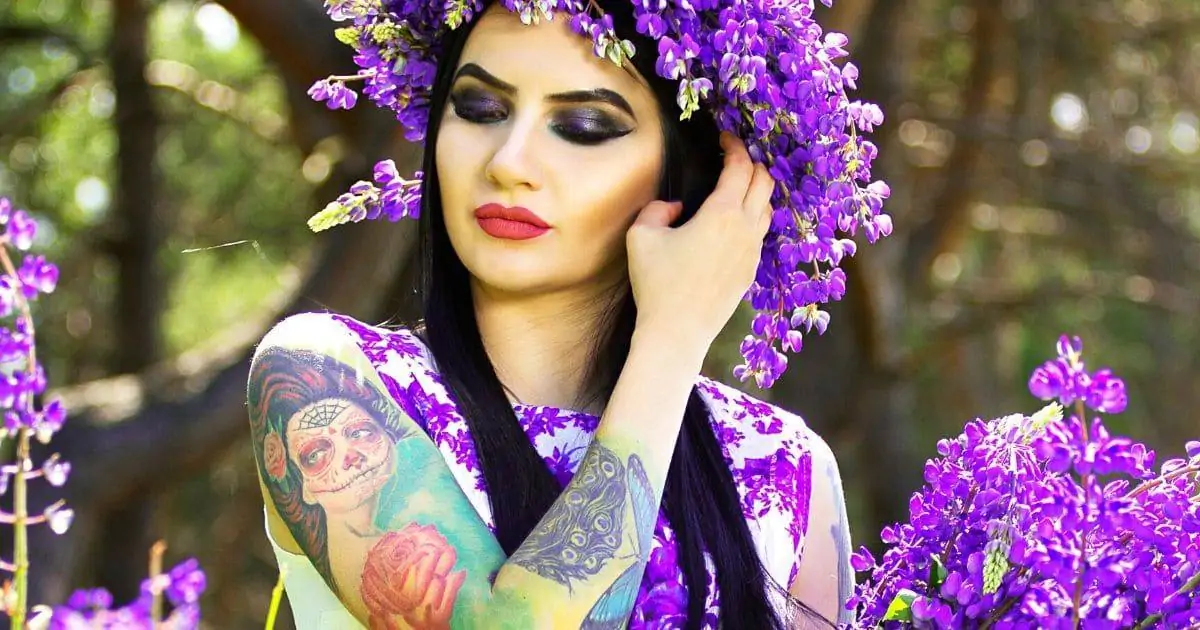

Looking for the best Mexican tattoos for women?
You’ve come to the right place! 👋 I’m Shelley, and I have been traveling solo and living in Mexico since April 2018.
I fell in love with the country and wanted to get a tribute Mexico tattoo after my first year living here.
I did a bunch of research into designs, but decided on La Sirena (The Mermaid) from the Mexican card game called La Loteria.
These are popular tattoos to get, and there are 54 cards in the game, so if you were inclined, you could even do a whole Loteria themed sleeve!
…But we’ll get to La Loteria. In fact, we’ll be getting to ALL of the most popular Mexican tattoo ideas to use as inspo.
From La Catrina/Day of the Dead, Frida Kahlo, textile styles, cacti and roses, hummingbirds, traditional Aztec and Mayan art, contemporary Mexican subject matter, and more.
You’re even going to learn about the symbolism behind the tattoos and how they relate to ancient and contemporary Mexican culture — and also discover 11 female Mexican tattoo artists you need to have on your radar.
If you’re ready to get inspired for your next tattoo, or even your first tattoo, let’s look at all the best Mexican tattoo style ideas.
The 11 Best Mexican Tattoos for Women
1. Embroidery Tattoos
This beautiful style of tattooing gives the optical illusion your skin has been embroidered.
One of the most popular ways to depict this is through the otomí pattern, which is associated with the otomí ethnic groups of Central Mexico.
The Mexican bordado (pronounced bore-dad-oh, and meaning “embroidery”) style tattoos are commonly done with traditional folkloric elements, including hummingbirds, deer, other animals and flowers.
This esthetic is indicative of the style of embroidery found on everything from tapestries and tablecloths, to the traditional Mayan huipil (pronounced wee-peel).
The huipil is a pre-Hispanic tunic style garment, still worn by today Mayan women in Mexico and Central America countries like Guatemala.
You will especially see huipils in the Mayan regions of Mexico, like the Yucatan Peninsula (less so in the tourist meccas of Cancun and Tulum, but definitely in places like Merida and Valladolid).
Mayan women in Chiapas state, and sometimes in Oaxaca state, also wear huipil.
2. La Catrina Tattoos
Besides Frida Kahlo, La Catrina might be the most commonly tattooed woman from Mexico.
This skeletal woman is one of the most beloved icons of Mexico’s famed Dia de los Muertos (Day of the Dead) Holiday, which takes place each year on Nov. 1-2.
History of La Cartina: The Skeletal Woman
La Catrina has a long and interesting history, dating back to 1910 when Mexican printmaker and illustrator Jose Guadalupe Posada first penned her.
He named this figure La Calavera Garbancera (The Elegant Skull), which you can see replicated in the small tattoo in the IG photo above.
This tattoo is an exact replica of the sketch Posada drew of her.
This dapper woman, with her fancy feathered hat, was a social critique of Mexican society at the time.
From Posada’s perspective, many Mexicans were aspiring to dress and act more European.
Posada saw this as a snub to the more “humble,” traditional style of Mexican dress, and he created his character as a skeleton who would serve as a reminder that we eventually die — fancy clothing or not — we’re all just bones beneath our clothing.
Diego Rivera’s La Catrina


Posada’s original woman was just a skull — until Mexican artist Diego Rivera (Frida Kahlo’s husband) gave her a body in his 1947 painting, Sueño de una tarde dominical en la Alameda Central.
This is the first time we see the skeletal woman we now know as La Catrina.
La Catrina’s transition into the official grand dame of the Mexican Dia de Muertos (Day of the Dead) holiday came after Rivera’s 50-foot-long painting — in which he placed her in the dead center (pun intended 💀).
You can see this amazing painting at the Diego Rivera Mural Museum in Mexico City, one of the best museums in Centro Historico, the historic city center.
This off the beaten path museum is one of the best non-touristy things to do in Mexico City.
3. Hummingbird Tattoos
Colibri (pronounced coe-lee-bree, and meaning “hummingbird”) turn up in many of Mexico’s pre-Hispanic religions.
From the Mayans to the Aztecs, the hummingbird seems to be a revered animal throughout centuries-old Mexican lore.
One of two principal Aztec gods, Huitzilopochtli, was often represented in art as a hummingbird or an eagle.
This deity symbolized the sun, war, youth and conquest — making the hummingbird a symbol of perseverance, among other things.
The Aztecs also believed hummingbirds were the reincarnation of their fallen warriors.
They believed when a warrior died in battle, he would reincarnate and return to Earth as a hummingbird, thus these birds essentially carried our immortal essence.
For the Mayans, the hummingbird had the ability to carry the thoughts and desires of humans from place to place.
They believe the gods revered these beautiful birds so much, they gave them incredible flying abilities, including such fast speed that no human could ever catch one.
Nowadays, hummingbirds are popular tattoos.
These colorful birds are gorgeous in 2D, but you’ll also see artists getting very creative with 3D hummingbird tattoo designs that look like they are in mid-flight.
4. Frida Kahlo Tattoos
There is perhaps no single woman who represents Mexico as much as artist Frida Kahlo. She has been the subject of books, movies, dolls, copycat artists, Mexican folklore and much more.
She has also been immortalized in many tattoos — in literal and abstract form — the latter seeming to carry her rebellious nature on, even decades after her death.
Nothing is absolute. Everything changes, everything moves, everything revolves, everything flies and goes away.
—Frida Kahlo
I have traveled to half the states in Mexico, and even when I least expect it, I’ll find a street art mural in tribute to Frida, a restaurant, bar or cafe named after her, and small museums — like the Frida Kahlo Museum in Playa del Carmen.
Her spirit is very much still alive and well in her homeland… and on many a tattoo. Frida tattoos were definitely the easiest to find on Insta.
Are you a Frida superfan?

Then you must put the Frida Kahlo Museum, AKA Casa Azul (Blue House), in Mexico City on your bucket list!
The museum is located inside the blue house she lived in with her family until her death in 1954, in the colorful Coyoacan neighborhood, one of the most historic in all Mexico City.
5. La Loteria Tattoos
La Loteria (The Lottery) is a popular card game in Mexico which dates all the way back to 1887, when Italian missionaries brought ti to Mexico.
Now a quintessential Mexican card game, La Loteria has since been played by families and at parties.
The art from the game is iconic — with its imagery showing up all the time in Mexican pop culture.
Because of the game’s popularity, La Loteria tattoos are also quite popular. Some people elect to get the entire card, while some (like me!) just get the image from the card.
With so many card options to choose from, there’s no shortage of tattoo inspiration from La Loteria.
Some of the most popular La Loteria cards people get tattooed include:
- 🌞 El Sol (The Sun)
- 🌜 La Luna (The Moon)
- 🧜♀️ La Sirena (The Mermaid)
- ♥️ El Corazon (The Heart)
- 🦂 El Alacran (The Scorpion)
- 🍺 El Borracho (The Drunk Guy)
How to Play La Loteria

This game is played with 54 cards, and each player gets their own board (larger card) with images on it.
It’s basically a cross between the U.S. card game, Go Fish, and Bingo, but here’s a detailed version of the rules.
- The first step is to determine who will be the card name caller. This person can sometimes also play, but often just calls out the card names, similar to the person who calls the Bingo numbers.
- They then pass out a board (or two) to each player. There are 54 cards in the La Loteria deck, and each board has 16 random card images on it.
- Before starting the games, each player will need at least 16 small things to use as markers so they can check off or mark off the cards from their board once called. For this, anything can be used, but raw beans are quite common.
- After shuffling the deck of cards and laying them face down, the caller will starts flipping the cards over and calling out each name one by one. If a player has that card on their board, they will mark it with a bean.
- The first person who has marked off all the called cards on their game board is the winner.
🃏 Sound fun? Order your very own La Loteria set and see for yourself.
6. Sugar Skull Tattoos
Dia de Muertos, or Day of the Dead, is one of the most festive times in Mexico!
The holiday takes place each year on Nov. 1-2, with large-scale celebrations in Mexico City, Oaxaca City, and the more off the beaten path island of Patzcuaro, Mexico.
One of the most iconic features of this holiday is the sugar skull. Ironically, these don’t not totally have Mexican (or even pre-Hispanic) roots.
They came via Italian Catholic missionaries, who brought sugar art to Mexico in the 1600s.
Mexico, abundant in sugar and sugarcane, became a natural place for these molded sugar figures to take root and form their own traditions.
The sugar skulls seen during Dia de Muertos represent a departed person.
The person’s name is written on the forehead of the skull, and they are then placed on the ofrenda (altar) or gravestone to welcome that person’s returning spirit.
🌺💀🌺 Want to learn more about sugar skulls and other symbols of the Dia de Muertos holiday? Head to this article: Mexico Day of the Dead.
7. Maya Tattoos & Aztec Tattoos
If you’re looking for a tattoo with a lot of inherent symbolism, an Aztec or Maya tattoo is a great choice.
Both civilizations were pantheistic, meaning they worshiped many gods, and much of their art and symbols are in homage to one or more deities.
The origins of (known) Mexican civilization date back to the Olmecs, who inhabited Mexico from ca. 1200BC-400BC — almost 3,300 years ago 🤯
Historians and anthropologists don’t know much about these mysterious people, but the Aztecs and Mayas are among their descendants.
The Mayan Civilization encompassed what is now Mexico’s Yucatan Peninsula, as well as the neighboring countries of Guatemala and Belize.
Aztecas, or Aztecs, lived in Central Mexico, and in fact, are responsible for the establishment of Mexico City.
The story says Aztecs priests had a vision in which Huitzilopochtlii, the God of Sun and War, said they must find an eagle clutching a snake in its talons, perched on a cactus, and build their city in that spot.
This was found and the Aztecs built Tenochtitlan, or, present-day Mexico City.
The image of this eagle with the snake now graces the center of the Mexican flag. It is a symbol of Mexican national pride, and a popular Mexican heritage tattoo.
The feathered serpent deity is commonly seen in tattoo imagery, and was worshiped by both the Aztec and Maya.
This god — known as Quetzalcoatl (pronounced ketz-al-ko-uh) for the Aztecs, and Kukulkan (pronounced coo-cool-khan) to the Maya — is one of the most important for both peoples.
8. Huichol Tattoos
The Huichol (pronounced wee-chole) people, from the present-day Mexican states of Jalisco, Durango, Zacatecas and Nayarit, are known for their yarn and beadwork designs.
This pattern work makes for one of the most beautiful Mexican tattoo designs, and a popular travel tattoo idea after your Mexico trip.
For tattooing, the bead designs are quite popular, especially given that most patterns have a deep religious and cultural significance.
Huichol tattoos are also popular with artisans who sew, and bear a striking resemblance to the increasingly popular cross stitch tattoos.
Similar to embroidery style tattoos, the cross stitch takes its cues from a sewing technique called, you guessed it, cross stitching.
Historic records of textile remains have even found pre-Hispanic societies used this sewing technique!
After the Spanish conquest of Mexico, the technique only gained popularity…
“Crossed stitches, extremely fashionable in Europe during the 19th century, became so popular in Mexico that they eventually overshadowed most other stitches.” —V&A Museum
9. Mexico Food Tattoos
Food is a big part of Mexican culture and national identity, a fact that has even been validated by the United Nations.
In 2010, UNESCO declared it an Intangible Cultural Heritage of Mankind; meaning Mexican food is one of mankind’s cultural treasures. #TRUTH
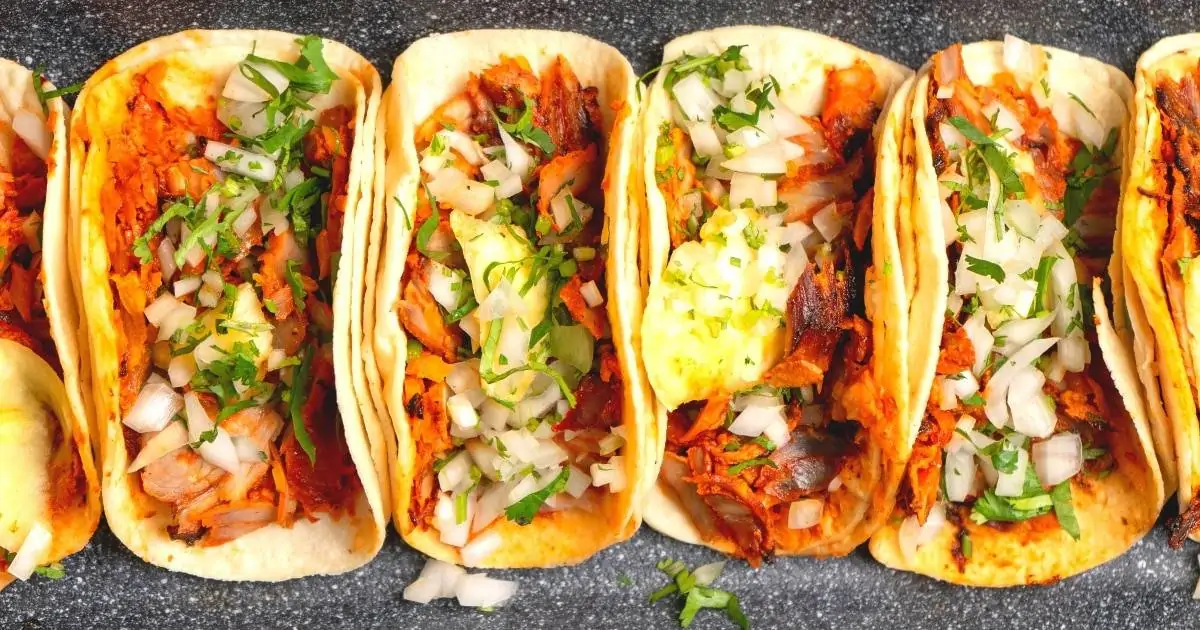
RELATED BLOG 🌮 50 Best Tacos in Mexico City
Though a country known and loved for its tacos, Mexican food is much more than that!
In fact, the state of Oaxaca (pronounced wa-ha-ka) isn’t known for tacos, but is considered one of the top Mexico foodies destinations. → Learn all about Oaxaca food here.
While there’s no shortage of Mexican food art to tattoo on your body, some of the more popular ones include:
- Tacos
- Trompo (tacos al pastor meat)
- De la Rosa mazapan candy
- Avocados and guacamole
- Concha (Mexican sweet bread)
- Chili peppers
- Elote (corn)
- Mangos
- Mezcal
- Churros
10. Agave Plant & Cactus Tattoos
There is no one plant more closely associated with Mexico than the nopal (cactus)!
The agave, a particular type of cacti, makes two of Mexico’s most important products — tequila and mezcal.
Beyond the agave, the cactus plant is commonly eaten throughout Mexico. The taste and texture of nopal (cactus) are similar to okra, and it is considered a Mexican superfood.
Aesthetic-wise, cacti make for beautiful tattoos. From abstract-style designs to hyper-realism, cactus imagery seems to have a home across all styles of Mexican tattoo art.
Cactus are found throughout most of Mexico, and in nearly every state. In fact, the prickly pear cactus is considered the official plant of Mexico.
You’ll even find one of these cacti on the Mexican flag in the country’s Coat of Arms.
11. Mexican Flower Tattoos
The most popular flower tattoo, in Mexico and the world, seems to be the rose.
You’ll find a lot of stand-alone rose tattoos, roses with skulls, and roses in Dia de Muertos (Day of the Dead) flowers crowns.
If you’re looking to go beyond the rose, consider a marigold flower tattoo.
This flower is synonymous with Day of the Dead — much more than the rose, actually — and commonly known as flor de la muerto (flower of the dead).
The marigold flower, or cempasuchil (pronounced sem-pah-souch-ill), has been a part of this celebration dating back to its Aztec origins.
According to Aztecs beliefs, the flower’s bright color and strong scent let the spirits know exactly where they should return during the Día de Muertos holiday.
