
I’ve Lived in Mexico for 8 Years — These are the WORST Places to Visit in Mexico for Tourists

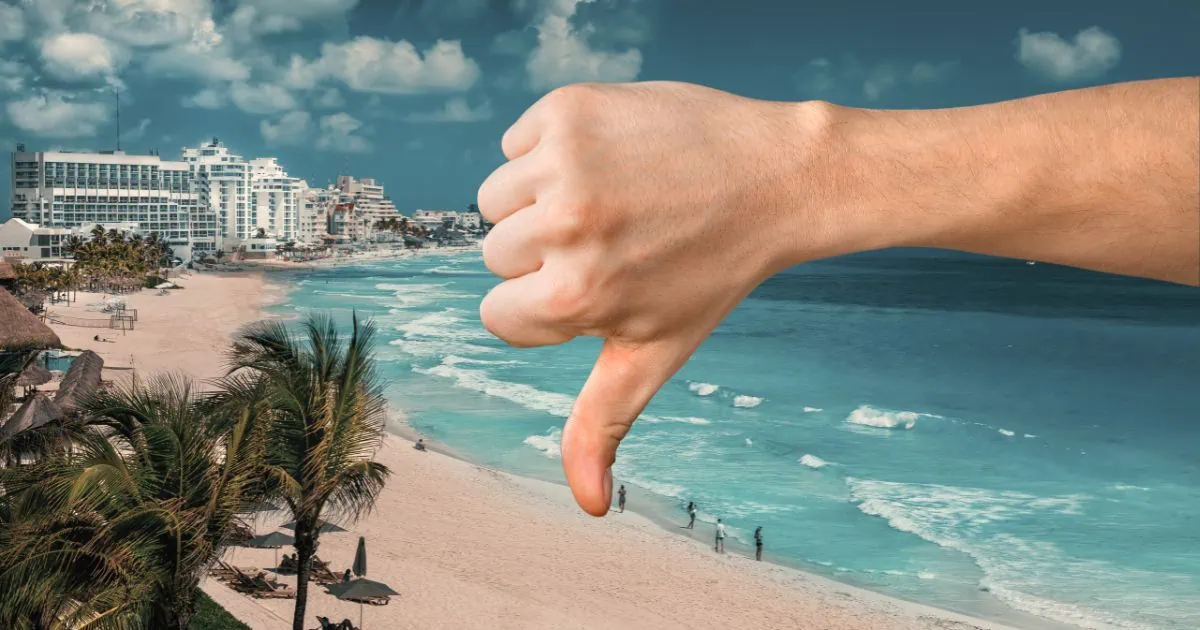
Curious about the worst places in Mexico for tourists?
You’ve landed to the right article! I’ve lived in Mexico since 2018, traveled far and wide, and found myself disenchanted with some “must-see” tourist spots.
Below, you’ll find all my honest thoughts on the worst places to visit in Mexico for tourists, along with why I feel they usually disappoint visitors.
Disclosure: This article may contain affiliate links, meaning when you make a purchase, I earn a small commission. Affiliate links cost you nothing to use, and help keep my content free. It’s a win-win for us both. For more info, see the Disclosure Policy.
What “Worst” Means to Me
By “worst” I don’t mean dangerous everywhere, all the time, as many of these places are known to be both safe and beautiful.
However, as a traveler who opts out of all-inclusive resort bubble, I look at factors like:
- Overdevelopment
- Safety for visitors
- Loss of local culture and authenticity
- Environmental damage and pollution
- Risk of petty crime and travel scams
- Infrastructure issues (roads, water, waste)
- Price-gouging for tourists
- Overcrowding and over-tourism
With that out of the way, let’s get to the list of what I consider the worst places to visit in Mexico for tourists.
1. Tulum
Why Tulum is so popular?

Once a stunning-yet-sleepy fishing village, Tulum’s tourism boom over the past decade could almost be predicted.
With white-sand Caribbean beaches, turquoise waters, ancient Mayan ruins, and hundreds of cenotes (natural sinkholes), it drew travelers in droves.
Add to this a bohemian atmosphere, boutique eco-resorts, wellness and yoga retreats, farm-to-table organic restaurants, and photographic panoramas at every turn, and you have an Instagrammable destination.
Also, improvements in access — like the Tulum Airport and Tren Maya (Mayan Train) — make Tulum more convenient to get to than it once was.
Here’s Why Tulum Sucks
👎 Environmental collapse & infrastructure failure
Tulum’s growth over the past few years has been explosive, and often, unregulated, so large developments are popping up without proper permits.
Some hotels dump sewage improperly, with many not properly connected to waste water treatment. As a result, underground rivers sometimes get polluted.
🏖️ Beach access & high prices
Locals often complain that beaches are being privatized with access restricted to hotel guests only — though legally, all beaches in Mexico are public.
As Tulum gets more popular, fees to enter some beach areas are going up, and everything from lodging to food has becoming more expensive than ever.
If you’re on a budget, you’ll likely feel squeezed in Tulum — but you can opt for cheaper destinations like Bacalar, El Cuyo, Zihuatanejo, and Huatulco.
🌿 Sargassum seaweed

Tulum’s seaweed (sargassum) invasions are a recurring nightmare, both for aesthetics and beach usability.
It can render swimming impossible, produce foul smells, attract flies, etc.
🗑️ Pollution, trash, and waste management problems
Even beyond the beaches, the jungle/cenote infrastructure cannot always cope with tourism’s demands.
Trash, untreated or partially treated wastewater, illegal development all contribute to environmental degradation.
Will you like Tulum?

If you’re more of a luxury traveler who stays at upscale beachfront resorts like these, books your own private transportation, and likes posh beach clubs, then Tulum is for you.
For many others, the cost and environmental compromise may spoil what should be magical in the Mexican Caribbean.
2. Cancún
Why Cancún is so popular?

Cancún has long-been one of the best places to visit in Mexico (though I disagree) because it offers visitors a lot.
The beaches have long stretches of soft sand, clear warm water, with strong resort development right on the coast (within the Cancun Hotel Zone) that offer everything from luxury hotels to large all-inclusive resorts.
Then there’s consistent warm, tropical weather year-round, which makes it a safe bet for sun regardless of season.
Adventure offerings nearby add to the charm: snorkeling, scuba diving on the Mesoamerican Reef (one of the largest coral reef systems in the world), cenotes, and jungle excursions.
Plus, there’s excellent infrastructure for tourists with the Cancun Airport, entertainment, nightlife, shopping, and more — making it an easy trip families, couples, groups, and even solo travelers.
Here’s Why Cancun Sucks
🌿 Sargassum seaweed

Like Tulum, Cancun has sargassum seaweed blooms. While there are clean-up efforts, sometimes, there’s simply too much to clean.
Usually, the Cancun sargassum season peaks in the hot summer months, but it’s unpredictable and can happen at any time.
🚔 Scams, tourist traps, and price-gouging
From taxis and airport transportation to beach clubs and tours, Cancún is very good at extracting money from tourists.
⚠️ Note: If you’re looking for reputable Cancun Airport transportation, I recommend using this company to book your shuttles.
🇲🇽 Lack of Culture
If you’re looking for authentic Mexican culture, Cancún is not the best place to find it (it actually might be the worst place).
As a result, many things in “feel” artificial rather than immersive Cancún is essentially the Disney of Mexico.
⚠️ Safety concerns in certain zones

While the majority of tourists have perfectly safe stays, there are areas and times (ie. after dark, or far from the hotel zone) where petty crime, pickpocketing, or worse, can happen.
Make sure to check out this Cancun Safety Guide so you know how to stay safe on your trip.
✈️ Overcrowding, and Over-Tourism
Over-tourism is a BIG problem Cancún, which the most-visited place in Mexico.
Popular beaches, resorts, and shopping areas are extremely busy, and service sometimes slips which can turn a relaxing vacation into a stressful one.
Roads and access points can get jammed in high season winter months, so everything from getting a taxi to waiting in line is more painful.
3. Cabo San Lucas
Why Cabo San Lucas is so popular?

Cabo San Lucas is gorgeous, with dramatic desert landscapes and rugged coastlines, and the contrast of arid mountains meeting the ocean.
Many beaches are beautiful and well maintained, some awarded Blue Flag status.
Then there are the water-based draws! A fishing mecca, there’s also excellent diving and snorkeling spots, boat tours, and whale watching in winter.
Add upscale resorts, a party scene (for those who want it), fine dining, luxury amenities, and very good tourist infrastructure — Cabo offers a polished, more “resort-luxury” beachfront experience.
Here’s Why Cabo Sucks
Cabo is glamorous, but that glamour has a price. Here’s what you need to consider when planning a trip to Cabo, Mexico.
💸 Price to value mismatch

Luxury stays, resorts, yacht parties, high-end restaurants dominate, so if you want something more local or low cost, you’ll struggle in Cabo.
Many services are priced for affluent tourists or Americans, and the all-inclusive vibe can make you feel disconnected from “the real Mexico.”
🏨 Overdevelopment and commercialization
The landscape (especially around the Cabo Marina, beaches, and resorts) has been heavily built up.
The authenticity of small town Baja culture is often overshadowed by souvenir shops, luxury condos, and high-end nightlife.
If you’re looking for places near Cabo San Lucas that have more culture to offer, check out Todos Santos, El Pescadero, and San Jose del Cabo.
🛟 Non-Swimmable Beaches

Cabo is actually not the best place for swimming, especially on the Pacific Ocean side, where not all beaches are swimmable beaches.
Be aware if you plan to visit certain beaches, like Playa del Amor (Lover’s Beach) and Playa Solmar, as they may have strong waves, rip currents, rough seas.
4. San Miguel de Allende
Why San Miguel de Allende is so popular?

San Miguel de Allende is beloved for its colonial charm, with cobblestone streets, ornate Baroque and Spanish colonial architecture, colorful buildings, charming plazas, art galleries, and artisan culture.
The climate is another draw. With temperate, generally pleasant year-round, you won’t be sweltering like in Mexico’s coastal regions.
A big expats scene is also part of the story, as many foreigners retire in SMA or spend long periods, drawn in by safety (relative to many other parts of Mexico), culture, and the refined, slow pace of life.
Add excellent food, boutique lodging, artistic festivals, and a UNESCO World Heritage designation, and it becomes clear why San Miguel feels like both a cultural jewel and a romantic getaway.
Here’s Why San Miguel de Allende Sucks
🤳 Overhyped and overpriced

Once a hidden gem, SMA got very Instagram famous, and changed (not necessarily for the better).
Prices for accommodations, food (especially restaurants aimed at tourists), and tours are much higher than many average Mexican can pay.
👎 Over-Crowding, and a loss of authenticity
The town center is beautiful, but extremely crowded, especially in the peak tourist season and on weekends.
I have found that through the years, charming boutiques selling handmade crafts made by local artisans have been overtaken by souvenir shops.
⚠️ Safety issues of a different kind

Not usually violent crime so much, but there can be petty theft, pickpockets, and sometimes, harassment.
This is especially true for tourists wandering late at night away from main tourist arteries of the city.
🤔 Expectations vs reality
Many people go expecting an authentic colonial Mexican town, and while there are many beautiful colonial buildings and a rich arts scene, the tourist infrastructure sometimes dominates so heavily that the local flavor gets diluted.
In the busy season winter months, infrastructure like parking and roads will likely be strained because of the large crowds.
5. Tijuana
Why Tijuana is so popular?

Tijuana’s popularity comes primarily from its location, at about 30 minutes from San Diego (depending on traffic, of course).
It draws visitors driving to Mexico for weekend trips, cross-border shopping, food, nightlife, and a mix of U.S. and Mexican influences.
It’s often more accessible (geographically and cost-wise) than more remote destinations.
Also, Tijuana has been growing as a destination for medical tourism with people from the U.S. come for dental work, cosmetic surgery, etc., because of lower costs and often, higher quality.
Cultural vibrancy plays a role too with food scenes, music, street art, and Valle de Bravo, the best Mexico wine region, located nearby.
That border-town energy (for better or worse) gives Tijuana the unique flavor many travelers find exciting.
Here’s Why Tijuana Sucks
🚔 High crime in certain areas

According to security reports, violent crime is high in Tijuana overall, though much of it is localized (ie. certain neighborhoods are far riskier than others).
⚠️ Safety perceptions, and day/night differences
Tourists are generally ok if they stay in the well-patrolled tourist zones like Zona Río and Playas de Tijuana (meaning, “Tijuana’s Beaches”).
However, once you stray into neighborhoods with less oversight, the risk of assault, robbery and gang activity increases — so stick to well-lit, central areas.
🇺🇸 Cross-border tensions, and expectations

Because many visitors come from or drive to Mexico from the U.S., expectations can be out of alignment.
What seems “normal city wear” or behavior in Los Angeles may cause unwanted attention, risk, and/or misunderstandings in Tijuana.
🧽 Cleanliness, and public service issues
Along with safety concerns, some tourists complain about diminishing public services in certain parts — ie. trash, poor lighting, broken infrastructure, and more.
6. Acapulco
Why Acapulco is so popular

Acapulco was once the glamorous Mexican resort city — in movies, postcards, legends of Hollywood stars arriving by yacht.
Its bay is iconic, steep cliffs, dramatic sunsets, cliff divers, tropical Pacific waves.
Huge hotels, a party atmosphere (especially in its heyday), beaches, seafood, warm weather, and proximity to Mexico City make it a natural getaway for domestic tourists.
Also, because of historical reputation, nostalgia plays a part so people imagine Acapulco glamorous, exotic, full of energy.
It remains one of Mexico’s most well-known beach destinations.
Here’s Why Acapulco Sucks
🚨 Violence, and insecurity
Acapulco has long been known for high crime rates, cartel activity, and gang violence.
There are coups between rival criminal groups. Some beaches or zones have seen violent incidents, sometimes spilling over into tourist areas.
⛈️ hurricanes, storm damage, and Environmental Issues

Sadly, the region has been devastated by major hurricanes in the last few years, like Hurricane Otis (2023) and Hurricane John (2024).
These were massive hurricanes which damaged Acapulco’s infrastructure, some homes and roads, and made certain areas unstable or unsafe.
Post-storm damage and lack of sufficient repairs have left some beachfronts contaminated, and some roads dangerous to drive on.
👎 Decline in appeal
Because of the above, combined with rumors, news reports, official safety advisories, many domestic and international tourists avoid Acapulco now.
Those who do go, tend to stick to the beach areas because Guerrero state, where Acapulco is, isn’t know to be one of the safest places in Mexico.
7. Playa del Carmen
Why Playa del Carmen is so popular?

Playa del Carmen has a mix that many tourists love, including beautiful Caribbean beaches and coral reefs for snorkeling and diving.
It also has a proximity to Riviera Maya hot spots (Tulum, Cozumel, cenotes), a pedestrian friendly downtown (5th Avenue) lined with shops, restaurants, bars, and nightlife.
It offers both resort-comfort and local flavor more so than some bigger resort zones, which appeals to travelers seeking both relaxation and culture.
Its infrastructure for tourism is solid, there are many lodging options, good access (via Cancun and ferries), and its growth in recent years reflects how well it has balanced mass tourism with diversified offerings.
Here’s Why Playa del Carmen Sucks
🌿 Sargassum seaweed Issues

Similar to Tulum and Cancun, Playa del Carmen has been dealing with horrible sargassum seaweed for the last few years.
It affects beach aesthetics, smells horrible, makes swimming unsanitary, and often causes cancellations of water-based tours.
🌊 Coastal erosion, and environmental stress
Beaches are eroding; rising sea levels, sand shortages, and inadequate coastal management are hurting the coastline.
🚨 Scams, and transportation rip-offs

While most people in the service industry in Playa del Carmen are honest, hard-working folks, pay attention to taxi drivers, tour operators, restaurants, etc.
Some big complaints from travelers include “rip-off tourism,” overcharging, unclear fees, and/or dishonest billing.
🤢 Public health, sewage, and water quality problems
Some concerns include overflowing sewage (especially after heavy rains during Hurricane Season in the summer), and black water in some public streets near tourist zones.
In general, Mexico travels should be aware of concerns about water safety. In case you aren’t sure, don’t drink the water in Mexico.
🚗 Transport safety, and Bad road conditions

The highways connecting the Mexican Caribbean beach towns aren’t generally in the best shape, with large potholes and unmarked topes (speed bumps).
You should also expect heavy traffic and congestion between towns, especially on weekends and during the busy season in winter.
While I recommend renting a car in Playa del Carmen so you can explore the entire Yucatan Peninsula, read these Mexico driving tips before hitting the road.
My Best Tips If You Still Want to Visit These Places

For the record, I’m not saying “never go” to any of these places. Instead, go to them informed and smart — and here’s how to do that.
- Stay in well-known, reputable lodging. I recommend Booking.com and Expedia for hotels rentals, and I recommend Airbnb for home and apartment rentals.
- Before booking, research reviews, particularly recent ones mentioning safety, pollution, water quality, etc.
- Ask locals about which neighborhoods are safe at night. Stay in areas with good lighting, busy streets.
- Avoid wandering far outside tourist zones after dark.
- Use certified tour operators; check for licenses.
- Before booking, check recent photos of beaches and water. If they’re full of sargassum, smells, or dirty water, you may want to change your plans.
- Don’t expect perfection, but do check infrastructure in advance (ie. how to get from the airport to downtown or your hotel, the roads, etc.).
- Be budget-realistic and know you’ll likely pay a “tourist premium,” so account for it.
Places to Go Instead

If you want a holiday that mixes beauty, culture, affordability, and true Mexican hospitality (less “tourist facade”), these places don’t often deliver for many visitors.
If I were advising someone planning a trip to Mexico who wants to avoid disappointment, I’d suggest these alternatives:
- Instead of Tulum and Playa del Carmen: Try smaller, less developed coastal spots like Isla Holbox, El Cuyo, Bacalar, Cozumel, and Isla Mujeres.
- Instead of Acapulco: Seek beach towns on the Pacific Coast with lower crime rates, like Puerto Escondido, Zihuatanejo, Sayulita, and Mazatlan.
- Instead of Tijuana: Check out authentic places like Oaxaca City, San Cristóbal de las Casas in Chiapas state, Pátzcuaro, and Mérida.
My Final Thoughts on the Worst Places to Visit in Mexico
If I had to pick which destination gives more “regret per peso,” for many tourists, Tulum and Playa del Carmen are high on that list.
The reason being because you often pay premium prices expecting paradise, and then you deal with environmental problems, limited beach access, sargassum, and infrastructure that can’t keep up.
Tijuana and Acapulco are more serious in terms of safety — and they’re actually considered some of the most dangerous places in Mexico.
Cancún and Cabo are expensive and sometimes superficial, but comparatively safer options than Acapulco if you want to visit the beaches of Mexico.
San Miguel de Allende disappoints more by expectation than danger, as many expect a cultural hub in Mexico, but get a pricey tourist trap instead.
Get My FREE Guide: 5 Easy Ways to Save Money in Mexico
Insider tips from someone who’s lived in Mexico since 2018.

