
How to AVOID Cancun Seaweed & Sargassum (So You Can Actually Enjoy Swimming)


NEED INFO ABOUT AVOIDING SEAWEED IN CANCUN?
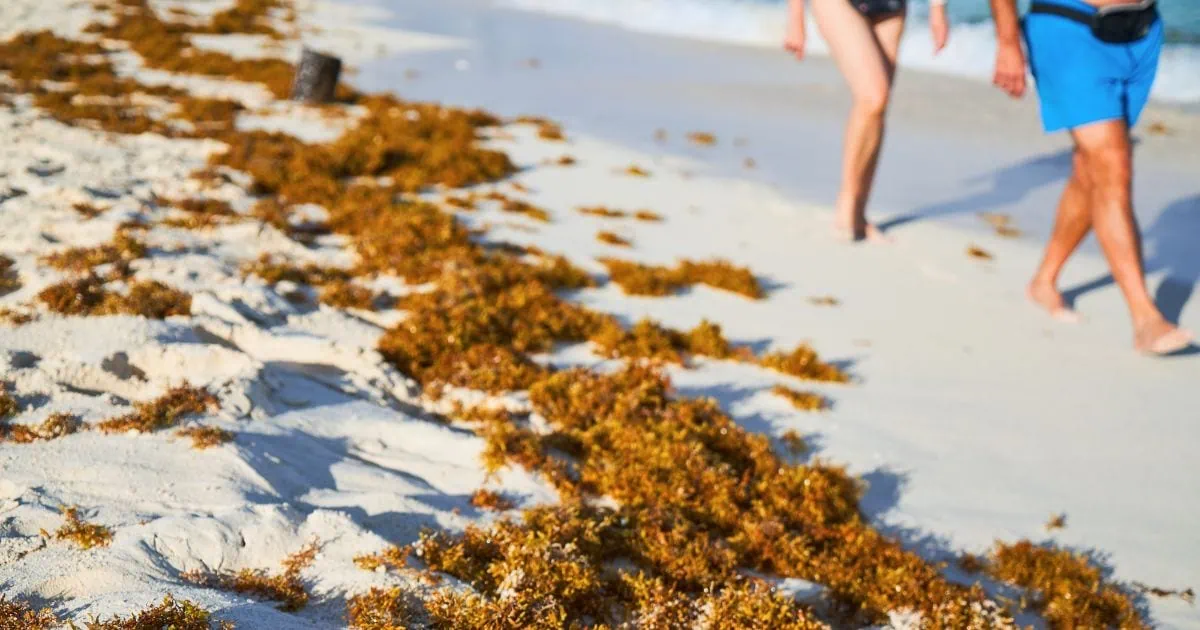
You’re in the right place if you’re worried about running into the pesky Cancun seaweed that’s been covering the shorelines along Mexico’s Caribbean Coast.
As someone who’s lived in Mexico since 2018, I wrote this article to help you avoid the Cancun beaches seaweed issue, so that you have a nice vacation.
I’ve personally visited Cancun numerous times, and managed to avoid the seaweed in Cancun each time 🙌 and so can you.
Yes, there is seaweed in Cancun during certain months, but with a little research, preparation and planning, you can easily steer clear of it.
Remember, not all beaches are affected daily, so rest assured you can still have a fantastic time in Cancun even if there is some seaweed around.
Ready to learn everything you need to know about visiting Cancun and avoiding sargassum in 2024? Let’s dive in!
What is Cancun seaweed?
Cancun seaweed sargassum is a brown seaweed or brownish algae that washes up on the beaches in the Cancun area.

It originates from the Sargasso Sea in the Atlantic Ocean, and recently, large amounts of sargassum have drifted towards Cancun’s shores.
This has caused concerns due to its unpleasant smell and tendency to accumulate in large masses.
The Cancun seaweed problem has also had an immense impact on Mexico’s tourism industry (and other Caribbean countries).
If you want to know more or need additional info about sargassum blooms, check out the Cancun Seaweed FAQ at the end of this article.
When does the seaweed season start in Cancun?
The Cancun seaweed season usually runs from spring to fall.

Though keep in mind that sargassum isn’t predictable, so how much seaweed Cancun gets each year is unknown — as a best case scenario, it gets none this year!
Some areas close to Cancun, like Playa del Carmen, Cozumel, Tulum, and Puerto Morelos, often see significant amounts of sargassum starting as early as February.
While there’s no way to predict this with 100% certainty, the seaweed is mostly gone by November — and not likely to return until late-February or early-March.
Why are Cancun beaches full of seaweed?
Cancun beaches are often full of seaweed, specifically sargassum, due to a combination of natural and human-influenced factors.

1. Ocean Currents and Waves
The seaweed originates from the Great Atlantic Sargassum Belt between Africa and the Caribbean.
Ocean currents and winds carry this seaweed across the Atlantic to the shores of Cancun.
2. Nutrient Enrichment
Dust from the Saharan Desert in Africa, upwelling waters, and river runoff, particularly from the Amazon River and Orinoco River, enrich the seaweed.
The nutrients from these rivers have helped the sargassum grow as much as tenfold in some years.
3. Climate Conditions
Higher sea temperatures, typical during the warmer months, also favor the growth of sargassum.
This leads to greater growth rates and larger masses of seaweed reaching the beaches in Mexico, South Florida, the United States, and beyond.
4. Human Impact

Factors like agricultural runoff and increased nitrogen content in the ocean, possibly linked to human activities, also contribute to the growth and proliferation of sargassum.
These factors combine to cause the frequent and sometimes massive influxes of seaweed that affect Cancun Mexico, and other parts of the Caribbean Sea.
How can you avoid Cancun seaweed beaches?
You can still enjoy Cancun, even if some beaches have seaweed on them — you just have to plan accordingly.
Yes, the sargassum odor and unsightly large seaweed on beach shorelines blocking the water have turned many tourists away in recent years.
Keep reading to learn about the Cancun Facebook groups, official webpages and Cancun webcam live streams that show the locations of sargassum in real-time (and semi-real time).
1. Check the Cancun Seaweed Forecast on Facebook

One of the best things to do in Cancun, Mexico, is hit the beaches. The best way to find Cancun beaches without seaweed is to use Facebook to get updates.
The seaweed situation can change daily, so you can get the best info here.
🌿 BEST CANCUN SEAWEED FACEBOOK GROUPS
Sargasso Seaweed Updates Riviera Maya and Sargassum Seaweed Updates (Cancun, PDC, Tulum) are both great groups to join before your trip to get updated info.
As with all Facebook groups, some people are very helpful, and some are very snarky. I always make sure to say thanks for the update to the helpful folks 😁
🌿 RED SARGAZO FACEBOOK PAGE

Red de Monitoreo del Sargazo de Quintana Roo is a page, not a group, so you can view it without joining.
You can also check post comments, as people leave updated photos of beaches to show the seaweed levels at different ones.
The Red Sargazo Facebook page is in Spanish, but they use self-explanatory graphics, like the one seen above, with colored dots that mean the following:
- 🔴 Red Dot: Excessive levels of sargassum on that beach
- 🟠 Orange Dot: Abundant sargassum on that beach
- 🟡 Yellow Dot: Some sargassum on that beach
- 🟢 Green Dot: Very little sargassum on that beach
- 🔵 Blue Dot: That beach is 100% free and clear of sargassum
You can also check the Sargazowatch site for a similar visual option.
Keep in mind that Cancun also has local clean-up initiatives around the ZOFEMAT (Federal Maritime Terrestrial Zone), the first 60 feet (20 meters) of beach above the high tide line.
For this reason, you might see a beach in the red, but crews might be working to clean it at that very moment.
This means there might not be much sargassum by the time you arrive since the map was last updated before the clean-up.
Also, many of these best Cancun beach resorts and Cancun beach clubs have crews that clear away the seaweed each morning.
⚠️ Note: As a visitor, please respect the locals from the resorts in Cancun and Riviera Maya who work tirelessly to keep the beaches clean for you.
2. Check the Cancun Seaweed Reports Online

Visit the Sargassum Monitoring site’s real-time Cancun Seaweed Report to understand better seaweed conditions and the best Cancun beaches to visit.
For those wondering if there is seaweed in Cancun right now, or if there is seaweed today in Cancun — this map can help!
Here, you’ll find the Cancun Seaweed Map (also called the Cancun Sargassum Seaweed Map), where you can get updated reports, beach by beach.
One of the great things about the beautiful beach town of Cancun is the abundance of beaches to explore. There are 14 miles (22.5 km) of beaches in Cancun!
If you find yourself at a beach with too much seaweed for your liking, simply head to another Cancun beach.
🏖️ Note: The link above lets you check current seaweed conditions in Cancun, as well as the seaweed problem in Tulum, Playa del Carmen, and other Riviera Maya beaches.
3. Check the Cancun Seaweed Webcams

Several popular hotels in Cancun, have live streams that can also be considered as Canacun seaweed cams that allow you to see certain areas in real time.
As the live cams don’t cover every beach in Cancun, you might also want to engage with locals through Facebook groups for a full Cancun seaweed update.
That way, you can see the seaweed in Cancun today without worrying or having to forecast sargassum.
👀 LOOKING FOR MORE MEXICO SEAWEED LIVE STREAMS?
The Webcams de México site has cameras in several cities to help you find the best beaches without seaweed, like these:
- Tulum live stream on Tulum Beach from Casa Malca Tulum Resort
- Isla Mujeres seaweed live stream on Playa Norte Beach
- Playa del Carmen seaweed live stream
- Cozumel seaweed live streams on several popular beaches
- Puerto Morelos seaweed live stream
4. Head to the best seaweed free beaches near Cancun
If you can’t find any seaweed free beaches in Cancun during your visit, you can always take a day trip and visit some of the best beaches near Cancun.
🏝️ ISLA CONTOY NATIONAL PARK

You can also take this day trip to Isla Contoy — a beautiful island oasis off the coast of Cancun, and a Mexico national park.
Isla Contoy is easily one of the best beaches in Mexico without seaweed, though you can only go if you book a tour (using the link above).
With miles and miles of coastline in the Yucatan Peninsula, there’s no need to fly to Mexico’s Baja California Peninsula for seaweed-free Mexican beaches!
If you’re struggling to find a seaweed-free spot during your vacation, trust me, there’s one near Cancun — including this small island which has never had a major seaweed problem.
🏝️ ISLA MUJERES & Cozumel Island

Isla Mujeres has some of the best beaches in Mexico in July to escape the Cancun beach seaweed problem.
Another option is Cozumel Island (especially the island’s west coast), though Isla Mujeres is much closer to Cancun at only 15-20 minutes away by ferry.
The beaches on these Mexican islands tend to be seaweed-free in the hot summer months.
Even if they have some seaweed, they usually have much less seaweed than Cancun beaches like Playa Delfines or Playa Gaviotas — two of the most visited public beaches among Cancun tourists.
These popular beaches have seen their fair share of seaweed piles, even in the middle of winter, though the worst months are still usually in summer.
🏝️ MEXICO GULF BEACHES

If you have trouble finding the best seaweed-free beaches in Caribbean waters, another option is to visit the Gulf of Mexico side of the country.
There’s FAR less sargassum in the Gulf of Mexico beaches vs Caribbean beaches, and places like El Cuyo and Puerto Progreso Beach near Merida make great options.
Of course, these aren’t beaches close to Cancun, so you might have to alter your travel plans to visit these beaches of Mexico.
5 Best Things to Do if There’s Sargassum in Cancun
Visiting Cancun during seaweed season when there’s large influxes of sargassum expected?
Or, did you check the sargassum forecast and see there’s a continued presence of sargassum seaweed during your stay in Cancun?
If so, don’t worry! When there’s a large quantity of sargassum and smelly seaweed floating around on Mexico’s beaches, you still have the options listed below.
1. Swim in the Seaweed-Free Cancun Cenotes

Visiting cenotes is one of the most popular things to do in Cancun. Since they don’t connect to the ocean, these cenotes are seaweed-free all year.
🔎 What are cenotes? Cenotes are deep sinkholes found in the lush jungles throughout Yucatan Mexico. There are about 6,000 cenotes in Mexico.
They mostly stem from the same clear water source, the Sistema Sac Aktun System, a massive freshwater river flowing beneath the Yucatan Peninsula.
La Ruta de los Cenotes, meaning the Road of Cenotes or the Route of Cenotes, are some of the best cenotes near Cancun.
They are all along one road, which is located just off the main highway (Carretera Cancun-Tulum, Highway 307) in the beach town of Puerto Morelos
The best ones include Cenote Zapote EcoPark, Cenote Siete Bocas, Cenote Azul and Cenote Jardin Del Eden (Cenote Ponderosa).
💧 Best Cancun Cenote Tours
As there aren’t any cenotes in Cancun itself, you will have to venture outside of town to swim in the Mexico cenotes.
There aren’t any cenotes reachable by bike tour, so you’ll need a rental car or taxi ride to get you there — which is why I recommend booking a tour.
To book, check out these best cenote tours from Cancun. Many take you to multiple cenotes in one day, or additional attractions, like ATV rides in the jungle.
2. Enjoy a Cancun to Chichen Itza Day Trip

Chichen Itza Mayan Ruins is one of the New Seven Wonders of the World, and a bucket list site for many Cancun travelers.
Taking a tour with a local guide is the best and safest way to visit Chichen Itza from Cancun.
Most tours leave early in the morning and include stops at nearby cenotes, and the famous colonial city of Valladolid — one of the Mexico pueblos magicos (magic towns).
The ancient Mayan Ruins of Chichen Itza are the largest archeological site in Mexico.
With about two million annual visitors, Chichen Itza and Teotihuacan Ruins in Mexico City share the distinction of being the most visited archeological sites in Mexico.
Chichen Itza was a major pre-Columbian city and political and economic hub for the Mayan civilization.
It was even declared a UNESCO World Heritage Site in 1998 because of its historical importance.
3. Take a Cancun Cooking Class or Cancun Food Tour

When you just “can’t even” with the Cancun seaweed, why not take a hands-on cooking class that includes extras like a tequila tasting or a market visit?
These incredible chefs use local ingredients and even some ancient cooking techniques. You’ll learn about the food’s origins and try a new delicious dish.
Want to try a Mexican Cooking Class and Market Tour with a Local Chef?
Or would you prefer this fun and educational Mexican Food Cooking Class that includes enough tastings to fill you up?!
Don’t feel like cooking? There are plenty of food tours that you can also take, like this Taco Tour, which includes stops at four taco restaurants Cancun locals love.
There’s also this Cancun City Tour and Taco Crawl where you’ll enjoy tacos, tequila and cervezas, and do some souvenir shopping in Mercado 28.
4. Snorkel One of the Largest Barrier Reefs in the World

Jump on a boat and escape the Cancun Mexico seaweed problem while you head out to one of the largest coral reefs in the world.
The Mesoamerican Barrier Reef (AKA the Great Mayan Reef) offers amazing snorkeling opportunities.
Being out in the ocean away from the shore means you won’t encounter large piles of seaweed because the experienced boat tours know how to avoid them.
Additionally, some nearby Cancun cenotes offer clear-water snorkeling opportunities. Snorkeling is the perfect escape when the seaweed sets in at the beaches.
Tons of snorkeling tours in Cancun will take you to the spectacular reefs and cenotes along the Mexican Caribbean Coast.
5. Visit Sian Ka’an Biosphere Reserve

Sian Ka’an, meaning “origin of the sky” in the Maya language, is a 1.3 million-acre (526,000 hectare) natural reserve in Mexico.
Visitors and locals flock to the nature preserve, which is also a land and water park, to experience its ecological diversity and crystal-clear waters.
Home to dolphins, manatees, sea turtles, fish, and endemic birds, Sian Ka’an was designated a UNESCO World Heritage Site in 1987.
These boat tours are the best way to get to Sian Ka’an, as the roads are difficult to navigate and require an off-road vehicle.
Also, with so much to see in the water, a boat tour is the only way.
You can float through the canals, explore in a kayak, or take advantage of the popular fly-fishing opportunities.
Either way, Sian Ka’an Biosphere is one of the area’s most unique attractions — because Sian Ka’an is seaweed-free all year.
Understanding the Cancun Seaweed Seasons: FAQ
How long does sargassum seaweed last?
The Cancun sargassum season usually runs from spring to fall — though summers tend to be the hardest-hit months.

However, one of the worst things about the sargassum in Cancun and all Mexico is that it’s unpredictable.
Also, it varies from year to year so there’s no way to know when the sargassum begins each year until it starts actually arriving.
How long the seaweed stays on a beach depends on how quickly it’s cleaned up, the weather, and the ocean currents.
If people don’t keep the beaches clean, and the weather and water currents don’t carry it away, it can stick around for a long time — sometimes weeks or months.
What time of year is worst for seaweed in Cancun?
Summer — There’s usually an increase in sargassum and a lot of seaweed in Cancun during the hottest months of the year.
While seaweed can be unpredictable to an extent, you can always expect sargassum season to arrive in peak force when the Caribbean Sea is warmest.
The warm and hot waters are prime breeding grounds for sargassum growth, and tend to bring a mass of sargassum with them.
During a major sargassum year, you’ll have high levels of seaweed and sargassum mats, but there’s always some public beaches in Cancun without seaweed to enjoy.
Does Cancun still have a seaweed problem?
Yes — Cancun still has a problem with sargassum seaweed, though the Mexican government is making strides against it.

The severity and distribution of seaweed can vary greatly from day to day and from beach to beach, making it challenging to predict exactly where and when the beaches will be affected.
Local hotels and authorities have taken some measures to manage and clean up the sargassum Cancun, but the extent of these efforts varies.
Where does the sargassum in Cancun come from?
The sargassum seaweed that affects Cancun primarily comes from the Great Atlantic Sargassum Belt.

This belt is a massive region of seaweed growth stretching between the coast of West Africa and the Gulf of Mexico.
This area receives nutrient-rich runoff from major rivers like the Amazon and the Orinoco.
Nutrients are also brought to the surface by oceanic upwelling and from Saharan dust from this massive desert in Africa.
The seaweed is then carried across the Atlantic by ocean currents until it reaches the Caribbean and the coasts of places like Cancun, Quintana Roo, Mexico.
During these months, the sargassum presence is usually minimal, making it a better time for clear beaches.
However, the exact seaweed season Cancun timing can vary yearly due to ocean currents and temperature changes.
What beach in Cancun has the least seaweed?
Playa Langosta and Playa Las Perlas are often reported to have low sargassum levels, making them good options for clearer beaches in the Cancun area.

There’s also Playa Coral, Playa Mujeres and Playa Gaviotas Azul near Punta Cancun — however, to really escape the seaweed in Mexico, head to Isla Mujeres Island.
Playa Norte, located on Isla Mujeres, is known for having the least amount of sargassum seaweed among beaches close to Cancun.
Due to its geographic location and favorable water conditions, it often remains relatively clear of seaweed — even during peak sargassum season!
Located just 15-20 minutes from Cancun by ferry boat, this makes it a great choice for beachgoers looking to avoid seaweed conditions in Cancun.
Why is there algae in Cancun Mexico?
There is algae in Cancun because of the sargassum, a species of macroalgae that thrives in warm Caribbean waters and floats in the sargasso sea.
During summer months, the macroalgae pushes its way to the warmest waters, sometimes leaving miles of shoreline coated with algae and seaweed.
With government funding and support from local businesses, there are ongoing efforts to reduce the amount of sargassum seaweed Cancun Mexico sees each year.
While you may continue to see seaweed on Cancun’s beautiful beaches, the new comprehensive containment plan efforts should make a noticeable difference in future years.
Are the beaches in Cancun full of seaweed?
No — All beaches in Cancun are NOT full of seaweed, and there are always sargassum-free beaches near Cancun to enjoy.
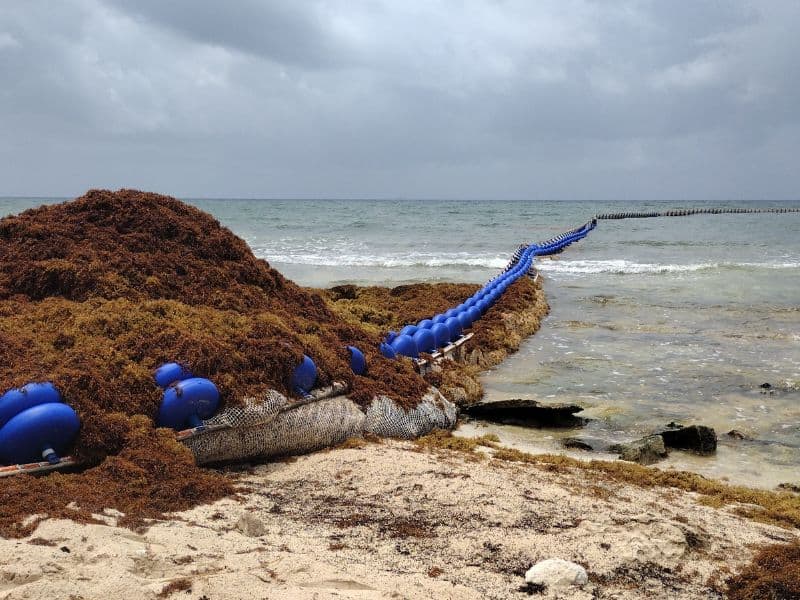
While some beaches may have seaweed along the shoreline, there are plenty of beaches in Cancun with no seaweed.
⚠️ Note: Wondering about the current seaweed conditions in Tulum as well? Check out this article to see the quantity of seaweed on Tulum’s beaches.
Mexico’s government, local authorities, and the tourism industry in Cancun are working on ways to deter seaweed from getting to the popular shorelines.
These include installing a sargassum barrier several miles offshore, and using the sargassum for other purposes like farming and research.
Hopefully these initiatives will stop sargassum’s stronghold on the local tourism industry, and prevent a large amount of seaweed from hitting the beaches.
Final Thoughts: How to Avoid Cancun Seaweed & Sargassum

As visitors navigate the challenges posed by seaweed Mexico, staying informed and adaptable remains important.
In collaboration with dedicated cleanup initiatives, local authorities continue their efforts against sargassum to ensure enjoyable beach experiences.
With resources like Cancun Seaweed Reports and real-time updates from seaweed Mexico Facebook groups, travelers can make informed decisions about their coastal excursions.
By prioritizing flexibility and exploring alternative attractions, such as the Cancun cenotes and cultural tours, visitors can make the most of their time in Cancun — even with seaweed Mexico concerns.
