
Americans are Fleeing to Mexico in Record Numbers — But Can You Blame Them? Mexico Is Just Better!


From cheaper healthcare to friendlier neighborhoods and a lower cost of living, Americans are increasingly choosing Mexico as their new home.
What was once a trickle of retirees has become a steady flow of remote workers, families, and retirees who say their quality of life improved the moment they landed south of the border.
As I moved to Mexico in 2018, I wanted to compile this article to explain exactly why so many of us are making the move south of the border.
Disclosure: This article may contain affiliate links, meaning when you make a purchase, I earn a small commission. Affiliate links cost you nothing to use, and help keep my content free. It’s a win-win for us both. For more info, see the Disclosure Policy.
A Surprising Migration — But The numbers Don’t Lie!
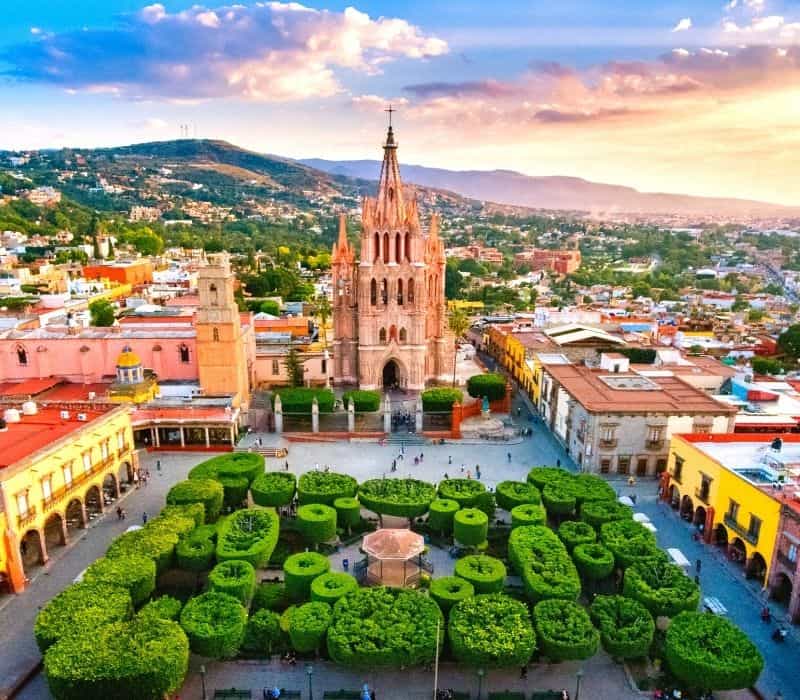
In the last few years, the growth in Americans living in Mexico has been dramatic.
Recent reporting places the number of U.S. citizens living in Mexico at roughly 1.5-1.6 million, an increase of around 70% since 2019 in some estimates — evidence of a migration that’s more than a post-pandemic fad.
That surge shows up in residency applications, long-term visas, and the booming communities of Americans from the Baja Peninsula to the Yucatán Peninsula.
At the same time, global expat surveys show that expats in Mexico report higher satisfaction than the global average.
In fact, the InterNations’ 2024 report found Mexico among the top countries for expat happiness, with nearly 9 in 10 expats saying they’re happy with life there (I know I am 🇲🇽).
That’s not just wistful travel writing; it’s a measurable trend.
3 of the Top Reasons Why People are Leaving the U.S. For Mexico
1. Cost of Living: Your Dollar Stretches Further
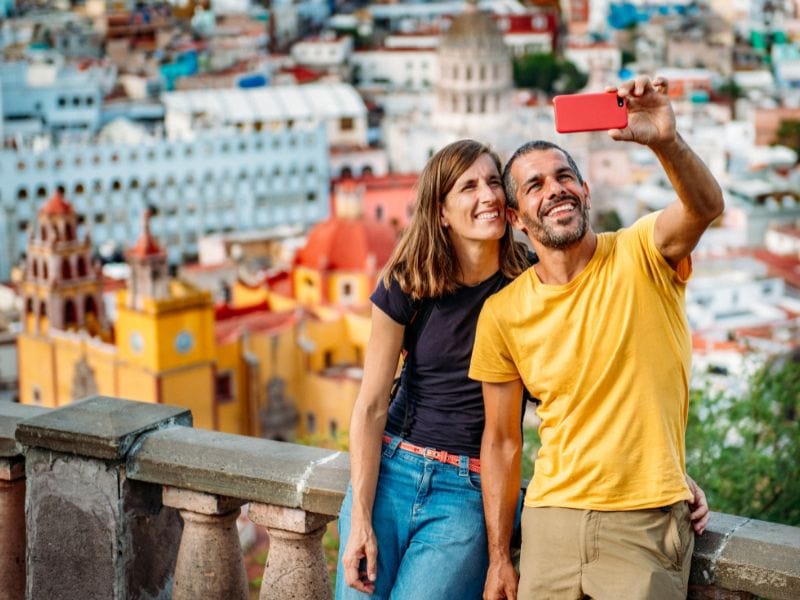
With rising costs and staggering inflation, one of the clearest and most-common reasons Americans are relocating to Mexico is financial.
Housing, groceries, restaurants, and healthcare commonly cost far less in Mexico than in most U.S. metro areas.
🩺 It’s also why there’s a booming Mexico medical tourism market. In fact, Mexico is the one of the Top 3 most popular medical tourism destinations.
For retirees and fixed-income households, that math is decisive — a retirement nest egg that feels tight in the U.S. often buys a higher standard of living in Mexico.
Financial publications and retirement guides consistently highlight Mexico’s affordability as a top attraction.
2. Mexican Healthcare: Quality Care at Lower Prices

Healthcare itself is another major draw as American leave the U.S. for a better life in Mexico.
Many Americans report they can access quality private and public healthcare in Mexico at much lower out-of-pocket cost, with routine visits, dental work, and prescriptions often costing a fraction of U.S. prices.
That accessibility matters hugely for retirees, people on high-deductible plans, and anyone fed up with runaway medical bills.
My Recommendation: SafetyWing Insurance

Health insurance is also much cheaper in Mexico vs U.S. — and some would say, much better.
I’ve been with SafetyWing Insurance since 2021, and pay just $200/month for premium coverage.
3. Lifestyle and Community: Slower Pace of Life, Friendlier Folks, Local Events

Beyond money and medical care, people cite lifestyle as a reason to leave the U.S. for Mexico.
Walkable colonial cities like Mérida, known as the safest city in Mexico, bustling plazas, local markets, and community rituals make everyday life feel social and human.
Expats describe neighbors who actually say hello, festivals and holidays that fill the calendar, and food culture that centers communal eating.
These small factors add up to a big improvement in day-to-day satisfaction for those wanting to escape the rat race in the U.S.
Who’s Moving to Mexico? And Where are They Going?
Retirees, Remote workers, and Young families

The migration isn’t one-size-fits-all, though American retirees still make up a large share of the expat population, drawn by climate and cost.
But the you-know-what in 2020 accelerated a different wave: remote workers and digital nomads who discovered that Mexico offers solid internet, lower living costs, and cities with Uber, international airports, and good restaurants.
Families and younger professionals, especially those priced out of U.S. housing markets, are also exploring long-term stays in Mexico.
Popular Destinations for U.S. Expats in Mexico

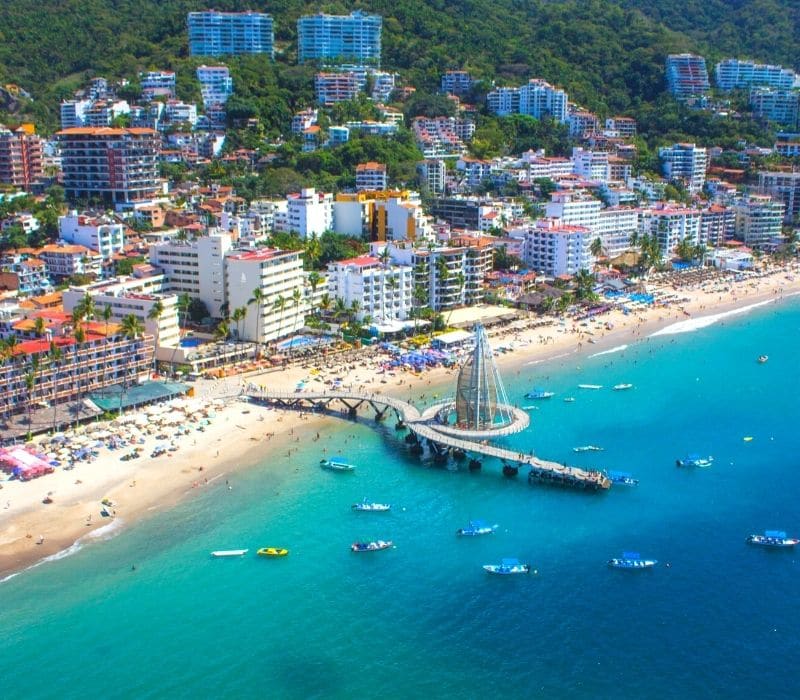
Some perennial favorites remain, like Mérida, Ajijic, Puerto Vallarta, San Miguel de Allende, Playa del Carmen, and parts of Baja like Todos Santos, Ensenada, and La Paz.
However, inland colonial cities and mid-size urban centers, like Puebla and Guadalajara, have seen newcomers because they combine big city services with lower prices.
And the dispersion matters because it isn’t just Mexican beach towns getting more Americans anymore.
Rather, it’s a geographic spread that’s reshaping local economies throughout the entire country.
The “Better” Arguments: 4 Concrete Areas Where Mexico Shines Above the U.S.
1. Housing Value and Options

You’ll find homes in Mexico that match the quality of U.S. properties for a fraction of the price in many regions.
Whether it’s a restored colonial house in a historic center or a modern condo near the beach, buyers and renters are regularly surprised at what their money buys.
Real estate markets in several Mexican cities remain far more affordable than the U.S. equivalents.
2. Healthcare Affordability

A minor surgical procedure or specialist visit in Mexico can cost a small fraction of the same care in the U.S.
To boot, many doctors that practice in Mexico’s private hospitals have been trained in the U.S. or Europe — so you can expect premium care from qualified physicians.
For many older Americans, that peace of mind, along with reasonable prescription costs, is worth leaving the U.S. behind for good.
3. Proximity and Accessibility
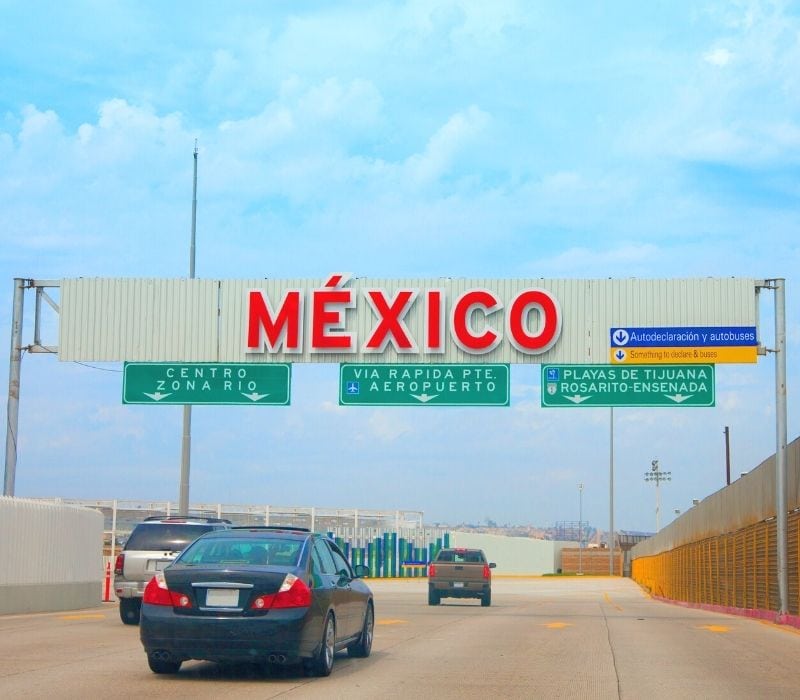
Mexico’s proximity to the U.S. is a practical advantage few relocating countries can offer U.S. expats abroad.
Short flights to major U.S. hubs, driving across the border for family visits, and easy shipping of goods make it simple to live in Mexico without feeling cut off.
For dual citizens or snowbirds, the border is a convenience as much as a lifeline.
4. A Cultural Reset: Community and Quality of Life

Quality of life isn’t strictly a measurable item, but expats frequently point to Mexico’s community-orientated atmosphere as a reason to move.
With slower days, more neighborliness, and social rituals that reduce loneliness and build community, Mexico appeals to those who feel frustrated in the U.S.
InterNations, the world’s largest expat community with 4+ million members, notes high satisfaction scores for Mexico driven by social life and personal happiness.
For many Americans who feel increasingly isolated or frustrated at home, this can be transformative.
The Flip-Side: Tensions, Realities, and Things to Watch
Not Everything is Perfect in Mexico

Of course, you always have to take the good with the bad — so lets take a moment to level-set expectations. In plain English: Mexico is not a utopia.
There are real issues like regional safety variations, bureaucracy for residency and visas, scams in tourist-heavy areas, and language barriers for those who don’t learn Spanish.
Additionally, popular neighborhoods in major cities have seen rising rents and local pushback against tourism-driven gentrification.
Those dynamics have sparked protests and conversations about sustainability.
Gentrification and Friction From Locals

Places that attract foreigners can face rising housing costs, which locals rightly resist.
Recent reporting has documented protests in neighborhoods where short-term rentals and an influx of wealthier foreigners have pushed rents upward.
This has become a cautionary tale for would-be movers and a reminder that ethical relocation requires respect for local communities.
Legal and Bureaucratic Steps Matter

Obtaining Mexican residency, understanding tax implications, and navigating healthcare enrollment (public vs private) require planning.
Advisors recommend short trial stays, legal counsel for long-term moves, and careful budgeting for things that don’t translate one-to-one across borders (car insurance, imported goods, property taxes, etc.).
Migration-policy and immigration analyses can help explain the legal landscape for Americans abroad.
How to Decide if Moving to Mexico Makes Sense for You

- Run the numbers: Compare your current cost of living to realistic local costs in the Mexican city you’re considering, including healthcare and housing.
- Try before you buy: Spend an extended month-long stay (or longer) in high- and low-season to test the weather, healthcare, and amenities.
- Talk to experts. Financial planners who specialize in cross-border retirement and immigration lawyers can save headaches.
- Respect the community. Learn basic Spanish, hire local services providers, and avoid pricing locals out of their neighborhoods. Ethical relocation keeps tourism sustainable.
The Bigger Picture: What This Trend Means for the U.S. and Mexico
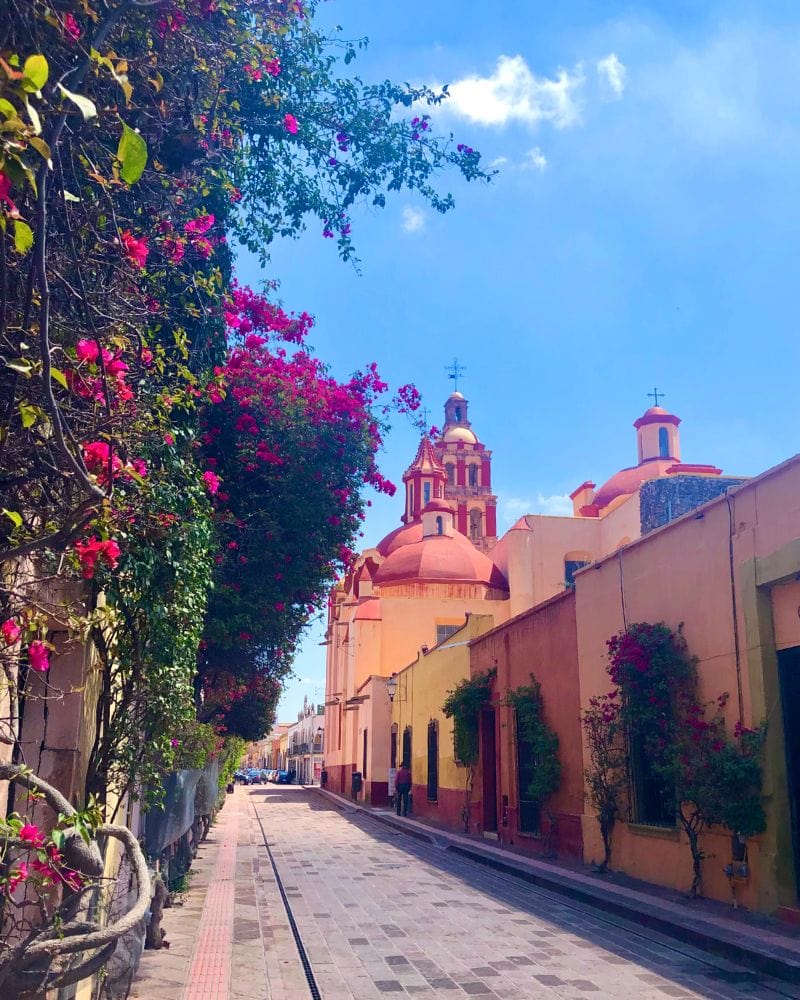
As more Americans choose Mexico for long-term living, both countries will feel the effects.
For the U.S., outbound migration highlights affordability and quality-of-life shortfalls that policymakers ignore at their peril.
For Mexico, the economic boost is real, but so are the affordability pressures placed on local residents in hot spots like Mexico City.
The healthiest outcome is thoughtful policy and community-minded integration that benefits visitors, newcomers, and long-term residents alike.
My Final Thoughts on Why Many Americans are Moving to Mexico in Droves
Moving to Mexico wasn’t a cure-all for me, and it very likely won’t be one for you either because Mexico isn’t perfect.
However, for many Americans (like me!) it was an immediate upgrade with lower living costs, accessible healthcare, richer daily life, and a strong sense of community.
The numbers and happiness surveys back it up, and while there are trade-offs, it’s easy to see why so many (like me!) are choosing to stay in Mexico 🇲🇽