
21 Types of Mexican Folk Art You’ll Want to Bring Home (#19 Is Dyed with Bugs)

Looking for the best Mexican folk art?
I’ve called Mexico home since 2018, and I have developed a bit of a Mexican folk art obsession over the years.
I’ve visited folk art museums and galleries in Mexico City, Morelia, Tlaquepaque, Valle de Bravo, Oaxaca, Zacatecas, Aguascalientes, San Luis Potosí, and more.
Every region of Mexico has its own craft, from Oaxaca’s black pottery to Puebla’s hand-painted Talavera.
Here are 21 types of Mexican folk art to know, plus where each one comes from.
The 21 Best Types of Mexican Folk Art
1. Alebrijes

- 🎨 From: San Martín Tilcajete and San Antonio Arrazola, both in Oaxaca state
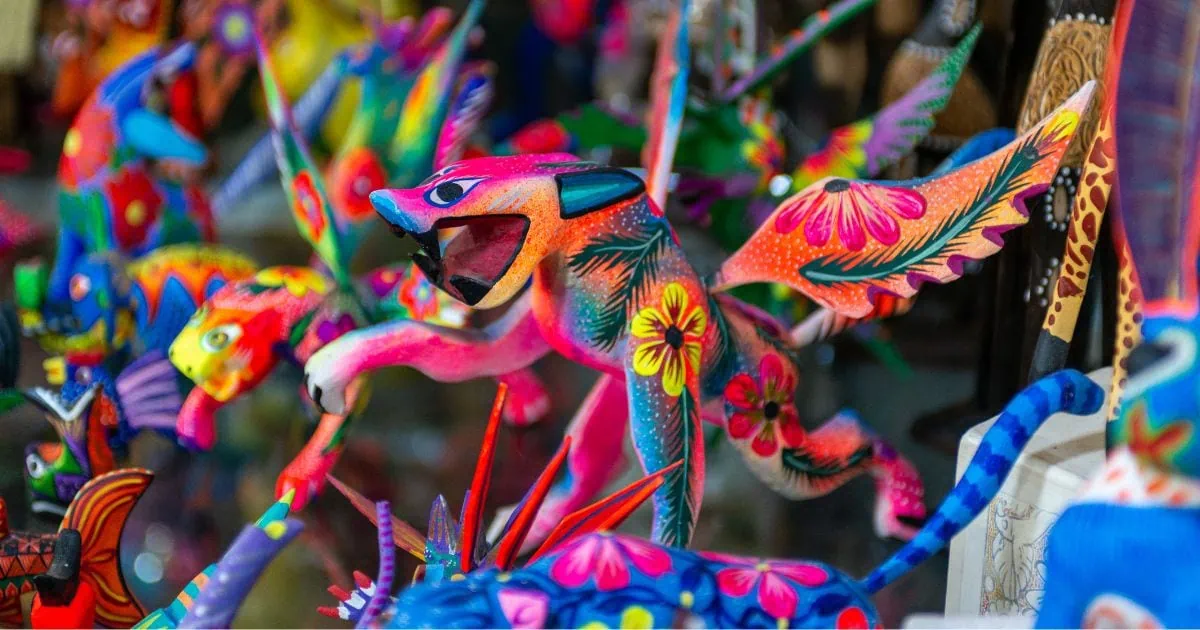
Alebrijes are brightly painted fantasy creatures that mix parts of different animals.
They began with Pedro Linares, a Mexico City artisan who made the first ones from papier-mâché in the 1930s.
In Oaxaca, artisans carve them from soft copal wood and paint them by hand with tiny, detailed patterns.
I bought my own alebrije from an artisan in San Martín Tilcajete, Oaxaca.
Learn more in my guide to Oaxaca’s alebrijes.
2. Talavera Pottery
- 🎨 From: Puebla and Tlaxcala states
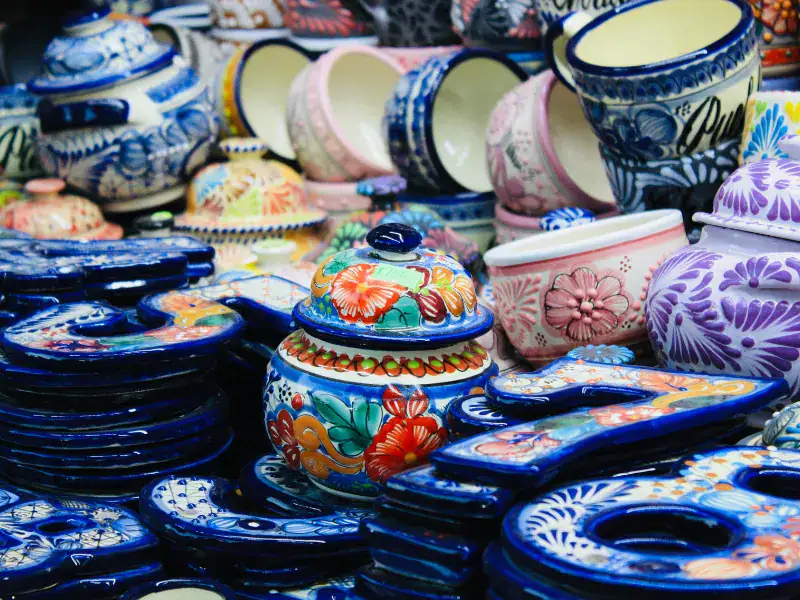
Talavera is hand-painted, tin-glazed pottery known for its bright blues, yellows and greens.
Spanish potters brought the technique to Puebla in the 1500s, and local artisans made it their own.
Real Talavera has a protected designation of origin, so only certified workshops in Puebla and Tlaxcala can use the name.
To spot the real thing, look for the workshop’s signature and certification number on the bottom.
Real pieces also have a thick, glossy glaze that feels slightly raised.
3. Barro Negro (Black Pottery)
- 🎨 From: San Bartolo Coyotepec, Oaxaca
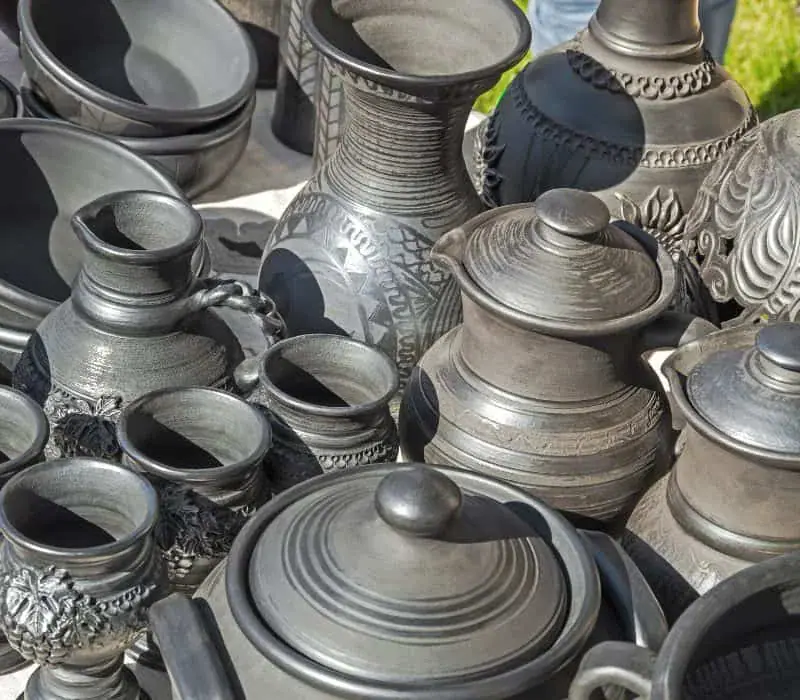
Barro negro is Oaxaca’s famous black pottery, made from the local gray clay.
In the 1950s, a potter known as Doña Rosa found that polishing the clay with a quartz stone before firing gave it a shiny, metallic finish.
Unpolished areas come out matte, so many artisans mix both finishes in one design.
Polished barro negro is mostly decorative and isn’t meant to hold water.
San Bartolo Coyotepec is one of the best Oaxaca art towns for shopping.
4. Árbol de la Vida (Tree of Life)
- 🎨 From: Metepec, Estado de México
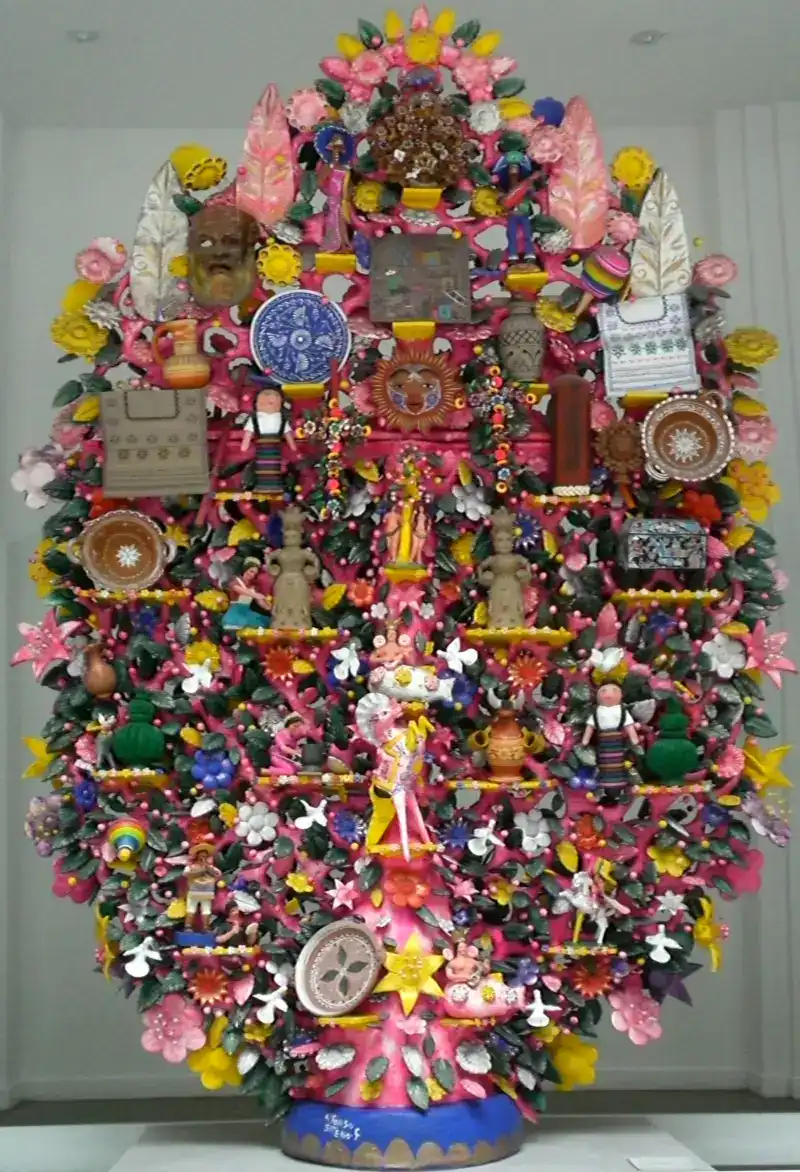
The árbol de la vida (tree of life) is a colorful clay sculpture shaped like a tree.
Its branches are covered in tiny figures, from Adam and Eve to flowers, birds and saints.
Metepec, just outside Toluca, is the most famous place to buy one.
Some are small enough for a shelf, while others are taller than a person.
5. Huichol Beadwork and Yarn Paintings
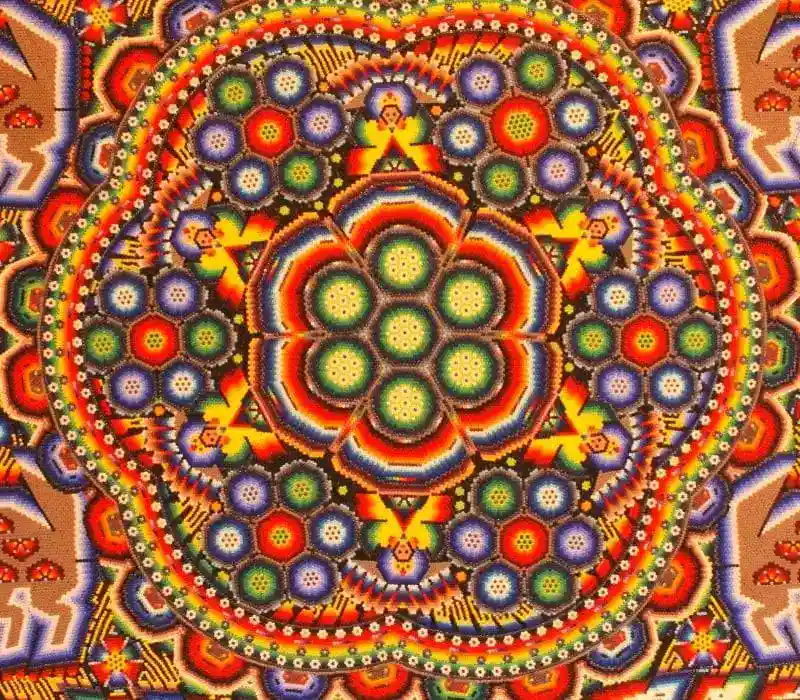
- 🎨 From: Nayarit and Jalisco states
The Wixárika (Huichol) people of Nayarit and Jalisco are known for their dazzling bead art.
Artisans press tiny glass beads, one by one, into beeswax spread over carved wood or gourds.
Their yarn paintings, called nierika, are made the same way with colorful yarn.
Designs like deer, corn and peyote carry deep spiritual meaning.
6. Papel Picado
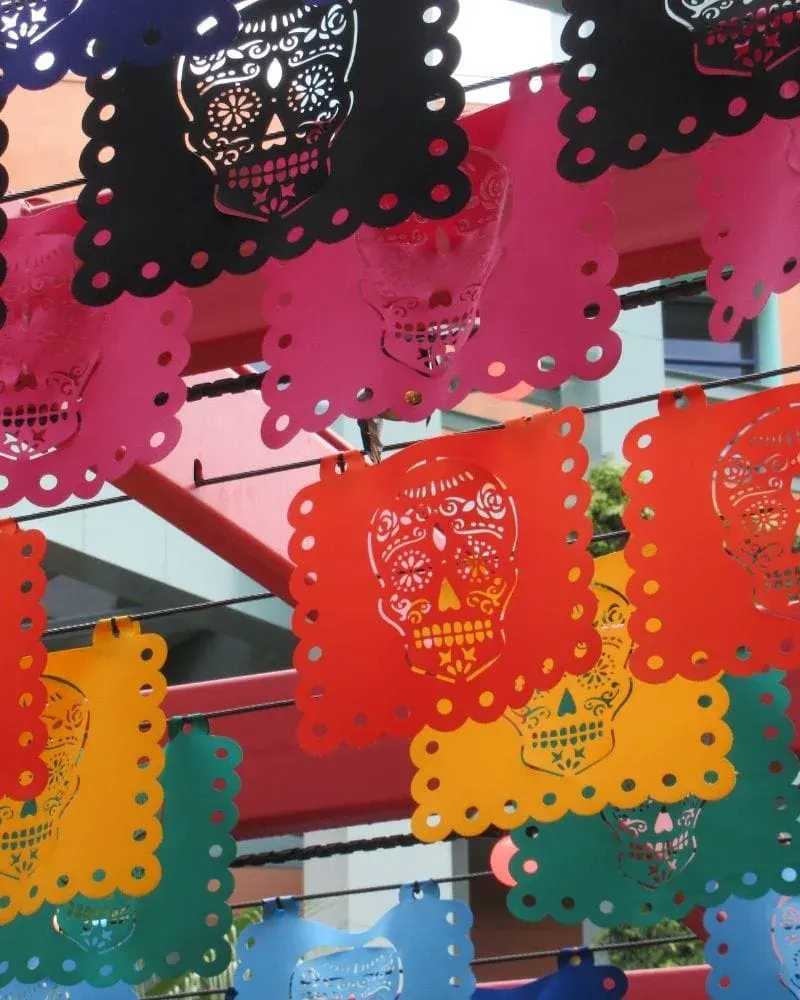
- 🎨 From: San Salvador Huixcolotla, Puebla (but found all over Mexico)
Papel picado is tissue paper cut into detailed designs and strung up as banners.
Much of it comes from San Salvador Huixcolotla, Puebla, where artisans cut stacks of paper at once with hammers and chisels.
You’ll see it at fiestas, weddings and Day of the Dead altars.
It’s also one of the easiest souvenirs to pack flat.
7. Otomí Tenango Embroidery
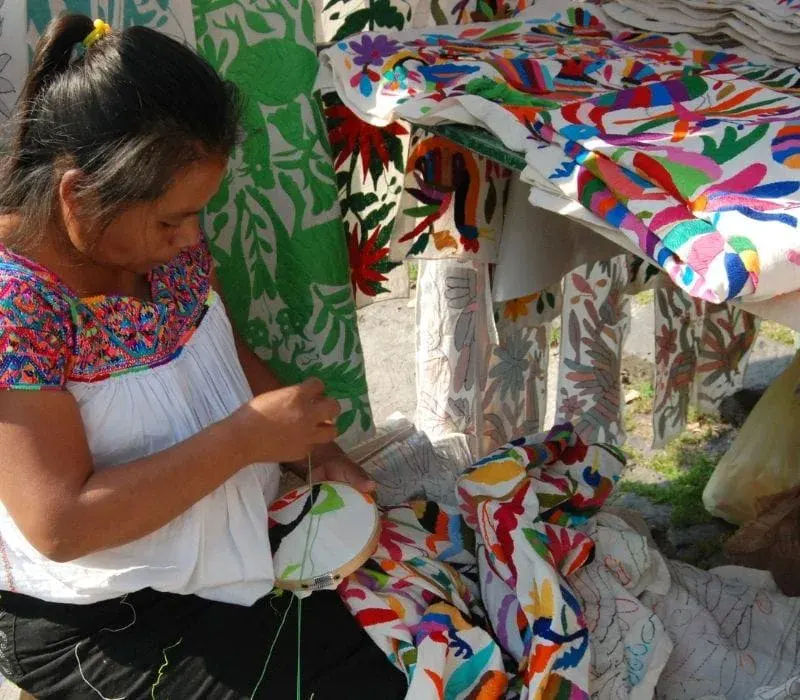
- 🎨 From: Tenango de Doria, Hidalgo
Tenango embroidery features bright animals, plants and village scenes stitched onto white cotton.
It comes from Otomí artisans in the mountains around Tenango de Doria, Hidalgo.
Many say the style took off in the 1960s, after a drought pushed families to earn money from embroidery.
Hand-stitched pieces take weeks to finish, so expect to pay more than for machine-made copies.
8. Piñatas

- 🎨 From: Acolman, Estado de México (but found all over Mexico)
Piñatas are colorful papier-mâché figures filled with candy and broken open at parties.
Many historians trace Mexico’s piñata tradition to Acolman, where Augustinian friars used them during Christmas Posadas in the 1500s.
The classic piñata is a star with seven points, one for each of the seven deadly sins.
Breaking it represents beating temptation, and the candy inside stands for the rewards of faith.
9. Tlaquepaque Blown Glass
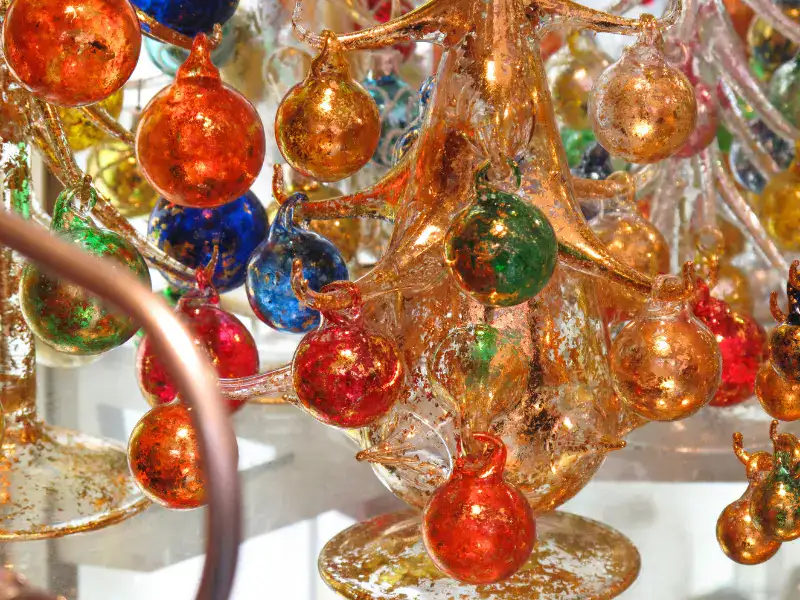
- 🎨 From: Tlaquepaque and Tonalá, both in Jalisco (but found all over Mexico)
Jalisco is Mexico’s center for hand-blown glass, known as vidrio soplado.
In Tlaquepaque and Tonalá, two towns near Guadalajara, artisans shape molten glass by hand into glasses, pitchers and vases.
Many workshops use recycled glass, which can give pieces a slight green tint and tiny bubbles.
Plan your shopping with my Tlaquepaque guide.
10. Amate Bark Paintings
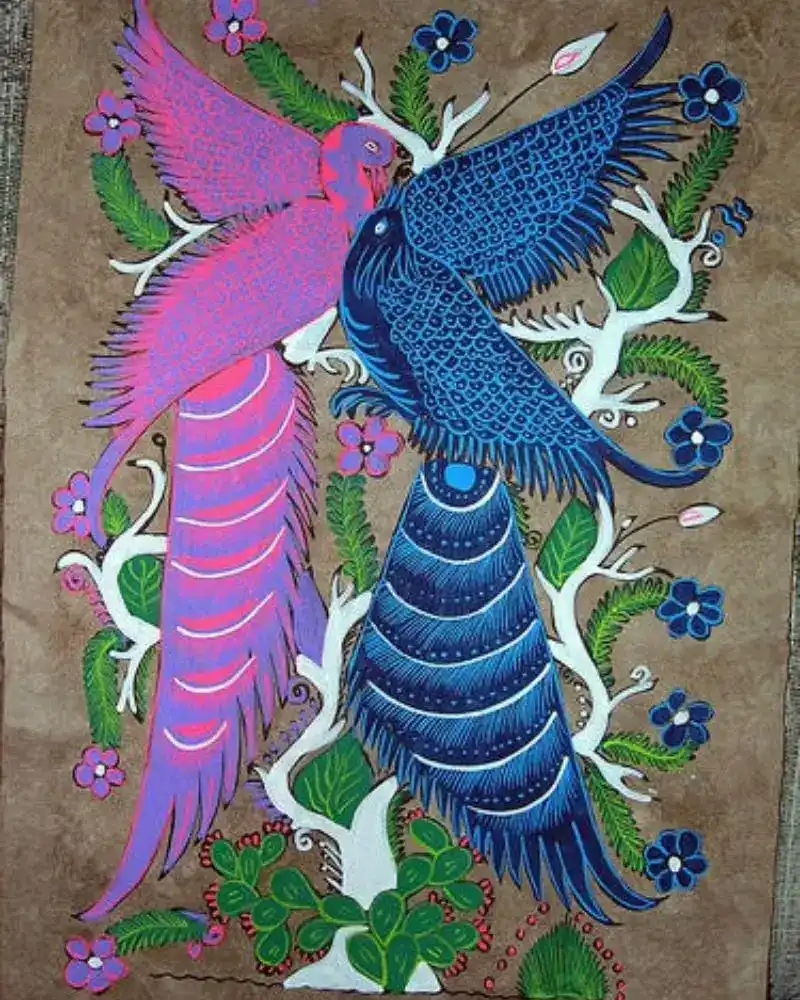
- 🎨 From: San Pablito, Puebla (paper) and Guerrero (paintings)
Amate is a paper made from tree bark, a craft that goes back to pre-Hispanic times.
Otomí artisans in San Pablito, Puebla, still make it by boiling the bark and pounding it flat with stones.
In the 1960s, Nahua painters from Guerrero began painting bright birds, flowers and village scenes on it.
11. Olinalá Lacquerware
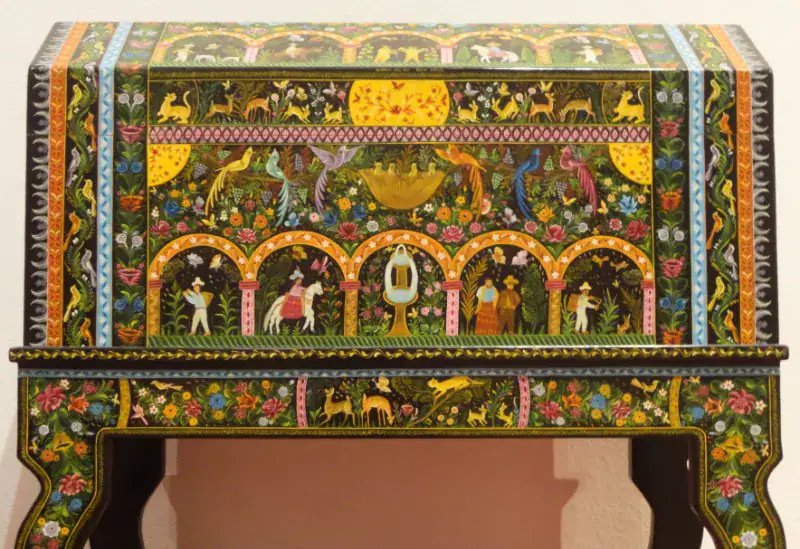
- 🎨 From: Olinalá, Guerrero
Olinalá, a small town in the mountains of Guerrero, is famous for its lacquered wooden boxes, chests and gourds.
Artisans build up layers of lacquer, then carve or paint delicate flowers and animals on top.
Many boxes are made from linaloe, a fragrant wood, so they smell lovely when you open them.
12. Santa Clara del Cobre Copper
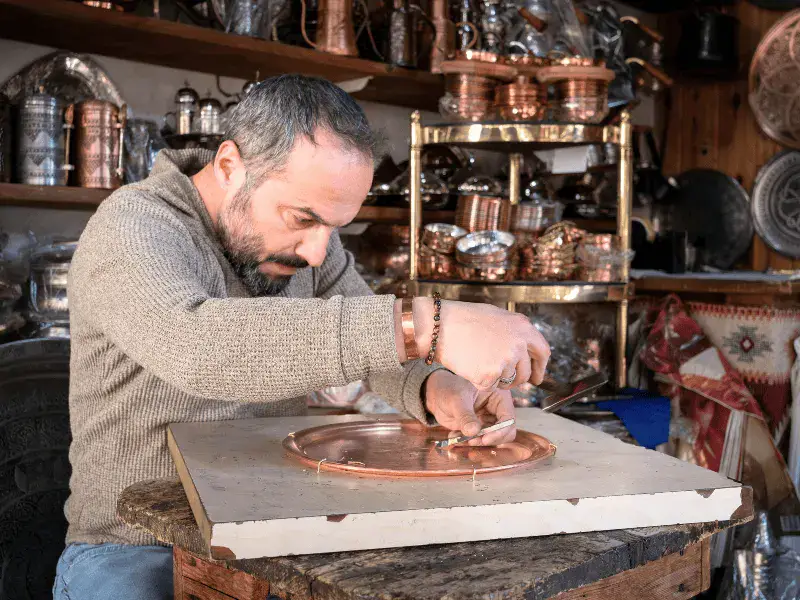
- 🎨 From: Santa Clara del Cobre, Michoacán
Santa Clara del Cobre is a small town near Pátzcuaro where copperwork goes back to the pre-Hispanic Purépecha times.
Artisans heat and hammer each piece by hand into pots (cazos de cobre), vases, sinks and bowls.
Small dents and hammer marks are a sign that a piece was made by hand.
The town also has the Museo Nacional del Cobre (National Museum of Copper), and it holds a big copper fair every August.
Many say the best carnitas in Mexico (pork confit) come from Michoacán state, and the Michoacán cazo pots are often cited as the reason why.
13. Taxco Silver
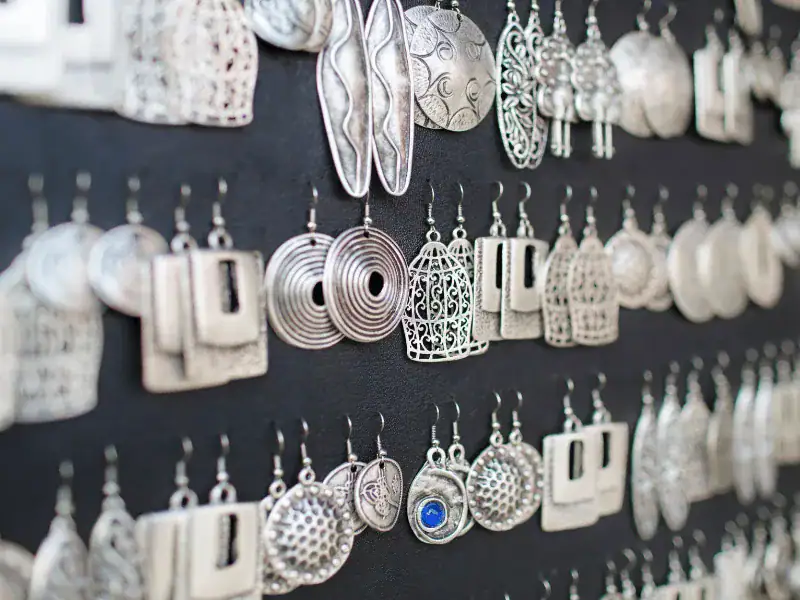
- 🎨 From: Taxco, Guerrero
Taxco, in Guerrero, has been a silver mining town since colonial times.
Its jewelry scene took off in the 1930s, when American designer William Spratling opened a workshop there.
To spot real silver, look for a .925 stamp, which means it’s 92.5% pure silver.
Pieces made in Taxco usually also carry a registration code that starts with the letter T.
14. Rebozos
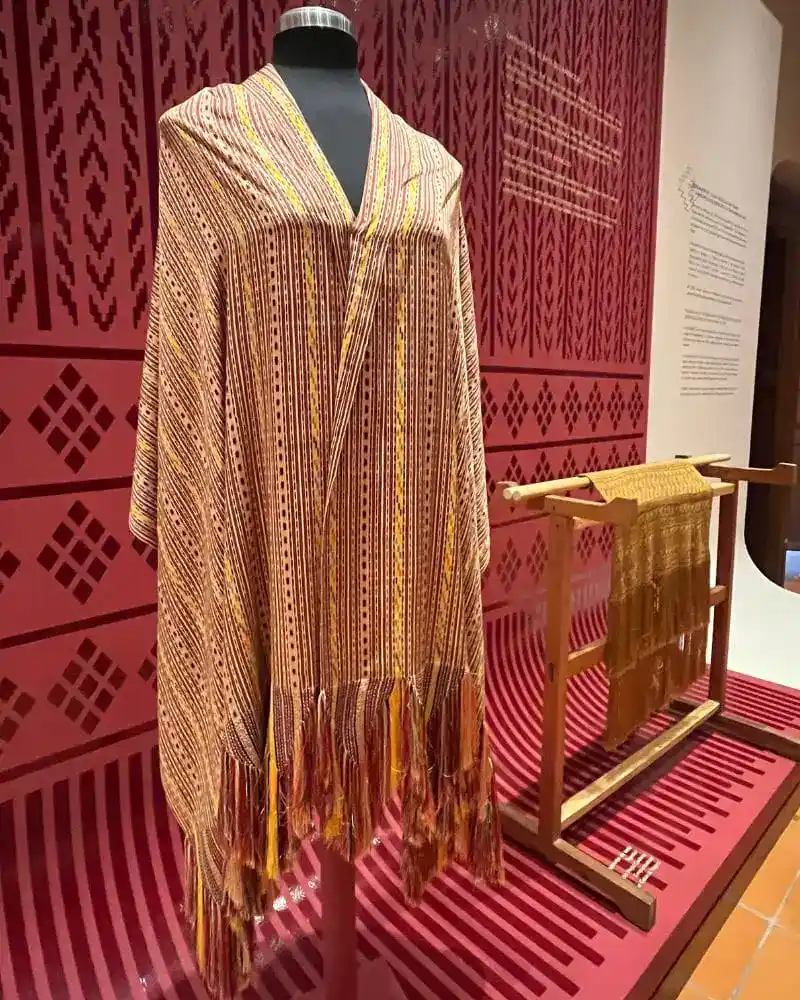
- 🎨 From: Santa María del Río, San Luis Potosí, and Tenancingo, Estado de México
A rebozo is a long, handwoven shawl that Mexican women have worn for centuries.
Women also use them as scarves, baby carriers and even shopping bags because they can be tied in a variety of ways.
Tenancingo is known for its ikat-dyed rebozos, while the pueblo mágico (magic town) of Santa María del Río is famous for fine silk ones.
A traditional test of a quality silk rebozo is that it can pass through a wedding ring.
To see them up close, visit the Museo Casa del Rebozo (Rebozo Museum) in Santa María del Río, located near the city of San Luis Potosí.
15. Huipiles
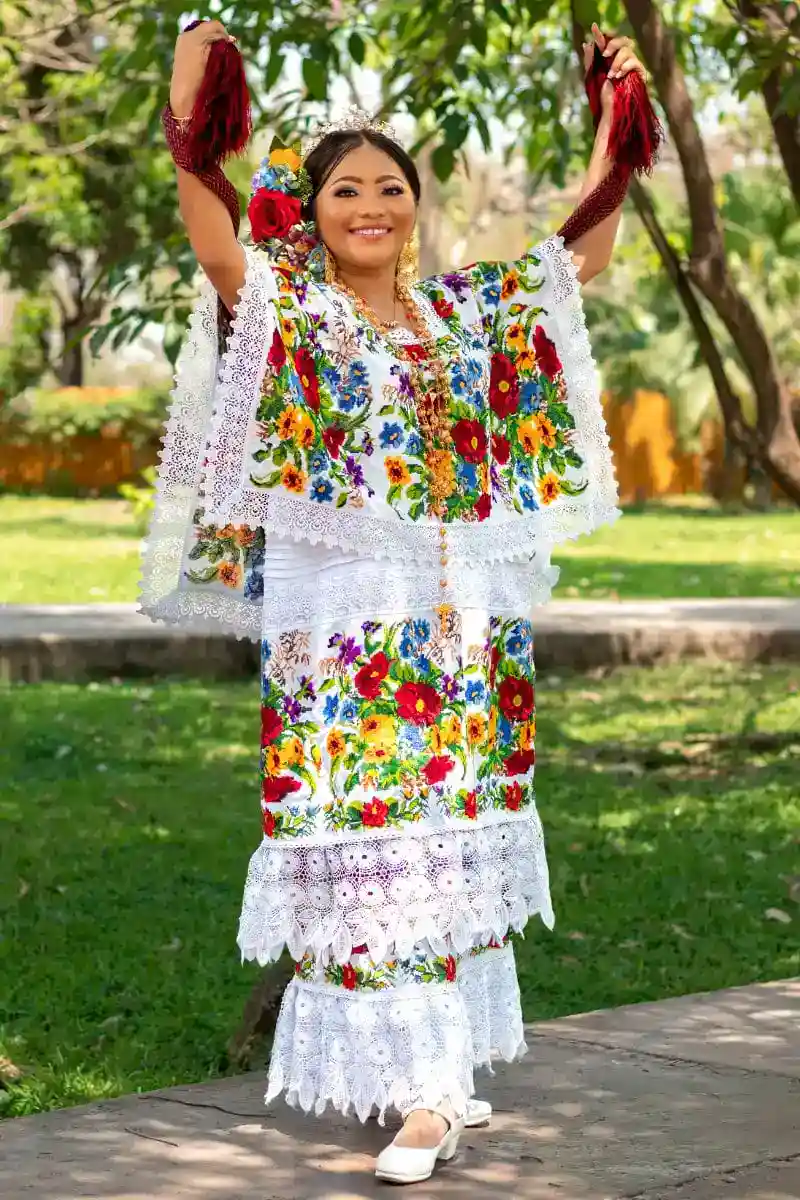
- 🎨 From: Oaxaca and Chiapas states, and the Yucatán Peninsula, particularly Yucatán state
A huipil is a loose, tunic-style blouse or dress that Indigenous women have worn since pre-Hispanic times.
Each region has its own colors and patterns, so a huipil can show where its maker comes from.
In the Yucatán, the white huipil with embroidered flowers is a classic.
See more in my guide to traditional Mexican clothing.
16. Saltillo Sarapes
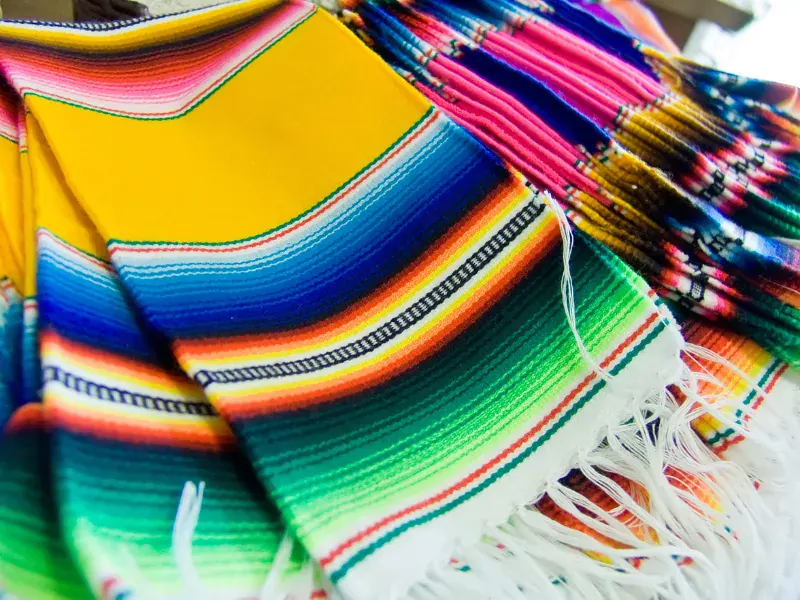
- 🎨 From: Saltillo, Coahuila
The Saltillo sarape is a woven blanket-shawl with bold stripes in bright, rainbow-like colors.
It’s named after Saltillo, Coahuila, where Tlaxcalan weavers settled in the late 1500s.
Men traditionally wore them as cloaks, and today they’re popular as blankets, throws and table runners.
17. Mata Ortiz Pottery
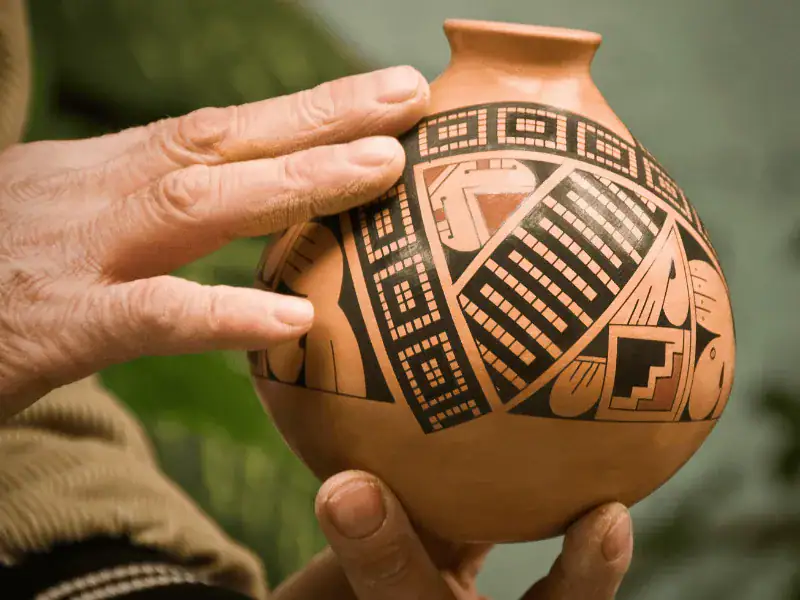
- 🎨 From: Mata Ortiz, Chihuahua
Mata Ortiz pottery comes from a small village in Chihuahua, near the ruins of Paquimé.
In the 1970s, local potter Juan Quezada taught himself to recreate the ancient designs he found on Paquimé pottery shards.
The pots are hand-coiled without a wheel and painted with very fine geometric lines.
Quezada won Mexico’s National Prize for Arts and Sciences in 1999.
18. Wooden Dance Masks
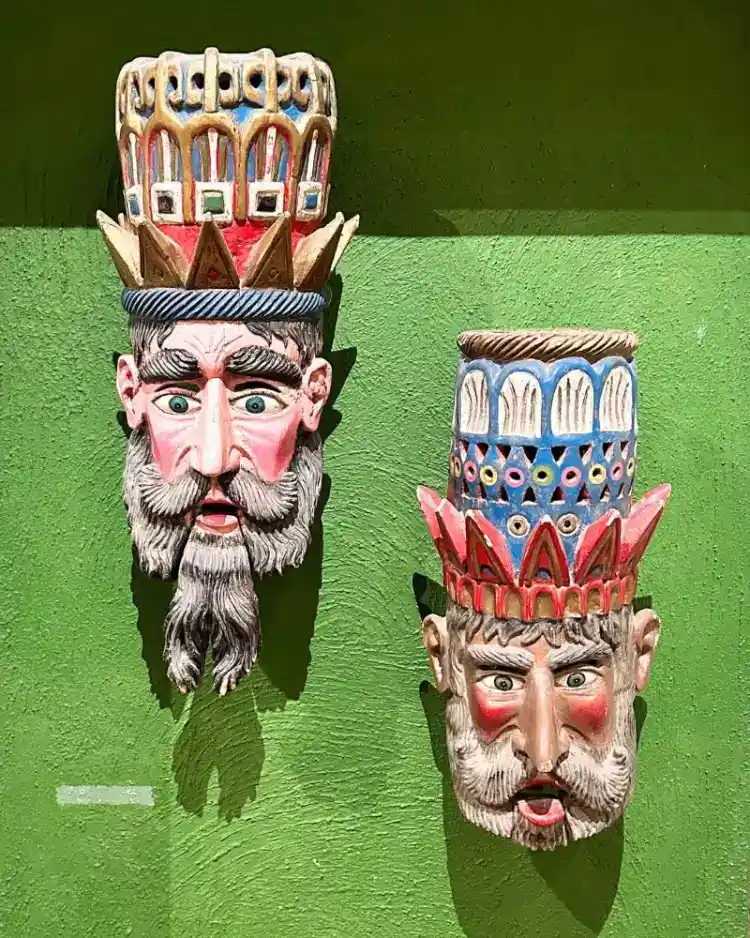
- 🎨 From: Guerrero and Michoacán states
Carved and painted wooden masks are still made for Mexico’s traditional dances.
In Guerrero, dancers wear fierce jaguar masks for the Danza de los Tecuanes (loosely translating to Dance of the Devourer).
Guerrero’s Costa Chica is home to many Afro-Mexican communities, and masks like those of the Danza de los Diablos blend African, Indigenous and Spanish traditions.
In Michoacán, the famous Danza de los Viejitos (Dance of the Old Men) uses smiling old-man masks.
Learn more in my guide to types of Mexican dances.
19. Zapotec Wool Rugs
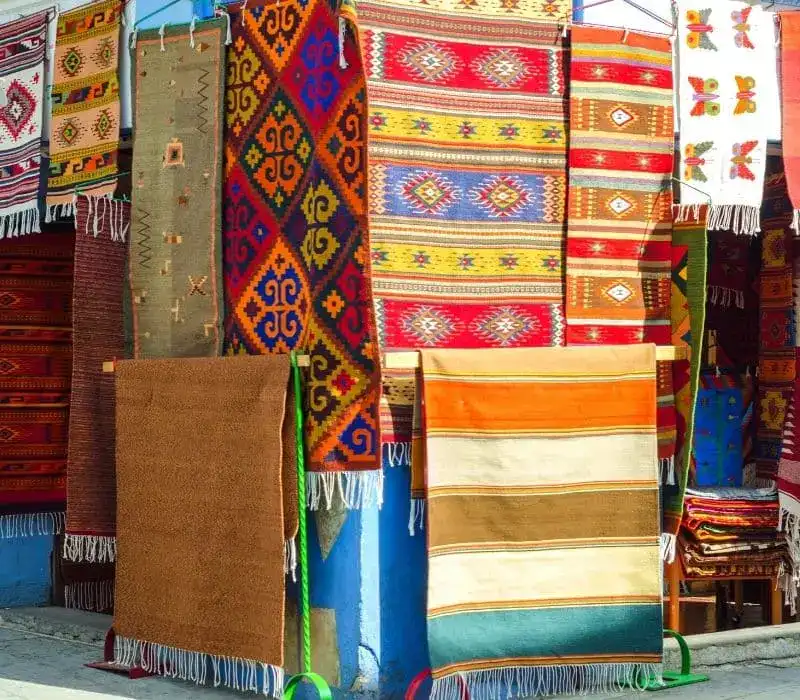
- 🎨 From: Teotitlán del Valle, Oaxaca
Teotitlán del Valle, a Zapotec village near Oaxaca City, is famous for its handwoven wool rugs.
Many families still dye their wool with natural colors from plants like indigo and marigold.
Their deepest reds come from cochineal, a tiny insect that lives on nopal cactus.
Crushed cochineal makes red, and adding lime juice or other ingredients shifts the shade toward orange or purple.
20. Hojalata (Tin Art)
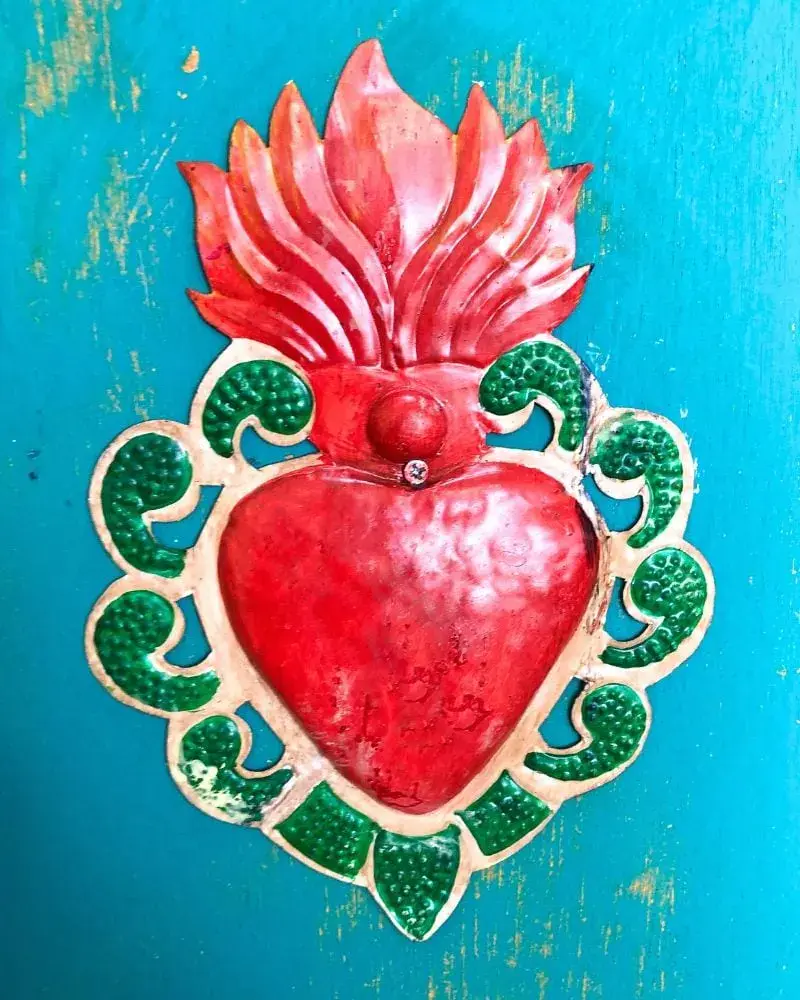
- 🎨 From: Oaxaca, and San Miguel de Allende, Guanajuato
Hojalata is tin that’s cut, stamped and painted into mirrors, ornaments, frames and lanterns.
Oaxaca’s pieces are known for their bright painted colors, while San Miguel de Allende is known for punched-tin lanterns and mirrors.
Tin ornaments shaped like hearts, stars and animals make light, easy-to-pack souvenirs.
21. Lele Dolls
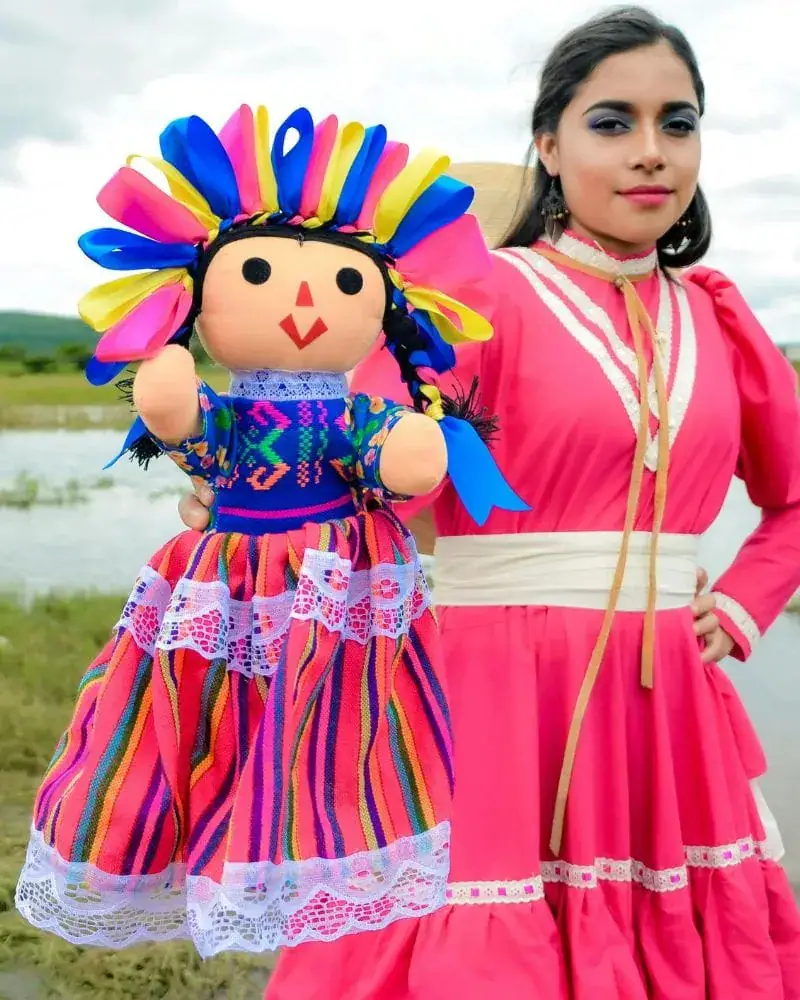
- 🎨 From: Amealco, Querétaro
Lele dolls are handmade Otomí rag dolls with bright ribbons in their hair and embroidered dresses.
They come from Amealco, Querétaro, especially the Otomí community of Santiago Mexquititlán.
Querétaro declared the Lele doll part of the state’s cultural heritage in 2018.
Want more Mexican culture? Don’t miss my list of what Mexico is known for.
Mexican Folk Art FAQ
What is Mexican folk art called?
Mexican folk art is usually called arte popular, and handmade crafts are called artesanías.
It covers everything from pottery and textiles to wood carving and metalwork.
What is the most famous Mexican folk art?
Talavera pottery and Oaxaca’s alebrijes are two of the most famous types of Mexican folk art.
Both are made by hand, and you can buy them straight from artisans in Puebla and Oaxaca.
Where can you buy Mexican folk art in Mexico?
The best places are the towns where each craft is made, like Oaxaca’s art villages, Tlaquepaque and Puebla.
In Mexico City, Bazar Sábado in San Ángel and La Ciudadela market sell crafts from all over the country.
How can you tell if Talavera is real?
Real Talavera has the workshop’s signature and a certification number on the bottom.
Only workshops certified by the Consejo Regulador de la Talavera in Puebla and Tlaxcala can legally sell it as Talavera.
Get My FREE Guide: 5 Easy Ways to Save Money in Mexico
Insider tips from someone who’s lived in Mexico since 2018.
