Las Posadas in Mexico: Traditions, Decorations & Fun Facts

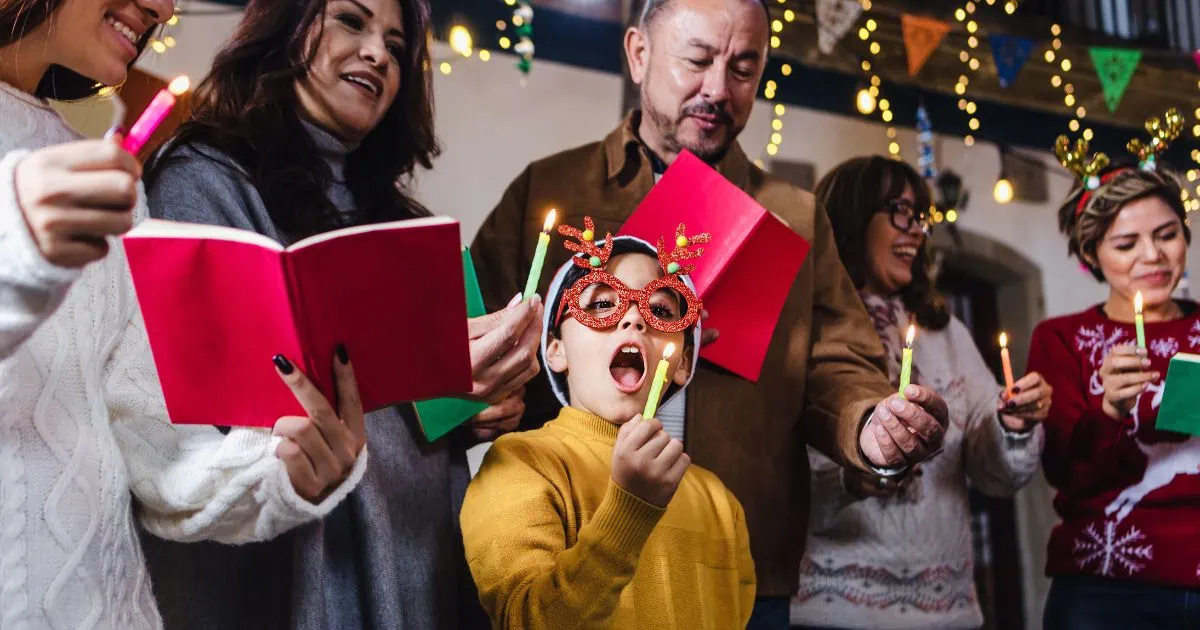
Las Posadas are nine nights of Christmas celebrations in Mexico, held every year from December 16 to 24.
Each night reenacts Mary and Joseph’s search for a place to stay in Bethlehem before Jesus was born.
The word posada means “inn” or “lodging” in Spanish, and that search for the inn is the heart of the tradition.
In 2026, Las Posadas run from Wednesday, December 16, to Thursday, December 24 (Nochebuena, or Christmas Eve).
Below, you’ll find what Las Posadas mean, how a traditional posada works, the decorations you’ll see, and what everyone eats and drinks.
Las Posadas at a Glance

- What: Nine nights of processions, songs, prayers and parties before Christmas
- When: December 16–24 every year (Wednesday, December 16 – Thursday, December 24, 2026)
- Why nine nights: They represent the nine months Mary was pregnant with Jesus
- Where: Homes, neighborhoods, churches, schools and offices all over Mexico
- Must-haves: A seven-point piñata, ponche navideño, tamales and bags of candy called aguinaldos
What are Las Posadas?

Las Posadas are one of Mexico’s most important Christmas traditions.
Each night, a group of “pilgrims” walks through the neighborhood carrying candles and figures of Mary and Joseph.
They stop at a house and sing, asking for a place to stay.
The people inside sing back, turning them away, until the pilgrims finally reach the house that lets them in.
Once the door opens, the solemn part ends and the party begins, with food, ponche, music and a piñata.
Today, a posada can also simply mean a Christmas party, like the office posada or a school posada in mid-December.
When are Las Posadas in 2026?
Las Posadas always start on December 16 and end on December 24, no matter the year.
The ninth night falls on Nochebuena (Christmas Eve), the main Christmas celebration in Mexico.
The posadas sit in the middle of what Mexicans call the Guadalupe-Reyes Marathon.
This is the party season that runs from the Virgin of Guadalupe on December 12 to Three Kings Day (Día de Los Reyes Magos) on January 6.
The History of Las Posadas

Las Posadas began in colonial Mexico as a way to teach the Christmas story.
In 1587, Pope Sixtus V allowed Friar Diego de Soria to hold nine special Masses between December 16 and 24.
The first posada was held at the Augustinian convent of Acolman, which is not far from the famous pyramids of Teotihuacán near Mexico City.
Historians also link the timing to Panquetzaliztli, a Mexica (Aztec) festival honoring the god Huitzilopochtli at the same time of year.
Over the centuries, the Masses moved out of the church and into the streets and homes, becoming the processions and parties Mexicans celebrate today.
How a Traditional Posada Works
Every family and neighborhood does it a little differently, but most posadas follow the same steps.
1. The Procession
Guests gather outside, often holding small candles.
Some carry figures of Mary and Joseph (called “los peregrinos,” or “the pilgrims”), and sometimes children dress up as them.
2. Asking for Lodging (Pedir Posada)
The group splits in two: the pilgrims outside and the “innkeepers” inside. They sing a traditional song back and forth, verse by verse.
It opens with the pilgrims singing “En nombre del cielo, os pido posada,” or “In the name of heaven, I ask you for lodging.”
The innkeepers refuse at first, until Joseph explains who Mary is. Then the doors open, and everyone sings together as the pilgrims are welcomed in.
3. Prayers and the Litany
In more religious homes and churches, the night includes a rosary or a litany (a series of short prayers).
4. The Party
After that, it’s time to celebrate at the Mexican posada party with food, fun, and fellowship.
Expect warm ponche, tamales, music and, for the grand finale, the piñata. Guests usually leave with an aguinaldo, a small bag of candy and fruit.
6 Traditional Las Posadas Decorations
Las Posadas decorations are colorful, handmade and full of meaning.
Here are the traditional decorations you’ll see at a posada, and how to use them if you’re hosting your own.
1. Piñatas

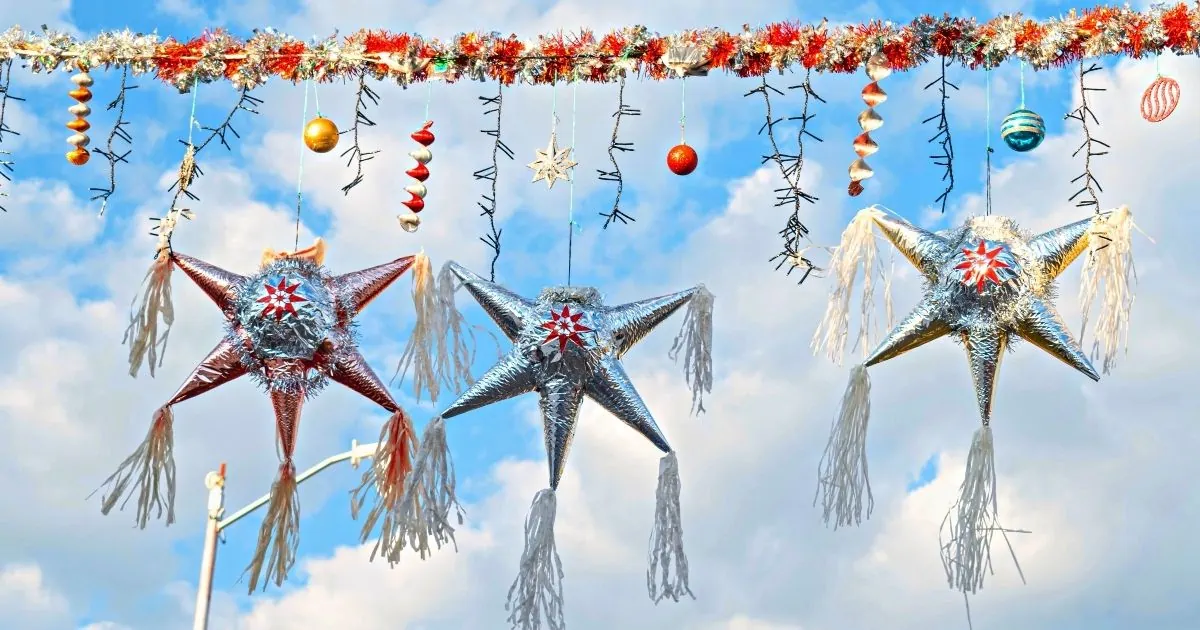
The seven-point star piñata is the most famous posada decoration.
Each point represents one of the seven deadly sins: pride, envy, greed, lust, gluttony, sloth and wrath.
The blindfold stands for faith, and the stick for virtue. When the piñata breaks, the candy and fruit that fall out represent the rewards of beating temptation.
Acolman, where the first posada was held, calls itself the birthplace of the piñata.
It hosts a free piñata fair every December (in 2025, it ran December 4–7), so check the dates before you go.
2. Papel Picado

Strings of papel picado (cut-paper banners) hang over patios and streets.
For Christmas, they often come in red, green, white and gold, with stars, bells or nativity designs.
3. Candles and Farolitos
Candles light the procession, and paper lanterns called farolitos often line the path to the door.
4. Nochebuenas (Poinsettias)

The poinsettia is native to Mexico, where it’s called nochebuena, after Christmas Eve.
The Aztecs called it cuetlaxóchitl, and today you’ll see red nochebuenas on doorsteps, altars and church steps all season.
5. Nacimientos (Nativity Scenes)

Many Mexican homes set up a nacimiento, a nativity scene that can fill an entire table or corner.
The manger stays empty until Christmas Eve, when the baby Jesus figure is placed in it.
6. Lights and Christmas Colors
Twinkling lights, stars and garlands in red, green and white (the colors of the Mexican flag) round out the look.
Las Posadas Decoration Ideas for Your Own Party

- Hang a seven-point star piñata over the patio or garden
- String papel picado across the room or yard
- Line the entrance with candles or farolitos
- Use red nochebuenas as centerpieces
- Set up a small nacimiento near the door
- Serve ponche in clay jarritos
- Give guests aguinaldo bags as party favors
Looking for more ideas? Check out my list of the best Mexican Christmas gifts and ornaments.
Traditional Mexican Posada Food and Drinks
Posada food is warm, simple and made to share. While each posada party does their celebration a bit differently, here are the foods and drinks you can expect.
Ponche Navideño

Ponche is a hot Christmas fruit punch made with tejocotes, guava, apples, sugarcane, tamarind, cinnamon and piloncillo (unrefined cane sugar).
Adults sometimes add a piquete, which is a splash of rum, brandy or tequila.
Tamales
Tamales are the classic posada food, served hot from big steaming pots 🫔
Made with masa (corn dough) and seamed in corn husks or banana leaves (depending on where you are in Mexico), tamales have been around since prehispanic times, and still consumed all over the country today.
Buñuelos

These crispy fried fritters are dusted with cinnamon sugar or drizzled with piloncillo syrup.
Use these links to try out my recipes for traditional Mexican buñuelos and buñuelos de viento (snowflake-shaped buñuelos ❄️).
Champurrado and Atole
Champurrado (aka Mexican hot chocolate) and atole, a thick, warm corn drink, are both perfect for cold December nights during Christmastime.
For the full holiday menu, see my list of 45 Mexican Christmas foods.
Aguinaldos: Posada Candy Bags
At the end of the night, guests (especially kids) get an aguinaldo, a small bag of treats.
A typical aguinaldo has mandarins, peanuts, sugarcane pieces, colaciones (sugar-coated candies) and other Mexican candy.
Where to Experience Las Posadas in Mexico

Las Posadas are mostly private or neighborhood celebrations, so the best way to join one is to be invited.
As a traveler, you can still see them in a few ways:
- Churches: Many parishes hold posadas and processions from December 16 to 24, so ask at the local church.
- Town squares: Some towns and cities hold public posadas with music, ponche and piñatas.
- Your hotel or Airbnb: Ask your host whether there’s a neighborhood posada nearby.
- Acolman: Visit the piñata fair, about an hour from Mexico City, near Teotihuacán.
Planning a December trip? Here’s what to expect when visiting Mexico in December.
Fun Facts About Las Posadas in Mexico

- The nine nights represent the nine months of Mary’s pregnancy.
- The tradition dates back to 1587, which makes it more than 400 years old.
- The seven points on a traditional piñata stand for the seven deadly sins.
- The poinsettia, a Christmas symbol around the world, is a native Mexican plant.
- Schools and offices often hold their posada before December 16, before the holiday break starts.
- The last posada falls on Nochebuena, when families gather for a late dinner and sometimes midnight Mass.
For more holiday traditions, see my guide to 50+ Mexico Christmas traditions.
When are Las Posadas?
Las Posadas are held every year from December 16 to 24.
What do Las Posadas represent?
Las Posadas reenact Mary and Joseph’s search for a place to stay in Bethlehem before Jesus was born.
The nine nights of Las Posadas represent the nine months of Mary’s pregnancy before the birth of Jesus.
What decorations are used for Las Posadas?
Arguably the most important Mexican posada decorations are the seven-point star piñatas.
Some other traditional Las Posadas decorations include these:
- Papel picado (perforated, colorful Mexican paper)
- Candles and farolitos (lanterns)
- Red nochebuena flowers (poinsettias)
- Nacimientos (nativity scenes)
- Colorful Christmas lights (the same ones you would see in the U.S.)
What do you eat at a Mexican posada?
Posada food usually includes tamales, buñuelos and warm drinks like ponche navideño, champurrado and atole.
Guests often leave with an aguinaldo, which is a to-go bag of candy and fruit.
What does the piñata represent at Las Posadas?
The seven points of a traditional piñata represent the seven deadly sins.
Breaking it represents beating temptation, and the candy that falls out represents the rewards for doing so.