
21 Famous Mexican Saints You Need to Know About (And Their Symbolic Meanings)


WANT TO LEARN MORE ABOUT MEXICO SAINTS?
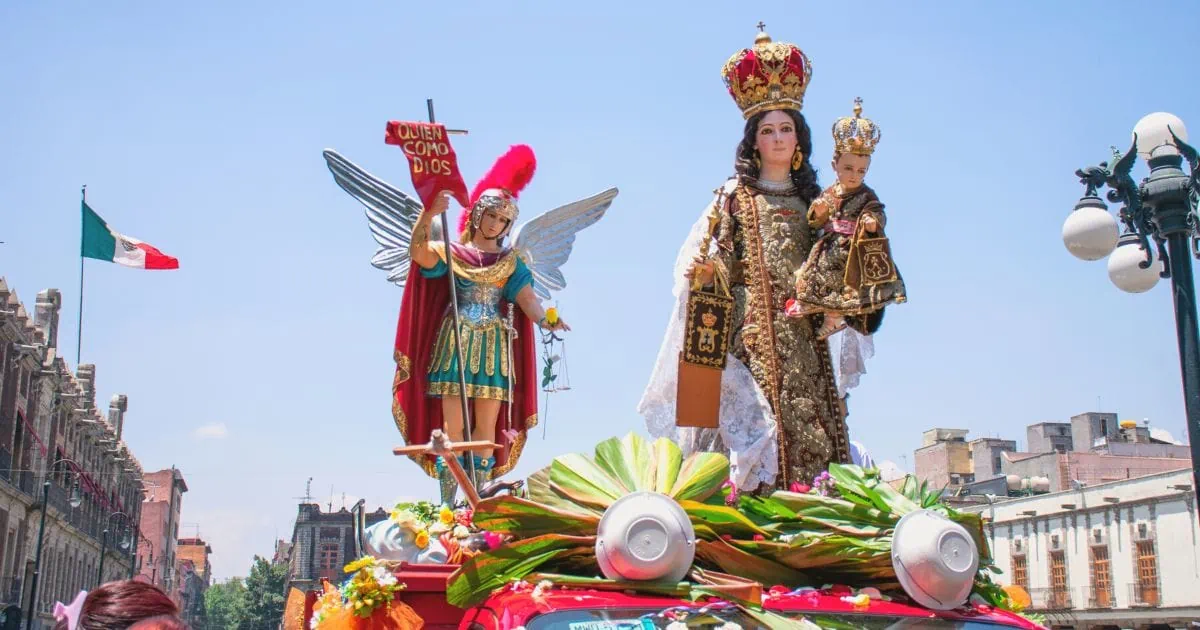
This article is all about Mexican saints, both the official ones recognized by the Catholic Church and the not-so-official ones that you may have already heard about.
The most famous Mexican saints (santos mexicanos) are the Virgin of Guadalupe, the patron saint of Mexico, and Saint Juan Diego, the first Indigenous saint from the Americas.
As I have been living in Mexico since 2018, I have come to understand firsthand how deeply-rooted religion and spirituality are in Mexican culture.
Even for those who aren’t religious, the beautiful religious artwork can draw you in.
Mexico boasts a history of saints, including important Mexican female saints, Mexican saints of death, saints connected to the drug trade and saints that died for refusing to renounce their religion.
Oh, and we can’t forget about La Patrona (the Mexico patron saint). Do you know who that is?!
You’re about to find out in our EPIC list of Mexican saints and their meanings, which includes some noteworthy hispanic saints as well — so let’s get to it!
The 21 Most Popular Mexican Saints
1. Our Lady of Guadalupe, the Patron Saint of Mexico

While not a saint in the traditional sense, there was NO WAY to make this list without including Nuestra Señora de Guadalupe (or, La Virgen de Guadalupe, which means The Virgin of Guadalupe).
La Virgen is actually an Aparición Mariana, or, apparition of the Virgin Mary.
Essentially, this means La Virgen de Guadalupe is the Virgin Mary that has appeared in physical form to a human.
In this case, that person was Juan Diego Cuauhtlatoatzin.
While there are numerous reports each year of Virgin Mary apparition sightings, the Catholic Church has recognized only a handful as valid — including at the Sanctuary of Fátima in Portugal and the Sanctuary of Lourdes in France.
The other approved Aparición Mariana (Virgin Mary Apparition) took place at the site that’s now the Basilica of Guadalupe in Mexico City.
Keep reading for the fascinating story of how this massive shrine came to be…
2. Saint Juan Diego Cuauhtlatoatzin

Juan Diego Cuauhtlatoatzin’s sainthood is tied to the Virgin Mary’s apparition on Tepeyac Hill in 1531.
Here, she left an image of herself on his cloak and gave him instruction to build her a shrine on that hill.
While that’s the short version, the long version is worth the read, so here’s the whole story of the Virgin Mary sighting on Tepeyac Hill…
What happened on Tepeyac Hill?

On December 9, 1531, Juan Diego, an indigenous convert to Christianity, witnessed an apparition of the Virgin Mary on Tepeyac Hill.
Historically known by the names Tepeyacac and Tepeaquilla, this is a large hill, located about 30 minutes downtown Mexico City.
The Virgin requested that a shrine be built in her honor at that exact site.
When the local bishop demanded a sign to prove the authenticity of this request, Mary provided Juan Diego with an extraordinary one.
Despite winter, she directed him to find roses blooming on the barren hilltop.
Juan Diego collected these roses in his tilma (cloak), and presented them to the bishop.
Upon opening his tilma to release the roses, an image of the Virgin Mary was miraculously imprinted on the fabric.
Church of Our Lady of Guadalupe

This event led to the construction of the Basilica of Our Lady of Guadalupe on Tepeyac Hill, which now houses Juan Diego’s tilma bearing the sacred image.
Today, the Our Lady of Guadalupe Shrine has become the most visited Catholic pilgrimage site in the world.
It is also the second-most visited Catholic site in the world, after the Vatican in Vatican City — and one of the best things to do in Mexico City to learn about the local culture.
His life’s work was marked by a profound commitment to faith, education, and social service.
He tirelessly worked to establish schools, hospitals, and orphanages.
The Virgin Guadalupe was declared the Queen of Mexico and Patroness of the Americas, embodying a message of compassion, faith, and unity across the continent.
She is one of the most famous Mexican patron saints — though the significance of Our Lady of Guadalupe extends beyond religion.
She also symbolizes the blend of Indigenous and Spanish cultures, and the birth of Mexico’s mixed heritage (called Mestizo).
Her image has become a national symbol, representing protection, care, and motherly comfort to many.
Juan Diego was canonized by Pope John Paul II in 2002, further solidifying the importance of his vision and the Virgin’s message in the Catholic faith and Mexican identity.
Now known as San Juan Diego Cuauhtlatoatzin (or just San Juan Diego), he is the Mexican saints male patron saint of indigenous people.
3. Saint José María de Yermo y Parres

San José Maria de Yermo y Parres was born on November 10, 1851, in Santa María del Río, San Luis Potosí, Mexico.
He was pivotal in addressing social injustice and caring for the needy, embodying true Christian charity.
De Yermo y Parres founded the Congregation of the Servants of the Sacred Heart of Jesus and of the Poor in 1885, dedicated to serving the most marginalized and forsaken members of society.
José María de Yermo y Parres Lifework
His life’s work was marked by a profound commitment to faith, education, and social service. He tirelessly worked to establish schools, hospitals, and orphanages.
On May 21, 2000, Pope John Paul II canonized José Maria de Yermo y Parres as a testament to his enduring legacy of compassion and service in the name of Christ.
His canonization recognized his spiritual zeal and his groundbreaking efforts in social reform and care for the underprivileged, making him a beacon of hope and faith for Mexicans and the Catholic faithful worldwide.
4. Saint Felipe de Jesús

San Felipe de Jesús was born in 1572 in Mexico City, Mexico. He became the first Mexican saint and the patron saint of Mexico City.
Initially pursuing a mercantile career, he joined the Franciscan Order.
He was sent to the Philippines as part of his missionary work, intending to reach China or Japan to spread Christianity.
However, upon arriving in Japan, he found himself in the midst of severe anti-Christian persecution.
Felipe de Jesús Execution
Felipe de Jesús refused to renounce his faith, leading to his martyrdom in Nagasaki in 1597.
His execution, alongside other Christians, marked him as the first Mexican saint, canonized on June 8, 1862, by Pope Pius IX.
His canonization was in recognition of his martyrdom, making him a symbol of faith and resilience for Mexican Catholics.
5. Saint María Natividad Venegas de la Torre

Santa María Natividad Venegas de la Torre was born September 8, 1868, in Zapopan, Jalisco, Mexico, which is located near Guadalajara.
She is remembered for her profound dedication to healthcare and spiritual service.
Founding the Daughters of the Sacred Heart of Jesus, she worked tirelessly to provide medical care to those most in need.
Her life was a testament to the power of compassion, faith, and unwavering commitment to service.
She was canonized by Pope John Paul II on May 21, 2000, becoming the first Mexican laywoman to achieve sainthood.
For this, she became a pioneering figure in the Catholic Church’s history in Mexico.
6. Saint Rafael Guízar y Valencia

San Rafael Guízar y Valencia’s life was marked by his deep commitment to evangelization and charitable works amidst the Mexican Revolution.
As the Bishop of Veracruz, he was known for his innovative ministry methods, often disguising himself to carry out pastoral work during periods of anti-Catholic persecution.
His foundational work in establishing seminaries ensured the education of future priests, reflecting his dedication to the Catholic faith and education.
Canonization of Guízar y Valencia
Guízar y Valencia was canonized by Pope Benedict XVI on October 15, 2006, recognized for his virtuous life and the miracles attributed to his intercession.
The concept of miracles attributed to his intercession implies that after his death, Rafael Guízar y Valencia could mediate with the divine.
This is said to be able to cause miraculous events that defy scientific explanation, thus affirming his enduring legacy.
7. Saints of the Cristero War
The Catholic Church recognizes the Saints of the Cristero War.
This includes 25 martyrs canonized by Pope John Paul II in 2000, as well as José Sánchez del Río, canonized by Pope Francis in 2016.
These individuals, consisting of priests (like David Galván Bermúdez and Jenaro Sánchez Delgadillo) and laypeople, were martyred during the Cristero War (1926-1929) by Mexican Army soldiers.
What is the Cristero War?

If you’ve never heard of it, La Guerra Cristera (Cristero War) was a major conflict in Mexico sparked by anti-clerical legislation that restricted the Church’s rights.
Then-Mexican President Plutarco Elías Calles believed the Church was trying to usurp the State’s power by challenging his government’s revolutionary initiatives. He began to institute anticlerical laws in rebuttal.
These laws aimed to diminish the Church’s power and influence, which angered Catholics and triggered a 10 year war.
Catholics known as “Cristeros” were the ones who led these violent uprisings against the Mexican military.
The Cristeros fought against government forces to protect their religious freedoms.
The war ended with a truce, but only after significant loss of life and persecution of Catholics in Mexico.
8. Saint José Sánchez del Río

San José Sánchez del Río was a young Mexican martyr who played a notable role in the Cristero War.
This was a religious uprising against the Mexican government’s anti-Catholic and anti-clerical policies in the late 1920s.
Born on March 28, 1913, in Sahuayo, Michoacán, José was deeply religious from a young age and felt a strong calling to defend his faith.
When the Cristero War erupted in response to the government’s repression of religious freedoms, José, despite being only 14-years-old, eagerly joined the Cristero fighters (los Cristeros) to defend religious liberty.
José Sánchez del Río Execution
Captured by government troops in early 1928, José refused to renounce his faith, even under torture.
His captors attempted to force him to publicly reject his belief in Christ, but he remained steadfast.
It’s reported that before his execution, he was brutally tortured, including being made to walk to his own grave.
His final words before his untimely death were a shout of “Viva Cristo Rey!,” which was a rallying cry of the Cristero Movement. (In English, the means “Long live Christ the King!”)
San José Sánchez del Río was canonized by Pope Francis on October 16, 2016.
He was recognized for his heroic virtue and the strength of his faith at such a young age.
9. Saint Cristóbal Magallanes Jara

San Cristóbal Magallanes Jara was born on July 30, 1869, in the town of Totatiche, Jalisco, Mexico.
He was ordained as a priest in 1899, and dedicated his life to serving the Catholic Church and his community.
Magallanes Jara advocated for the rights of workers and peasants, particularly during a time of political turmoil in Mexico.
He was a vocal critic of the oppressive policies of the government, which led to his arrest and imprisonment on several occasions.
Tragically, Cristóbal Magallanes Jara was martyred for his faith on May 25, 1927, in Colotlán, Jalisco, during the Cristero War.
In 2000, Saint Christopher Magallanes Jara was canonized as a saint by Pope John Paul II, along with other martyrs of the Cristero War against religious freedom in Mexico.
10. Saint María Guadalupe García Zavala

Santa María Guadalupe García Zavala, born on April 27, 1878, in Zapopan, Jalisco, dedicated her life to serving the sick and needy.
Co-founding the Congregation of the Handmaids of St. Margaret Mary and the Poor with Father Cipriano Iñiguez, she was deeply committed to providing compassionate care to the less fortunate.
García Zavala, known for her humility and self-sacrifice, often went to great lengths to gather resources for the hospital she helped establish — sometimes even begging to support the healthcare needs of the poor.
Canonization of García Zavala
Canonized on May 12, 2013, by Pope Francis, María Guadalupe García Zavala’s sainthood was a recognition of her virtuous life, filled with acts of charity, humility, and her significant role in healthcare provision.
She passed away on June 24, 1963, leaving a legacy of devotion to the sick and poor that inspires many worldwide.
11. Saint Toribio Romo

Santo Toribio Romo González was born in 1900 in Jalisco, Mexico.
As a priest, he became a key figure in the Cristero War, which was a fight for religious freedom in Mexico during the late 1920s.
After his death in 1928, he was canonized in 2000 by Pope John Paul II, along with 24 of his companions from the war.
Known as the Patron Saint Mexico of Migrants, Santo Toribio Romo is believed to offer protection to those crossing the US-Mexico border.
He is said to symbolize hope and aid to migrants in distress.
12. Saint José María Robles Hurtado

Mexican priest San José María Robles Hurtado actively opposed government restrictions on Catholic religious practices during the Cristero War.
Ordained secretly as a bishop in 1927 due to the persecution efforts in place, he was known for his unwavering faith.
Captured by government forces, he was executed in 1927, becoming a symbol of resistance against religious oppression.
Canonized in 2000, his legacy lives on as an example of courage and devotion to faith under persecution.
13. Saint Mateo Correa Magallanes

San Mateo Correa Magallanes was a Mexican Catholic priest born on July 23, 1866, in Tepechitlán, Zacatecas, Mexico.
During a period of religious persecution in Mexico, Father Mateo ministered to his congregation, despite facing threats to his own safety.
He was arrested in 1927 during the Cristero War.
Despite enduring torture and imprisonment, he remained steadfast in his faith and refused to renounce his beliefs.
On February 6, 1927, Father Mateo Correa Magallanes was martyred for his faith.
In 2000, he was canonized as a saint in Mexico by Pope John Paul II, along with other martyrs of the Cristero War.
The Feast of San Mateo Correa Magallanes is celebrated on May 21st.
14. Saint Agustín Caloca Cortés

San Agustín Caloca Cortés was born on May 5, 1898, in San Juan Bautista del Teúl, Zacatecas, Mexico.
A devout Catholic priest, he was known for his unwavering faith and selflessness.
However, one act solidified his infamy in this area.
Caloca Cortés became a symbol of courage and solidarity during a period of religious persecution in Mexico when he refused his own freedom unless it was also granted to his parish priest.
He ultimately met martyrdom for this defiance on May 25, 1927, in Colotlán, Jalisco.
Up until his execution, he was boldly proclaiming his innocence and praying for the unity and peace of his countrymen before his execution.
Caloca Cortés was canonized May 21, 2000 by Pope John Paul II. His parish priest, Cristóbal Magallanes Jara (AKA Cura Magallanes), was also canonized.
15. Saint David Roldán Lara

San David Roldán Lara was born on March 2nd, 1902 in Chalchihuites, Zacatecas, Mexico.
He entered the seminary in Durango City but dropped out to support his family, though he wanted to remain.
Like many devout Catholics in Mexico, was arrested during the Cristero War.
Similar to his other comrades who were arrested, he refused to renounce his faith.
After several days of torture, Roldán Lara was shot on the side of the road in the mountains near Chalchihuites in Zacatecas state.
He was canonized May 21, 2000 by Pope John Paul II — along with other Saints of the Cristero War.
16. Child Martyrs Cristóbal, Antonio, and Juan

The child martyrs Cristóbal, Antonio, and Juan, also known as the Child Martyrs of Tlaxcala, were three indigenous boys from the area of Tlaxcala, Mexico.
They were among the first to receive Christian baptism in the early 16th Century, and were murdered for their faith shortly thereafter.
Their stories are intertwined with the early evangelization efforts in Mexico following the arrival of the Spanish.
Child Martyrs Lifework and Canonization
Cristóbal, born around 1514, was the son of a local ruler and was educated by Franciscan missionaries.
He was martyred in 1527 for challenging his father’s pagan practices.
Antonio and Juan, also young converts to Christianity, met their deaths around 1529.
These two were killed by members of their community who opposed their rejection of the old Aztec gods and their embrace of Christianity.
These three children were canonized by Pope Francis on October 15, 2017, recognized for their brave commitment to their new faith despite the lethal threats from their own community.
5 Important But Unofficial Saints of Mexico
Alongside the Saints of Mexico recognized by the Mexican Roman Catholic Church, there exists a deep respect for “unofficial” saints — like San Charbel.
These figures, not canonized but deeply revered, show the unique spiritual needs and cultural expressions of the Mexican people.
They offer solace, protection, and miracles to those who may feel distant from the official Mexican Catholic Saints.
Their stories, rooted in local lore and tradition, underscore the diverse ways in which faith and devotion manifest, bridging the gap between the religious and the everyday.
1. La Santa Muerte (Saint Death)

Originating from the complex interweaving of pre-Columbian death deities and Catholicism brought to Mexico by Spanish conquerors — this is a unique figure to say the least.
Today, Santa Muerte’s worship reflects the presence and transformation of indigenous spiritual practices under colonial rule.
Also known by the names Lady of Shadows and White Lady and Lady of the Night, she often appears as a female skeletal figure wearing a long robe.
She is usually seen holding an object or objects, like a globe, a scythe or flowers.
Her worship, once secret, has gained visibility and acceptance, particularly from the early 2000s onwards.
Celebration of Santa Muerte

She represents both protection and guidance in the face of adversity, embodying aspects of life, death, and safe passage.
To many in Mexico, Santa Muerte is a powerful symbol of faith and resilience, especially among those facing societal marginalization.
Her feast day aligns with the Day of the Dead holiday on November 1st.
This integrates into the Mexican calendar saints in a unique way, and highlights her role in Mexican spirituality.
However, her celebrations retain distinct practices, emphasizing requests for personal protection and blessings.
Despite her significant following, Santa Muerte is one of the most famous unofficial female Mexican saints.
She is not recognized by the Catholic Church, yet is still deeply integrated into Mexican spiritual life.
2. Saint Juan Soldado

Juan Soldado, born in the countryside of Mexico in the late 19th Century, lived a humble and relatively obscure life before his name became etched in infamy.
Accused of a brutal crime in the early 20th Century, he faced a swift and harsh judgment with the bare minimum of an actual trial.
In 1938, Juan Soldado was convicted and subsequently executed for the rape and murder of a young girl named Olga Camacho Martínez.
However, many believe he was innocent and framed by authorities seeking a scapegoat to quell public outcry.
These people believe the actual criminal was never brought to justice.
After Soldado’s Execution
Following his execution, strange occurrences began to unfold around Juan Soldado’s tomb.
These include people saying they saw blood dripping from his grave, and hearing him cry out to protest his innocence.
Despite his tarnished reputation in the eyes of the law, he emerged as a symbol of injustice and the struggles faced by ordinary people.
Often referred to as the Soldier Saint or Juan Soldado de Cristo, he stands as a symbol of hope and protection, particularly among marginalized communities and those facing adversity.
Similar to Saint Toribio Romo, who is recognized by the Catholic Church, Juan Soldado is considered a patron saint of undocumented Mexican immigrants.
3. Saint Jesús Malverde (The Narco Saint)

San Jesús Malverde, often referred to as the Narco Saint or the Angel of the Poor, occupies a unique place in Mexican popular culture.
🎥 There’s even a Netflix show about him called Malverde: El Santo Patron (meaning, Malverde: The Patron Saint in English).
While not officially recognized by the Catholic Church, Malverde’s worship has surged — particularly among marginalized communities and those involved in the drug trade.
Legend has it that Malverde was a bandit in the late 19th Century who robbed from the rich to give to the poor.
He eventually met his demise at the hands of authorities.
Despite his criminal reputation, many see him as a Robin Hood-like figure, and a symbol of rebellion against social injustice and poverty.
Devotees often visit the Shrine of San Jesús Malverde in Culiacán, Sinaloa to leave offerings and prayers for protection, prosperity, and assistance — especially in less-than-legal activities.
4. Saint Judas Tadeo

San Judas Tadeo, also known as Saint Jude, holds a unique position in Mexican religious culture.
While not originally a Mexican saint, his veneration has grown significantly since the mid-20th Century, particularly in Mexico City.
The focal point of this devotion lies within the San Hipolito Church, which is located in the heart of Downtown Mexico City.
Here, his image now occupies the main altar.
Saint Jude, one of the Twelve Apostles and a relative of Jesus, was an early follower and evangelizer. He was ultimately martyred alongside Simon the Zealot.
At San Hipolito Church in Mexico City, there is a massive celebration on Día de San Judas Tadeo (Saint Judas Tadeo Day), which is October 28.
This is the same day this saint was venerated.
Devotion to San Judas Tadeo

In Mexico City and beyond, devotion to San Judas Tadeo is especially strong among the impoverished.
This saint has millions of devotees, which are usually referred to as San Juditas or Sanjuderos.
Notably, his popularity extends to drug abusers and delinquents, some of whom seek his help, even petitioning him for protection or assistance in criminal activities — a unique aspect of his worship.
Despite this, the Catholic Church officially supports the veneration of St. Jude as an expression of popular faith in Latin America — unlike other folk saints Santa Muerte and Jesús Malverde.
5. El Niño Fidencio (Saint José Fidencio Síntora Constantino)
San José Fidencio Síntora Constantino is better known as Niño Fidencio, which means Miracle Boy.
He was a revered Mexican folk healer and spiritual figure born in the late 19th Century.
Hailing from the town of Espinazo, Nuevo León, Niño Fidencio gained widespread recognition for his claimed abilities to heal the sick and alleviate suffering through spiritual means.
Despite his lack of formal medical training, he attracted a devoted following, drawing people from across Mexico seeking remedies for various ailments, both physical and spiritual.
Following his death in 1938, Niño Fidencio’s legacy endured. However, his devotees continue to venerate him as a saintly figure and seek his help for healing and protection.
His shrine in Espinazo remains a pilgrimage site, attracting thousands of believers each year who come to pay homage to the Miracle Boy.
🎥 There are also several YouTube videos about Niño Fidencio if you want to know more.
What is the Mexican Saint Calendar?
The Mexican Saint Calendar is part of the broader Catholic liturgical calendar.

It highlights saints significant to Mexico’s religious and cultural heritage.
It includes feast days for saints like St. Juan Diego and martyrs from the Cristero War, alongside celebrations like Our Lady of Guadalupe on December 12th, reflecting Mexico’s rich Catholic tradition and devotion.
The Feast of San Juan Diego

An example from the Mexican Saint Calendar Names is the Feast Day of St. Juan Diego, which is celebrated on December 9th.
St. Juan Diego is a revered figure in Mexican Catholicism, known for his role in seeing the apparitions of the Virgin Mary as Our Lady of Guadalupe in 1531.
Millions and millions of pilgrims from all over Mexico and Latin America gather at the Basilica of Our Lady of Guadalupe in Mexico City’s La Villa neighborhood to honor St. Juan Diego each year.
According to local authorities, more than 11 million people went to the Guadalupe Basilica during the 2023 celebration.
It is the second most popular Catholic site in the world, after the Vatican.
The Feast of San Juan Diego is an emotional holiday, but a festive one.
For Catholics, it commemorates the miraculous apparitions that have played a significant role in Mexican religious and cultural identity.
Most Important Mexican Saints: Frequently Asked Questions
Who are the important saints in Mexico?
Mexico venerates many saints, but St. Juan Diego, known for the apparition of Our Lady of Guadalupe, and the Cristero War martyrs, like St. Toribio Romo González, are especially significant.
What saint was born in Mexico?
Recognized for his faith and martyrdom, St. Felipe de Jesús holds the distinction of being the first Mexican-born saint.
Felipe de Jesús was born in 1572 in Mexico City, Mexico. He became the first Mexican saint, and later, the Patron Saint of Mexico City.
Who are the female Mexican saints?
Mexico’s two canonized female saints are Santa María Natividad Venegas de la Torre (Madre Nati) and Santa María Guadalupe García Zavala (Madre Lupita).
Who is the Mexican folklore saint?
Mexico has several folklore saints, however the two most famous ones include Santa Muerte and Jesús Malverde.
Santa Muerte, often depicted as a skeletal figure, is worshiped for protection, healing, and safe passage to the afterlife, reflecting deep themes of life and death.
Jesús Malverde is also known as the Angel of the Poor or the Narco-Saint.
He is a legendary figure from Sinaloa, considered a Robin Hood-like character who allegedly stole from the rich to give to the poor.
Both are symbols of folk devotion, embodying desires for justice, protection, and benevolence outside the official Catholic canon.
Who is the 14 year old boy saint from Mexico?
San José Sánchez del Río, a young martyr of the Cristero War, is celebrated for his courageous stand for his faith at just 14-years-old.
Is Santa Muerte a lady?
Yes — Santa Muerte is often depicted as a female figure.
Symbolizing death, she’s seen as a skeletal figure dressed in a long robe.
Her image includes various attributes, such as a scythe and globe, representing justice and the Earth.
However, she often holds other objects, like a rosary and flowers.
💀 Note: Make sure not to confuse Santa Muerte with La Catrina, one of the most important Day of the Dead symbols.
Santa Muerte embodies multiple aspects for her followers, including protection, healing, and safe passage to the afterlife.
She is a complex figure, reflecting themes of life, death, and devotion beyond the boundaries of traditional Catholicism.
As a result, she has a significant following among those seeking spiritual aid in challenging circumstances.
Is Guadalupe a saint in Mexico?
Our Lady of Guadalupe, while often referred to as the Patron Saint of Mexico, is not a saint in the traditional sense.

The Mexican Lady of Guadalupe is actually an apparition of the Virgin Mary, who has a unique story.
She appeared to St. Juan Diego in 1531 on the hill of Tepeyac near Mexico City, leaving her image miraculously imprinted on his cloak.
⛪️ This is now the site of the Guadalupe Shrine — one of the largest churches in the world.
This image on the imprinted cloak has become a central symbol of Mexican identity and faith, representing maternal protection and compassion.
The significance of Our Lady of Guadalupe transcends that of a traditional saint, embodying a deeper, national spiritual presence.
Who is the saint of mariachi?
While not officially designated as the saint of mariachi, St. Cecilia Acatitlan is considered the patron saint of musicians and is often invoked by mariachi bands.
Some towns in Mexico observe a holiday held in her honor on November 22 called Día de Santa Cecilia (St. Cecilia’s Day).
The most notable is in Apaseo el Grande, a municipality in Guanajuato state near San Miguel de Allende.
Here, they have special masses, concerts and organized dances — in a celebration that often lasts up to four days.
My Final Thoughts on the Most Important Mexican Saints

In exploring the rich tapestry of Mexican spirituality, from revered Mexican prophet figures to Mexican saint names, including impactful female saints from Mexico, we uncover a diverse spiritual landscape.
These figures, ranging from official Catholic saints to those of folklore, embody the deep faith and cultural synthesis unique to Mexico, offering protection, guidance, and inspiration to many.
Their stories continue to influence and inspire both devotion and cultural identity among Mexicans and beyond.
✝️ Looking for a list of list of hispanic saints? Check out this article to learn about everyone from Santiago Apostol (St. James the Apostle) and St. John of the Cross, to St. Teresa of Ávila and St. Josemaría Escrivá.
