
50+ Special Mexico Christmas Traditions & Customs (That You Probably Don’t Know About)


want to know more about Mexican christmas traditions?
Christmas in Mexico is an amazing time, and in fact, the Christmas Season in Mexico lasts about two months!
In Mexico, the main Christmas celebration is on the night of December 24, called Nochebuena, with a late family dinner and often a midnight Mass.
The season runs from Virgin of Guadalupe Day (December 12) to Día de la Candelaria (February 2).
In between come Las Posadas (December 16–24), Christmas Day and Three Kings Day (January 6).
During this time, there are many interesting Mexico winter holidays, festivals and traditions that offer a great glimpse into Mexican culture.
As someone who’s been living in Mexico since 2018, I’m here to shed light on those for you.
As with many countries, Christmas is one of the most magical holidays in Mexico.
Of all places, Christmas in Mexico City is especially beautiful with all the amazing decorations in the Zocalo (Historic Downtown Mexico City).
Beyond Christmas Day, there are many other Mexican Christmas celebrations taking place in other winter months.
Ready to discover the best Mexico winter holidays and traditions? Let’s get to it!
Christmas in Mexico Traditions: The Holidays
1. When is the Mexico Christmas Season?
December 12 to January 6 — In Mexico, it starts on December 12 each year with the Día de la Virgen de Guadalupe holiday, and doesn’t end until January 6 on Día de Reyes Magos.
Now, this is the most widely-accepted start and end date — however, there is some debate.
- Some consider December 8th, Day of Immaculate Conception (AKA Feast of the Immaculate Conception), as the start of the Christmas Season.
- Others also say the Mexico Christmas season actually ends on February 2 with Día de la Candelaria.
Regardless of the “official” start and end date, know that Christmas lasts well beyond December 25th in Mexico and many Latin American countries.
Between December 12 and February 2 (or January 6), there are a number of winter holidays in Mexico, including Christmas, one of the most important Mexico holidays and traditions.
Below, you’ll discover the Mexico winter holidays, their customs and their meanings, traditional foods, and popular decorations that make up the best Christmas in Mexico traditions 🎄
You’ll also learn about some Spanish Christmas traditions that came from Spain, but are now part of the most popular Mexican Christmas festivities.
2. Dia de la Virgen de Guadalupe: December 12

One of the central religious figures, images and statues of the Virgen de Guadalupe (Virgin of Guadalupe) can be seen all over Mexico.
Her devotees are called guadalupanos, and for many Mexicans, religious or not, she’s also a national symbol.
The Day of the Virgin of Guadalupe is among the most important holidays for religious Mexicans and all Latin American Catholics throughout all Latin America, not just the various parts of Mexico.
It has been celebrated for centuries.
According to tradition, the Virgin appeared to an Indigenous man named Juan Diego (now Saint Juan Diego) in December 1531.
According to his story, The Virgen de Guadalupe ordered him to build her a temple.
As proof, he carried roses to the bishop wrapped in his cloak, or tilma.
When he opened it, an image of the Virgin was on the fabric, and the bishop ordered a church built on Tepeyac Hill, where she had appeared.
Located in northern Mexico City, the Basilica of Guadalupe still stands on that spot today.
I’ve visited the Basilica on a regular day, not December 12, and it’s worth seeing any time of year.
💒 Keep scrolling to see an image of it — as it’s one of the most beautiful churches in Mexico.
💒 Best Basilica of Our Lady of Guadalupe Tours
The church itself is a work of art, which any architecture lover will appreciate on any day of the year.
The most recent building on the church was built by famed Mexican architect, Pedro Ramírez Vázquez, who also built the National Anthropology Museum.
To see the beautiful Basílica de Guadalupe in Mexico City, it’s easiest to join a group tour.
Many tours combine a visit to the Guadalupe Church with the nearby Teotihuacan Ruins, a UNESCO World Heritage Site with prehispanic pyramids in Mexico — two top Mexico City sites.
Looking for the best Guadalupe Shrine tours?
Here are all the best tours to Basílica Guadalupe Mexico City, with options at all price points.
3. Nochebuena in Mexico: December 24

After the last Pidiendo Posada song is sung, many head to late-night Mass or Midnight Mass at a local Catholic church. Following the service, they eat the Christmas meal.
Since it’s after midnight, the meal is technically eaten on December 25th. However, some people skip church services and eat the meal on December 24th.
🎄 Christmas in Mexico Fun Fact: What’s known as the Midnight Mass in the U.S. is called the Misa de Gallo, or Mass of the Rooster, in Spain, Mexico, Central America, and the Philippines.
As you now know, many Mexicans eat the main Christmas dinner on December 24. This is known as Noche Buena, which means “Good Night,” and is the equivalent of Christmas Eve.
While some Mexican families open presents at midnight (technically Christmas Day), others only eat the meal.
Note: Unlike in the U.S., most Mexican people don’t open presents on Christmas morning.
Some families, especially religious families, don’t allow the children to open presents until Three Kings Day on January 6th (more on this in a minute).
Christmas dinner in Mexico isn’t too dissimilar to the U.S.
Dishes vary from family to family, but you’ll often find roasted turkey or meat, traditional Mexican foods like tamales, ensalada nochebuena (AKA ensalada de noche buena, meaning Christmas salad), and romeritos con mole.
For dessert, there’s often Mexican Christmas cookies called hojarascas, and possibly volteado de piña, which is pineapple upside down cake. You can wash them down with Mexico Christmas punch, called ponche navideño.
4. Christmas in Mexico: December 25

Though the main holiday in the Mexico Christmas Season, the actual holiday on December 25 is actually pretty low key.
Most Mexicans have the day off, and a lot of businesses close, so it’s a day to be with your family and relax at home.
🎄 Want to say Merry Christmas to a Mexican friend? To say Merry Christmas in Mexico and other Latin countries, the translation is feliz navidad (pronounced fell-lees nah-vee-daad).
More than just the day off, many take the week off during Christmas and New Years — a nice break from the long, festive season.
For those who do take the entire week off, they often head to the best Mexican beach towns. The beaches in Mexico get very crowded during this week.
This includes the top beach towns, like Cancun, Cabo San Lucas, Puerto Vallarta, and even the more off the beaten path Mexico beaches like Sayulita, Huatulco and Zihuatanejo.
5. Día de los Santos Inocentes: December 28
The Día de Santos Inocentes (Day of Innocent Saints or Day of Innocents), is often called Mexican April Fool’s Day because people throughout the country play pranks on one another — including large-scale pranks from news stations.
Though one of the most playful Christmas traditions Mexico has, this holiday actually has ominous origins.
This Feast of the Holy Innocents is a day when Catholics remember the innocent children killed at the hands of King Herod. These are known to be the first victims of Christianity.
Just like April Fool’s Day in the U.S. (and similar holidays in other countries, like Poisson d’Avril in France), this Mexican Christmas tradition includes hoaxes, pranks, and telling bold-faced lies in a playful manner.
While meant to be light-hearted, these practical jokes are said to harken back to the trickery of the innocent imposed by King Herod of Judea on the innocent children who he had killed.
6. New Year’s Day in Mexico: January 1

For most Mexicans, New Year’s Eve is a family holiday more than a party night.
It’s usually a big dinner at home with family and friends, and most people stay up until midnight to eat the 12 grapes (more on this below).
With many adults off work, and students on a school break, many simply head to the beaches.
The best time to go to the best Mexico beaches is from November to March during the dry season, so this is the perfect time for a tropical Christmas in Mexico.
7. El Dia de los Reyes Magos: January 6
Dia de Reyes, also known as Día de los Reyes Magos, Día de los Santos Reyes, or even Epifanía (The Epiphany), is celebrated on January 6.
Regardless of what you call it, this important Catholic holiday commemorates the arrival of the Three Wise Men in Bethlehem to worship the Baby Jesus.
They brought with them small gifts for the baby, and nowadays many Mexican children will not get their presents until the same day Jesus did.
That’s right, one of the main 3 Kings Day traditions in Mexico is that kids actually open their gifts on this day — not Christmas!
8. Día de la Candelaria: February 2

Dia de la Candelaria is a Mexican holiday that goes by many names in English.
These include Candlemass, Candlemas Day, Feast of the Presentation of Jesus Christ, Feast of the Purification of the Blessed Virgin Mary, and Feast of the Holy Encounter — all the equivalent of the Mexican Candelaria holiday.
It is the last Mexico Christmas season holiday, and very important for religious Catholics in Mexico. In some cities, there are large festivals that might even include bullfighting.
While not a public holiday with a day off work and bank closures, Dia de la Candelaria is still important for many who observe the faith.
For non-religious people, they usually still eat a meal with families and friends. After all, whoever found a muñeco in their rosca de reyes on Dia de los Reyes Magos will have to bring the tamales to a Candelaria Tamale Party 🫔
9. Chanukah in Mexico
According to Mexico’s 2020 census, about 78% of Mexicans are Catholic.
Though Mexico is an overwhelmingly Catholic country, there are religious minority groups. The largest are Protestant and evangelical Christians, and Mexico also has a long-established Jewish community.
According to the World Jewish Congress (WJC), most Jews in Mexico live in Mexico City. The largest population is in the Polanco neighborhood.
If you’re there, you’ll see homes with Chanukah decorations instead of Christmas decorations during Chanukah (Hanukkah), which runs from December 4 to 12 in 2026, and you’ll also see some religious decorations in public spaces.
Christmas in Mexico Traditions: The Festivals & Parties
10. Las Posadas in Mexico: December 16-24

Beginning December 16th, Posadas, or nightly holiday celebrations, take place throughout Mexico.
The Posadas reenact the Bible story of Mary and Joseph’s search for a place to stay in Bethlehem.
The nine nights are often said to represent the nine months of Mary’s pregnancy.
They were in search of a place to give birth to their baby (more on this in one second).
This is one of the oldest Mexican Christmas traditions. Posadas take place everywhere from private homes and rented halls, to public, citywide celebrations.
Some posadas also include pastorela performances that represent the journey of the shepherds to go worship the Niño Jesus (Baby Jesus).
Las Pastorelas are humorous plays, usually done by children, that retell Biblical stories with a touch of levity.
At a private party, you may end up joining in on the Pedir Posadas (posada songs).
Learn more in my guide to Las Posadas in Mexico.
11. Día de la Virgen de la Soledad (Oaxaca): December 18
The Virgen de la Soledad is the patron saint of Oaxaca, and December 18 is one of the biggest days of the year in Oaxaca City.
Thousands of pilgrims visit the Basílica de la Soledad, and the celebrations include a calenda, fireworks and food stalls around the church.
12. Night of the Radishes: December 23
Looking for unusual things to do in Oaxaca City?
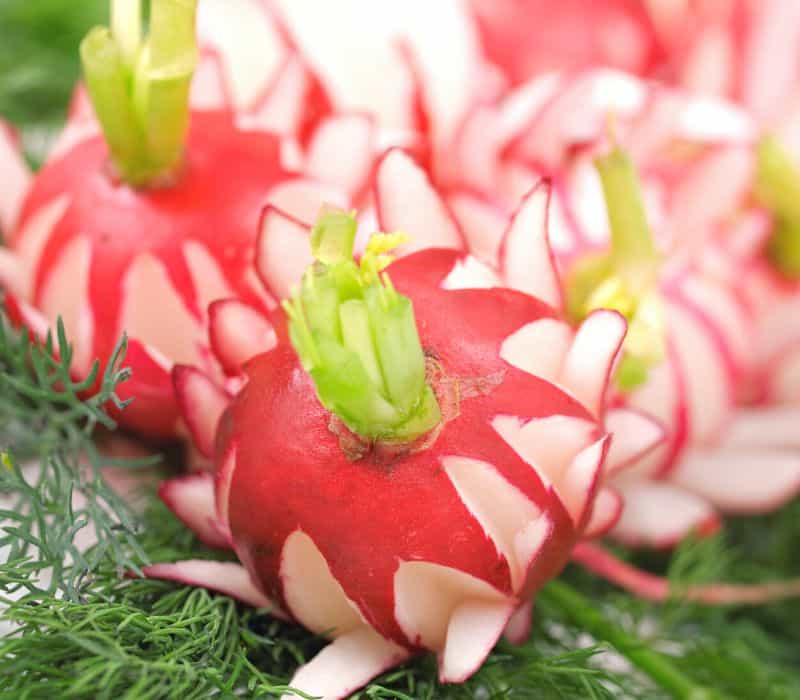
Look no further than the annual Night of the Radishes. On December 23rd each year, Oaxaca City hosts the world’s largest radish carving festival. Yes, this is a real thing!
This is actually a pretty big deal in Oaxaca, and there’s a lot of planning and prep that goes into this short event.
The artists and families carve their radishes the morning of the festival, but the event lasts just a few hours because the radishes turn brown pretty quickly.
🌱 BRIEF History of the Oaxaca Radish Festival
This radish carving festival dates back to 1897 when Oaxaca mayor, Francisco Vasconcelos, made it part of the Oaxaca Christmas market.
As radishes are an integral part of Oaxaca’s Christmas cuisine, the radish contest was a fun way to promote local agriculture.
If you’re traveling to Oaxaca in December for Christmas, make sure you visit the festival to see the radishes carved into nacimientos (Nativity scenes) and other designs.
Though the radishes can be carved into any design, many opt for religious imagery because the festival is so close to Christmas.
13. Calenda Navidad: December 24

Throughout most of Mexico, Christmas Eve is known as Nochebuena. However, in Oaxaca, they have Calenda.
The Oaxaca Calenda Navidad, or Christmas Calenda, celebrates the birth of Jesus.
On the night of December 24, calendas from neighborhood churches parade through Oaxaca City’s streets before Midnight Mass.
🪅 What are Oaxaca Calendas?
A calenda is a vibrant parade with singing, dancing, marching bands and traditional dress that’s unique to Oaxaca.
Calendas bring the local community together to celebrate holidays, weddings, the birth of children, and more, and are an integral part of Oaxaca culture.
14. Fiesta del Niñopan in Xochimilco: February 2

Xochimilco, located in southern Mexico City, is popular year-round with both chilangos (Mexico City locals) and tourists alike.
This festive area is known for its colorful boats (trajineras), elaborate Day of the Dead celebration, and a Mexican Christmas celebration called La Fiesta del Niñopan (AKA El Niñopa).
The Niñopa (often said to mean “Father Child”) is a figure of the Christ child that dates to the 1500s.
Each year a different family, the mayordomo, cares for him, and the handover happens every February 2.
Each year, one particular family will have El Niñopa during some important holidays, like Día del Niño (Day of the Child) on April 30, and Día de Candelaria (Candlemas) on February 2.
El mayordomo, or the sponsor family that has the child during these holidays, is in charge of party-planning — sometimes for the whole town!
Like many festivals and holidays in Mexico, the Niñopa tradition blends Catholic devotion with Indigenous customs.
15. Mexican New Year’s Traditions

During a family dinner on Año Nuevo (New Year’s), some Mexican traditions include eating 12 grapes at midnight 🍇 as a way to make a wish or set an intention for each month of the year.
For this one, you must eat one grape with each gong of the clock at 12:00am — which is not easy to do!
Others will walk down the streets with luggage, which is said to bring lots of travel in the coming year.
One of the Mexican New Year traditions that’s not always discussed publicly, is that many people will wear a certain color of underwear to signify what they hope for in the New Year.
Each color has a different meaning, like yellow for abundance, green for good health and red for love.
☃️ Best Places to Visit in Mexico in Winter

You can’t go wrong with any beaches in Mexico in winter, because that’s the best time to visit to get perfect weather.
For the best beaches in Mexico, head to the Baja Peninsula, Pacific Coast or Yucatan Peninsula on the Caribbean Coast, famed for white sand beaches and crystal clear water.
Here are some places to consider:
- Chichen Itza Mayan Ruins
- Riviera Maya
- Playa del Carmen
- The island of Cozumel
- Puerto Vallarta
- The colonial town of San Miguel de Allende in Central Mexico
- Cabo San Lucas
Wherever you choose, you’ll enjoy a mild tropical climate in winter. 🏝 If you’re adventurous, check out these Mexico hidden beaches!
Learn more in my guide to Mexican New Year’s traditions.
16. Pastorelas (Funny Christmas Plays)
When Catholic missionaries arrived in Mexico, they used exaggerated, funny plays as a way to spread Catholicism and convert the local people.
These outdoor performances eventually became known as pastorelas, and they are still done to this day.
A mixture of theater, faith and fun, the pastorelas in Mexico offer a light-hearted re-telling of the birth of Jesus in Bethlehem. Pastorelas in Mexico are usually performed by children.
The Adoration of the Magi by Fray Andrés de Olmos is said to have been the first pastorela performed in Mexico.
Today, pastorelas are performed at schools, churches and theaters all over Mexico, and many add jokes about current events.
17. Pedir Posadas (Mexican Christmas Carols)

The Pedir Posadas are specific songs and verses that you sing during Las Posadas in Mexico. There are several pedir posadas songs, like the Pidiendo Posada and Letanía (or, Litany).
Some parties have half the guests remain inside, and half go outside, and they sing the songs in a call and response fashion.
Some families go door to door singing them, similar to Christmas carolers in the United States and Christmas carols in other parts of the world. With this, you would go to a different house with each song.
Going door to door in this way is said to symbolize the Biblical journey of Joseph and Mary going door to door while seeking shelter to give birth to the baby Jesus.
In fact, the word posada means “lodgings” or “accommodations.”
Christmas in Mexico Traditions: The Best Mexican Christmas Decorations
18. Flor de Nochebuena (Poinsettia Flowers)

Looking for the best Christmas in Mexico decorations? Not many know this, but la flor de la nochebuena, meaning “the flower of the holy night,” comes from Mexico.
That’s right, the bright red Christmas flower known as the poinsettia in much of the English-speaking world, is actually native to Mexico.
The Aztecs called this flower cuetlaxochitl, meaning “the flower of leather petals.”
For them, nochebuenas symbolized a new life earned by warriors who died in battle.
These war heroes were said to return to Earth as hummingbirds and butterflies, two animals that drink the nectar of poinsettia plants.
19. Nacimientos (Nativity Scene)

A nacimiento in Mexico is a recreation of the Catholic Nativity, or manger scene. (🤔 In case you’re wondering, nacimiento is pronounced nah-see-me-ent-toe.)
You will see both small- and medium-sized mangers in peoples’ homes, and life-sized recreations in front of Mexico churches throughout the Christmas holidays.
For nacimientos at Mexican churches, it is considered a great honor to be chosen as one of the participants to make the scene come to life.
Some Nativity scenes are quite elaborate, and can include Holy Family, Magi, angels, an ox and donkey, King Herod, a figure of the Christ child or baby figurine, as well as shepherds and villagers.
There may be upwards of 15 live participants at some of the largest nacimientos in Mexico, as this is one of the most important Mexican holiday traditions.
20. Mexico Christmas Ornaments
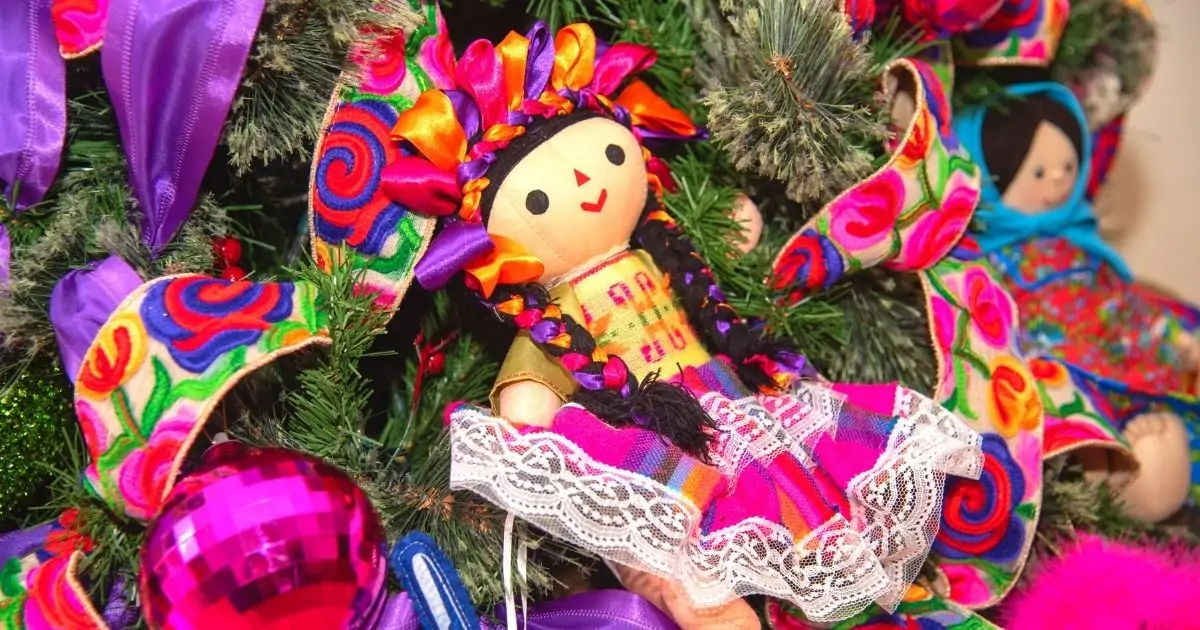
You’ll see lots of the same Christmas decorations during the holiday season in Mexico that you will in other parts of the world, like Christmas trees, lights, luminaries (paper lanterns), wrapped presents, ornaments, poinsettia flowers, etc.
When it comes to the most traditional Mexican Christmas ornaments, check out a few of our favorites below, and you can click on any ornament to buy it. (🎅 For me, this Mexico Santa Claus is a favorite).

🎄 Looking for the best Mexico Christmas ornaments? Check out this list.
As Christmas trees are more of a European and American Christmas tradition, they have merely been adopted in Mexico, so in a sense, all Mexican Christmas tree decorations are traditional.
Mexican Christmas tree decorations are fun gifts to give at Christmas — as they are “gifts that keep on giving” — because they get used again the following Christmas.
In fact, giving a new Mexico Christmas tree ornament as a gift each year could become one of your family’s Mexican Christmas traditions.
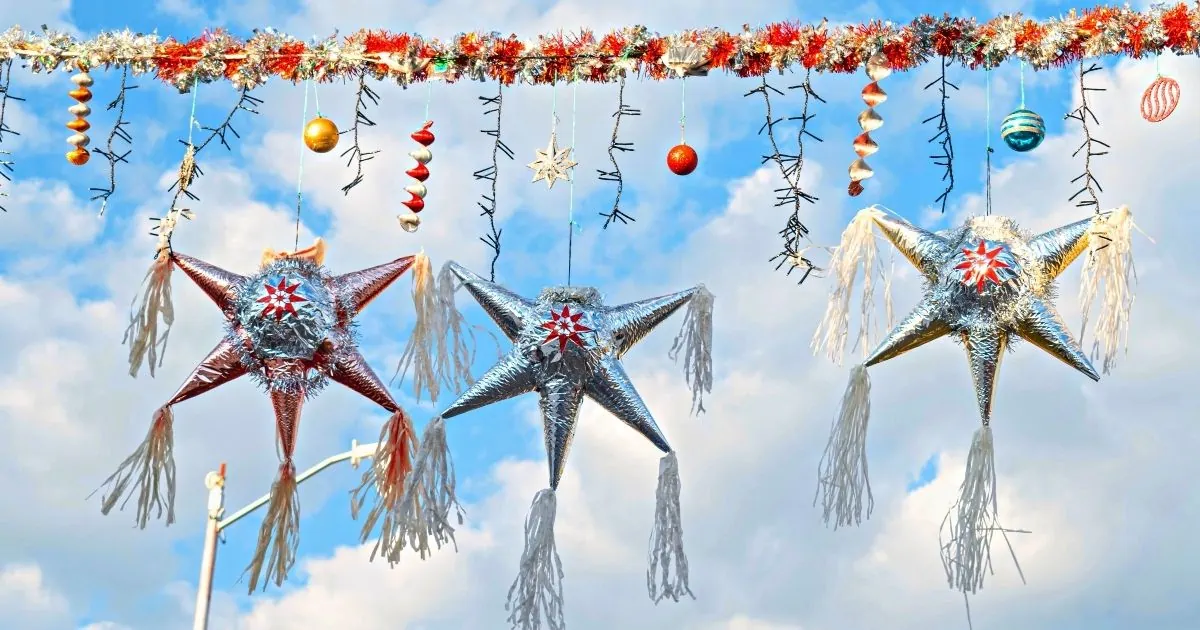
21. Mexican Piñatas

Having a piñata is one of the most common Mexican birthday traditions, and one of the most prevalent Mexican winter holiday traditions.
Seemingly an innocuous party favor, the Mexican piñata holds deep religious symbolism and ties to the Seven Deadly Sins.
The piñata’s bright colors symbolize temptation, and the stick to hit it with represents the will to overcome sin. The blindfold person symbolizes faith.
Once the most “faithful” person cracks open the piñata, they get all the goodies inside as a reward for overcoming sin and evil.
These colorful paper structures are common at many Mexican parties, especially ones for children. They are usually in the shape of a star, animal or cartoon character.
Inside, they’re filled with candy, small trinkets and toys, and sometimes even money. This all goes to the faithful person who cracks it open, though they typically share their bounty with the rest of the partygoers.
22. Mexican Christmas Trees

🎄 Mexico Christmas Fun Facts: Former Mexican Emperor Maximilian I is said to have brought the first Christmas tree to Mexico in the 1860s. After seeing his tree, the demand for Christmas trees in Mexico began.
In fact, back in 2009, Mexico received the Guinness World Record for the world’s largest Christmas tree. This artificial tree stood 362-feet-tall (110 m), and was located in Mexico City.
The traditional Mexican Christmas tree looks much like they would in other parts of the world when they’re all decorated. On them, you’ll see large colorful ball decorations, streamer paper or fabric and tinsel.
In Mexico, you might also find traditional ornaments made with straw, tin or clay, and also themed ornaments that showcase national pride or funny jokes, like these best Mexican Christmas ornaments.
The trees themselves are often sourced from local forests, and can be Mexican white pine, Douglas fir, Mexican pinyon, Oyamel fir (AKA sacred fir) or Aleppo pine.
Christmas in Mexico Traditions: The Food & Drink
Christmas dinner in Mexico isn’t too dissimilar to the U.S. Dishes vary from family to family, but you’ll often find roasted turkey or lomo (roast pork loin) as a main dish on all Mexican Christmas dinner tables.
Besides these meats, there are many side dishes and other traditional Mexican foods you’ll enjoy during a Christmas dinner in Mexico.
These best traditional Mexican Christmas foods and drinks include tamales, romeritos, bacalao, oxtail soup, pozole Mexican soup (posole), ensalada navideña (Christmas salad), and ponche (Mexico Christmas punch).
23. Tamales

Tamales are made from masa (maize dough, or corn dough), the same dough used to make corn tortillas.
The masa mixture is then wrapped in a corn husk or banana leaf, and steamed. The leaf can also serve as a plate for eating the tamales.
🫔 History of Tamales as a Mexican Christmas Food
It is said the incorporation of tamales into present-day Mexican Christmas meals is a nod to prehispanic traditions.
For the ancient Maya and Aztecs, corn was a staple food and one of the most important crops they had.
Tamales are made of masa (corn dough) and cooked in corn husks or banana leaves, depending on where you are in the country. Corn husks are used in most places, but in Yucatan cuisine and Oaxaca cuisine, you’ll see banana leaves.
24. Romeritos con Mole

Romeritos con mole is a beloved Central Mexico Christmas dish, but one few outside of Mexico have ever even heard of.
First off, you probably want to know, What are romeritos in English?
In English, romeritos translates to “little rosemary,” but this green plant is not rosemary.
Actually, a romerito is sprigs from a seepweed plant. Romeritos taste similar to spinach, but can have a slightly minty taste to them as well.
The romeritos con mole dish is made with romeritos cooked in mole sauce.
It usually also includes potatoes, nopales (cactus) and tortitas de camarón (dried shrimp patties).
Like most foods in Mexico, it’s usually served with tortillas on the side.
25. Bacalao a la Vizcaina

Wondering, What is bacalao and how is it prepared during the Christmas season in Mexico?
Bacalao a la Vizcaina, usually just called Bacalao and pronounced bah-kah-LAH-oh, is a Mexico Christmas food that comes from Spain’s Basque Country.
It is salted cod fish that’s cooked with roasted tomatoes, potatoes, onions, olives, almonds, chili peppers, garlic, herbs and spices — a very flavorful dish!
26. Pozole (Hominy Soup)

One of the most traditional foods from Mexico is pozole (pronounced poh-zoh-lay), a maíz (hominy) soup with a lot of flavor.
Pozole is a pre-colonial dish that dates all the way back to the Aztec in the 1300s. Today, pozole is one of the most beloved dishes throughout Mexico.
It is a popular food during the holidays, but also year-round. You’ll find pozole eaten at many Mexican holidays, like Day of the Dead and Mexican Independence Day on September 16th.
Traditional Mexican pozole is made with meat and hominy, and cooked in broth with plenty of spices, like cumin and chili powder.
Many garnish their pozole with diced white onion, lime juice, avocado, shredded lettuce, radishes and dried oregano.
27. Ponche Navideño (Mexican Christmas Punch)

To drink during a Mexican Christmas celebration, you’ll usually drink ponche (pronounced pon-chay).
Sometimes called “Mexican sangria,” ponche is a bit different, and it’s also served warm.
Ponche uses fruits like tejocotes (a small fruit similar to crabapples), pears, oranges and guava, as well as jamaica (hibiscus flower), tamarind and piloncillo (raw cane sugar).
Often, Mexican ponche is served with a sugar cane stick to stir it. You can enjoy it as is, or spiked with some brandy.
28. Hojarascas (Mexican Christmas Cookies)
Many meals end with Mexican Christmas cookies, called hojarascas — as well as other desserts and candies.
As in the U.S., Mexican Christmas desserts are one of the best parts of the overall Mexican celebration of Christmas!
Hojarascas (pronounced ho-jah-ras-cahs) are a type of shortbread cookie, sprinkled with cinnamon and sugar.
They can be a bit dry, so many will wash them down with some hot chocolate or cafe de olla (Mexican coffee).
29. Champurrado

Champurrado (pronounced champ-pour-ah-doe) is a thick Mexican hot chocolate drink.
If you love chocolate (🤔 who doesn’t?), this is one of the best Mexican hot chocolate recipes.
It’s a bit richer than regular Mexican hot chocolate because it’s prepared with masa de maíz or masa harina (corn flour), piloncillo (raw cane sugar) and cinnamon.
Champurrado has been around since the Aztec times, and really useful to keep people warm on the cooler Central Mexico nights.
Yes — Central Mexico has many more cold days than the beaches of Mexico.
Still popular today, champurrado’s thick texture makes it the perfect drink for dipping your churros in.
🇲🇽 Mexico Fun Fact: The Olmecs, Maya and Aztecs were drinking chocolate for thousands of years before the Spanish brought it to Europe.
30. Rompope

Rompope (pronounced rom-po-pay) is known as Mexican eggnog.
It is a Christmastime cocktail, served throughout the country, but most associated with the state of Puebla, Mexico.
As with U.S. eggnog, adults often spike the rompope with rum or fruit brandy (or both 😆).
31. Buñuelos

Around Christmas time in Mexico, you can enjoy trying some buñuelos (pronounced boun-you-ell-los) being sold by street vendors.
There are a few styles of buñuelos throughout Latin America, which translates to “little puffs.”
There are two types of Mexican buñuelos — buñuelos de rodilla, meaning “knee buñuelos,” and buñuelos de viento, meaning “wind buñuelos.”
The first type, buñuelos de rodilla, are large, flat, circular-shaped fritters, typically dusted with cinnamon sugar or drizzled with syrup.
Buñuelos de viento will really get you into the Christmas spirit, as these fried dough fritters are made using a snowflake-shaped rosette mold.
32. Rosca de Reyes Cake

Besides the presents, one of the main traditions on Dia de los Reyes Magos (Three Kings Day) is eating a rosca de reyes.
This is a ring-shaped sweet bread that’s somewhat similar to an Italian Panettone cake.
Inside each ring, there are a few small, plastic figurines in the shape of a child — called a muñeco (little doll).
If your slice of rosca has one of the little plastic doll figures, you’ll have to buy everyone present at the gathering tamales on the next holiday.
This will be Día de la Candelaria on February 2nd.
In the weeks leading up to the holiday, supermarkets and bakeries start selling rosca de reyes.
Many say the best roscas come from a local panaderia (bakery), and not the grocery store.
To experience one of the best Mexican holiday food traditions the right way, always “shop local” for your rosca.
Here’s how Mexicans celebrate Three Kings Day in Mexico.
10 Facts About Christmas in Mexico

33. What is Christmas in Mexico called?
It’s called navidad — and if you want to say Merry Christmas to a Spanish-speaking friend, you’ll say Feliz Navidad.
34. What is the best Mexican tradition for Christmas?
Gathering together for Noche Buena (Christmas Eve) on December 24, and spending time with your family.
35. Why does Mexico celebrate Christmas on the 24th?
Many religious Mexicans attend Midnight Mass on the night December 24th (which is technically December 25th at midnight).
After this, the entire family would eat their Christmas dinner.
Even if less and less people are attending church these days, the December 24th gathering tradition continues — and this is definitely the main event of all Mexico Christmas traditions.
While parties for Noche Buena will begin on December 24, they don’t end until the morning hours on December 25, and there are lots of fun activities and meals going on in-between.
36. What do Mexicans do December 25th?
Christmas Day is usually a day of rest. Most businesses are closed, and people usually hang out in their house with family — many recovering from drinking too much the night before 🤣

37. What’s the best Christmas in Mexico food?
This will depend on who you ask! For some, it will be the tamales, for others, the pozole soup, while still other people might say the romeritos con mole.
38. How long is Christmas in Mexico?
The full Mexican Christmas Season spans 26 days.
It begins on December 12 with Día de la Virgen de Guadalupe, and ends on January 6 with Día de Reyes Magos — and some jokingly call this the Guadalupe-Reyes Marathon.
Now, some will say the full Mexico Christmas Season actually lasts 53 days.
With this math, it still begins on December 12 with Día de la Virgen de Guadalupe, but ends on February 2 with Día de la Candelaria.
As La Candelaria is a somewhat minor holiday, the most common count you’ll see is the 26 day Guadalupe-Reyes Marathon!
39. Is there Santa Claus in Mexico?
Yes — You’ll see Santa decorations all over the country, and even Mexican Santa ornaments on many Christmas trees.

40. What’s on a traditional Mexican Christmas tree?
Christmas trees in Mexico have about the same things as those in the United States — tinsel, Christmas ornaments, garland, keepsake decorations, Christmas lights, etc.
41. What are some decorations for Christmas in Mexico?
In cities throughout Mexico for Christmas, you’ll see papel picado paper, paper lanterns, twinkling lights, Santa and his reindeer, shiny ornaments, nacimientos (manger scenes) and piñatas.
42. How is Christmas in Mexico different from Christmas in America?
Everyone wants to know how the Christmas in Mexico vs USA celebrations differ.
Well, they aren’t very different at all — which you now know after reading this article.
Christmas in Mexico Traditions: FAQ

43. When is Christmas in Mexico?
December 24 — While Christmas Day is also December 25th in Mexico, the holiday celebration actually takes place on December 24th.
44. When do Mexican kids open presents?
Some children in Mexico open presents during the Noche Buena Christmas Eve celebration on December 24.
However, some kids receive presents on January 6, for Dia de los Reyes Magos, and many get presents on both days.
The Dia de los Reyes Magos (AKA Fiesta de Los tres Reyes Magos), which is Three Kings Day in English, honors the Three Wise Men from the Bible.
In this story, the three brought presents on January 6th to honor the Baby Jesus — so some Mexican kids don’t get presents till this day.
45. How is Mexican Christmas different?
The biggest difference in Mexico Christmas vs U.S. Christmas is that the holiday really takes place on December 24th.

December 25th is more of a quiet day of rest, but the real celebrations take place on Noche Buena (Christmas Eve).
46. What do Mexicans do on December 25?
Christmas Day is often a day to rest, relax, catch up with family and friends, watch Christmas movies (like A Christmas Story), and eat leftovers from Christmas Eve dinner.
While people will also wish each other a Merry Christmas (Feliz Navidad) on this day, the holiday really took place the day before.
47. What do Mexicans eat on Christmas Eve?
The Noche Buena Dinner on December 24th usually consists of a pavo navideño (roast turkey), pozole or menudo soup, romeritos, tamales, and sometimes other Mexican favorites like enchiladas, tacos, flautas and empanadas.
48. Who celebrates Christmas in Mexico?
Most people — Similar to Christmas in the U.S. and much of the Western World, Christmas is one of the most important Mexican holidays.
Now, there’s no definite answer to the How does Mexico celebrate Christmas? question.
This is because the holiday means different things to different people — so how Mexico celebrates Christmas can vary greatly, though most people do celebrate.
49. What is the most popular Christmas tradition in Mexico?
Mexican Christmas Posadas — Formerly known as “the Nine Posadas of Advent,” posada parties are one of the most beloved Mexico Christmas traditions.

These posadas are in-home and city-wide social gatherings and parties that begin December 16.
The last Posada is held on December 24, and there can be a party each night in-between.
They are often lively parties, and often involve singing Spanish Christmas carols, like the Pedir Posada Navideña.
50. How is Christmas celebrated in Mexico?
It is similar to Christmas in most countries, with festive decorations (both in-home and in public places), church services for religious Catholics, gift exchanges, and large dinners with family and friends.

51. Is everything closed on Christmas Day in Mexico?
Pretty much — While most places will be open during the morning and early afternoon on Christmas Eve in Mexico, on Christmas Day, the majority of businesses will be closed.
52. What is Santa called in Mexico?
Santo Clós, which is actually pronounced very similar to Santa Claus.
Of course, it uses the Spanish or Latin for saint (santo), instead of the English word saint (as in Saint Nicholas).
An important icon of Christmas in Mexico, you will see both large and small Santa figures displayed prominently in public places.
He is a popular Christmas decoration in Mexico, along with others like lights and candles.
Though a less-popular option than Santa Clos, some people in Mexico call Santa Papa Noel.
53. What’s the Christmas in Mexico weather like?
It depends on where you are. In Central Mexico and Northern Mexico, you’ll have cool or cold temperatures.
However, December is one of the best months to visit the beach towns of Mexico for perfect weather.
From about mid- December to early-January, the beaches of Mexico become a popular tourist destination for national and international visitors.
If you’re headed to the Pacific Ocean beaches, you can also do some whale watching 🐋
My Final Thoughts on Traditions for Christmas in Mexico

🎄 Mexico Holiday Fun Fact: There are so many holidays in Mexico that you’ll often hear fireworks going off and have no idea why.
As someone who has lived in Mexico since 2018, I can attest to not being able to keep up with all the Mexican holidays.
This is indeed a festive country, with at least one major holiday every month.
💀 Want to learn about one more of them? Check out this article on the Day of the Dead festival in Mexico (Día de los Muertos).
If you want to experience the best Mexico winter holidays and traditions, you must visit Mexico in December.
This is when many cities have winter celebrations and Christmas celebrations, and most towns are festively-decorated.
While this article highlighted a lot of Mexico winter holidays, including Christmas in Mexico, there are so many more throughout the rest of the year.
To read about more of them, check out 35 Unique Mexican Traditions & Festive Mexico Holidays — and don’t miss this Mexico Christmas Gift Guide 🎁
