
The 7 Types of Mexican Blankets (+ Where to Buy Them and How to Wash Them)

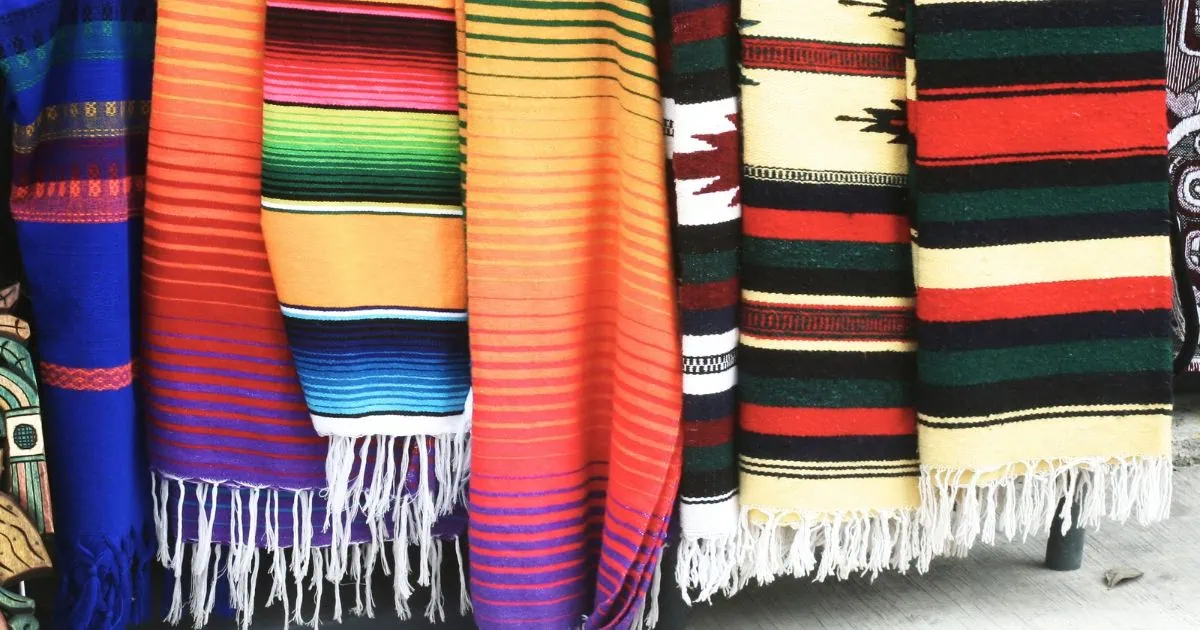
Looking for a Mexican blanket?
Most people mean the falsa, a bright, striped blanket with fringe on both ends, when they say “Mexican blanket.”
However, Mexico has plenty of other blankets and textiles, from wool serapes to Zapotec rugs, which are all listed below.
🛒 Head here to see the best Mexican blankets to buy

7 Types of Mexican Blankets
1. Falsa Blanket
- 📍 Where it’s from: Mexico
- 🧶 Made of: Recycled cotton blended with acrylic or polyester
- 🛒 Buy it on Amazon
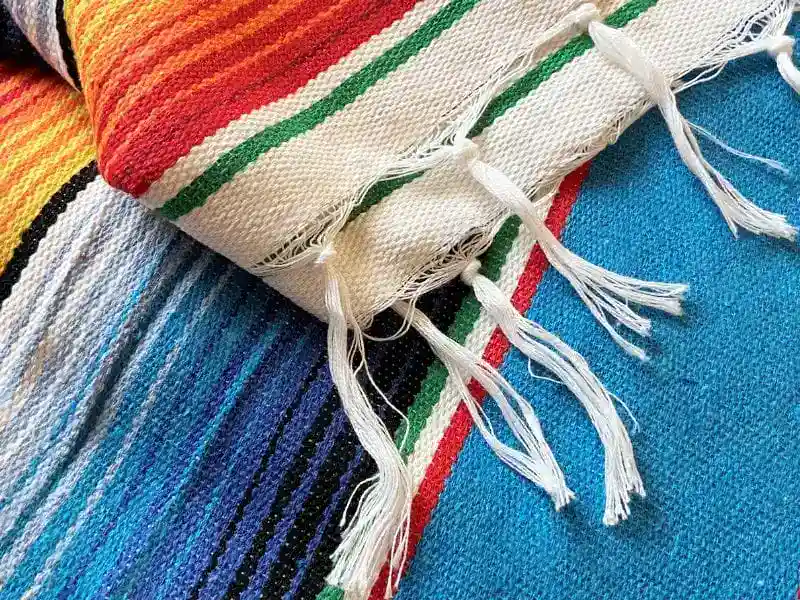
The falsa is the bright, striped blanket most people picture when they hear someone refer to a traditional Mexican blanket.
Most are woven from recycled cotton blended with acrylic or polyester, with fringe on both ends.
They’re light, tough and easy to wash, so you’ll see them at beaches, picnics and yoga studios.
2. Saltillo Serape (Coahuila)
- 📍 Where it’s from: Saltillo, Coahuila
- 🧶 Made of: Wool woven on a cotton warp
- 🛒 Buy it on Amazon
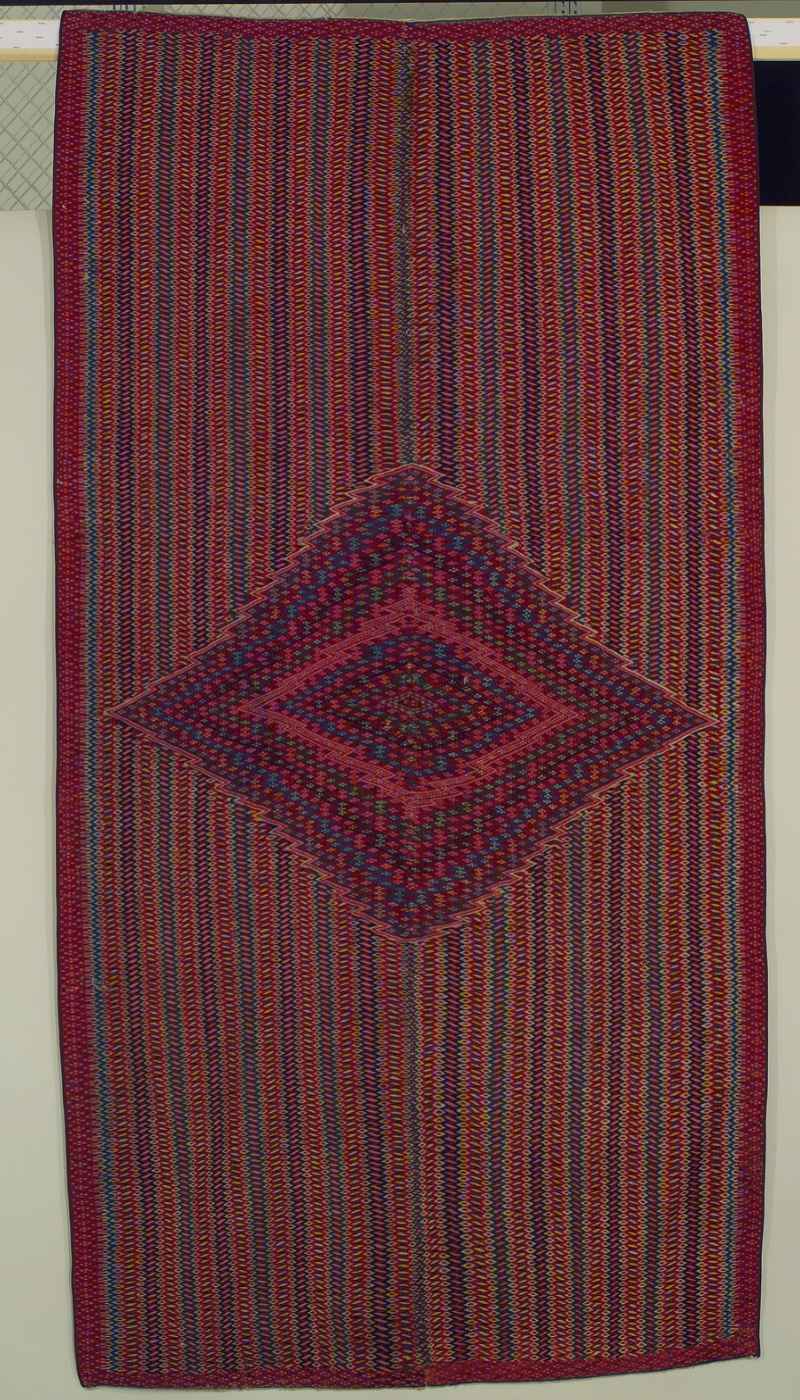
The Saltillo serape is named for the weaving center of Saltillo, in the northern state of Coahuila.
Classic Saltillos have a central diamond and bands of bright color. Most are about twice as long as they are wide.
From the 1700s on, wealthy horsemen wore them and rolled them up behind the saddle when they weren’t in use.
One of the best-known pieces of traditional Mexican clothing, you can also see classic Saltillo serapes in The Met’s collection.
3. Zapotec Wool Rugs and Blankets (Oaxaca)
- 📍 Where it’s from: Teotitlán del Valle, Oaxaca
- 🧶 Made of: Wool colored with natural dyes like cochineal and indigo
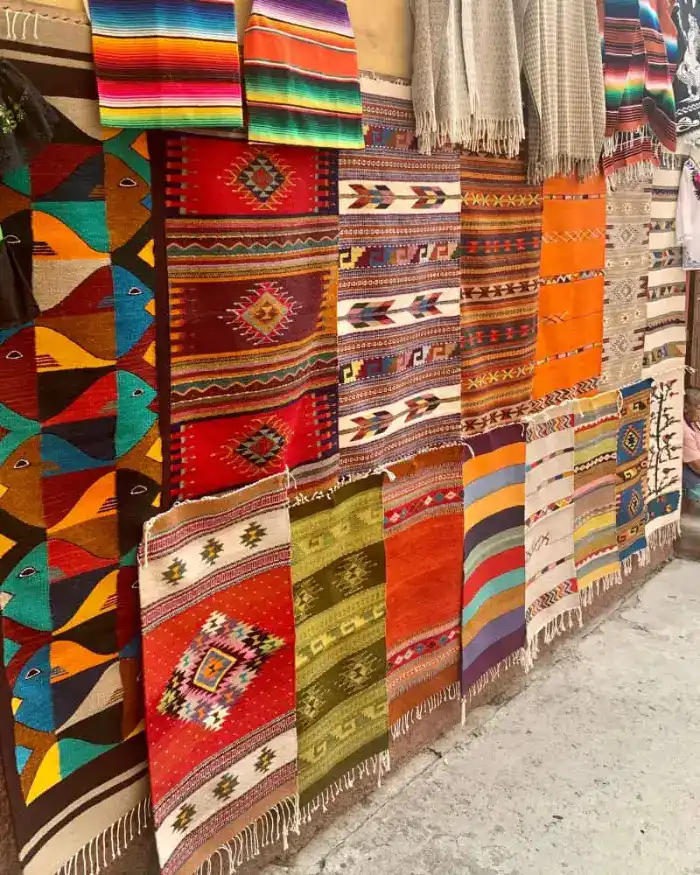
Teotitlán del Valle is a Zapotec village about 19 miles (31 km) from Oaxaca City, famous for its wool rugs.
Many weavers use natural dyes, like cochineal, a deep red made from an insect that lives on nopal cactus.
Their geometric designs often borrow from the carved walls of nearby Mitla Ruins.
I visited Teotitlán del Valle on a tour from Oaxaca City.
It’s one of the easiest day trips from Oaxaca City, and you can watch weavers at work in their family workshops.
4. Wool Sarapes from Santa Ana Chiautempan (Tlaxcala)
- 📍 Where it’s from: Santa Ana Chiautempan, Tlaxcala
- 🧶 Made of: Wool or cotton
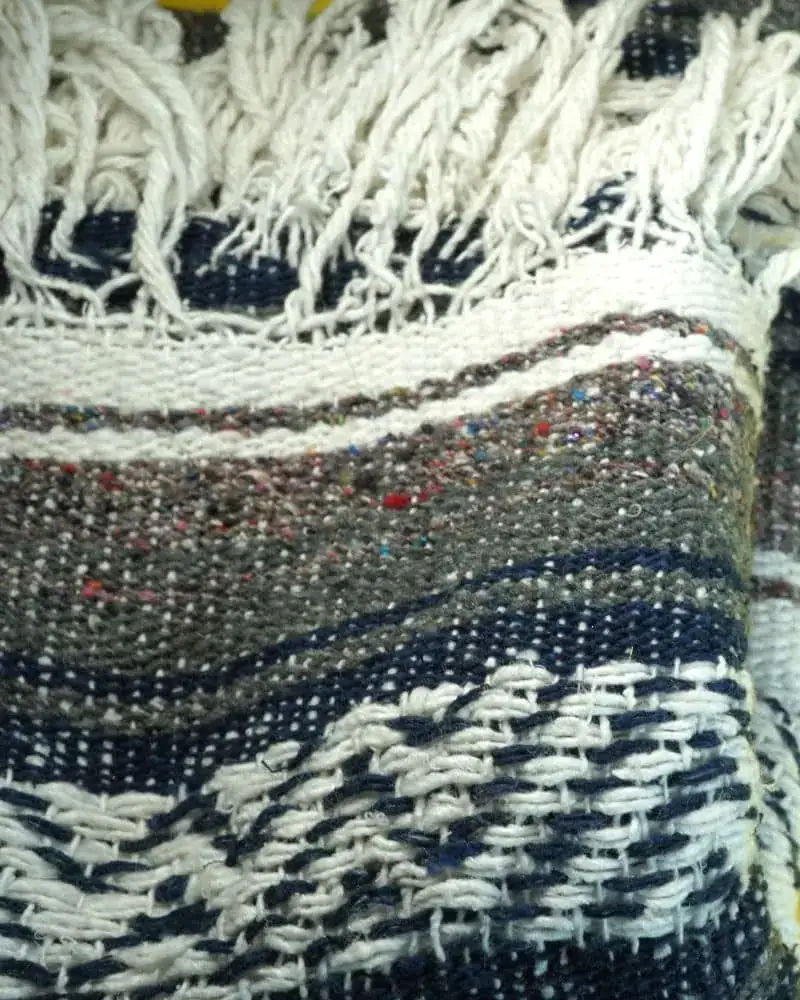
Santa Ana Chiautempan, nicknamed the “Cuna del Sarape” (Cradle of the Sarape), is known for its hand-loomed sarapes and wool textiles.
The sarape is thought to have started in this part of central Mexico before spreading to northern Mexico during colonial times.
The traditional Mexican woven blankets crafted in this town blend pre-Hispanic weaving traditions and geometric motifs with colonial-era wooden pedal looms and sheep’s wool.
Historically, the wool is dyed using natural ingredients like cochineals (small insects), pericón (a native herb), and cempasúchil (marigold flowers).
Every summer, Santa Ana Chiautempan hosts the National Sarape Fair to honor this centuries-old Mexican art.
5. Mexican Tiger Blanket: San Marcos Blanket aka Cobija de Tigre (Aguascalientes)
- 📍 Where it’s from: Aguascalientes
- 🧶 Made of: Mostly acrylic
- 🛒 Buy it on Amazon
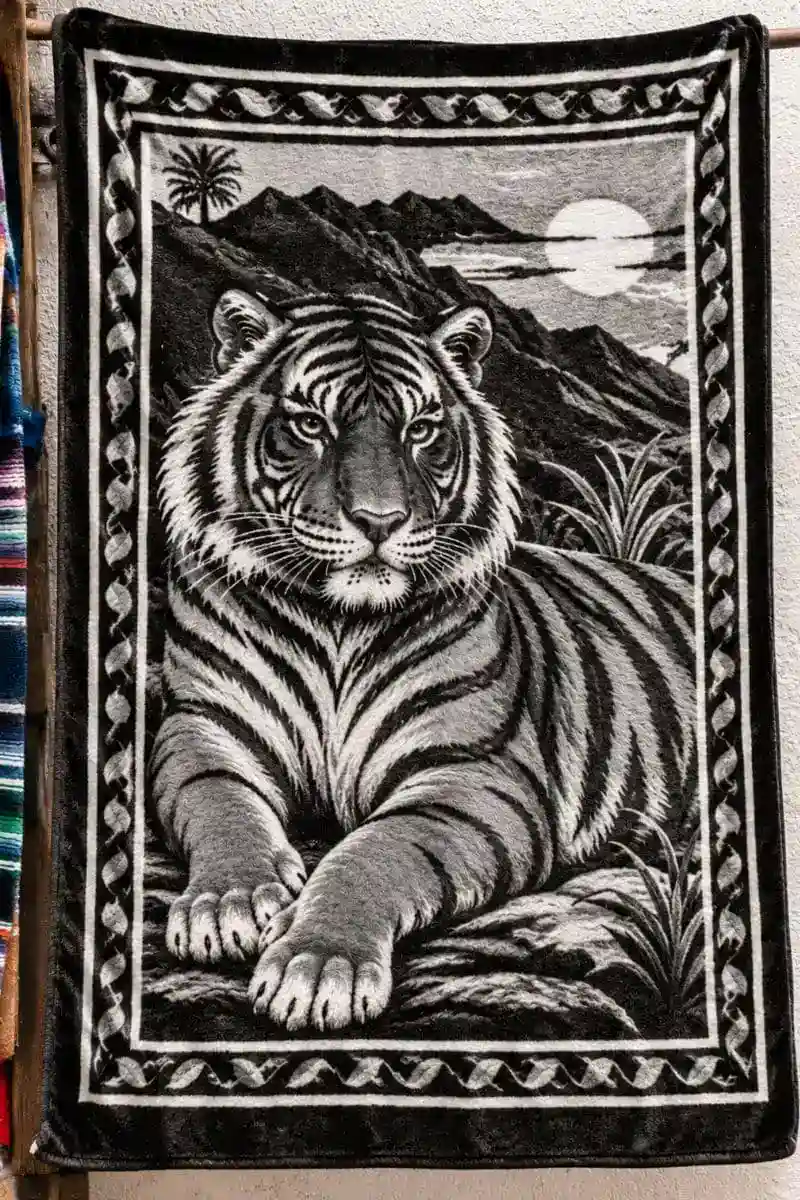
The San Marcos blanket is the heavy, plush blanket with bold prints like tigers that kept many Mexican homes warm.
Jesús Rivera Franco created it in Aguascalientes in the 1970s. He named it after his San Marcos neighborhood.
The original factory closed in 2004, so most tiger blankets sold today are look-alikes.
Still, the cobija de tigre (Mexican tiger blanket) is a huge part of pop culture, and you’ll still see these in many homes today.
6. Jorongo (Gabán)
- 📍 Where it’s from: Mexico
- 🧶 Made of: Wool or cotton
- 🛒 Buy it on Amazon
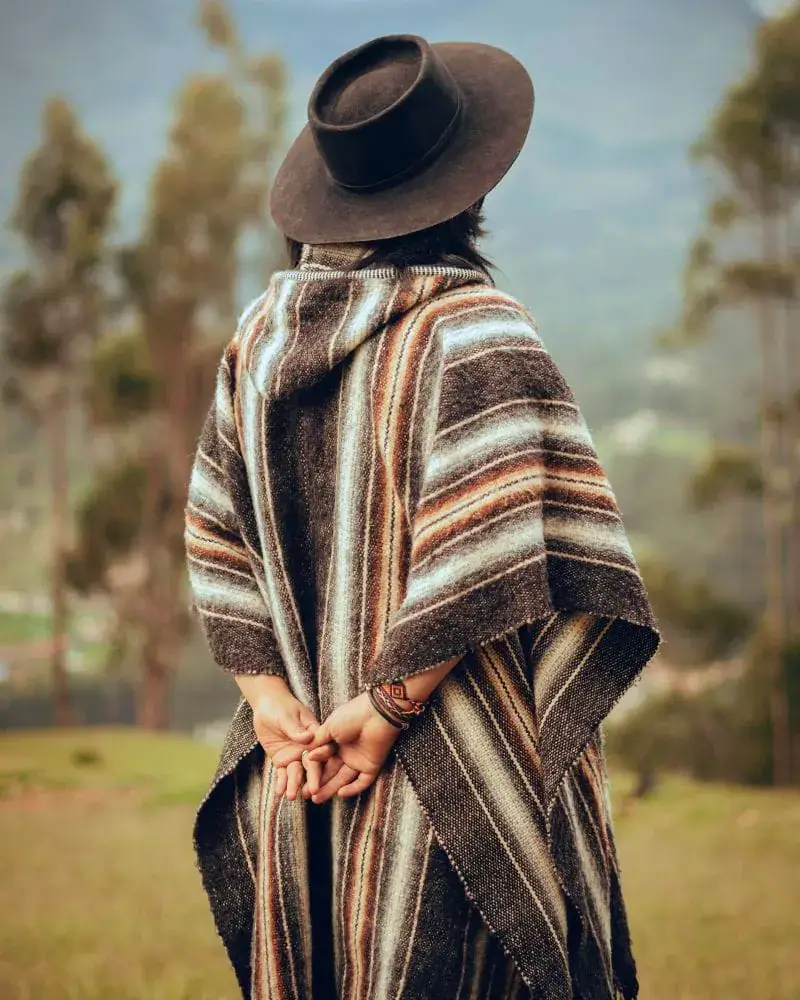
A jorongo (aka gabán) is a sarape with an opening in the center for your head, so it doubles as a poncho.
It has no sleeves, so you can wear it as a poncho or spread it out as a blanket.
7. Mexican Beach, Picnic and Yoga Blankets
- 📍 Where it’s from: Mexico
- 🧶 Made of: Usually cotton, acrylic and polyester blends
- 🛒 Buy it on Amazon
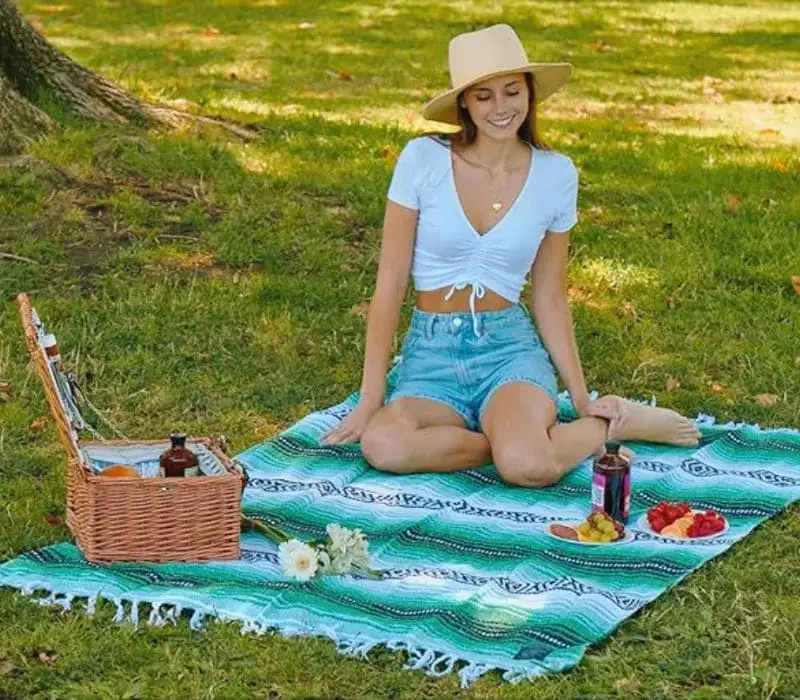
Many falsa-style blankets are sold as yoga, picnic, and beach blankets.
They fold into a firm cushion for yoga, while sand and dirt shake right off them at the beach or park.
The 6 Best Mexican Blankets to Buy
1️⃣ Del Mex Classic Mexican Blanket: A classic striped falsa throw in dozens of colors → Buy it on Amazon
2️⃣ Open Road Goods Saltillo Serape Blanket: A lightweight serape with the classic Saltillo stripe pattern → Buy it on Amazon
3️⃣ El Paso Designs Mexican Yoga Blanket: A colorful falsa that’s a favorite for yoga, with thousands of reviews → Buy it on Amazon
4️⃣ Laguna Beach Textile Co Mexican Blanket: A blue and tan serape that works as a beach blanket or a Mexican throw blanket → Buy it on Amazon
5️⃣ Open Road Goods Heavyweight Falsa Blanket: An extra-thick falsa for the couch, camping or chilly nights → Buy it on Amazon
6️⃣ Del Mex Mexican Serape Poncho: A jorongo-style poncho you can throw on over a sweater → Buy it on Amazon
Want a real Zapotec rug? Buy it straight from the weavers in Teotitlán del Valle, or at the Oaxaca markets.
How to Tell a Real Wool Blanket from Acrylic
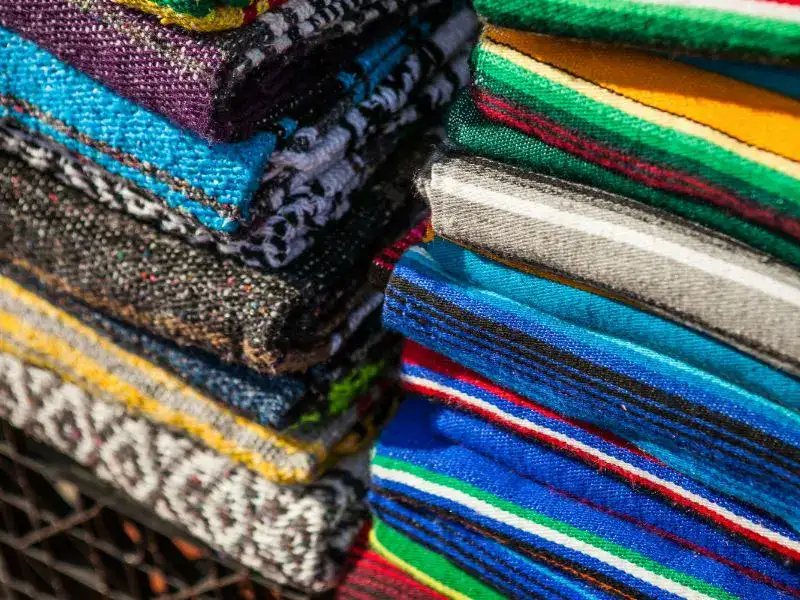
- 🏷 Tag: Check the label or ask the seller what it’s made of.
- ✋ Feel: Wool feels heavier and slightly coarse, while acrylic feels smooth and lighter.
- 🔥 Burn test: A loose wool thread smells like burnt hair, while acrylic melts.
- 💲 Price: Wool takes far longer to weave, so a very cheap “wool” blanket probably isn’t real.
How to Use a Mexican Blanket
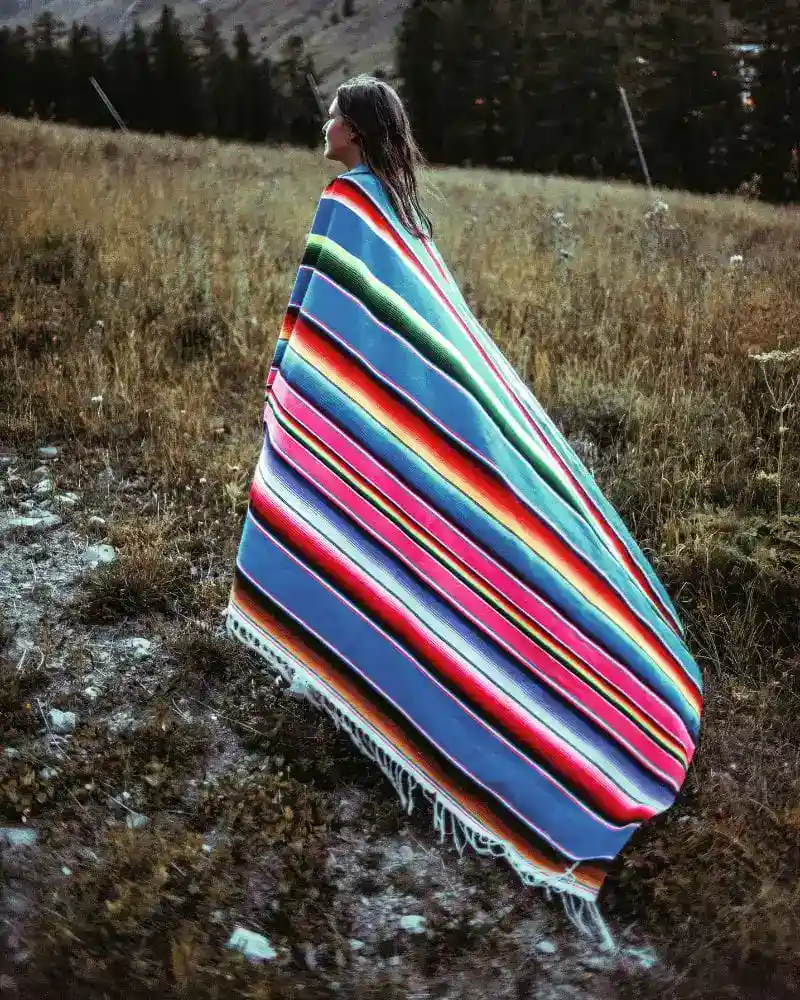
- 🧘 Yoga: Fold it into a firm cushion or bolster
- 🏖 Beach: Spread it on the sand
- 🧺 Picnic: Lay it on the grass
- 🛋 Throw: Drape it over the couch or the foot of the bed
- 🖼 Wall hanging: Hang a wool serape or rug as art
- 🚗 Car seat cover: Protect your seats from sand and pet hair
They also make great gifts from Mexico, and they’re a fun way to bring Mexican folk art home.
How to Wash a Mexican Blanket
Most falsa blankets can be hand-washed in cold water and hung up to dry. Skip the dryer.
Wool serapes and Zapotec rugs need gentler care, so follow the label or the weaver’s advice.
Mexican Blankets FAQ
What are Mexican blankets called?
Mexican blankets go by several names, including falsa, serape (or sarape), jorongo, gabán and cobija.
Cobija is the everyday Spanish word for “blanket,” like what you’d buy at the mall.
What are Mexican blankets made of?
Most falsa blankets are made of recycled cotton blended with acrylic or polyester.
Traditional serapes and Zapotec rugs are made of wool, and ideal for the cooler nights in central Mexico.
Why are Mexican blankets so cheap?
Falsa blankets are cheap because they’re woven from inexpensive recycled fibers.
Handwoven wool serapes and Zapotec rugs take much longer to make, so they cost far more.
Can you wash a Mexican blanket?
Yes, most falsa blankets can be washed in cold water and hung to dry.
For wool blankets, follow the label or the seller’s advice, or ask your local dry cleaner what services they offer for wool items.
Get My FREE Guide: 5 Easy Ways to Save Money in Mexico
Insider tips from someone who’s lived in Mexico since 2018.
