
15 Most Haunted Places in Mexico Sure to Give You the Creeps (#10 Is Called the House of Laments!)

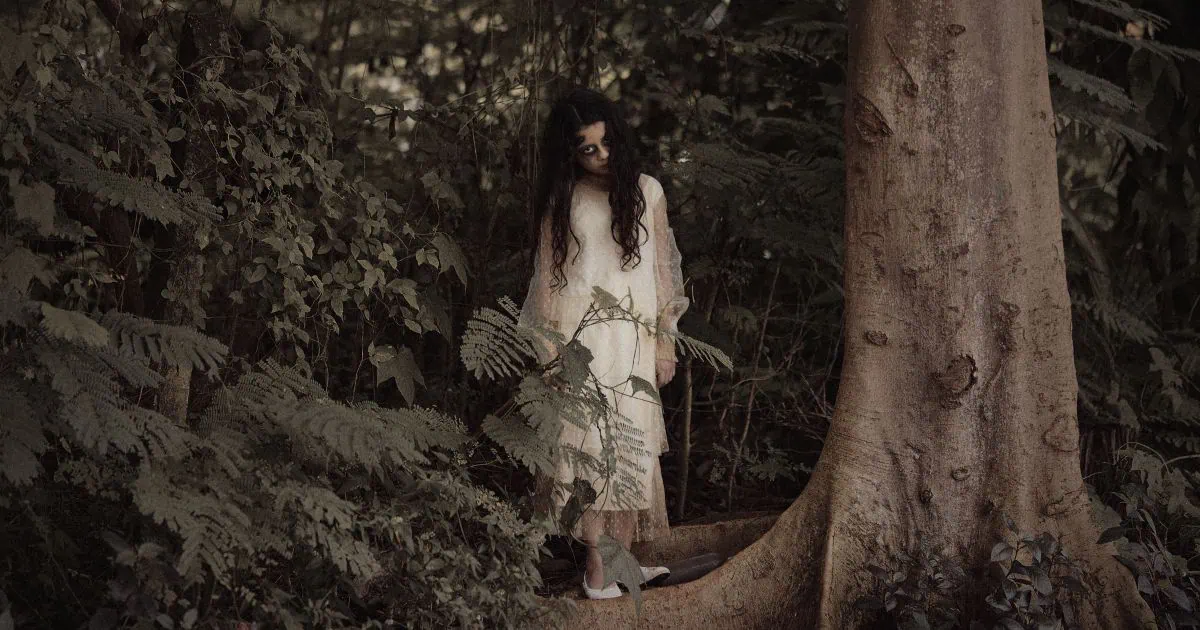

Curious about Mexico’s haunted places?
Some ghost stories about haunted places in Mexico are so eerie they send shivers down the spines of even the bravest souls.
As someone who has lived in Mexico since 2018, and has a penchant for dark tourism, I can tell you first-hand that Mexico is a treasure trove for people interested in paranormal activity, ghost stories, UFOs, and haunted houses.
Amidst the lively atmosphere and bustling streets lined with tourists and locals, there are several places said to be haunted by restless spirits, Mexican demons, and worse.
Ready to explore 15 of the most haunted places in Mexico that promise to give you goosebumps? Then let’s dive in for a spine-tingling adventure like no other!
Visiting in late October or early November? Here’s why Mexicans celebrate Day of the Dead.
Why Is Mexico Said to Be So Haunted?
Mexico’s ghost stories are woven into its history, and a few big reasons come up again and again.
Long before the Spanish arrived, the Aztecs believed the souls of the dead journeyed to Mictlan, the underworld.
The colonial era added centuries of wars, epidemics and executions, along with Catholic tales of restless souls.
Every year, Day of the Dead welcomes the spirits of loved ones back home on November 1 and 2.
Famous legends like La Llorona, the Weeping Woman, are told all over the country. Read more of the scariest Mexican urban legends.
The 15 Most Haunted Places in Mexico
1. Island of the Dolls, Mexico City
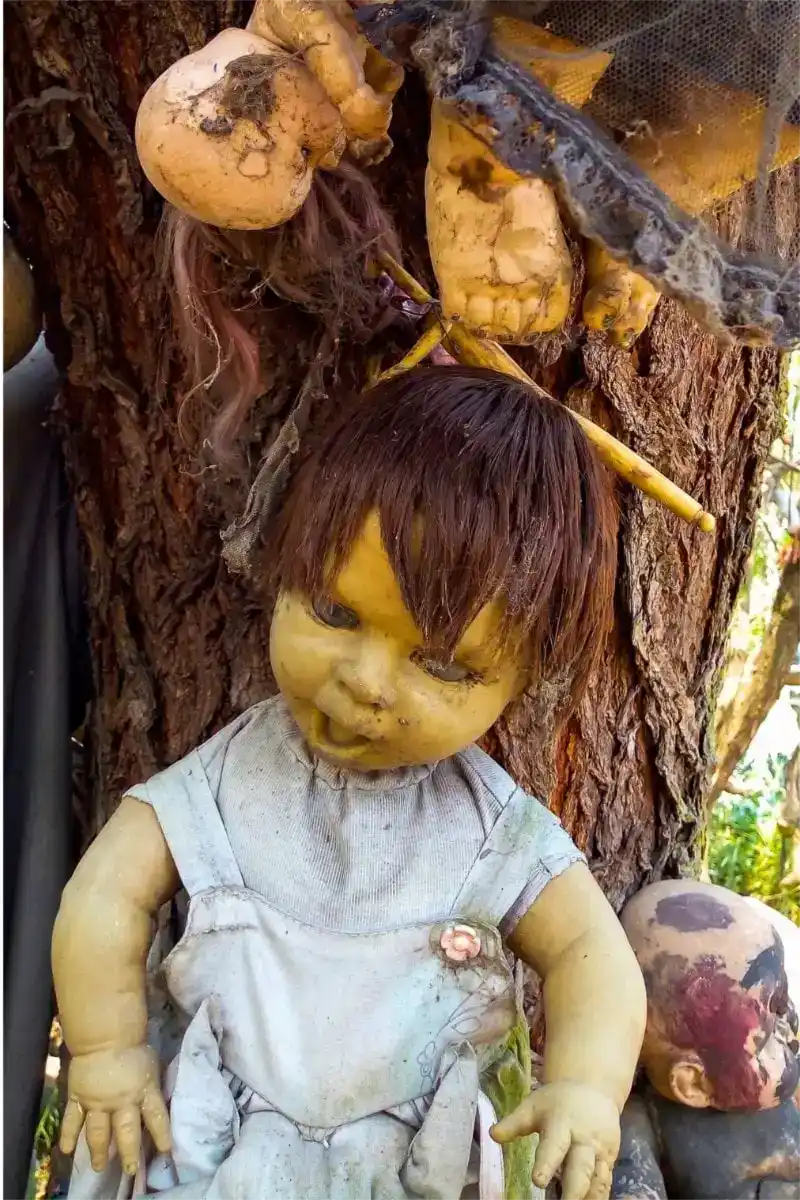
Near the canals of Xochimilco in Mexico City, this island is covered with dolls hanging from trees — and yes, it’s as creepy as it sounds.
👻 Fun Fact: Lady Gaga filmed her music video for “The Dead Dance” at the Island of the Dolls.
It was directed by Tim Burton.
While the decaying dolls are creepy themselves, this haunted island also has a dark and mysterious past that dates back to the 1950s.
The story goes that a resident of the area named Julián Santana Barrera found the corpse of a young girl who had drowned, and hung a baby doll in a tree as a memorial to her.
He claimed her spirit haunted him after that.
To appease the spirit and protect himself, he collected other dolls and hung them around the island.
It is said there are now about 1,000 dolls here.
In a strange twist of fate, Julián died in 2001 of a heart attack — in the same spot where he found the girl’s body.
Today, his dolls remain hanging at La Isla de las Muñecas (The Island of the Dolls AKA Island of the Dead Dolls), and it’s a popular site for dark tourism in Mexico.
There are even tours you can take to go there, like this popular Island of Dolls Tour in Xochimilco.
Planning a visit?
Here’s how to visit the Island of the Dolls, and why it’s called one of the creepiest places on Earth.
2. Mummy Museum, Guanajuato City

I’ve visited the Mummy Museum myself.
The Museo de las Momias (Mummy Museum in Guanajuato City, AKA House of Mummies) has the world’s largest collection of natural, intact mummies — with about 100 on display.
The story behind the museum dates back to 1833, when a deadly cholera outbreak swept through Guanajuato state.
Sadly, the outbreak claimed many lives, resulting in a large number of burials that had to be performed in a short period of time.
A few decades later, Guanajuato’s government imposed a “burial tax,” and started making the living family members pay a tax on their buried loved ones.
Since many relatives couldn’t afford to pay for it, the corpses were exhumed, and they turned out to be mummified from being in the mineral-rich soil from the area.
While there aren’t any explicitly supernatural or gore-filled exhibits, the nature of the museum may disturb some.
3. Hospicio Cabañas, Guadalajara

I’ve visited Hospicio Cabañas in Guadalajara.
The Hospicio Cabañas building is a UNESCO World Heritage Site in Mexico’s second-largest city of Guadalajara.
It has served as an asylum, military barracks, and orphanage — so amidst its stunning architecture and famous murals, its halls hold tales of horror and tragedy.
The most chilling legend involves a large wall clock that would stop ticking whenever a child died in the orphanage.
Talk about sadness and scare!
4. Posada del Sol, Mexico City

Once a grand project by businessman Fernando Saldaña Galván, Posada del Sol now stands abandoned — though it’s one of the best sites in Mexico City for dark tourists and urban exploration.
Due to several mishaps it was never completed, and he took his life in the hotel’s courtyard in 1945 under the weight of insurmountable debts.
According to legend, he cursed the property before he did, and bid it to never be inhabited.
Allegedly, the ghost of Saldaña still haunts the lonely building.
Further adding to the eerie atmosphere is the story of a young girl’s spirit believed to wander the underground chambers.
Those who have dared to enter often leave candies at an altar to show respect and ward off her curse.
5. Tasqueña Metro Station, Mexico City

Part of Mexico’s extensive public transport network, the Tasqueña Station (sometimes spelled Taxqueña Station) is reputedly the spookiest on the Mexico City Metro route.
Mexico City locals (known as Chilangos in Mexican slang) believe the ghost of a man who died here from a severe assault now protects solo travelers from harm.
Unlike other haunted spots, the spirit here is considered friendly — but would you dare to meet this kind spirit when you visit Mexico City!?
6. Colegio Salvatierra, Santa Rosalía
Located in Santa Rosalía, which is one of Mexico’s pueblos mágicos (magic towns) on the Baja Peninsula, this primary school is said to be filled with the sounds of children who died there.
According to stories, the ghost of a young boy who tragically choked on a marble haunts the girls’ bathroom.
Students of the school have reported hearing the sound of marbles rolling around and the boy’s laughter echoing through the halls.
7. Casa de los Tubos, Monterrey

Known as the House of the Tubes, the details of this legend vary depending on the source.
In most stories, the project was started by a father whose daughter was confined to a wheelchair.
He wanted to build a house where she could move around freely.
When construction started, strange events began to occur like bricklayers complaining of eerie sounds and missing tools.
During a party to improve the workers’ morale, one man inexplicably fell from the top of the house to his death, and shortly after, a second fell to his death from a window.
Eventually, the father brought his daughter to the house to see the progress — and she too ended up falling and dying.
Soon after, he abandoned the project.
It is said the ghost of this 11-year-old girl haunts the premises. Passersby have reported seeing her spirit in a window at this unique Mexico landmark.
8. Panteón de Belén, Guadalajara
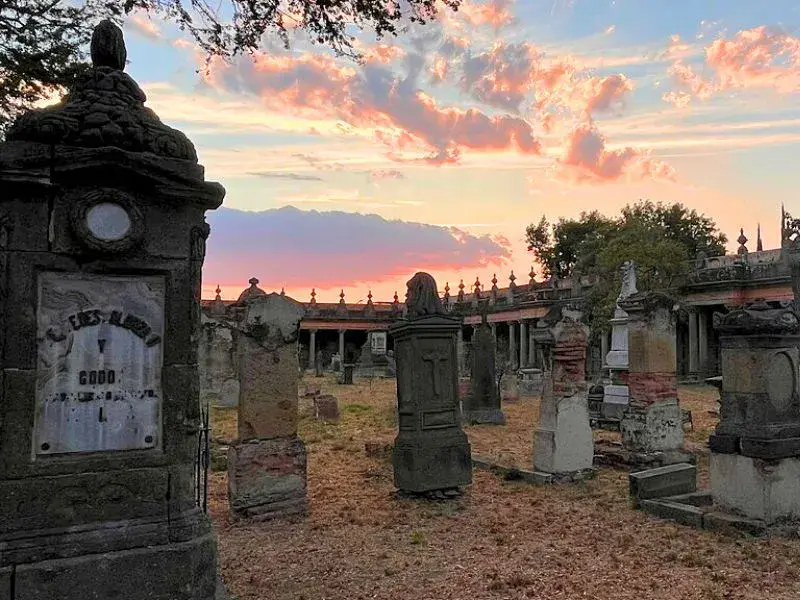
In the heart of Guadalajara lies the Belén Cemetery, which is known for hosting a diverse range of spooky entities — particularly a vampire. 🧛
Local legends say that vigilantes killed a vampire here by driving a stake through his heart (of course).
After his death, they buried the vampire in this cemetery.
Months later, the stone slabs that marked the vampire’s burial spot cracked open, and the stake in his heart grew into a tree.
Today, locals believe that if the tree dies, this zombie vampire monster will return to terrorize the city.
In fact, authorities built a metal gate around the Vampire Tree to keep it safe.
One of the top attractions in Guadalajara, visitors can explore the Museo Panteón de Belén (Belén Cemetery Museum), on both day tours and night tours.
9. Mapimí Silent Zone, Durango

Looking for Mexican paranormal places?
Often called the Bermuda Triangle in Mexico, the desert area in Mapimí Biosphere Reserve is said to be a hotspot for mysterious phenomena.
Radio signals and compasses reportedly fail here, and there are tales of meteorite impacts and extraterrestrial activities.
Some visitors claim to have seen a blonde woman (though some say it’s a man) vanish into thin air after asking for water.
Locals also tell stories of UFOlogical phenomena in the area, including UFO crafts flying overhead and alien-like creatures roaming the land.
10. House of Laments, Guanajuato
There are many legends, most of them quite dark, in the town of Guanajuato City, Mexico — which is also known as one of the most beautiful towns in Mexico.
The house is infamous for the grisly murders committed by Tadeo Mejía, a Mexican serial killer who sought to contact his deceased wife.
Mejía performed human sacrifices in a bid to speak with her.
Today, the Casa de los Lamentos house is a museum where visitors report hearing mysterious sounds and seeing apparitions.
Besides this, some other places to visit in Guanajuato City that appeal to dark tourists include:
- Callejón del Beso (The Alley of the Kiss)
- Casa de la tía Aura (House of Aunt Aura)
- Casa de las Brujas (House of the Witches)
- Calle del Truco (Street of Tricks)
11. Templo Mayor Ruins, Mexico City
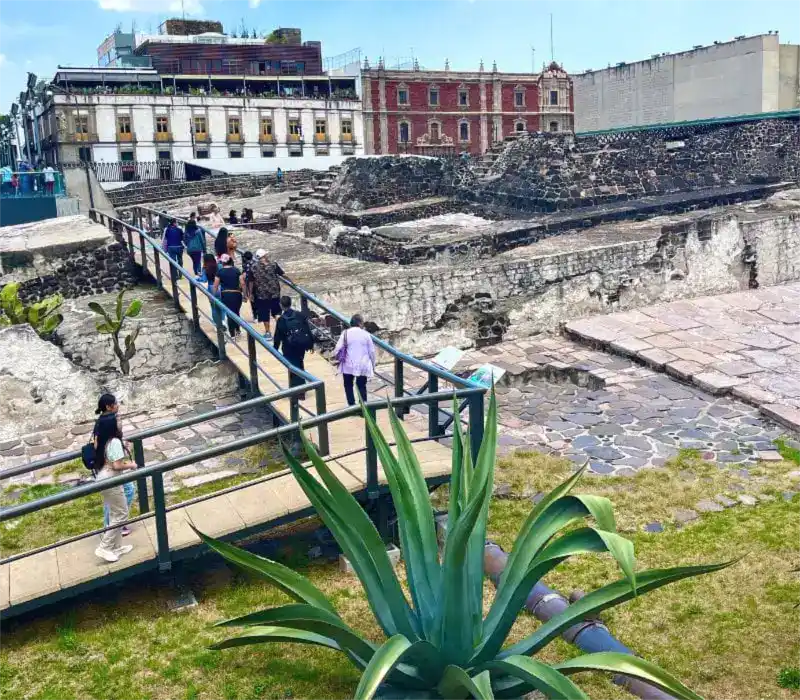
I’ve visited the Templo Mayor ruins.
Centuries ago, the Templo Mayor Aztec Temple was the central temple complex of the mighty Aztec Empire.
After the Spanish conquest of Tenochtitlan (what’s now called Mexico City), it was buried, and the Mexico City Zocalo (Town Square) was built right on top of it.
It has since been excavated and is now one of the top places to visit in Centro Historico (Historic Center), which is in Downtown Mexico City.
During the Aztec time, there were numerous temples here to various gods like Huitzilopochtli (Aztec Sun God) and Tlaloc (Aztec Rain God) — and it’s said thousands of human sacrifices were performed here.
Visitors to this museum report strange sensations, sightings of shadowy figures, and the sounds of cries and voices.
12. Claudia Mijangos House, Querétaro
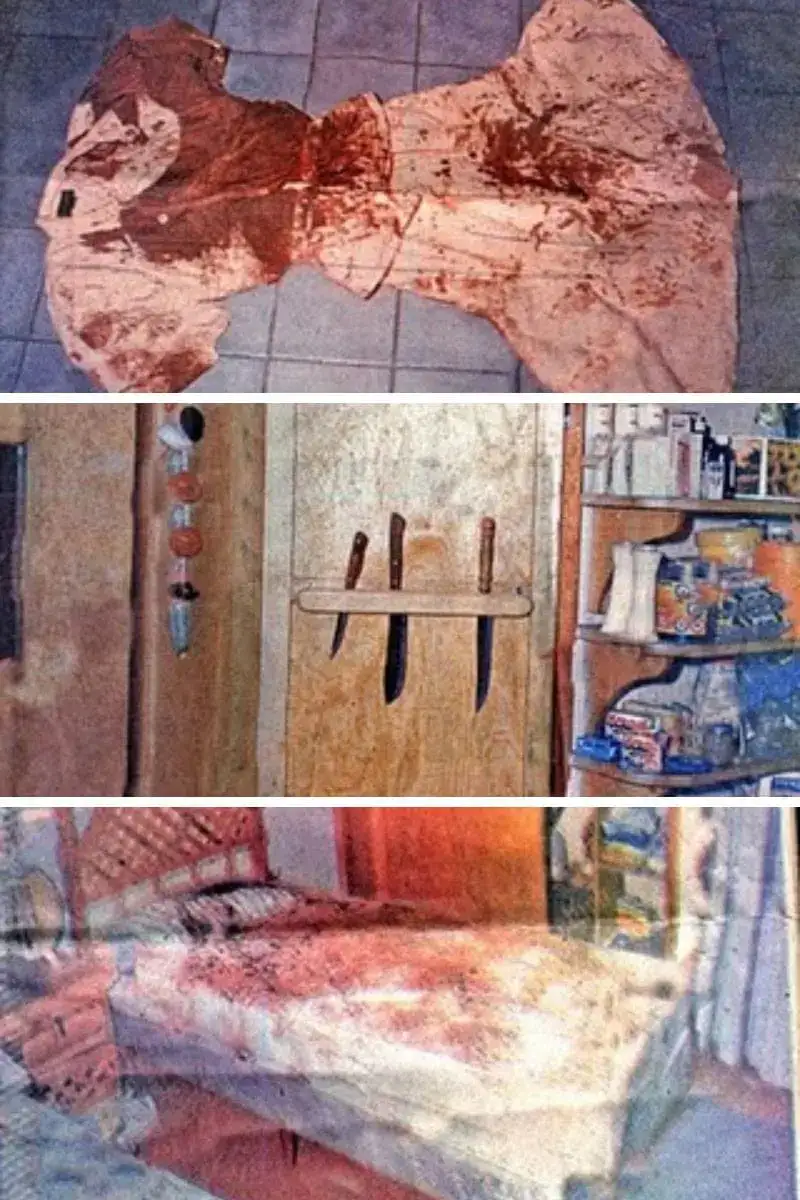
Known as the Hyena of Queretaro, this house is linked to the tragic story of Claudia Mijangos.
Mijangos stabbed her three children to death while they slept in the early hours of April 24, 1989, stating she was possessed by a diabolical entity that made her do it.
She essentially pleaded insanity, was diagnosed with schizoaffective disorder, and sentenced to 30 years in prison.
At the time, that was the maximum penalty for this type of crime in Mexico — and Mijangos was released in 2019 after serving her sentence.
To this day, locals claim to hear screams and see apparitions of the three young children who tragically perished in the house at the hands of their mother.
13. Palacio de Lecumberri, Mexico City
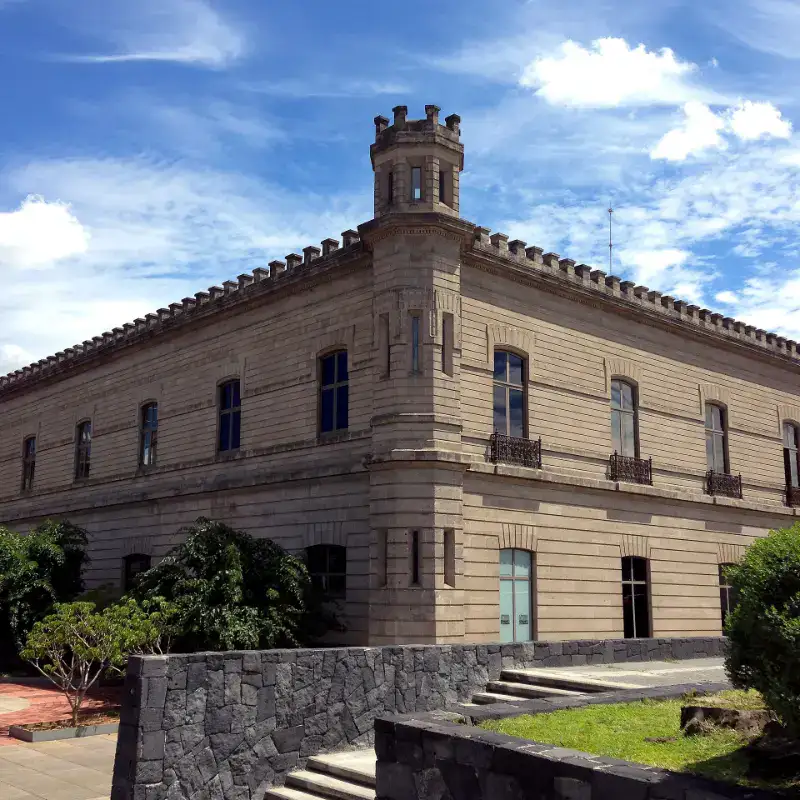
Nicknamed the Black Palace (Palacio Negro), Lecumberri opened as Mexico City’s main prison in 1900.
It held prisoners until 1976, and today it houses Mexico’s national archive, the Archivo General de la Nación.
Its cells were known for harsh conditions, and many inmates suffered behind its walls.
Archive workers on the night shift say they’ve seen shadowy figures and heard footsteps in empty hallways.
One well-known legend tells of Jacinto, a ghost said to appear to a night janitor.
14. Casa de las Brujas, Mexico City
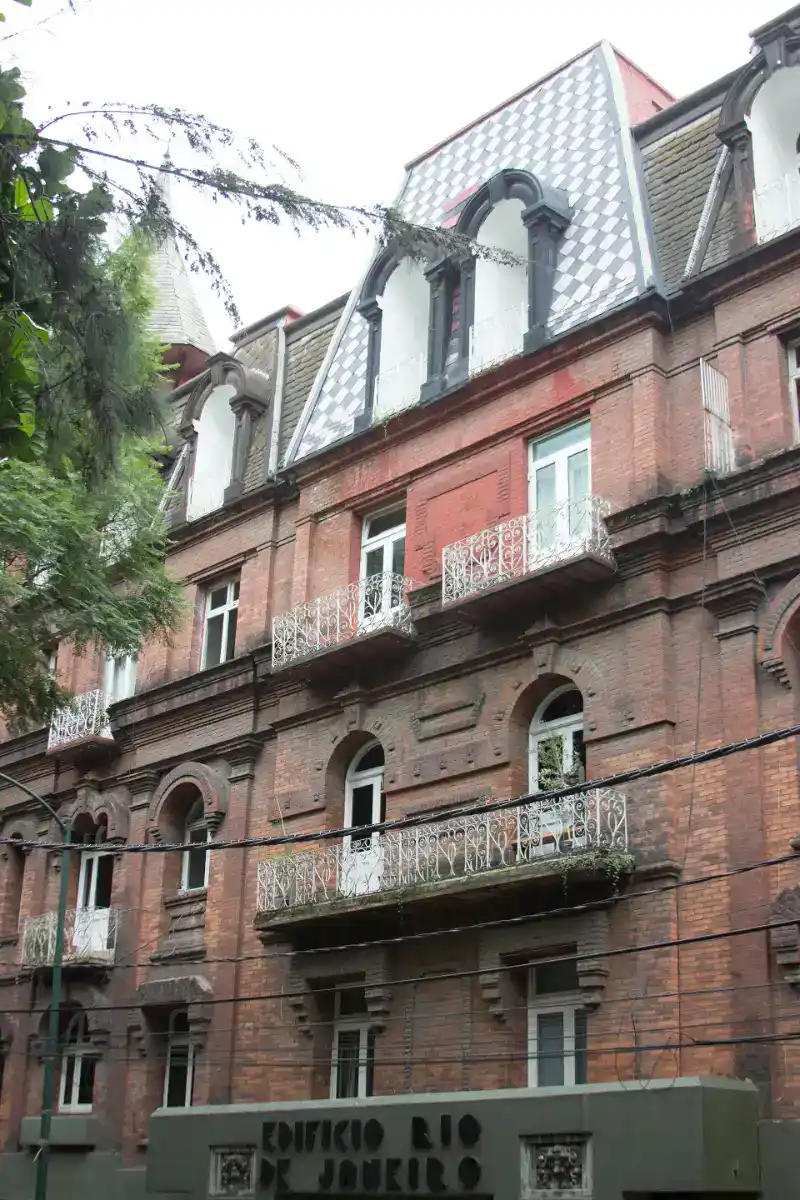
The Edificio Río de Janeiro in Roma Norte is better known as the Casa de las Brujas (House of the Witches).
Built in 1908, its pointed tower looks like a witch’s hat, and its windows seem to form a face.
According to legend, a famous healer named Pachita once lived here and held rituals to call on spirits.
Locals say her spirit still roams the building.
It faces Plaza Río de Janeiro, so you can see it on a walk through Roma Norte.
15. Callejón del Diablo, Mexico City
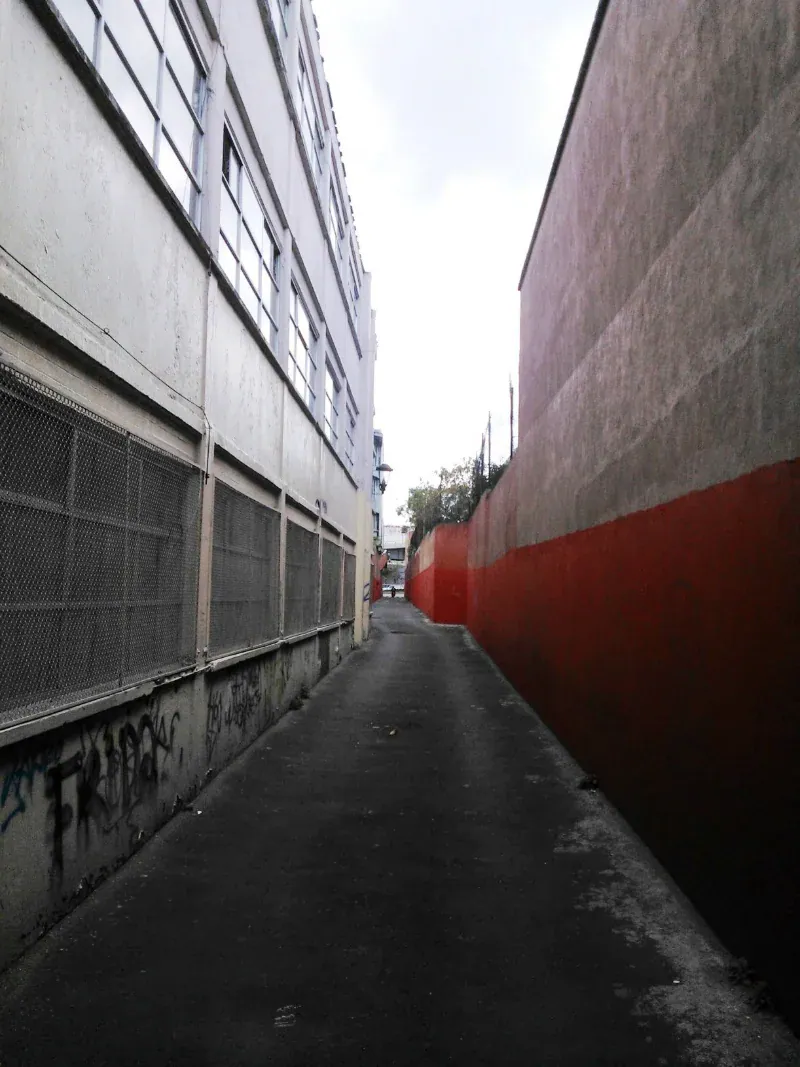
This narrow alley in the Mixcoac neighborhood runs between Avenida Río Mixcoac and Calle Campana.
According to legend, it was once lined with dense trees, and the Devil himself would appear here at night.
Some say he takes the form of a shadow or an owl. Others say he drags away anyone who owes a debt.
Locals also tell of a swindler named Julio whose body was found in the alley, said to be the Devil’s punishment.
Abandoned Places in Mexico
Not every creepy spot in Mexico comes with a ghost story.
These abandoned places feel eerie simply because almost everyone left.
Misnébalam, Yucatán
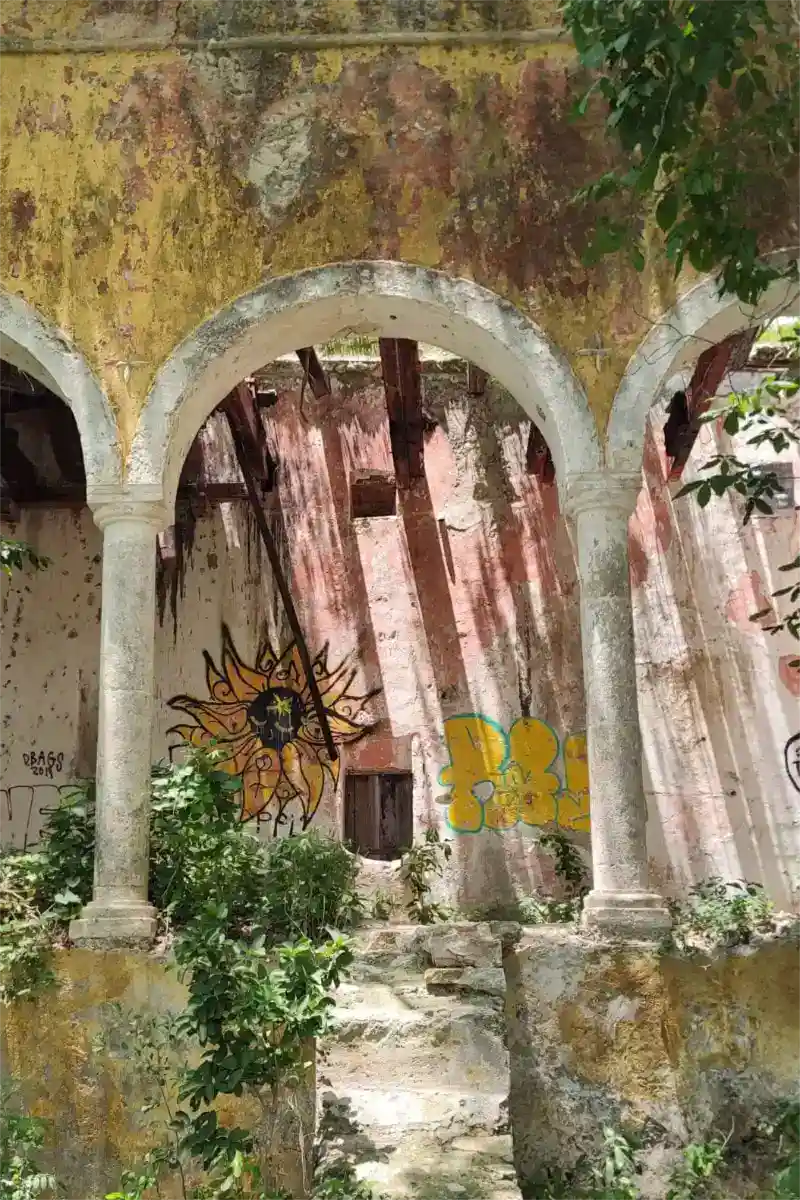
I’ve been to the Misnebalam ghost town near Mérida.
Misnébalam Hacienda is located in the small town of Misnébalam, which means “cat tail” or “jaguar tail” in the Mayan language.
About 45 minutes from the city of Mérida by car, this abandoned village is said to be the only ghost town in Yucatán.
This unique estate, once a fully functional hacienda, was built in the early 20th century, and its last residents had left by about 2005.
Misnébalam was once a bustling site for the production of henequén (rope made from the agave plant).
At its peak, more than 150 people, mostly workers and their families, resided in and around the estate.
Locals say Misnébalam was abandoned due to paranormal occurrences, but a decline in demand for henequén and a water shortage in the area were the likely culprits.
Today, it is said two ghosts haunt Misnébalam: Julián, a 9-year-old boy who took his own life at the hacienda, and the ghost of a priest or monk whose story is unknown.
I visited Misnébalam Hacienda to find out for myself, but didn’t see or hear any ghosts; just other curious tourists.
Locals say the area has also been used by various religious cults, evident from runes spray painted on the walls and remnants of candles and other ritual instruments.
Real de Catorce, San Luis Potosí
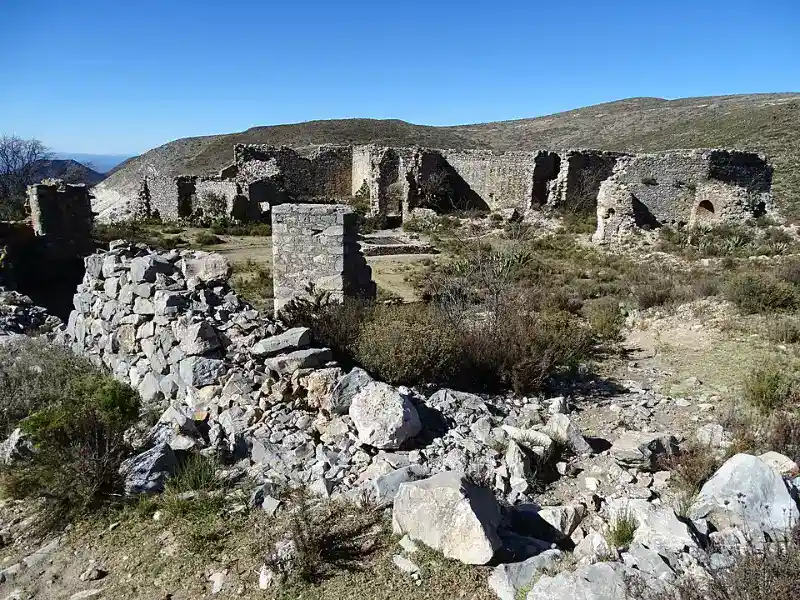
Silver was discovered here in 1772, and by the late 1800s, about 15,000 people lived in town.
After silver prices crashed in the early 1900s, it was almost completely abandoned.
Today it’s a pueblo mágico with only about 1,000 full-time residents, and ruined mine buildings still stand outside town.
To get in, you drive through the Ogarrio Tunnel, which is about 1.5 miles (2.4 km) long.
San Juan Parangaricutiro, Michoacán
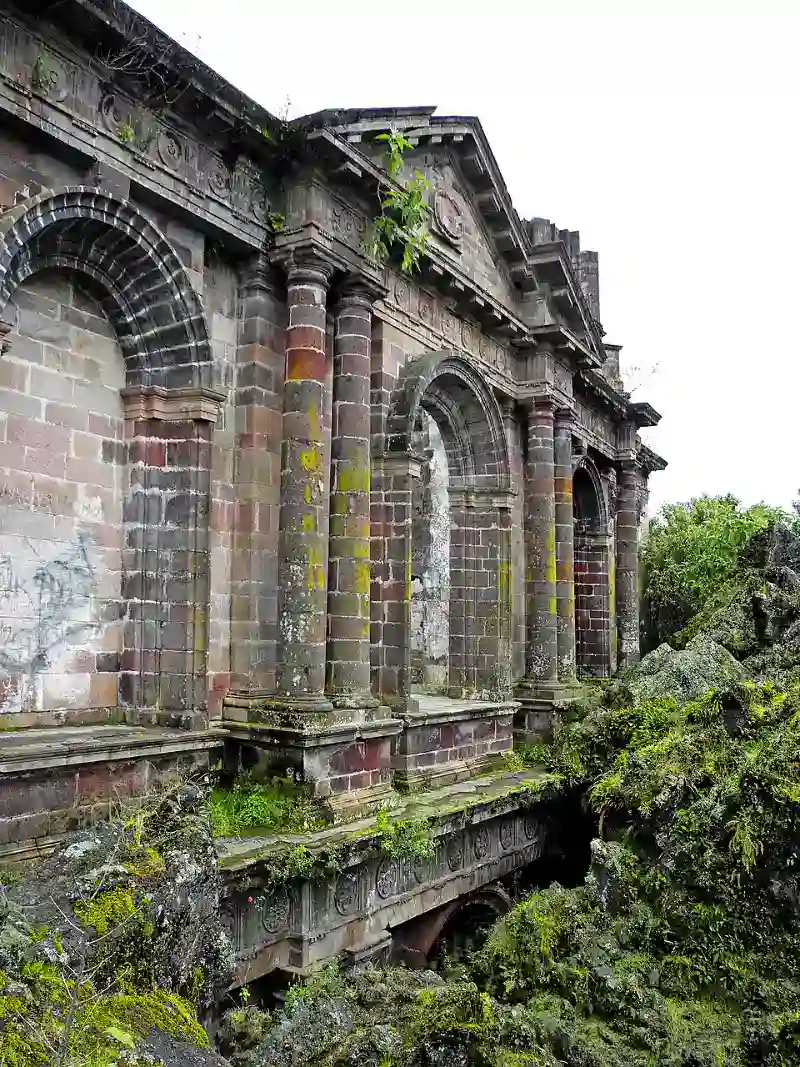
In 1943, the Paricutín volcano was born in a nearby cornfield.
By 1944, its lava had buried the town of San Juan Parangaricutiro, and everyone had to leave for good.
Only the upper part of its church still rises above the black lava field.
Today, the ruined church is a pilgrimage site and one of the strangest sights in Michoacán.
Mineral de Pozos, Guanajuato
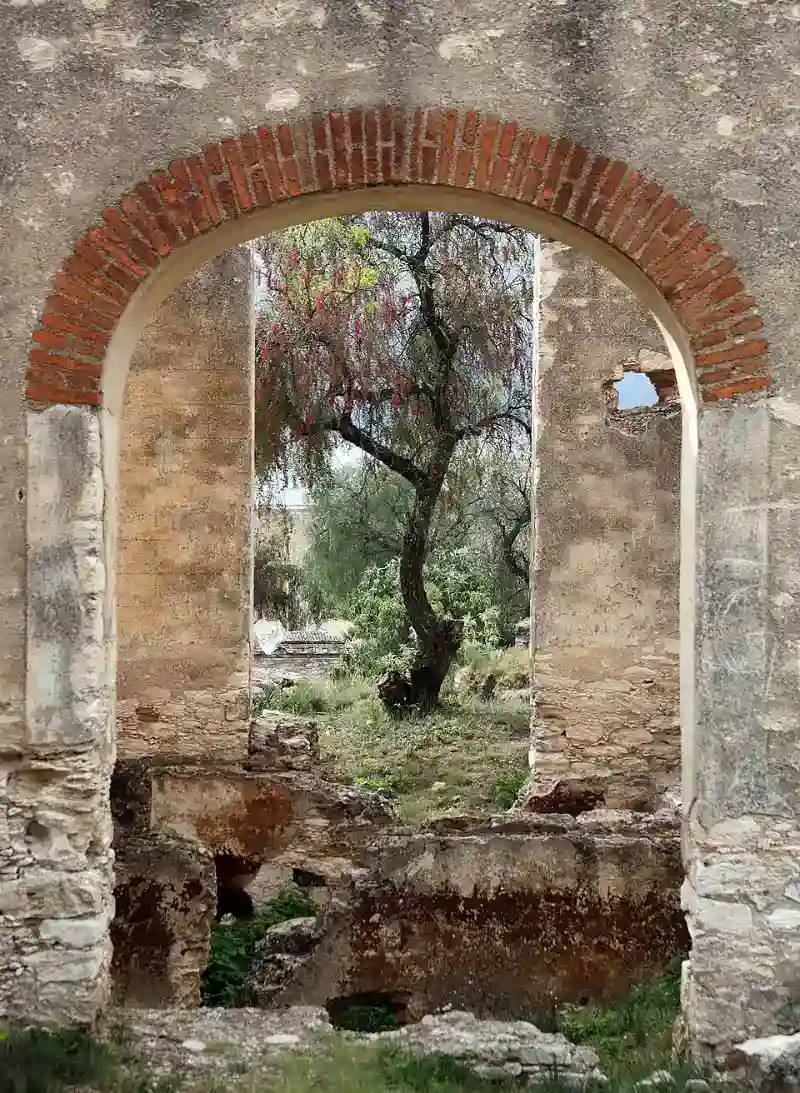
Mineral de Pozos was a busy mining town until its mines gave out and most people left.
Its roofless stone houses and the old Jesuit ovens at the Santa Brígida mine make it feel like a ghost town.
Ojuela, Durango
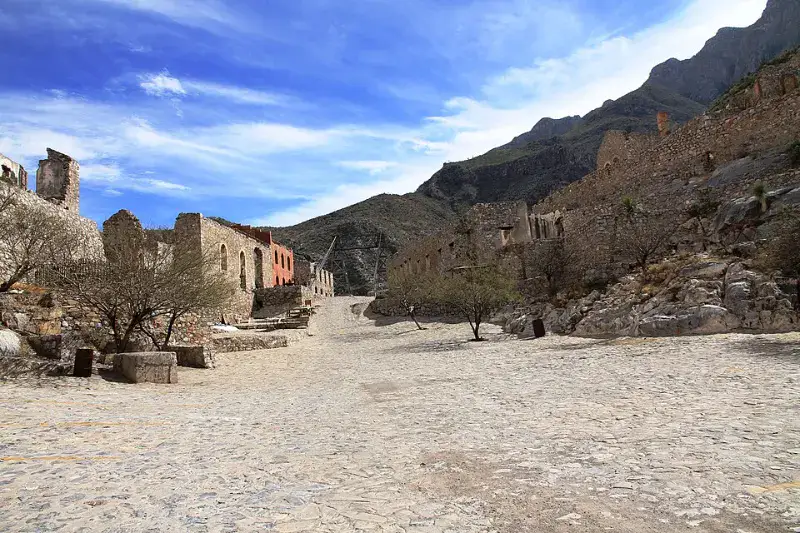
Ojuela is an old mining town near Mapimí, Durango, and today it’s a ghost town.
It’s famous for the Puente de Ojuela, a suspension bridge built in 1892 to carry ore from the mines.
The bridge is about 1,040 feet (318 m) long and hangs over a ravine about 310 feet (95 m) deep.
Frequently Asked Questions About Haunted Places in Mexico
What is the most haunted place in Mexico?
The Island of the Dolls (La Isla de las Muñecas) in Xochimilco, Mexico City, is often called the most haunted place in Mexico.
Other places often named as Mexico’s most haunted include the Mummy Museum in Guanajuato and Lecumberri in Mexico City.
The Aztec ruins of the Templo Mayor are said to be haunted, too — learn about the site on the official INAH Templo Mayor page.
Are there ghost towns in Mexico?
There are a few Mexico ghost towns like Misnébalam in the Yucatan Peninsula, Real de Catorce in San Luis Potosí state, and Nuevo San Juan Parangaricutiro in Michoacan state.
What is the abandoned city in Mexico?
El Cóporo — Located in present-day San José del Torreón, Guanajuato, Mexico, this abandoned Mesoamerican city was built more than 1,500 years ago.
A pre-Hispanic settlement with a civic ceremonial center and rooms where ordinary people lived, El Cóporo is associated with the Tunal Grande culture.
Distinguished by ancient architecture, the site is surrounded by a natural wall with rock formations.
Who is La Llorona in Mexico?
La Llorona, Spanish for “the Weeping Woman,” is a frightening figure from Mexican folklore and contemporary Mexican horror stories (like this La Llorona movie).
According to legend, she drowned her children in a jealous fit of rage after she found out her husband was cheating on her.
Regretting her choice, this heartbroken woman is now damned to haunt the night, especially by waterways.
It’s arguably the most famous Mexican horror story of all time.
What does it mean if you see La Llorona?
She’s a malevolent spirit always heard weeping for her children, so you should run the opposite way if you hear or see La Llorona because she brings misfortune.
What ghost is similar to La Llorona?
La Planchada, Spanish for “the Ironed Lady,” is similar to La Llorona (though they aren’t the same).
Contrary to what some people assume because of the legend’s title, La Planchada was not a woman who was crushed to death by iron.
Rather, this Mexican ghost woman haunts hospitals, and is known for wearing an old-fashioned, ironed nurse’s uniform.
What is the Mexican shapeshifting creature?
In Mesoamerican folk religions from Mexico and other places, a nagual (pronounced nah-wall) is a human who can shape-shift into their animal counterpart.
Get My FREE Guide: 5 Easy Ways to Save Money in Mexico
Insider tips from someone who’s lived in Mexico since 2018.
