
12 Terrifying Mexican Urban Legends That Will Haunt You Forever

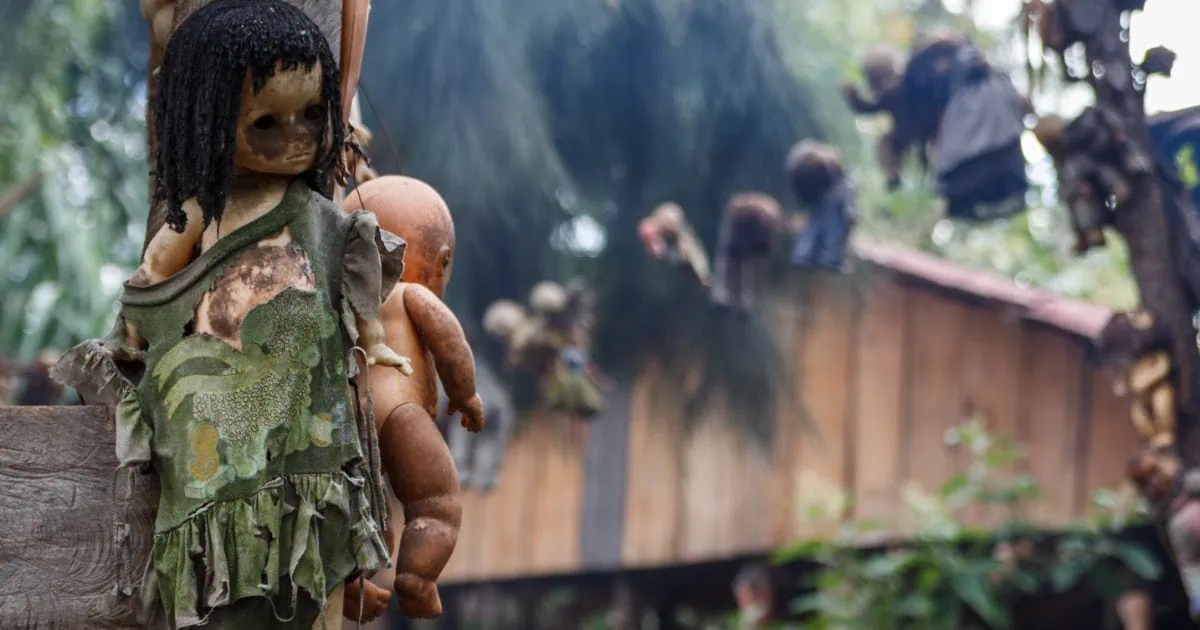
Mexico’s most famous urban legends include La Llorona (the Weeping Woman), the chupacabra, the Island of the Dolls and La Lechuza, the witch owl.
👻 Many mix Aztec and Maya beliefs with Spanish folklore, and parents still tell some of them to keep kids in line.
Here are 12 of the scariest Mexican legends, myths and folklore creatures, and the stories behind them.
Disclosure: This article may contain affiliate links, meaning when you make a purchase, I earn a small commission. Affiliate links cost you nothing to use, and help keep my content free. It’s a win-win for us both. For more info, see the Disclosure Policy.
1. The Weeping Woman: La Llorona

La Llorona, or “The Weeping Woman,” is one of Mexico’s most famous and scary legends.
The story is about a woman who, in a moment of anger and sadness, drowned her children.
Now, she roams the earth, crying for her lost kids. People say they can hear her ghostly cries near rivers and lakes; seeing her is a bad omen.
La Llorona’s story is more than a ghost tale; it shows deep cultural fears and past traumas.
The legend has been told for generations, adding more horror each time. It warns about the dangers of strong emotions and the never-ending pain of a grieving mother.
Today, La Llorona is popular in movies, books, and songs. Her story still scares and fascinates people, proving that some legends never die.
2. The Chupacabra: Bloodsucking Beast

The Chupacabra, or “Goat Sucker,” is a newer legend, first reported in the 1990s.
This creature is said to attack farm animals, sucking their blood and leaving dead bodies behind.
People describe the Chupacabra differently, but it often resembles a reptile with spines on its back.
The Chupacabra legend taps into our fear of the unknown and wild animals.
Many have tried to find out what it is, with some saying it’s just wild animals or secret government experiments.
Even without proof, the Chupacabra remains a scary and mysterious figure.
3. The Island of the Dolls: Isla de las Muñecas

Isla de las Muñecas, or the Island of the Dolls, is a creepy place in the canals of Xochimilco, near Mexico City.
The island is covered with hundreds of dolls, many broken and old, hanging from trees and buildings.
The story says that the island’s caretaker, Don Julian Santana, started collecting the dolls to calm the spirit of a drowned girl he found in the canal.
The Island of the Dolls shows one man’s descent into madness.
Visitors often feel a spooky presence on the island, and some say the dolls’ eyes follow them.
This strange place has become a popular tourist spot, attracting those interested in the bizarre and supernatural.
4. The Legend of El Sombrerón
El Sombrerón, or “The Man with the Big Hat,” is a figure that mixes the supernatural and the sacred.
He is often described as a short man with a large hat and silver spurs who enchants young women with his music and dancing.
Once captivated, these women fall into a trance, unable to eat or sleep.
The legend of El Sombrerón warns about the dangers of vanity and the seductive power of the unknown.
It reflects fears about losing control and the vulnerability of the human mind.
The story has been used to explain mysterious illnesses and behaviors, adding a moral lesson to the myth.
5. The Aluxes: Mischievous Spirits

Aluxes are small, elf-like creatures from Mayan mythology, believed to live in the forests and caves of the Yucatán Peninsula.
These spirits are known for their playful tricks on humans but can also be protective if their territory is respected.
The belief in Aluxes shows Mexican culture’s deep connection between nature and the supernatural.
These spirits remind us that the land is alive and magical.
The legend teaches the importance of respecting nature and its unseen forces.
6. The Nahuales: Shape-Shifting Sorcerers

Nahuales are shape-shifting sorcerers from Aztec mythology who are believed to transform into animals like jaguars, eagles, or coyotes.
The Nahuales symbolize humans’ dual nature, embodying both the civilized and the wild.
They show that humans are part of nature, not separate from it.
The legend also highlights the belief in the spirit’s power to transform and transcend physical form.
7. The Legend of La Planchada
La Planchada, or “The Ironed Lady,” is a ghostly figure said to haunt hospitals in Mexico.
According to the legend, she was a nurse who fell in love with a doctor, only to be betrayed and abandoned.
In her grief, she neglected her duties, leading to the deaths of several patients.
Now, her spirit roams the halls, tending to the sick to make up for her past mistakes.
Reports of encounters with La Planchada continue, with many claiming to have seen her ghostly figure or felt her presence.
8. The Legend of El Charro Negro

El Charro Negro, or “The Black Horseman,” is a figure that represents the darker side of Mexican folklore.
He is often depicted as a tall, dark figure dressed in black charro attire, riding a black horse.
According to the legend, El Charro Negro appears to those who have made a pact with the devil, coming to collect their souls.
9. The Legend of La Pascualita
La Pascualita is a mannequin that has stood in the window of a bridal shop in Chihuahua for over 80 years.
According to the legend, the mannequin is the embalmed body of the shop owner’s daughter, who died tragically on her wedding day.
Many believe that La Pascualita’s lifelike appearance and the mysterious circumstances surrounding her origin are evidence of this macabre tale.
Visitors to the shop often report feeling an eerie presence and claim that La Pascualita’s eyes follow them.
10. The Legend of El Cucuy

El Cucuy, also known as El Coco, is a mythical monster Mexican parents use to scare their children into good behavior.
Described as a boogeyman-like figure, El Cucuy is said to hide in closets or under beds, waiting to snatch misbehaving children.
The legend serves as a tool for discipline, instilling fear and obedience in young minds.
Despite its scary nature, the legend of El Cucuy has been embraced in popular culture, appearing in books, movies, and TV shows.
11. The Legend of La Lechuza
La Lechuza is a witch who can transform into an owl, often depicted as a large bird with the face of a woman.
According to the legend, La Lechuza preys on those who wronged her, using her supernatural abilities to get revenge.
Her eerie cries are said to be a warning of impending doom.
Owls in general are seen as bad luck in Mexico. 👉 More: Mexican Superstitions List
The story of La Lechuza reflects fears about the power of the supernatural and the consequences of wrongdoing.
12. The Legend of El Cadejo

El Cadejo is a mythical creature that appears as a large, ghostly dog, often described as either black or white.
According to the legend, the black Cadejo is evil, bringing bad luck and death, while the white Cadejo is good, offering protection and guidance.
The dual nature of El Cadejo reflects the complex interplay between good and evil in Mexican folklore.
The Evolution of Urban Legends in Modern Culture

Urban legends are not static; they change over time, adapting to new cultural contexts and technological advancements.
The legends discussed in this article have been reimagined in various forms, from books to movies, reflecting modern concerns and fears.
This evolution shows the dynamic nature of folklore and its ability to stay relevant in a rapidly changing world.
The continued relevance of these legends shows their ability to capture the imagination and teach important lessons.
They offer a way to explore complex themes and emotions, providing a sense of continuity and connection to the past.
Mexican Urban Legends FAQ
What is the most famous Mexican legend?
La Llorona, the Weeping Woman, is the best-known Mexican legend.
She’s said to wander near rivers at night, crying for the children she drowned.
👉 Full story: The Legend of La Llorona
What are some Mexican mythical creatures?
The best-known Mexican folklore creatures include the chupacabra, La Lechuza (a witch who turns into an owl), nahuales (shape-shifters), aluxes (Maya spirits) and El Cadejo (a ghostly dog).
What is the scariest Mexican legend?
Most people would say La Llorona.
The Island of the Dolls in Xochimilco is the scariest one you can actually visit.
Are Mexican urban legends part of Day of the Dead?
Not directly. Day of the Dead honors loved ones who have died, and it’s joyful rather than scary.
👉 Here’s how the two holidays differ: Day of the Dead vs Halloween
Conclusion: Mexican Urban Legends
Mexican urban legends and myths offer a fascinating glimpse into the cultural psyche, reflecting deep-seated fears, values, and aspirations.
The legends discussed in this article highlight the rich tapestry of Mexican folklore and its ability to capture the imagination and teach important lessons.
As these stories continue to evolve, they will remain a vital part of cultural identity, offering a way to explore complex themes and emotions.
By examining these legends, we can better understand ourselves and the world around us, recognizing the lasting power of folklore to shape our understanding of the world and our place within it.
