
17 Types of Mexican Tamales You Need to Try (#11 Will Feed the Whole Party)

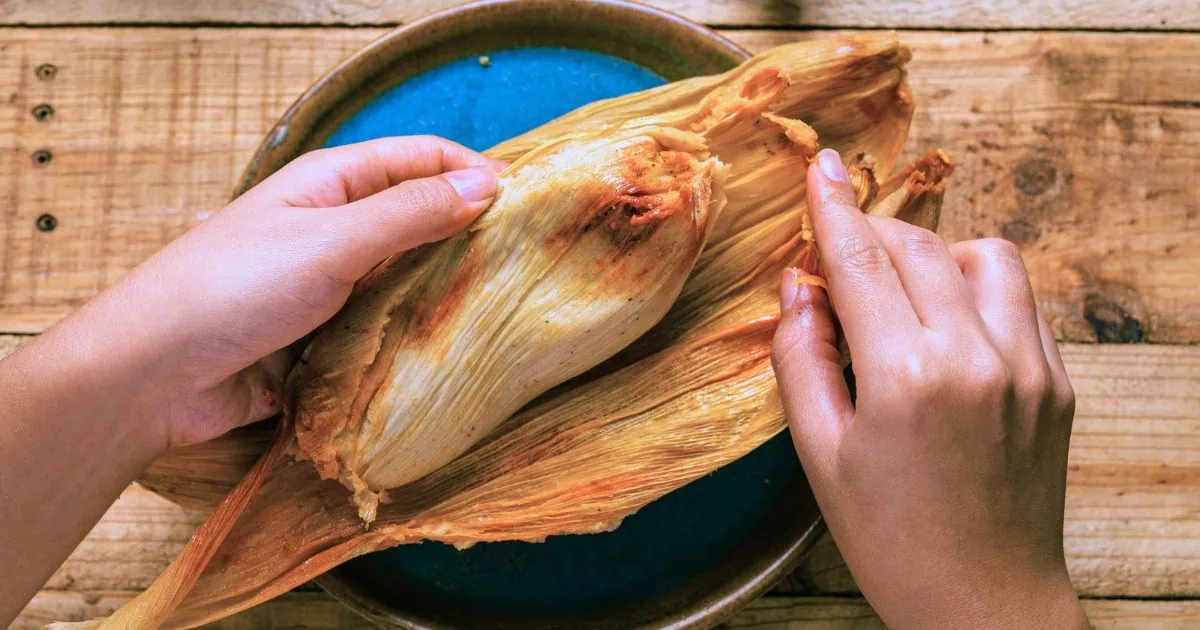
Looking for the best Mexican tamales?
I’ve called Mexico home since 2018, and my three favorite tamales are corundas, tamales oaxaqueños and zacahuil.
Mexico has hundreds of kinds of tamales, and almost every region makes its own.
Here are 17 types of Mexican tamales to try, and where in Mexico to eat each one.
The 17 Best Types of Mexican Tamales
1. Tamales de Hoja de Maíz (Corn Husk Tamales)

- 🫔 What’s inside: Pork or chicken in salsa verde, red chile sauce or mole, or rajas with cheese
- 🌽 Wrapped in: Dried corn husk
- 📍 Where to try it: Street carts and tamalerías in Mexico City and central Mexico
This is the everyday tamal of Mexico City and central Mexico. It’s steamed in a dried corn husk until the masa is soft and fluffy.
Street carts and tamalerías (tamale shops) sell them in the morning, often with a cup of hot atole.
When the sun goes down, the vendors come back out at night to sell again, and these are the four fillings you’ll see most often.
1️⃣ Tamales Verdes
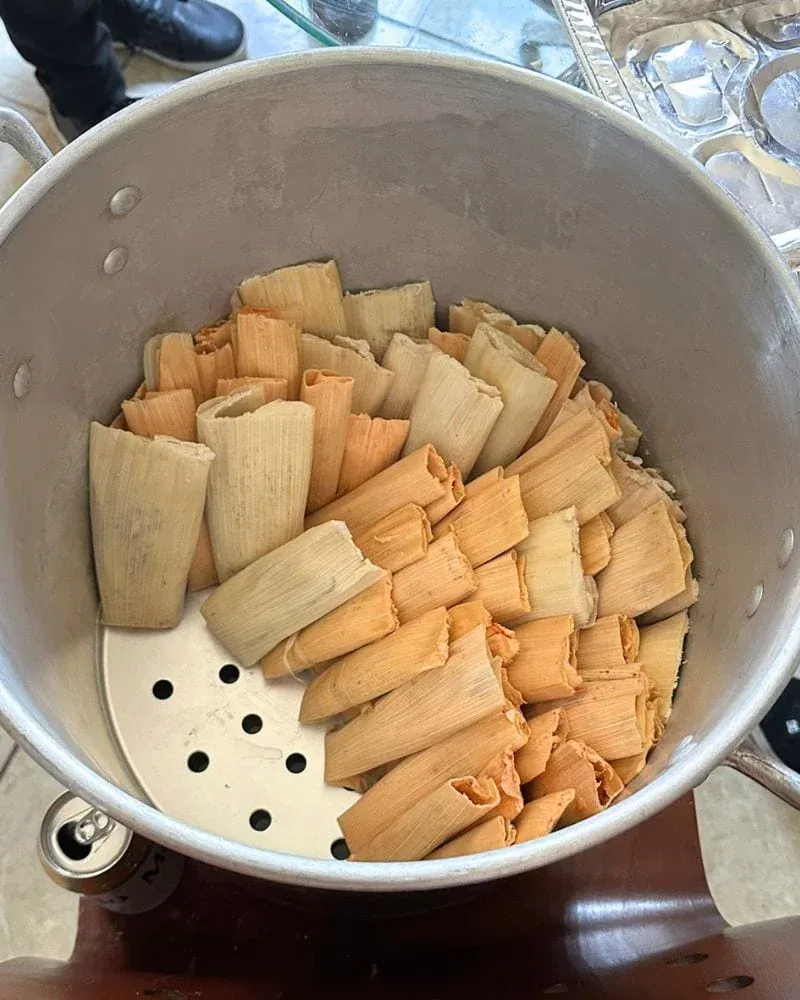
Tamales verdes are filled with chicken or pork simmered in a tangy salsa verde (green salsa).
The salsa is made with tomatillos (green tomatoes) and green chiles, and has a nice tang thanks to the tomatillos.
2️⃣ Tamales Rojos
Tamales rojos are filled with pork in salsa roja (red salsa) made with dried chiles. Sometimes, you’ll find these made with chicken.
3️⃣ Tamales de Rajas con Queso
These are filled with strips of roasted poblano pepper (rajas) and cheese (queso); usually queso oaxaca (quesillo).
They’re the go-to meat-free option, but are not usually vegetarian or vegan because the masa (corn dough) is made with pork lard.
4️⃣ Tamales de Mole
Tamales de mole are filled with chicken in a rich, dark mole sauce that uses chocolate and chili peppers for a sweet-spicy balance.
2. Tamales Oaxaqueños
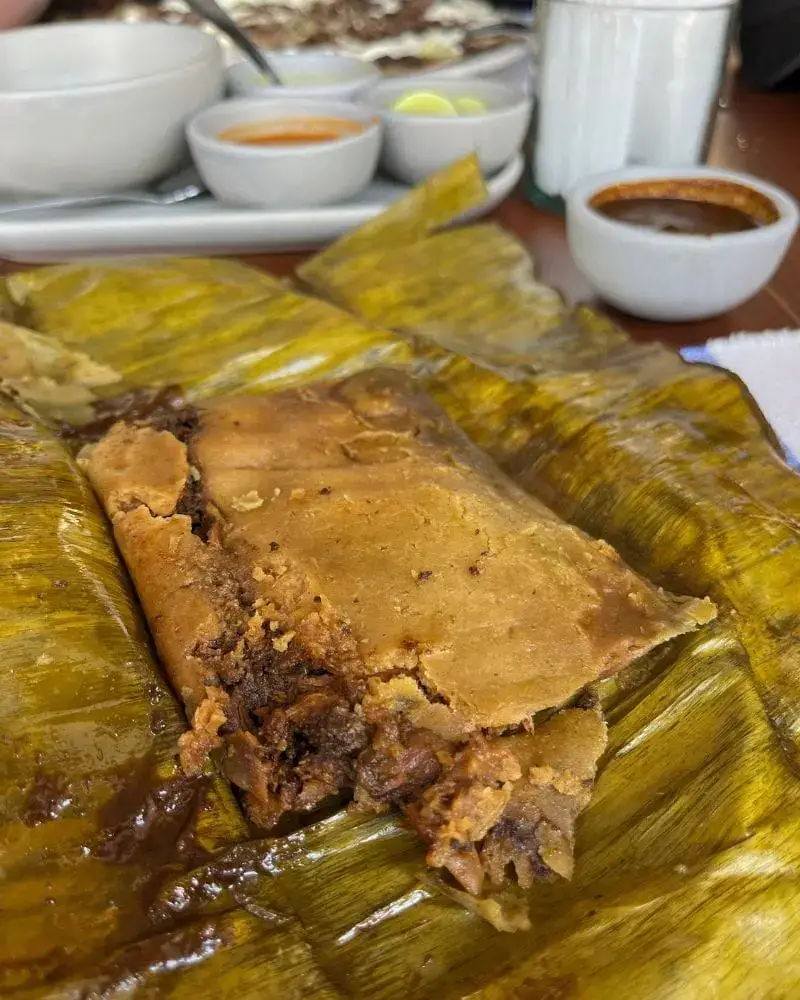
- 🫔 What’s inside: Chicken or pork in mole negro
- 🌽 Wrapped in: Banana leaf
- 📍 Where to try it: Oaxaca City and markets across Oaxaca state
Tamales oaxaqueños are wrapped in banana leaves instead of corn husks. The leaf keeps the masa soft and gives it a light, earthy aroma.
The classic filling is chicken or pork in mole negro, Oaxaca’s famous black mole.
Tamales oaxaqueños with mole are my second favorite Mexican tamal variety, and that’s because I absolutly adore the moles of Oaxaca.
3. Corundas
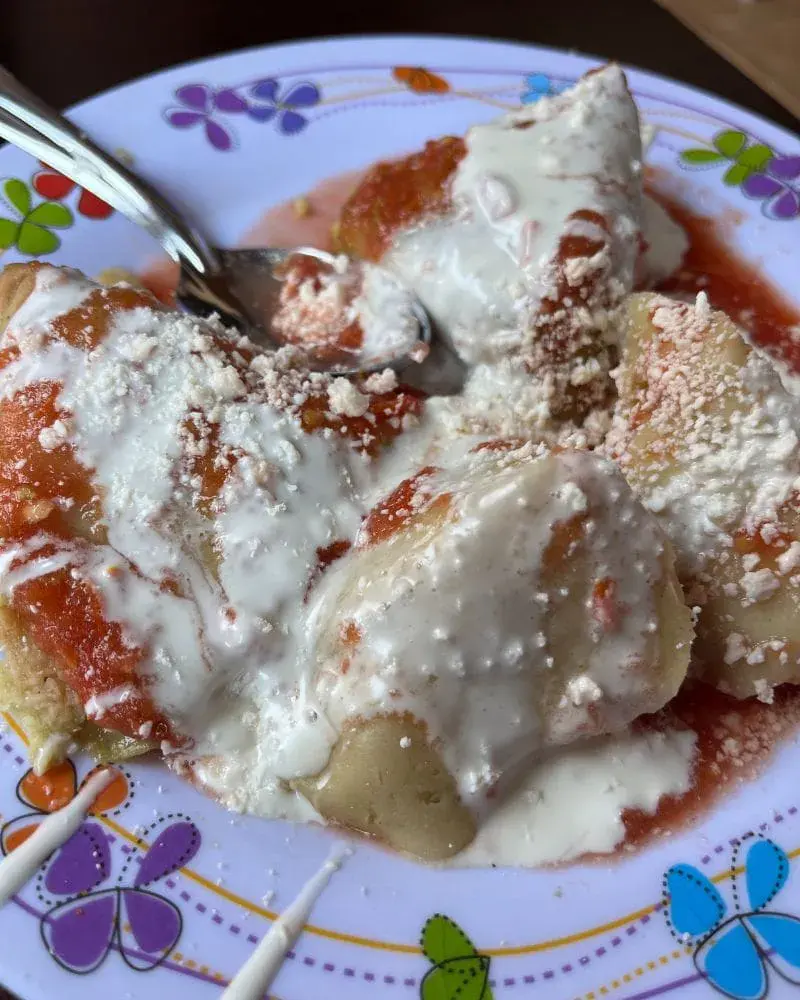
- 🫔 What’s inside: Usually just masa, topped with cream, salsa and cheese
- 🌽 Wrapped in: The long, green leaves of the corn plant
- 📍 Where to try it: Markets and fondas across Michoacán
Corundas are my favorite tamal, and sadly, so few people have heard of them or tried them.
Michoacán’s triangle-shaped tamales, corundas are near-impossible to find outside of that state.
I tried them in Morelia, as well as ucheops, sopa tarasca, carnitas, and gaspacho, and realized Michoacán has one of Mexico’s best regional cuisines.
Corundas (aka Michoacán tamales) come wrapped in the long leaves of the corn plant; not in corn husks.
When served, they get unwrapped and topped with creama (sour cream), red tomato salsa and crumbled aged cheese.
4. Tamales Dulces

- 🫔 What’s inside: Sweet pink masa with raisins
- 🌽 Wrapped in: Corn husk
- 📍 Where to try it: Tamal stands in Mexico City
Tamales de dulce are the sweet tamales of central Mexico. Their masa is tinted pink and mixed with sugar and raisins.
Some versions are made with pineapple instead, but the pink tamales seem to be more widespread.
5. Tamales de Elote

- 🫔 What’s inside: Fresh sweet corn, usually with no filling
- 🌽 Wrapped in: Corn husk
- 📍 Where to try it: Jalisco, Sonora and markets across Mexico
Tamales de elote are sweet corn tamales that are made with fresh corn instead of dried masa.
They’re naturally sweet, and some cooks add sugar, piloncillo (raw cane sugar) or condensed milk.
6. Uchepos
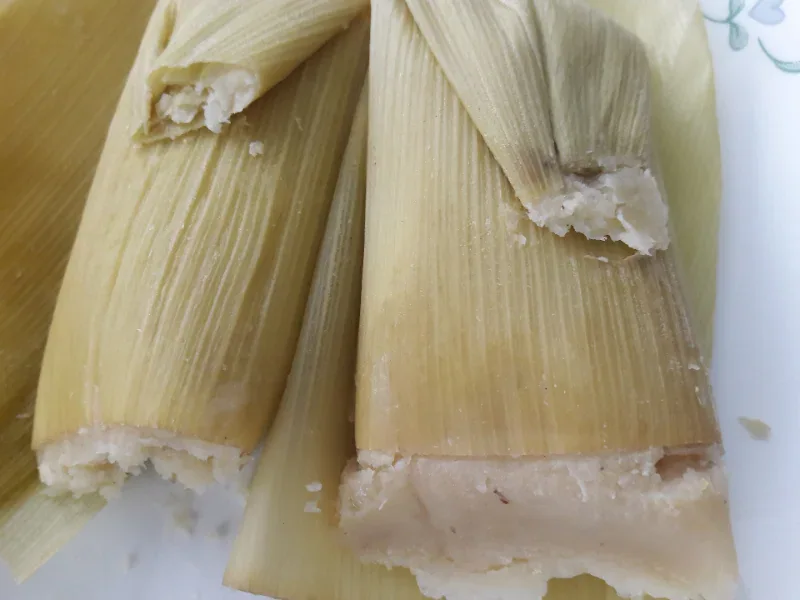
- 🫔 What’s inside: Fresh young corn and milk, with no filling
- 🌽 Wrapped in: Fresh corn husk
- 📍 Where to try it: Michoacán, especially its Tierra Caliente region
Uchepos (aka chepos) are Michoacán’s fresh-corn tamales that are made with tender young corn and milk.
While they may look similar to “standard” Mexican tamales because they’re wrapped in a corn husk, uchepos are softer and a little sweeter.
They’re also unfilled so the corn flavor really shines, and come served with sour cream, salsa and fresh cheese on top.
7. Chanchamitos
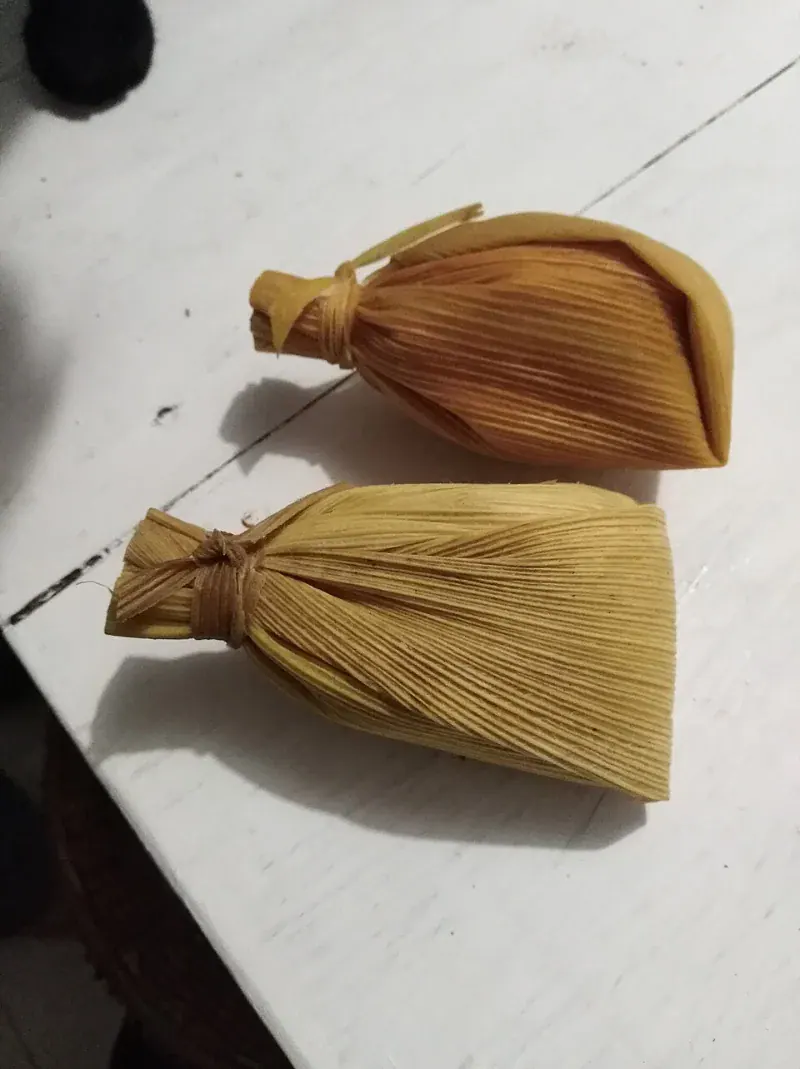
- 🫔 What’s inside: Pork or chicken, in masa seasoned with achiote
- 🌽 Wrapped in: Corn husk, tied at the top
- 📍 Where to try it: Tabasco, Campeche, Yucatán and southern Veracruz
Chanchamitos are small, round tamales from southeastern Mexico. The masa is colored and seasoned with achiote.
Each one is filled with pork or chicken, then tied up in a corn husk like a little bundle.
8. Tamales de Chipilín
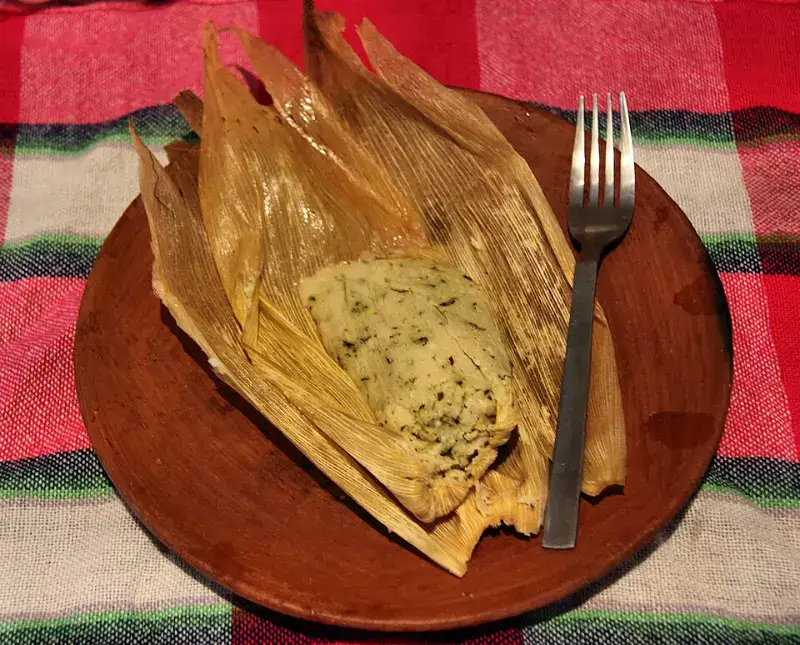
- 🫔 What’s inside: Masa mixed with chipilín leaves, often with cheese or chicken
- 🌽 Wrapped in: Banana leaf or corn husk
- 📍 Where to try it: Chiapas and Tabasco
Chipilín is a leafy herb used in Chiapas and Tabasco. Cooks chop the leaves and mix them right into the masa.
The tamales are often filled with cheese or chicken and served with tomato salsa.
In Oaxaca, the same herb is called chepil.
9. Tamales de Bola

- 🫔 What’s inside: Pork rib in a tomato and guajillo or ancho chile sauce, plus a fried simojovel chile
- 🌽 Wrapped in: Corn husk, tied at both ends
- 📍 Where to try it: Chiapas
Tamales de bola (ball tamales) are a classic from Chiapas state, in southern Mexico.
The masa is shaped into a round ball-like shape by hand around a piece of pork rib that was cooked in chile and tomato sauce.
Each one also hides a fried simojovel chile, named for a town in Chiapas.
10. Tamales de Cambray
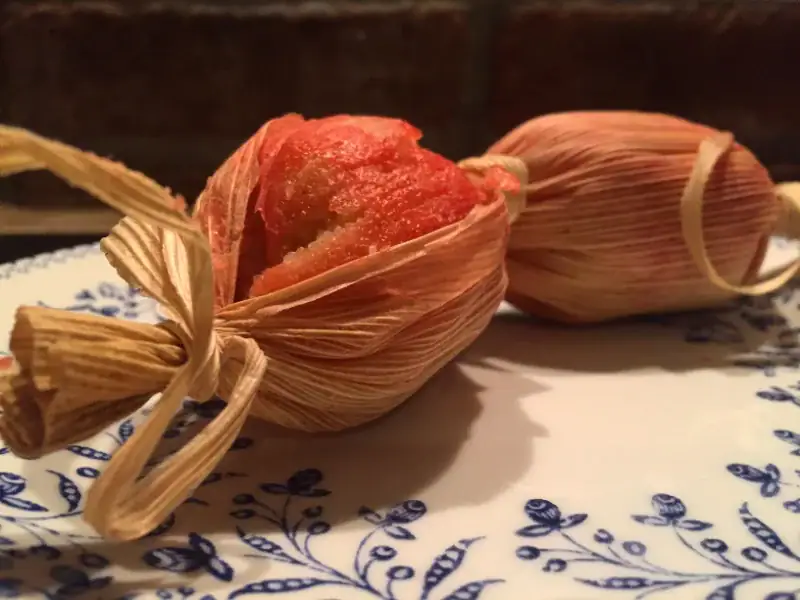
- 🫔 What’s inside: Pork and chicken in a tomato and guajillo sauce, with raisins, almonds and a green olive
- 🌽 Wrapped in: Banana leaf (some families use corn husk)
- 📍 Where to try it: Chiapas
Tamales de cambray are small, festive tamales from Chiapas state. Families make them for parties and special celebrations.
The filling mixes savory meat with sweet raisins, crunchy almonds and a whole green olive.
Some cooks also add fried plantain and vegetables like carrots and potatoes.
11. Zacahuil
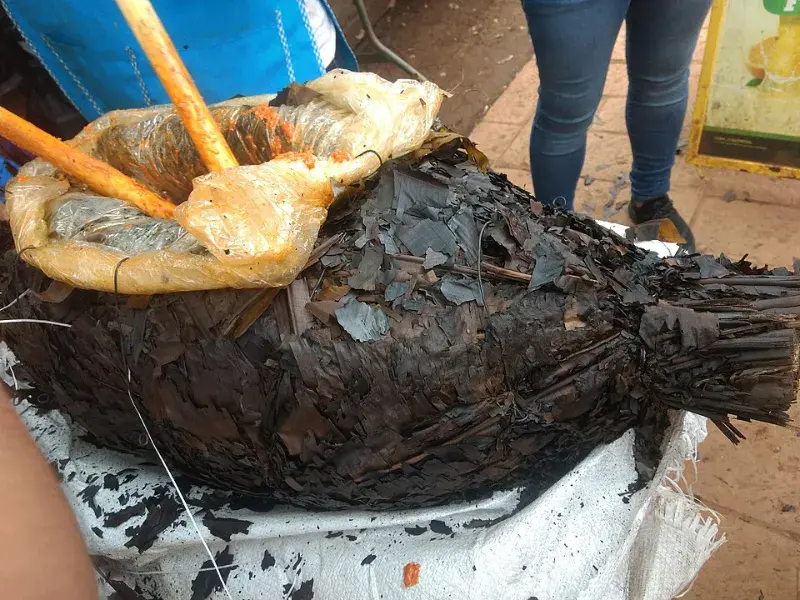
- 🫔 What’s inside: Big pieces of pork, sometimes turkey, in chile-seasoned masa
- 🌽 Wrapped in: Papatla or banana leaves
- 📍 Where to try it: The Huasteca region, including San Luis Potosí, Veracruz and Hidalgo
Zacahuil (sah-kah-weel), the giant tamal of the Huasteca region, is meant to feed a whole party, with the biggest ones serving 100 people or more.
Cooks bake it for 10 to 12 hours in a very hot wood-fired oven. It takes so long because they’re often more than 3 feet (1 m) long.
That’s why it shows up at weddings, quinceañeras, religious festivals, Xantlo (the Huastec Day of the Dead festival), and other Mexican holidays.
I tried zacahuil when visiting the Huasteca Potosina, in San Luis Potosí state.
My husband bought one from a street vendor withouth knowing what it was, and we both loved it.
12. Tamales Norteños
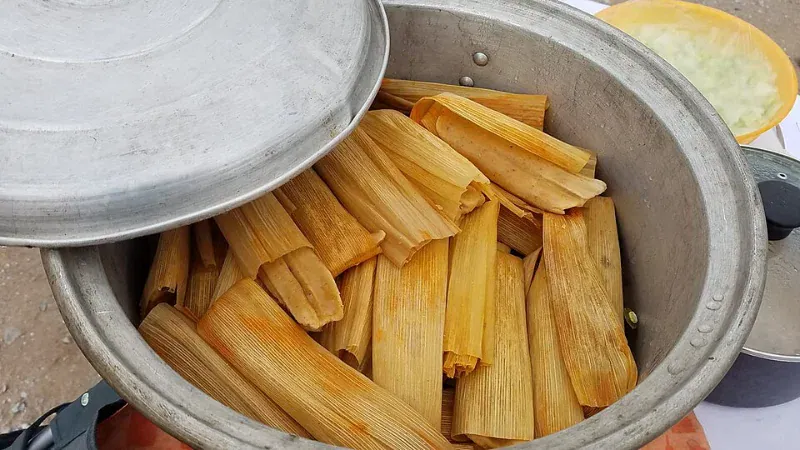
- 🫔 What’s inside: Pork in red chile sauce
- 🌽 Wrapped in: Corn husk
- 📍 Where to try it: Northern Mexico, including Nuevo León and Coahuila
Northern Mexico’s tamales are small and much thinner than the ones in Mexico City and central Mexico.
They usually have more filling than masa, and the classic filling is pork in red chile sauce, often with cumin.
13. Tamales de Frijol
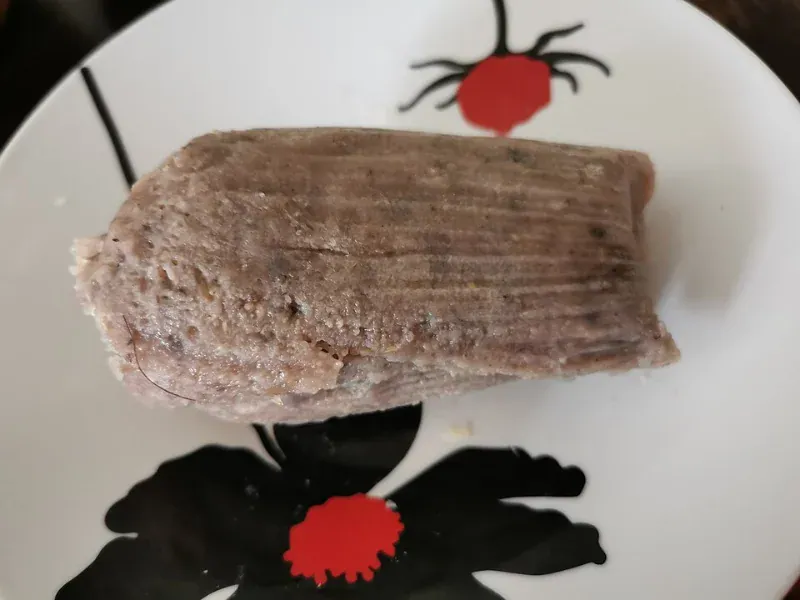
- 🫔 What’s inside: Seasoned mashed beans
- 🌽 Wrapped in: Corn husk
- 📍 Where to try it: Hidalgo, the State of Mexico and markets across Mexico
Bean tamales are among the most traditional tamales in Mexico.
Otomí communities in Hidalgo and the State of Mexico make them with ayocote beans.
Other versions use black beans seasoned with avocado leaves and dried chiles.
14. Pib (Mucbipollo)

- 🫔 What’s inside: Chicken and pork in achiote-seasoned masa
- 🌽 Wrapped in: Banana leaf
- 📍 Where to try it: Mérida and across Yucatán around Hanal Pixán
Pib is the big, baked tamal Yucatecan families make for Hanal Pixán, the Maya Day of the Dead celebration.
It’s traditionally baked in an underground oven called a pib, resulting in one of the crispiest tamales in Mexico.
I’ve had pib in Mérida during Hanal Pixán a few times, including once at the annual Feria del Mucbipollo (Pib Festival) held in October.
15. Tamales Colados
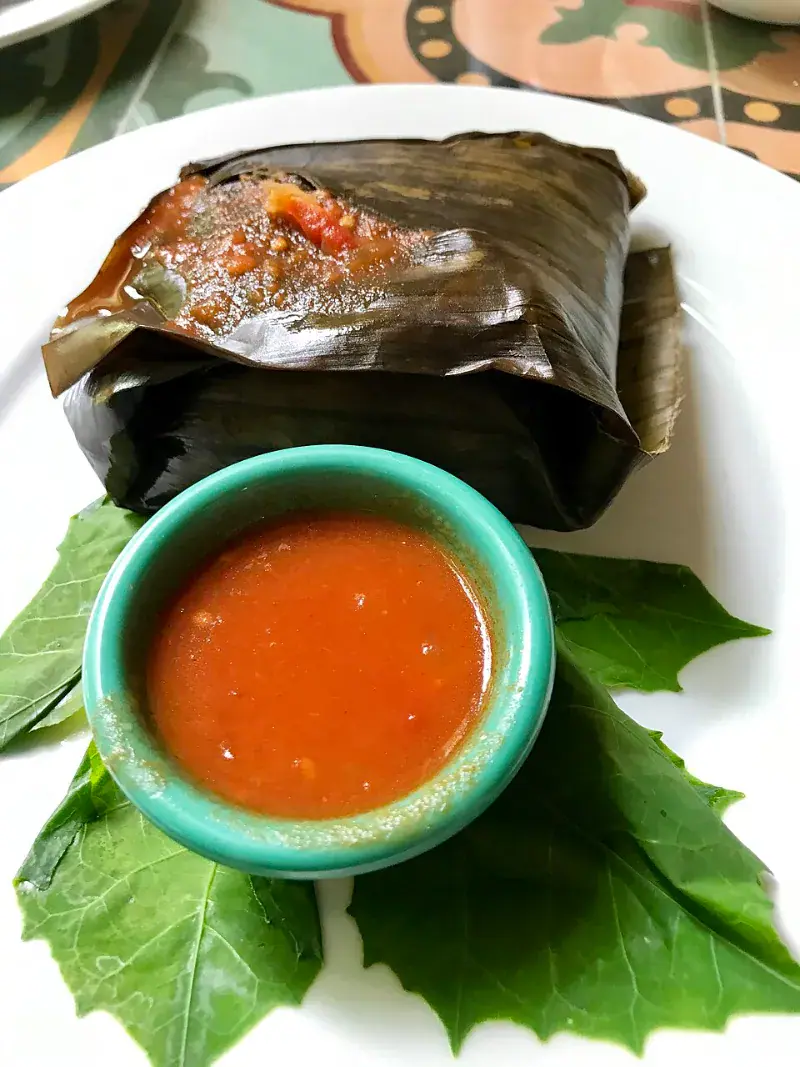
- 🫔 What’s inside: Chicken in achiote sauce
- 🌽 Wrapped in: Banana leaf
- 📍 Where to try it: Mérida and markets across Yucatán
Colados are Yucatán’s silkiest tamales. The masa is strained and cooked until it’s soft, almost like pudding.
I’ve had colados in Mérida several times, but they weren’t a favorite — though you can discover more Yucatecan dishes in this guide to Yucatán foods.
16. Brazo de Reina

- 🫔 What’s inside: Hard-boiled egg and ground pumpkin seeds, in masa mixed with chaya
- 🌽 Wrapped in: Banana leaf
- 📍 Where to try it: Mérida and across Yucatán, especially during Lent
Brazo de reina (Queen’s arm) is a long, rolled tamal made with chaya, a leafy green.
It’s filled with hard-boiled egg and ground pumpkin seeds, which may seem like a strange combo, but it works
It’s served sliced and served with tomato sauce, and especially common during Lent and Semana Santa (Holy Week).
I’ve had brazo de reina in Mérida, and would say it was actually my favorite of all the Yucatecan tamales.
17. Guajolota (Tamal Sandwich)

- 🫔 What’s inside: A whole corn husk tamal
- 🌽 Wrapped in: A bolillo roll
- 📍 Where to try it: Tamal stands in Mexico City
A guajolota (which means “turkey” 🦃) isn’t a separate type of tamal, but such a beloved and unique sandwich that I wanted to add it.
It’s a corn husk tamal stuffed inside a bolillo roll, also called a torta de tamal.
Mexico City tamal stands sell them as a cheap, filling breakfast on the go. Outside of Mexico City, you’ll likely never see these.
Mexican Tamales FAQ
What is the most popular tamal in Mexico?
Corn husk tamales, particularly the verdes (green), rojos (red) and mole varieties, are the most common tamales in Mexico.
What do you drink with tamales?
One of the best non-alcoholic Mexican drinks, atole (ah-tow-lay), is the classic tamal drink pairing.

Atole is a warm, thick corn drink that’s been around since pre-Hispanic times — just like tamales themselves 🫔
Champurrado, the chocolate version of atole, is another favorite for chocolate lovers.
Why do Mexicans eat tamales on February 2?
The Día de la Candelaria tamale party on February 2 is a celebration that blends Catholic traditions with pre-Hispanic traditions.
Tamales, one of the few pre-Hispanic food still eaten today, have long-been part of the Día de la Candelaria (Candlemas) celebration.
The tamal party is really decided on January 6 during Día de Reyes Magos (Three Kings’ Day).
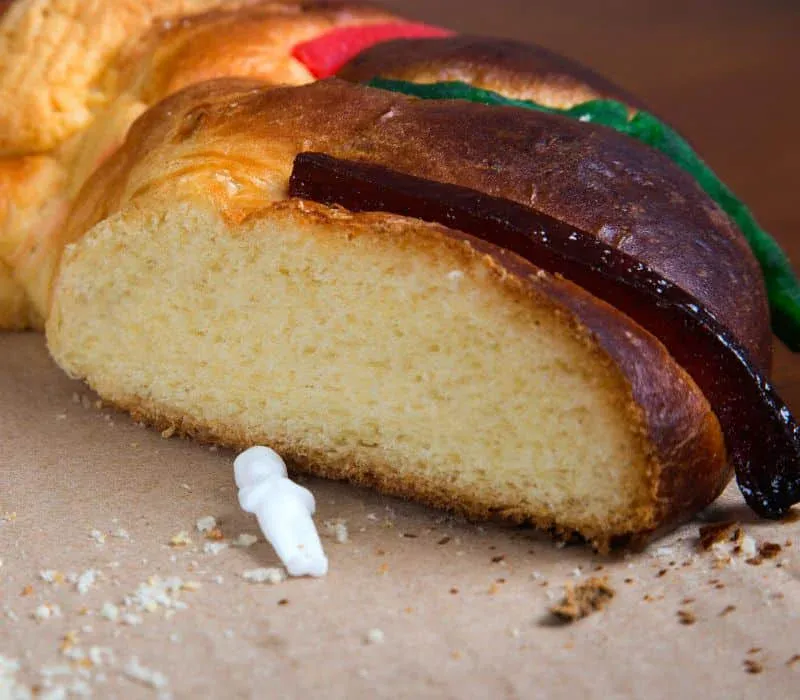
At the end of that dinner, a rosca de reyes (ring shaped fruit cake) is served, and hidden insides, there’s a small white figurine of the baby Jesus.
The person who finds the figurine in their piece of rosca on January 6 must then hosts a Candlemas tamal party on February 2.
You can learn more about the rosca tradition in this guide to Three Kings’ Day in Mexico.
How do you eat a tamal?
Unwrap it first! The corn husk or banana leaf isn’t meant to be eaten, and actually, it’s impossiblt to eat.
After it’s unwrapped, eat the tamal with a fork, or tuck it into a bolillo to make a guajolota (torta de tamal).
Hungry for more? Check out these Mexican Christmas foods and these Day of the Dead foods.
Or dig into this epic guide to 50+ Traditional Mexican Foods — most you’ve probably never heard of 🤔
Get My FREE Guide: 5 Easy Ways to Save Money in Mexico
Insider tips from someone who’s lived in Mexico since 2018.
