
Don’t Skip These 10 Mind-Blowing Mexican Locations—Your Bucket List Will Thank You

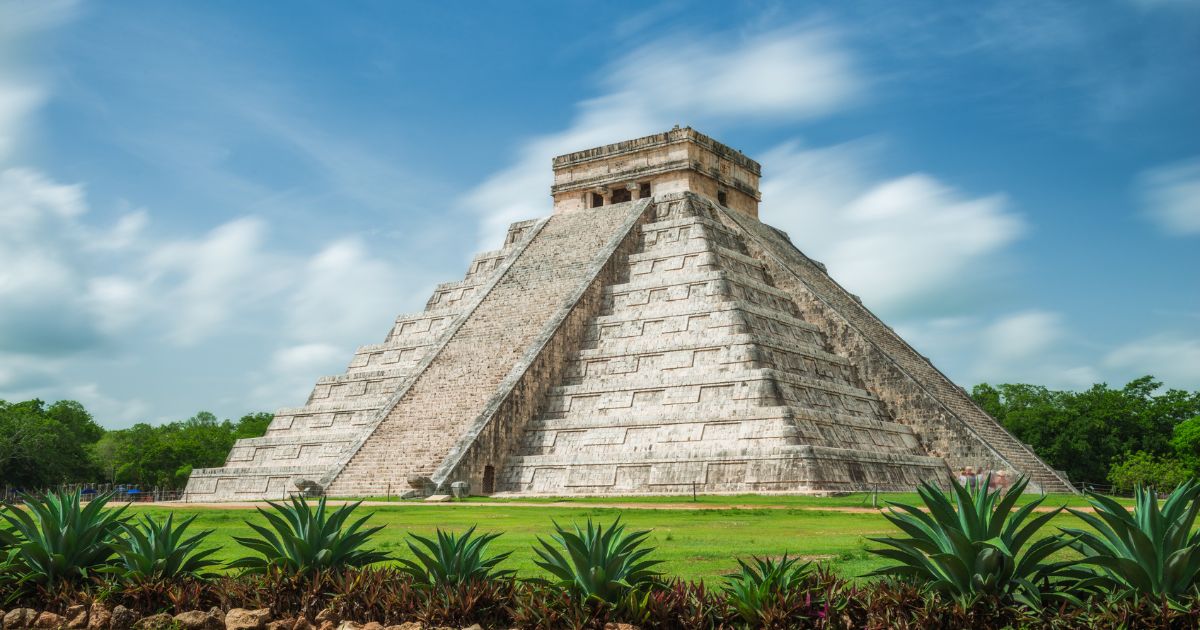
For those who have never been to Mexico, you may think it’s all beaches — but many of the best places to visit in Mexico aren’t beaches.
Though Mexico has almost 7,000 miles of coastline (9,330 km), and some of the world’s best beaches, it also has Mayan and Aztec ruins, natural pink lakes, bioluminescent lagoons, haciendas and cantinas, and much more!
Intrigued? Then, let’s explore this bucket list of Mexico sites and unique experiences.
Disclosure: This article may contain affiliate links, meaning when you make a purchase, I earn a small commission. Affiliate links cost you nothing to use, and help keep my content free. It’s a win-win for us both. For more info, see the Disclosure Policy.
1. Visit Chichen Itza Mayan Ruins: One of the Seven Wonders of the World
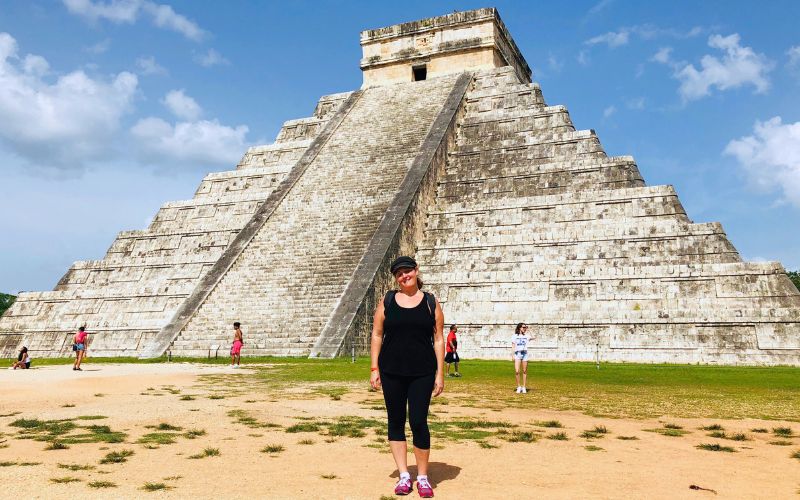
One of the most visited Mexico tourist attractions is Chichen Itza Ruins, which attracts about two million visitors annually.
Chichen Itza is one of the New Seven Wonders of the World, a Mexico UNESCO World Heritage Site, and is believed to be more than 1,500 years old.
It is located 2-3 hours from the top Yucatan Mexico destinations of Cancun, Tulum, Merida, and Playa del Carmen and about one hour from Valladolid, Mexico.
There are many Chichen Itza tours from all places, or you can drive your Mexico rental car.
As the Mayan people were experts in astronomy, architecture, and mathematics, their buildings were uniquely designed according to the rotation of the Earth and the positioning of the sun.
El Caracol is the Astronomical Observatory and telescope once used to track the planet Venus.
The Maya believed Venus was the sister star to the sun and a war god. Observing its position in the sky helped them know the best time to go into battle.
The largest pyramid is El Castillo (AKA Temple of Kukulkan). This pyramid has 91 steps on each side, up to 365 for each calendar day.
The entire Chichen Itza site is filled with interesting buildings and amazing facts, such as this, which is why you’ll want to join a tour.
☀️ Equinox at CHICHEN ITZA Ruins

For a true Mexico bucket list experience, join the thousands who gather on the Spring and Fall Equinoxes.
For about 30 seconds, the sun casts a shadow on the side of the El Castillo pyramid, making it appear as though a serpent is crawling down it!
2. Attend the Day of the Dead in Oaxaca City

Día de los Muertos is a festive time in some parts of Mexico — though there’s no better Mexico Day of the Dead celebrations than the ones in Oaxaca.
As Oaxaca City, the state’s capital, is a smaller sized city, people book this Mexico bucket list celebration up to a year in advance.
I have been twice, and know first-hand that there’s A LOT to know if you want to go, so make sure you check out my detailed Day of the Dead in Oaxaca Guide.
3. See Humpback Whales Near Cabo San Lucas
Cabo Pulmo is located in the Sea of Cortez, famously called “the aquarium of the world” by French diver and 1970s TV personality, Jacques Cousteau.
It is located about 90 minutes north of San Jose del Cabo (and the Los Cabos Airport) in a protected Mexican national park.
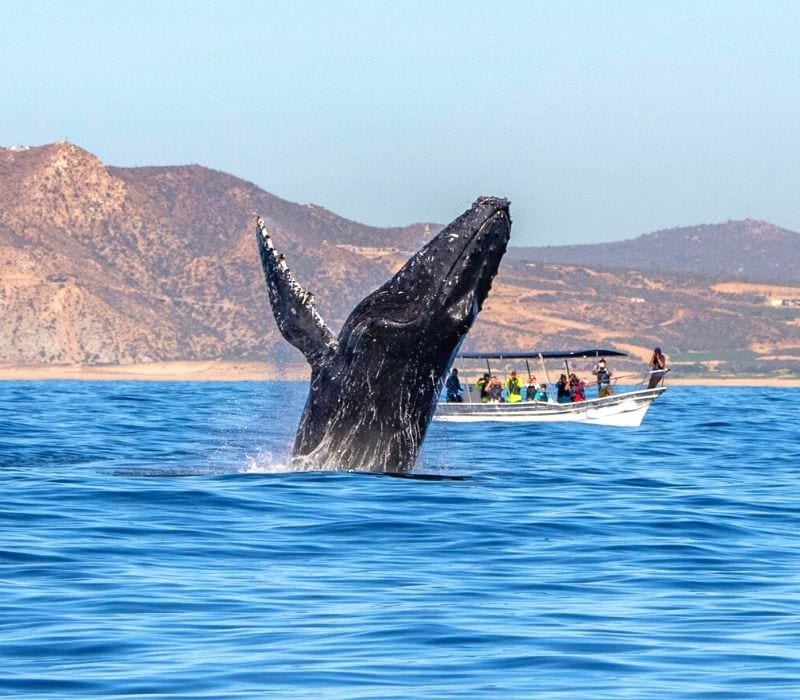
During the winter months, this is the best place in Mexico to see humpback whales, as they migrate past the area from about late November to early April.
If you’re visiting in the summer, Cabo Pulmo is one of the best places to snorkel in Mexico — so make sure you book this tour to snorkel with sea lions and other marine life.
4. Visit Frida Kahlo’s House
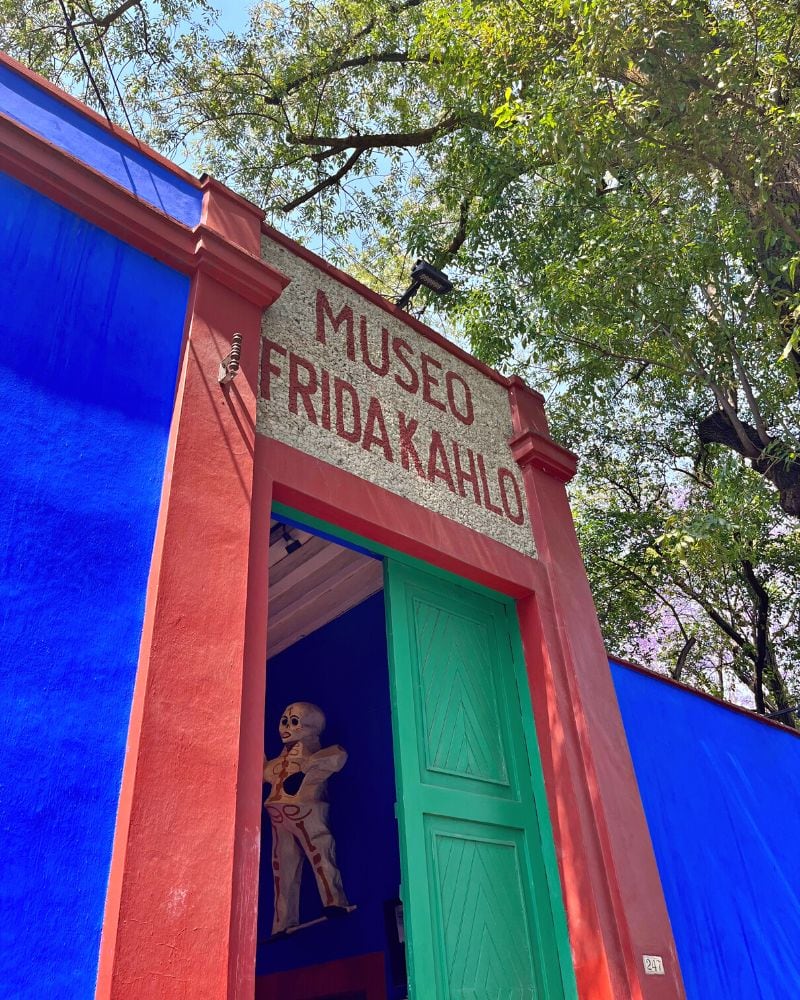
Among the best things to do in Mexico City is visit the Casa Azul (Blue House), better known as the Frida Kahlo Museum.
It is located in Coyoacan, one of the oldest neighborhoods in Mexico City, and a must-visit for many.
While Frida Kahlo is one of the most famous Mexican artists of all time, her husband, Diego Rivera, is just as important.
The Casa Azul is the home the two shared together, where Frida ultimately died in 1954. Inside, you’ll see some of her paintings, other artwork and personal belongings.
🎫 Mexico City Travel Tips: Buy your Frida Museum tickets in advance, otherwise the line gets hours long, and on busy days, people without tickets won’t get in.
5. Swim in the Mexico Cenotes

The Mexico cenotes (pronounced sen-no-tays) are natural pools, all connected to the same freshwater source.
Beneath the Yucatan Peninsula in southeastern Mexico, a river flows underground, and over time, the limestone rock above it collapses to create a cenote.
Today, there are about 6,000 cenotes in Yucatan and four types of cenotes; every kind of cenote is beautiful in its own way. Here are the types:
- Open Cenotes: Some are fully open, like a swimming pool or pond
- Semi-Open Cenotes: Some partially-covered with tall rock walls and an opening at the top, like Cenote Ik-Kil
- Cave Cenotes: some located underground in caves or caverns, like Cenote Suytun.
- Dive Cenotes: Cenotes with deep and long underwater caves that divers can explore.
For many travelers, swimming and snorkeling in cenotes is high atop of their Mexico bucket list, but for divers, going diving in the Tulum cenotes is a must-do.
While some are located deep in the jungle, others are easily accessible. In fact, some of the best cenotes in Mexico are the Tulum cenotes located near downtown Tulum.
While the scenery in these underground caves is a delight for divers, non-divers will love it as well.
Snorkelers closer to the surface, or even just anyone swimming with a mask on, will also be transported to what sometimes looks like you’re swimming in a river on the moon.
6. Climb Teotihuacan Pyramids

There are hundreds of ancient ruins and pyramids in Mexico, from the Aztecs to the Maya, the Olmecs, and the Toltecs.
One of Mexico’s most impressive ancient destinations, and one of the most visited, is the Teotihuacan Ruins (pronounced tay-oh-tee-wok-on).
At its height about 1,500 years ago, Teotihuacan was the most important and largest cities in the Americas, home to more than 100,000 people.
It was occupied by a group known as the Teotihuacanos, until the city was mysteriously burned and abandoned around 550 AD.
Today, many of the incredible monuments and pyramids still stand.
There are three pyramids at Teotihuacan: the Pyramid of the Sun, Pyramid of the Moon, and Pyramid of Quetzalcoatl, who was a central Aztec god.
The pyramids are linked by the 2.5-mile-long Avenue of the Dead, which is flanked by more temples and ceremonial platforms.
The impressive scale of this building work must be seen to be believed, especially when considering the builders didn’t have metal tools or pack animals to help.
Teotihuacan is located about 30 miles northeast of Mexico City. It takes about an hour to get there by rental car, taxi or Uber.
You can also take a public bus from Mexico City’s North Bus Terminal to San Juan Teotihuacan, the pueblo magico (magic town) Teotihuacan Ruins is in.
You’ll want to arrive early to beat the crowds and midday sun, though this hydration backpack with a built-in water bottle also comes in handy.
Wear comfy sneakers, eco-friendly sunscreen and a sun hat, as visiting Teotihuacan involves a lot of walking and in an area with very little shade.
7. See Millions of Butterflies During the Monarch Butterfly Migration
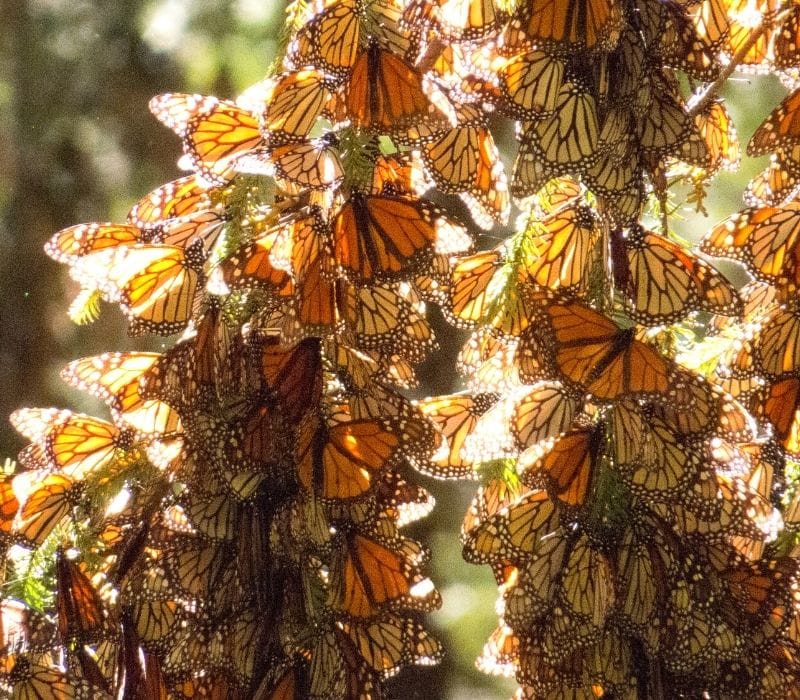
Every November, millions of monarch butterflies make their annual 3,000-mile migration from Canada to the Oyamel Fir Forests in Mexico’s Central Highlands.
They remain in Mexico from about November to March, though the best time to see butterflies in Mexico is usually January and February.
Located not far from Mexico City, many visit the UNESCO World Heritage Site Butterfly Sanctuary on a day trip from Mexico City.
There are a few designated sanctuaries — one in Michoacan state, and the Piedra Herrada Monarch Butterfly Biosphere in the lakefront town Valle de Bravo.
The Piedra Herrada Butterfly Sanctuary in Estado de México (Mexico State) is closer to Mexico City, so many visit this one.
A remote area and a strenuous climb to the butterfly area at the top of a mountain, the best and safest way to visit is on a group tour, like these:
- Monarch Butterflies & Valle de Bravo Tour
- Monarch Butterfly Sanctuary Private Tour with Photographer
Once at the top, you will see thousands of monarch butterflies just in your immediate eyeline.
They’re everywhere, often weighing down branches because there are so many, or fluttering about covering you, flying in the air around you, and on the ground.
In the spring, the butterflies begin their eight month migration back — during which time four generations of butterflies live and die.
Scientists don’t know how they find their way to the same spot in Mexico each year, but this is one of the largest insect migrations in the world.
Being in the forest, surrounded by monarch butterflies in all directions and as far as the eye can see, is truly a Mexico bucket list experience.
8. Visit the Underwater Museum in Cancun

The Underwater Museum in Cancun is one of the top tourist attractions in Mexico, and among the best things to do in Cancun Mexico.
MUSA, which stands for Museo Subacuatico de Arte, is located underwater near Cancun and Isla Mujeres, in the Mexican Caribbean.
As one of the best Cancun attractions, MUSA is also one of the largest underwater sculpture gardens in the world.
While diving, snorkeling or on this MUSA glass bottom boat tour, you can see some of the more than 500 pieces of art created by various artists.
This museum is also a marine reserve with more than 500 life-sized, underwater sculptures.
Diving or even snorkeling at this unique underwater park is actually helping to rebuild the coral reef in this area, so don’t pass up the chance — and don’t forget your underwater camera.
9. Ride El Chepe Train Through the Copper Canyon
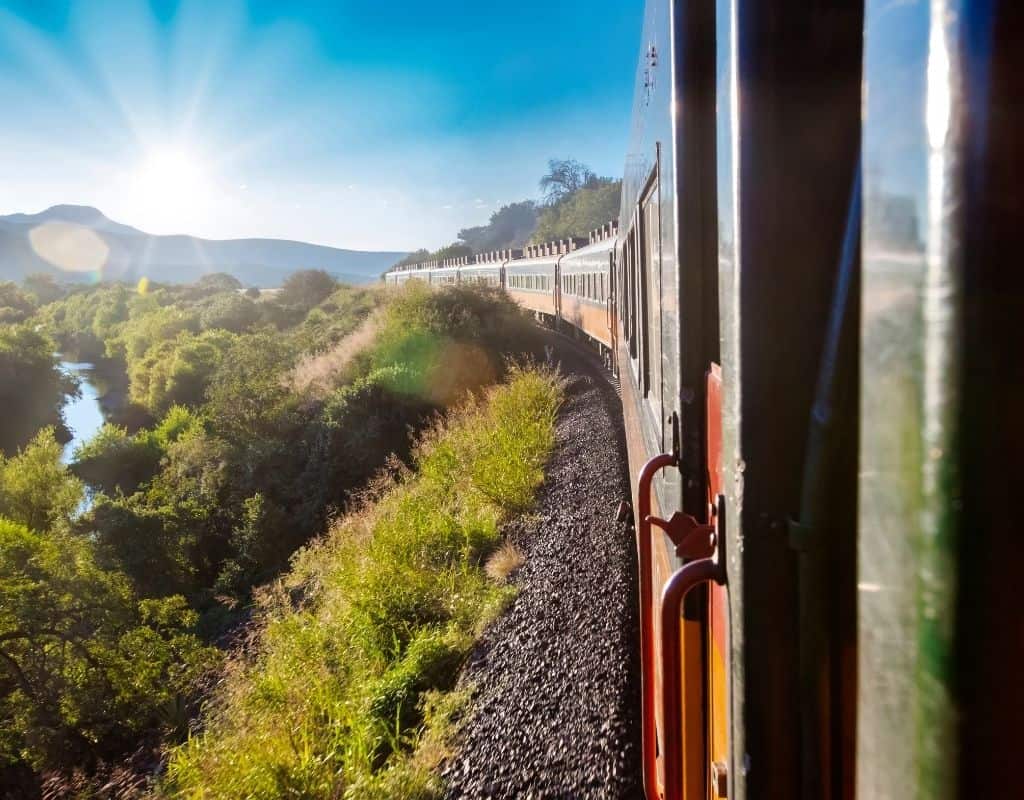
The Barranca del Cobre, or Copper Canyon, is the eighth largest canyon on Earth!
It is the second largest canyon in North America after the Grand Canyon, and a UNESCO World Heritage Site.
To see it, take the El Chepe Express Train, which goes through some areas of the canyon and other beautiful landscapes in North Mexico.
There are route options, but many board in Los Mochis, Sinaloa, and travel about 220 miles to Creel pueblo magico (magic town) in Chihuahua, Mexico.
10. Get Sprayed at La Bufadora Blowhole
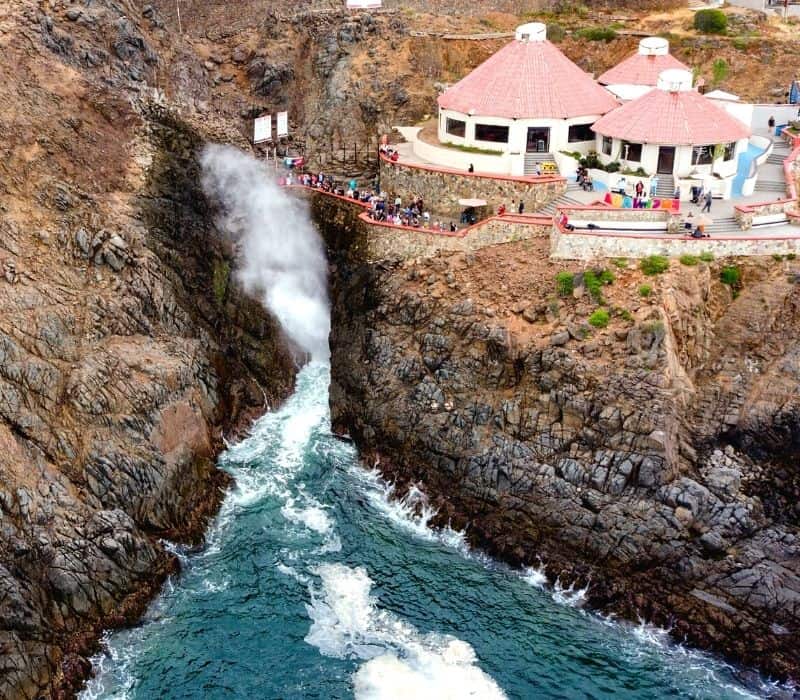
Just outside the beautiful port city of Ensenada, Mexico lies La Bufadora, a natural wonder in the Punta Banda Peninsula of Baja California state.
La Bufadora, meaning “the blowhole,” is a natural rock formation with a hole that shoots water into the air 100 feet (30 m) above the ocean.
It is one the largest blowholes in the world, along with Halona Blowhole in Hawaii and Hummanaya Blowhole in Sri Lanka.
Sitting right on the coast, La Bufadora’s waterspout is caused by waves pushing air into a sea cave below.
The air gets trapped, and when the waves recede out of the cave, the water bursts quickly upwards. This repeats every 15-20 seconds, all day.
Visitors waiting to witness this water explosion up close can gather at the raised viewing platform just next to it.
From there, you can safely enjoy the magnificent sight and the thunderous sound of the water explosion!
Among the best things to do in Ensenada, you can easily drive your rental car to La Bufadora or join a group tour.
Many tours combine a stop at La Bufadora with other local activities like horseback riding or wine tasting in Valle de Guadalupe, known as “the Napa Valley of Mexico.”
11. Pet the Gray Whales in Magdalena Bay

There are a number of places you can go whale watching in Baja California, and in Mexico, for that matter.
However, none are as unique as this Magdalena Bay Gray Whale Experience, where the whales come right up to the boats to be touched.
From about December-March, about 500 gray whales come to the protected lagoon in Magdalena Bay.
With its relatively shallow waters, orcas (killer whales) won’t enter this bay, making it safe for gray whales to give birth and raise their young before returning to the Pacific Ocean.
Over the years, the whales have become accustomed to and friendly with human visitors.
Unprovoked, they come to the tour boats alone — the baby calf often alongside the mother.
Ready to Book Your Mexico Vacation? Here Are Some Resources To Look At:

Mexico is a large country — the 14th largest country on Earth by size — and it’s also the 6th most biodiverse diverse country in the world.
Though it’s mostly known for beaches, there’s a lot more to Mexico than that. Check out these Mexico articles to discover parts of the country you never knew existed.
- The 30 Most Beautiful Cities in Mexico (#7 Will Shock You)
- Mexico Off the Beaten Path Places for Your Bucket List
- 20 Hot Springs in Mexico That are Calling Your Name
- Hidden Beaches in Mexico You’ve Never Heard Of
- Best Waterfalls in Huasteca Potosina Mexico
- The Coolest Mayan Ruins in Mexico’s Yucatan Peninsula
⚠️ Before You Go — Get Your FREE Guide!
Head here and enter your email address to download your FREE Mexico guide (5 Things You Don’t Want to Forget to Pack for Mexico) and get Mexico travel tips, tricks and more sent straight to your inbox.
