
What Is a Huipil? 10 Regional Mexican Huipil Garments (and Where to Buy Them)

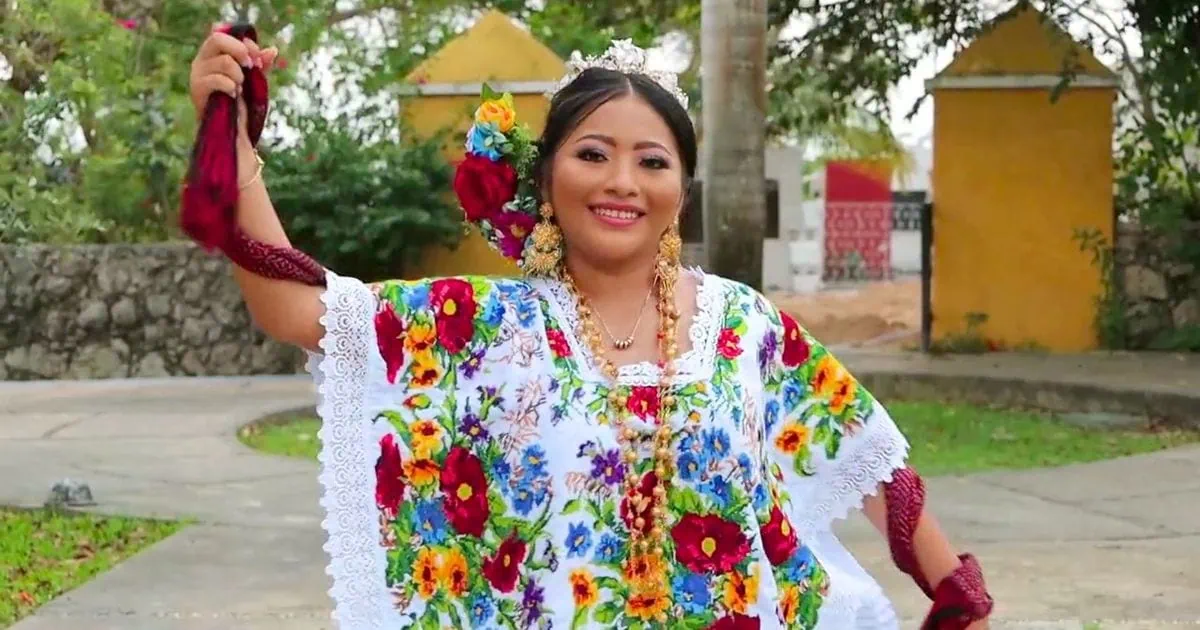
Wondering about the Mexican huipil?
A huipil (wee-PEEL) is a loose, sleeveless tunic worn by Indigenous women in Mexico and Central America.
As I’ve been living in Mexico since 2018, with several years spent in the Yucatán Peninsula, I thought there was just one type: Yucatecan hipil.
However, there are several types of Mexican huipil garments.
The most traditional ones are woven by hand on a backstrap loom, but keep reading because there’s SO much more to discover about huipils (wee-PEELS).

What Is a Huipil?
A huipil (wee-PEEL) is a loose tunic made from one to five rectangular pieces of cloth, usually two or three.
The word comes from the Nahuatl huīpīlli, meaning “blouse,” “shift,” or “tunic.” It specifically refers to a garment worn by a woman.
Women across Mesoamerica wore huipils long before the Spanish arrived, and it was a typical piece of Aztec and Maya clothing.
Today, it’s still the most common traditional garment of Indigenous women from central Mexico to Central America.
You’ll see it worn every day in parts of Chiapas, Oaxaca and the Yucatán Peninsula.
It’s one of the best-known pieces of traditional Mexican clothing.
How Is a Huipil Made?
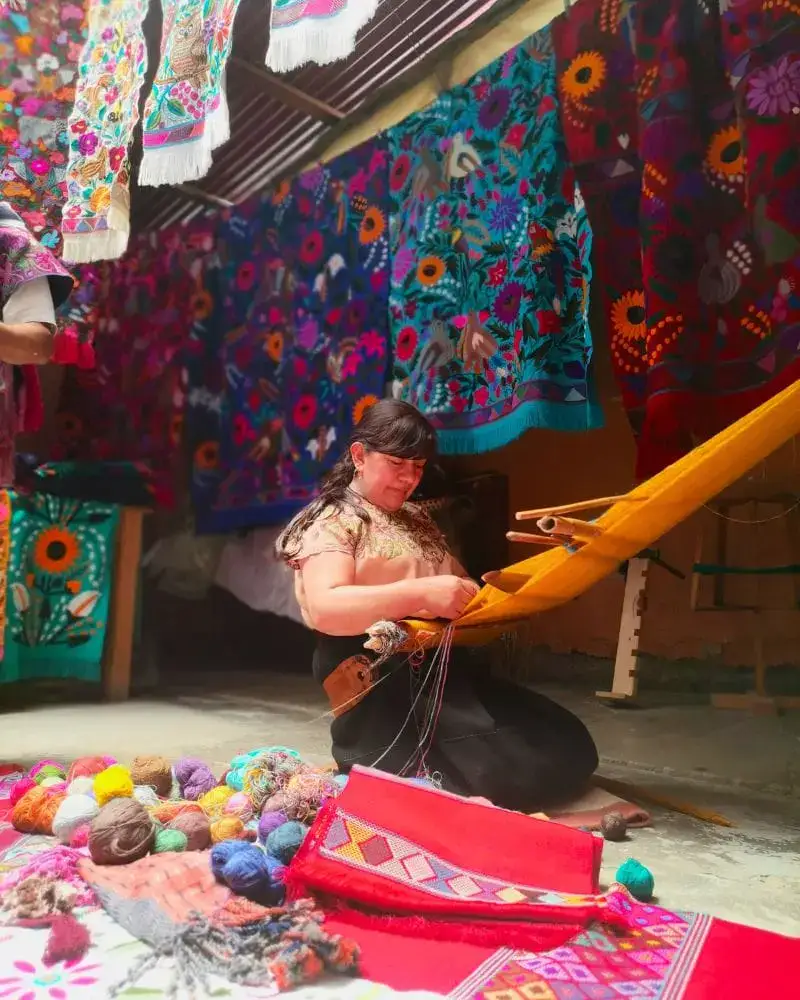
Unlike a blouse, a traditional huipil isn’t cut and sewn from a pattern.
Its panels are woven to size on a backstrap loom (pictured above) and never cut.
Then they’re joined with stitching, ribbons or strips of cloth.
Lengths range from waist-length to floor-length, but most huipils fall just above or below the knee.
10 Regional Huipil Styles in Mexico
1. Yucatán Hipil
- 📍 Region: Yucatán Peninsula
- 🧵 Known for: White cotton with bright embroidered flowers
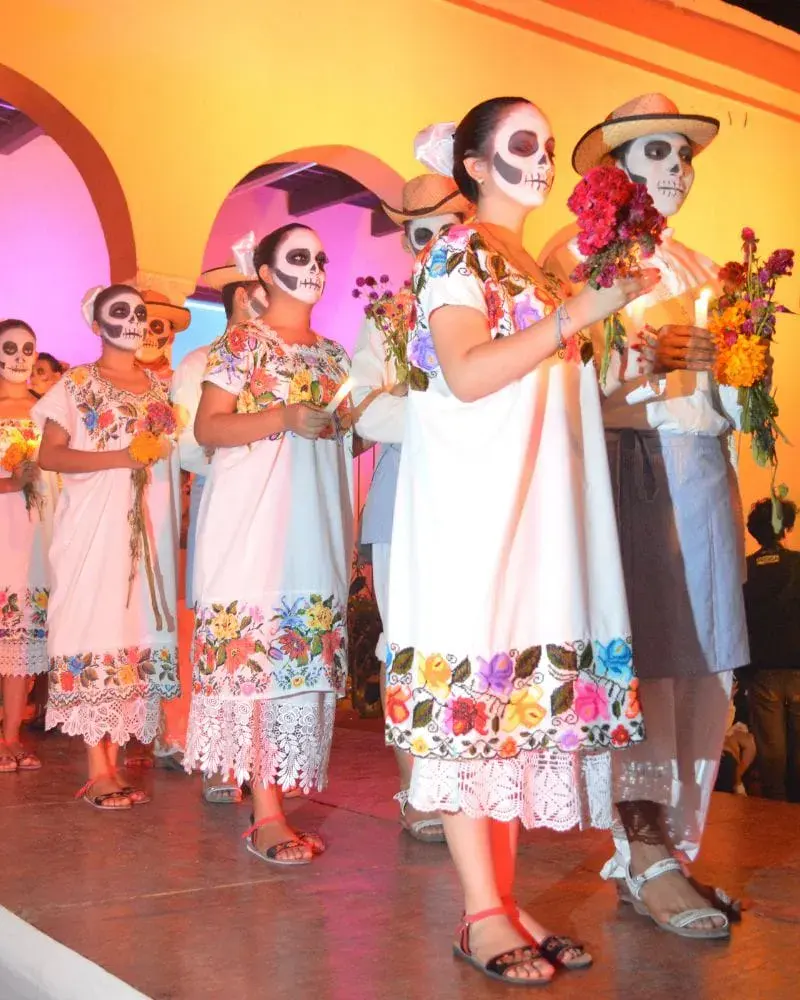
In Yucatán Peninsula, the huipil is called a hipil (ee-PEEL).
It’s a white dress with a wide square neckline, and the neckline and hem are covered in colorful embroidered flowers.
Many are stitched in xokbil chuuy, the Maya name for counted cross-stitch; others are machine-embroidered.
2. Terno (Yucatán’s Formal Hipil)

- 📍 Region: Yucatán Peninsula
- 🧵 Known for: A three-piece, formal ensamble
The terno (TEHR-noh) is the hipil’s formal version, and it’s comprised of three pieces.
- Jubón: The wide, square embroidered collar or yoke, which is often 8-12 inches wide (20-30 cm), and sewn onto the neckline of the hipil.
- Hipil: The loose, rectangular, sleeveless white tunic that’s usually knee-length, but sometimes longer.
- Fustán: The long white underskirt trimmed with lace that extends past the hem of the dress to make the garment floor-length.
Women wear the terno to vaquerías, religious processions, Hanal Pixan festivals, and official events, often while dancing the jarana.
3. Chilil (Zinacantán, Chiapas)
- 📍 Region: Chiapas Highlands
- 🧵 Known for: White ceremonial huipils with chicken feathers
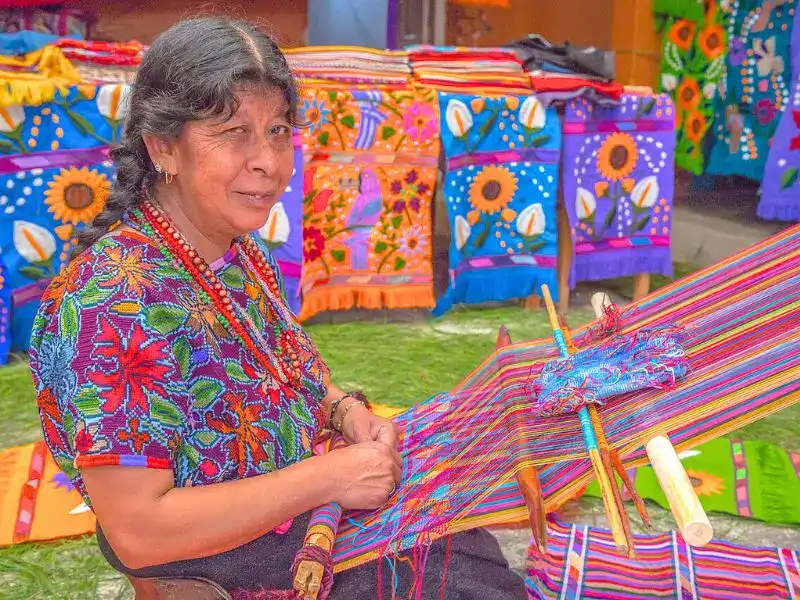
Zinacantán is a Tzotzil Maya town in the Chiapas Highlands, known for its colorful floral textiles.
In the local Tzotzil Maya language, the general word for a blouse or huipil is chilil (derived from chil, meaning shirt or tunic).
The ceremonial wedding huipil (K’uk’umal chilil or Il chil k’uk’umal in Tzotzil Maya), which translates to “feathered shirt/huipil,” is a formal version.
Worn at Mexican weddings by Tzotzil brides, this long white cotton tunic is woven with white chicken feathers.
4. San Andrés Larráinzar (Chiapas)
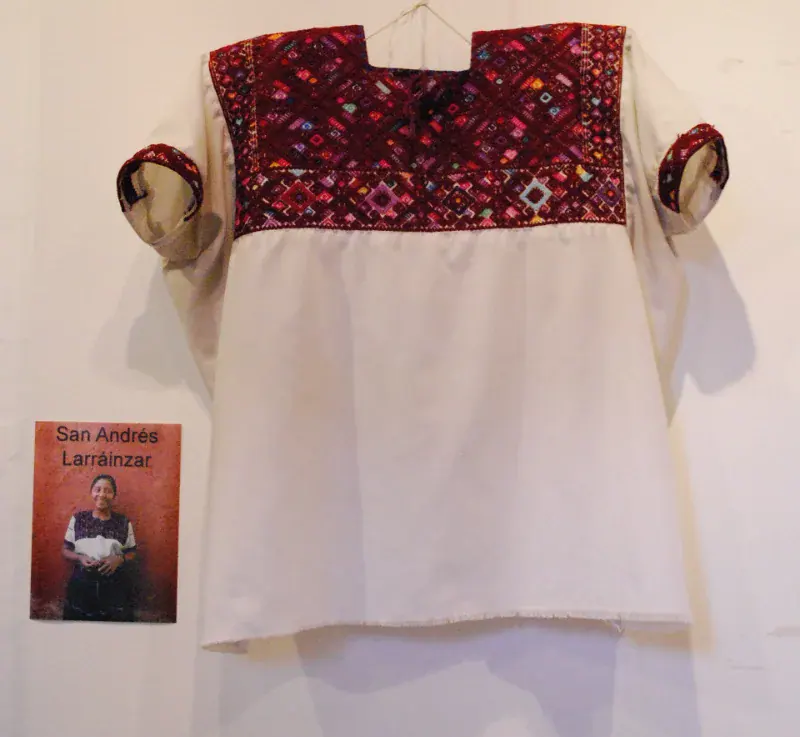
- 📍 Region: Chiapas Highlands
- 🧵 Known for: Brocaded huipils woven on backstrap looms
For centuries, Tzotzil-speaking women in San Andrés Larráinzar have woven huipils on backstrap looms (telar de cintura in Spanish).
Its weavers are respected as some of the best in the Chiapas Highlands.
The designs are brocaded (woven in with extra threads), and ceremonial huipils are densely brocaded with symbolic designs.
5. Mazatec (Huautla de Jiménez, Oaxaca)

- 📍 Region: Huautla de Jiménez, northern Oaxaca
- 🧵 Known for: Embroidered birds and flowers
The Mazatec huipil from Huautla de Jiménez is known for its embroidered birds, vines and flowers.
One old Huautla huipil even shows an eagle on a cactus holding a snake, the symbol on Mexico’s flag shown in the Coat of Arms.
Most young women in Huautla no longer wear the huipil every day, so the tradition is fading.
6. Tehuana (Isthmus of Tehuantepec, Oaxaca)
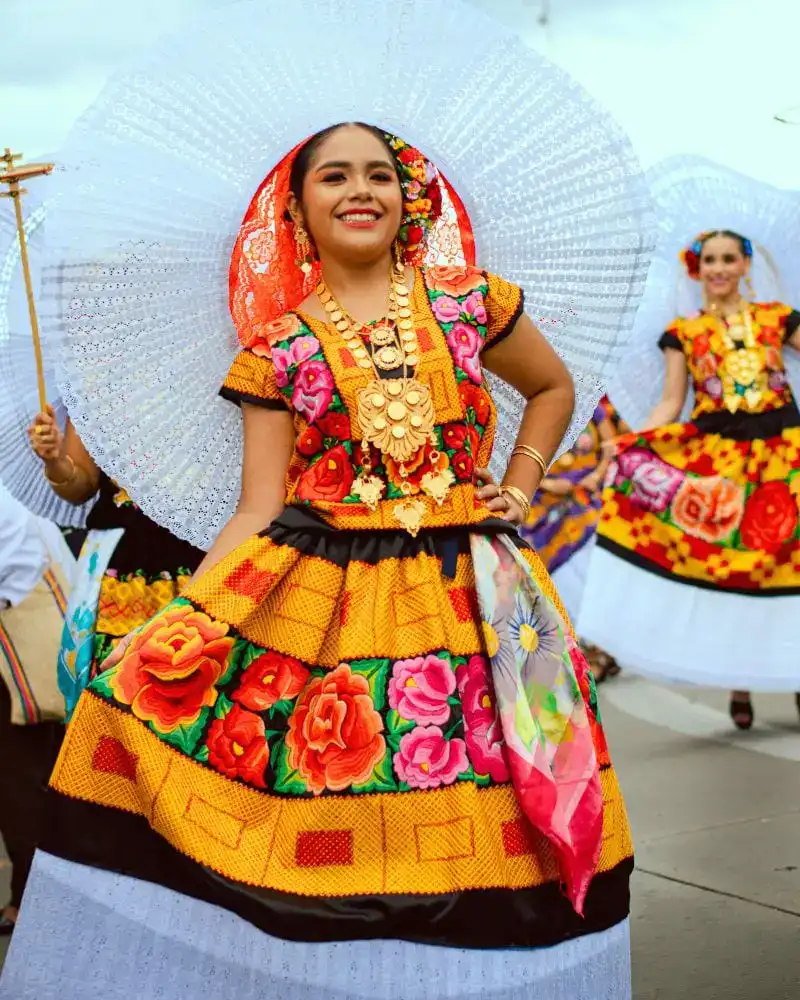
- 📍 Region: Isthmus of Tehuantepec, Oaxaca
- 🧵 Known for: Short huipils covered in big embroidered flowers
Traditional dress for Zapotec women on the Isthmus of Tehuantepec is called an Istmeña.
Also called the traje de tehuana (Tehuana dress), this garment consists of two or three distinct pieces (all pictured above).
- Short boxy, huipil top (also spelled wipil)
- Long skirt called an enagua
- Large lace headpiece known as huipil grande
Everyday versions are made of cotton and embroidered with multicolored flowers, while formal versions are made of silk or velvet.
The large lace huipil grande headpiece (also called a resplandor or bidaniro’ in Zapotec), is reserved for formal, religious, and ceremonies only.
If this dress looks familiar, it’s because Frida Kahlo made the Tehuana dress famous around the world.
Besides being gorgeous, the enagua (long skirt) helped hide her right leg, which polio had left thinner and shorter.
Today, you can see her Tehuana dresses on display at the Frida Kahlo Museum (Casa Azul), one of the best museums in Mexico City.
7. Amuzgo (Xochistlahuaca, Guerrero)
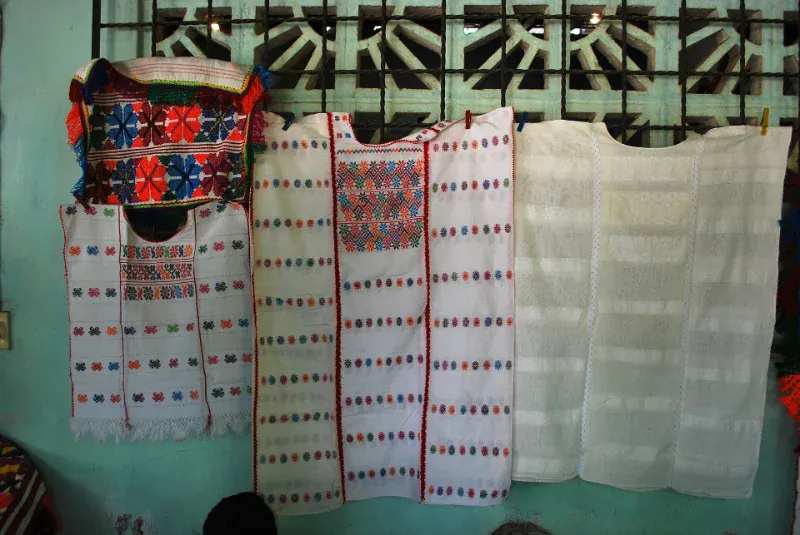
- 📍 Region: Xochistlahuaca, Guerrero
- 🧵 Known for: Brocade with butterflies, animals and plants
Amuzgo weavers brocade their huipils with animal, plant and geometric designs, which all represent different things.
For example, two connected triangles stand for butterflies 🦋
Renowned for their craftsmanship, Amuzgo weaver Florentina López de Jesús even won UNESCO recognition for her work.
8. Chinantec (Oaxaca)
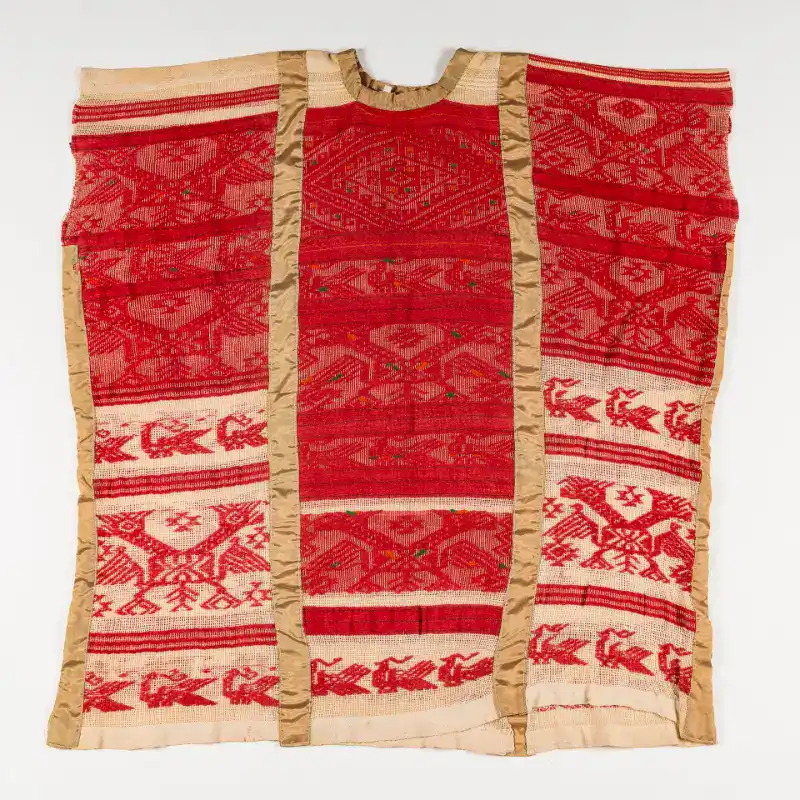
- 📍 Region: The Chinantla, northern Oaxaca
- 🧵 Known for: Huipils covered in woven and embroidered designs
Chinantec huipils from Ojitlán are covered in colorful geometric designs, with ribbons along the edges.
The red gala huipil is the traditional and most expensive wedding dress.
The pájaros y palomas (birds and doves) style, the cheapest and most common in markets, is white with bright animals and birds.
9. Triqui (Oaxaca)

- 📍 Region: The Mixteca, western Oaxaca
- 🧵 Known for: Long, bright red huipils
Triqui women wear a long, bright red huipil woven on a backstrap loom.
The huipil is the Triqui outfit’s main piece and its strongest link to Triqui identity.
In San Juan Copala, women roll the extra length up at the waist when they wear it with a skirt.
10. Mixtec (Oaxacan Coast)
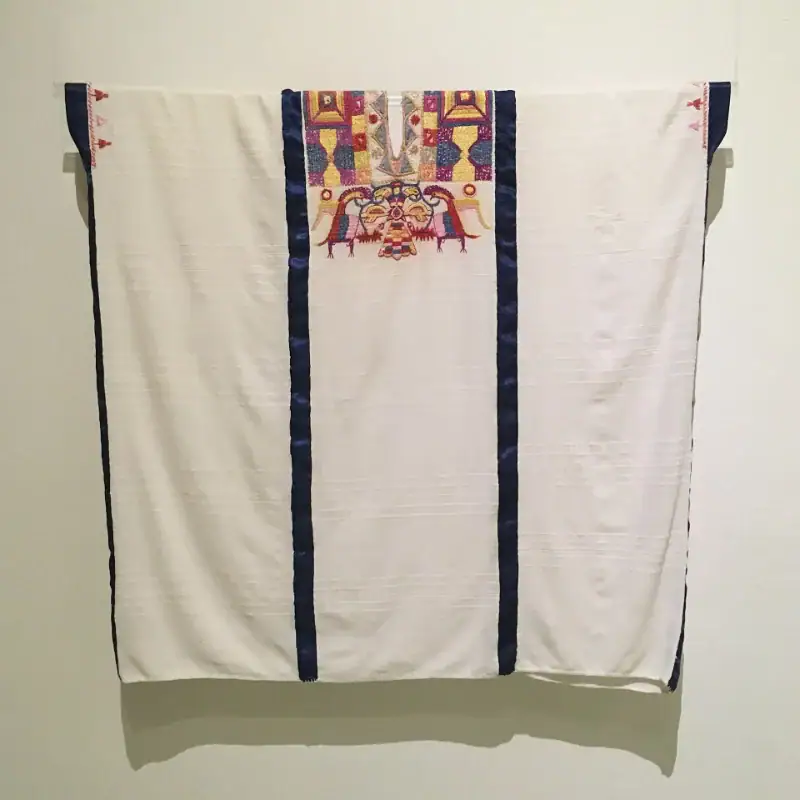
- 📍 Region: Costa Chica, Oaxaca
- 🧵 Known for: Cotton dyed with sea snail purple
Mixtec weavers on the Oaxaca coast still grow cotton, including native brown coyuchi, and weave it on backstrap looms.
Their rarest color is purple dye “milked” from a sea snail by dyers from Pinotepa de Don Luis.
Pinotepa huipils show animals, Mexican flowers, suns, moons, fish and fretwork.
A single huipil can take 400 hours of work, and as you might imagine, it costs quite a bit to buy an authentic one.
How to Spot a Handmade Huipil
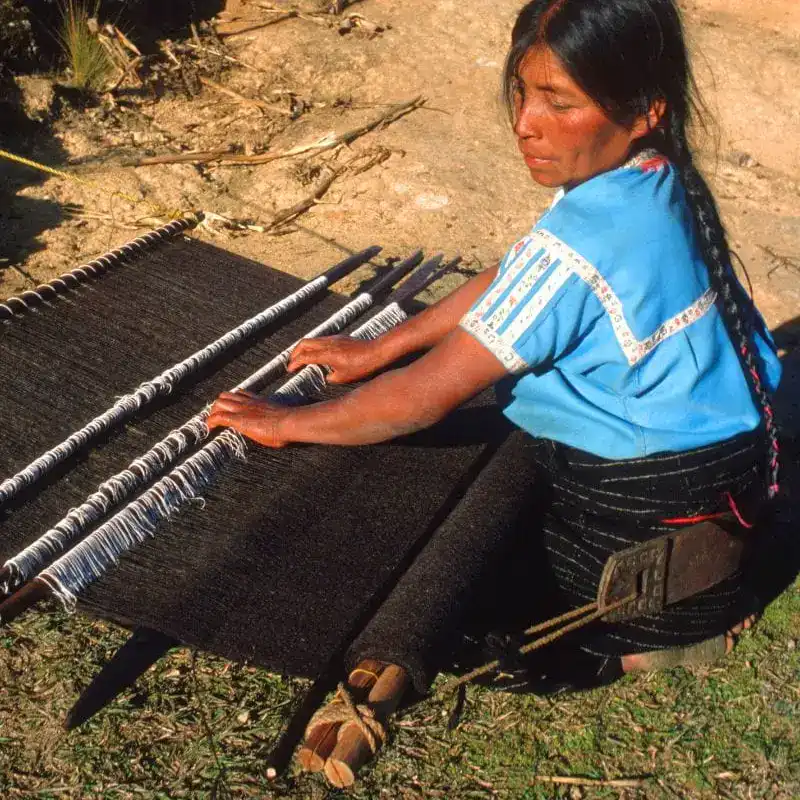
The most traditional huipils are handwoven on a backstrap loom (pictured above), which straps around the weaver’s waist.
This loom limits how wide the cloth can be.
Handwoven huipils are made of narrow panels joined by hand, so look for those seams.
- 🧵 Backstrap loom: Narrow panels, woven to size and never cut
- 🎨 Natural dyes: Colors like cochineal red, indigo blue and sea snail purple
- 🪡 Machine-made: Machine embroidery is common, especially on Yucatán hipiles
- 💰 Price: A handwoven coastal Mixtec huipil can take 400 hours, so a very cheap one probably wasn’t made the traditional way.
Like most Mexican folk art, buying from the maker is the surest way to get the real thing.
Where to Buy a Huipil in Mexico
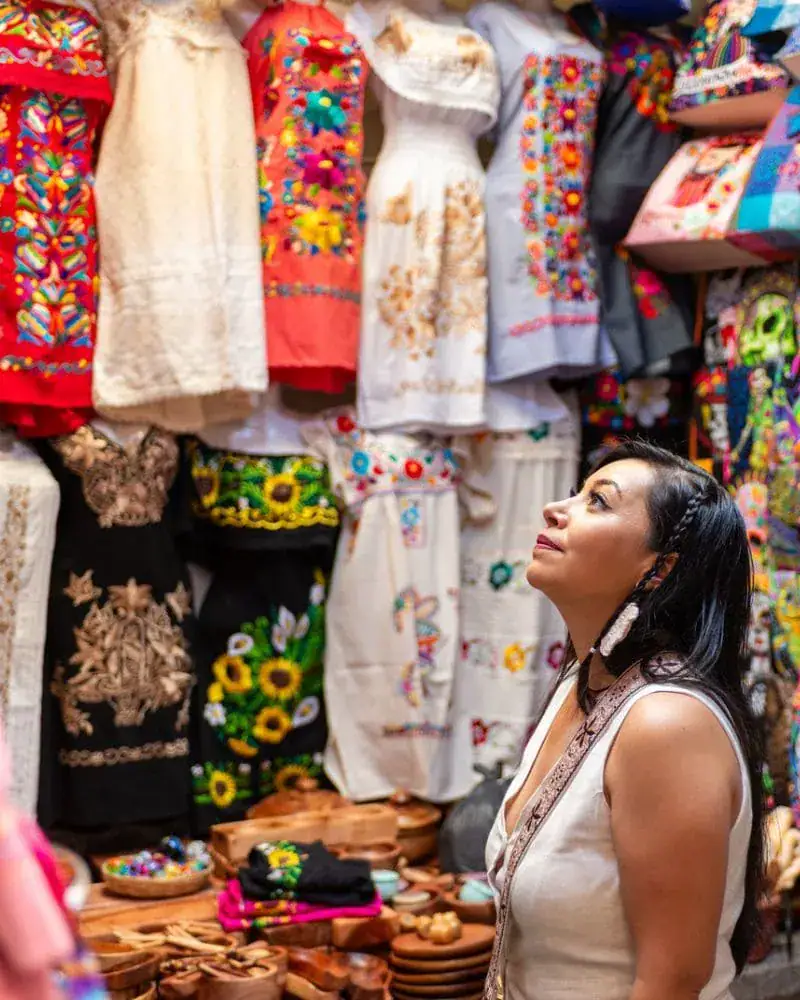
The best place to buy a huipil is straight from the women who weave it, or from a cooperative.
In San Cristóbal de las Casas, the Santo Domingo artisan market sells textiles from all over the Chiapas Highlands.
In Oaxaca City, browse the Oaxaca markets and the shop at the Museo Textil de Oaxaca.
In Merida, you’ll find hipiles and ternos in shops around the historic center.
Cooperatives like Jolom Mayaetik in Chiapas and the Tixinda weavers of Pinotepa de Don Luis also sell their work.
Where to Buy a Huipil Online
Can’t get to Mexico to buy one? These huipil-style dresses and blouses listed below are sold on Amazon.
Most aren’t backstrap-woven, but they have the same look, and you can buy one from the comfort of your couch!
Embroidered Mexican Dress: A loose, hand-embroidered dress with a classic huipil-style cut → Buy it on Amazon
Puebla Dress: A hand-embroidered Puebla-style dress covered in colorful flowers → Buy it on Amazon
Mexican Embroidered Shirt: A floral embroidered top that’s easy to wear every day → Buy it on Amazon
Embroidered Mexican Peasant Blouse: A budget-friendly embroidered huipil blouse with thousands of reviews → Buy it on Amazon
How to Wear and Care for a Huipil
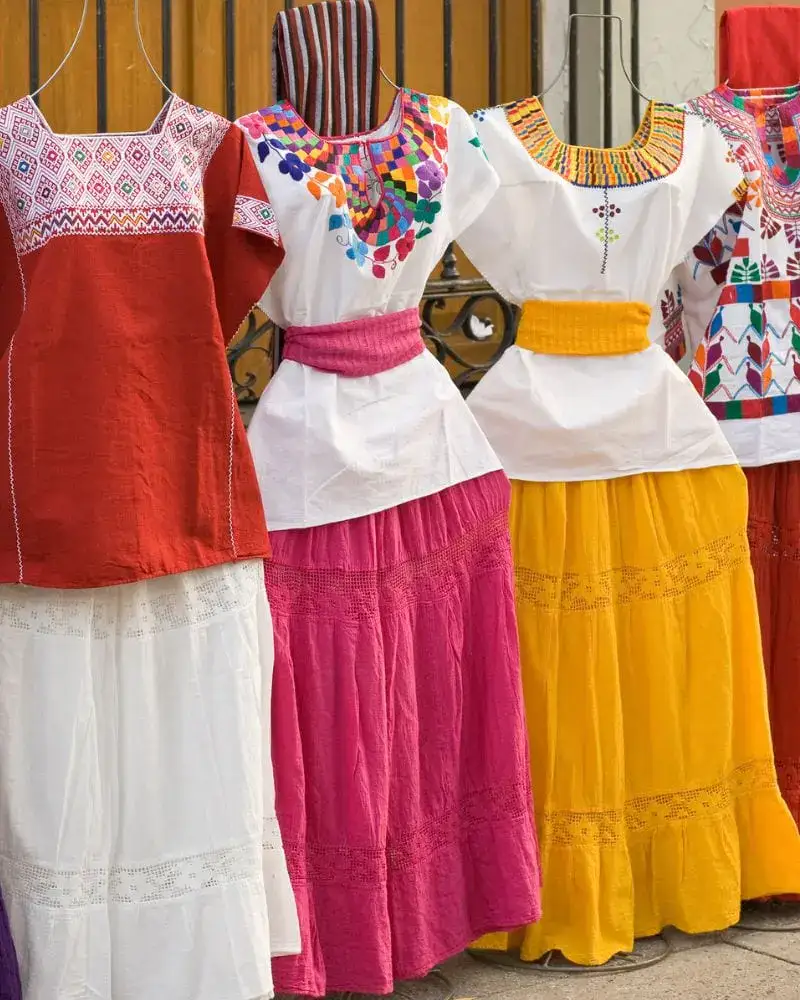
Most huipils hang loose, but some are tied at the waist or tucked into a skirt like a blouse.
Pair yours with jeans, white pants or a long skirt.
Wash handwoven huipils gently by hand in cold water, and dry them in the shade so natural dyes don’t fade.
Traditional Mexican Huipils FAQ
What is a huipil?
A huipil is a loose, tunic-style garment worn by Indigenous women from central Mexico to Central America.
It’s usually made of two or three rectangular panels woven on a backstrap loom.
How do you pronounce huipil?
Huipil is pronounced “wee-PEEL” in singular, and the plural form, huipils, is pronounced “wee-PEELS.”
In the Yucatán Peninsula, it’s called a hipil and pronounced “ee-PEEL.”
Is it OK for tourists to wear a huipil?
In most places, it’s fine to wear a huipil you’ve bought from the artisans who made it.
There are exceptions. In Jamiltepec, Oaxaca, it’s taboo for outsiders to wear the town’s huipils.
Ceremonial huipils, like those made to dress saint statues, aren’t meant for everyday wear.
How much does a huipil cost?
A huipil’s price depends on how it’s made, as machine-made huipil-style blouses are inexpensive, while handwoven ones cost much more.
A handwoven huipil can take hundreds of hours to make, so expect to pay a lot more for one.
To see historic huipils from all over the state, visit the Museo Textil de Oaxaca in Oaxaca City.
Get My FREE Guide: 5 Easy Ways to Save Money in Mexico
Insider tips from someone who’s lived in Mexico since 2018.
