
10 Fun Facts About Mexico That Will Surprise You (You Won’t Believe #4)


Mexico’s official name is Estados Unidos Mexicanos (United Mexican States or United States of Mexico). You’re about to discover many fun and interesting facts about Mexico.
As a large country, Mexico is packed with rich culture, world-class food, and incredible heritage and history. It was difficult to narrow the list down because there are so many cool things about Mexico.
Keep reading to discover the 10 most interesting facts about Mexico — including facts about Mexico City, general fun facts about Mexico, and other interesting things about Mexico that make it so unique.
Disclosure: This article may contain affiliate links, meaning when you make a purchase, I earn a small commission. Affiliate links cost you nothing to use, and help keep my content free. It’s a win-win for us both. For more info, see the Disclosure Policy.
1. Mexico has the World’s Smallest Volcano

Mexico is home to the smallest volcano on Earth, Cuexcomate Volcano, located outside Puebla City, Mexico. It stands at an adorable 43-feet-tall (13 m).
Compared to the tallest volcano on Earth, Mauna Loa in Hawaii, at 13,678-feet-tall (4,169 m), Cuexcomate is barely a hill.
2. Mexico has 42 volcanoes

There are 42 active volcanoes in Mexico, as well as thousands of inactive volcanoes.
The country is located on the Ring of Fire — the most seismically active region on Earth. This is where you’ll find 75% of Earth’s volcanoes and where 90% of all earthquakes happen.
The highest peak in Mexico is an inactive stratovolcano, the Pico de Orizaba (or, Volcan Citlaltepetl), located in Puebla state.
It stands at about 18,500 feet (5,650 m) above sea level. Pico de Orizaba is the third largest volcano in North America and is very popular with climbers.
🐰 Weird Facts About Mexico: Mexico is home to a very rare rabbit called the volcano rabbit, which lives around the country’s volcanoes.
3. Millions of Butterflies Migrate to and from Mexico Each Year
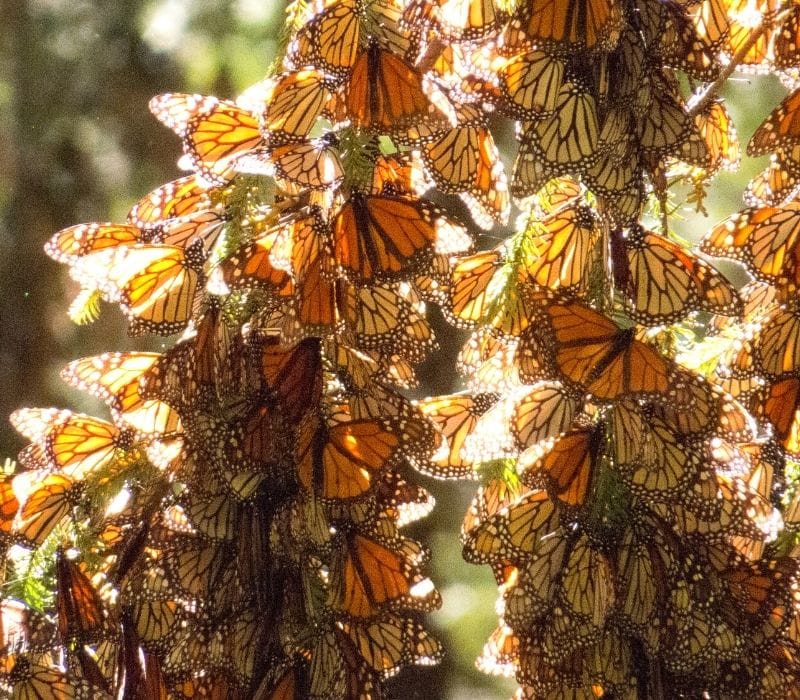
Every November, millions (possibly billions) of monarch butterflies 🦋 make their annual 3,000-mile migration from Canada to Mexico. They remain here from about November to March.
Located not far from Mexico City, the Mexico Monarch Sanctuary is a UNESCO World Heritage Site.
If you visit Central Mexico during their migration season, this is one of the most fun things to do in Mexico.
One of the best places to see the butterflies in Mexico is the Piedra Herrada Monarch Butterfly Biosphere. It is located two hours from Mexico City near the lakefront town of Valle de Bravo.
4. Mexico has the Most Cenotes on Earth
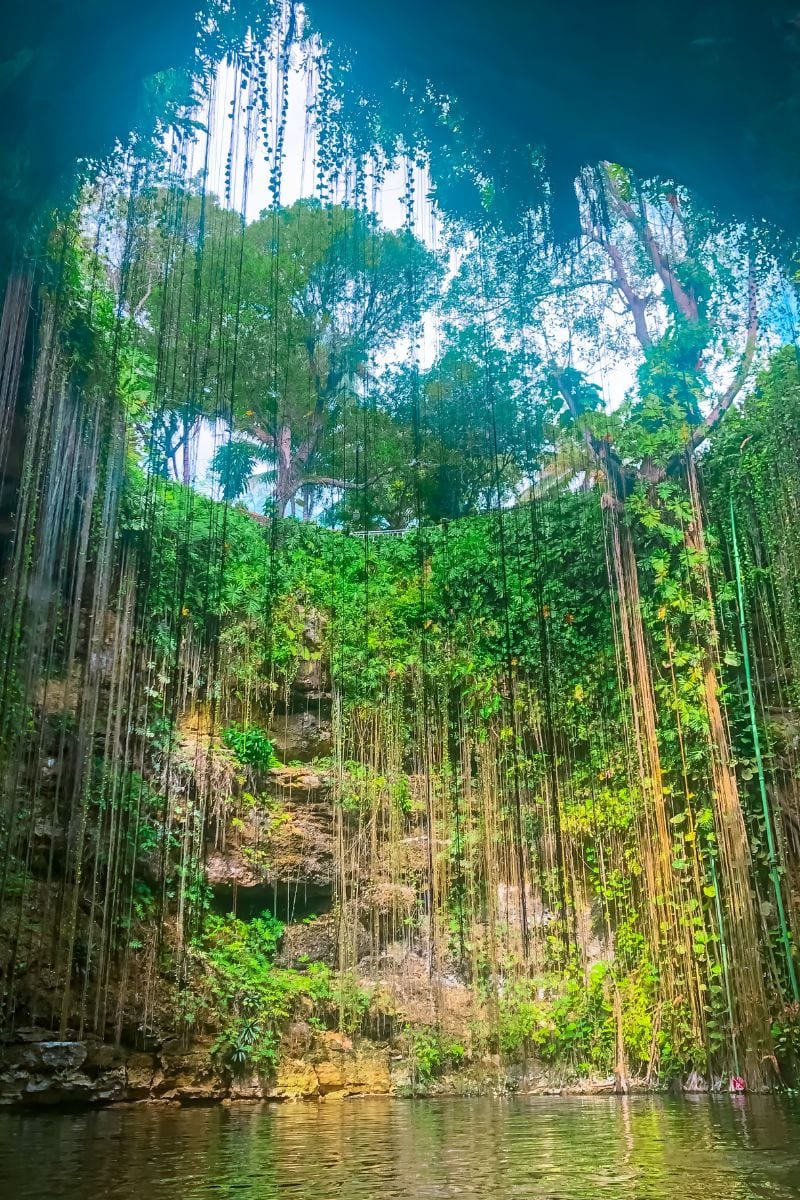
Mexico is known for its beautiful cenotes (pronounced sen-no-tays) — which are basically natural freshwater pools.
There are about 6,000 cenotes in Mexico, with most in the Yucatan Peninsula and near the Yucatan coast. They’re all connected as part of the largest underwater cave system on Earth.
You can learn more about the best cenotes in Mexico, and the best things to do in Yucatan, in this article: 25 Best Places in Yucatan Mexico: Ruins, Beaches, Cenotes.
🤔 What are cenotes?
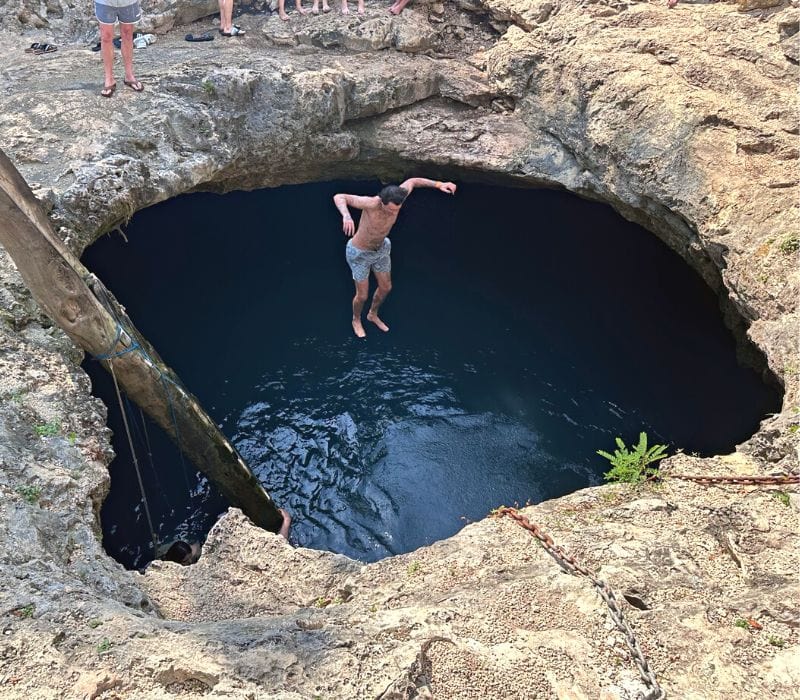
The actual definition you might see for cenotes is a “sinkhole.”
This describes the process of how the cenotes came to be — as all cenotes were once enclosed in the native limestone rock, but over time some of the rock eroded, to expose the cenote water beneath.
Nowadays, thanks to YouTube, TikTok and social media, the photogenic cenotes have become popular for swimming and photography.
However, cenotes are sacred for the Mayan people, who used them as a freshwater source, places of worship, and more. So much of the Mayan world is well-preserved in Mexico.
5. Mexico City has the Second Most Museums of Any City
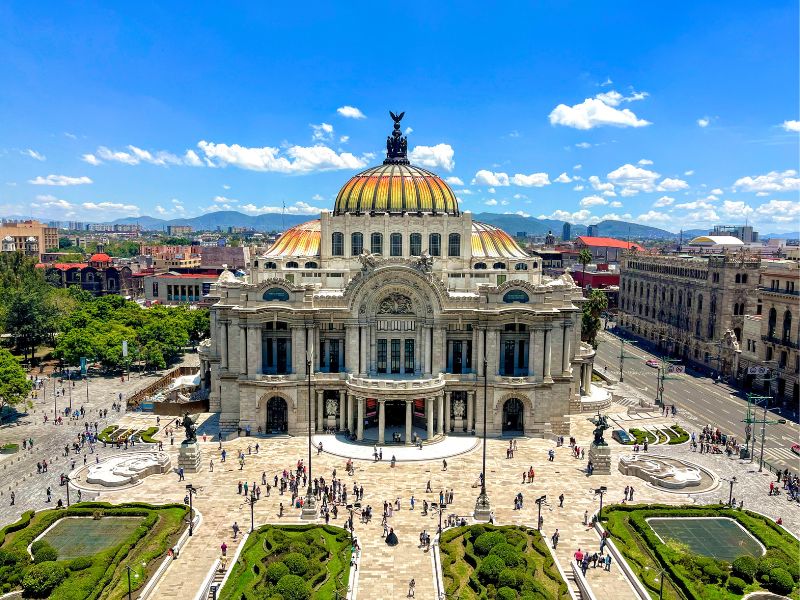
While this is one of those fun facts about Mexico City that’s hotly debated, know that Mexico City has a lot of museums.
For many years, it was widely considered that London had the most museums, followed by Mexico City.
In recent years, Moscow and Paris have claimed to have the most, but this is hard to really know as it depends on how to properly define what constitutes a “museum.”
According to TripAdvisor, there are about 145 museums in Mexico City, some of which are on this list of the 51 Best Non-Touristy Things to Do in Mexico City.
Among the most fun things to do in Mexico City are visiting the National Anthropology Museum, Frida Kahlo Museum, Palacio Bellas Artes, Templo Mayor, and the off-the-beaten-path Mexico City Museum of Antique Toys.
🇲🇽 Mexico Travel Tips: Nearly all museums in Mexico City are closed Mondays. On Sundays, Mexican nationals get in free to all Mexico museums, so expect big crowds that day.
6. Mexico City was Built on a Lake – And it’s sinking

One of the most bizarre and interesting facts about Mexico City is that it’s sinking.
In fact, Mexico City has sunk so much that it was once the seventh highest capital city on Earth, but has since been overtaken by Sana’a, Yemen, which is about 30-feet (9 m) higher now.
Tenochtitlan, now known as Mexico City, was once the grand Aztec Empire capital of the world. It was torn down during the Spanish Conquest led by Hernán Cortés, which began in 1521.
You can tour the ruins of their Templo Mayor (Main Temple) in Centro Historico. Located in the heart of Mexico City, this is one of three Mexico City UNESCO World Heritage Sites.
7. The Aztecs Discovered Mexico City By Prophecy

When searching for a place to establish their capital city, Aztec priests prophesied they would see an eagle on a cactus eating a snake — and know that’s where they must set up their city.
The Aztecs ultimately found the eagle, perched on a cactus in Lake Texcoco. Since they couldn’t ignore the prophecy, they built their city on top of the lake.
As a result of unstable ground, Mexico City is sinking by about 4.75-inches (12 cm) each year.
8. Mexico’s National Symbol is the Golden Eagle

This image of the eagle remained an enduring symbol, pictured in the center of Mexico’s flag.
The Mexican Coat of Arms, located in the white stripe on the Mexican flag, shows an eagle on a nopal (cactus) with a snake in its mouth and talons.
9. Mexico Only has One Gun Store, Located in Mexico City
Though its sinister reputation may lead you to think otherwise, Mexico has some of the world’s strictest firearm laws and regulations.
Mexico has only one gun store, located in Mexico City and operated by the Mexican military.
To purchase a gun in Mexico, citizens have to subject themselves to background checks, fingerprinting, submitting references, being photographed, and other steps.
10. There are Women-Only Cars in the Mexico City Subway

Like any large city, Mexico City has higher crime rates than small cities, and higher incidents of pickpocketing and petty theft.
To compare cities, Mexico City is about as safe as New York City — and much like NYC, you must exercise caution on the subway, especially during rush hour.
In an effort to make the Mexico City Metro safer for women, the front subway carriages are for women and children only.
Also, most public buses are large with two or three cars for each one, and similarly, the front part of Mexico City buses are women only.
⚠️ For tips on Mexico City safety, check out this Ultimate Mexico City Solo Travel Guide for Female Travelers, which even non-solo travelers will learn a lot from.
11. Chocolate Originated in Mexico

Here’s one of the most delicious and interesting facts Mexico has: The ancient Mexican civilizations, including the Olmec, Aztec peoples, Toltec, and Maya, have been cultivating cacao trees more than 3,000 years ago.
In fact, the English word “chocolate” is derived from the Aztec word, xocolatl. This word comes from Nahuatl, the Aztec language.
It has long been consumed as a drink, but cacao beans were also used as a form of currency, often valued at more than gold.
In different parts of Mexico, you can still enjoy ancient drinking chocolates, like atole, champurrado, and tascalate.
There’s also tejate, which is lovingly called “the drink of the gods.” This is one of the best Oaxaca food and drinks you need to try when you visit.
12. Mexico is the World’s Largest Beer Exporter

In 2019, Mexico exported $4.2 billion worth of beer. The Netherlands, which produces Heineken, is the world’s second biggest beer exporter with sales of $2.1 billion — only about half as much as Mexico.
🍺 What’s the best selling beer in Mexico? According to Wiki, it’s Corona, which is one of the five most-consumed beers in the world, and available in more than 150 countries.
While Corona is the most known and most consumed of all Mexican beers, there are plenty more to try, both
Next time you’re in the market, check out some of these other best Mexican beers: Dos Equis, Negra Modelo, Sol, Pacifico, Indio, Tecate, Victoria, Bohemia and Carta Blanca.
13. Mexico is the World’s Top Coca-Cola Consumer

On average in Mexico, there’s an astounding 163 liters consumed annually by each person! This translates to half a liter every day, and of course, high rates of diabetes, obesity and more.
🥤 Fun Facts of Mexico: Coca-Cola is so popular that it’s even part of the unique religious ceremony at Iglesia San Juan church in San Juan Chamula, Chiapas.
In fact, Mexico is considered the second most overweight country on Earth, behind the U.S. Many point the finger right at soda over-consumption, and the government is starting to take measures.
In the state of Oaxaca, children can no longer legally purchase soda on their own. Hopefully soon, this will help change the fact that Mexico is the largest consumer of soda.
14. Traditional Mexican Food is UNESCO Approved

In 2010, the United Nations Educational, Scientific and Cultural Organization — better known as UNESCO — declared Mexican food an Intangible Cultural Heritage of Mankind and Immaterial World Cultural Heritage.
Mexican cuisine is elaborate and symbol-laden, with everyday tortillas and tamales, both made of corn, forming an integral part of Day of the Dead offerings.
Source: UNESCO
In short, this is a fancy way of saying traditional Mexican food is important, amazing, and a gift to mankind!
This prestigious culinary designation, which has only been bestowed to Mexico and France, highlights Mexican ingredients as well as cooking preparations.
While corn is a staple food in Mexico, it was the nixtamalization process that allowed for the creation of tortillas (as well as tamales).
🌮 Fun Facts of Mexico: Tacos are eaten all over the country, but burritos are only common in Northern Mexico cities like Monterrey and Ciudad Juarez, considered the birthplace of the burrito.
15. Mexico has 59 Varieties of Corn

For centuries, Mexican farmers have been growing corn 🌽 In fact, there’s no country in the world as socially, economically and culturally linked to corn as Mexico.
For thousands of years, it has been one of the top staple foods and cooking ingredients in traditional Mexican cuisine.
There are 59 varieties of indigenous corn, in colors ranging from red and blue to green and white, all of which come from the same wild species, called teosinte.
With so many varieties, there are multiple words for corn, though maíz is the most commonly used.
16. Tomatoes Come from Mexico
Tomatoes are actually berries, and they are most associated with Italian cuisine. However, they first grew in Mexico.
Spanish explorer Hernan Cortez is said to have brought the first tomato plant to Europe from Mexico in 1519.
Besides tomatoes, Mexico also gave us many of our most beloved foods, including cacao (chocolate), avocados, zucchini, vanilla, various beans, and numerous types of chili peppers.
Some claim coffee also comes from Mexico, but other sources say it’s from Ethiopia.
Final Thoughts: Fun Facts About Mexico
This just scratched the surface of all the amazing and interesting facts about Mexico — but you now have a better idea of how amazing this often underrated country is.
So, just what is Mexico known for? Though most know it simply as one big tropical Spring Break party town, I hope you’ve discovered a plethora of interesting tidbits about Mexico in this article.
In reality, there definitely are many amazing Mexico beaches — but it’s not all beaches, tacos and tequila.
For more Mexico fun facts and information, and to discover Mexico further, check out the Mexican movies and Mexico books below. These just might be your doorway to even more Mexico facts.
Ready to Book Your Mexico Vacation? Here Are Some Resources To Look At:

Mexico is a large country — the 14th largest country on Earth by size — and it’s also the 6th most biodiverse diverse country in the world.
Though it’s mostly known for beaches, there’s a lot more to Mexico than that. Check out these Mexico articles to discover parts of the country you never knew existed.
- The 30 Most Beautiful Cities in Mexico (#7 Will Shock You)
- Mexico Off the Beaten Path Places for Your Bucket List
- 20 Hot Springs in Mexico That are Calling Your Name
- Hidden Beaches in Mexico You’ve Never Heard Of
- Best Waterfalls in Huasteca Potosina Mexico
- The Coolest Mayan Ruins in Mexico’s Yucatan Peninsula
⚠️ Before You Go — Get Your FREE Guide!
Head here and enter your email address to download your FREE Mexico guide (5 Things You Don’t Want to Forget to Pack for Mexico) and get Mexico travel tips, tricks and more sent straight to your inbox.
