
15 Traditional Mexican Instruments You’ve Probably Never Heard Of (#14 Uses an Armadillo Shell)

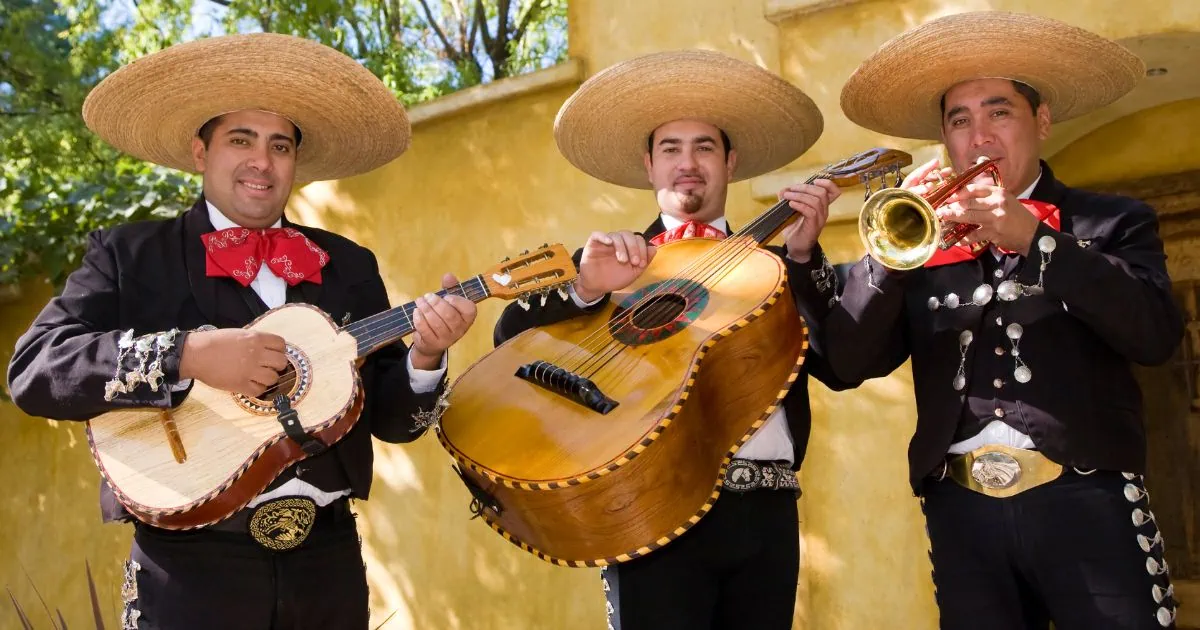
Curious About traditional Mexican instruments?
I’ve called Mexico home since 2018, and one of my favorite memories is listening to mariachis at El Parián in Tlaquepaque.
Mexican music is much more than trumpets and guitars, and some instruments date back to the Aztecs.
Here are 15 traditional Mexican instruments, and where you can hear them played today.
The 15 Most Famous Traditional Mexican Instruments
1. Guitarrón
- 🎵 Music style: Mariachi
- 📍 Where to hear it: Plaza Garibaldi in Mexico City
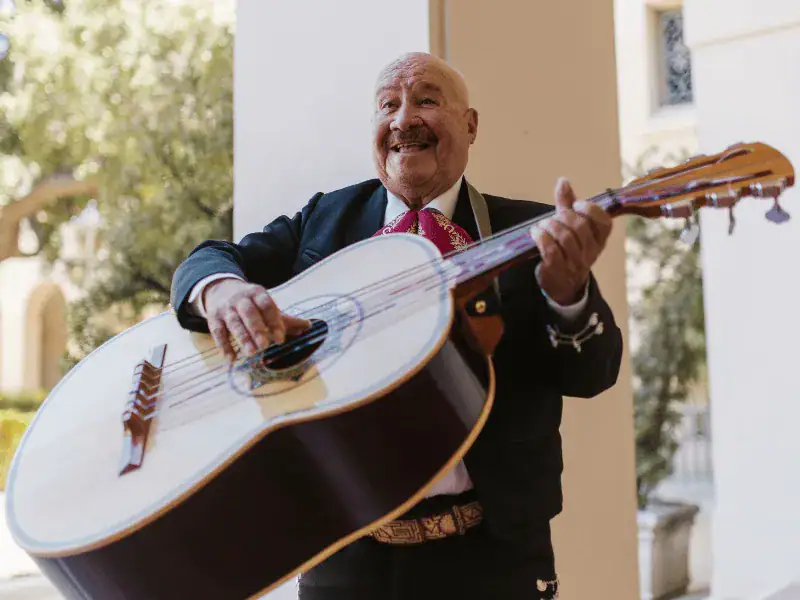
The guitarrón is the big, deep-bodied bass guitar of every mariachi band.
It has six strings and a curved back, and players often pluck two strings at once for a fuller bass.
It has no frets, so players rely on their ear to hit each note.
2. Vihuela
- 🎵 Music style: Mariachi
- 📍 Where to hear it: Plaza Garibaldi in Mexico City or El Parián in Tlaquepaque
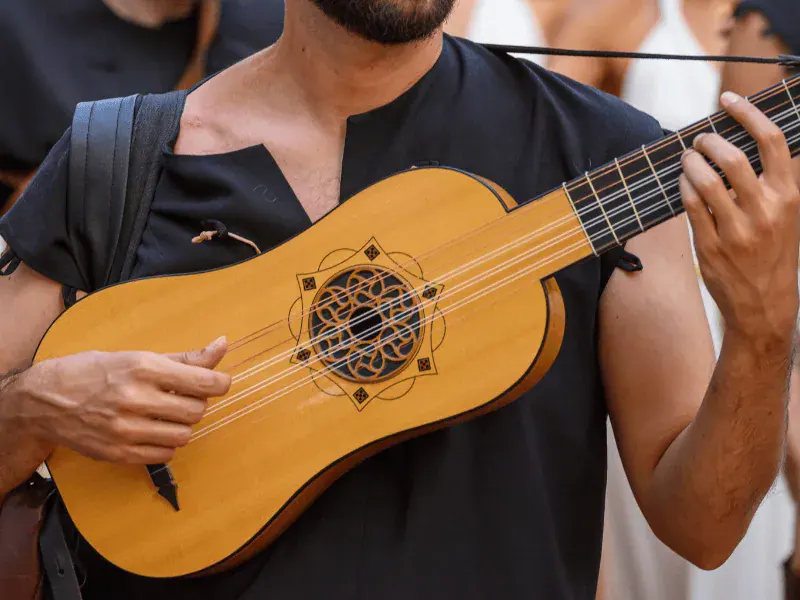
The mariachi vihuela is a small, five-string guitar with a high, bright sound.
Like the guitarrón, it has a curved back that bulges outward.
Players strum it fast to keep the rhythm, which gives mariachi music its lively bounce.
3. Jarana Jarocha
- 🎵 Music style: Son jarocho
- 📍 Where to hear it: The Candelaria festival in Tlacotalpan, Veracruz
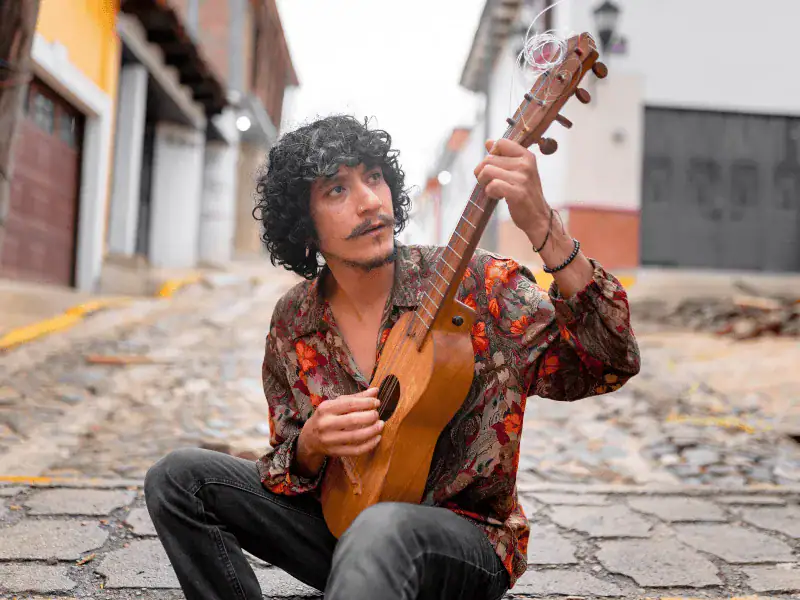
The jarana jarocha is a small, guitar-shaped instrument from southern Veracruz.
It drives the rhythm in son jarocho, the music behind the folk song “La Bamba.”
Jaranas come in several sizes, and players strum them in lively patterns at fandangos, or community dance parties.
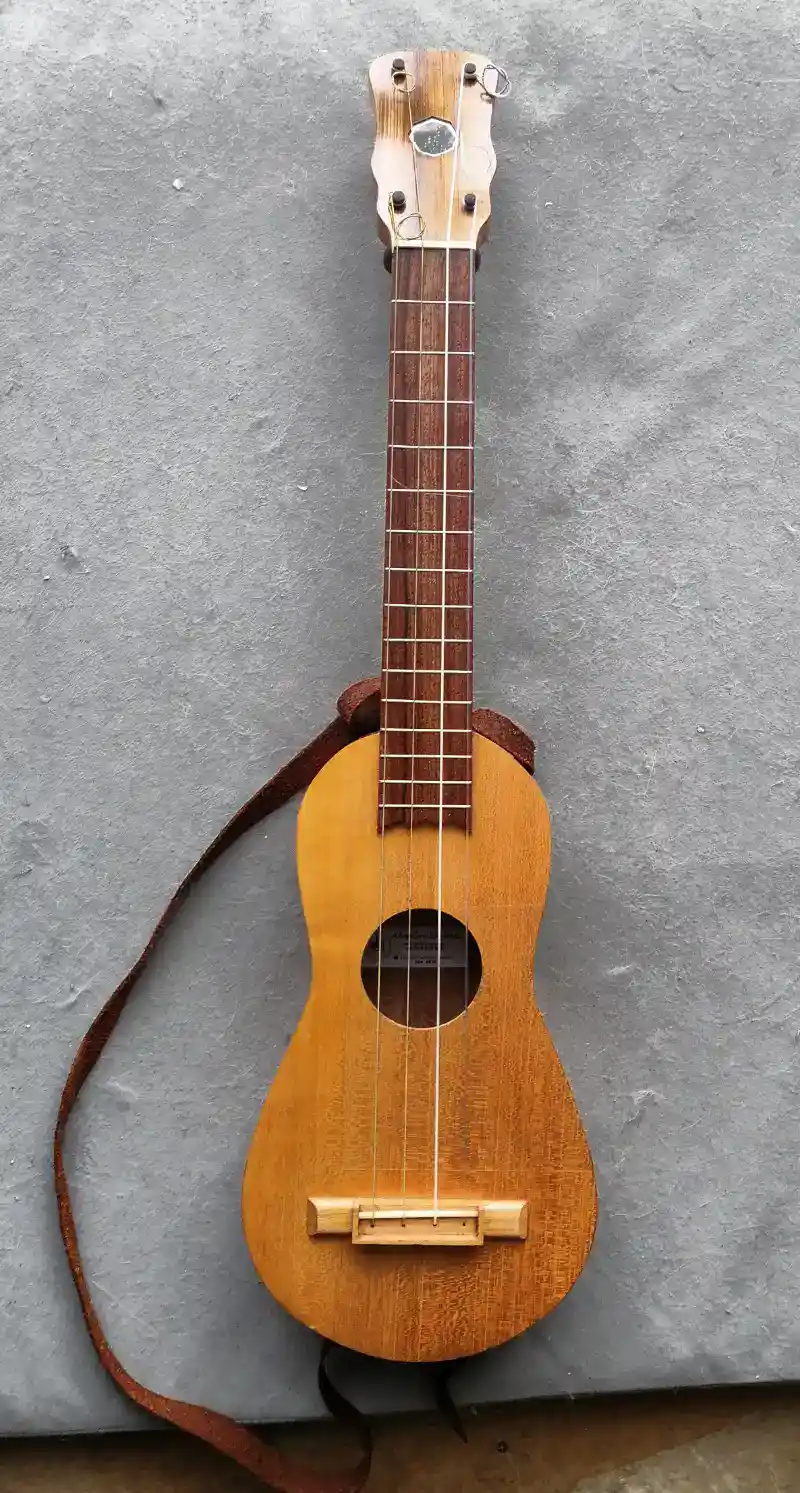
4. Requinto Jarocho
- 🎵 Music style: Son jarocho
- 📍 Where to hear it: Fandangos in Veracruz towns like Tlacotalpan
The requinto jarocho, also called the guitarra de son, plays the melody in son jarocho.
It’s a narrow guitar with four or five strings, traditionally played with a long pick made from cow horn.
Its sharp, punchy notes cut right through the strumming jaranas.
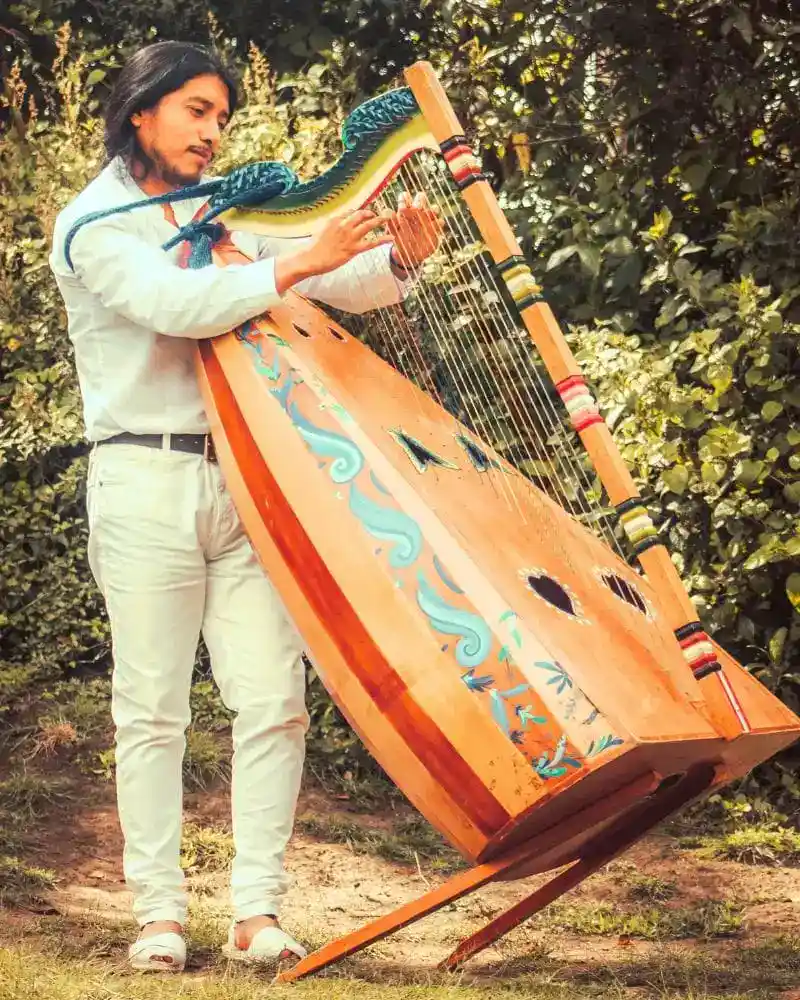
5. Arpa Jarocha
- 🎵 Music style: Son jarocho
- 📍 Where to hear it: Veracruz City’s main plaza and Tlacotalpan
The arpa jarocha is a tall wooden harp from Veracruz, played standing up.
It plays both the bass and the melody, often leading the group.
Its bright notes ring out over dancers stomping on a wooden platform called a tarima.
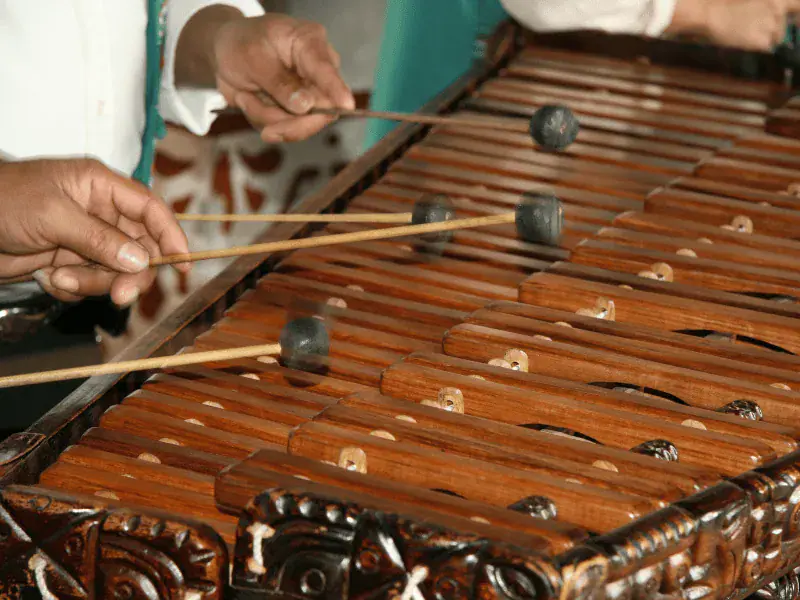
6. Marimba
- 🎵 Music style: Marimba music of Chiapas
- 📍 Where to hear it: Parque de la Marimba in Tuxtla Gutiérrez, Chiapas
The marimba is a large wooden xylophone, often played by three or four musicians at once.
It’s deeply tied to the identity of Chiapas, where you’ll hear it at parties, plazas and parades.
Free marimba concerts take place most evenings at Parque de la Marimba in Tuxtla Gutiérrez.
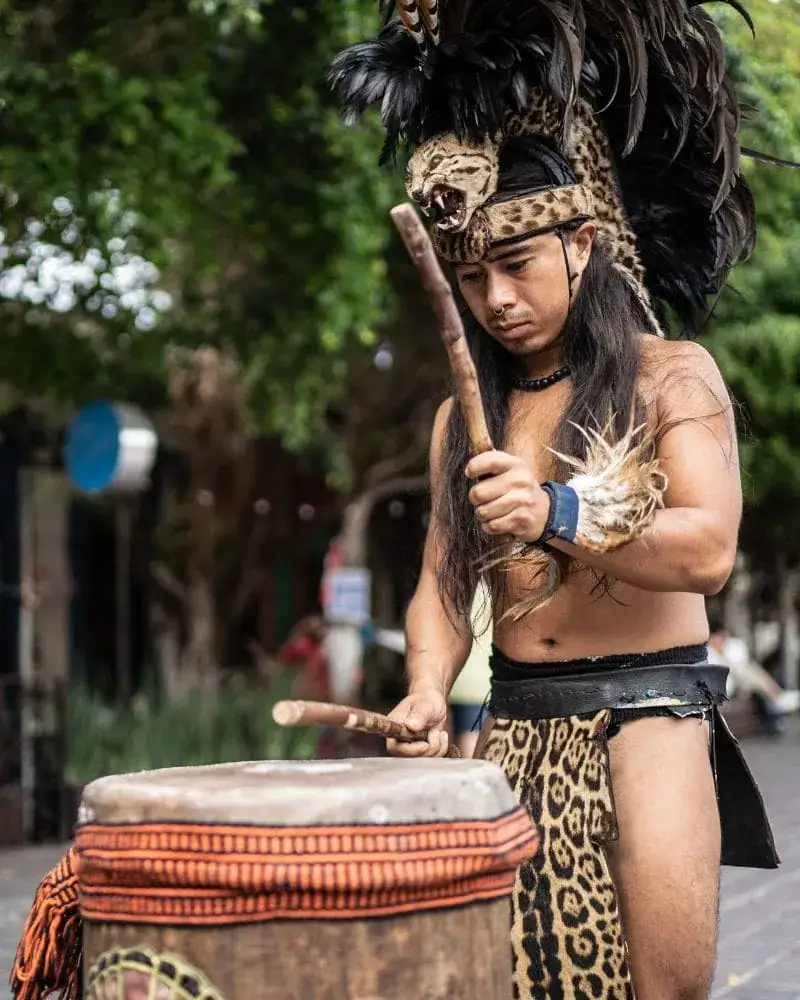
7. Huehuetl
- 🎵 Music style: Pre-Hispanic
- 📍 Where to hear it: Concheros dancers in Mexico City’s Zócalo
The huehuetl is an upright drum carved from a hollowed tree trunk and topped with animal skin.
The Aztecs played it at ceremonies and in battle, often with the teponaztli.
Today, it sets the beat for the Concheros dancers you’ll see in Mexico City’s Zócalo.
8. Teponaztli
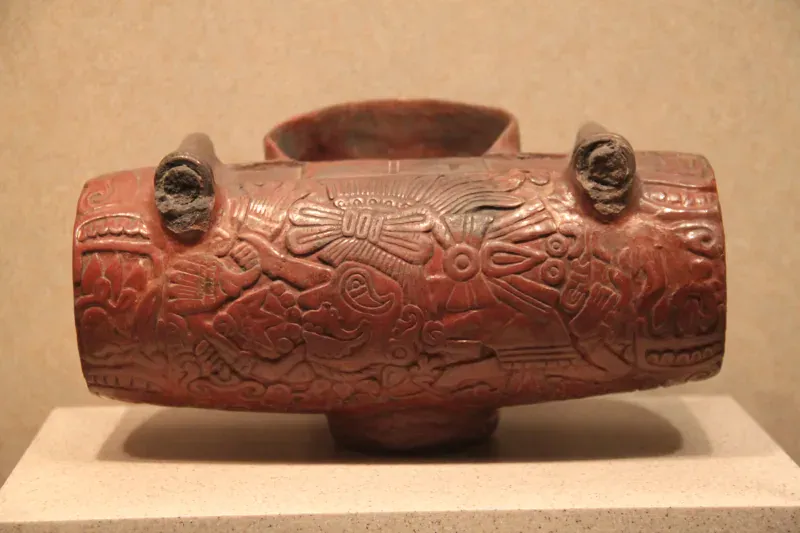
- 🎵 Music style: Pre-Hispanic
- 📍 Where to hear it: Pre-Hispanic music shows in Mexico City
The teponaztli is a horizontal slit drum traditionally carved from a single log.
An H-shaped cut on top creates two wooden tongues, and each one makes a different note.
This clay version at the National Museum of Anthropology shows that the Aztecs also made them from pottery.
9. Caracol (Conch Trumpet)
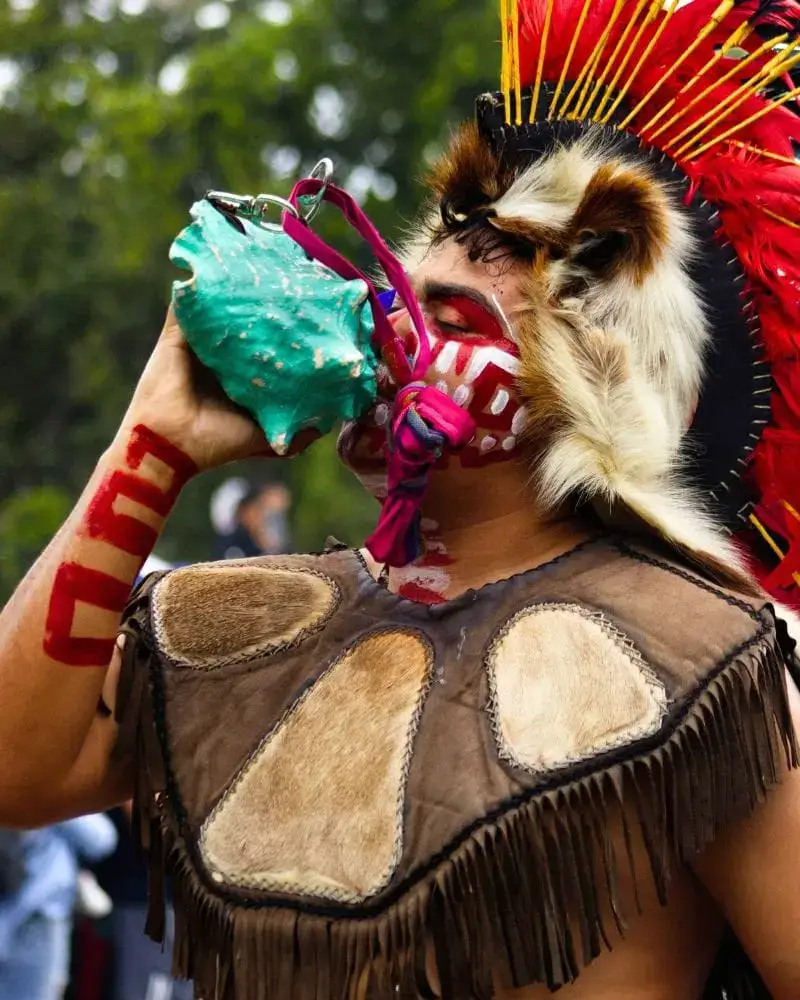
- 🎵 Music style: Pre-Hispanic
- 📍 Where to hear it: Concheros dances and ceremonies in Mexico City’s Zócalo
The caracol is a large conch shell turned into a trumpet by cutting off its tip.
The Aztecs and Maya blew it to open ceremonies, mark the time and call warriors to battle.
Its deep, haunting call still opens many Concheros dances.
10. Ayoyotes
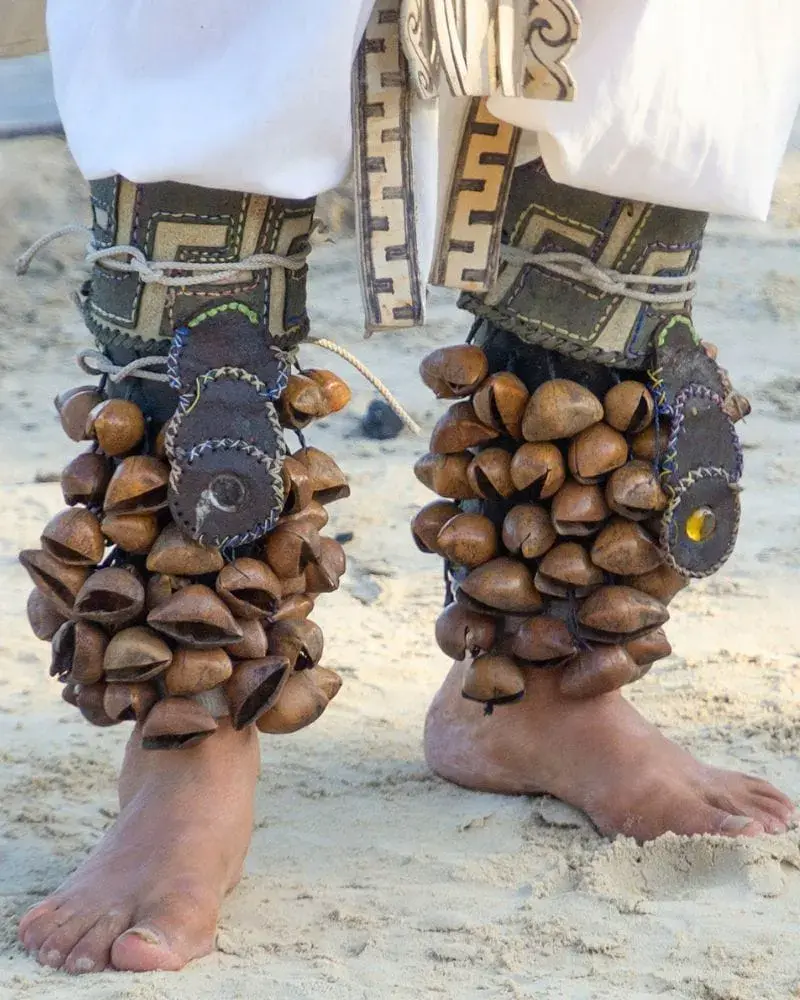
- 🎵 Music style: Pre-Hispanic
- 📍 Where to hear it: Concheros and Aztec dancers in Mexico City’s Zócalo
Ayoyotes are rattles made from the hard seed shells of the ayoyote tree.
Dancers tie strings of them around their ankles, so every step adds a rattling beat.
You’ll see them on many of the traditional Mexican dances with pre-Hispanic roots.
11. Tlapitzalli (Clay Flute)
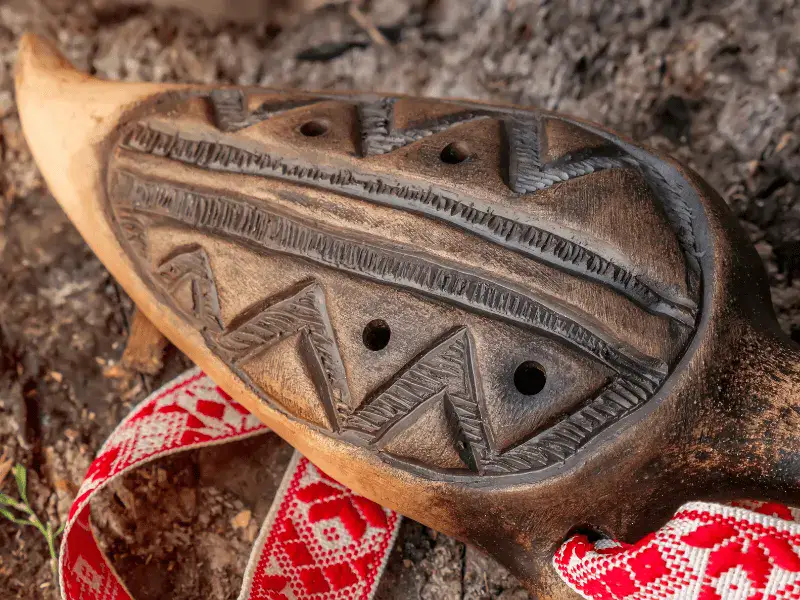
- 🎵 Music style: Pre-Hispanic
- 📍 Where to hear it: Pre-Hispanic music shows, or see ancient ones at the National Museum of Anthropology
The tlapitzalli is a clay flute played by the Aztecs and other ancient cultures.
Many were decorated with flowers or animals and had four holes for different notes.
Musicians played them at religious ceremonies, and some were broken on purpose as part of rituals.
12. Quijada (Jawbone)
- 🎵 Music style: Son jarocho and Afro-Mexican music
- 📍 Where to hear it: Son jarocho groups in Veracruz and the Costa Chica of Guerrero and Oaxaca
The quijada is the dried jawbone of a donkey, horse or mule, used as a percussion instrument.
When you hit it, the loose teeth rattle and buzz.
Players also scrape a stick along the teeth for a clicking sound.
It’s tied to Mexico’s Afro-Mexican heritage and is still heard in son jarocho.
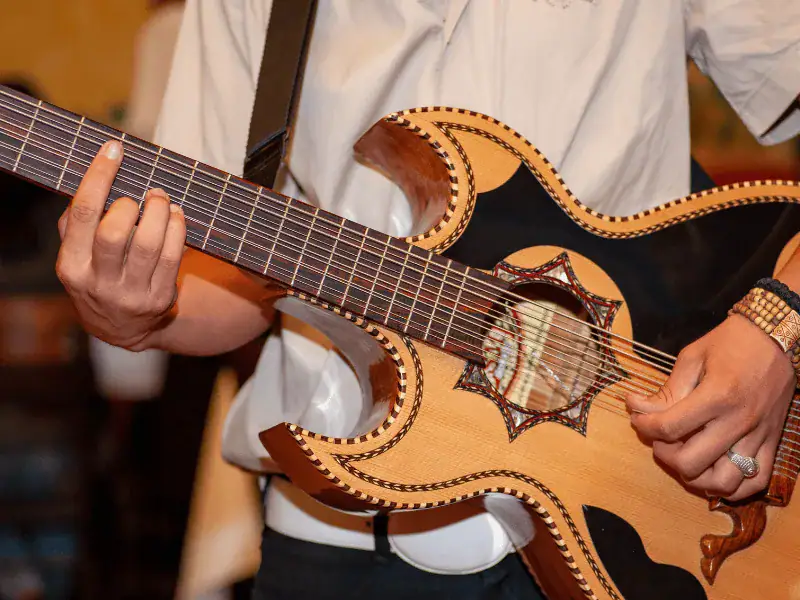
13. Bajo Sexto
- 🎵 Music style: Norteño
- 📍 Where to hear it: Norteño bars and festivals in Monterrey and northern Mexico
The bajo sexto is a 12-string bass guitar with six pairs of strings.
Along with the accordion, it’s the backbone of norteño music from northern Mexico.
It plays both the bass line and the rhythm, so a small band sounds much bigger.
Find more music to listen to in my list of famous Mexican singers.
14. Concha

- 🎵 Music style: Concheros dance music
- 📍 Where to hear it: Concheros dances in the Zócalo and at the Basilica of Guadalupe on December 12
The concha is a small mandolin-like instrument with a body made from an armadillo shell.
It gave the Concheros dancers their name.
Musicians play it while the dancers move, mixing Indigenous and Spanish traditions.
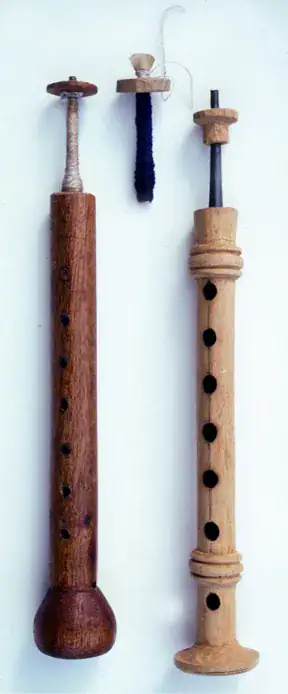
15. Chirimía
- 🎵 Music style: Village fiesta music
- 📍 Where to hear it: Patron saint fiestas in Puebla, Tlaxcala and Oaxaca villages
The chirimía is a wooden reed instrument that Spanish missionaries brought to Mexico in the 1500s.
It has a loud, nasal sound, a bit like an oboe, and is often paired with a drum.
You’ll still hear it at village fiestas and religious processions in central and southern Mexico.
Catch one at the best cultural festivals in Mexico.
Want more Mexican culture? Don’t miss my list of what Mexico is known for.
Mexican Instruments FAQ
What instruments are in a mariachi band?
A mariachi band usually has violins, trumpets, a guitar, a vihuela and a guitarrón.
Some groups also add a harp.
What is the most famous Mexican instrument?
The mariachi guitarrón and vihuela are among the most famous Mexican instruments.
You’ll hear them in every mariachi band, from Plaza Garibaldi to Tlaquepaque.
What instruments did the Aztecs play?
The Aztecs played drums like the huehuetl and teponaztli, plus conch-shell trumpets, clay flutes and rattles.
Music was a big part of their religious ceremonies.
What is son jarocho?
Son jarocho is the traditional folk music of southern Veracruz, played on jaranas, the requinto and the harp.
It’s best known for the song “La Bamba” and for fandangos, where people dance on a wooden platform.
Get My FREE Guide: 5 Easy Ways to Save Money in Mexico
Insider tips from someone who’s lived in Mexico since 2018.
