
Where to See Wild Animals in Mexico (And Which Ones You’ll See There)


Want to see Mexico’s national animals in the wild?
You’re in the right place! I’ve been living in Mexico since 2018, and have been fortunate enough to see MANY wild animals in Mexico firsthand.
From the tropical jungles and deserts to Mexico’s beaches and forests, each area offers a window into the lives of some truly captivating wild animals.
In this guide, I’ll show you the top places I’ve found where these wild encounters not only become possible but are almost guaranteed.
Join me as we explore the best spots to see wild animals in Mexico in a sustainable and ethical way.
1. Sian Ka’an Biosphere Reserve
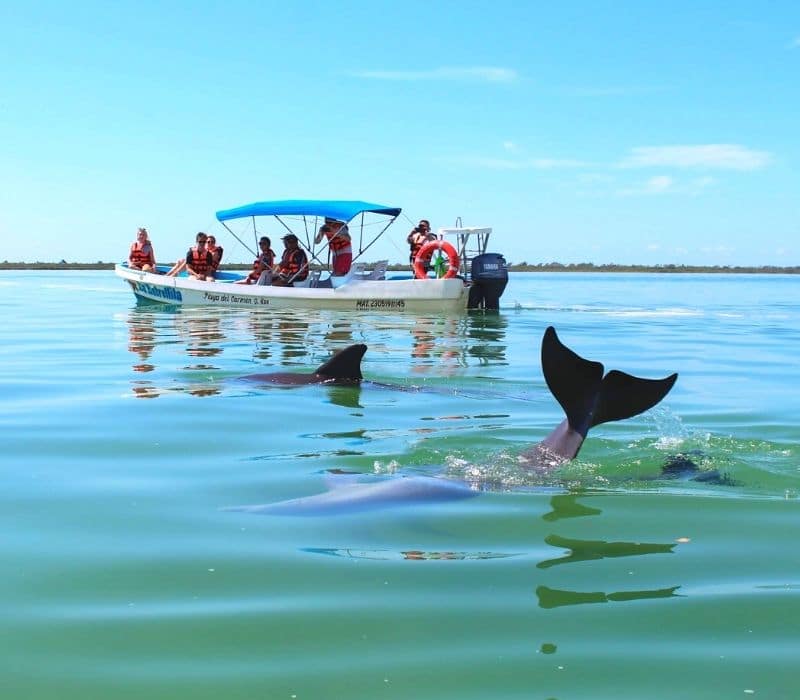
📍 Where to Stay: Tulum
Located just south of Tulum, the Sian Ka’an Biosphere Reserve offers an escape into one of Mexico’s most pristine natural environments.
It is one of the most popular places to see wild animals in Mexico due to its proximity to Tulum, which makes it easy to get to.
This UNESCO World Heritage Site spans more than a million acres (404,685 hectares), featuring a rich mosaic of tropical forests, mangroves, marshes, and a barrier reef bustling with marine life.
The reserve’s network of waterways is perfect for kayaking or floating tours, where silence is only broken by the splash of water and the call of distant birds from Mexico.
Visitors can enjoy activities like bird watching, snorkeling, and even fly fishing in this vast, protected area.
The beauty of Sian Ka’an lies not just in its biodiversity, but also in its profound tranquility and isolation, providing a genuine wilderness experience.
🐬 Animals to See in Sian Kaan Biosphere
The reserve is a critical habitat for a variety of Mexican wildlife and native plants.
It’s home to elusive jaguars that roam the dense forests, and manatees and dolphins that gently glide through the clear waters.
There’s also crocodiles sunning on the banks, and numerous species of tropical birds, like toucans and parrots, that add a vivid splash of color to the green canopy.
2. Baja California Sur

📍 Where to Stay: La Paz
Baja California Sur state is one of two states that make up Mexico’s Baja Peninsula on the country’s west coast; the other is Baja California state (without the “Sur”).
Baja Sur is a paradise for marine wildlife enthusiasts, and another touristy location where it’s easy to both find a nice hotel and see wild animals in Mexico.
The region’s waters are famously clear, making it an ideal spot for snorkeling and diving.
La Paz Mexico, located on the Sea of Cortez, has been called the “Aquarium of the World” by diver Jacques Cousteau due to its vibrant marine life and biodiversity.
Here, visitors can swim with the friendly sea lions of Espiritu Santo Island, join eco-friendly tours to see whales, or snorkel with whale sharks in the nutrient-rich waters.
The coast also offers stunning beaches where relaxation and wildlife observation can go hand in hand.
🐋 Animals to See in La Paz
This region is best known for its aquatic residents, so expect to see majestic whales, playful dolphins, and curious sea lions, and large fish like marlin.
During certain times of the year, the waters around La Paz become a gathering spot for whale sharks, the largest fish in the sea, offering an unforgettable snorkeling experience.
3. Calakmul Biosphere Reserve

📍 Where to Stay: Campeche
Deep in the heart of Campeche state in the Yucatan Peninsula, the Calakmul Biosphere Reserve is one of the most significant and biodiverse areas in Mexico.
This ancient site is not only a critical conservation area, but also houses one of the largest and most powerful ancient Maya cities.
The vast rainforest surrounding some of Mexico’s best Mayan Ruins teems with wildlife, and is an excellent spot for those who want to combine historical exploration while spotting wild animals in Mexico.
Hiking through this dense jungle, visitors often feel as though they’ve stepped back in time, surrounded by the calls of the wild and the mystique of ancient civilizations.
🐆 Animals to See in Calakmul Biosphere
Calakmul is a sanctuary for a variety of jungle dwellers. It’s one of the best places in Mexico to spot jaguars in their natural habitat.
The reserve also hosts large populations of monkeys and vibrant toucans, which are often seen flitting through the canopy.
Keep an eye out for the occasional puma, as well as numerous other species that call this dense forest home.
4. Copper Canyon

📍 Where to Stay: Creel
Mexico’s Copper Canyon is a network of canyons several times larger than the Grand Canyon. It offers a dramatic and rugged landscape in the northern state of Chihuahua.
The area around Creel, a Mexico pueblo magico (magic town) nestled at the edge of the canyons, serves as the perfect base for exploring this vast region.
Here, adventurers can embark on hikes, horseback rides, or thrilling train rides along the famous El Chepe Train (Ferrocarril Chihuahua al Pacífico), which provides spectacular views of the deep gorges and towering cliffs.
The natural beauty of Copper Canyon is both awe-inspiring and humbling, with its vast, open spaces and deep silence punctuated only by the echoes of wildlife.
🐏 Animals to See in Copper Canyon
The diverse ecosystems of Copper Canyon support a range of wildlife adapted to its varied climates.
Sightings may include bighorn sheep navigating the rocky terrain, pumas lurking in the shadows, and even black bears.
Birdwatchers will also be delighted by the presence of eagles and hawks soaring overhead, utilizing the canyon’s updrafts for effortless flight.
5. El Triunfo Biosphere Reserve

📍 Where to Stay: San Cristóbal de las Casas
Tucked away in the highlands of Chiapas state, El Triunfo Biosphere Reserve is one of the most important cloud forest habitats in Mexico.
This reserve is a haven for biodiversity, largely due to its elevation and the unique climatic conditions it creates.
Visitors to El Triunfo can explore winding trails that lead through dense mists and lush vegetation, offering a surreal experience akin to walking through the clouds.
The area is renowned for its birdwatching opportunities, featuring some of the most exotic and rare bird species in the region, including the elusive Horned Guan.
It is also one of the cheapest places in Mexico to enjoy a vacation while you’re searching for wildlife.
🦜 Animals to See in El Triunfo
The star of El Triunfo is undoubtedly the resplendent quetzal, a bird revered by ancient Maya and Aztec peoples.
This bright bird can sometimes be seen flitting through the canopy, its brilliant plumage a splash of color against the green.
The reserve is also home to a variety of other bird species, as well as crocodiles, and other reptiles lurking in its rivers and lakes.
6. Islas Marietas National Park

📍 Where to Stay: Puerto Vallarta
Off the coast of Puerto Vallarta, the Islas Marietas National Park is a hidden jewel in the crown of Mexico’s Pacific coast.
Formed by volcanic activity, these small uninhabited islands have become famous for their unique landscapes and their secluded beaches, such as the renowned Hidden Beach in Mexico (Playa del Amor).
Being uninhabited islands, they’re a great place to find Mexico’s animals in the wild.
Accessible only by boat, the islands are located about two-hours from Puerto Vallarta by boat, and about one hour by boat from the town of Sayulita Mexico.
You can boat near the islands, but you can only access the Marietas Islands Hidden Beach by swimming through a water tunnel — which I’ve done!
The surrounding waters are crystal clear, perfect for snorkeling and discovering the rich marine life beneath the waves.
The Marietas Islands offer BOTH exceptional land and sea exploration, and their isolation makes them one of the best islands in Mexico to see wild animals.
🐢 Animals to See in the Marietas Islands
During the winter months, the waters become a prime viewing spot for humpback whales that migrate to the area to breed and nurse their young, providing an awe-inspiring spectacle for all who visit.
The marine environment around Islas Marietas is bustling with activity, and visitors can expect encounters with playful dolphins and graceful sea turtles.
I visited the Marietas Islands on a tour, and we were also able to see blue-footed boobies, as well as red-footed boobies and yellow-footed boobies.
7. Monarch Butterfly Biosphere Reserve

📍 Where to Stay: Morelia
The Mexico Monarch Butterfly Reserve (Reserva de Biosfera de la Mariposa Monarca) is a UNESCO World Heritage Site that spans 139,000 acres (56,250 hectares) between two states.
Nestled in the mountains of Michoacán state and Estado de Mexico (Mexico state), the Monarch Butterfly Biosphere Reserve offers one of nature’s most spectacular displays.
Each year, millions of monarch butterflies migrate from Canada to this specific area in Mexico, covering the fir trees in blankets of orange and black butterflies.
The sight is breathtaking, especially when the sun warms the butterflies’ wings, prompting them to take flight in swirling masses.
The reserve not only provides a crucial habitat for these butterflies, but also offers visitors a profound connection with the natural cycle of life and migration.
🦋 Animals to See in the Reserve
The main attraction here is undoubtedly the monarch butterflies in Mexico.
The reserve becomes a living tapestry of color from November to March, as the butterflies congregate in the Oyamel fir trees to hibernate for the winter.
This phenomenon creates an enchanting atmosphere that makes the reserve a must-visit destination for wildlife enthusiasts and photographers alike.
Fun Fact: The monarch butterflies arrive in Mexico around the time of Día de Muertos, which is why they’re one of the most important Day of the Dead symbols.
8. Sumidero Canyon National Park, Chiapas
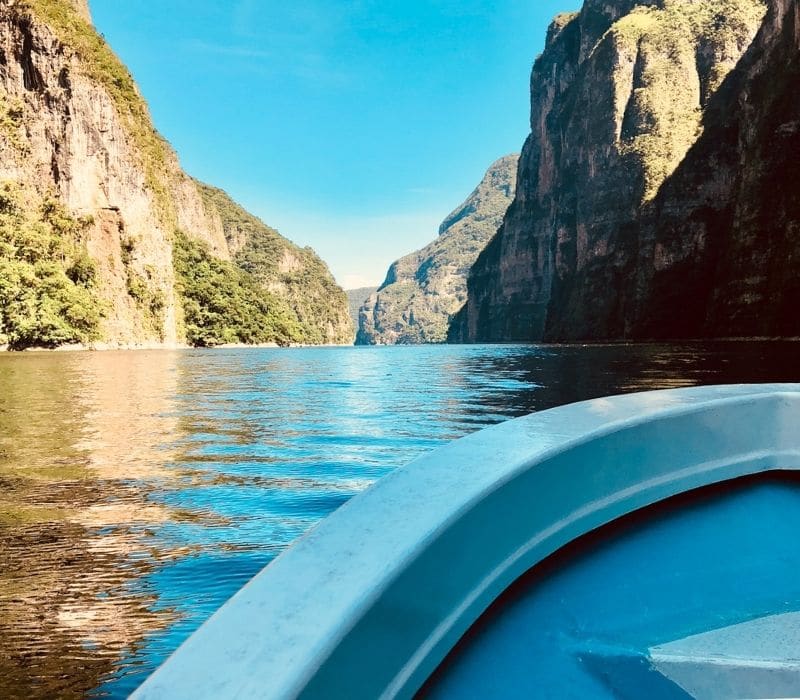
Marvel at the dramatic vertical canyon walls, spot crocodiles basking along the riverbanks, and watch various monkeys and birds in their natural settings.
9. Yum Balam Protection Area, Quintana Roo
Visit this coastal reserve north of Holbox Island, a refuge for flamingos, sea turtles, and whale sharks amid beaches, dunes, and lush wetlands.
It is a touristy location to see wild animals in Mexico because there are so many great Holbox Island hotels where you can stay.
10. Sierra Gorda Biosphere Reserve, Querétaro

Discover a rugged landscape teeming with biodiversity, including several endangered species, in one of Mexico’s most ecologically diverse zones.
11. Montes Azules Biosphere Reserve, Chiapas
Explore deep rainforests and rivers in the heart of the Lacandon Jungle, home to vibrant bird species and the elusive jaguar.
12. La Encrucijada Biosphere Reserve, Chiapas
Wander through some of the world’s tallest mangrove forests, which serve as crucial habitats for migratory birds, American crocodiles, and diverse marine life.
13. La Escobilla Sanctuary, Oaxaca

One of the best places to see turtles in Mexico, Playa La Escobilla Beach near Huatulco sees up to 90,000 turtles come ashore over 3-5 days each month, from July to March.
This event is known as La Arribada, which means “the arrival,” and this area is protected by military guards so you can only visit with a tour.