
👎 Done With America? Here are 10 Countries Where You Can Live Well on Just $500-$1,000 a Month


Tired of watching half your paycheck disappear into rent? Ready to ditch the $15 avocado toast and actually enjoy life?
Me too, which is why I moved to Mexico in 2018. However, there are other countries where you can live cheaply if Mexico isn’t your cup of tea.
The 10 countries on this list prove you don’t need a tech salary to live like royalty, so here’s where your dollars will stretch furthest.
🇹🇭 1. Thailand

The average monthly budget in Thailand is between $500-$1000, though this varies depending on which city you choose.
With rents as low as $300, you can live comfortably with good food, high-speed internet and a buzzing social life for $800-$1000.
Chiang Mai has become legendary among digital nomads for this exact reason.
Many digital nomads can live on a baseline of $700 a month in Chiang Mai when adjusted for current inflation.
In cities like Chiang Mai, expats report monthly budgets as low as $800.
The Best Part About Thailand?
You’re not living in some rundown apartment eating nothing but instant ramen.
You’re getting quality housing, eating at restaurants daily, and still having money left over for weekend adventures.
Thailand also launched a new digital nomad visa in 2024 that makes long-term stays much easier for remote workers.
The country offers world-class beaches, ancient temples, incredible street food, and some of the friendliest people you’ll ever meet.
It’s hard to say for sure, but Thailand might just be the perfect balance of affordability and quality of life.
🇲🇽 2. Mexico
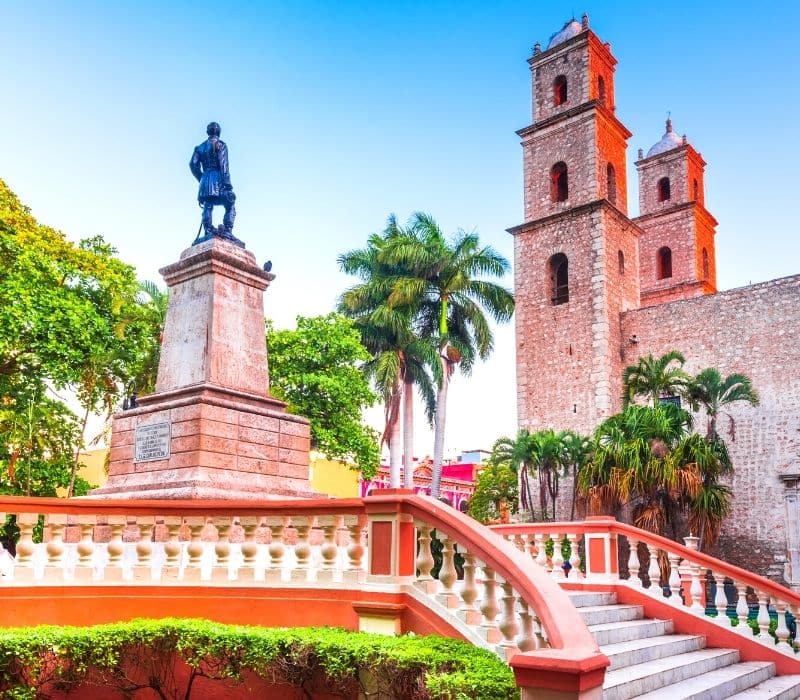
The average monthly budget in Mexico ranges from $600-$1000, with significant variation between tourist zones and local neighborhoods.
With rents starting around $350, you can enjoy a comfortable lifestyle with authentic Mexican cuisine, reliable internet, and an active expat community for $700-$900.
Mérida, Mexico City and Oaxaca City have exploded in popularity among remote workers for good reason.
Many expats report living comfortably on $750 a month in these colonial cities when accounting for current costs.
In places like Guanajuato, San Cristóbal de las Casas and Morelia, monthly budgets can drop as low as $650.
The Best Part About Mexico?
You’re not sacrificing quality for price (and you’re only a few hours from “home”)
You’re getting spacious apartments in historic buildings, eating fresh street tacos for $1, and exploring ancient ruins on weekends.
Mexico’s proximity to the U.S. means you can fly home for holidays without breaking the bank.
The country offers stunning beaches, vibrant culture, world-class cuisine, some of the warmest hospitality imaginable, and more (like tacos 🌮)
It’s hard to say for sure, but Mexico might just be the best kept secret for Americans seeking adventure without the distance.
🇻🇳 3. Vietnam

The average monthly budget in Vietnam falls between $500-$900, depending on whether you choose Ho Chi Minh City or smaller towns.
With rents as low as $250, you can maintain a fantastic lifestyle with incredible street food, blazing-fast internet, and an emerging digital nomad scene for $600-$800.
Da Nang and Hoi An have become favorites among location-independent workers.
Many remote workers report baseline costs of $650 a month in these coastal cities after adjusting for current prices.
In cities like Hanoi’s Old Quarter, expats manage on monthly budgets around $700.
The Best Part About Vietnam?
You’re not compromising on anything.
You’re getting modern apartments with city views, eating bowls of pho for $2, and taking weekend trips to Ha Long Bay.
Vietnam’s improved infrastructure and growing tech scene make it increasingly attractive for remote workers.
The country offers pristine beaches, fascinating history, some of Asia’s best food, and coffee culture that rivals anywhere in the world.
It’s hard to say for sure, but Vietnam might just offer the best value-to-experience ratio in Southeast Asia.
🇵🇹 4. Portugal

The average monthly budget in Portugal ranges from $800-$1000, making it Europe’s most affordable quality-of-life destination.
With rents starting at $400 outside Lisbon, you can enjoy a European lifestyle with Mediterranean cuisine, excellent public transport, and vibrant arts scenes for $850-$950.
Porto and smaller cities like Braga have become magnets for digital nomads seeking European charm without the price tag.
Many remote workers live comfortably on $900 a month in Porto when calculated for current inflation.
In cities like Coimbra and Aveiro, expats report monthly budgets as low as $800.
The Best Part About Portugal?
You’re not settling for Eastern Europe when you want Western Europe.
You’re getting beautiful apartments with ocean views, drinking world-class wine for $3 a bottle, and exploring medieval castles on Sunday drives.
Portugal’s D7 visa makes it relatively easy for remote workers to establish residency.
The country offers stunning coastlines, year-round sunshine, some of Europe’s safest cities, and English-speaking locals who actually want you there.
It’s hard to say for sure, but Portugal might just be the best European lifestyle for American prices.
🇮🇩 5. Indonesia (Bali)

The average monthly budget in Bali ranges from $600-$1000, though Canggu and Seminyak run higher than Ubud.
With rents starting around $300, you can live in tropical paradise with organic food, coworking spaces, and an international community for $700-$900.
Ubud and the beach towns have created entire economies around digital nomads.
Many remote workers maintain comfortable lifestyles on $800 a month in Bali after accounting for current inflation.
In areas like Sanur and East Bali, expats report monthly budgets closer to $650.
The Best Part About Bali?
You’re not roughing it in the jungle.
You’re getting villas with private pools, eating at healthy cafes daily, and attending sunset yoga sessions on the beach.
Indonesia recently extended visa options for remote workers, making stays up to six months much simpler.
The island offers world-class surfing, ancient temples, vibrant spirituality, unique wildlife, and a wellness scene that puts California to shame.
It’s hard to say for sure, but Bali might just be the ultimate lifestyle upgrade for digital nomads.
🇨🇴 6. Colombia

The average monthly budget in Colombia falls between $600-$900, with Medellín offering exceptional value.
With rents as low as $350, you can enjoy spring-like weather year-round, excellent coffee culture, and South America’s most innovative city for $700-$850.
Medellín’s El Poblado neighborhood has become a digital nomad hub for excellent reasons.
Many remote workers report living well on $750 a month in Medellín when adjusted for current costs.
In cities like Bogotá’s Chapinero or coastal Cartagena, budgets range from $700-$900.
The Best Part About Colombia?
You’re not dealing with safety concerns anymore.
You’re getting modern apartments in safe neighborhoods, drinking the world’s best coffee for $1, and salsa dancing until 3am on weeknights.
Colombia’s digital nomad visa launched in 2022 and has become one of South America’s easiest options.
The country offers incredible biodiversity, warm Caribbean beaches, fascinating colonial history, and locals who genuinely embrace expat communities.
It’s hard to say for sure, but Medellín might just be the most underrated city in the Americas.
🇬🇹 7. Guatemala
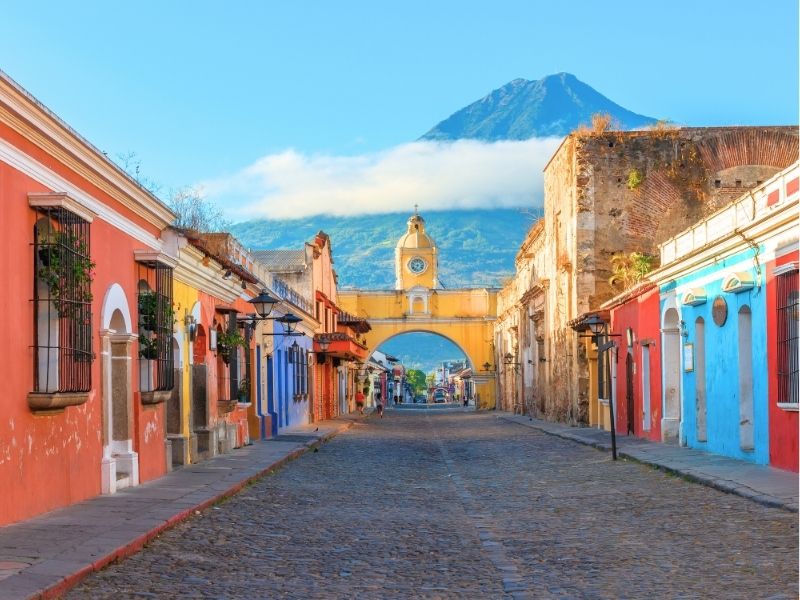
The average monthly budget in Guatemala ranges from $400-$800, making it one of Central America’s best bargains.
With rents starting at $400, you can live surrounded by volcanoes and Mayan culture, with great food and improving infrastructure for $600-$750.
Antigua and Lake Atitlán have developed strong expat communities over the past decade.
Many remote workers report comfortable lifestyles on $650 a month in Antigua when accounting for current inflation.
In Lake Atitlán’s lakeside towns like, San Pedro, San Marcos and Panajachel, monthly budgets can drop to $550.
The Best Part About Guatemala?
You’re not sacrificing modern conveniences for low prices.
You’re getting colonial charm, learning Spanish naturally through daily interactions, and hiking active volcanoes on weekend mornings.
Guatemala’s tourist visa is easily extended, and the country is increasingly remote-work friendly.
It offers incredible Mayan ruins, perfect year-round weather, Central America’s best coffee, and a cultural richness that surprises everyone who visits.
It’s hard to say for sure, but Guatemala might just be the best value in the Western Hemisphere.
🇧🇬 8. Bulgaria

The average monthly budget in Bulgaria falls between $600-$900, making it one of Europe’s hidden gems for affordability.
With rents as low as $300, you can experience authentic European living with Mediterranean climate, ancient history, and mountain adventures for $700-$850.
Sofia has quietly become a digital nomad favorite in Eastern Europe.
Many remote workers report comfortable monthly budgets of $750 in Sofia when adjusted for current inflation.
In cities like Plovdiv and coastal Varna, expats manage on budgets around $650-$800.
The Best Part About Bulgaria?
You’re not giving up European standards for lower prices.
You’re getting fast internet, modern apartments in historic buildings, eating at restaurants for $8, and skiing in winter or beach hopping in summer.
Bulgaria offers EU membership benefits with a fraction of Western European costs.
The country has stunning Black Sea beaches, rich Roman history, incredible mountain ranges, and a thriving cafe culture in its cities.
It’s hard to say for sure, but Bulgaria might just be Europe’s best-kept secret for location-independent living.
🇲🇾 9. Malaysia

The average monthly budget in Malaysia ranges from $600-$950, depending on whether you choose Kuala Lumpur or Penang.
With rents starting around $350, you can live in Southeast Asia’s most developed country with world-class infrastructure, diverse food scenes, and English-speaking locals for $750-$900.
Penang and Kuala Lumpur have become established digital nomad hubs with excellent coworking spaces.
Many remote workers report baseline costs of $800 a month in these cities when accounting for current prices.
In cities like Ipoh and Malacca, monthly budgets can drop to $650.
The Best Part About Malaysia?
You’re not sacrificing first-world amenities for third-world prices.
You’re getting modern apartments with pools and gyms, eating incredible food from Malaysian, Chinese, and Indian cuisines daily, and enjoying world-class shopping and entertainment.
Malaysia’s visa options for longer stays have improved significantly for remote workers and retirees.
The country offers pristine islands, lush rainforests, multicultural festivals, and some of the friendliest people in Southeast Asia.
It’s hard to say for sure, but Malaysia might just offer the most developed infrastructure for the price point anywhere in the world.
🇦🇱 10. Albania
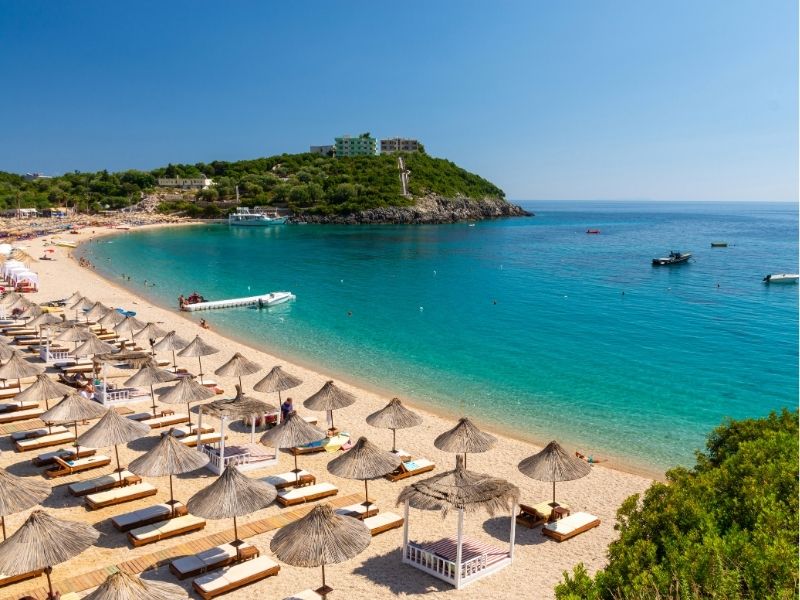
The average monthly budget in Albania ranges from $500-$800, making it the Balkans’ most affordable coastal option.
With rents as low as $250, you can enjoy Mediterranean living with stunning beaches, Ottoman history, and emerging food scenes for $600-$750.
Tirana and the coastal town of Sarandë have started attracting digital nomads looking for Europe’s last undiscovered gem.
Many remote workers report living comfortably on $700 a month in Albania when adjusted for current inflation.
In smaller coastal towns and mountain villages, budgets can drop to $550-$650.
The Best Part About Albania?
You’re not compromising on beauty or culture for affordability.
You’re getting Mediterranean coastline that rivals Greece or Croatia, exploring ancient ruins without tourist crowds, and eating fresh seafood for $10.
Albania offers one-year digital nomad visas and is actively courting remote workers.
The country has pristine beaches, dramatic mountain ranges, incredibly hospitable locals, and costs that feel like they’re from a decade ago.
It’s hard to say for sure, but Albania might just be the last affordable Mediterranean paradise in Europe.
The Visa Situation for Americans
Here’s how long you can stay without major paperwork:
- Thailand: 60 day tourist visa, extendable; Digital Nomad Visa available
- Mexico: 180 days on tourist permit (FMM); though not everyone gets the full 180 days
- Vietnam: 90 day e-visa available
- Portugal: 90 days visa-free; D7 visa for longer stays
- Indonesia: 60 day visa on arrival, extendable
- Colombia: 90 days visa-free; Digital Nomad Visa available
- Guatemala: 90 days visa-free, easily extendable
- Bulgaria: 90 days visa-free (US citizens); Digital Nomad Visa available
- Malaysia: 90 days visa-free; MM2H program for longer stays
- Albania: 90 days visa-free; Digital Nomad Visa (1 year) available
Most remote workers do “visa runs” or apply for digital nomad visas to extend their stays legally.
What About Healthcare?

As someone who has been living in Mexico since 2018, I recommend and use SafetyWing Insurance — with plans that start at just $45 PER MONTH 🤯
One of the biggest surprises for Americans who move abroad? Healthcare is shockingly affordable.
In most of these countries, a general practice doctor’s visit costs $10-$30 without insurance. Dental cleanings run about $15-35.
Even major procedures cost a fraction of U.S. prices which is why medical tourism is a booming industry.
Many expats simply pay out-of-pocket for routine care and maintain international insurance (approx. $100-200/month) for emergencies.
In countries like Thailand, Portugal, Malaysia, and Colombia, you can access world-class medical facilities that attract medical tourists specifically because of the quality-to-cost ratio.
The Internet Question
Every single country on this list offers reliable high-speed internet in major cities.
Most cities also have coworking spaces with backup power and faster connections if you need absolute reliability.
- Thailand: 100+ Mbps for $25-35/month
- Mexico: 75-100 Mbps for $30-40/month
- Vietnam: 50+ Mbps for $15-25/month
- Portugal: 100+ Mbps for $35-45/month
- Indonesia: 50+ Mbps for $25-40/month
- Colombia: 100+ Mbps for $30-40/month
- Guatemala: 50+ Mbps for $35-50/month
- Bulgaria: 100+ Mbps for $15-25/month
- Malaysia: 100+ Mbps for $30-40/month
- Albania: 50+ Mbps for $20-30/month
A Safety Reality Check

Let’s be honest about travel safety for digital nomads and solo travelers, since it’s the #1 concern.
As an American who’s been living abroad as a digital nomad for 8+ years now — you’ll be as shocked as I was to leans that many places are saferer than the U.S.
Of course, standard advice applies everywhere: Don’t flash valuables, be aware of surroundings, trust your instincts, etc.
- Thailand: Generally very safe, and the biggest risks tend tom be traffic accidents.
- Mexico: Safe in expat-friendly cities like Mérida, Oaxaca, Mexico City, and Guadalajara. As a general rule, avoid border regions though millions of Americans dive across the U.S.-Mexico border to live, work and play.
- Vietnam: Extremely safe, and petty theft is the main concern.
- Portugal: One of Europe’s safest countries with crime rates that rival Switzerland.
- Indonesia: Safe in tourist areas like Bali but be aware of natural disasters like earthquakes, volcanoes and even tsunamis.
- Colombia: Transformed DRAMATICALLY since the 2000s. Major cities are now safe for expats (and full of them).
- Guatemala: Stick to the popular in expat towns like Antigua and Lake Atitlan, and exercise normal precautions elsewhere.
- Bulgaria: Very safe overall, with standard European safety levels.
- Malaysia: One of Southeast Asia’s safest countries with low crime rates across the board.
- Albania: Safer than most people expect, as petty theft is rare and violent crime even rarer.
The Social Factor

Living abroad cheaply is great, but what about making friends and enjoying a social life?
While it will take effort on your part, every single country on this list has established expat communities where you’ll find:
- Facebook groups with thousands of members
- Weekly meetups and language exchanges
- Coworking spaces built for networking
- Expat-friendly cafes and bars
- Digital nomad events and conferences
Many people also report making better friends abroad than they ever did at home.
When everyone’s in the same boat (ie. navigating a new culture, learning a language, building location-independent lives) connections happen naturally.
Start Small With a Test Run
Not ready to commit? Totally understandable 🫶 Try this plan out to test the waters before jumping all the way in:
- Pick a country that excites you most
- Book 30 days in a centrally-located Airbnb — See what’s available on Airbnb now! Even if you’re not booking, it’s good to get an idea, and bonus: most hosts offer 20-40% discounts on long stays of 30+ days.
- Budget $1,250 for your test month (your $1000 budget + a $250 buffer)
- Arrive with an open mind and no rigid plan
- Connect with the community through Facebook groups
- Explore different neighborhoods to find your ideal spot
- Track your actual spending to see if it works long-term
Most people who try this realize they can live better abroad for less money within the first two weeks.
The Bottom Line for Americans Dreaming of Life Abroad
Living well on $500-$1,000 a month isn’t just possible — it’s happening right now for SO MANY of your fellow Americans who now have:
- Better weather than wherever you currently live
- Lower stress levels from financial pressure
- More time for hobbies and passion projects
- Stronger social connections and community
- Adventures that used to be “someday” dreams
The countries on this list aren’t budget compromises. They’re lifestyle upgrades that happen to cost less.
The real question for so many Americans these days isn’t “Can I afford to do this?” Rather, it’s actually “Can I afford NOT to?”