
27 Birds of Mexico That Are Total Showstoppers (#24 Weighs Less Than a Penny)

Looking for the most beautiful birds of Mexico?
Mexico is one of the best countries in the world for birds, with about 1,100 species.
I’ve called Mexico home since 2018, and spotting wild flamingos never gets old.
Here are 27 birds of Mexico to look for, and where to find them.
🦜 Want an expert to help you spot them? Book one of these 11 best birding tours in Mexico led by local guides.
The 25 Most Beautiful Birds of Mexico
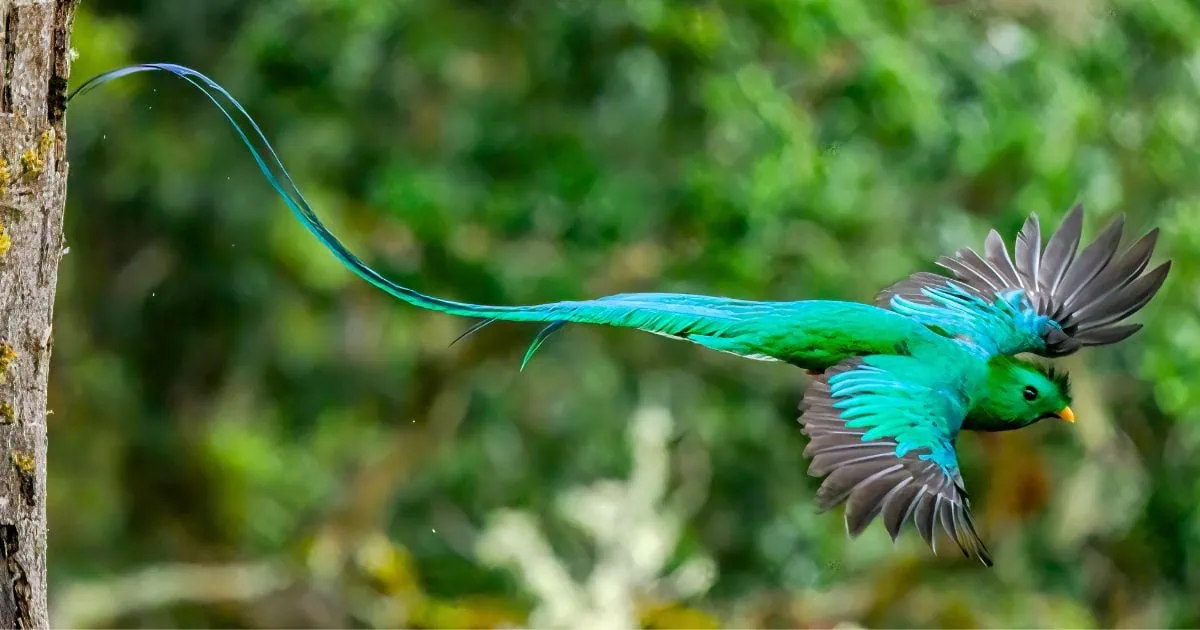
1. Resplendent Quetzal

- 📍 Where to see it: El Triunfo Biosphere Reserve, Chiapas
- 🗓️ Best time: March to June
The resplendent quetzal is bright emerald green with a red belly, and males grow tail streamers up to about 25 inches (65 cm) long.
The Maya and Aztecs considered it sacred, and only rulers and priests could wear its feathers.
The feathered serpent god Quetzalcoatl is named after it.
In Mexico, it lives in the cloud forests of Chiapas, and El Triunfo is one of the best places to spot one.
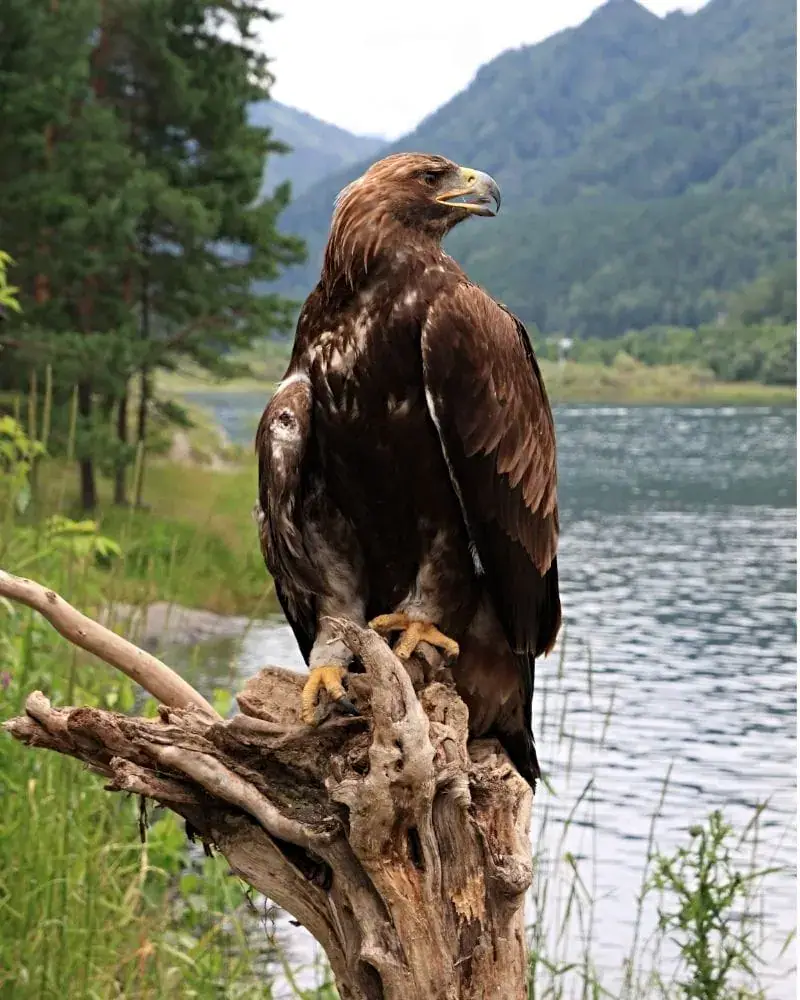
2. Golden Eagle (The National Bird of Mexico)
- 📍 Where to see it: Northern Mexico’s mountains and deserts
- 🗓️ Best time: Year-round
The golden eagle is Mexico’s national bird, and it’s the eagle on the Mexican flag and coat of arms.
It’s one of the largest birds of prey in North America, with a wingspan of more than 6 feet (1.8 m).
In Mexico, it lives mostly in the open mountains and deserts of the north.
It’s rare in Mexico today, so spotting one in the wild is a real treat.
3. American Flamingo

- 📍 Where to see it: Río Lagartos and Celestún, Yucatán
- 🗓️ Best time: Year-round (big flocks in winter)
Mexico’s flamingos are American flamingos, the brightest pink flamingos in the world.
They get their color from the tiny shrimp and algae they eat.
The Yucatán coast is the place to see them, especially the Río Lagartos and Celestún biosphere reserves.
I’ve seen flamingos in a few places in Mexico, including Chuburná and Río Lagartos.
Find more great day trips in my guide to the best places in Yucatán.
4. Scarlet Macaw

- 📍 Where to see it: Lacandon Jungle, Chiapas
- 🗓️ Best time: Year-round
The scarlet macaw is a big parrot with bright red, yellow and blue feathers.
It’s endangered in Mexico, where wild flocks survive mostly in the Lacandon Jungle of Chiapas.
Conservation groups have also brought scarlet macaws back to places like Palenque and Los Tuxtlas, Veracruz.
You’ll usually hear them before you see them, as they fly over the treetops in noisy pairs.
5. Military Macaw

- 📍 Where to see it: Sótano del Barro, Querétaro, and western Mexico
- 🗓️ Best time: Year-round
The military macaw is mostly green, with a red forehead and blue flight feathers.
Its name comes from its green “uniform,” which is a common color for military service-people to wear.
It nests on cliffs and in huge sinkholes, like the Sótano del Barro in Querétaro’s Sierra Gorda.
It’s a threatened species, so seeing a flock fly out of a canyon at sunrise is unforgettable.
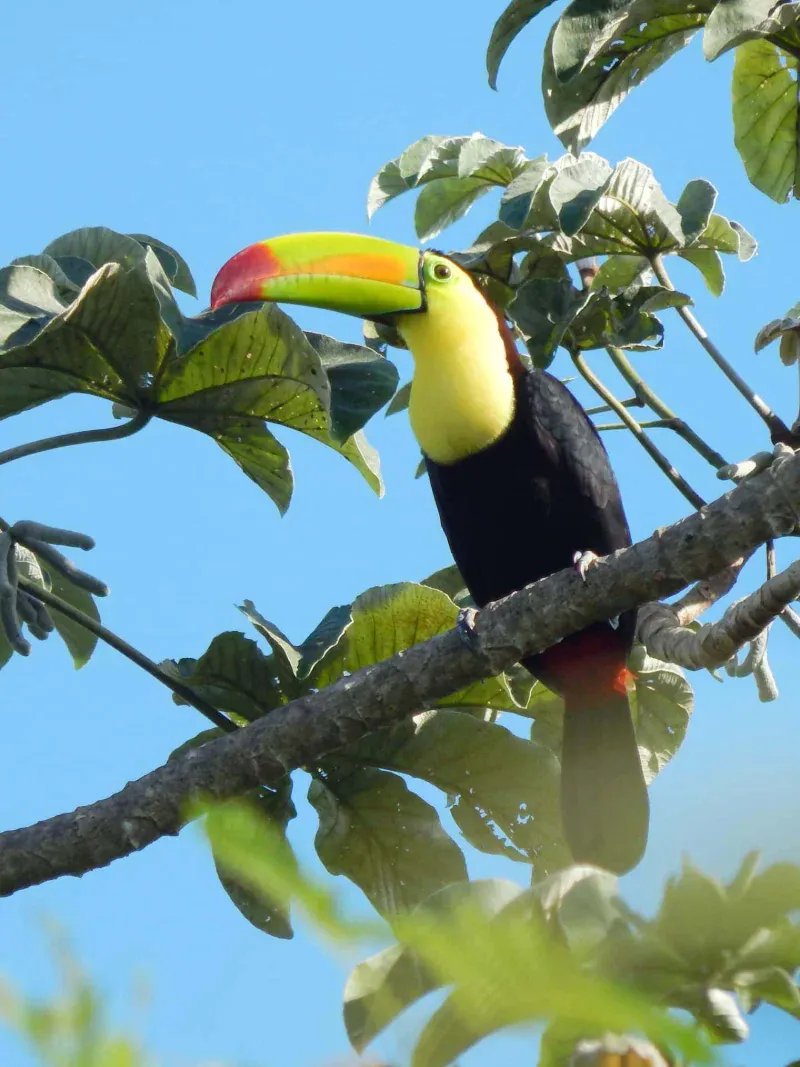
6. Keel-Billed Toucan
- 📍 Where to see it: Yucatán Peninsula and Chiapas
- 🗓️ Best time: Year-round
The keel-billed toucan has a huge rainbow-colored bill in green, orange, red and blue.
The bill looks heavy, but it’s actually light and hollow inside.
In Mexico, it lives in the jungles of the Yucatán Peninsula and Chiapas state.
You may also see them in the Calakmul Biosphere Reserve, a UNESCO World Heritage site located in Campeche state.
It’s also the national bird of Belize, Mexico’s neighboring country to the south.
7. Turquoise-Browed Motmot

- 📍 Where to see it: Yucatán Peninsula, especially around cenotes and ruins
- 🗓️ Best time: Year-round
The turquoise-browed motmot has bright turquoise eyebrows and a long tail that ends in two paddles.
In Yucatán, it’s called the toh, and Maya legends tell how it lost the feathers in the middle of its tail.
It nests in burrows, often in the walls of cenotes and old quarries.
Watch for it swinging its tail like a pendulum at cenotes and Maya ruins around the peninsula.
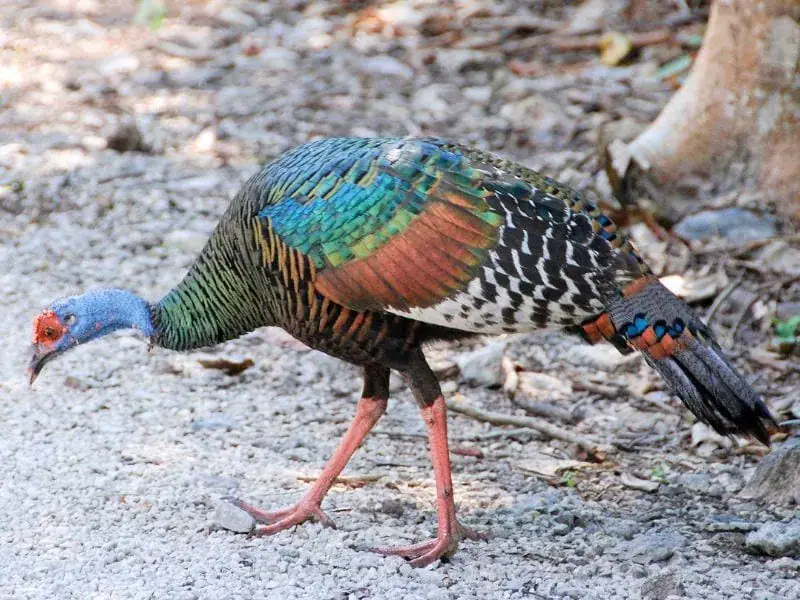
8. Ocellated Turkey
- 📍 Where to see it: Calakmul and the Yucatán Peninsula
- 🗓️ Best time: Year-round
The ocellated turkey looks nothing like the turkeys you know.
Its feathers shine bronze, green and blue, and its tail has eye-like spots, a bit like a peacock’s.
It lives only on the Yucatán Peninsula and in nearby parts of Belize and Guatemala.
Calakmul is one of the best places to see one, as they often walk right through the ruins.
I visited the remote Mayan ruins site of Calakmul once, and yes, you really do see them everywhere 🦃
9. Roseate Spoonbill

- 📍 Where to see it: Celestún, Río Lagartos and Holbox
- 🗓️ Best time: Year-round
The roseate spoonbill is a pink wading bird with a flat, spoon-shaped bill.
It sweeps that bill from side to side in shallow water to catch small fish and shrimp.
People often confuse it with flamingos, and you’ll see both on the same boat tours in Yucatán.
It’s also common in the mangroves around Holbox Island.
10. Greater Roadrunner

- 📍 Where to see it: Northern Mexico’s deserts
- 🗓️ Best time: Year-round
One of the weirdest animals in the world, The greater roadrunner (correcaminos in Spanish) would rather run than fly.
It can run about 20 mph (32 km/h) as it chases lizards, insects and even small snakes.
Look for it in the deserts and dry scrublands of northern Mexico, often along roadsides.
11. Painted Bunting

- 📍 Where to see it: Yucatán Peninsula and the Pacific coast
- 🗓️ Best time: Fall to spring
The male painted bunting looks like a child colored it in, with a blue head, red belly and green back.
Females and young birds are a softer lime green.
Many painted buntings spend the winter in Mexico, especially on the Yucatán Peninsula and along the Pacific coast.
They’re shy, so look for them near the edges of brushy fields and gardens.
12. Yucatan Jay
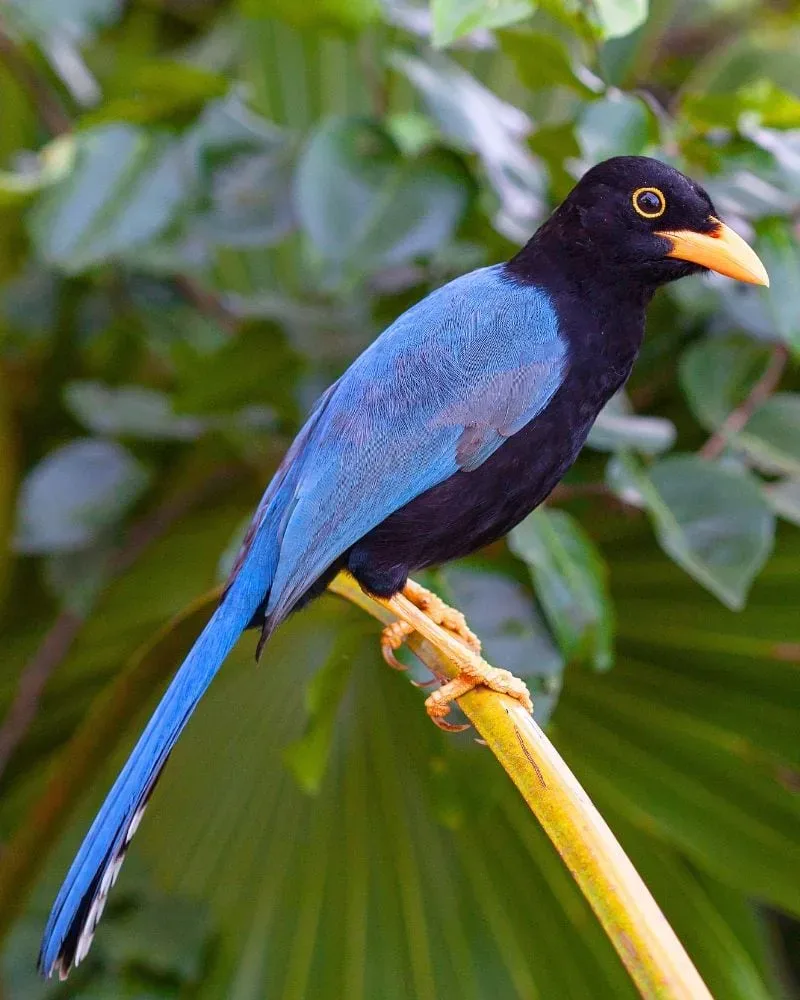
- 📍 Where to see it: Yucatán Peninsula
- 🗓️ Best time: Year-round
The Yucatan jay has a black head and body with bright blue wings and back.
Young birds have yellow bills that slowly turn black as they grow up.
It lives in noisy family groups in the forests of the Yucatán Peninsula.
You’ll often hear a flock calling to each other before you see it.
13. Great-Tailed Grackle (Zanate)

- 📍 Where to see it: Everywhere in Mexico
- 🗓️ Best time: Year-round
The great-tailed grackle, or zanate, is one of the most common birds in Mexico.
Males are glossy black with long, keel-shaped tails, while females are smaller and brown.
The Aztec ruler Ahuitzotl is said to have brought them to Tenochtitlan (present-day Mexico City) for their shiny feathers.
At sunset, huge flocks fill the trees in town plazas with their loud whistles and clicks.
14. Elegant Trogon

- 📍 Where to see it: Western and northern Mexico
- 🗓️ Best time: Year-round
The elegant trogon is a cousin of the quetzal (#1 on this list), with a coppery green back and a bright red belly.
It lives in forests and canyons from northern Mexico down the Pacific side of the country.
It sits very still on branches, so listen for its croaking call to find it.
15. Magnificent Frigatebird

- 📍 Where to see it: Isla Contoy and Holbox
- 🗓️ Best time: Year-round (red throat pouches in breeding season)
The magnificent frigatebird has long, pointed wings and a forked tail, and it can soar for hours without flapping.
During breeding season, males puff up a bright red throat pouch like a balloon to attract females.
Isla Contoy, a protected bird island near Cancún, has a large frigatebird colony.
You’ll also see them soaring over the beaches of Isla Holbox and the Yucatán coast.
16. Blue-Footed Booby
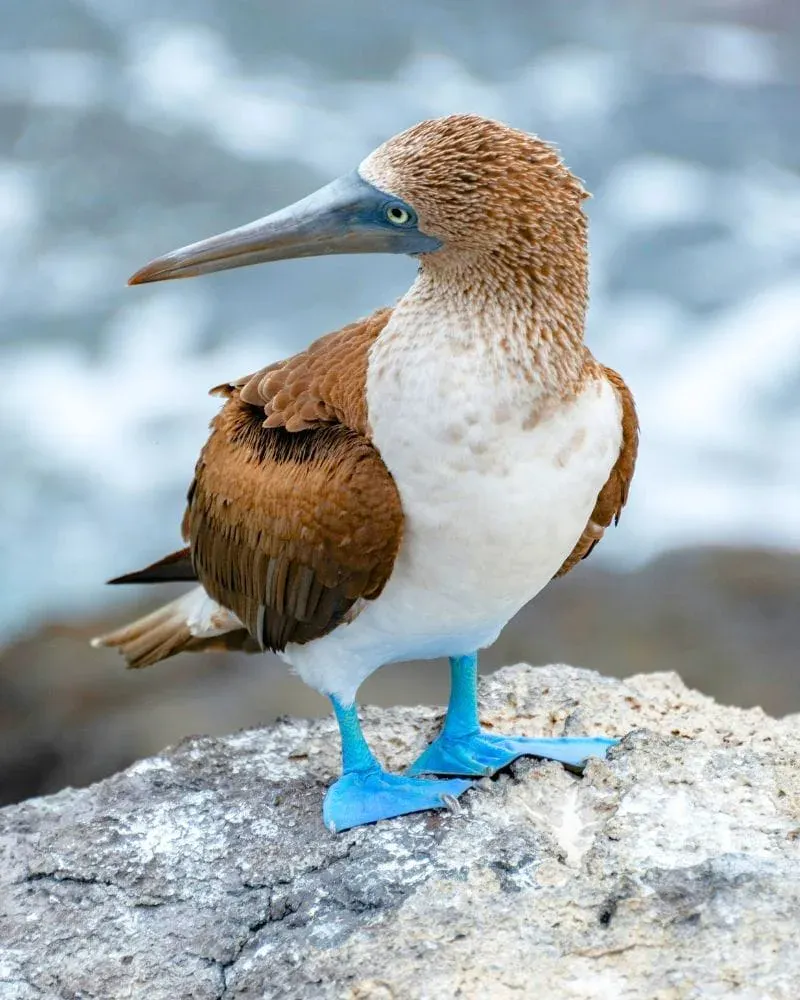
- 📍 Where to see it: Islas Marietas, Isla Isabel and the Gulf of California
- 🗓️ Best time: Year-round
The blue-footed booby is famous for its bright blue feet.
Males show off their feet in a high-stepping dance, and the bluest feet win.
Many of the world’s blue-footed boobies nest on islands in the Gulf of California.
You can also see them on boat tours to the Islas Marietas near Puerto Vallarta and on Isla Isabel in Nayarit state.
I was lucky enough to take a tour to Islas Marietas (Marietas Islands), and we saw numerous blue-footed boobies.
17. Brown Pelican

- 📍 Where to see it: Both of Mexico’s coasts
- 🗓️ Best time: Year-round
The brown pelican is a big seabird with a huge pouch under its bill.
It dives headfirst into the water from the air to scoop up fish.
You’ll see pelicans on almost every beach in Mexico, often waiting for scraps near fishing boats.
I saw the one above on a tour in Río Lagartos, when it landed right in our boat.
18. Thick-Billed Parrot

- 📍 Where to see it: Sierra Madre Occidental, Chihuahua and Durango
- 🗓️ Best time: Summer
The thick-billed parrot is bright green with a red forehead and a heavy black bill.
It’s one of the few parrots that lives in cold mountain pine forests.
It once flew as far north as Arizona, but today it lives only in Mexico’s Sierra Madre Occidental.
It’s endangered, mostly because of logging in the old forests where it nests.
19. White-Throated Magpie-Jay

- 📍 Where to see it: Mexico’s Central and Pacific coasts, from Jalisco to Chiapas
- 🗓️ Best time: Year-round
This striking, large jay is instantly recognizable by its vibrant turquoise-blue color, crest of feathers atop its head, and exceptionally long tail.
In total, they measure about 18-22 inches long (45-55 cm), and the tail makes up nearly half of the bird’s body.
Highly social, white-throated magpie-jays live in tight-knit family flocks of five to ten individuals.
Uniquely, they practice cooperative breeding led by a dominant breeding pair.
In this arrangement, young females stay behind to help feed and raise future broods while young males disperse.
They do not migrate, so you can see them in Mexico year-round. Loud birds, you might actually hear one before seeing it.
20. Orange-Breasted Bunting

- 📍 Where to see it: Mexico’s Pacific coast, from Jalisco to Chiapas
- 🗓️ Best time: Year-round
The male orange-breasted bunting has a turquoise head, green back and bright yellow-orange chest.
It’s endemic to Mexico, where it lives in the dry forests along the Pacific coast.
It’s one of the top birds birders hope to see on trips to coastal Oaxaca and Jalisco.
21. Blue Mockingbird

- 📍 Where to see it: Central and southern Mexico’s highlands
- 🗓️ Best time: Year-round
The blue mockingbird is dark blue all over, with a black mask and red eyes.
It’s endemic to Mexico and lives in thick brush and forest edges in the highlands.
It’s shy and hard to spot, but it has a loud, varied song.
22. Horned Guan

- 📍 Where to see it: El Triunfo Biosphere Reserve, Chiapas
- 🗓️ Best time: Dry season (approx. November to May)
The horned guan is a large black bird with a white chest and a bright red horn on top of its head.
It’s one of the rarest birds in Mexico, living only in a few cloud forests in Chiapas and Guatemala.
Birders hike for days into El Triunfo for a chance to see one.
23. Vermilion Flycatcher

- 📍 Where to see it: Northern and central Mexico
- 🗓️ Best time: Year-round
The male vermilion flycatcher is a tiny flash of bright red with dark brown wings.
It catches insects in midair, then returns to the same perch.
It’s common in open areas across northern and central Mexico, even in some city parks.
24. Bumblebee Hummingbird

- 📍 Where to see it: Highland forests of central and southern Mexico
- 🗓️ Best time: Year-round
One of the world’s smallest birds, bumblebee hummingbirds average 3 inches (7 cm) long and weigh about 2 grams — less than a U.S. penny.
As the name implies, it really does buzz like a bumblebee 🐝 as it zips between flowers in search of nectar.
It’s endemic to Mexico and lives in humid mountain forests.
25. California Condor

- 📍 Where to see it: Sierra de San Pedro Mártir National Park, Baja California
- 🗓️ Best time: Year-round
The California condor is the largest flying bird in North America, with a wingspan of almost 10 feet (3 m).
It nearly went extinct, and for decades none lived wild in Mexico.
Thanks to a reintroduction program, condors now soar again over Baja’s Sierra de San Pedro Mártir.
26. Lilac-Crowned Parrot

- 📍 Where to see it: Mexico’s Pacific coast, from Sonora to Oaxaca
- 🗓️ Best time: Year-round
The lilac-crowned parrot (aka lilac-crowned amazon) is green with a red forehead and a soft lilac crown.
Endemic to Mexico, it lives nowhere else in the wild.
Sadly, they’re now endangered because so many have been caught for the illegal pet trade.
Look for it in the dry forests along the Pacific coast, including the beaches of Oaxaca.
27. Yellow-Backed Oriole

- 📍 Where to see it: Yucatán Peninsula
- 🗓️ Best time: Late February through May
A vibrant, medium-sized songbird native to Mexico, Central America, and northern South America, it live year-round across its tropical range.
Averaging 8.5–9.5 inches in length (21–24 cm), these black and yellow birds are nearly monomorphic, so males and females look similar.
Often seen traveling in pairs or small family-oriented flocks of 8–10 individuals, they occasionally joins mixed-species feeding flocks.
Want to see more of Mexico’s wildlife? Check out my list of native Mexican animals.
You’ll also love my guide to the best places to see wild animals in Mexico.
Birds of Mexico FAQ
What is the national bird of Mexico?
The golden eagle is the national bird of Mexico. It’s the eagle shown on the Mexican flag and coat of arms.
How many bird species live in Mexico?
About 1,100 bird species live in Mexico, which makes it one of the best countries in the world for birdwatching.
Where can you see flamingos in Mexico?
The best places to see flamingos in Mexico are Río Lagartos and Celestún on the Yucatán coast.
Both are protected biosphere reserves with boat tours that take visitors out to see the flamingos.
What is the most colorful bird in Mexico?
The painted bunting and the scarlet macaw are two of the most colorful birds in Mexico.
The keel-billed toucan and the resplendent quetzal are close runners-up though.
What are the best places for birdwatching in Mexico?
Some of the best places for birdwatching in Mexico are Celestún and Río Lagartos in Yucatán state, and Calakmul in Campeche state.
Others include El Triunfo in Chiapas state, and the islands of the Gulf of California located on Mexico’s west coast.
Get My FREE Guide: 5 Easy Ways to Save Money in Mexico
Insider tips from someone who’s lived in Mexico since 2018.
