
Why Locals Hate Mexico’s New Tourist Train in the Yucatan Peninsula


Mexico is renowned for its stunning natural environments, rich historical narratives, and delightful cuisine.
Unsurprisingly, this country draws millions of tourists each year who are eager to explore its cultural and scenic offerings.
To further boost Mexico’s flourishing tourism sector, an innovative project was proposed called the Tren Maya, or Mayan Train.
This tourist train was designed to provide a unique journey through the Yucatan Peninsula, which includes many historical regions sacred to the Maya civilization.
Yet, this ambitious tourism project is at the heart of a substantial environmental controversy — and here’s why.
What is Tren Maya?

The Tren Maya (AKA Mayan Train) is a 965-mile-long railway (1,554 km) that takes visitors through Mexico’s Yucatán Peninsula, and makes travel easier for locals too.
Initiated by Mexican president Andrés Manuel López Obrador (usually known as AMLO) in September 2018, the first route opened in late-2023.
More routes are slated to open in time, and eventually, the train will have 18 stations and 12 stops.
AMLO intended the Tren Maya to link Caribbean tourist hotspots like Cancun with inland Mayan historical sites like Coba Ruins, which he said would redistribute tourist traffic and bring money to lesser-visited places in the peninsula.
The Grand Vision of Mexico’s New Tourist Train

Hailed as a significant construction achievement by some, this Mexican tourist train will transport passengers across some of the country’s most treasured landscapes and archeological sites, like Chichen Itza Mayan Ruins.
It is described as a unique expedition into history, following the routes of the ancient Mayans.
The train will pass through lush forests, travel near dramatic coastlines, and pause at ancient ruins, promising a breathtaking exploration through history for visitors traveling to Mexico.
Yet, as momentum for the project builds among the Tren Maya supporters, so does the level of dissent and concern among environmentalists and activists.
Their primary concern with the train? The potential environmental damage it will cause in the Yucatan.
Environmental Concerns Over Tren Maya’s Construction

Cenotes, the natural freshwater wells sacred to the Maya and cherished by tourists, are scattered across the Yucatan Peninsula.
It is estimated there are 6,000 in the Yucatan — the highest concentration of cenotes on Earth. Some of these natural jungle pools have become a must-see for visitors.
The construction efforts necessary for the tourist train, especially those planned in the expansive areas of Riviera Maya, could pose severe risks to these fragile ecosystems.
Activists are sounding the alarm about the construction techniques used to build the train.
These involve breaking, drilling, and altering the underground environments that sustain the delicate ecosystems of Mexican cenotes.
They argue this disruption poses a local environmental issue (and also a global issue), which will affect biodiversity and the natural environment for future generations.
Why the Activists Aren’t Happy About Tren Maya

The term ecocide has been used by critics to depict the potential impact of the project.
They especially highlight the possible clearing of approximately 8.7 million trees to make way for the train, and the threats to the cenote’s underground water systems.
Despite government assurances of establishing nine protected natural areas to lessen the impact, detractors claim these actions aren’t sufficient in countering the environmental repercussions.
Their worries continue to fuel debates on the sustainability of these expansive infrastructure projects in Mexico.
Measures Mexico’s Government is Taking to Lessen the Impact
In reaction to widespread condemnation, the Mexican government has set aside multiple conservation areas and claims to be adopting construction methods that minimally impact ecological sensitivities.
Adjustments to the project plans and continuous discussions with conservationists are being prioritized, attempting to find a balance between development and conservation.
Appeasing Both Sides: Combining Progress and Preservation
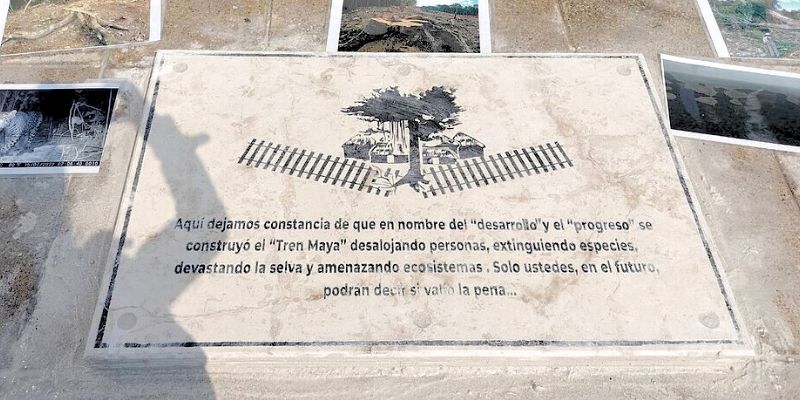
As Mexico proceeds with this ambitious endeavor, the critical issue remains balancing developmental aspirations with environmental conservation.
Promising economic and cultural benefits, the Mayan Train Project carries the burden of employing sustainable practices that safeguard the environmental treasures that make Mexico a unique destination.
Learning from similar international projects, the future approach should involve transparent, informed, and participatory planning.
Ongoing dialogue with local communities, continuous ecological monitoring, and flexible management strategies might guide this endeavor toward becoming an example of responsible tourism development.
As the tracks for the tourist train are set, the debate intensifies.
Is it a route to deeper understanding and appreciation of Mexico’s heritage, or a risk that might spoil its invaluable natural settings?
As the development unfolds, it is critical to consider all opinions and address every issue, maintaining that progress does not compromise ecological integrity.
Planning to Visit the Yucatan Peninsula?
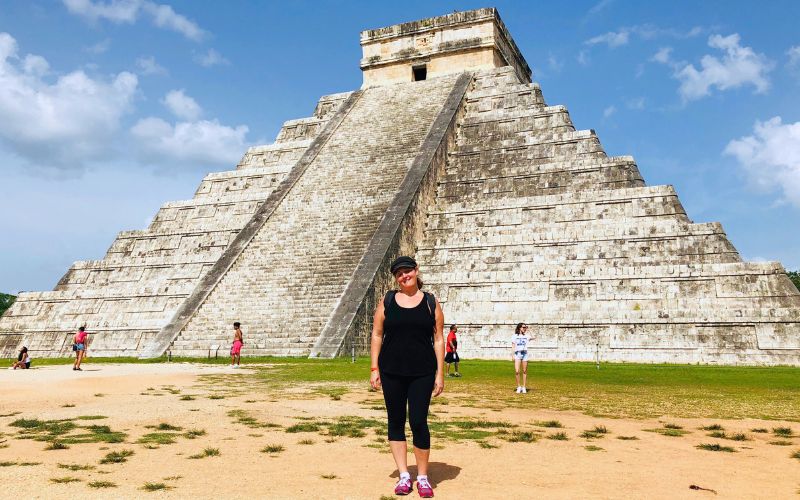
The Yucatan Peninsula, located in southeast Mexico, is one of the country’s most popular regions. It’s also home to many of the safest places in Mexico.
With beautiful beaches, Mayan Ruins and pyramids, swimmable cenotes, colorful cities, and more, here are some additional articles to help you discover the Yucatan Peninsula.