
15 Waterfalls in Mexico You NEED to Add to Your Bucket List

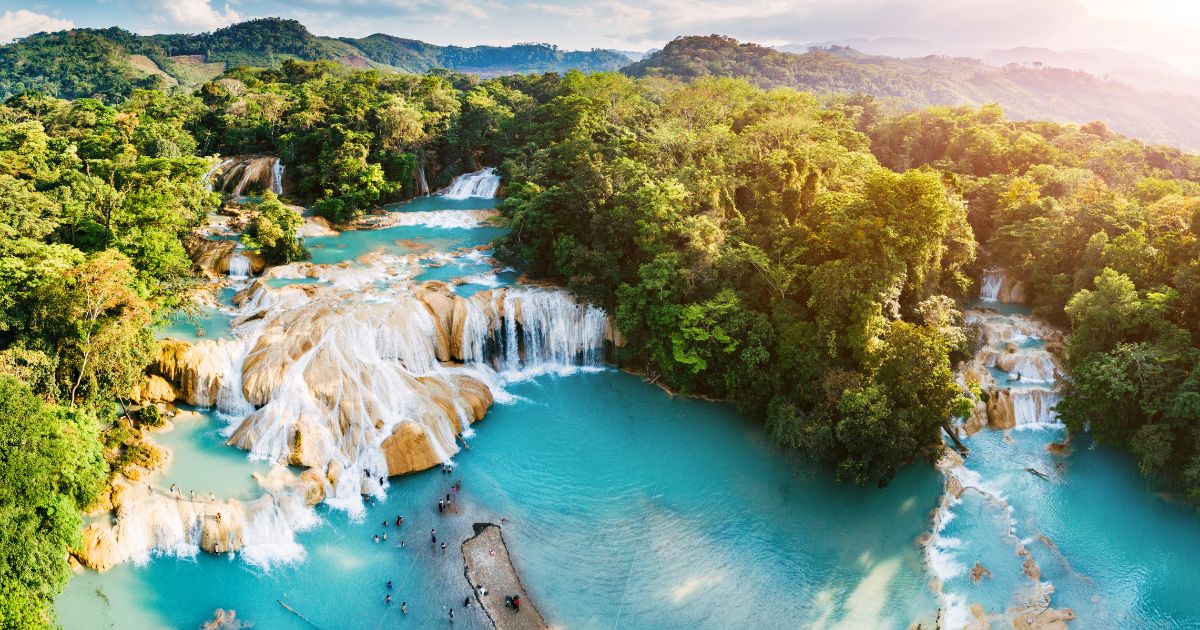
I’ve been living in Mexico since 2018, I’ve traveled across the country and spent hours (sometimes days) enjoying the many incredible waterfalls in Mexico.
At this point, I’d say I’m a connoisseur of Mexico waterfalls — and I’m here to help you discover the 15 Best Waterfalls in Mexico.
Without further delay, let’s dive into my comprehensive list of the best natural pools in Mexico, including some lesser-known hot springs yet to be discovered by many 🤫
1. Hierve el Agua Waterfall, Oaxaca

Hierve el Agua, located about 43 miles (70 km) east of Oaxaca City, is a stunning natural wonder that’s different from the other waterfalls of Mexico on this list.
First and foremost: It has petrified waterfalls, which make it look like large quantities of water are falling, but that’s an illusion.
While there is some water dripping down the cliff face that has created the petrified waterfalls, this site is also renowned for its mineral-rich pools and hot springs.
Although its name, Hierve el Agua means “boiling water,” the springs here are refreshingly cool rather than hot (and definitely not boiling).
The geological formations at Hierve el Agua are particularly incredible. They’ve been created by centuries of mineral water flow.
These formations have shaped natural infinity pools whose edges provide panoramic views over the valley below.
💧 Popular Oaxaca day trip

If you’re looking for things to do in Oaxaca, this is one of the best and most popular places for visitors and locals alike.
But beyond its geological and scenic allure, Hierve el Agua is of significant cultural and historical importance.
The indigenous Zapotec communities, who have inhabited the region for thousands of years and consider the site sacred for its healing properties, deeply revere it.
Visitors to Hierve el Agua can explore surrounding trails, enjoy a picnic with vast valley views, or relax in the tranquil waters of the mineral pools.
This is one of the most famous waterfalls in Mexico, so expect crowds. Midday is usually the busiest time, as well as weekends and holidays.
If you can, I recommend coming at sunrise or sunset, as the views are incredible. You can also stay the night in the Hierve el Agua cabins located onsite.
2. Cascada Tamul Waterfall, Huasteca Potosina

Located about 250 miles (402 km) north of Mexico City, Tamul Waterfall is one of the most majestic natural attractions in the Huasteca Potosina of San Luis Potosí.
Tamul is the highest waterfall in the San Luis Potosí state, dropping 344 feet (105 meters) into the Tampaón River below.
Its blue waters pour into a wide river surrounded by lush green cliffs. It creates a breathtaking view from any angle.
Despite its remote location, Tamul attracts thousands of visitors annually, who witness its grandeur and partake in the thrilling river expeditions leading to its base.
Paddling in a “panga” (colorful, small boat made of wood), visitors can approach the curtain of water, feeling the mist and hearing the thunderous roar up close.
The journey to Tamul Waterfalls is often combined with visits to the Cueva del Agua (Water Cave), a nearby underwater spring that feeds the Río Tampaón.
3. El Chiflon Waterfall, Chiapas

El Chiflón is a striking waterfall in the Chiapas region, about 124 miles (200 km) from Tuxtla Gutiérrez, and 63 miles (102 km) from San Cristobal de las Casas.
Cascada El Chiflón is famous for its powerful cascades and turquoise waters, and makes for a popular day trip from either of the two cities just mentioned.
El Chiflón waterfall cascades down in a series of falls, the largest of which is Velo de Novia. It towers at approximately 394-feet-tell (120 meters).
The waterfall’s name, Velo de Novia, means “bridal veil.” This aptly describes the wide, sweeping flow of water that resembles a bride’s veil.
The surrounding area is a lush eco-park where visitors can hike up trails alongside the falls. These trails offer many viewing platforms.
💧 Activities in El Chiflón
One of the trails takes you to the top of Velo de Novia, providing a spectacular view of the waterfall and surrounding valley.
El Chiflón is also a popular spot for sightseeing and swimming in designated areas with calm water, and other activities like ziplining.
The park;s management ensures the facilities blend well with the natural environment, maintaining the area’s beauty and sustainability.
Although you can come here on your own, I recommend a day trip from either San Cristobal or Tuxtla Gutiérrez.
Several options are available, like this El Chiflon Waterfalls and Montebello Lakes Day Trip.
4. Cascada de Basaseachi Waterfall, Chihuahua

About 200 miles (322 km) west of Chihuahua City, near Copper Canyon is Cascada de Basaseachi, the second-largest waterfall in Mexico.
The waterfall cascades down 807 feet (246 meters) and is a highlight of Basaseachi National Park.
For the best views of it, you’ll want to take the Sendero de la Ventana trail. It’s a moderate hike, accessible to most visitors.
This path leads directly to an overlook with panoramic views of both the waterfall and Mexico’s Copper Canyon.
The park is a prime example of the Sierra Madre Occidental ecosystem. It features pine-oak forests and diverse wildlife, appealing to nature enthusiasts and adventurers.
The waterfall does dry up during their dry season, so I recommend visiting in the rainy season (July to September) to see this waterfall in Mexico in its full glory.
5. Cascada Misol-Ha Waterfall, Chiapas

Misol-Ha has stunning waterfalls located in the lush rainforests of Chiapas, not far from the renowned archaeological site of Palenque Mayan Ruins.
This waterfall features a drop of 115 feet (35 meters) into a spacious, circular pool, where visitors can swim in its refreshing waters.
The natural setting of Misol-Ha is characterized by rich greenery and the soothing sounds of falling water.
🎥 Fun Fact: The waterfall scene in the 1987 movie Predator, starring Arnold Schwarznegger, was filmed was here at Misol-Ha Falls.
The area is well-maintained, preserving its beauty and providing a relaxing environment for all visitors.
One of the unique attractions at Misol-Ha is the cave directly behind the waterfall. This cave allows you to take a walk behind the cascade.
It provides a rare look and viewpoint where visitors can view the waterfall from behind a veil of water.
Inside, the cave extends back to reveal a small river. This only adds to the site’s mystical allure, and makes it one of the best places to visit in Chiapas state.
6. Cascada de Texolo Waterfall, Veracruz

Located in Xico, Veracruz, the Cascada de Texolo is located about 11 miles (18 km) from the city of Xalapa Mexico.
This 80-foot-tall waterfall (24-meters) is set in a green ravine and is easily accessible, making it a popular spot. Other than its beauty, this waterfall is also famous.
The 1980s movie Romancing the Stone, starring Michael Douglas and Kathleen Turner, was filmed in Veracruz state.
In the movie, an emerald (the “stone” in the title Romancing the Stone) is found behind a waterfall — and this was that waterfall!
An old railway bridge arching over the ravine near the falls adds a touch of historical charm to the scenic view.
This area is a haven for ecotourists and photographers, drawn by its lush biodiversity and picturesque setting.
The Cascada de Texolo Waterfall in Veracruz offers a beautiful and quiet experience, perfect for a quick nature escape.
Best Waterfalls in Mexico
7. Cascadas Agua Azul Waterfall, Chiapas
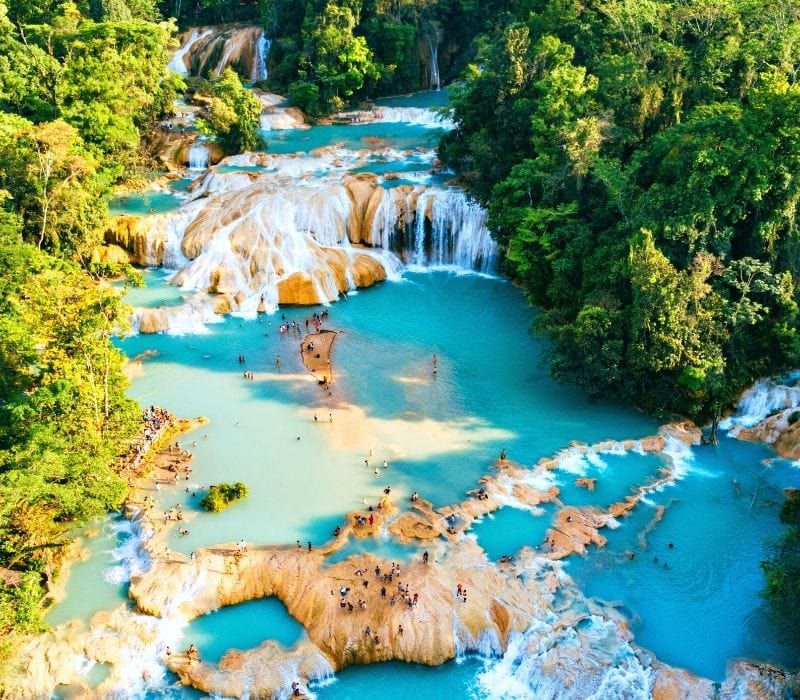
Cascadas Agua Azul is a series of stunning blue waterfalls in the lush jungles of Chiapas, located about four hours from San Cristóbal de las Casas.
Known for its turquoise waters, the falls flow over tiered limestone formations, creating numerous cascades and natural pools.
The tributaries of the Shumuljá, Otulún, and Tulijá Rivers form Aguas Azul Waterfalls.
The water’s bright color is due to its high mineral content, especially calcium carbonate, which also forms tiny, bright-blue limestone dams.
These cascades are popular spots for swimming and picnicking. There are also plenty of shallow pools, perfect for a refreshing dip for people of all ages.
Do note that the area is very wet and humid, making the ground muddy and slippery. You’ll want to wear good walking shoes, and these water shoes when swimming.
Located in Chiapas state, almost on the border with Mexico’s Yucatan Peninsula, Aguas Azules is not very accessible because it’s quite remote.
It requires a 4-4.5 hour drive on a bumpy road from San Cristóbal de las Casas, or a one-hour drive from Palenque Ruins.
For this reason, I recommend booking this Misol-Ha and Agua Azul Waterfalls Tour if you’re coming from San Cristóbal and don’t want to drive in Mexico.
8. Pozas Azules Waterfall Pools, Taxco

Pozas Azules, meaning “blue pools,” is a set of natural pools located near Taxco, Guerrero.
These striking blue water pools are found within a lush canyon, making them a hidden gem for visitors, and the ideal place for a swim.
The series of pools cascade from one to another, forming natural slides and providing endless fun for adventurous swimmers in many areas.
Accessibility to Pozas Azules de Atzala involves a short hike. It adds to the charm of your visit, and offers scenic views of the surrounding nature and the pools.
When you’re done exploring the natural pools, head to Taxco — one of the most beautiful Mexico pueblos magicos (magic towns).
Taxco is celebrated for its rich silver mining history, charming cobblestone streets, and baroque architecture, and a visit to the city makes for an ideal cultural outing.
9. Cascada Cusarare Falls, Chihuahua

Cusarare Falls is located near Creel in Chihuahua, about 20 miles (32 km) south of the town.
This waterfall features an impressive drop of more than 90 feet (30 meters) into a pool below.
The area surrounding the falls is a haven for hiking and wildlife viewing, offering paths through pine forests and past scenic overlooks.
The falls are particularly striking during the rainy season when the water volume is at its peak, but they maintain a picturesque flow.
Local guides are often available to lead hikes and share insights about the flora and fauna and the culture of the indigenous Rarámuri people who inhabit the region.
10. Cascada Cola de Caballo Waterfall, Nuevo León

Cola de Caballo, which means “horse’s tail,” is a breathtaking waterfall located about 25 miles (40 km) from Monterrey, Nuevo León.
Known for resembling a horse tail, this 82-foot (25-meter) cascade is one of the area’s most famous natural attractions.
Visitors can enjoy the view from a well-maintained park that provides easy access to the falls.
The site includes walking paths, viewing platforms, and picnic areas, making it ideal for a family outing.
The park is beautifully-landscaped and offers various services, including guided tours that explain the region’s ecological significance.
11. Cascadas Mágicas de Copalitilla Waterfalls, Oaxaca

Cascadas Mágicas de Copalitilla are located in the small town of San Miguel del Puerto. This is near Huatulco, and within the heart of Oaxaca’s lush forests.
This series of waterfalls and natural pools offers visitors a secluded paradise, perfect for swimming and nature hikes.
The clear, turquoise waters are ideal for cooling off on a hot day, and the surrounding jungle provides ample opportunities for bird watching and spotting other wildlife.
The area is less commercialized than other tourist spots, offering a more authentic experience of Oaxaca’s natural beauty.
Cascadas Mágicas de Copalitilla is a hidden gem that provides an escape into nature, ideal for travelers seeking peace and solitude.
One of three distinct sections within the Huatulco Waterfalls, don’t miss the other two when you visit; Llano Grande Waterfall and Las Brisas Waterfall.
If you want to visit them, I recommend booking this Huatulco Waterfall Tour because the drive up to the falls isn’t easy unless you have 4-wheel drive.
12. Cascadas de Tamasopo Waterfall, San Luis Potosí

Cascadas de Tamasopo is a stunning group of waterfalls in the Huasteca Potosina region of San Luis Potosí.
The waterfalls and pools here are natural — but the environment is like a waterpark with ropes courses, play areas, hammocks, restrooms, lockers and restaurants.
If you’re visiting Huasteca Potosina with kids, or traveling to Mexico with kids, this is a great option. Adults will love it too though; my boyfriend and I certainly did!
As you might expect, it gets VERY crowded on weekends, so go during the week to avoid the crowds.
Nearby, don’t miss the other pools and waterfalls in Tamasopo, like Puente de Dios, La Hacienda Gomez y Sus 7 Cascadas, Paraje los Otates and El Trampolín.
13. Cascada Minas Viejas Waterfall, San Luis Potosí
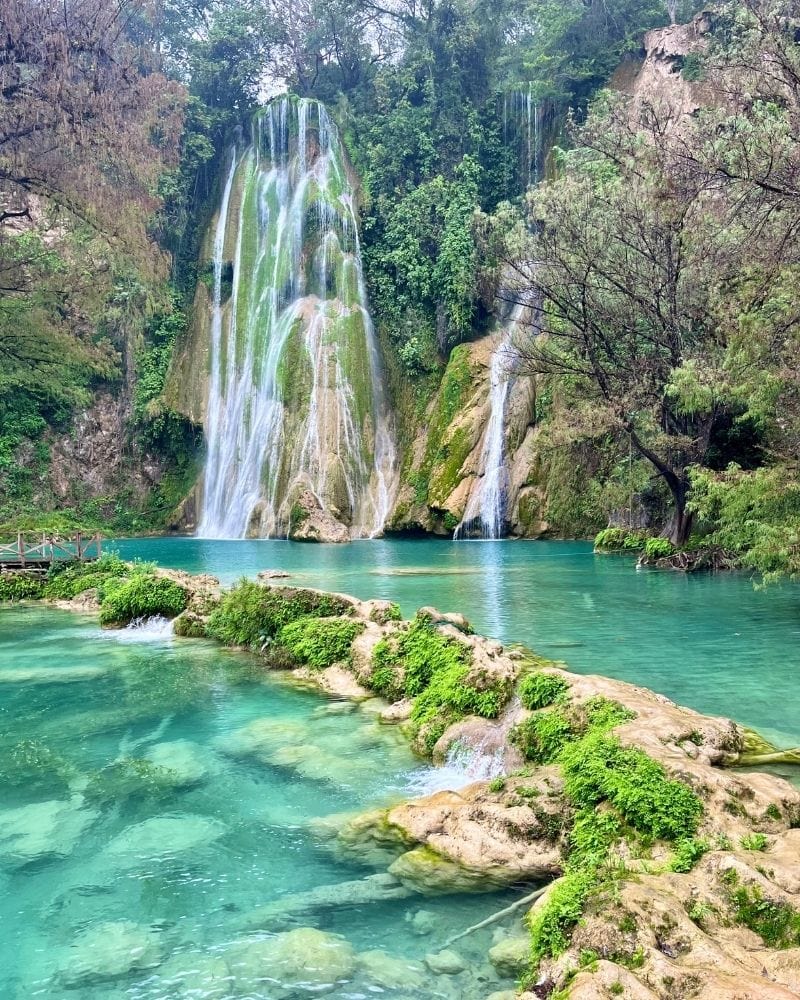
Minas Viejas Waterfall is located in the Huasteca Potosina region of San Luis Potosí, and looks like something out of a fairy tale.
This one, along with Puente de Dios, are my two favorite waterfalls in La Huasteca Potosina Mexico.
This impressive 164-foot-high (50-meter) cascade is part of a larger eco-park with multiple waterfalls and gorgeous blue pools.
The area is popular for its water activities, including swimming, kayaking, but thrill-seekers can even go rappelling down this waterfall.
Plenty of different spots allow you to jump off the rocks into the pool right next to the falls. We visited in December, and the water was cool, but not too bad.
As with many waterfalls Mexico has in the region, you need to walk down to reach the main falls. The walk is relatively easy, and will take about 10-15 minutes.
The picturesque pools near the waterfall are perfect for swimming or just eating a picnic next to while admiring their beauty.
You can book this Minas Viejas and Micos Waterfalls Experience to see two different waterfalls on the same day.
14. Cascada Salto de Eyipantla Waterfall, Veracruz

Salto de Eyipantla is a famous waterfall located in the state of Veracruz, just south of Catemaco.
This spectacular waterfall is known for its wide curtain of water that plunges 131 feet (40 meters) into a broad basin.
Salto de Eyipantla is known for its dramatic appearance and has been featured in several films; most notably in Apocalypto, directed by Mel Gibson.
Beyond its beauty, Salto de Eyipantla has deep roots in local culture and history.
It is named after the Nahuatl words “eyi” (three), “pantli” (flag or banner), and “tla” (water), referring to the waterfall’s three distinct streams that resemble banners.
It was also a significant site for the region’s indigenous peoples, including the Totonacs, and later, the Aztecs.
They revered it as a sacred place, and considered this waterfall a symbol of fertility and abundance.
The site includes a series of steps for visitors to view the waterfall from various angles, offering dramatic views of the cascading water and lush tropical vegetation.
15. Cascada Salto del Agua Waterfall, San Luis Potosí

Cascada Salto del Agua is a captivating waterfall in the small town of El Naranjo, It’s located in La Huasteca Potosina, within the state of San Luis Potosí.
Salto del Agua, like many waterfalls in Huasteca Potosina, is known for its bright turquoise blue water.
This waterfall is noted for its impressive height and the powerful volume of water that plunges into a deep, clear pool below — but the volume depends on the seasons.
In the rainy season (fall and winter), it’s heavy, but there’s much less water in the dry season (spring and summer), and the falls will be smaller.
Part of a larger area known for its diverse natural attractions, don’t miss the other waterfalls and rivers ideal for water sports nearby, like Cascada Micos Waterfall.
🛶 Visiting Salto del Agua Waterfall

Salto del Agua stands out with its accessibility and dramatic vista, making it a popular spot for photography and nature observation.
Visitors can enjoy the surrounding natural beauty on well-maintained trails.
The site is perfect for a day of exploration and relaxation in a less commercialized environment.
Cascada El Salto is part of a group of waterfalls known as the Turquoise Route, along with Cascadas de Minas Viejas, Cascadas El Meco, and Cascada El Aguacate.
Cascadas El Meco is conveniently located just a short distance from Cascada El Salto. Further south, approximately an hour from El Naranjo, lies Cascadas de Minas Viejas.
For an up-close experience of some of the The most gorgeous waterfalls in Huasteca Potosina, book this El Salto and El Meco Waterfalls Tour.
Looking to Discover More Unique Places in Mexico?

Mexico is a large country — the 14th largest country on Earth by size — and it’s also the 6th most biodiverse diverse country in the world.
Though it’s mostly known for beaches, there’s a lot more to Mexico than that. Check out these Mexico articles to discover parts of the country you never knew existed.
- The 30 Most Beautiful Cities in Mexico (#7 Will Shock You)
- Mexico Off the Beaten Path Places for Your Bucket List
- 20 Hot Springs in Mexico That are Calling Your Name
- Hidden Beaches in Mexico You’ve Never Heard Of
- Best Waterfalls in Huasteca Potosina Mexico
- The Coolest Mayan Ruins in Mexico’s Yucatan Peninsula
⚠️ Before You Go — Get Your FREE Guide!
Head here and enter your email address to download your FREE Mexico guide (5 Things You Don’t Want to Forget to Pack for Mexico) and get Mexico travel tips, tricks and more sent straight to your inbox.
