
The Mass Grave of Maya Boys Revealed: Ancient Horror at Chichen Itza Ruins

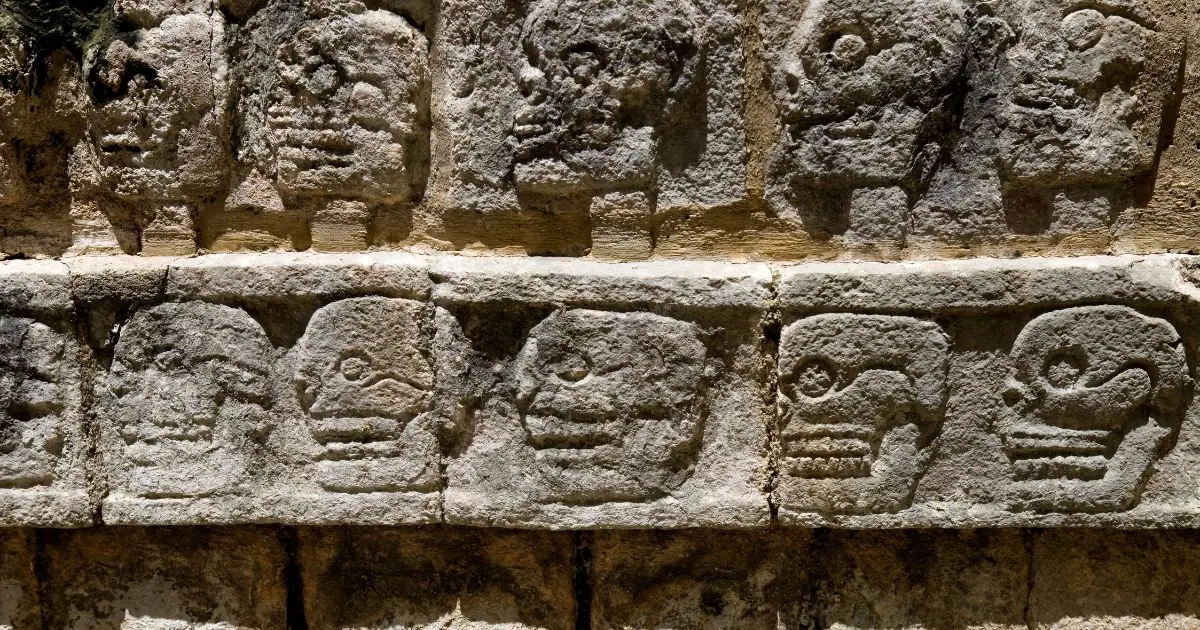
Chichén Itzá is one of the most famous ancient Maya sites. Recently, a mass grave with the remains of at least 100 boys was found there.
😱 So what does this mass grave of Maya boys actually reveal?
This discovery, dating back to the seventh to the 12th centuries, gives us new information about the Maya people and their practices, especially human sacrifice.
Disclosure: This article may contain affiliate links, meaning when you make a purchase, I earn a small commission. Affiliate links cost you nothing to use, and help keep my content free. It’s a win-win for us both. For more info, see the Disclosure Policy.
The Discovery of the Mass Grave

The chamber was first found in 1967 but took many years to understand. Scientists used genetic testing to learn more about the remains.
They discovered that most skeletons were boys, many of whom were related, including four sets of twins.
Genetic Insights
The genetic tests showed that the boys came from local Maya populations, and many were related.
This finding changed our perception of Maya sacrifices, which were believed to involve girls and women mainly.
The boys’ similar ages and diets suggest they were chosen for a particular reason, possibly for rituals.
The Role of the Chultún

The boys were found in a chultún, an underground cistern connected to a small cave. The Maya saw these places as links to the underworld.
This chultún was used as a tomb for the boys. The bones showed no signs of violence, so they were not thrown into the chamber.
The Significance of the Findings

The discovery of the boys’ mass grave changes what we thought about Maya sacrifices. It shows that boys were also chosen for these rituals, not just girls and women.
This finding makes us rethink human sacrifice’s cultural and religious importance in Maya society.
🗿Insights into Maya Society

The boys’ genetic and dietary similarities suggest they were part of a specific group, possibly chosen for their family connections.
This raises questions about how sacrificial victims were selected and the social dynamics within Maya communities.
Understanding these aspects can give us a deeper insight into the Maya’s societal structure and beliefs.
The Mystery of the Cause of Death
Even with the genetic testing, we still don’t know how the boys died. There were no signs of violence on the bones so that they might have died from disease or other ritualistic practices.
More research is needed to find out how they died and why they were buried in the chultún.
Ethical Considerations

Studying ancient remains, especially those of children, raises important ethical questions.
Researchers must balance the need for knowledge with respect for the deceased and their cultural heritage. The remains should be handled with care and sensitivity.
Cultural Sensitivity
Interpreting findings about human sacrifice must be done with cultural sensitivity. It’s important not to sensationalize or misrepresent ancient practices.
Researchers should try to understand these practices’ cultural and religious contexts and provide a respectful portrayal of the Maya people.
Looking Forward

The discovery of the boys’ mass grave at Chichén Itzá opens new research opportunities.
Future studies could focus on finding out how the boys died, how sacrificial victims were chosen, and the broader social and religious contexts of the Maya civilization.
🗿The Importance of Preservation
Preserving archaeological sites like Chichén Itzá is vital for ongoing research and education.
It ensures that future generations can learn from and appreciate the rich cultural heritage of the Maya civilization. Public support for preservation initiatives is crucial.
Final Thoughts: Mass Grave of Maya Boys
The mass grave of Maya boys at Chichén Itzá offers a fascinating glimpse into the practices and beliefs of an ancient civilization.
While many questions remain unanswered, the findings challenge previous assumptions and provide new insights into Maya society.
As research continues, it is essential to approach the study of these remains with respect, cultural sensitivity, and ethical responsibility, ensuring that the legacy of the Maya people is honored and preserved for future generations.
Get My FREE Guide: 5 Easy Ways to Save Money in Mexico
Insider tips from someone who’s lived in Mexico since 2018.
