
If You Remember These 20 Foods, You’re a True Child of the 1970s — How Many Have You Tried?


Before Hello Fresh meal kits, before food blogs, and long before anyone had heard the word “artisan,” there was the 1970s kitchen.
It was a decade of fondue sets on wedding registries, Jell-O molds shaped like fish, and TV dinners eaten on fold-up trays in front of the evening news.
If you grew up in the 70s, these foods are not just recipes. They are time machines. How many of these have you tried?
1. Fondue
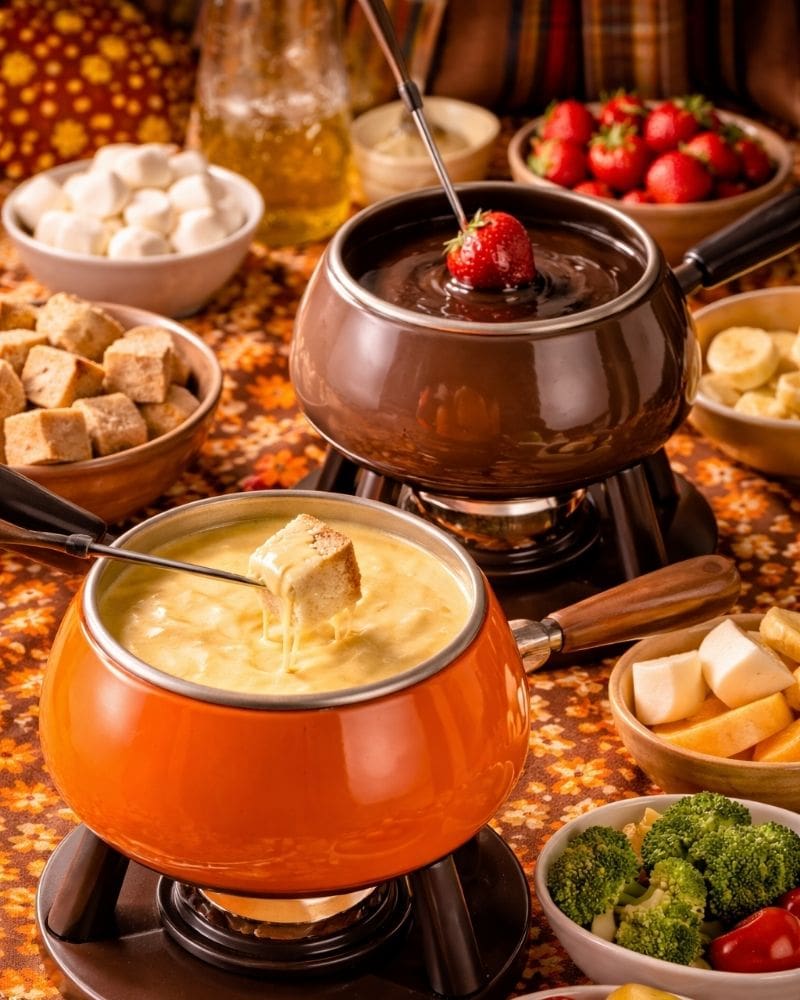
Nothing said “we are sophisticated adults” in the 1970s quite like a fondue pot in the center of the table.
Cheese fondue — a Swiss import that hit its American peak in the early 70s — involved melting Gruyère and Emmental into white wine, then dipping bread cubes on long forks.
Every dinner party had one.
Every household that wanted to seem worldly owned the pot, the fuel burner, and the matching set of color-coded forks.
The Melting Pot restaurant chain, which launched in 1975, was proof that Americans were absolutely serious about fondue as a dining experience.
If you dropped your bread in the pot, there was a penalty, usually a kiss or a drink, depending on the company.
2. Creamed Chipped Beef on Toast (AKA “SOS”)
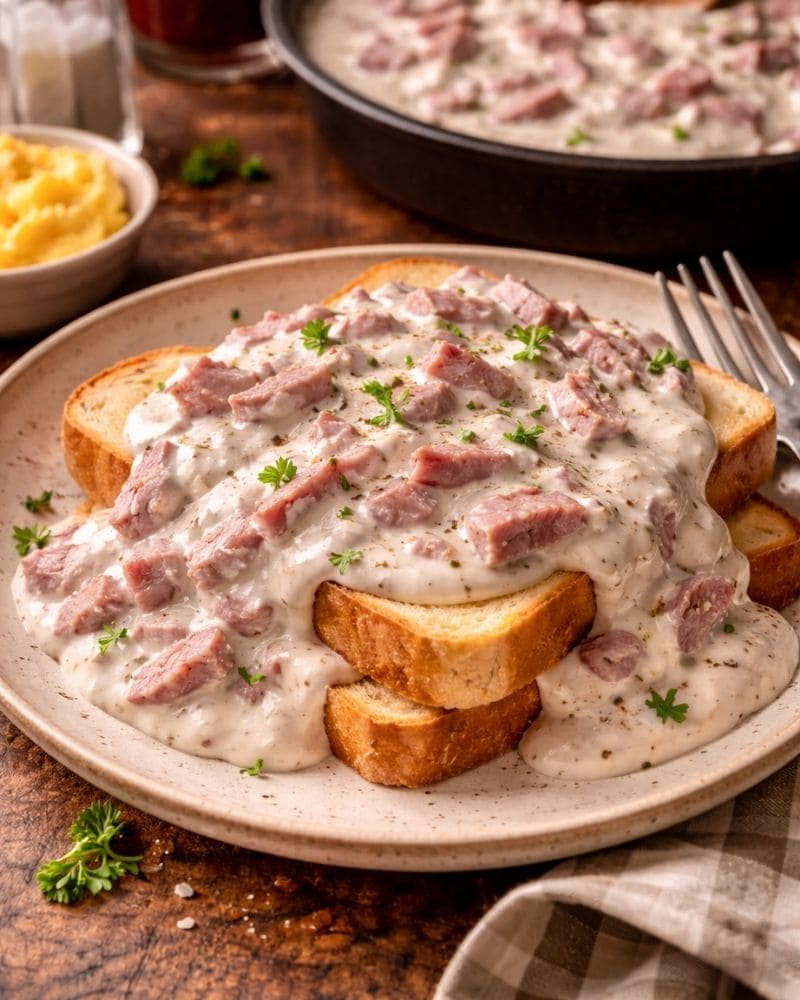
If you were in the military, you probably called it “sh!t on a shingle,” or SOS — but if you were a civilian mom trying to stretch the grocery budget, you called it supper.
Creamed chipped beef on toast — thin slices of dried, salted beef folded into a thick white cream sauce, spooned over white toast — was a Depression-era staple that held on well into the 70s.
It is salty, it is heavy, and it is the kind of food that sticks to your ribs whether you want it to or not.
Military families and anyone who grew up working class in America knows this dish by heart.
The name that soldiers gave it cannot be printed here, but every person who ate it in a mess hall knows exactly what we are talking about.
3. Ambrosia Salad
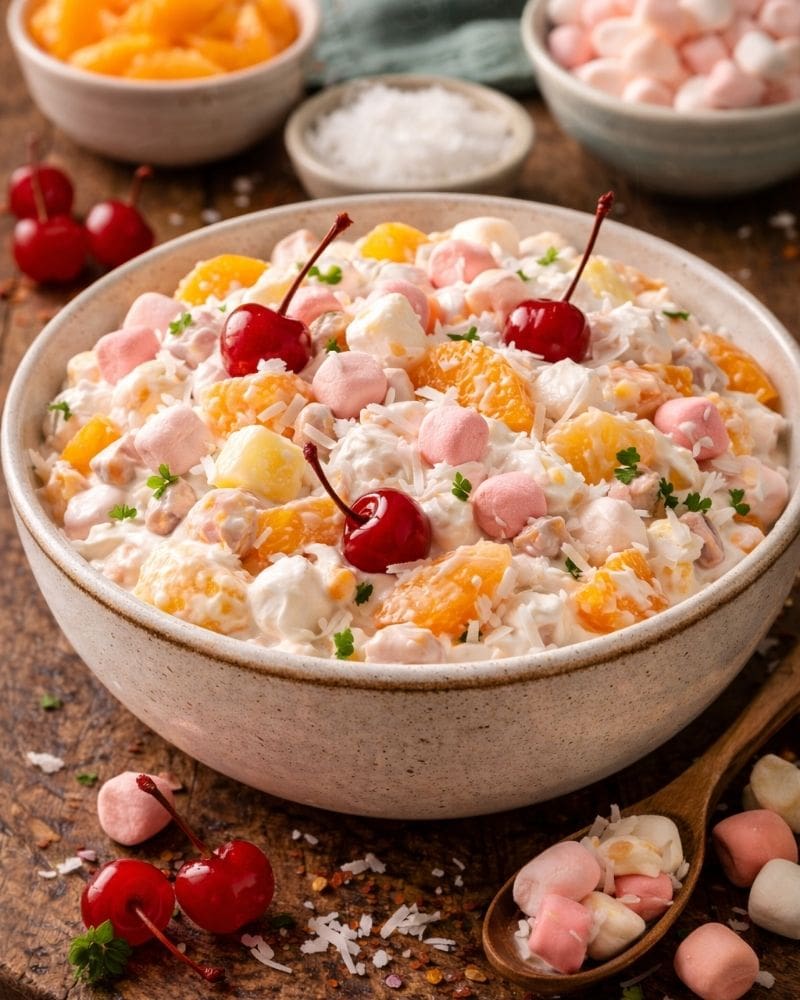
Ambrosia salad showed up at every potluck, every church supper, and every holiday gathering in the 1970s without fail.
It was canned mandarin oranges, crushed pineapple, maraschino cherries, shredded coconut, and mini marshmallows folded into Cool Whip.
Then someone called it a salad, and nobody questioned it.
Smithsonian Magazine traces the dish back to late 19th century cookbooks, where it started as a simple, elegant citrus dessert.
By the time the 1970s arrived, Cool Whip and canned fruit had transformed it into something far more colorful, far sweeter, and far more likely to appear in a lime green Jell-O mold.
Your grandmother made it. Her neighbors made it. Somebody always brought it.
4. Turkey Tetrazzini
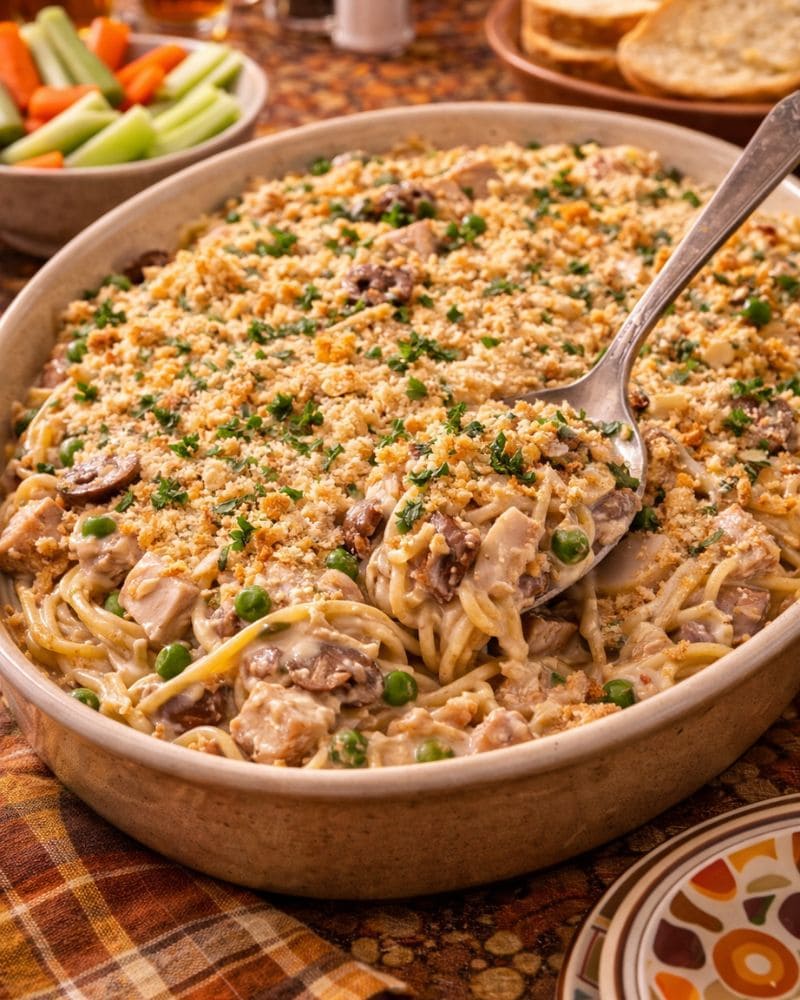
Turkey tetrazzini was the meal that appeared the Monday after every Thanksgiving and every Christmas.
It was creamed turkey, mushrooms, and spaghetti baked in a casserole dish under a breadcrumb and Parmesan topping.
The recipe transformed leftover turkey into something that felt like a completely different meal, and in the 1970s, wasting food was not something families did.
Named after Italian opera singer Luisa Tetrazzini, who was reportedly a lover of pasta, this dish made its way into American kitchens through mid-century church cookbooks and community recipe collections.
A proper tetrazzini, baked until golden and bubbling, is comfort food at its most honest.
5. Sloppy Joes
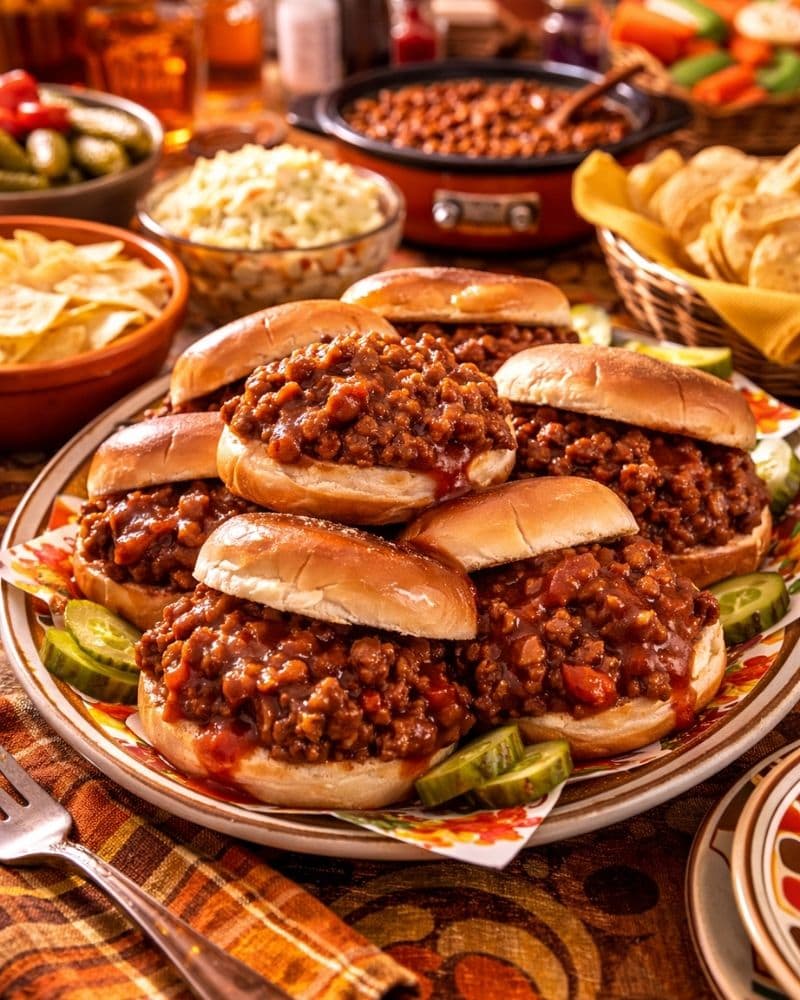
Sloppy Joes were a school cafeteria staple and a weeknight dinner hero across the entire decade.
Ground beef browned in a skillet, stirred into a sweet and tangy tomato-based sauce, and piled onto a hamburger bun.
They were called Sloppy Joes because they were, in fact, spectacularly messy.
Every mom had her version.
Some used Manwich from a can — which launched in 1969 and became the dominant shortcut of the decade.
Others made the sauce from scratch with ketchup, Worcestershire, brown sugar, and whatever else was in the pantry.
Either way, you needed at least two napkins and a clean shirt standing by.
6. Jell-O Salads
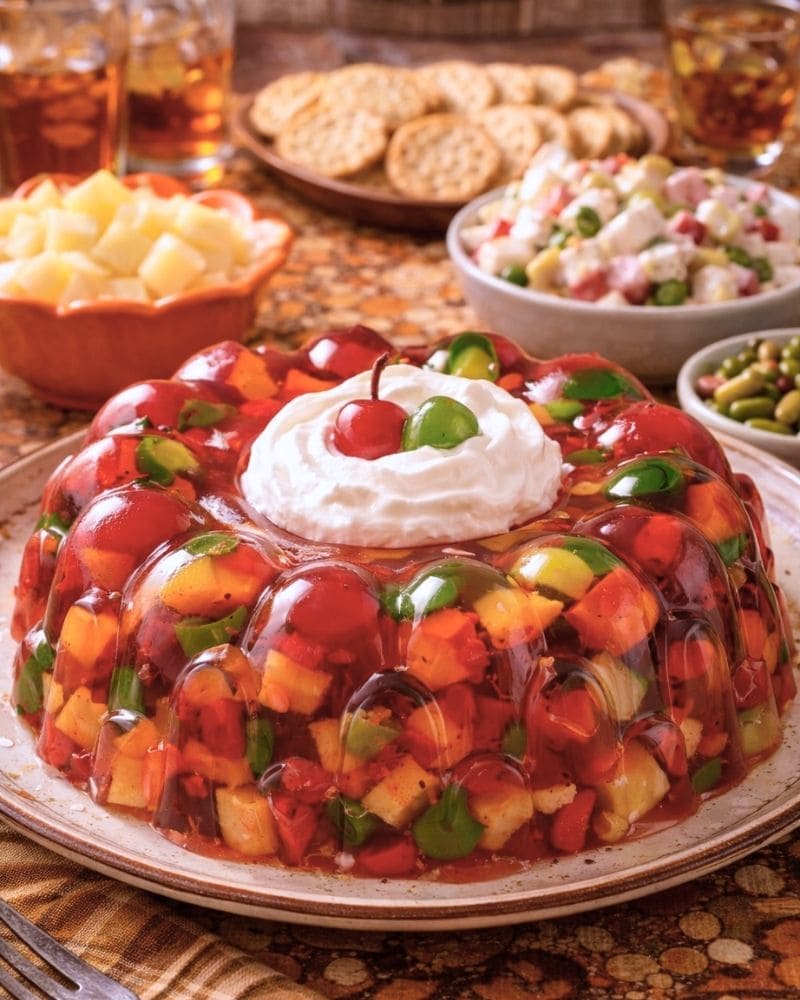
The 1970s were the golden age of the Jell-O salad, and no family dinner table was complete without at least one wobbly, translucent creation making an appearance.
Lime Jell-O with cream cheese and crushed pineapple. Strawberry Jell-O with pretzels and Cool Whip. Orange Jell-O with shredded carrots and celery.
The combination of sweet gelatin with savory vegetables sounds deeply wrong today.
In 1975, it was just Tuesday.
Jell-O was marketed heavily as a versatile, modern ingredient throughout this era, and American home cooks embraced it with a level of enthusiasm that still defies explanation.
7. Tapioca Pudding
Tapioca pudding was the quiet, unassuming dessert that appeared in school cafeterias, at grandma’s table, and at the back of every hospital menu.
Made from tapioca pearls — small starch balls extracted from the cassava root — cooked into a creamy vanilla custard, it was soft, slightly chewy, and deeply comforting.
Kids either loved it or were deeply unsettled by the texture, with very little middle ground.
The ones who loved it ate both portions.
Tapioca has roots in Indigenous Brazilian cuisine and arrived in American kitchens through colonial-era trade routes, eventually becoming a pantry standard throughout the mid-20th century.
8. Beanie Weenies (AKA Franks and Beans)
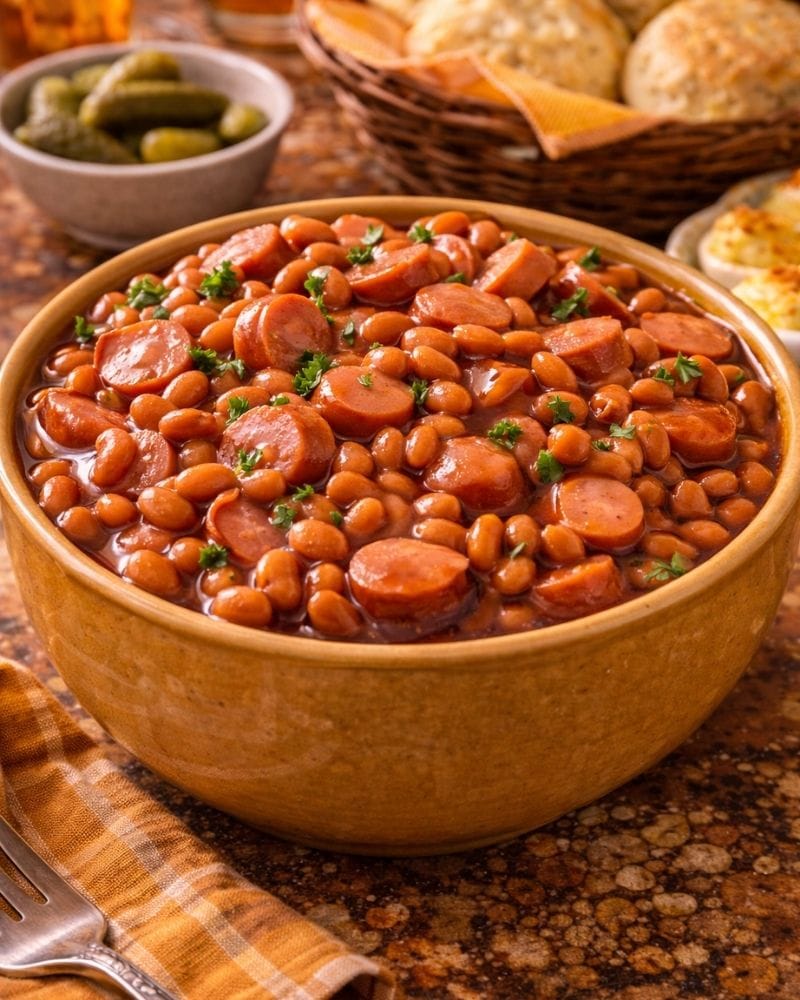
Beanie weenies were exactly what they sound like: canned baked beans with sliced hot dogs stirred in and heated on the stove.
They were a camping staple, a budget dinner, and a latchkey kid’s best friend.
You could make beanie weenies with a can opener and a saucepan at age ten, which made them a genuine symbol of 70s childhood independence.
Van Camp’s had been making their canned version since the 1960s, and it was a fixture in every household pantry that prioritized convenience.
Served over white rice or straight from the pot, depending on how much effort was involved, beanie weenies were the meal nobody bragged about and everyone secretly loved.
9. Mincemeat Pie
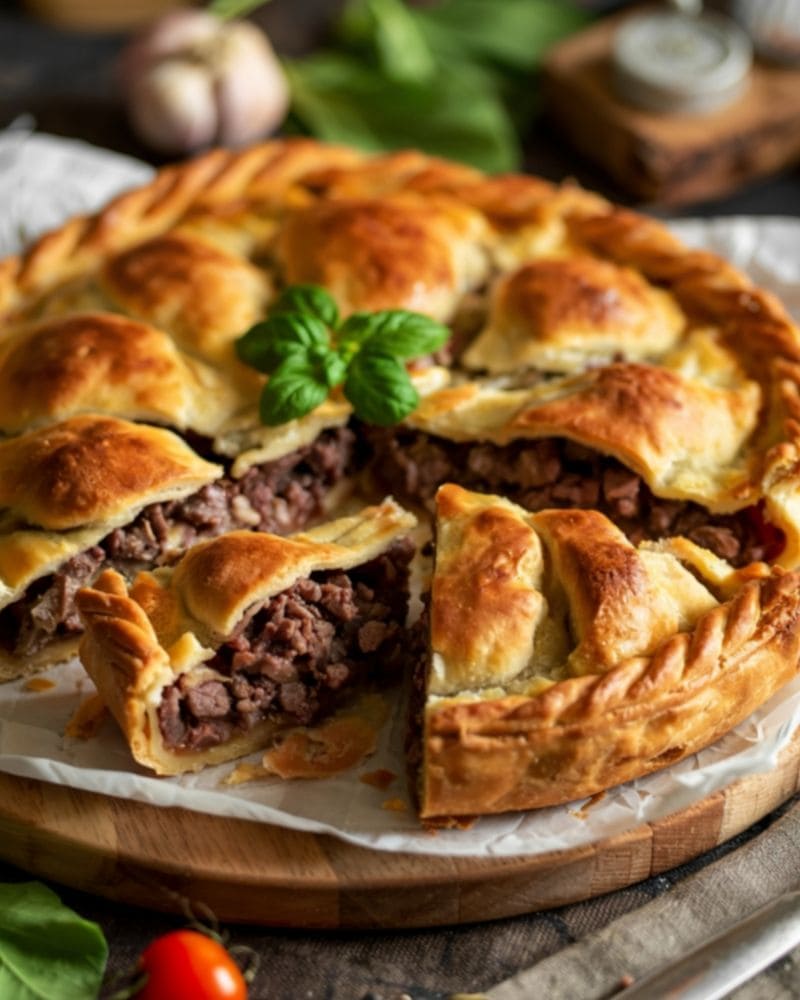
Mincemeat pie was a holiday staple that younger generations have almost entirely abandoned, and older generations defend with surprising intensity.
The modern version is a spiced fruit filling — raisins, currants, apples, citrus peel, and brown sugar packed with warm spices — baked in a flaky pastry shell.
The original versions, dating back centuries, actually contained minced meat, which is where the name comes from.
By the 1970s, most commercially made mincemeat, like the popular None Such brand, had eliminated the meat entirely while keeping the name.
Grandparents ate it every Christmas. Their grandchildren tried one bite and quietly moved on to the pecan pie.
10. Ice Cream Sodas
Before Starbucks, before smoothie bars, and before the frappuccino, there was the ice cream soda.
Two scoops of vanilla ice cream in a tall glass, filled with flavored soda water or cola, topped with whipped cream from a can.
You ate it with both a spoon and a straw and you made a mess of it every single time.
Ice cream parlors were a genuine social destination for families in the 1970s, and the soda fountain counter was still a real thing in many American towns.
Diners and drug stores with soda fountains served these throughout the decade, and ordering one felt like a special occasion even if you had one every week.
11. Carob (The Chocolate Alternative)
Carob was what happened when health food culture collided with the 1970s.
As Americans became more interested in natural foods and alternatives to sugar and caffeine, carob — a sweet brown powder made from the pods of the carob tree — was marketed aggressively as a healthy substitute for chocolate.
It was in carob chips, carob bars, carob-covered raisins, and carob-dipped anything.
The problem was that carob does not taste like chocolate.
It tastes like carob, which is its own thing entirely: slightly sweet, a little earthy, and missing everything that makes chocolate chocolate.
Health food stores in the 70s were full of it, and a generation of children grew up being handed carob chips and told they were just as good.
They were not just as good.
12. Banana Flips
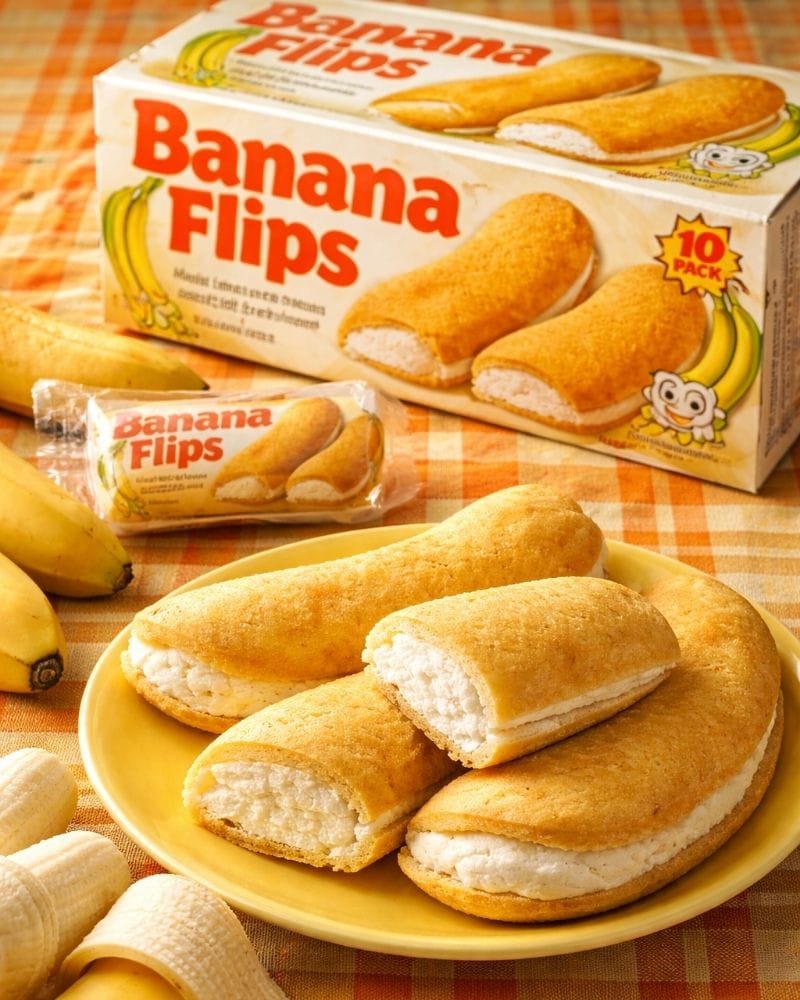
Banana Flips were the snack cake that a certain generation of American kids remembers with a devotion that borders on religious.
Made originally by Mickey’s Bakery and later produced in various forms by Hostess, Dolly Madison, and Nickles Bakery, a Banana Flip was a soft, moist banana sponge cake folded over a fluffy banana cream filling — shaped roughly like a taco made entirely of cake.
They were individually wrapped, sold from bread trucks and school vending machines, and they were bigger than most snack cakes of the era.
Kids peeled back the wrapper, licked the cream from the edges first, then ate the cake.
Banana Flips were permanently discontinued in the early 2000s, and the internet is full of forum posts from people who have spent decades trying to find them or recreate them.
The nostalgia for Banana Flips is real, specific, and deeply felt. As the kids of today say: If you know, you know.
13. TV Dinners in Aluminum Trays
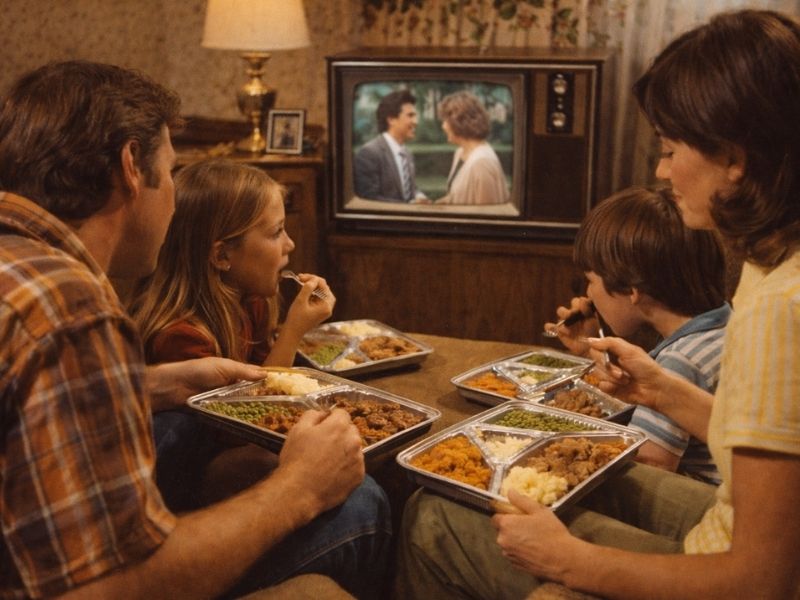
The TV dinner was one of the defining culinary inventions of the mid-20th century, and by the 1970s it had become a genuine American institution.
Swanson introduced the aluminum tray dinner in 1953, and by the time the 70s arrived, the frozen dinner industry had expanded to dozens of brands and hundreds of options.
You slid the tray into the oven, set the timer, and twenty-five minutes later you had a complete meal separated into its own little compartments: a protein, a vegetable, and a starch, none of which were touching.
Eating it on a fold-up TV tray in front of the news while Walter Cronkite told you how the world was doing was a very specific 1970s experience that no algorithm will ever replicate.
14. Space Food Sticks
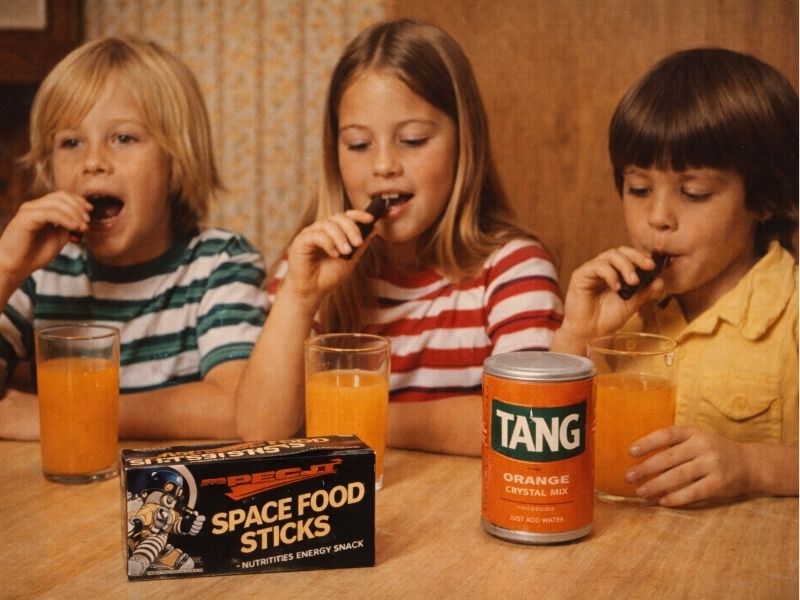
Space Food Sticks were proof that the entire country was still completely swept up in the excitement of the space program.
Developed by Pillsbury originally for NASA, they were rod-shaped, chewy, individually wrapped energy bars that came in flavors like chocolate, peanut butter, and caramel.
According to General Mills archives, a version of Space Food Sticks actually accompanied Neil Armstrong and Buzz Aldrin on the Apollo 11 mission as emergency contingency food.
Pillsbury marketed the consumer version as a “nutritionally balanced between-meal snack” and leaned heavily on the NASA connection.
Kids loved them because astronauts ate them. Parents bought them because they came with a nutrition claim on the box.
They disappeared from store shelves in the 1980s when the space race fever finally broke, and a generation of kids still remembers them with genuine affection.
15. Clams Casino
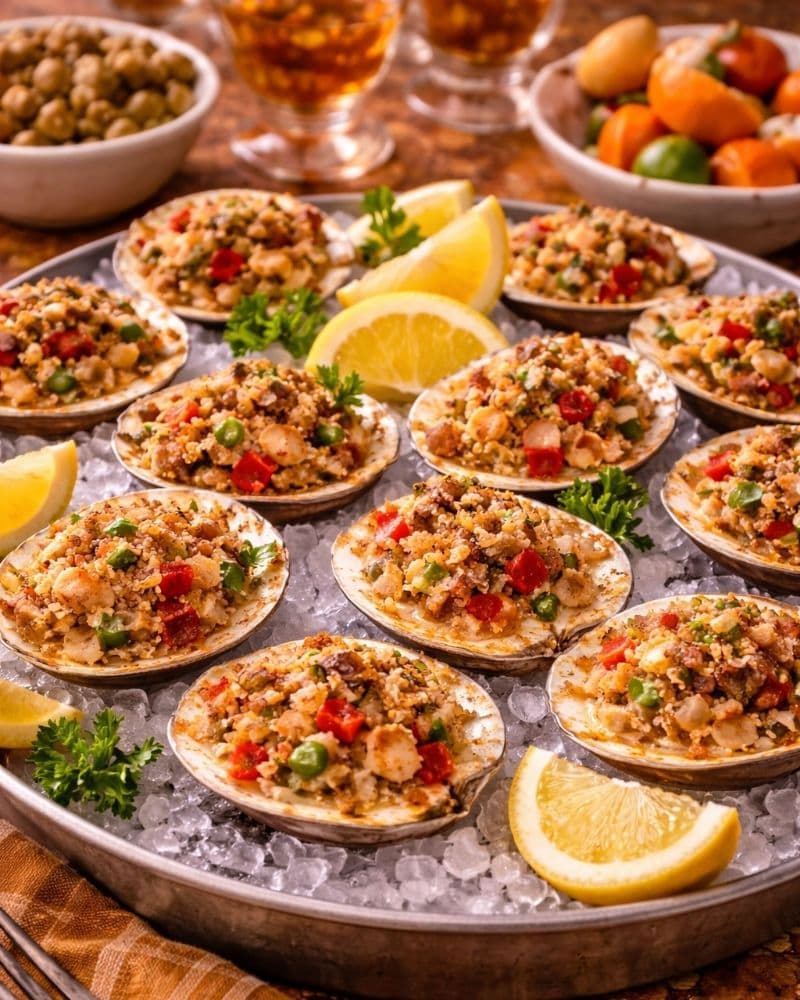
Clams Casino was the appetizer that said “we are having a dinner party” in the most emphatic way possible.
Littleneck clams baked in their half shells with a topping of breadcrumbs, bacon, green pepper, and butter, broiled until the bacon crisped and the topping went golden.
They were served on a bed of rock salt to keep the shells steady, and they smelled incredible coming out of the oven.
The dish reportedly originated at the Casino at Narragansett Pier in Rhode Island in the early 1900s, but it hit its cultural peak in American home kitchens during the 1970s dinner party era.
If your parents entertained, you have probably watched someone prepare these on a Saturday evening before the guests arrived.
16. Pineapple Upside-Down Cake
Pineapple upside-down cake is one of the most visually satisfying baked goods ever invented.
You press pineapple rings and maraschino cherries into a brown sugar and butter base, pour the cake batter on top, bake it, then flip the whole thing out of the pan to reveal the glossy, caramelized fruit arranged in perfect circles on top.
It is dramatic. It is delicious. It is deeply, completely 1970s.
Dole canned pineapple ran advertisements for upside-down cake recipes throughout the mid-century, and by the 70s it had become one of the most reliably requested desserts at potlucks, birthday dinners, and church socials across the country.
17. Cheese Balls Rolled in Nuts
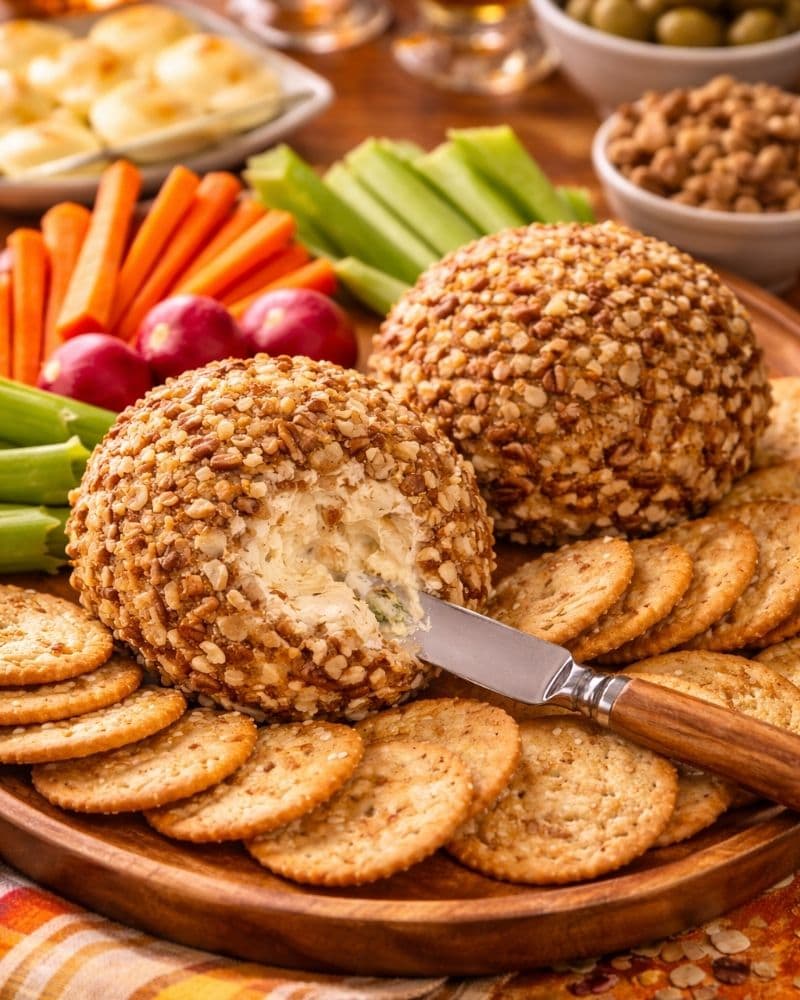
The cheese ball was the crown jewel of 1970s party food.
A mixture of cream cheese, cheddar, Worcestershire sauce, garlic powder, and whatever else was in the fridge, formed into a large sphere and rolled in crushed pecans or walnuts until fully coated.
It sat in the center of the appetizer spread next to a fan of Ritz crackers and it was completely demolished before the main course arrived.
Every family had their version, passed down on a handwritten index card. Some added blue cheese. Some added dried beef. Some added green onions.
All of them were served with a small spreading knife and eaten with the kind of enthusiasm that only room-temperature cheese can inspire.
18. Chicken à la King
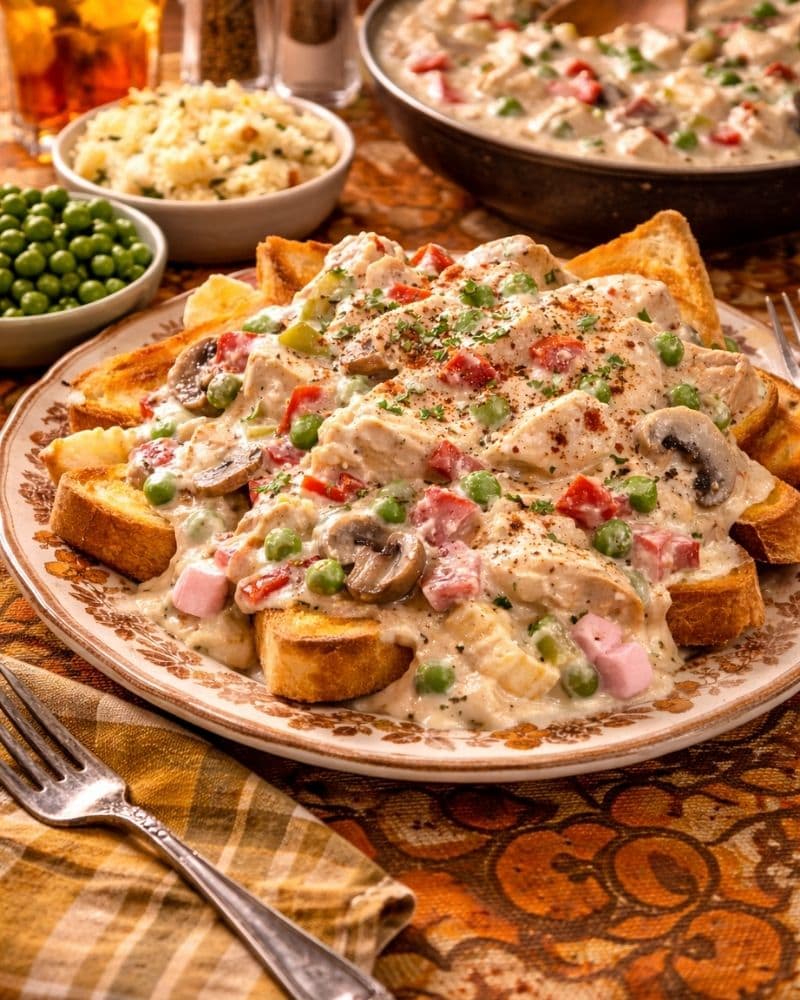
Chicken à la King was the dish that appeared whenever someone needed to serve a crowd and stretch a modest amount of chicken into something that felt special.
Diced chicken in a cream sauce with mushrooms, pimentos, and green peppers, served over biscuits, toast points, puff pastry shells, or white rice.
It was creamy, it was mild, and it was exactly the kind of thing that filled a church hall or a wedding reception buffet without offending anyone.
The dish has murky origins — multiple hotels and chefs have claimed credit for inventing it — but food historians generally trace it to the late 19th century before it became a mainstream American staple through the mid-20th century.
By the 1970s, it had a firm place on every church cookbook page and every hospital menu in the country.
19. American Goulash
American goulash — and it is important to note this is the American version, not the Hungarian original — was ground beef and elbow macaroni cooked together with canned tomatoes, onion, and whatever spices were on hand.
It was called goulash because it borrowed the general idea of a Hungarian stew without much of the actual Hungarian part.
One pot. One hour. Fed a family of five with change left over.
It was the meal that appeared on Tuesday nights when payday was still a few days away.
In the South and Midwest, it was also called American chop suey.
Whatever you called it, it was warm, filling, and the kind of food that felt like home in the most elemental way.
20. Watergate Salad
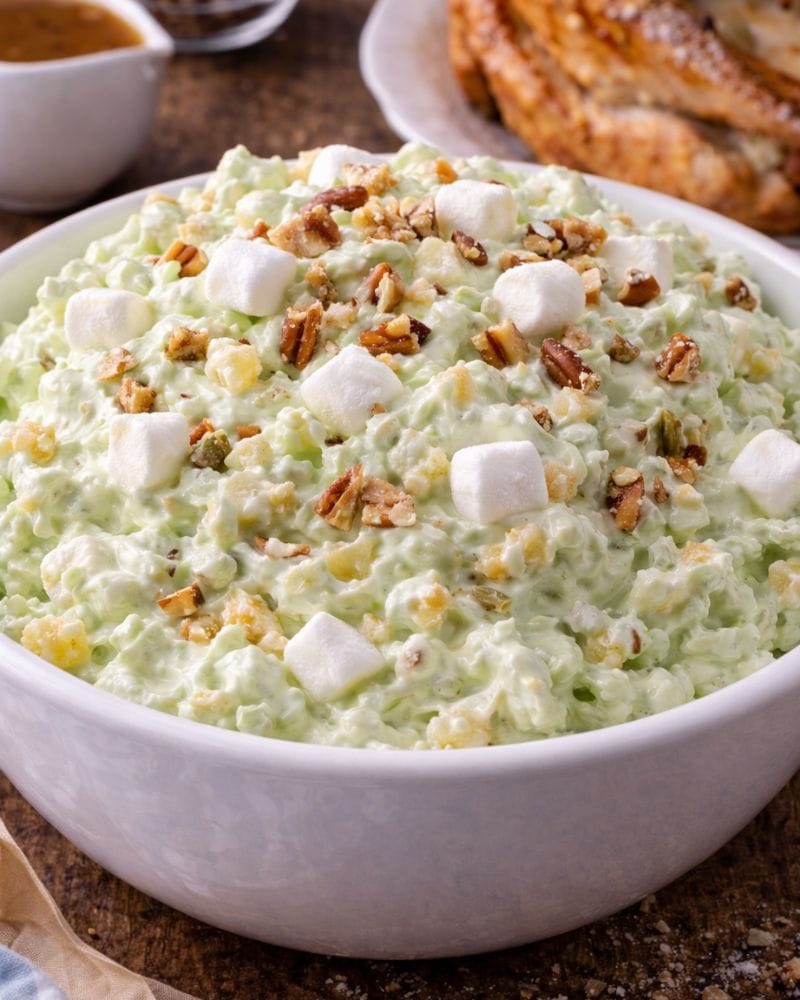
Watergate Salad may be the most perfectly named dish of the entire decade.
It is pistachio pudding mix, canned crushed pineapple, mini marshmallows, chopped pecans, and Cool Whip, stirred together into a fluffy, mint-green cloud.
According to Wikipedia, Kraft developed the original recipe in 1975 under the name “Pistachio Pineapple Delight” to promote their new pistachio pudding mix.
A Chicago food editor reportedly renamed it Watergate Salad in her column to draw readership during the height of the Watergate scandal.
The name stuck, and so did the recipe.
Also known as Green Fluff, Green Goop, and Pistachio Delight, it appeared at Thanksgiving tables, Easter dinners, and every potluck in between throughout the decade.
Nobody could agree on whether it was a salad or a dessert. Everyone agreed it was good though.
Let’s Take a Walk Down Memory Lane For Even More 1970s Nostalgia

We’ve got you covered. Check out our other groovy 70s content using the links below.