
The 11 Most Influential Mexican Architects of All Time (Plus Photos of Their Work)


Mexico’s architecture is world-famous for good reason. It blends ancient indigenous traditions with Spanish colonial style and bold modern design.
From Luis Barragán’s colorful walls to today’s cutting-edge sustainable buildings, Mexican architects have changed how the world thinks about design.
As someone who’s been living in Mexico since 2018, I’ve seen how these visionaries transformed spaces into experiences with buildings that capture the true Mexican spirit.
1. Luis Barragán

When it comes to famous Mexican architects, Luis Ramiro Barragán Morfín (usually called simply Luis Barragán) is in a class all his own.
Besides being the country’s most celebrated architect, he’s also the only Mexican to win the Pritzker Prize — the most prestigious award in architecture.
By mixing bright colors with water features and clean lines, Barragán’s work changed modern architecture by adding emotion and spirituality to simple designs.
I’ll never forget seeing both Casa Gilardi and the Luis Barragán House and Studio in person, strolling among colorful walls that feel almost sacred.
His style feels both modern and timeless, which is why so many Mexican architects that came after him have been heavily influenced by his work.
What makes him truly special is proving modernism doesn’t have to feel cold.
He showed that architecture could be spiritual and deeply Mexican, while still being completely contemporary.
Luis Barragán’s Most Important Works

Casa Gilardi (1976) is one of the most photographed homes in the world. Its indoor pool with red and blue walls has inspired designers everywhere.
Torres de Satélite (1957) turned a highway into art with five brightly colored concrete towers that have welcomed visitors to Mexico City for decades.

Casa Barragán (1948), located near the popular Condesa Mexico City neighborhood, was his home and studio. This UNESCO World Heritage site shows his mastery of light and color perfectly.
Cuadra San Cristóbal (1968) is a stunning horse ranch. Pink walls and water features blend beautifully with the mountain landscape.
2. Juan O’Gorman

Juan O’Gorman connected strict modernism with colorful Mexican murals better than anyone.
He started following European design rules in the 1930s. Later, he embraced organic architecture and covered buildings with incredible paintings.
Whenever I visit the UNAM Central Library in Mexico City, I spend hours looking at O’Gorman’s stone mosaics that cover all four sides of the building.
With a career reflecting Mexico’s architectural journey, O’Gorman helped create a uniquely Mexican style that honored indigenous culture while embracing modern design.
His work influenced every Mexican architect who wanted to celebrate their heritage, proving you can be both contemporary and deeply Mexican.
Juan O’Gorman’s Most Important Works

UNAM Central Library (1953) has more than 43,000-square-feet (4,000 square meters) of stone mosaic murals, and became a UNESCO World Heritage site in 2007.
Museo Anahuacalli (1964), one of the best Mexico City museums, houses Diego Rivera’s pre-Columbian art collection. The volcanic stone building feels like an ancient temple.
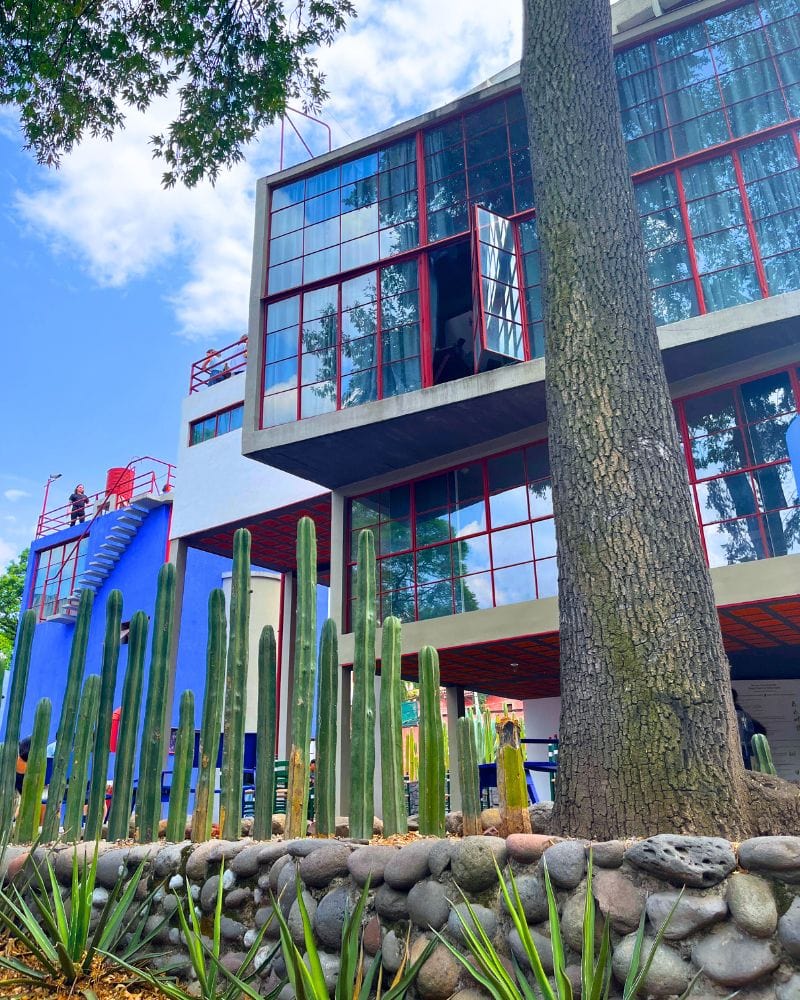
Diego Rivera and Frida Kahlo Studio-Houses (1931-1932) were revolutionary for their time. These connected homes in Mexico City’s charming San Ángel neighborhood introduced pure functionalist design to Mexico.
His own home in El Pedregal (1956) was tragically demolished. The house was completely covered in mosaics and blended perfectly with the volcanic landscape.
3. Tatiana Bilbao

Tatiana Bilbao Spamer represents Mexico’s new generation of architects. She’s making international waves while solving Mexico’s housing crisis.
Her work, like the Jardín Botánico Culiacán (botanical garden pavilion in Culiacán, Sinaloa), proves beautiful design can also be affordable.
Here, she used local materials to create a modern-meets-traditional aesthetic — and in the process, proved thoughtful design can be accessible to ordinary Mexicans.
Bilbao doesn’t sacrifice beauty to address social problems either, so it’s no wonder other architects look to her as proof you can maintain artistic vision while helping people.
Of course, her influence extends beyond buildings through teaching and advocacy initiatives.
Tatiana Bilbao’s Most Important Works
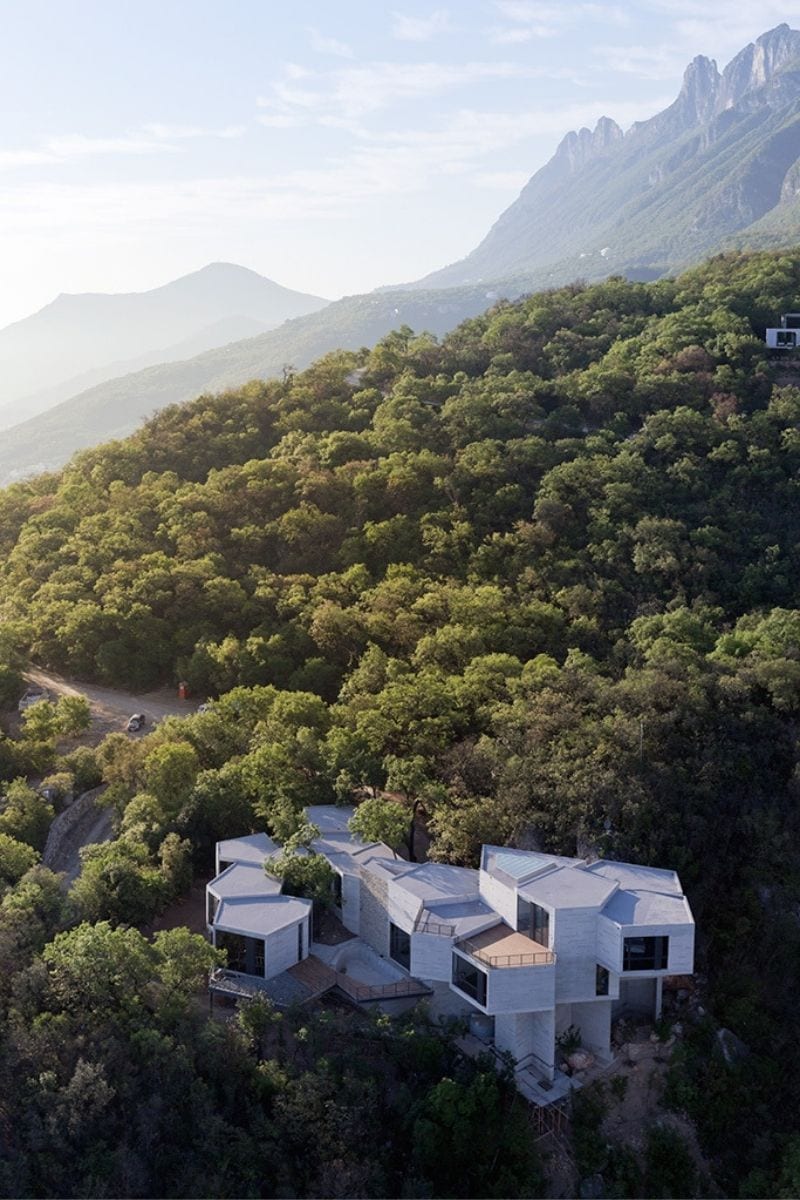
Casa Ventura House (2008), located on the outskirts of Monterrey, opens dramatically to nature. The home balances privacy with landscape views in a uniquely Mexican way.
Culiacán Botanical Garden (2010-2013) uses concrete tubes arranged like plants. It’s stunning and built with simple materials.
Social Housing Prototype offers affordable housing with dignity. The modular design adapts to different climates and grows with families.
Jinhua Architecture Park Pavilion (2007) in China brought her international fame. She used Chinese building techniques with a Mexican approach.
4. Pedro Ramírez Vázquez

Pedro Ramírez Vázquez shaped how modern Mexico architecture and design looks to the world by creating institutions Mexicans could be proud of.
He understood how architecture could tell national stories, and his buildings became symbols of Mexican identity itself.
Ramírez Vázquez’s buildings weren’t just buildings, though. They were statements about Mexico’s importance globally.
The National Museum of Anthropology in Mexico City’s Chapultepec Park, which he designed, is Mexico’s most visited museum.
As you walk in, you’re welcomed by a giant fountain in a sprawling courtyard that always amazes me (and millions of other annual visitors).
Pedro Ramírez Vázquez’s Most Important Works

National Museum of Anthropology (1964) set new standards worldwide. The dramatic umbrella fountain and exhibition spaces showcase indigenous heritage perfectly.
Mexican Pavilion at the 1970 World’s Fair in Osaka showcased Mexican culture brilliantly. It established Mexico’s reputation for sophisticated cultural presentation.

Basilica of Our Lady of Guadalupe (1976) holds 10,000 worshippers, and was erected in honor of Our Lady of Guadalupe, the patron saint of Mexico. One of the biggest churches in the world, its circular modern design was controversial at first, but has become iconic.
Estadio Azteca (1966) hosted two World Cup finals. It remains Latin America’s most iconic stadium with its distinctive wavy roof.
5. Frida Escobedo

Frida Escobedo has become one of Mexico’s most celebrated contemporary architects. Her work explores light, shadow, and indoor-outdoor relationships.
In 2018, she designed the Serpentine Pavilion in London, and at just 38-years-old, was the youngest architect ever chosen for that honor.
Escobedo studies Mexican traditions deeply. Then she turns them into something completely new and contemporary.
Her success has opened doors for other Mexican women architects. She’s proven that staying true to your roots can be your greatest strength.
Frida Escobedo’s Most Important Works
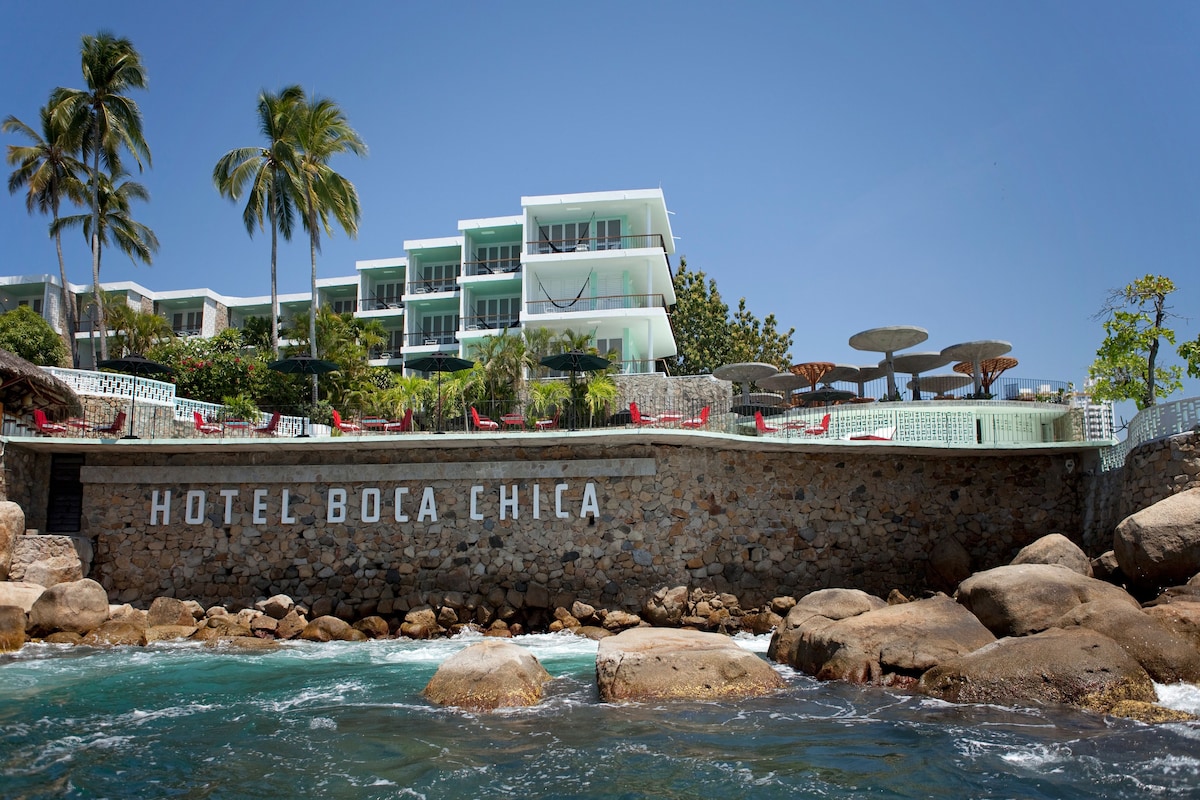
Hotel Boca Chica (2008-2013) in Acapulco reimagined a 1950s hotel. Her updates respect the original while making it work for today.
Serpentine Pavilion (2018) in London used traditional Mexican screen patterns. It created beautiful shifting light effects that wowed visitors.
La Tallera Siqueiros (2012) transformed an artist’s workshop into a contemporary art space. It balances preservation with bold new additions.
LIGA (2012) is an exhibition space she co-founded. It showcases emerging Mexican and Latin American architects.
6. Mario Pani

Mario Pani Darqui designed huge parts of modern Mexico City. His neighborhoods house thousands of families today.
Every time I pass the Tlatelolco housing complex, I think about his ambitious dreams of wanting to transform how Mexicans lived through smart planning.
Pani brought European ideas to Mexico and adapted them. He believed architecture could solve social problems through mass housing.
His influence is complicated because some projects developed serious issues, but his commitment to providing decent housing for working families remains important.
Mario Pani’s Most Important Works

Torre Latinoamericana (1956), located in downtown Mexico City, was Latin America’s tallest building when completed. This earthquake-resistant skyscraper symbolized Mexico City’s modernization.
Unidad Habitacional Nonoalco-Tlatelolco (1964) was Latin America’s largest housing complex. It included 102 buildings, schools, shops, and public spaces.
Ciudad Universitaria Master Plan (1946-1952) helped create UNAM’s campus. His planning created what became a UNESCO World Heritage site.
Conservatorio Nacional de Música (1946) showed his skill with institutional buildings. It represented the best of Mexican modernism.
7. Javier Senosiain

Javier Senosiain Aguilar is Mexico’s master of organic architecture. His buildings look like they grew from the Earth rather than being constructed on it.
He’s famous for creating spaces that feel like living organisms, like El Nido de Quetzalcóatl (Quetzalcoatl’s Nest), located near Mexico City.
When I first saw photos of this, I thought it was computer-generated. However, it’s one of the coolest Airbnbs in Mexico, and you can actually stay there!
Senosiain believes architecture should work with nature, not against it, but what makes him truly unique is his commitment to biomimicry.
He studies forms from nature like shells, caves, and flowers, then translates them into livable spaces — proving architecture doesn’t have to be boxes and straight lines.
Javier Senosiain’s Most Important Works


El Nido de Quetzalcóatl (1998) is the famous snake house near Mexico City. The serpent-inspired design features winding paths, colorful mosaics, and underground living spaces that feel like an ancient temple.
Organic House (1984) looks like a peanut shell half-buried in the ground. The earth-covered roof provides natural insulation and blends seamlessly with the landscape.
Flower House (2010) features petal-shaped rooms arranged around a central courtyard. Each “petal” serves a different function while creating a unified organic whole.

Nautilus House (2006) is shaped like a massive seashell. The spiral design creates flowing interior spaces with colorful stained glass that filters natural light beautifully.
Shark House (2008) resembles a great white shark emerging from the ground. The sculptural form creates surprisingly functional interior spaces for a family home.
8. Ricardo Legorreta

Ricardo Legorreta Vilchis continued Luís Barragán’s legacy of colorful architecture and geometric forms that have become synonymous with Mexican design.
I’ve visited and/or stayed at several hotels he designed, like the Camino Real in Mexico City. Their bright walls and dramatic spaces just feel joyful.
Legorreta proved Mexican style could work anywhere. His buildings in the U.S., like the Latino Cultural Center in Dallas, have carried Mexican DNA globally.
He showed you could honor Barragán without copying him. He took the master’s ideas and pushed them in new, more playful directions.
Ricardo Legorreta’s Most Important Works
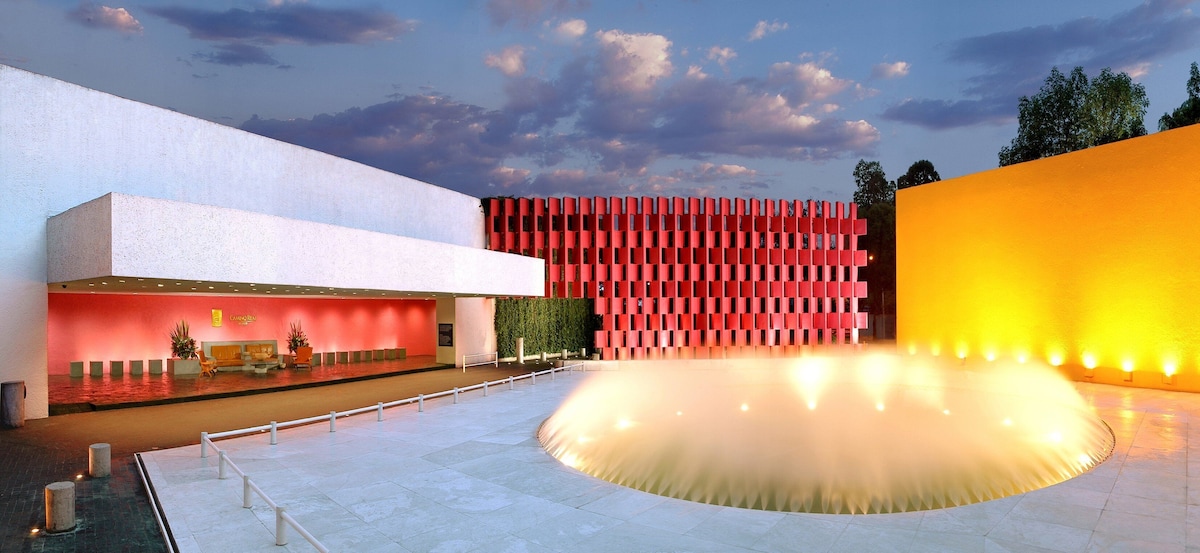
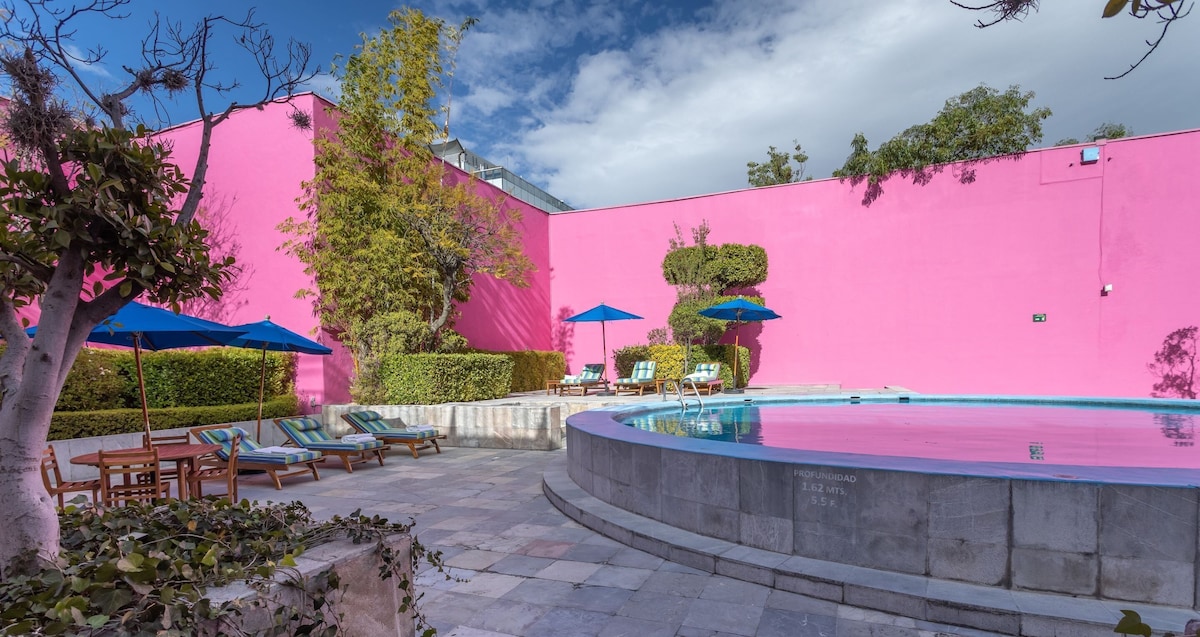
Camino Real Mexico City (1968) transformed hotel design with bold pink walls. This landmark, located in the posh Polanco neighborhood, influenced hotels throughout Latin America.
Papalote Museo del Niño (1993) uses bright colors perfect for a children’s museum. Located in Bosque de Chapultepec Park, the building encourages exploration through its design.
Pershing Square (1994) in Los Angeles brought Mexican style to American cities. It showed how Mexican design could revitalize public spaces.
Solana IBM Complex (1989) in Texas proved he could work at corporate scales. The campus uses his signature colors to create human-scaled spaces.
9. Alberto Kalach

Alberto Kalach has emerged as Mexico City’s most important urban visionary. He proposes ambitious projects to improve the capital’s environment.
His designs often use water and green spaces as key elements, like the Lake Texcoco Ecological Park, which will leave you blown away (like I was).
Kalach thinks beyond individual buildings. He imagines entire urban systems transformed for the better.
His work balances technical innovation with poetic sensitivity, and has influenced prominent Latin American architects concerned with sustainability.
Alberto Kalach’s Most Important Works

Biblioteca Vasconcelos (2006) is one of Mexico’s most ambitious libraries, where suspended bookshelves make reading feel theatrical.
Lago Texcoco Project (ongoing) proposes restoring ancient lake systems. This massive project could transform Mexico City’s relationship with water.
Centro de Ciencias de Sinaloa (2012) uses water features to create a science museum. The architecture makes science tangible through space.
Reforma Tower (2016) became one of the city’s tallest sustainable skyscrapers. It responds to seismic conditions while creating a new landmark.
10. Michel Rojkind
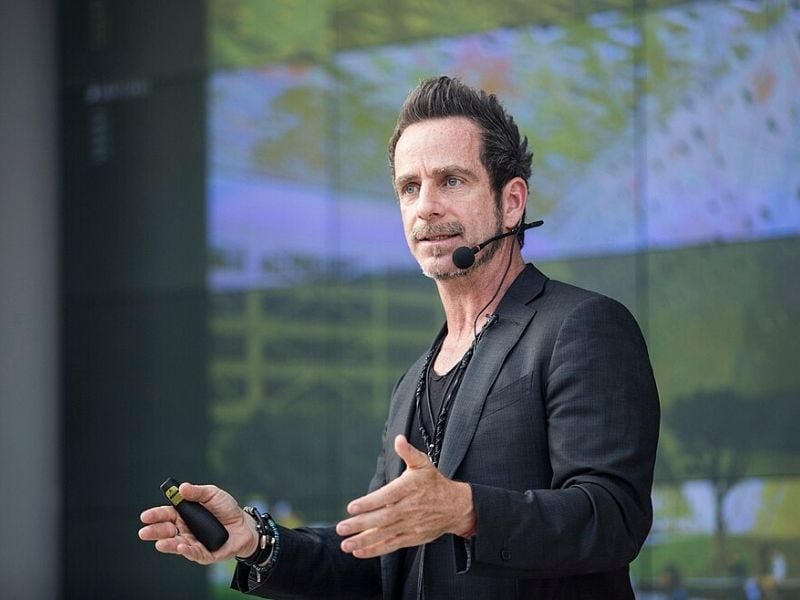
Michel Rojkind brings rock-star energy to Mexican architecture with bold, sculptural forms that push technical boundaries.
His buildings look like nothing else in Mexico, like the epic Cineteca Nacional México City, which is one of the coolest places I’ve ever seen a movie 🎥
Rojkind shows Mexican architects can compete globally with cutting-edge design. He’s embraced digital tools to create impossible forms.
His success has encouraged younger architects to be more ambitious. He’s proven you don’t have to choose between Mexican identity and international style.
Michel Rojkind’s Most Important Works

Foro Boca (2017), located in Boca del Río, Veracruz, is a waterfront cultural center. The curved forms respond to the coastal landscape beautifully.
Cineteca Nacional (2012) features dramatically cantilevered concrete wrapped in aluminum. It’s one of Mexico City’s most photographed contemporary buildings.
Mercado Roma (2014) transformed a traditional market into a hip food hall. It helped revitalize the Roma Norte neighborhood.
Nestlé Chocolate Museum (2007) uses striking red perforated steel. The bold form announced Rojkind as a major architectural voice.
11. Enrique Norten

Enrique Norten has built an international practice while staying connected to Mexican culture.
His work ranges from museums to corporate headquarters, and I admire how his Mexico City buildings feel contemporary, without rejecting their context.
In other words: They fit their spaces perfectly.
Norten shows Mexican architects can lead major international projects. Success doesn’t require abandoning Mexican identity.
His teaching at prestigious universities has spread Mexican architectural thinking.
He’s trained a generation who understand that cultural specificity and global sophistication work together.
Enrique Norten’s Most Important Works

Museo Universitario Arte Contemporáneo (MUAC, 2008) features dramatic cantilevered volumes. It creates powerful spaces for experiencing contemporary art.
Hotel Habita (2000) pioneered the boom of Mexico City’s luxury and boutique hotels. The rooftop pool became an iconic symbol of the city’s design scene.
Brooklyn Public Library (2013) in New York showed his international reach. It demonstrates community sensitivity while creating striking form.
Reforma 27 (2016) is a luxury residential tower that set new standards for residential architecture in Mexico’s capital city.
FAQs About Mexican Architecture and Mexican Architects
Who is the most famous Mexican architect?
Luis Barragán is the most famous Mexican architect internationally.
Winner of the Pritzker Architecture Prize in 1980, his colorful, emotional approach to modernism has influenced architects worldwide.
His Casa Luis Barragán in Mexico City is a UNESCO World Heritage site, and architecture lovers from every country make pilgrimages to visit it.
What is Luis Barragán’s architectural style called?
Barragán’s style, known as Mexican modernism or emotional modernism, combines simple forms with vibrant colors and water features.

His approach proved modernism could be warm and poetic. It showed architecture could be culturally specific rather than universal.
What defines Mexican architecture style?
Mexican architecture blends indigenous traditions, Spanish colonial influences, and modern innovation.
Contemporary Mexican buildings often feature bright colors and dramatic light effects.
Mexican architects frequently connect indoor and outdoor spaces. They reference pre-Hispanic forms while using contemporary materials and techniques.
Who are the most famous female Mexican architects?
Tatiana Bilbao, Fernanda Canales, Rozana Montiel, Gabriela Carrillo and Frida Escobedo are five Mexican female architects who have achieved major international recognition.
In fact, Escobedo was the youngest architect ever to design London’s Serpentine Pavilion. She was just 38 when she designed it in 2018.
Where can I see the best Mexican architecture?
Mexico City offers the richest collection of important Mexican architecture.
You can visit Barragán’s house, O’Gorman’s UNAM library, and the National Museum of Anthropology.
Guadalajara also features significant works by Ricardo Legorreta. Both cities have numerous contemporary buildings worth seeing.
How has Mexican architecture influenced global design?
Mexican architects showed modernism can include emotional and spiritual dimensions.
For decades now, Luis Barragán‘s use of color has influenced architects worldwide, and some even call it the pinnacle of the modern Mexican aesthetic.
Contemporary Mexican architects, like Tatiana Bilbao, have advanced sustainable design solutions.
Her approach to integrating architecture with landscape has become particularly influential in today’s architecture scene.
What makes contemporary Mexican architecture unique?
Contemporary Mexican architecture balances cultural heritage with bold innovation.
In general, Mexican architects are unafraid of color, embrace indoor-outdoor integration, and reimagine pre-Hispanic living concepts in modern ways.
Today’s younger contemporary Mexican architects also tend to address social issues like affordable housing when creating their designs.
My Final Thoughts on the Most Influential Mexican Architects of All Time
These 11 best Mexican architects have transformed their country and influenced global architecture.
From Barragán’s poetic minimalism to Escobedo’s contemporary refinement, they’ve proven great design can be both culturally specific and universally meaningful.
What strikes me most after years exploring Mexican architecture is how these designers balance tradition and innovation.
Whether you’re an architecture enthusiast or simply curious about Mexican culture, understanding these architects reveals Mexico’s creative soul.
Their work shows how we can shape spaces that are both rooted in place and looking forward to the future.