
The 15 Coolest Household Items From the 1970s That are Now Extinct


Growing up in the 70s, our homes were filled with things that seemed like they’d last forever.
I remember the smell of fresh mimeograph paper, the sound of our rotary phone ringing off the hook, and the way our wood-paneled basement felt like the coolest hangout spot in the world.
Every house on the block had the same avocado green appliances and shag carpet you could lose your homework in.
These items weren’t just things we owned. They were part of daily life that shaped how we lived, talked to each other, and spent our time at home.
1. Rotary Dial Telephones
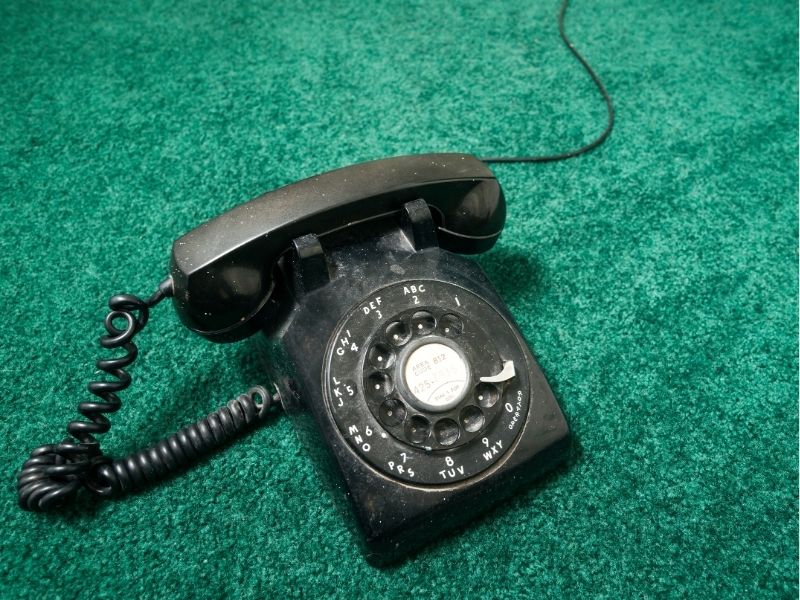
The rotary phone sat in one spot in your house and nobody could move it.
Making a call meant sticking your finger in the hole and dragging the dial all the way around. Phone numbers with lots of 9s and 0s took forever to dial.
You had to wait for the dial to spin back to its starting position before you could dial the next number.
The curly cord stretched across the kitchen so you could get a little privacy.
Everyone in the house could hear your conversation anyway because there was only one phone line.
Calling long distance was expensive enough that you’d watch the clock. Parents would yell at you for tying up the line too long.
2. Encyclopedia Sets
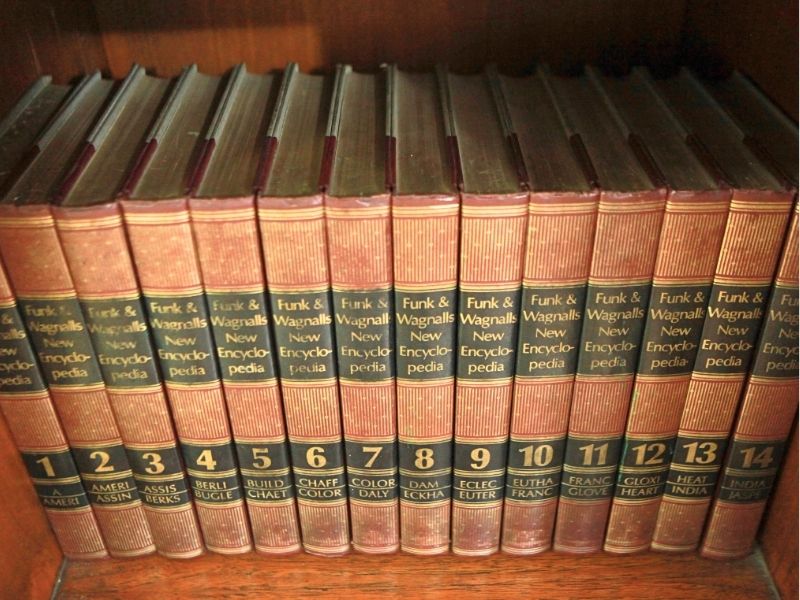
Heavy encyclopedia sets lined the shelves in nearly every 70s living room.
World Book and Encyclopedia Britannica collections cost hundreds of dollars, which was serious money back then.
Each volume was bound in fake leather and organized alphabetically. You’d pull out the “M” volume to research monkeys for your school report.
The information was already outdated by the time it reached your shelf. Copyright dates from 1968 or 1972 meant you were learning old facts.
Kids today can’t imagine having to physically walk to a bookshelf to look something up.
We thought having encyclopedias meant we had all the world’s knowledge right at home.
3. Shag Carpet
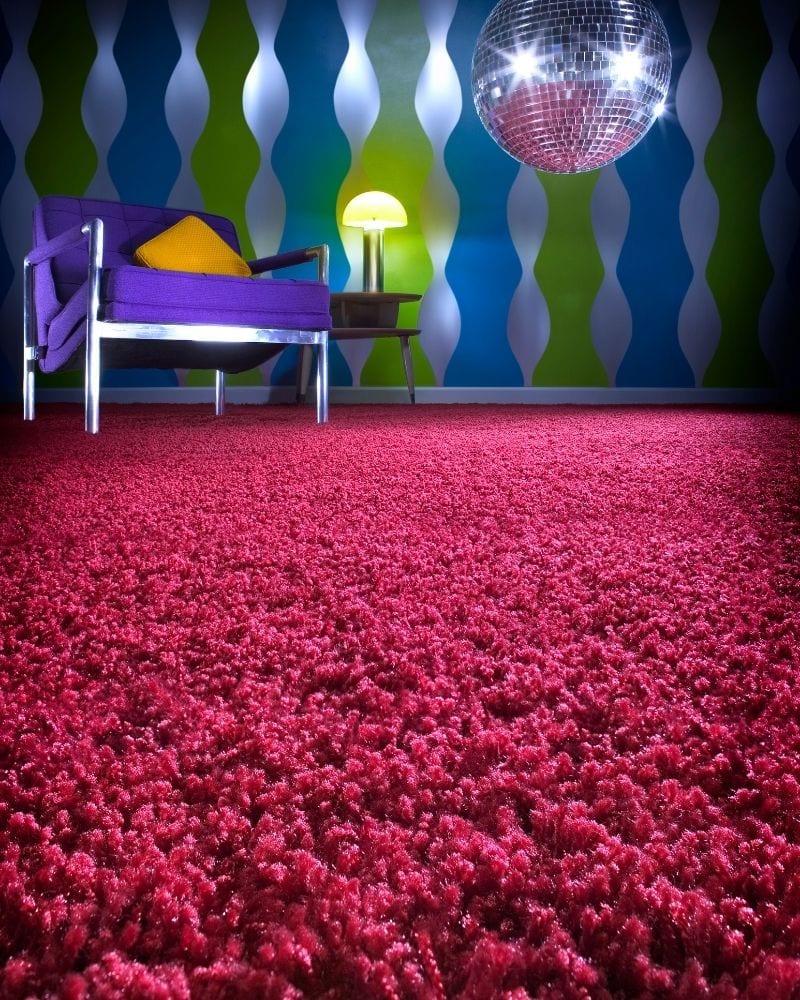
Shag carpet was everywhere in the 70s and the deeper the pile, the better.
Walking barefoot meant your feet disappeared into thick fibers that came in burnt orange, avocado green, or harvest gold.
Dropping a contact lens or earring back meant getting on your hands and knees to search. You could rake the carpet to make it look fresh and neat again.
Vacuuming shag took serious effort because the suction would get stuck. Mom would vacuum in careful rows to make patterns in the carpet.
The shag carpet trend defined 70s home design more than anything else. Ripping it out in the 80s revealed the hardwood floors we all wanted.
4. Wood Paneling
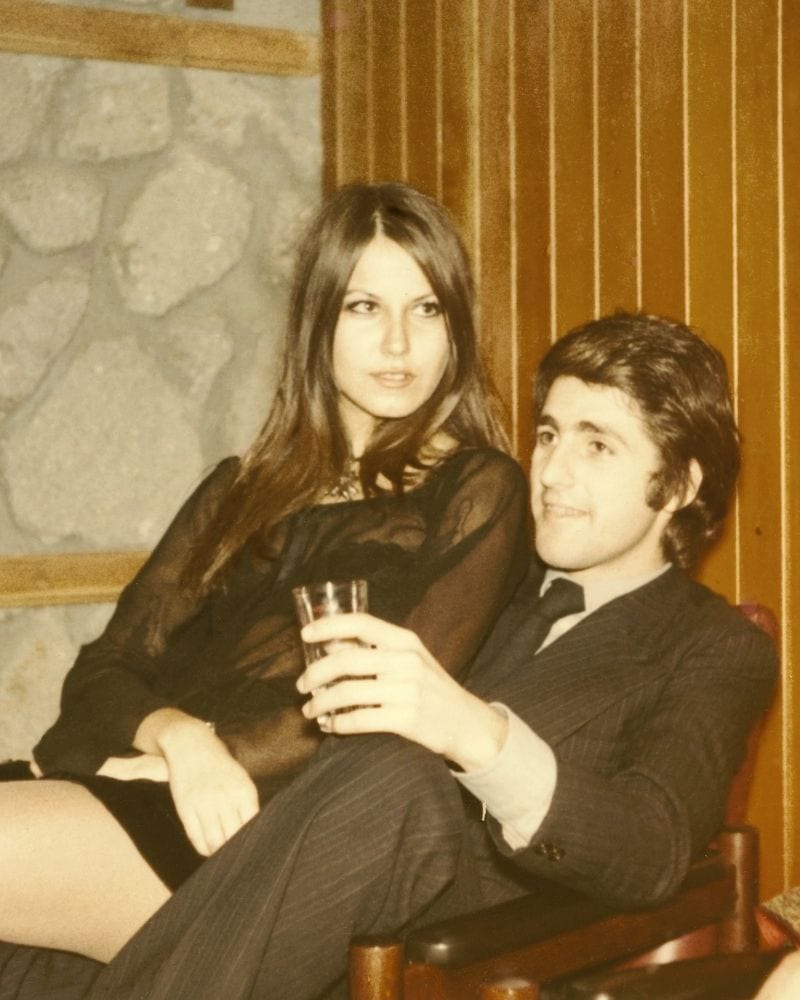
Dark wood paneling covered the walls of basements, rec rooms, and family rooms across America. Most of it was actually vinyl printed to look like wood grain.
Our basement was completely paneled and it made the room feel like a cave. You needed all the lights on just to see what you were doing down there.
Hanging pictures required special hooks because nails wouldn’t work right. The panels would show every dent and scratch over time.
Station wagons like “The Woody” even had fake wood paneling on the outside. The 70s loved anything that looked like wood whether it was real or not.
5. TV Trays and TV Dinner Trays
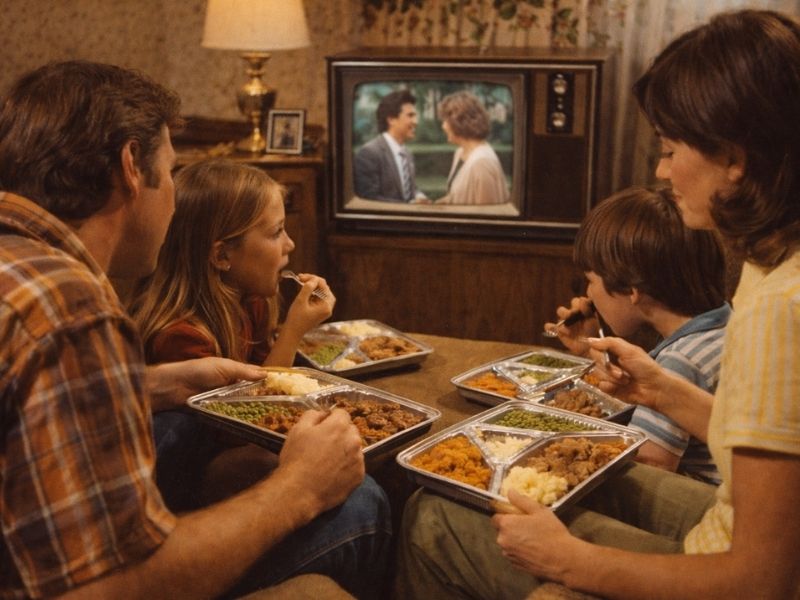
Folding TV trays were essential furniture in every 70s home.
You’d set them up in the living room so the whole family could eat while watching television.
The metal trays folded flat and stored in a rack that leaned against the wall. Each one had a different floral or nature scene printed on top.
Swanson TV dinners in aluminum trays went straight from freezer to oven.
The compartments kept your Salisbury steak separate from your mushy vegetables and tiny brownie.
Eating together as a family meant sitting on the couch with TV trays watching “The Waltons.”
The trays would wobble if you bumped them and send your whole dinner sliding.
6. Rabbit Ear Antennas
Rabbit ear antennas sat on top of console TVs in every living room. You had to adjust them constantly to get a clear picture on your three channels.
Moving the antenna even an inch could switch the picture from clear to complete static. Sometimes you’d wrap aluminum foil around them to improve reception.
One person had to stand by the TV and move the antenna while another person sat on the couch yelling directions. “A little to the left! No, back! Right there!”
Network television was all we had with ABC, NBC, and CBS. PBS was your fourth channel if the antenna could pick it up.
7. Console Stereos and Record Players
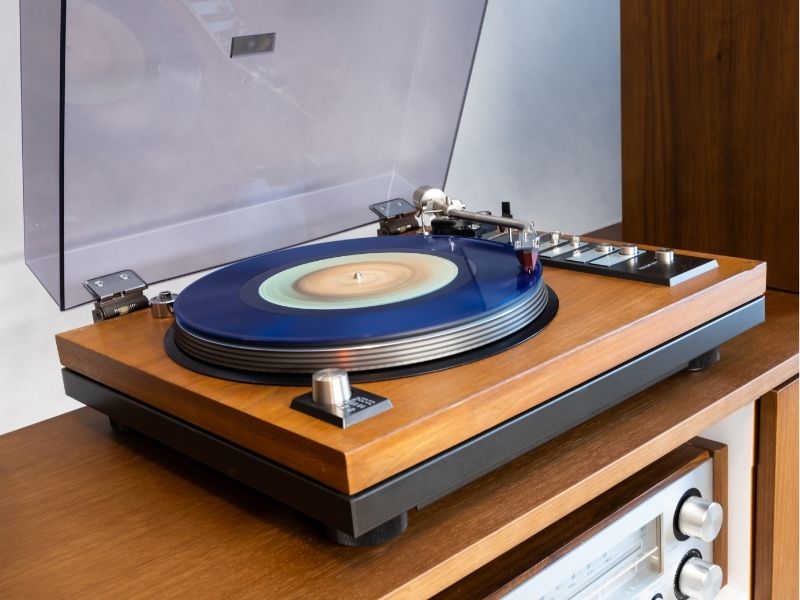
Giant console stereos were furniture pieces that doubled as entertainment centers. They sat low to the ground with speakers built into wooden cabinets.
You’d lift the lid to reveal the turntable where you played your records. The sound quality was tinny compared to today but we thought it was amazing.
Stacking albums on the spindle meant you could play multiple records in a row. The arm would lift, the next record would drop, and the needle would find its groove.
Your parents’ record collection lived in these cabinets along with 8-track tapes. Everybody gathered around the console to listen to music together.
8. Avocado Green and Harvest Gold Appliances
Every 70s kitchen had appliances in avocado green, harvest gold, or burnt orange. Refrigerators, stoves, and dishwashers all came in these earth tones.
Our avocado green refrigerator was massive and hummed constantly. The harvest gold stove had those electric coil burners that took forever to heat up.
Matching your appliances to your countertops and wallpaper was important. Everything coordinated in the same muddy color palette.
These colors were supposed to be modern and stylish. By the 80s everyone was ripping them out and replacing them with white or almond.
9. Wall-Mounted Rotary Phone with Extra Long Cord
The kitchen wall phone had a cord that stretched across the entire room. You could walk around while talking, dragging the tangled cord behind you.
The coiled phone cord always ended up twisted into impossible knots. You’d have to hold the phone up and let the receiver spin to untwist it.
Privacy meant stretching the cord as far as it would go into another room. Your mom could still hear everything you said to your friends.
That phone rang so loud it could wake the whole house. There was no way to silence it or send calls to voicemail.
10. Cigarette-Friendly Everything
Ashtrays sat on every coffee table, end table, and kitchen counter in the 70s. They came in glass, ceramic, or cheap plastic with cigarette rests molded into the sides.
Everyone smoked everywhere so homes needed multiple ashtrays in every room. Fancy ones were souvenirs from vacations or shaped like fish or seashells.
The smell of stale cigarette smoke was baked into the shag carpet and wood paneling. Smoke stains turned white ceilings yellow over time.
Kids would empty ashtrays as a chore, dumping butts into the trash. The culture around smoking in homes was completely different from today.
11. Manual Typewriters
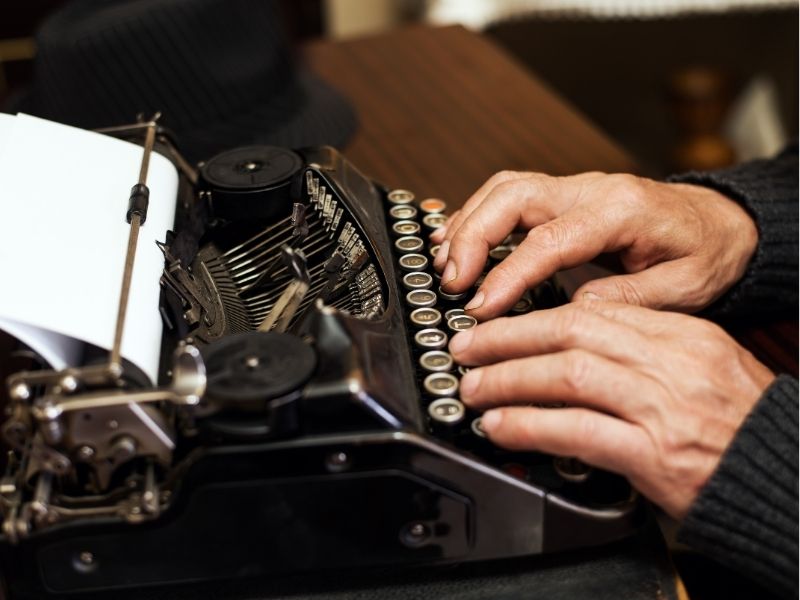
Families who could afford them had manual typewriters for typing school reports. You’d feed a piece of paper into the roller and start pecking away at the keys.
Each keystroke required real force to make the metal arms hit the ribbon and paper. Making a mistake meant using correction fluid or typing over the error with X’s.
The clacking sound of typing echoed through the whole house. Changing the ribbon was a messy job that got black ink all over your fingers.
Electric typewriters were fancy upgrades that not everyone had. Most kids still wrote everything by hand until high school or college.
12. Dial Kitchen Timers
Wind-up kitchen timers sat on the counter next to the stove. You’d twist the dial to set how many minutes you needed and it would tick loudly until time was up.
The bell would ring so loud you could hear it from outside. These timers were shaped like tomatoes, chickens, or plain metal cylinders.
Overwinding them could break the spring mechanism inside. You learned to set it gently and not crank it too far past 60 minutes.
Mom used one for everything from cooking to timing our baths. The constant ticking was just background noise in every 70s kitchen.
13. Card Catalogs (For Families with Home Libraries)
Some families had elaborate card catalog systems for their book collections. Small wooden boxes with tiny drawers held index cards filed alphabetically.
You’d write the book title, author, and where it sat on your shelf. This was how you kept track of which books you owned and where to find them.
Library card catalogs were huge wooden cabinets that took up entire walls. Looking up a book meant flipping through hundreds of cards filed in drawers.
The Dewey Decimal System ruled everything. Kids today have no idea what it was like to physically search through cards to find information.
14. Slide Projectors and Carousels
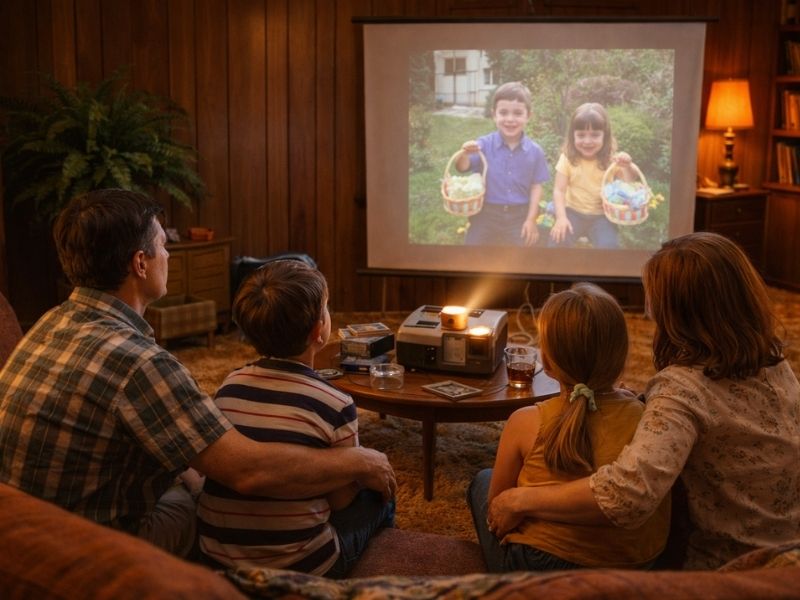
Slide projectors were how families watched their vacation photos together. You’d load the carousel with small plastic frames holding your developed slides.
Everyone would gather in the darkened living room while dad projected images onto a white screen. “Next slide” became the most common phrase of the evening.
The projector bulb was scorching hot and burned out regularly. Slides would jam in the carousel or appear upside down on the screen.
This was the only way to view photos on a large scale. Passing around small prints couldn’t compete with seeing your trip to the Grand Canyon fill the whole wall.
15. Afghan Blankets on Every Couch
Hand-crocheted afghan blankets draped across the back of every couch in the 70s. Grandmas made them in wild color combinations that somehow all worked together.
The blankets were heavy, warm, and scratchy against bare skin. Each one was unique with different patterns of granny squares or ripple stitches.
They served as decoration when not in use and as blankets during family TV time.
The yarn colors were always burnt orange, avocado green, brown, and mustard yellow.
Every afghan told a story about who made it and why. They were precious handmade items that families kept for decades.
Let’s Take a Walk Down Memory Lane For Even More 1970s Nostalgia

We’ve got you covered. Check out our other groovy 70s content using the links below.