
U.S. State Department Issues Level 4 “Do Not Travel” Warning for this Mexico Tourist Hotspot — Would You Still Go?


Picture this: a gorgeous beach with golden sand, a sprawling malecón (boardwalk), fresh seafood and sunset cocktails with your toes in the sand, and the kind of old-town charm that feels like the “real Mexico.”
But right now, Mazatlán has an uncomfortable asterisk attached to it: it sits inside Sinaloa state.
The U.S. State Department categorizes this state as Level 4: Do Not Travel due to security risks.
That doesn’t automatically mean every tourist who steps into Mazatlán is doomed.
It does mean the U.S. government is telling Americans that the overall risk environment in Sinaloa is serious enough that — if something goes wrong — help may be limited and violence can be unpredictable.
In late 2024, the U.S. Consulate issued additional security alerts referencing violence concerns in Culiacán and Mazatlán specifically.
So here’s the real question: If your beach vacation destination is inside a “Do Not Travel” state, is the risk worth the reward? Let’s dig deeper for clarity.
What the Level 4 warning actually means for Mazatlán

First: the State Department’s warning is at the state level, with Sinaloa is labeled “Do not travel due to terrorism and crime.”
Also, the advisory includes unusually specific language about movement restrictions for U.S. government employees in Sinaloa.
Notably, it states U.S. government employees may travel to Mazatlán by air or sea only and that their movement is limited to defined areas (historic center boundaries and permitted routes), with direct routing to the airport/sea terminal.
That’s not “everything is fine, just be careful.” Rather, it’s closer to: “If our own staff go, their travel is constrained.”
Also important: the U.S. Embassy/Consulate network periodically issues security alerts when conditions spike, and there was a public alert in late 2024 about ongoing violence and security concerns in Culiacán and Mazatlán.
“But Mazatlán is a tourist bubble” — Why this argument travelers use should be examined

If you read traveler forums or watch travel influencers, you’ll hear a familiar claim: Mazatlán is a bubble in a resort town.
Many say that Mazatlán tourist areas are insulated, and that violence is “elsewhere.” There are reasons these beliefs persist:
- Mexican authorities do invest in protecting major tourist zones
- Many violent incidents in cartel conflicts are targeted (rivals, local enforcement, logistics routes), not random tourists
- Millions of tourists visit Mexico safely every year
Canada’s travel guidance for Mexico reflects this nuance in a way many travelers miss.
It warns about violent clashes in Sinaloa and notes issues have occurred in parts of Mazatlán outside main tourist zones, while also describing the broader reality that violence can spill into public spaces like restaurants and hotels.
Translation: tourist zones can be safer — until they aren’t. Safety changes from moment to moment.
What’s driving the risk in Sinaloa right now

Sinaloa isn’t just “a state in Mexico that has issues with crime.”
It’s historically and strategically important to organized crime networks, particularly because of trafficking routes, internal disputes, and enforcement pressure.
From 2024 onward, multiple major outlets reported an intensified cycle of violence connected to cartel infighting and enforcement actions.
Reuters, for example, has reported on how violence in Sinaloa surged and persisted over time, including sharp increases in killings and disappearances tied to internal conflict dynamics.
Even when violence is concentrated in Culiacán or rural areas, it can affect:
- highways and transit corridors
- policing capacity and response times
- “show of force” incidents (roadblocks, gunfire, vehicle theft)
- the overall chance of being in the wrong place at the wrong time
Canada explicitly mentions armed groups stopping vehicles on highways in Sinaloa and warns about road risks.
And U.S.-affiliated security reporting has echoed “remain alert” messaging during flare-ups (including reports of gunfire/roadblocks in parts of Sinaloa).
Crime statistics: The part nobody wants to read before vacation

Travel warnings aren’t issued just because the internet is anxious. Mexico has dangerous places, and that’s not fear-mongering.
They’re usually anchored to patterns: homicide rates, kidnappings, armed robberies, disappearances, and the demonstrated presence of heavily armed criminal groups.
Two key context points:
- Mexico’s homicide rate has been elevated for years, and Statista has charted the country’s homicide trend and investigations over time.
- Even when national homicide rates fall (and Mexico has reported declines recently), analysts and major outlets still flag that organized crime violence remains severe in specific states, including Sinaloa.
That’s the important travel takeaway: national averages don’t protect you from regional spikes.
Also: homicide is only one part of traveler risk (there are even thing most don’t normally consider, like getting sick).
Advisories often emphasize kidnapping, carjacking, and armed robbery — and that violence can occur without warning.
What this means if you’re considering Mazatlán right now

If you’re determined to go, the safety question becomes less “Is Mazatlán safe?” and more questions like these.
1. Can you avoid the highest-risk scenarios?
The State Department’s employee restrictions hint at what they consider “risk multipliers.” These include:
- road travel beyond specific corridors
- moving outside defined zones
- unclear routing at night
- getting caught in unpredictable flare-ups
In plain English: the more you improvise, the more you gamble. To mitigate the risk as best as you can, come up with a plan.
2. Do you have a plan for the “unsexy” emergencies?
We’re not talking “Where’s the best taco spot?” — but do you have a plan for scenarios like these:
- What if there are roadblocks on the route to the airport?
- What if there’s gunfire nearby and you need to shelter?
- What if your hotel locks down?
- Do you have roaming cell service, a Mexico SIM card, emergency contacts, and travel insurance that covers disruptions?
3. Are you traveling like a tourist, or like a local commuter?
Many of the worst outcomes happen when visitors:
- drive long distances through unfamiliar areas
- use unvetted transportation
- flash valuables
- wander outside tourist zones at night
Canada’s advisory warns that even tourist areas can see violence — and that bystanders can be injured or killed.
The bottom line: Would you still go to Mazatlán?
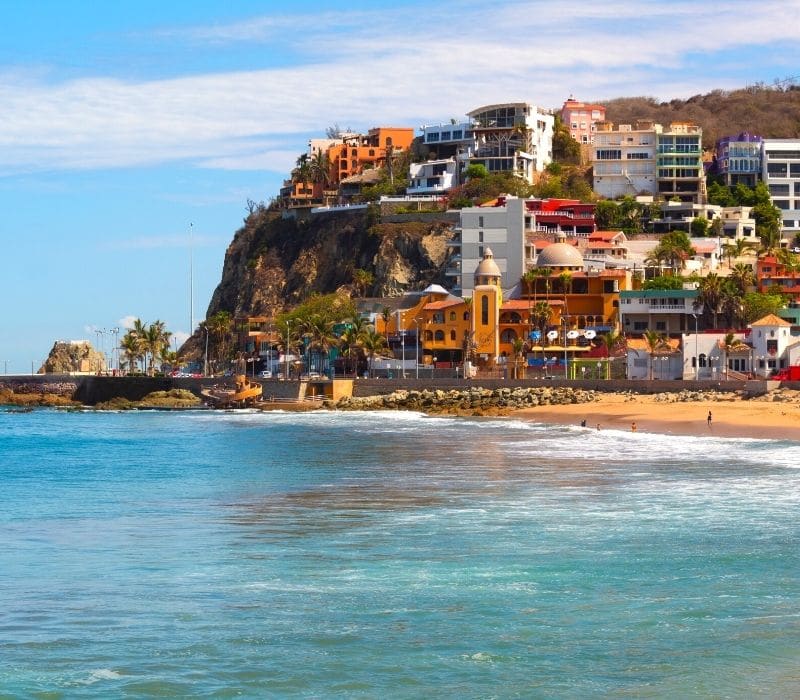
If you’re choosing Mazatlán specifically because it’s cheaper, less crowded, and feels more authentic than other beach cities, here’s the hard truth about the Mexican beach town:
- The “authentic” parts often mean less controlled environments
- A Level 4 state designation is not a vibe check — it’s a risk statement
- And while many trips may go fine, the downside risk is what matters: when things go wrong in a high-risk region, they can go wrong fast
If you need a beach escape and you’re flexible, you’re not crazy for asking: Is there a similar experience in a lower-risk state?
If you’re going for a wedding, a cruise stop, or a once-a-year trip you’ve planned forever, the smarter question is: Can I tighten my plan so I’m not the easy target or the unlucky bystander?
Either way; don’t treat the warning as background noise. It exists because the risk environment is real.