
20 Foods Boomers Grew Up Eating That are Gone Today — Which One Was Your Favorite?


It feels strange to admit this, but my mother had a Jell-O mold collection.
Not one. Not two. A collection, stored in a dedicated cabinet next to the good china, each one shaped differently — fish, ring, fluted dome, stars — all waiting for the next occasion that required something jiggly and impressive on the table.
I watched those molds get used less and less through the 1970s and 1980s, until they disappeared into a box somewhere, replaced by things that didn’t require a recipe from 1958 and a full afternoon to prepare.
That cabinet is a perfect metaphor for what happened to an entire generation of American food.
Here are 20 foods that defined the Boomer table — and then quietly slipped away.
1. The Jell-O Mold Salad
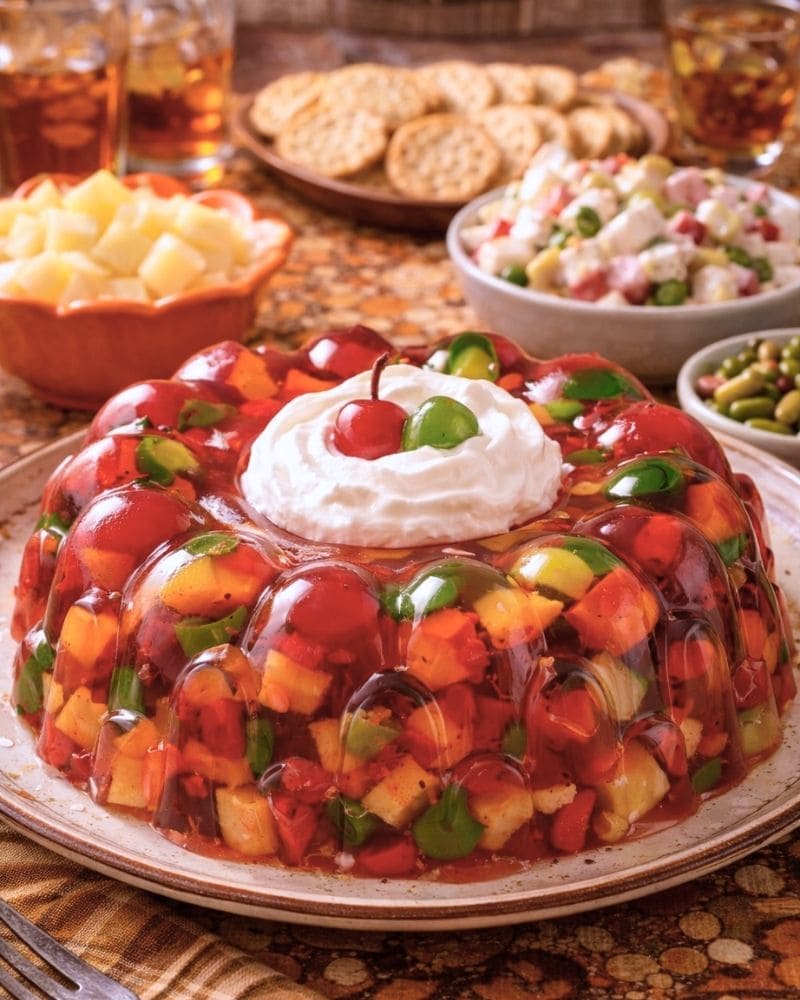
The Jell-O mold was the centerpiece of mid-century American entertaining, and calling it a salad was not considered a joke.
Lime gelatin suspended with shredded carrots, cottage cheese, and canned fruit appeared at dinner parties, potlucks, and church buffets with complete seriousness and genuine pride.
The Jell-O craze reached its peak in the 1950s, when women were expected to transform convenience products into elaborate-looking presentations — and a molded salad with visible layers was considered the height of domestic artistry.
By the 1980s, working women simply didn’t have time to refrigerate gelatin in stages, and the whole tradition collapsed almost overnight.
2. TV Dinners in Aluminum Trays
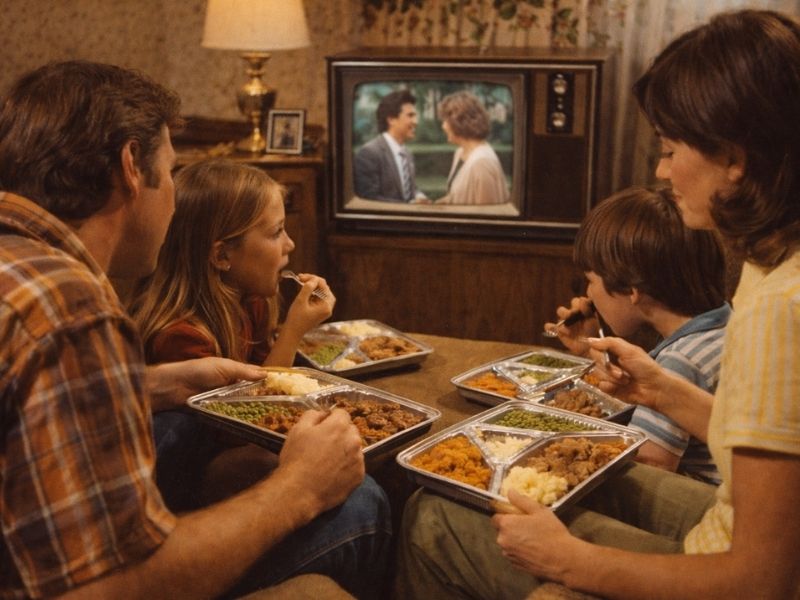
The original TV dinner arrived in 1953 as a genuine marvel of modern convenience — Salisbury steak, mashed potatoes, corn, and sometimes a small fruit cobbler, all arranged in a segmented aluminum tray that went straight from the freezer to the oven.
Eating it in front of the television, on a TV tray table, was considered a special occasion rather than a failure of domestic ambition.
The aluminum tray version required a real oven and about 25 minutes, which felt fast compared to cooking from scratch in 1955.
Today’s frozen meals are microwaved in plastic trays and come in varieties like cauliflower tikka masala, which tells you everything about how far the category has traveled from its origins.
3. Deviled Ham
A small tin with a red cartoon devil on the label, containing finely ground and spiced ham that spread on crackers or white bread.
Deviled ham was a lunchbox and cocktail party staple through the 1960s and 1970s, requiring no refrigeration until opened and delivering a salty, slightly spiced hit that paired perfectly with Ritz crackers and a glass of something cold.
It still technically exists, but the cultural moment has passed completely.
The charcuterie board replaced it — same concept, much more expensive, and with considerably more explaining required about what exactly is on it.
4. Space Food Sticks
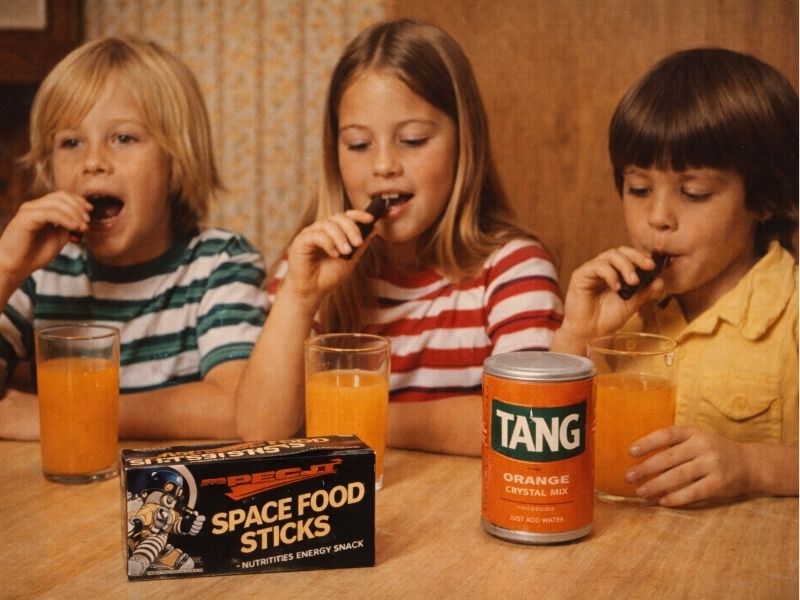
Pillsbury created Space Food Sticks in the late 1960s as a chewy, nutrient-dense bar supposedly developed for NASA astronauts, and marketed them to children who desperately wanted to eat what the astronauts were eating.
They came in chocolate, peanut butter, and caramel flavors, wrapped in packaging that looked like it belonged on a rocket, and had a texture somewhere between a Tootsie Roll and a protein bar.
Parents loved them because they were marketed as nutritious.
Kids loved them because eating astronaut food was possibly the coolest thing imaginable in 1969, and the Moon landing had just happened, and everything felt like the future was right around the corner.
5. Koogle Peanut Butter
In the early 1970s, Kraft decided that regular peanut butter was too boring and released Koogle — a flavored peanut butter spread that came in chocolate, vanilla, cinnamon, and banana varieties.
The texture was smoother than peanut butter, the mascot was a jar with googly eyes, and the commercials featured a jingle that Boomers can apparently still sing from memory several decades later.
It landed somewhere between peanut butter and frosting, it was controversial enough that some parents banned it from the house, and Kraft discontinued it in the late 1970s after apparently deciding that flavored peanut butter was ahead of its time.
It was not. Nutella would prove that definitively a few decades later.
6. Tang
Tang was introduced in 1957, but it became a genuine cultural phenomenon when NASA included it on John Glenn’s Mercury mission in 1962, and suddenly every kid in America wanted to drink what the astronauts were drinking.
The powdered orange drink mixed into a bright, aggressively sweet beverage that tasted nothing like actual orange juice and was marketed as a morning staple in millions of American households through the 1960s and 1970s.
Tang technically still exists today, but those who grew up with the original formula are clear that it is not the same product.
The specific combination of artificial orange flavor and space-age optimism that made it a fixture of the Boomer breakfast table cannot apparently be reproduced.
7. Jell-O 1-2-3
Jell-O 1-2-3 was a dessert that felt like a magic trick.
One packet, mixed and poured into a single dish, separated during refrigeration into three distinct layers: classic Jell-O on the bottom, a mousse-like layer in the middle, and a creamy froth on top — all from one box, with no extra work.
General Foods introduced it in 1969 and it became a staple at family gatherings and potlucks across the country, reliably delivering that wow-factor reveal when you cut into it.
Kraft discontinued it in 1996, and home cooks have been attempting to recreate it with regular Jell-O and whipped topping ever since, with results that are reportedly close but never quite right.
8. Canned Vienna Sausages
Small, pale, soft sausages packed in a liquid-filled can that opened with a pull tab — Vienna sausages were a reliable snack and lunchbox item through the 1950s, 1960s, and 1970s.
They required no preparation, no refrigeration until opened, and delivered a salty, soft, vaguely mysterious meat experience that children either loved or found deeply unsettling.
Many Boomers ate them straight from the can with crackers and mustard, which was a completely normal and socially acceptable thing to do.
Data from food industry tracking firm Tastewise shows that conversations about canned Vienna sausages have declined by more than 14% year over year.
This is a polite way of saying the generation that grew up eating them is the last one that will.
9. Fruitcake
Fruitcake is technically not gone — it still appears every December, usually as the punchline to a joke about regifting.
But the fruitcake that Boomers grew up with was a genuine holiday staple, made with candied fruit, nuts, and enough alcohol to preserve it for what seemed like geological timescales.
It was made in October or November, wrapped in cheesecloth soaked in brandy, and stored somewhere cool until Christmas — a process that required patience, planning, and a genuine belief that the result would be worth it.
Younger generations generally cannot be convinced that it is.
10. Campbell’s Pepper Pot Soup
Campbell’s introduced Pepper Pot Soup in 1899, and it became a fixture of the Boomer pantry before the company quietly discontinued it in 2010 due to declining demand.
The soup’s key ingredient was beef tripe — the lining of a cow’s stomach — simmered with potatoes, onions, carrots, and red pepper flakes into a thick, peppery broth that Boomers either loved deeply or avoided entirely.
Many who loved it still mourn it.
Some have reportedly approached Campbell’s directly about bringing it back, which tells you how strongly a generation can feel about a discontinued soup containing offal.
11. Liver and Onions as a Family Dinner
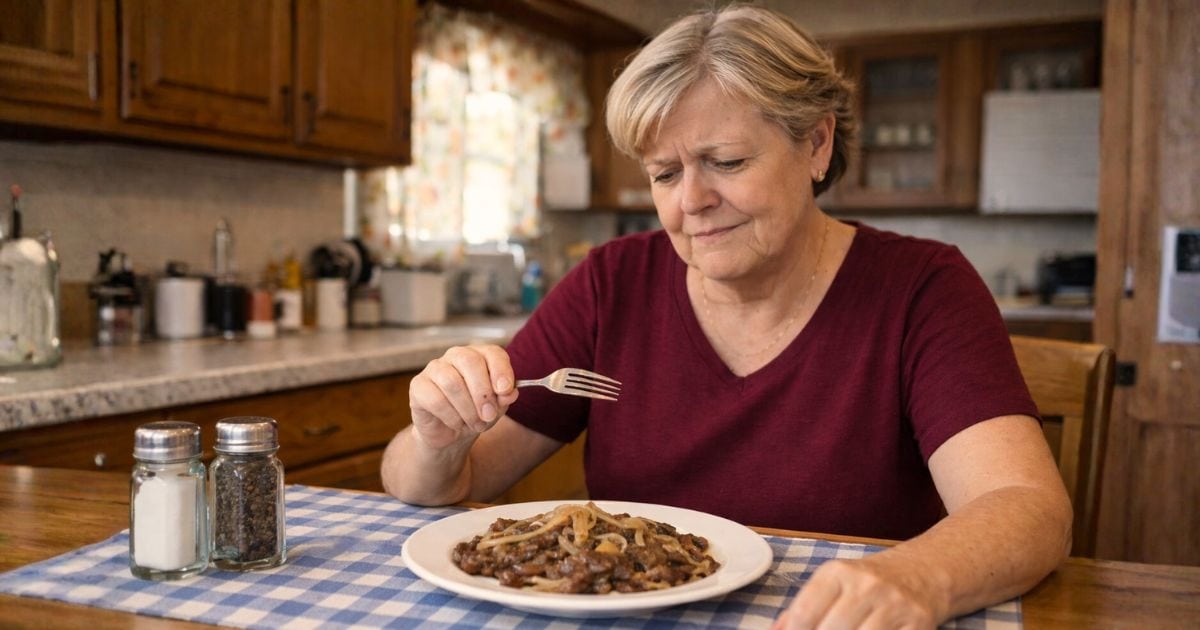
Beef liver sautéed with onions was a regular weeknight dinner in Boomer households — not an adventurous choice, not a special occasion, just Tuesday.
It was cheap, fast, packed with iron, and prepared by parents who had themselves grown up in households where every part of an animal was used and nothing was wasted.
The taste is divisive in a way that’s hard to overstate.
Many Boomers remember it with genuine affection. Many of their children remember being required to sit at the table until they finished it, which is a different kind of memory entirely.
12. The TV Snack Mix: Screaming Yellow Zonkers
Screaming Yellow Zonkers arrived in the late 1960s from Lincoln Snacks — a box of crispy, glazed, sweet-and-salty popcorn that was sold in a black box printed with absurdist humor and sold at movie theaters, gas stations, and wherever else snacks were sold.
The flavor was a specific combination of sweet glaze and popcorn that didn’t taste like anything else on the market, and the packaging was so distinctive that people recognized it across a room.
It disappeared from shelves in the early 2000s, and no modern popcorn snack has quite replaced the particular niche it occupied between candy and snack food.
13. The Dinner Party Baked Alaska
If you wanted to impress dinner guests in the 1960s and 1970s, you served Baked Alaska.
Ice cream on a cake base, covered entirely in meringue, then briefly torched in a hot oven until the outside browned while the ice cream inside stayed frozen — it was pure theater, executed in a home kitchen, and it genuinely worked.
The effect was dramatic enough that guests would gasp, which was entirely the point.
Modern desserts tend toward the architectural and the chocolatey, and the Baked Alaska has largely retired to steakhouse menus and retro supper club revivals, where it still gets the same reaction it always did.
14. Carnation Breakfast Bars
Carnation Breakfast Bars were dense, chewy chocolate-covered rectangles marketed in the 1970s as a complete breakfast you could eat on the go — a concept that felt genuinely revolutionary before protein bars and granola bars became their own category.
They came in flavors like chocolate chip, peanut butter, and granola cinnamon, and parents bought them because the marketing said “nutritious” while children ate them because they tasted like a candy bar at 7 AM.
They were discontinued in the late 1990s, and dedicated fans still surface regularly on Reddit and Facebook groups to collectively lament their absence and compare notes on how close modern alternatives come to the original.
The answer, according to those fans, is: not very.
15. The Marathon Bar
The Marathon Bar was eight inches of braided caramel covered in chocolate, and the ruler printed on the back of the wrapper was there to prove you were getting your money’s worth.
Mars sold it from 1973 to 1981, and the braided design meant it took a genuinely long time to eat — which was either the best feature or the worst feature depending on whether you were the child eating it or the parent watching candy consumption extend through an entire afternoon.
Mars discontinued it in 1981 claiming the braided design was too expensive to produce, which is the kind of explanation that Boomers have never fully forgiven.
A similar bar exists in the UK under the Curly Wurly name, which some import-obsessed Americans have been quietly ordering for decades.
16. Ambrosia Salad
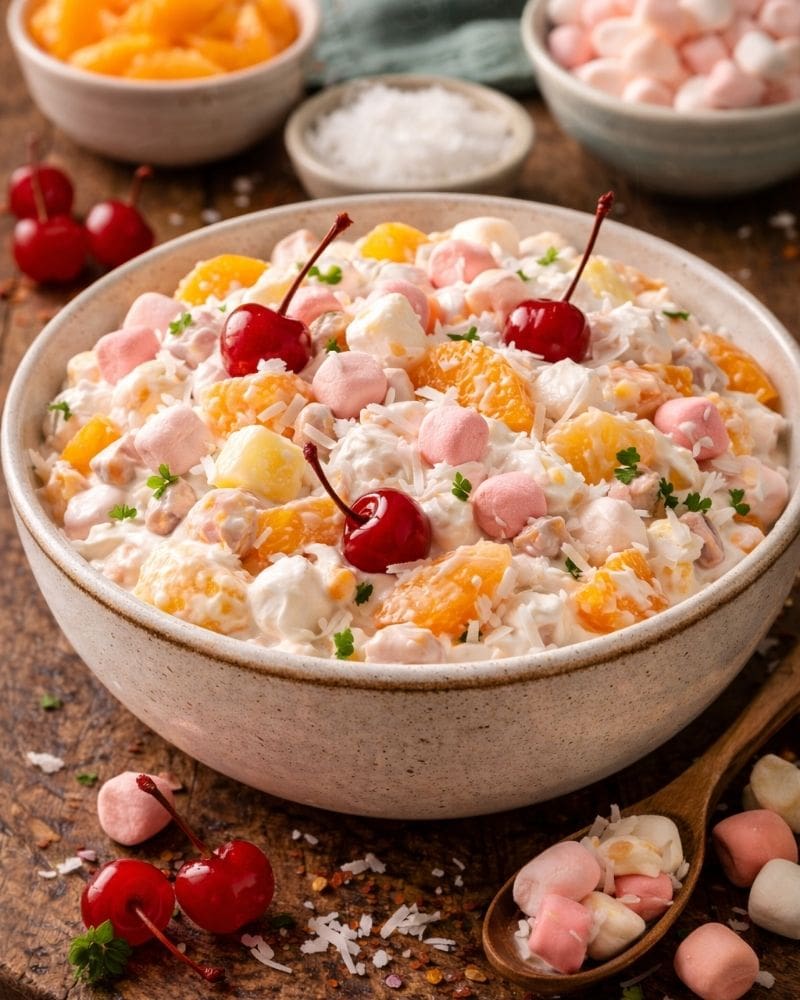
Ambrosia was the food of the gods — or at least that was the idea behind naming a dessert salad made of canned mandarin oranges, crushed pineapple, mini marshmallows, shredded coconut, and Cool Whip.
It appeared at every holiday meal and potluck through the Boomer era, usually in a large glass bowl that someone’s mother or grandmother brought out specifically for this dish.
It required no cooking, minimal skill, and produced something that was sweet, cold, and vaguely tropical, which in the 1960s Midwest counted as exotic.
Younger generations have largely replaced it with actual fruit salad, which is objectively less fun but arguably more honest about what it is.
17. Pineapple Upside-Down Cake
Pineapple upside-down cake — caramelized brown sugar, canned pineapple rings, maraschino cherries, and a butter cake baked together in a cast iron skillet then dramatically flipped onto a plate — was a Sunday dinner staple and church potluck hero of the Boomer era.
It looked impressive, tasted reliably good, required only pantry staples, and produced that satisfying moment of reveal when the skillet came off.
The cake still exists, but it has lost its cultural moment to layer cakes, cheesecakes, and anything with the word “lava” in the name.
If you bring one to a dinner party today, people will be delighted — partly because it tastes good and partly because nobody has seen one outside of a diner in twenty years.
18. Liverwurst on White Bread
Liverwurst — a smooth, spreadable sausage made primarily from pork liver — was a standard lunch meat in Boomer-era households, spread thickly on white bread with yellow mustard and maybe a slice of raw onion.
It was cheap, widely available, and carried absolutely no cultural baggage beyond being the thing your dad liked and your friends thought was disgusting.
Liverwurst still exists at the deli counter of certain grocery stores, but the audience for it ages a little more each year.
It represents a broader category of organ-meat-based convenience foods that the Boomer generation consumed without ceremony and their children largely declined to continue.
19. Buc Wheats Cereal
General Mills launched Buc Wheats in 1971 — a maple-syrup-flavored wheat cereal that sat in the interesting territory between healthy adult breakfast and something sweet enough to actually want to eat.
It was not a sugar-bomb kids’ cereal. It was Wheaties’ more enjoyable cousin, and adults could eat it without feeling like they were raiding the children’s cabinet.
General Mills discontinued it in 1983, and it occupies a particular place in the Boomer cereal memory — not as famous as Cap’n Crunch, not as iconic as Frosted Flakes, but remembered with a specific fondness by everyone who ate it regularly.
The maple flavor has never been replicated in quite the same way in any cereal that followed.
20. Creamed Chipped Beef on Toast (AKA “SOS”)
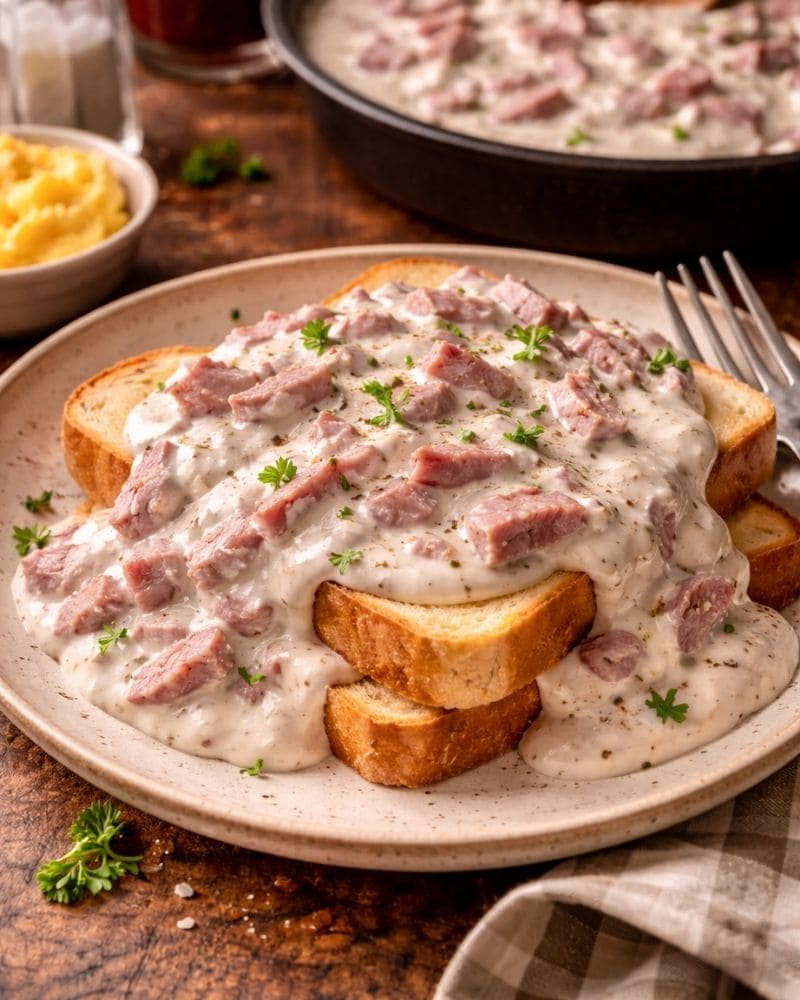
Also called sh!t on a shingle (or SOS) in military kitchens, creamed chipped beef on toast was dried salted beef in a white cream sauce, served over white toast, usually at breakfast.
It was a staple of Boomer childhood in households with any military connection, and a common diner breakfast item through the 1950s, 1960s, and into the 1970s.
It required almost nothing to make, cost almost nothing to produce, and delivered a salty, starchy, filling meal that kept you going until lunch.
Today it appears occasionally on retro diner menus as a novelty item, described with the kind of careful nostalgia that signals a dish that has become a curiosity rather than a staple.
The Boomers who grew up eating it off a military base cafeteria tray remember it differently than the people ordering it ironically at a brunch spot in 2025.