
Your Bank’s New “Junk Fees” are Sneakier Than Ever — Here’s What They’re Charging You For in 2026 😡


Wondering why your bank account keeps getting drained by mysterious charges?
And why consumer advocates are calling it “legalized theft”?
Well, while the federal government just cracked down on some bank fees, financial institutions have already found seven new ways to quietly drain your account — and they’re betting you won’t notice until it’s too late.
Before you find yourself staring at another unexplained $35 charge, here’s what changed, which fees are now illegal, and how to get your money back.
The Junk Fee Crackdown That Banks Don’t Want You to Know About

In 2023, banks raked in $5.83 BILLION from overdraft and non-sufficient funds (NSF) fees alone.
That’s down from a staggering $11.96 billion in 2019, but it’s still billions of dollars extracted from Americans’ checking accounts — often for mistakes that cost the bank virtually nothing.
The drop in the amount they collected? That’s because regulators finally stepped in.
The Consumer Financial Protection Bureau (CFPB) has been on a mission to stop what they call “junk fees,” which are charges that are often hidden, excessive, or both.
In 2023 alone, they forced financial institutions to return more than $120 million to customers through major enforcement actions like these:
- ❌ Navy Federal Credit Union: $95 million for illegal surprise overdraft fees
- ❌ Wells Fargo: $205 million in refunds to consumers
- ❌ Regions Bank: $141 million in unlawful fee returns
- ❌ Atlantic Union: $5 million paid back to customers
But here’s the thing: While the government battles overdraft fees (more on that in a minute), banks are quietly rolling out these new charges that fly under the radar.
1. The “$5 per Month Paper Statement” Scam
This one sounds ridiculous, but some banks have started charging customers as much as $5 per month to receive a physical statement in the mail.
Think about that: You’re already paying to keep your money with them, and now they want $60 a year to mail you a piece of paper showing what you already know.
The banks’ excuse? “We’re going green!”
Translation: We found another way to make money off you.
❌ How to avoid it: Switch to electronic statements (which you should probably do anyway), but make sure you’re actually saving your statements somewhere safe. You’ll need them for taxes, disputes, and major purchases.
2. Monthly Maintenance Fees (When You “Almost” Qualified to Avoid Them)
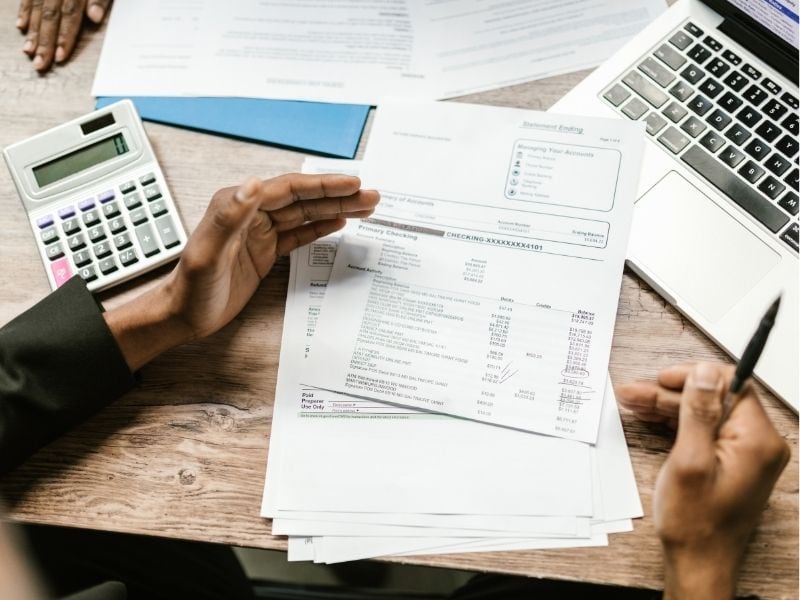
While most banks advertise “free checking,” but sadly there’s always fine print with most U.S. banking institutions.
You can avoid the $5 to $15 monthly maintenance fee if you:
- Maintain a minimum balance
- Have direct deposits totaling $500+
- Use your debit card X number of times per month
Sounds reasonable, right? At first glance, yes.
But here’s the problem: Customers often aren’t clearly notified when they miss a requirement by a hair.
For example, your direct deposit might hit just one day late through no fault of your own, but the fee is still automatically deducted.
Or maybe you had $1,498 in your account when the requirement was $1,500. Boom: $12 fee.
💡 Pro Tip: If you get hit with a maintenance fee and you were close to meeting the requirement, call your bank. Seriously.
Many will reverse the fee as a “one-time courtesy,” especially if you have a good account history.
You can claim a refund if you nearly met the waiver requirement or if the bank didn’t clearly notify you.
3. Excess Withdrawal Fees (Yes, for Moving YOUR OWN Money)

Remember when the Federal Reserve had a rule limiting you to six withdrawals per month from your savings account?
That rule (Regulation D) was lifted during the pandemic in 2020.
But guess what? Many banks still penalize customers for going over six withdrawals per month, with fees ranging from $3-$25 per transaction.
Let’s do the math: Say you transfer money from savings to checking seven times in a month because, I don’t know, you’re managing your budget like a responsible adult.
That seventh transfer? That one charge alone can offset weeks’ worth of earned interest.
❌ How to avoid it: Keep your emergency fund in a high-yield savings account, but do your regular money-moving through checking.
Or better yet, ask your bank if they still enforce this outdated limit.
4. ATM Fees That Have Gone Completely Insane

Using an out-of-network ATM used to sting — but now it’s downright painful.
The average ATM fees hit $4.86 in 2025, according to Bankrate. That includes:
- $1.64 average surcharge from your own bank
- $3.22 from the other bank (or the ATM operator)
In short: You’re paying both ends just to access your own money.
If you’re traveling or in an area without your bank’s ATMs, those fees add up fast.
🏧 How to avoid it: Some banks reimburse all your ATM fees, like Charles Schwab and Fidelity, while others reimburse some fees.
Alliant Credit Union will reimburse up to $20 in ATM fees from other banks every statement cycle, while Ally Bank will return up to $10.
If you travel a lot, these banks are worth considering.
5. The “Foreign Transaction Fee” That Isn’t Really Foreign
Here’s a sneaky one that has happened to a few people I know personally.
You’re shopping online from your couch in Ohio. You order from what looks like a normal U.S. website. Then you get hit with a 3% foreign transaction fee.
🤔 What’s up with that?, you might be rightfully wondering?
Banks sometimes trigger a “foreign transaction fee” simply because the merchant’s payment processor is located outside the U.S., even if the price was listed in dollars.
According to SavingAdvice.com, this is often an automated “sneak” that adds 3% to your purchase for no actual service provided by the bank.
These hidden surcharges can add up to hundreds of dollars a year for frequent online shoppers.
✈️ How to avoid it: Use a credit card with no foreign transaction fees for online shopping. Many travel cards have eliminated these fees entirely.
6. Paying a Fee to… Pay Your Bill 🤦

Many banks have tried to implement fees simply for the “privilege” of paying your bill. Whether it’s:
- A fee for paying over the phone with a representative
- A surcharge for using an expedited electronic payment
- A “convenience fee” for paying online
The CFPB has labeled these as “junk fees,” arguing that banks should not charge customers extra for the basic act of fulfilling their contractual obligation to pay.
If you’re being charged $10 just to make a payment on time, you’re being exploited.
🏦 How to avoid it: Always look for a free automated payment option. Many banks offer free ACH transfers or autopay that don’t carry these fees.
7. “Payment Protection” or “Credit Insurance” Fees

This might be the sneakiest of all because they make it seem like they’re helping you (spoiler: they aren’t).
Often marketed as “peace of mind” or “payment insurance,” this fee charges you a percentage of your balance every month in exchange for the promise of waiving payments if you become unemployed or disabled.
Sounds good, right? Yes, in theory, except that:
- The coverage often has so many exclusions it’s nearly worthless
- You’re paying 2-3% of your balance every month for insurance you’ll probably never be able to use
- Most people don’t even realize they’ve signed up for it
👀 How to avoid it: Check your statement for any recurring charges labeled “payment protection,” “credit insurance,” or “account protection.”
If you see it, call your bank immediately and cancel.
8. Dormancy or Inactivity Fees
This one’s particularly cruel: If you don’t touch your account for a while, some banks penalize you.
So if you opened a savings account for an emergency fund and haven’t needed to touch it (because, you know, that’s the point of an emergency fund).
You might find that your bank might start charging you a monthly fee for the crime of… um… being financially responsible?
❌ How to avoid it: Set up a small automatic transfer to or from the account once a quarter. Even $1 usually counts as “activity.”
Here’s How to Find Hidden Fees on Your Account
- Pull up your last 3 months of bank statements
- Look for abbreviations like: “MAINT FEE,” “SVC CHG,” “NSF,” “OD FEE,” “ATM SURCHG”
- Add them all up, and you might be shocked
- Call your bank and ask for refunds on any fees that seem unfair
- If they refuse, remind them that the CFPB has been ordering refunds for exactly these types of charges
The Good News: Some Fees are About to Become Illegal
Here’s where things get interesting: In December 2024, the CFPB announced a new rule targeting overdraft fees at large banks (those with $10+ billion in assets).
As of October 1 2025, these banks will have to either:
- Cap overdraft fees at $5
- Charge only what it costs them to process the overdraft (not the current $35 cash grab)
- Treat overdrafts as actual loans and disclose the interest rate (which would reveal just how predatory these fees really are)
The CFPB estimates this will save consumers up to $5 billion annually, or $225 per household that pays overdraft fees.
CFPB Director Rohit Chopra put it bluntly like this:
“For far too long, the largest banks have exploited a legal loophole that has drained billions of dollars from Americans’ deposit accounts.
The CFPB is cracking down on these excessive junk fees and requiring big banks to come clean about the interest rate they’re charging on overdraft loans.”
The catch? This only applies to the biggest banks.
If your bank has less than $10 billion in assets, they can still hit you with those $35 overdraft fees.
What You Can Do Right Now

1. Review your statements for any of the fees mentioned above.
2. Call your bank and ask for refunds on questionable charges.
According to SettleMate, claiming a refund for hidden bank fees doesn’t cost you anything, your bank won’t penalize you for raising the issue, and if the charge was unfair, you have a legitimate shot at getting it reversed.
3. Consider switching banks if yours is fee-heavy. Some banks like Capital One, Discover, and Ally have eliminated many of these fees entirely.
🙀 Not-So-Fun Fact: Chase Total Checking’s monthly fee quietly increased from $12 to $15 in August 2025. Just FYI.
4. Set up account alerts so you know when your balance is low or when fees are charged (or are about to be charged).
5. Read the fine print on any “free” account you have, because sadly, there’s always a catch — and it’s usually in the bank’s favor (not yours).
The Bottom Line

Banks are betting that you won’t notice a $5 fee here, a $10 fee there.
However, those “small” charges add up to billions of dollars in profit for banks — and significantly less money in your pocket 🤬
The federal government is finally cracking down on some of the worst offenders, but until all junk fees are eliminated, you need to stay vigilant.
Check your statements, question every fee, and remember: It’s YOUR money, not your bank’s personal ATM.