
Do You NEED to Tip Abroad? 5 Foolproof Rules for Every Traveler


Imagine this: You’re in a cozy café in Rome, enjoying a cappuccino and a slice of tiramisu.
The bill comes, and you leave a big tip, feeling generous. But instead of gratitude, you get a confused look from the barista.
😬😅 Oops! In Italy, tipping isn’t as common as you thought.
We’ve all been there, making those innocent yet awkward tipping mistakes while traveling.
Traveling is all about experiencing new cultures, and tipping is a small but important part of that. It can be tricky, though.
But don’t worry! With these five simple rules, you’ll be tipping like a seasoned traveler in no time. Let’s get started!
Disclosure: This article may contain affiliate links, meaning when you make a purchase, I earn a small commission. Affiliate links cost you nothing to use, and help keep my content free. It’s a win-win for us both. For more info, see the Disclosure Policy.
Rule 1: Research Before You Go

Before you even pack your bags, take a moment to learn about the local customs of your destination.
Understanding the tipping etiquette of the place you’re visiting can save you from those awkward moments and ensure you’re respecting the local culture.
📓Preparation is key, and a little research goes a long way.
So, where do you start? The internet is your best friend here. Travel blogs, forums, and guidebooks are treasure troves of information.
Websites like The Points Guy and The Manual offer comprehensive guides on tipping practices around the globe.
These resources can give you a clear picture of what’s expected and what’s not.
🇯🇵 A Unique Example: Japan
Take Japan, for instance. In many Western countries, tipping is a way to show appreciation for good service. But in Japan, tipping can actually be considered rude.
The Japanese take pride in providing excellent service as part of their job, and tipping can be seen as an insult.
Knowing this beforehand can save you from an embarrassing situation and help you show respect for their customs.
By doing a bit of homework before you go, you’ll be well-prepared to navigate the tipping landscape of any country you visit.
Rule 2: Always Carry Small Change

When it comes to tipping, having small bills on hand is a game-changer.
Imagine trying to tip a bellhop or a taxi driver with a large bill and watching them scramble to find change.
😬 Awkward, right? Carrying small change ensures that you can tip appropriately without causing a scene or inconvenience.
So, how do you make sure you always have small change? One of the best ways is to exchange money at local banks or use ATMs, which often give smaller bills.
Another tip is to break larger bills at the beginning of your trip, perhaps at a café or a convenience store. This way, you’re always prepared.
🇲🇦 Let’s SAY YOU ARE TRAVELING TO MORROCCo
Picture this: You’re in a bustling market in Marrakech, and you’ve just had an amazing experience with a local guide.
You reach into your wallet to tip them, but all you have are large bills. The guide looks at you, unsure of how to proceed.
Not having small change can turn a moment of gratitude into an uncomfortable situation.
It’s a small step that can make a big difference in your travel experience.
Rule 3: Know When to Tip and When Not To

Tipping practices can vary widely from one country to another, and knowing when to tip and when not to is crucial.
What might be seen as a generous gesture in one place could be considered inappropriate or even offensive in another.
Being culturally sensitive to these differences is key to respectful and smooth interactions.
Different services often have different tipping norms. For instance, in some countries, tipping at restaurants is expected, while in others, it’s not necessary.
The same goes for taxis, hotels, and other services. It’s important to learn the specific tipping customs for each type of service you might encounter.
🇪🇺 A European Example
Take Europe, for example. In many European countries, tipping at restaurants is common, but the amount can vary.
In France, a service charge is often included in the bill, so a small additional tip is enough. However, in cafes, tipping is less common.
By understanding when to tip and when not to, you can ensure that your gestures of appreciation are well-received and appropriate.
Rule 4: Use Discretion and Subtlety
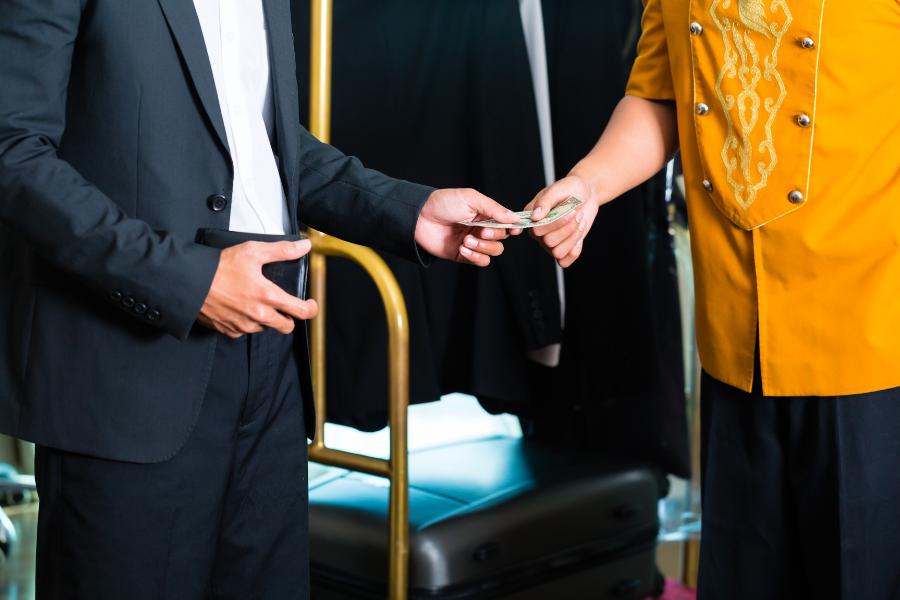
Tipping is not just about the amount; it’s also about how you do it. In many cultures, overt displays of tipping can be seen as showy or even disrespectful.
Using discretion and subtlety when tipping ensures that your gesture is appreciated without drawing unwanted attention or causing embarrassment.
🤔 So, how do you tip discreetly? One effective method is to place the tip in an envelope or a small card. This can be especially useful in hotels or for personal services.
Another technique is to hand over the tip with a handshake or a quiet word of thanks.
The key is to be subtle and respectful, ensuring that the tip is given in a manner that aligns with local customs.
Rule 5: When in Doubt, Ask a Local

When it comes to tipping, sometimes the best advice comes straight from the source.
Locals have a deep understanding of their own customs and can provide invaluable guidance on what’s appropriate.
When in doubt, don’t hesitate to ask someone who knows the ropes.
So, who should you turn to for this insider knowledge? Reliable sources include hotel staff, tour guides, or even local friends if you have them.
These individuals are usually more than happy to share their insights and help you avoid any tipping mistakes.
🇲🇽 A MEXICO Traveler’s Tale
Consider this: You’re in Mexico, enjoying the culture and delicious cuisine. You’re unsure about the tipping norms, so you ask the concierge at your hotel.
They inform you that while tipping isn’t mandatory, it’s appreciated in restaurants and for services like taxis.
By seeking local advice, you can ensure that your tipping practices are spot-on. This not only helps you avoid awkward situations but also shows respect for the local customs.
It’s a simple step that can greatly enhance your travel experience.
So Should You Be Tipping Abroad? YES!

So, there you have it — five foolproof rules to help you master the art of tipping abroad.
We’ve covered the importance of doing your research, the practicality of carrying small change, knowing when to tip and when not to, using discretion, and the value of asking locals for advice.
By following these guidelines, you can navigate the often confusing world of tipping with ease and confidence.
Traveling is all about learning and embracing new experiences, and tipping is just a small part of that.
With these tips in your back pocket, you’re well-equipped to show appreciation without overstepping cultural boundaries.
So go ahead, explore the world, and tip like a pro!