
7 Things That Prove Life Was Better in the 60s, 70s, and 80s — Do You Agree?


There was no app tracking your location. No activity on the calendar.
Just a screen door that slapped shut behind you and an afternoon that belonged entirely to you.
For a generation of Americans who grew up in the 1960s, 1970s and 1980s, that kind of freedom wasn’t a parenting philosophy — it was just Tuesday.
And it left marks. Not the kind you could see, but the kind that show up decades later in how you handle boredom, disagreement, silence, and uncertainty.
Research from the American Psychological Association has documented a steady decline in children’s unstructured play time over the past 50 years, with corresponding increases in anxiety and a reduced capacity for self-direction.
The kids who got those long, unsupervised hours didn’t just have a different childhood. They became a different kind of adult.
Here are 7 of those quiet traits. Some will feel like memory. Others might feel like something you didn’t know you’d kept.
1. You Can Sit With Yourself Without Reaching for Something

Boredom wasn’t something to fix back then — it was a starting point. When there was nothing to do, you made something up: a game, a story, a project that made no sense to anyone but you.
That experience, repeated across hundreds of slow afternoons, built something most adults can’t name but everyone notices.
The ability to be alone with your own thoughts without immediately needing to fill the silence.
In an era when the average American checks their phone more than 96 times a day according to research by Asurion, that kind of stillness is no longer common.
It was built in backyards, not classrooms, and it doesn’t transfer easily to people who never had to find their own way through a slow afternoon.
2. You Trust Strangers in a Way Most People Your Age Have Stopped Doing
Your neighborhood was your whole world.
You knew which houses were safe, which adults could be trusted, and which dogs were friendly — not because anyone told you, but because you learned it through time and proximity.
That low-grade daily exposure to community built something researchers have since tied to better mental health outcomes, stronger civic engagement, and longer life expectancy.
Today, more than 1 in 4 Americans report having no close friends outside their immediate family.
The quiet trust you still carry — the willingness to make eye contact, help a stranger, assume good faith — isn’t naivety.
It’s a skill built in a time when the neighborhood was the world.
3. You Have a Physical Confidence That Didn’t Come From a Gym
You fell out of trees. You misjudged distances on bikes.
You landed wrong, got up, and tried again — recalibrating each time without a coach, a parent, or a warning label nearby.
That trial-and-error relationship with your own body built an intuitive sense of what you can and can’t do.
A comfort with physical risk that isn’t recklessness — it’s calibration developed through years of real feedback.
Researchers at the American Academy of Pediatrics have documented how unstructured outdoor play develops risk assessment, motor confidence, and emotional regulation in ways that structured sports simply cannot replicate.
The adults who absorbed those lessons don’t freeze in uncertain situations. They read them.
4. You Finish Things Other People Quit
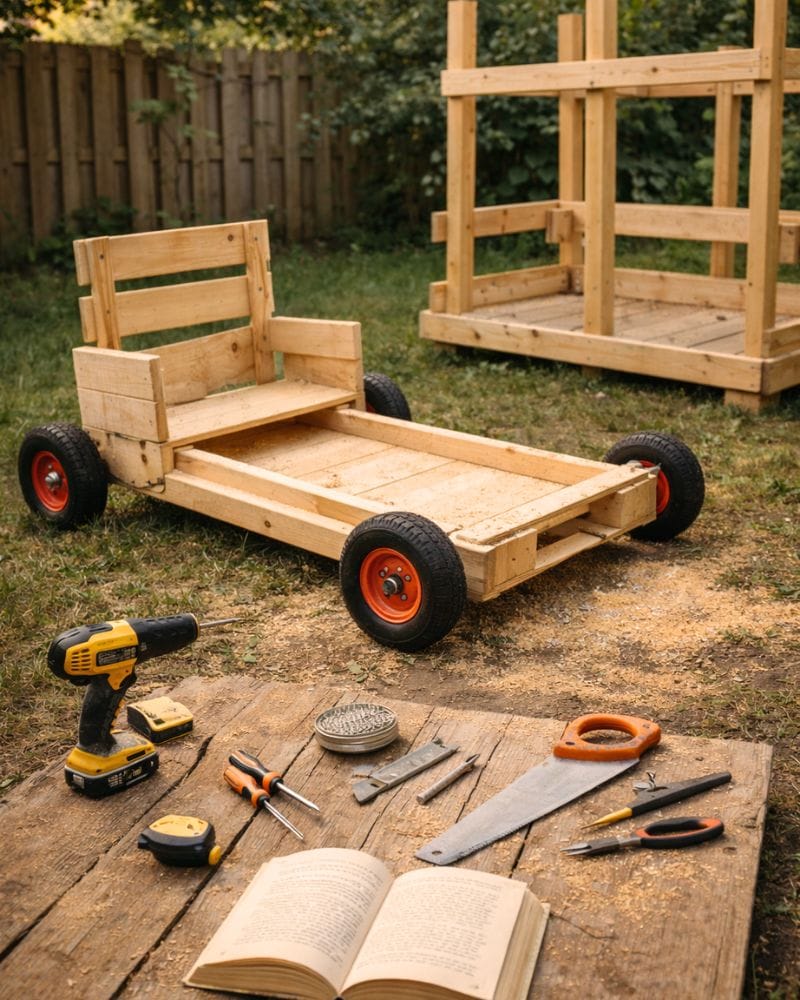
A fort that took three days. A bike that needed two failed repairs before the right one.
A backyard game you kept returning to all summer, adjusting the rules each time until it finally worked.
Nobody gave you a trophy for any of it. Nobody was watching.
You kept going because the process itself held your attention — and that built a different relationship with effort than one trained on external rewards and immediate results.
What it produced is a quieter kind of persistence. You’ve sat inside the uncomfortable middle of something unfinished before, and you know it eventually moves.
Most people who grew up on structured schedules and measurable milestones never learned that the middle part is survivable.
5. You Know How to Disagree Without Needing Someone to Decide
When the argument broke out over the rules of the game, there was no adult coming to settle it.
You negotiated, compromised, pushed back, backed down, and occasionally walked away — then came back the next day and worked it out anyway.
That repeated experience of peer-level conflict without a referee built something organizational psychologists now struggle to teach in workplace settings: the ability to hold your position, hear another one, and find a third path without waiting for authority to intervene.
It also gave you a tolerance for unresolved tension. Not every disagreement needs a winner declared.
Sometimes you just move the game forward. That’s a social skill — and it came from a childhood where no adult was close enough to call the play.
6. Silence Doesn’t Make You Uncomfortable
You know what a summer afternoon actually sounds like. Lawnmowers three streets over. A screen door. Wind moving through a tree you were sitting in.
Real quiet — the kind that doesn’t ask anything of you.
That familiarity with unstructured silence made you comfortable in your own company in a way that’s increasingly rare. You don’t need a podcast to take a walk. You don’t need the television on in an empty room.
Silence is neutral ground, not a void that needs filling.
Mental health researchers have documented the research on the health effects of noise and silence, finding that periods of quiet reduce cortisol levels and improve long-term emotional regulation.
You got years of that before anyone had a name for it. It still shows.
7. You Still Know How to Play — Really Play
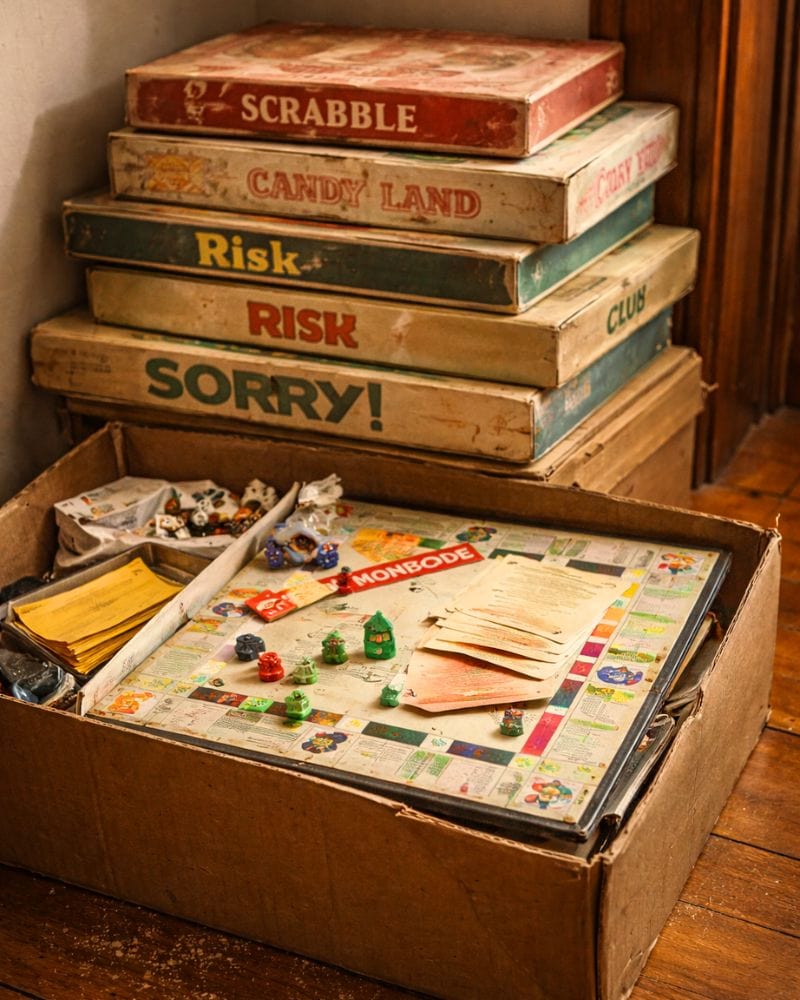
Not recreation. Not a hobby with gear and a rating system.
Play — the kind where the rules are invented, the stakes are imaginary, and the whole thing collapses and gets rebuilt three times before anyone goes home for dinner.
That capacity for open-ended imagination doesn’t disappear in adulthood. It migrates.
It shows up in how you approach problems, how you brainstorm, how you find the angle everyone else missed because you’re still willing to ask what happens if we try it completely differently.
Researcher Stuart Brown, whose work is housed at the National Institute for Play, has spent decades documenting how early unstructured play predicts adult creative capacity, adaptability, and resilience.
The kid who spent summers inventing entire worlds didn’t leave that skill in the backyard. They brought it with them.
Final Thoughts
These traits didn’t come from a curriculum. Nobody assigned them.
They accumulated over thousands of small moments — arguments settled on the fly, afternoons survived without a plan, risks taken and occasionally paid for — in the kind of low-stakes freedom that shaped a generation before anyone thought to measure what it was doing.
The research has caught up now. What it keeps finding is that the qualities built in those unobserved hours — patience, trust, resilience, imagination, comfort with silence — are among the hardest to develop later in life.
And the most predictive of how well people navigate the long, unscheduled stretch of adulthood.
If you recognize yourself in several of these, that’s not just nostalgia. That’s your foundation. And it was built in a backyard, long before anyone thought to schedule it.