
🇩🇰 The 10 Best Things to Do in Denmark (Including the Hidden Gems Most Visitors Miss)


Planning a trip to Denmark and wondering what to prioritize? You’re in the right place because we’re showcasing the Top 10 best things to do in Denmark.
Denmark is one of those countries that surprises people because it’s not just about Copenhagen (though Denmark’s capital city is absolutely worth your time).
From fairy-tale castles to Viking history, from world-class design to some of the best biking infrastructure on the planet, Denmark has way more to offer than most people realize.
I’ve put together this list of the 10 best things to do in Denmark, including 3 hidden gems that most tourists completely skip.
These aren’t just random attractions — these are the experiences that actually capture what makes Denmark special, so let’s dive in.
1. Explore Nyhavn and the Colorful Waterfront in Copenhagen
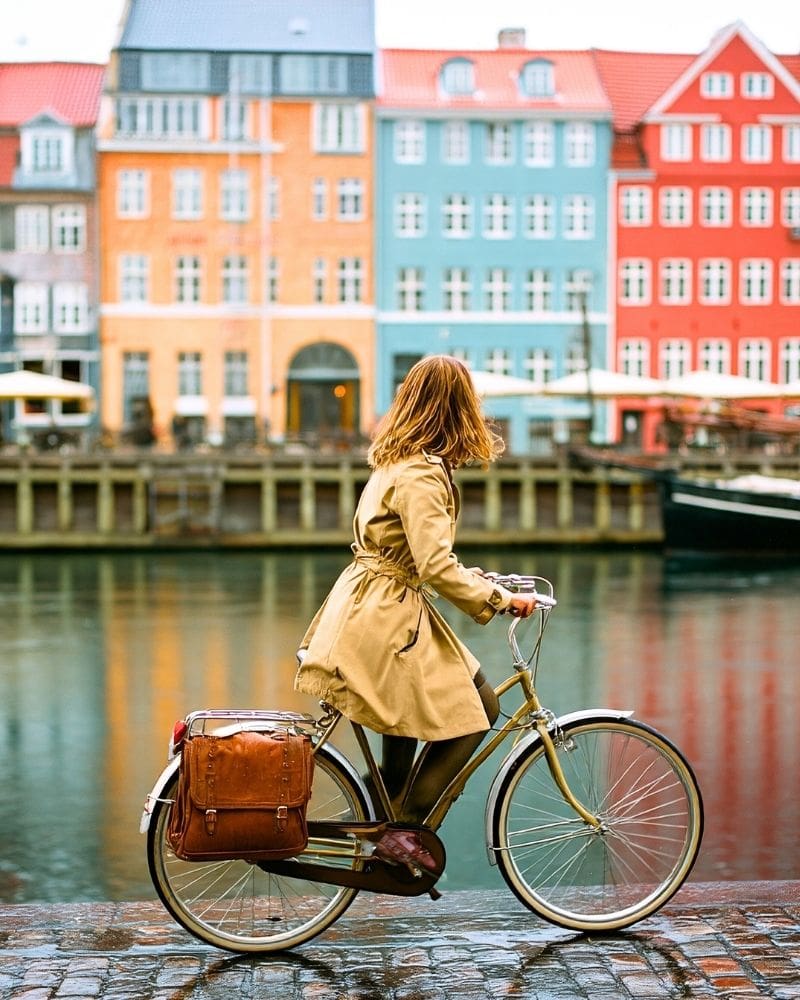
🇩🇰 Why it’s a must-do: It’s the iconic Copenhagen experience, and it’s beautiful for a reason.
You’ve probably seen the photos of those bright, colorful buildings lining the canal, but know that they’re even more stunning in person.
Nyhavn (which means “New Harbor”) is the postcard-perfect waterfront district in Copenhagen.
The 17th-century townhouses in vibrant yellows, reds, blues, and oranges create one of the most photographed scenes in Scandinavia.
But here’s the thing: Nyhavn is more than just a pretty backdrop for Instagram.
The canal is lined with outdoor cafes ☕️ restaurants, and bars where you can grab a Danish beer and watch the boats go by.
It’s also the departure point for canal tours, which give you a totally different perspective of the city from the water.
💡 Pro tip: Visit early in the morning or later in the evening to avoid the crowds and get better photos without throngs of people in them.
The restaurants along the canal can be pricey and touristy, so walk one street back for better value.
2. Visit Tivoli Gardens for Danish Magic
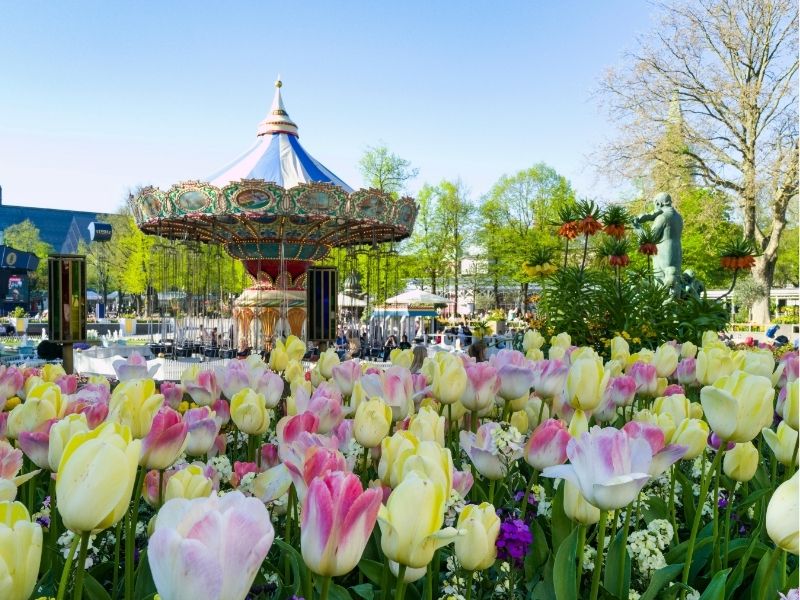
🇩🇰 Why it’s a must-do: It’s a quintessential Danish experience that combines nostalgia, beauty, and fun in a way few places can match.
Tivoli Gardens is one of the world’s oldest amusement parks, opening in 1843 — and is absolutely worth visiting because this isn’t your typical modern theme park.
Tivoli is more like stepping into a fairy tale, with beautifully landscaped gardens, vintage rides, and a charming old-world atmosphere.
At night, thousands of lights illuminate the park, creating an almost magical ambiance.
The park inspired Walt Disney when he was planning Disneyland 🏰 and you can see why.
There’s something timeless about wandering through Tivoli, whether you’re riding the wooden roller coaster, watching a performance at the open-air stage, or just strolling through the gardens with a Danish pastry.
💡 Pro tip: If you’re visiting in December, Tivoli’s Christmas market is one of the best Christmas markets in the world.
The entire park transforms into a winter wonderland with holiday decorations, mulled wine, and seasonal treats.
3. Bike Through Copenhagen Like a Local
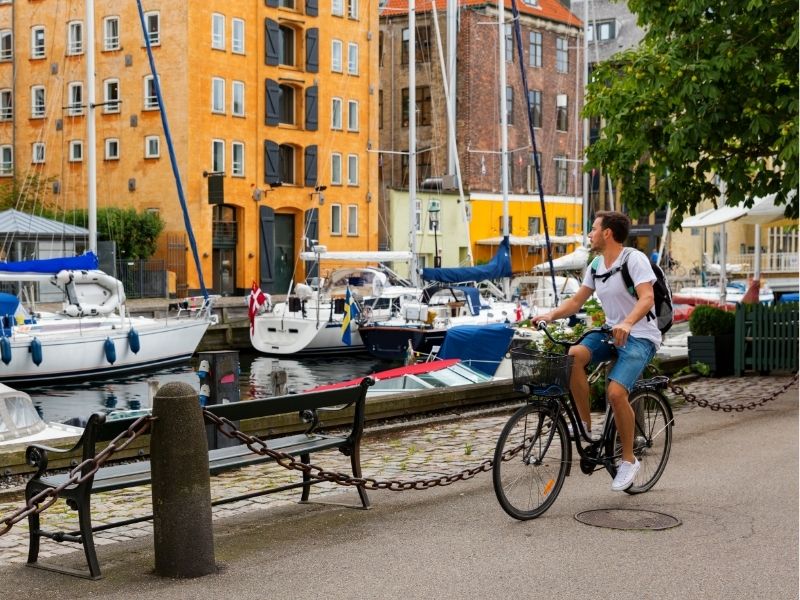
🇩🇰 Why it’s a must-do: Biking isn’t just transportation in Copenhagen; it’s a way of life. You’ll understand the city (and the Danish mindset) much better on two wheels.
Copenhagen isn’t just bike-friendly; it’s one of the most cyclist-centric cities in the world.
More than 60% of locals commute by bike daily 🚴♀️ and the infrastructure reflects that.
Renting a bike is one of the best ways to see Copenhagen. The city is flat, compact, and has dedicated bike lanes everywhere.
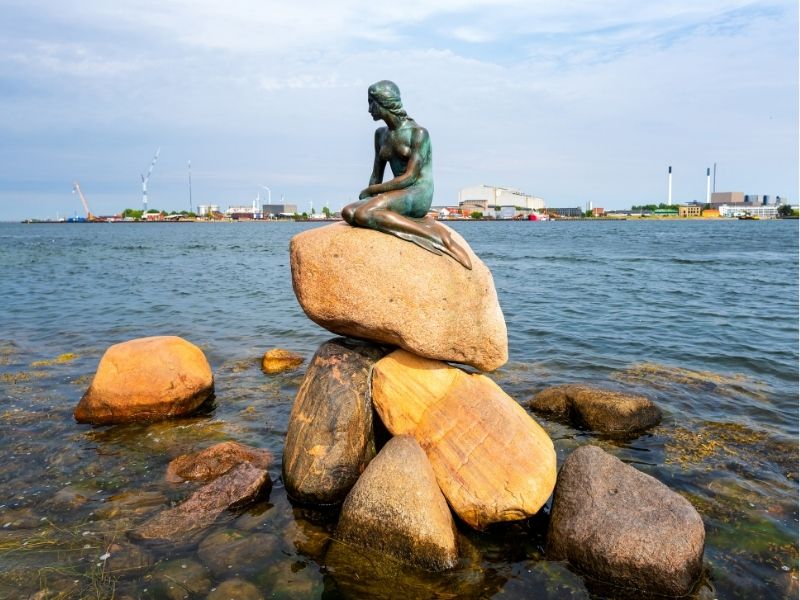
You can easily bike from Nyhavn to the famous Little Mermaid statue, through the trendy Nørrebro neighborhood, and down to the alternative community of Christiania all in one afternoon.
💡 Pro tip: Follow the bike lane rules. Danes take cycling seriously, and they expect you to signal turns, stay in the correct lane, and not block traffic.
Also, watch out for other bikes; they move faster than you think they will.
4. Step Back in Time at Kronborg Castle (Helsingør)
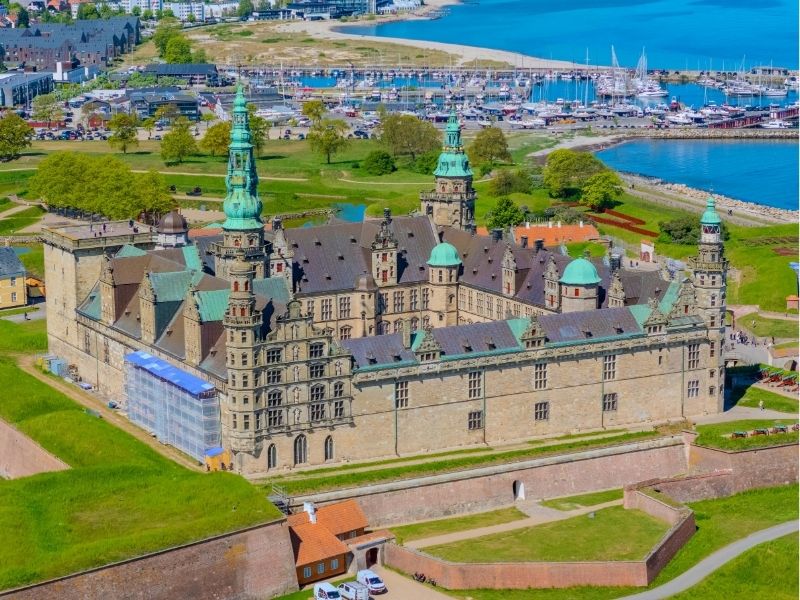
🇩🇰 Why it’s a must-do: It’s a UNESCO World Heritage site with legitimate historical significance, plus the Hamlet connection adds a literary twist.
About 45 minutes north of Copenhagen sits Kronborg Castle, one of the most important Renaissance castles in Northern Europe.
You might know it better as Elsinore, the setting for Shakespeare’s “Hamlet.”
The castle itself is stunning, with massive stone walls, grand halls, and a commanding position overlooking the narrow strait between Denmark and Sweden.
You can tour the royal chambers, walk through the dark underground casemates where soldiers were stationed ⚔️ and learn about Denmark’s maritime history.
But what makes Kronborg special isn’t just the architecture (though that’s certainly impressive).
Standing on the ramparts, looking across the water to Sweden just a few miles away, you get a real sense of Denmark’s strategic importance throughout history.
💡 Pro tip: Combine your visit to Kronborg with a trip to the Louisiana Museum of Modern Art, which is on the way back to Copenhagen.
It’s one of the best modern art museums in Europe.
5. Discover Danish Design at Designmuseum Danmark
🇩🇰 Why it’s a must-do: Understanding Danish design gives you insight into the Danish values of functionality, simplicity, and quality that permeate the culture.
Denmark has a design legacy that punches way above its weight.
Names like Arne Jacobsen, Hans Wegner, and Verner Panton revolutionized furniture and industrial design in the 20th century.
Designmuseum Danmark in Copenhagen showcases this incredible heritage of the country’s most famous furniture designers, and so much more.
The collection includes everything from classic Danish furniture, like these iconic chairs 🪑, to contemporary design, fashion, and decorative arts.
Even if you’re not a design nerd, the Designmuseum is fascinating — and arguably one of the best museums in Copenhagen.
You’ll leave with a new appreciation for how thoughtful design shapes daily life (and you’ll probably want to redecorate your entire home).
💡 Pro tip: The museum’s cafe is housed in a beautiful rococo building and serves excellent coffee. It’s a perfect spot to take a break.
6. Experience Hygge at a Traditional Danish Café

🇩🇰 Why it’s a must-do: You can’t understand Denmark without experiencing hygge, and there’s no better introduction than a cozy cafe.
You can’t visit Denmark without experiencing hygge (pronounced HOO-gah).
This untranslatable Danish concept roughly means coziness, contentment, and wellbeing all rolled into one.
The best way to experience hygge is simple: find a cozy cafe, order a coffee and a Danish pastry (Danes actually call them “wienerbrød” or Viennese bread), and just… be.
No rushing, no agenda. Just enjoying the moment 🕉️
Some great spots for hygge in Copenhagen include The Coffee Collective, Atelier September, or really any neighborhood bakery that looks inviting.
The point isn’t finding the best cafe in Copenhagen; it’s about slowing down and savoring simple pleasures.
💡 Pro tip: Try a traditional Danish pastry like a kanelsnegl (cinnamon roll) or a tebirkes (poppy seed pastry).
They’re less sweet than American pastries, but incredibly delicious.
7. Walk Through 1,000 Years at the National Museum of Denmark
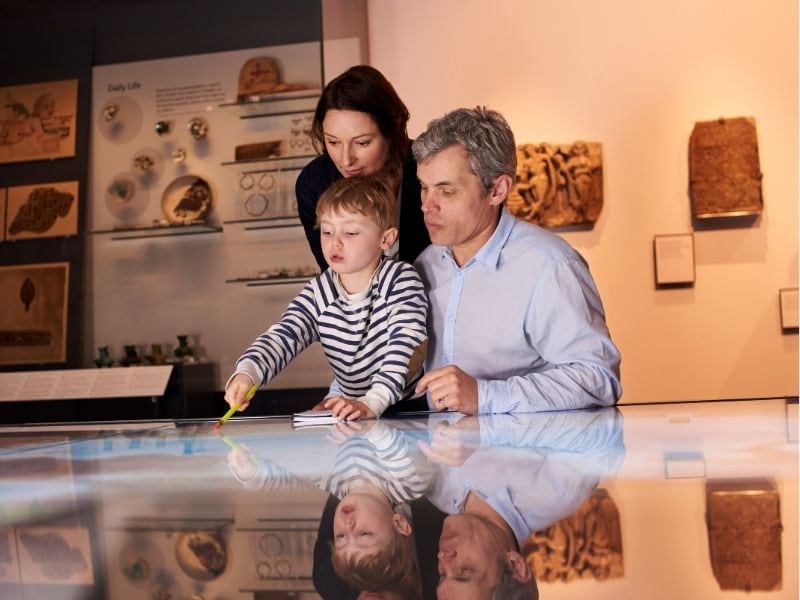
🇩🇰 Why it’s a must-do: It’s the best place to understand Danish history and culture in one location.
The National Museum in Copenhagen is Denmark’s largest museum of cultural history, and it’s absolutely massive.
You could easily spend an entire day here as the museum covers Danish history from the Stone Age to the present.
This includes an incredible Viking collection that includes a reconstructed Viking ship (though you can also visit the Viking Ship Museum in Roskilde).
What makes it special is how comprehensive it is — with royal treasures, exhibits on Danish culture and society, Viking jewelry and weapons, etc.
You’ll understand how Denmark evolved from a powerful Viking kingdom to a modern Scandinavian welfare state, and everything in between.
💡 Pro tip: The museum is free to enter, which is rare for a museum of this caliber. The children’s museum section is fantastic if you’re traveling with kids.
8. Hidden Gem: Explore the Rubjerg Knude Lighthouse on the North Sea Coast
🇩🇰 Why it’s a must-do: It’s dramatic, beautiful, feels like the edge of the world, and since most tourists never venture this far from Copenhagen, you may have it all to yourself.
Most tourists never make it to Denmark’s west coast, which is a shame because it’s absolutely stunning.
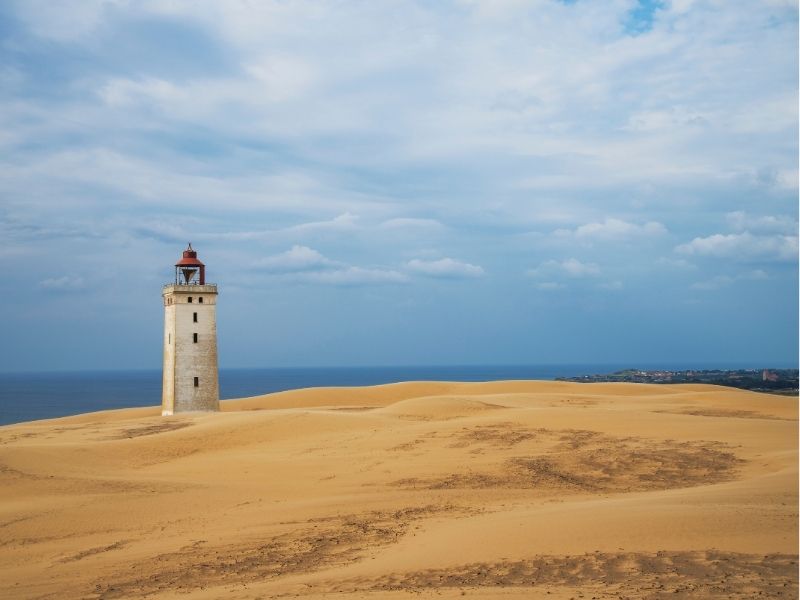
Rubjerg Knude Lighthouse sits on the edge of massive sand dunes on the North Sea coast in northern Jutland.
The lighthouse was abandoned in 1968 because of sand drift, and over the decades, the dunes have been slowly swallowing it.
In 2019, engineers moved the entire lighthouse 230-feet (70 meters) inland to save it from falling into the sea.
Now it sits in this surreal, almost post-apocalyptic landscape of shifting sands and wild coastline.
The walk up the dunes to the lighthouse is otherworldly. You feel like you’re on another planet.
The views of the North Sea are dramatic, especially on a stormy day, and there’s something hauntingly beautiful about this lighthouse fighting against nature.
💡 Pro tip: Wear sturdy shoes, as the sand is deep and the wind can be fierce.
Also, check the weather forecast and dress in layers 🧣 The North Sea coast can be brutally cold, even in summer.
9. Hidden Gem: Discover the Street Art and Alternative Culture of Freetown Christiania
🇩🇰 Why it’s a must-do: It’s a completely unique social experiment that’s been running for over 50 years, and it offers a different perspective on Danish society.
Freetown Christiania isn’t exactly unknown, but most tourists either skip it or just walk through quickly without really understanding what it is.
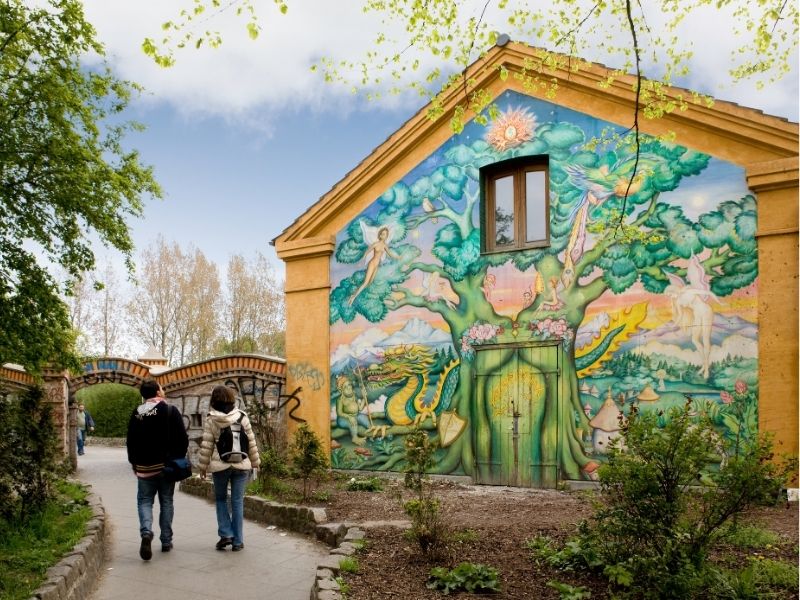
Freetown Christiania (aka Staden or simply Christiania) is an autonomous neighborhood in Copenhagen that’s been operating outside Danish law since 1971.
It was founded by squatters and alternative communities, and it’s evolved into this unique space with its own rules, culture, and governance.
The area is filled with colorful street art, unique architecture (much of it built by residents from reclaimed materials), organic cafes, and music venues.
While there’s definitely a counter-culture vibe, Christiania is also surprisingly family-friendly during the day, with playgrounds and open green spaces.
⚠️ Important note: Photography is prohibited in certain areas, especially Pusher Street. Respect the rules and the residents.
Also, while marijuana is openly sold in Christiania, it’s technically still illegal under Danish law, so be aware of the legal gray area you’re entering.
💡 Pro tip: Visit during the day for the best experience, and consider taking a guided tour to understand the history and philosophy behind Christiania.
10. Hidden Gem: Spend a Day in Ribe, Denmark’s Oldest Town
🇩🇰 Why it’s a must-do: It’s authentically historic, beautifully preserved, and sees a fraction of the tourists that Copenhagen gets. It’s Denmark at its most charming.
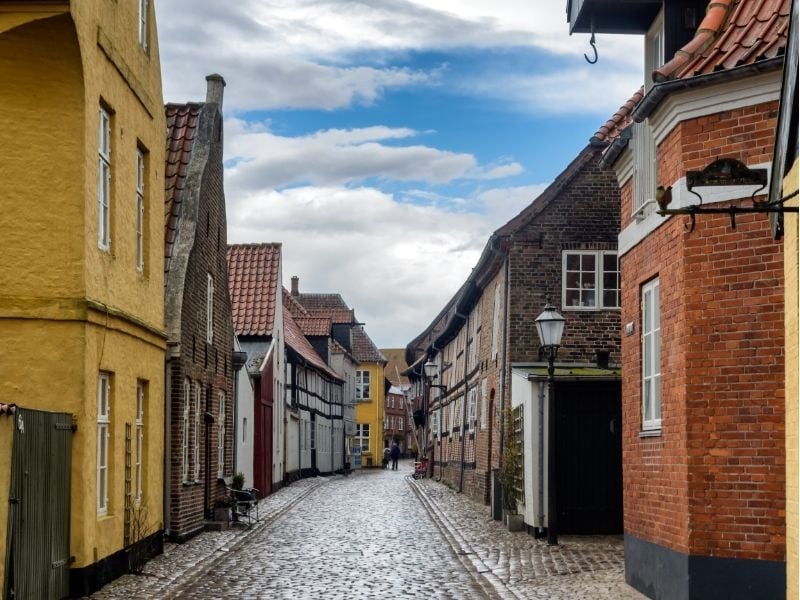
Ribe, in southwestern Jutland, is Denmark’s oldest town, dating back to the early 8th century.
It’s also one of the most beautifully preserved medieval towns in Scandinavia, and walking through Ribe feels like stepping back in time.
The old town is filled with half-timbered houses, cobblestone streets, and the magnificent Ribe Cathedral (Ribe Domkirke), which dominates the skyline.
You can climb the cathedral tower for stunning views over the town and surrounding marshlands.
What really makes Ribe special is how lived-in it feels. This isn’t a museum town; it’s a real community that just happens to have been around for 1,300 years.
The night watchman still walks his rounds every evening from April to October, singing traditional songs and telling stories (in Danish and English).
The marshlands surrounding Ribe are also beautiful and important for migratory birds.
If you’re interested in nature, the Wadden Sea National Park nearby is a UNESCO World Heritage site.
💡 Pro tip: Stay overnight if you can. Ribe has several charming hotels in historic buildings, and experiencing the night watchman’s rounds is special.
The town is almost completely deserted after dark, adding to the medieval atmosphere.
Our Final Thoughts on the Top 10 Best Things to Do in Denmark
Denmark might be small, but it’s packed with incredible experiences.
Whether you’re exploring the design museums and canals of Copenhagen, biking through the countryside, or discovering medieval towns like Ribe, you’ll find that Denmark has a way of surprising you.
The hidden gems on this list — Rubjerg Knude, Christiania, and Ribe — offer different perspectives on Denmark beyond the usual tourist highlights.
They’re worth the extra effort to reach if you like experiencing the true essence of a place and want to beyond the Denmark Instagram spots.
Most importantly, remember to slow down and embrace hygge.
Denmark isn’t about rushing from sight to sight. It’s about quality over quantity, simplicity over extravagance, and finding contentment in the moment.